Tarot and Jungian Archetypes: The Psychology Behind the 22 Major Arcana
Why tarot works (according to psychology)
People often ask me: do you actually believe tarot cards can tell the future? My honest answer: I don’t think that’s the right question.
The better question is — why do 78 pieces of illustrated cardstock consistently produce meaningful psychological insight? Why do people across centuries and cultures respond to the same images with recognition, emotion, and self-understanding?
Carl Jung had an answer. And it has nothing to do with fortune-telling.
Jung, archetypes, and the collective unconscious
Carl Jung (1875-1961) was a Swiss psychiatrist who proposed something radical: beneath our personal unconscious — our individual memories and repressed experiences — lies a deeper layer shared by all of humanity. He called it the collective unconscious.
This shared psychic layer contains archetypes — universal patterns, figures, and narratives that appear in every culture’s myths, dreams, fairy tales, and religious symbols. The Hero. The Mother. The Trickster. The Shadow. These aren’t learned — they’re inherited. Hard-wired into the human psyche like a blueprint for meaning-making.
Jung described tarot as “psychological images, symbols with which one plays, as the unconscious seems to play with its contents.” He recognized that the Major Arcana weren’t random illustrations — they were visual representations of the very archetypes he’d been mapping in his patients’ dreams and fantasies.
The 22 Major Arcana are essentially a picture-book of the human psyche.
The Fool’s Journey as individuation
Jung’s central concept was individuation — the lifelong process of integrating all aspects of your personality into a coherent, authentic whole. Not perfection. Wholeness. Including the parts you’d rather not acknowledge.
The Fool’s Journey through the 22 Major Arcana mirrors this process almost exactly:
Stage 1: The Innocent Ego (Cards 0-7)
The Fool (0) — Pure potential. The ego before it encounters the world. In Jungian terms, this is the unconscious state before individuation begins — open, unformed, carrying everything and nothing.
The Magician (I) — The conscious will. The ego’s first tool: “I can make things happen.” This is the developing ego learning to direct attention and intention.
The High Priestess (II) — The unconscious feminine. What Jung called the Anima in men — the inner feminine that carries intuition, receptivity, and access to deeper knowing. She guards the threshold between conscious and unconscious.
The Empress (III) — The Great Mother archetype. Fertility, nurture, abundance, but also the devouring mother who loves so much she smothers. Every archetype has its shadow side.
The Emperor (IV) — The Father archetype. Structure, authority, boundaries. The patriarchal principle that creates order — and rigidity when taken too far.
The Hierophant (V) — The Wise Old Man. Tradition, institutional wisdom, the voice of collective knowledge. Jung saw this archetype as the bridge between individual experience and cultural meaning.
The Lovers (VI) — The first major choice. Not just romantic love, but the conscious decision about values. In Jungian terms, this is where the ego first confronts the Anima/Animus — the inner opposite-gender figure that carries projected desire.
The Chariot (VII) — The Ego Triumphant. The persona fully formed, will directed, moving through the world with purpose. This is the ego at its peak — and, in Jung’s view, the point where real trouble begins.
Stage 2: The Descent (Cards 8-14)
This is where comfortable ego-identity starts breaking down.
Strength (VIII) — Meeting the inner beast. Not conquering instinct but befriending it. Jung would call this the first conscious encounter with Shadow material — and the realization that raw force won’t work.
The Hermit (IX) — The introvert’s card. Withdrawal from the outer world to examine the inner one. This is the beginning of genuine self-reflection — not escapism, but intentional solitude for soul-searching.
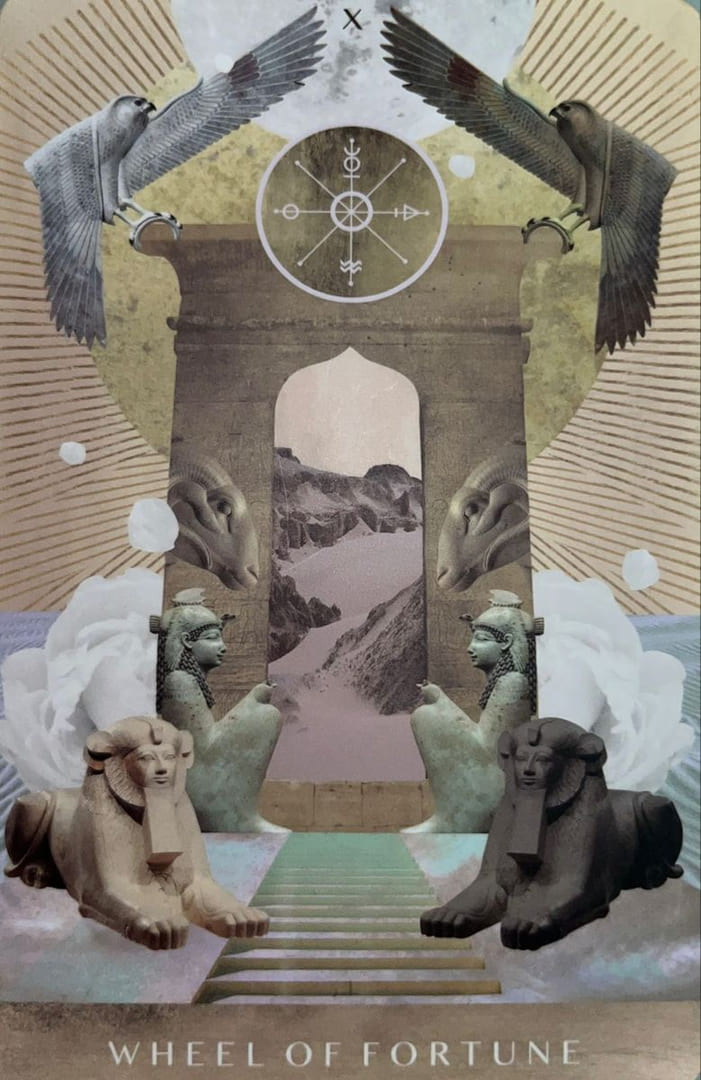
Wheel of Fortune (X) — The realization that the ego is not in control. Fate, cycles, the larger pattern. Jung would call this encountering the Self — the organizing principle larger than the ego.
Justice (XI) — Karma in psychological terms. The recognition that every choice has consequences, and that self-knowledge requires ruthless honesty. The ego can no longer hide behind self-deception.
The Hanged Man (XII) — Voluntary ego-surrender. Seeing the world from an inverted perspective. This is Jung’s concept of enantiodromia — the reversal that happens when a one-sided attitude has gone too far.
Death (XIII) — Psychological death and rebirth. Not the end, but the necessary dissolution of the old self so a new one can emerge. Jung saw this as the critical threshold of individuation — the ego must die to its old form.
Temperance (XIV) — Integration. The alchemical process Jung loved — combining opposites into something new. Not compromise but synthesis. The conscious and unconscious beginning to work together.
Stage 3: The Shadow Realm (Cards 15-18)
The darkest, most psychologically intense section.
The Devil (XV) — The Shadow archetype in its purest form. Everything you’ve rejected, repressed, denied about yourself. Addictions, compulsions, the parts that scare you. Jung was clear: you cannot become whole without facing the Devil. What you resist, persists.
The Tower (XVI) — Shadow eruption. What happens when repressed material breaks through the ego’s defenses. It feels like destruction, but Jung saw it as liberation — the false structure crumbling to reveal truth underneath.
The Star (XVII) — Healing after crisis. The renewed connection to hope, meaning, and the transpersonal. In Jungian terms, this is the first glimpse of the Self after the ego’s old structure has dissolved.
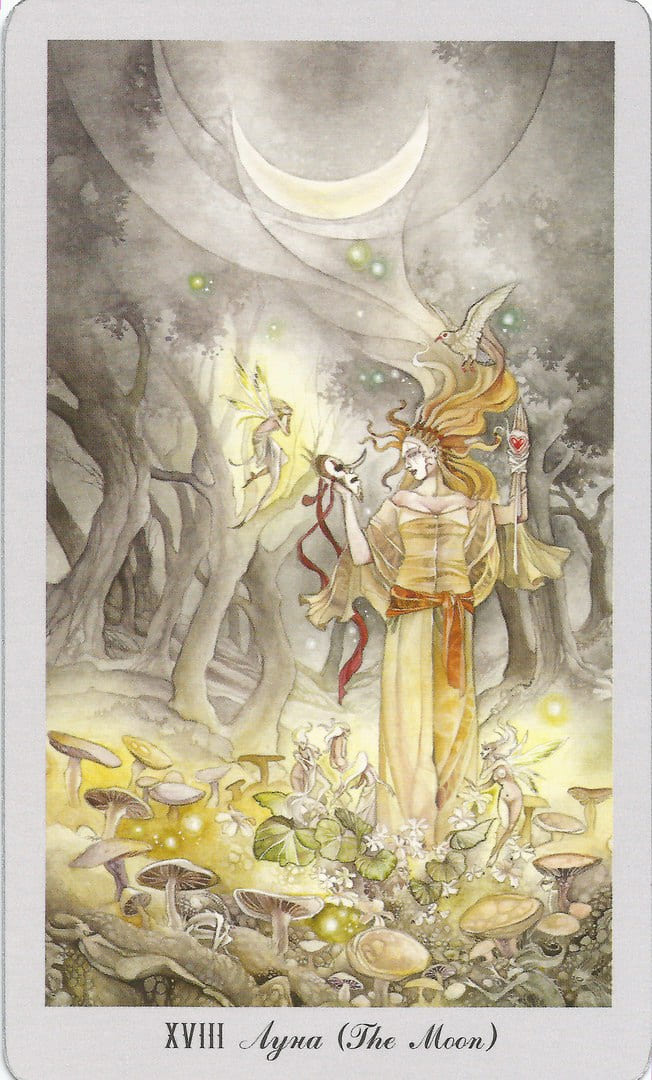
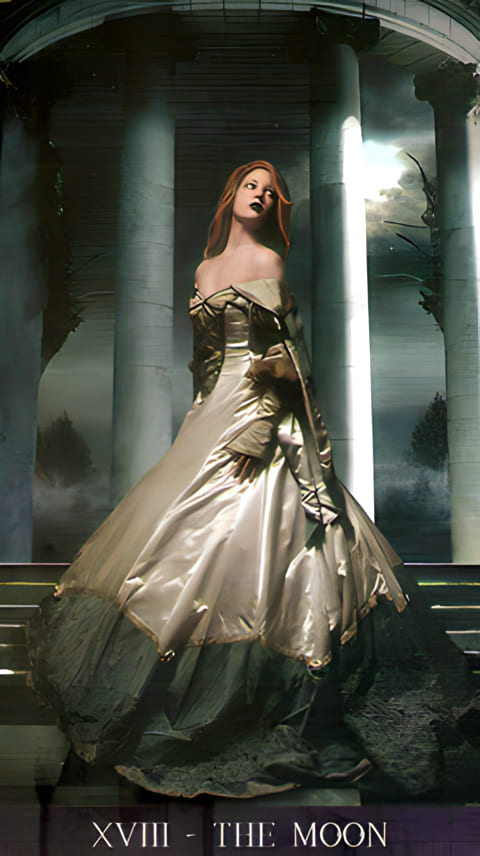
The Moon (XVIII) — The deepest unconscious. Dreams, illusions, ancestral fears, the primordial. Jung would recognize this as the territory of the collective unconscious itself — disorienting, terrifying, and profoundly transformative.
Stage 4: Integration and Wholeness (Cards 19-21)
The Sun (XIX) — Consciousness reborn. The ego, having survived its encounter with the unconscious, emerges with genuine clarity and joy. Not naive happiness — earned happiness. The child archetype renewed.
Judgement (XX) — The calling. Jung’s concept of vocation — the inner summons to become who you truly are. This is the moment of integration where all the parts of the personality are called forth and accepted.
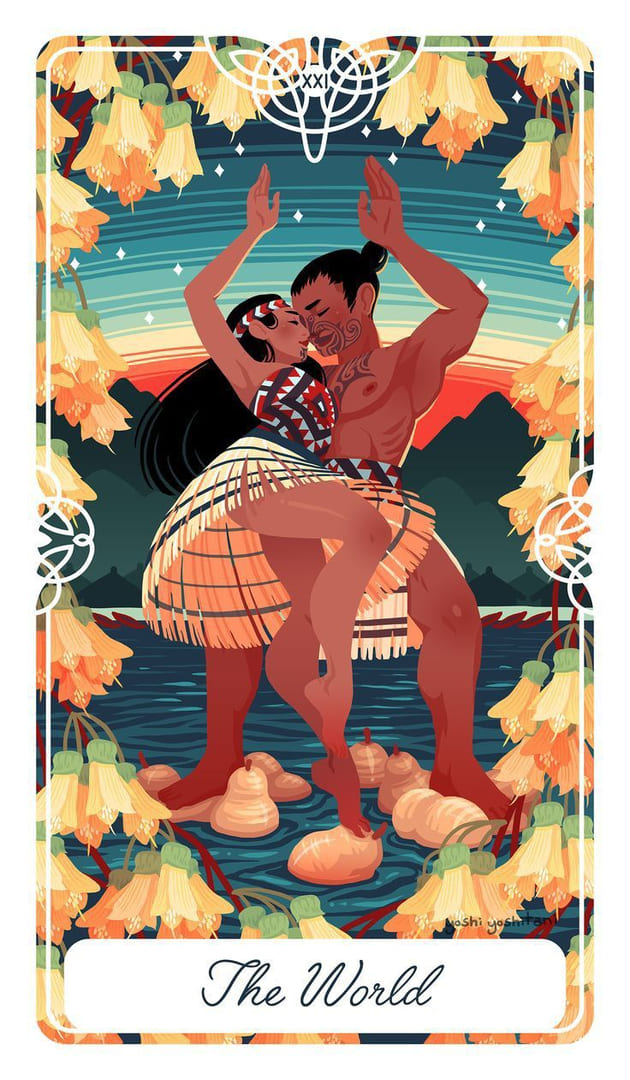
The World (XXI) — The Self — Jung’s ultimate archetype. Not the ego, not the persona, but the totality of the psyche in harmony. The mandala. The dance of wholeness that contains all opposites. Individuation achieved — not as a destination, but as a living, dynamic balance.
The four key Jungian archetypes in tarot
The Shadow
Primary card: The Devil Supporting cards: The Moon, The Tower, Death
The Shadow is everything you don’t want to be. It’s the jealousy you deny, the rage you suppress, the desire you judge. Jung said the Shadow is 90% gold — meaning most of what we’ve pushed into our shadow isn’t actually bad. It’s just the parts that weren’t welcome in our family or culture.
When the Devil appears in a reading, it’s rarely about evil. It’s about what you’ve chained up inside yourself. The question isn’t “how do I destroy my Shadow?” but “what am I losing by keeping it locked away?”
If you want to explore this further, I wrote a complete guide to shadow work with tarot.
The Anima/Animus
Primary cards: The High Priestess (Anima), The Emperor (Animus) Supporting cards: The Lovers, The Empress, Strength
Jung believed every person carries an inner figure of the opposite gender — the Anima (inner feminine in men) and Animus (inner masculine in women). Modern Jungians often expand this beyond gender to mean “the inner Other” — the complementary qualities you project onto partners.
The High Priestess embodies the Anima: mysterious, intuitive, connected to the unconscious. The Emperor embodies the Animus: structured, authoritative, connected to the social world. When these cards appear, they often point to your relationship with these inner figures — not just with external people.
The Self
Primary card: The World Supporting cards: The Sun, Judgement, Wheel of Fortune
The Self is Jung’s name for the totality of the psyche — conscious and unconscious, light and shadow, masculine and feminine, all in dynamic balance. It’s not the ego. The ego is a small island; the Self is the whole ocean.
The World card perfectly captures this: a figure dancing within a wreath of completion, surrounded by the four fixed signs of the zodiac (representing the four psychological functions Jung identified: thinking, feeling, sensation, intuition). This is wholeness — not perfection.
The Persona
Primary card: The Chariot Supporting cards: The Magician, The Hierophant
The Persona is the mask you wear for the world — your social role, your professional identity, the version of yourself you present. It’s necessary (you can’t walk through life with no filter), but it’s not who you really are.
The Chariot represents the Persona at full power: armored, directed, winning. But notice — the charioteer’s armor also conceals. When the Chariot appears, ask: is this strength, or is this hiding?
Using Jungian archetypes in your readings
You don’t need a psychology degree to use these ideas. Here’s the practical version:
When a Major Arcana card appears, ask: which part of my psyche is this card representing? Not what will happen, but what inner force is active.
When the Devil appears, don’t panic about “bad things.” Ask: what have I been rejecting about myself that needs attention?
When the High Priestess shows up, consider: what does my intuition know that my rational mind is ignoring?
When you see the World, celebrate: something in me is coming into balance.
The Major Arcana aren’t fortune-telling tools. They’re mirrors for the archetypal drama playing out inside you right now. Jung would have called them windows into the collective unconscious.
I call them the most honest conversation you’ll ever have with yourself.
Frequently Asked Questions
Did Carl Jung use tarot cards?
Jung never formally incorporated tarot into his clinical practice, but he was familiar with the cards and recognized their archetypal imagery. He described tarot as 'psychological images, symbols with which one plays, as the unconscious seems to play with its contents.' His student Sallie Nichols later wrote 'Jung and Tarot: An Archetypal Journey,' mapping his concepts directly onto the Major Arcana.
What Jungian archetype does the Death card represent?
Death represents the transformation archetype — the psychological death-and-rebirth process Jung saw as essential to individuation. It's not about literal death but about the ego's ability to release outdated identities. In Jungian terms, Death is what happens when you stop clinging to who you were so you can become who you're meant to be.
How does the Fool's Journey relate to Jung's individuation?
The Fool's Journey through the 22 Major Arcana mirrors Jung's individuation process — the lifelong journey toward psychological wholeness. The Fool begins unconscious, encounters archetypal forces (Mother, Father, Shadow, Anima/Animus), faces crisis (Tower, Death), and arrives at the World — integration of all aspects of the Self.
Which tarot cards represent Jung's Shadow archetype?
The Devil is the primary Shadow card — it shows the parts of yourself you've rejected or repressed. The Moon represents the Shadow's realm (the unconscious). The Tower shows what happens when Shadow material erupts into consciousness. Death represents the transformation that follows Shadow integration.