What Is Shadow Work? A Beginner's Guide to Meeting Your Dark Side with Tarot
Everyone has a shadow. Most people pretend they don’t.
Carl Jung — the Swiss psychiatrist who coined the term — described the shadow as everything about ourselves we refuse to see. Not just the “bad” stuff, though that’s part of it. The shadow holds our repressed anger, our shame, our jealousy, our fear of being too much or not enough. But it also holds buried creativity, sexuality, power, and joy that we were taught to suppress.
The shadow isn’t your enemy. It’s the part of you that got locked in the basement because someone — a parent, a teacher, a culture — told you it wasn’t acceptable.
Shadow work is simply the practice of going downstairs and opening the door.
Why tarot is one of the best tools for this
Therapists use talk therapy. Journalers use prompts. But tarot has something those tools don’t: the element of surprise.
When you sit down to journal about your shadow, your conscious mind is in charge. It curates. It filters. It decides which shadow material is “safe” to explore. You end up examining the shadows you’re already comfortable with.
Tarot bypasses that. When you pull the Devil in a shadow work reading, you don’t get to choose which chains to look at. The card shows you whatever your unconscious is ready to reveal — which is often not what your ego wanted to see.
That’s exactly why it works.
The shadow self: what’s actually hiding in there
Your shadow forms early. By the time you’re seven or eight, you’ve already learned which parts of yourself are acceptable and which need to be hidden. Here’s what typically ends up in the shadow:
Emotions you were punished for showing:
- Anger (“nice girls don’t get angry”)
- Sadness (“stop crying, be strong”)
- Excitement (“don’t be so loud”)
- Need (“don’t be needy”)
Qualities you were taught to suppress:
- Ambition (if your family valued humility)
- Sexuality (if your culture shamed desire)
- Creativity (if you were told to “be practical”)
- Power (if assertiveness was labeled “bossy”)
Experiences you couldn’t process:
- Rejection that became “I’m not lovable”
- Failure that became “I’m not capable”
- Loss that became “I shouldn’t get attached”
The shadow isn’t just negative traits. It’s any authentic part of you that went underground because the surface world said it wasn’t welcome.
The 5 shadow cards in tarot
Certain cards consistently point to shadow material. If these come up in any reading — not just shadow work — pay extra attention.
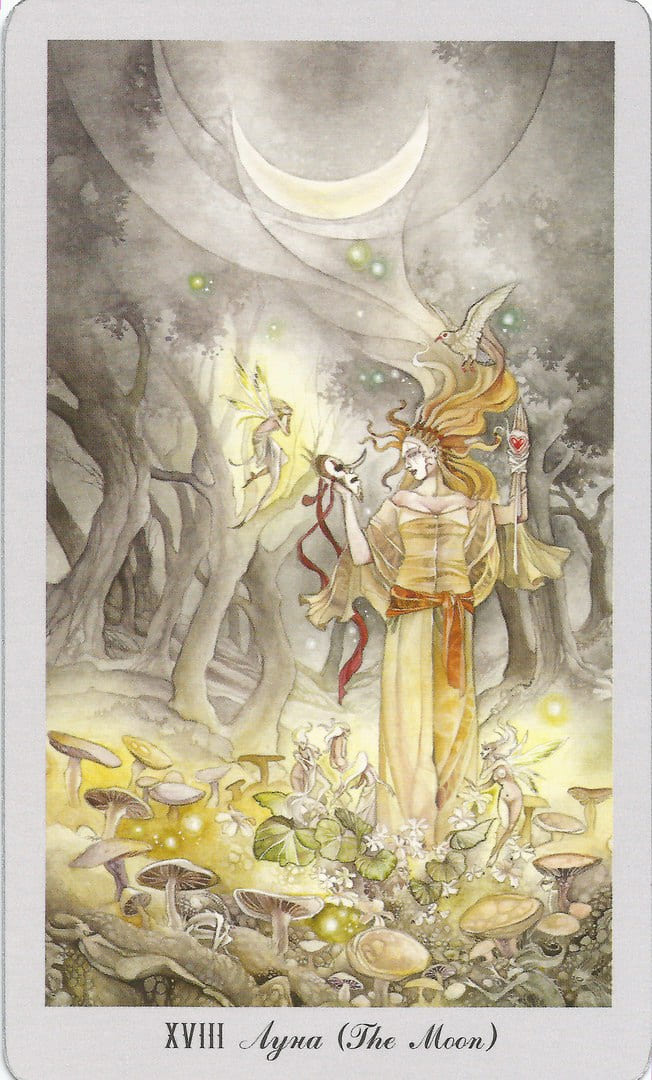
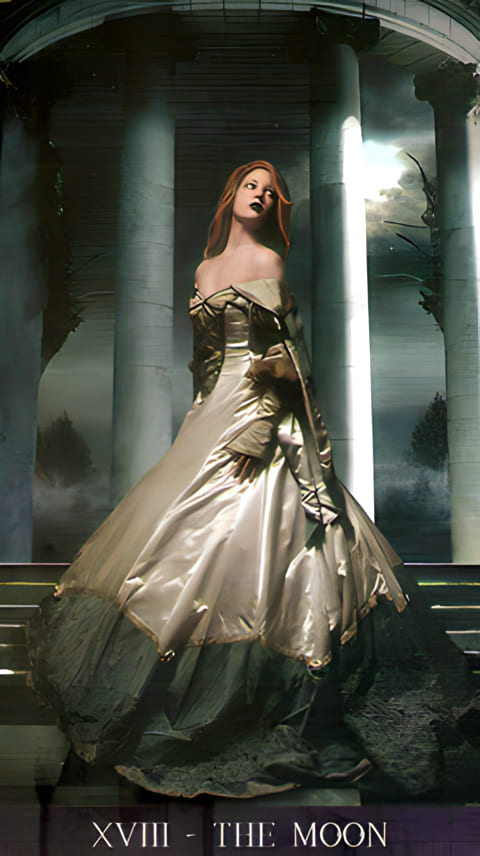
The Moon — The shadow itself. Hidden fears, illusions, things that lurk beneath the surface. When the Moon appears, something in your unconscious is trying to surface. Don’t push it back down.
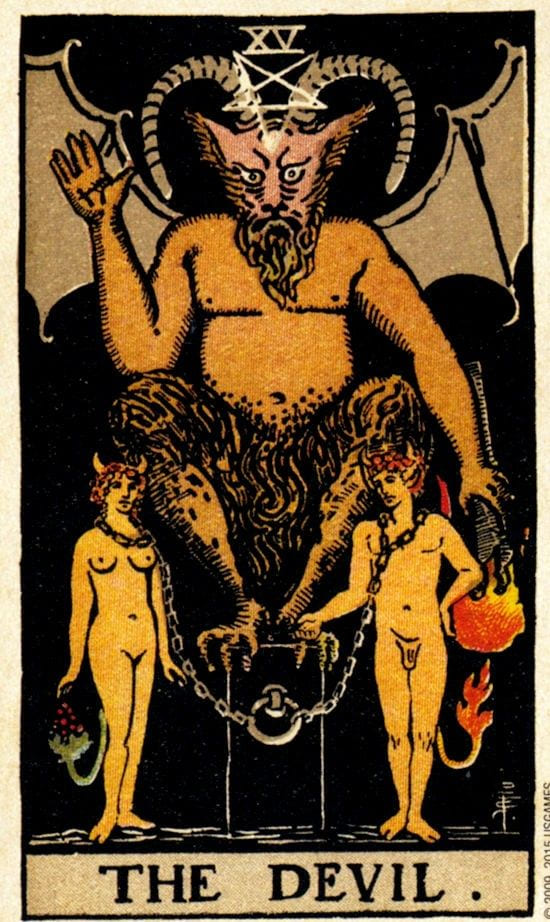
The Devil — The chains you don’t realize you’re wearing. Addictions, compulsions, unhealthy patterns that feel comfortable because they’re familiar. The Devil isn’t evil — it’s the part of you that traded freedom for a sense of safety.
The High Priestess reversed — Denied intuition. You know something but you’re refusing to acknowledge it. Reversed High Priestess in shadow work means: the answer is inside you, but you’ve been avoiding the quiet.
Death — Resistance to transformation. In shadow work, Death often appears when you’re clinging to an identity that no longer serves you. The shadow here is the fear of who you’d be if you let the old version go.
The Tower — Truth you’ve been building around. Everything constructed on a lie or a denial eventually falls. Tower in shadow work means the structure is already cracking. Better to look now than to wait for the collapse.
A beginner’s shadow work spread (5 cards)
This spread is designed to be gentle enough for your first time but deep enough to actually show you something real.
Before you start: Make sure you’re in a calm, private space. Shadow work is not a party trick. Light a candle if that helps you focus. Have a journal nearby — you’ll want to write after this.
Shuffle while asking: “What does my shadow need me to see right now?”
   [1]  [2]  [3]
      [4]  [5]
-
The Mask — The version of yourself you show the world. This is your persona — the curated image. There’s nothing wrong with having a persona, but it’s helpful to see it clearly.
-
What’s Hidden — The quality or emotion you’re suppressing right now. This is the core shadow card. Sit with it. Notice your reaction. If you feel defensive, that’s information.
-
Where It Came From — When or why this part of you went into hiding. This card often points to childhood, family patterns, or specific experiences that taught you this trait wasn’t safe.
-
How It Shows Up — How your shadow leaks into your behavior without you realizing. Passive aggression, procrastination, self-sabotage, people-pleasing, overworking — these are all shadow behaviors. This card names yours.
-
The First Step Toward Integration — What would help you begin acknowledging this part of yourself. Not fixing it. Not forcing it to change. Just seeing it without judgment.
Reading your shadow spread
The most important thing: don’t rush to interpret. Sit with each card for at least a minute before moving to the next. Notice your body. Where do you tense up? What card makes you want to look away? That’s the one that matters most.
If Position 2 feels “wrong” — if your first reaction is “that’s not me” — that’s often the shadow speaking. Jung said it best: “Everything that irritates us about others can lead us to an understanding of ourselves.” The same applies to tarot cards.
If the spread feels light — all pleasant cards, nothing uncomfortable — you might not be ready for shadow work today, and that’s fine. Or your unconscious is being protective. Try again in a week.
Journal immediately after. Write whatever comes up. Don’t censor, don’t edit. The shadow doesn’t speak in neat sentences. Let it be messy.
Cards that don’t look like shadow cards but are
Not all shadow material comes through the “dark” cards. Sometimes the shadow hides in places you wouldn’t expect:
- The Sun in position 2 — your shadow might be joy itself. Were you taught that being too happy was naive? That optimism wasn’t safe?
- The Empress — suppressed nurturing or femininity. Were you told caring was weakness?
- The Emperor — repressed authority. Are you afraid of your own power?
- Ace of Wands — buried creative fire. Did someone tell you your passion was too much?
- Three of Cups — hidden need for community. Do you pretend you don’t need people?
The shadow isn’t always dark. Sometimes it’s your brightest light, locked away because it was too much for the room.
Shadow work is not a one-time event
This isn’t something you do once and check off a list. Shadow work is an ongoing practice — like maintaining a garden. New shadow material surfaces as you grow. Old patterns re-emerge during stress. That’s normal.
A sustainable practice looks like this:
- Weekly: Pull one card and ask “what am I avoiding this week?” Journal for 5 minutes.
- Monthly: Do the full 5-card spread above. Compare with last month’s reading.
- When triggered: If someone or something provokes a disproportionate emotional reaction, pull a single card and ask “what does this trigger reveal about my shadow?”
Go slowly. Be gentle with yourself. And remember — the goal of shadow work isn’t to become a “better” person. It’s to become a more whole one.
Frequently Asked Questions
What is shadow work in simple terms?
Shadow work is the practice of exploring the parts of yourself you suppress, deny, or hide — your 'shadow.' These include emotions like jealousy, anger, shame, and fear. The goal isn't to eliminate them but to acknowledge and integrate them so they stop controlling you from the unconscious.
Is shadow work dangerous without a therapist?
Gentle shadow work with tarot is safe for most people. It's reflective, not clinical. However, if you have trauma, PTSD, or severe anxiety, work with a therapist alongside your tarot practice. Shadow work can surface intense emotions — go slowly and stop if it becomes overwhelming.
What tarot cards represent the shadow self?
The Moon (hidden fears and illusions), the Devil (chains you don't realize you're wearing), the High Priestess reversed (denied intuition), Death (resistance to change), and the Tower (truths you've been avoiding) are the most common shadow cards. Any card that triggers a strong emotional reaction may also point to shadow material.
How often should I do shadow work with tarot?
Start with once a week. Shadow work is an ongoing practice, not a one-time event. A weekly single-card pull with journaling is enough to begin. The 5-card spread in this guide works well monthly for deeper exploration.