Review: Forgotten Legends Tarot — Mythology in Detail
I tracked this deck down right before it went out of print. And every time I take it out, I feel something special: I’m holding something rare that can’t simply be reordered.
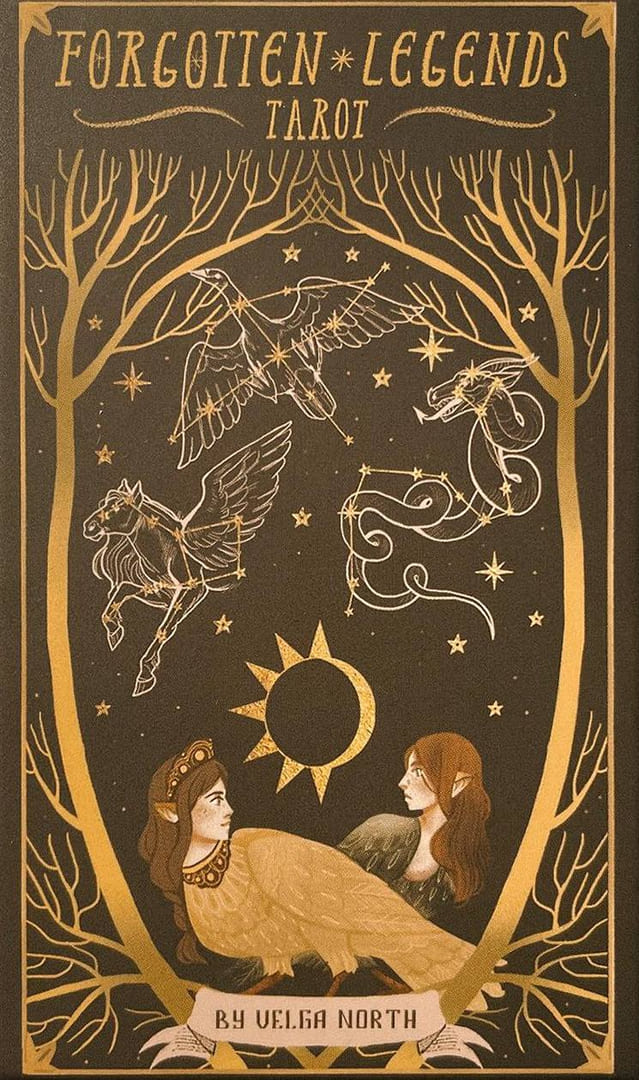
Forgotten Legends Tarot is an indie auteur deck by Velga North, in which every card is reimagined through a specific mythological or folkloric figure from various world traditions. This isn’t “modern tarot” — it’s a book of myths that can be laid out in spreads.
And this deck is heavy. Not just in card stock — in content.
First Impressions
The first thing you notice is the quality. 400gsm card stock — that means the cards feel weighty in the hands. The Major Arcana have gold embossing — under light, they shimmer with thin lines. This is a collector’s deck in the most literal sense.
The second is the illustration detail. There isn’t a single simplified card. Costumes, ornaments, landscapes, objects — everything is rendered with almost academic precision. You can feel that Velga North spent serious time on each card.
The third is the mythology. These aren’t general archetypes — they’re specific stories. Odin on the Hanged Man isn’t “sacrifice in general,” it’s the scene of Odin’s self-sacrifice on Yggdrasil. The Mistress of the Copper Mountain on the Six of Pentacles is from the Russian tales of Bazhov. Each card asks for knowledge of the story to open its depth.
About the Deck
Forgotten Legends Tarot was created by Velga North — an independent artist. The deck was released in a small print run and is now out of print. That means available copies are collector’s rarities.
78 cards, classic structure. 22 Major Arcana set off by gold embossing. A PDF guidebook in English comes with the deck, where Velga explains her vision for each card.
The cards don’t follow Rider-Waite-Smith literally. Velga North reimagines classic scenes through mythological scenes, which sometimes yields striking parallels and sometimes creator’s deviations that need to be reconciled with the traditional meaning. That isn’t a flaw — it’s the deck’s strength: it asks you to think, not just to repeat.
Visual Style
The style is a fusion of art nouveau, Slavic book illustration, and contemporary fantasy graphics. The lines are crisp, the colors saturated, the backgrounds worked through to the smallest detail. It looks like illustrations from an old book of fairy tales — but with modern drawing mastery.
The palette varies between cards but generally tends toward deep, saturated tones: dark blue night skies, ochre gold, malachite green, wine red. No minimalism — every card is densely packed with meaning.
The faces of the heroes are individual. These aren’t generalized “archetypal figures” — they’re specific people with character in their expressions. Odin is grim and focused. The Mistress of the Copper Mountain is cold and majestic. Every card works as a portrait.
Core Themes
Mythology as living language. The deck proceeds from the idea that myths aren’t ancient dust — they’re an active symbolic system. Odin, the Mistress of the Copper Mountain, Baba Yaga, Greek heroes, Celtic deities — all of them can mirror modern life.
Multiculturalism without surface treatment. Velga North doesn’t “collect” myths as ethnographic artifacts. She works with them as active images. That’s a rare respect for the sources.
The dark side of myth. Many cards lean toward a darker side than Rider-Waite. This isn’t oppression — it’s honesty. The myths of ancient peoples often spoke of death, sacrifice, and the secrets of the underworld. The deck doesn’t smooth that depth.
Auteur approach. This is a deeply personal work by one person. Velga North wasn’t trying to please the market. That’s why the deck became rare — it was made for those who would seek it out.
Favorite Cards
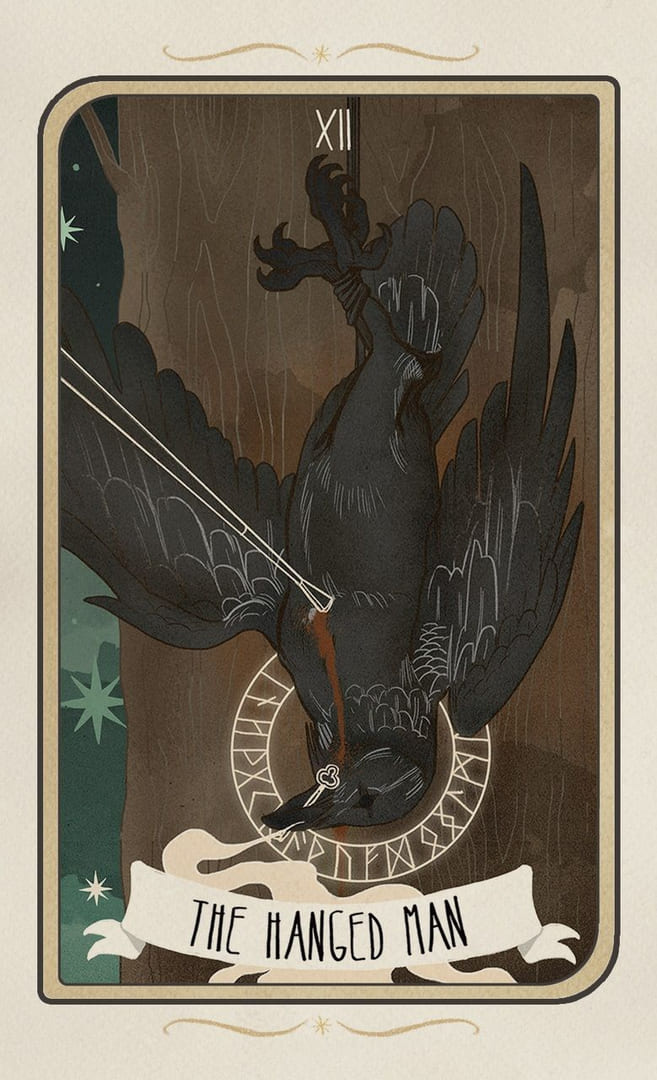
Hanged Man (Odin on Yggdrasil) — a black raven hangs upside down above a circle of runes, two spears piercing through it. Dark tones. This is the scene of Odin’s self-sacrifice: nine days and nine nights he hung on the ash tree Yggdrasil to receive the wisdom of the runes. The Hanged Man through this scene becomes not “stuck in suspension” but conscious sacrifice for knowledge. Deeper than the traditional reading.
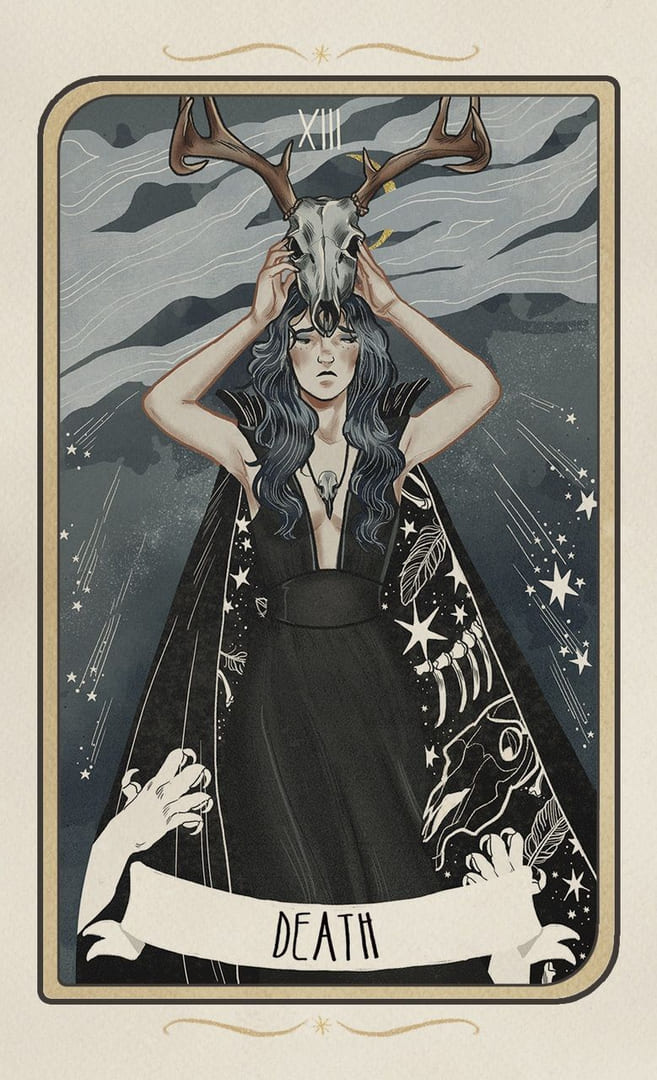
Death — a young woman with long hair holds an antlered deer skull above her head like a crown. Black gown patterned with bones and fish skeletons. Cosmic background with stars and meteors. This is Death as priestess of transition: calm, ceremonial, wearing a crown of what has ended. A very Slavic, very feminine image of Death.
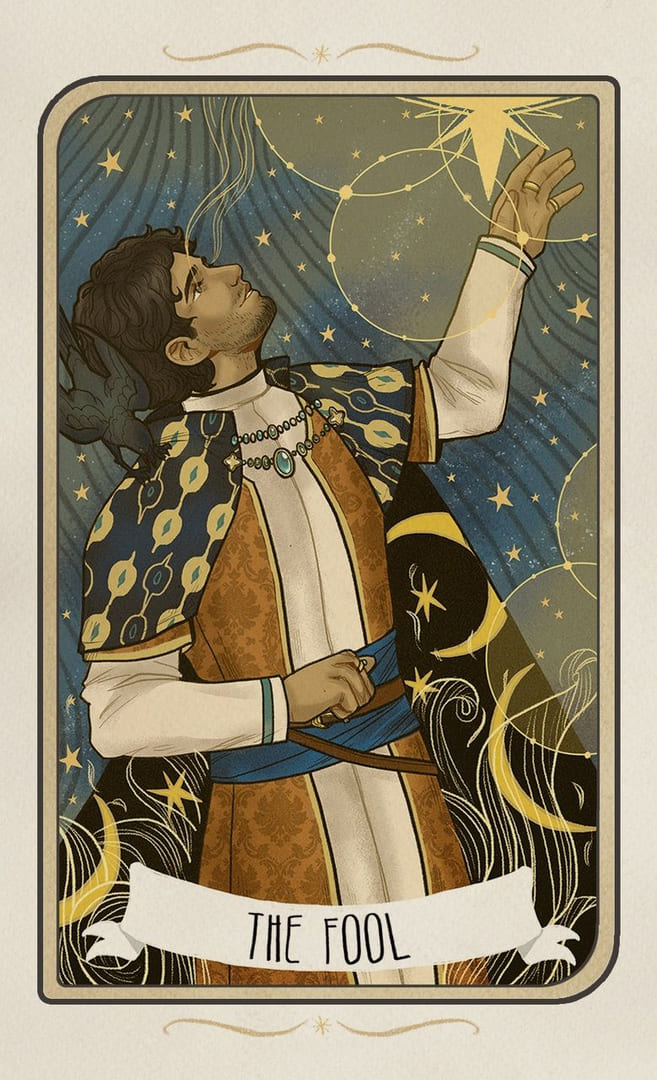
The Fool — a young man in rich medieval dress (white shirt, ochre tunic with ornament, patterned vest, blue belt) reaches a hand toward a large star in the night sky. Long dark hair flowing. This isn’t Rider-Waite’s naive youth — this is a young hero of an ancient legend who has just heard a calling and is going to find it. The Fool as the start of a mythic journey.
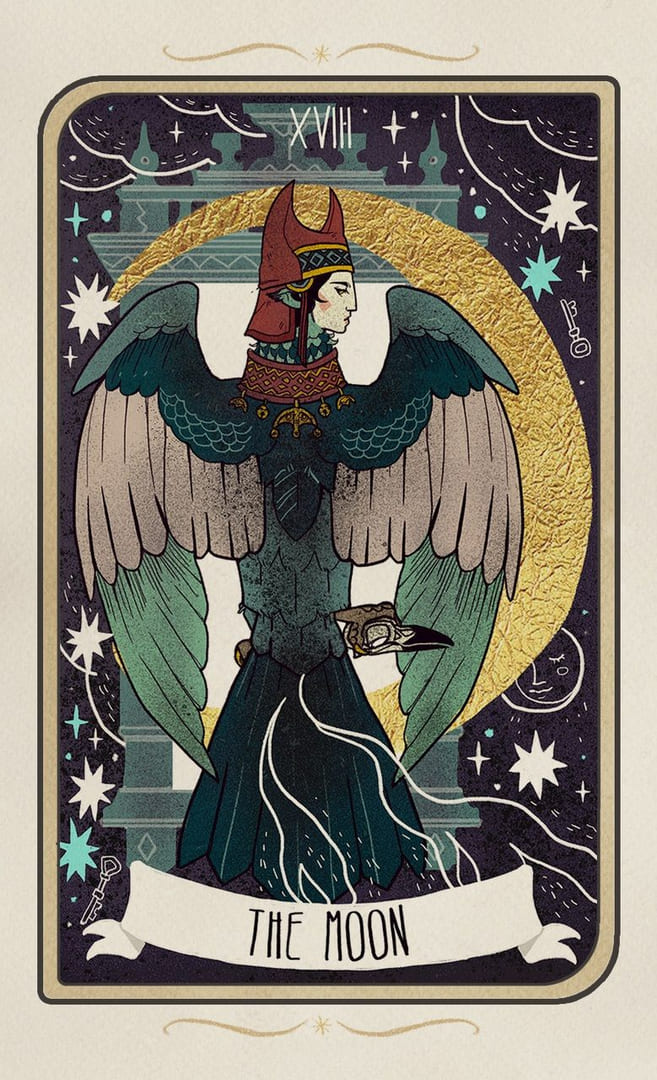
The Moon — a figure with green spread wings, in a red wreath or mask. A bird or bird-like being stands before a golden crescent moon, against a deep blue starry background. This is a very Slavic Moon: a mythic shapeshifter being, not quite human and not quite bird. It reminds you of night spirits, of the place where the boundary between worlds dissolves.
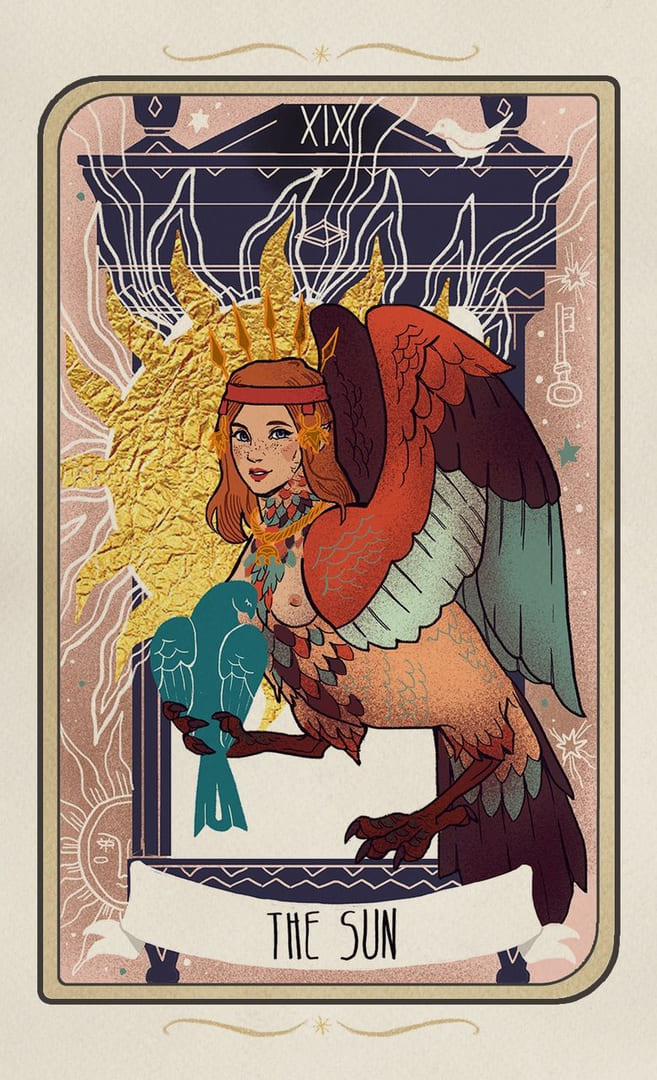
The Sun — a golden-haired female figure with a flower crown holds a bird of prey (falcon or owl) on her arm. Surrounded by ornaments and solar rays. This is the Sun as goddess of fertility and power, in the spirit of Slavic images of summer and ripeness. Not childlike joy, but the full bloom of an adult woman.
How to Work with This Deck
Mythological spreads. The deck literally asks to be used for archetypal work. Spreads like “my inner hero,” “what stage of the journey am I on,” “who am I in this story” are its native ground.
Shadow work through myth. The dark cards (Hanged Man, Death, Tower) give powerful imagery for shadow work — especially if you know the mythological sources.
Studying mythology in parallel. Each card can become a starting point for research: drew Odin on the Hanged Man — read the sagas. This turns tarot into a learning tool.
Not for everyday use. The deck is heavy in content and isn’t suited to a casual “card of the day.” It requires context and attention.
Not ideal for beginners; those unfamiliar with mythology; lovers of bright and gentle aesthetics.
Who Is This Deck For
Mythology lovers. If you read Homer, Norse sagas, Slavic tales, Irish legends — the deck speaks your language.
Experienced readers. Not a first deck. A third or fifth, when you have a foundation and want depth through cultural contexts.
Collectors. The deck is out of print. Each copy has collector value. If you collect, this deck is a must-have.
Those working with shadow through myth. The cards give powerful material for archetypal work.
Who it may not be for: beginners; those looking for light and clear symbolism; lovers of contemporary minimalist aesthetics; those uncomfortable with dark mythological imagery.
Deck Pairings
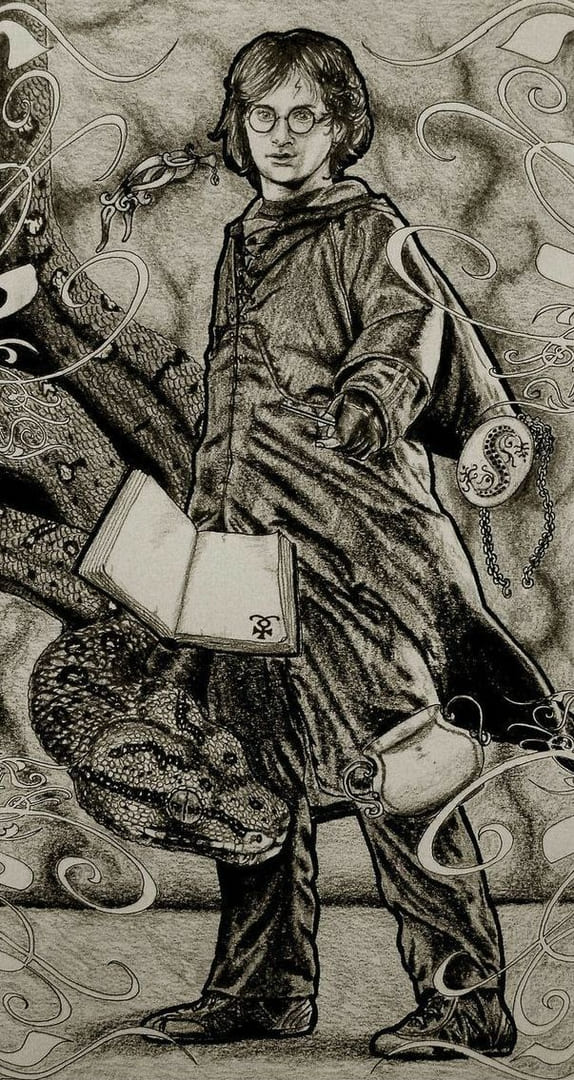
Harry Potter Tarot — another auteur, detail-rich deck where archetypes are reimagined through specific cultural images. If you like the “tarot through a big story” approach, both work together.
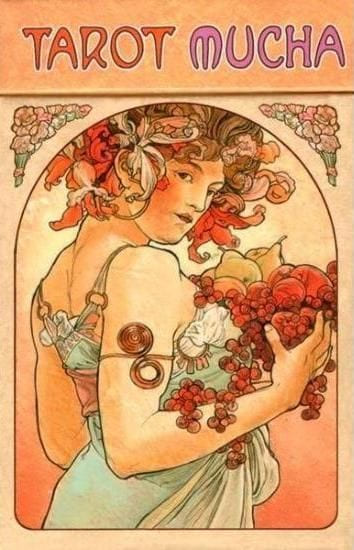
Mucha Tarot — close in art-nouveau aesthetic and decorative detail. If you value Velga North’s visual density, Mucha will give you a kindred mood in a lighter register.
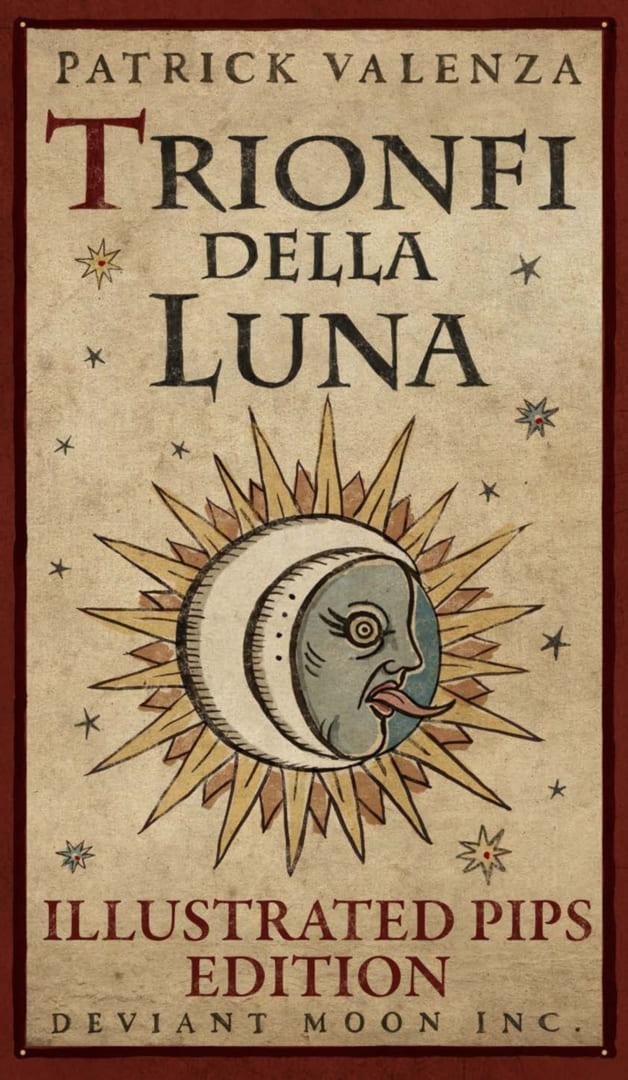
Trionfi della Luna — another indie deck with auteur style and a dark mythological tone. Both ask the reader for readiness for non-standard interpretation.
Try this deck in our Telegram bot — it’s available for readings right now.
Frequently Asked Questions
Is Forgotten Legends Tarot good for beginners?
Not really. The deck is built on specific mythological figures from various traditions — without knowing those stories, many cards lose depth. The imagery also reimagines classic Rider-Waite scenes, so willingness for the artist's interpretation is needed. Excellent for experienced readers who love myth.
How many cards are in Forgotten Legends Tarot?
78 cards in classic structure. 22 Major Arcana with gold embossing, 56 Minor Arcana. Card stock is heavy (400gsm), color print is rich and saturated. The deck is now out of print and has become a collector's item.
Who created Forgotten Legends Tarot?
Velga North — an independent artist. She created the deck intuitively, drawing on her own dreams and inner symbolism. A PDF guidebook in English with her interpretations comes with the deck.
What are the main themes of Forgotten Legends Tarot?
The central idea is to gather mythological and folkloric figures from various world traditions into a single tarot system. Odin appears on the Hanged Man (Norse), the Mistress of the Copper Mountain on the Six of Pentacles (Slavic). Each card feels like a page from a forgotten book of myths.