Is He Cheating? Tarot Cards That Reveal Deception and Dishonesty
The question nobody wants to ask out loud
Let me be real with you: “is he cheating?” is one of the most common questions I get asked in readings. And it’s one of the most difficult to answer responsibly.
Not because the cards can’t show deception — they absolutely can. But because the gap between “the cards show deception” and “your partner is definitely cheating” is wider than most people realize. And in that gap, a lot of damage can happen.
So I’m going to teach you which cards signal dishonesty, how to read them without jumping to conclusions, and most importantly — what to do with the information once you have it.
Cards that signal deception
Certain cards consistently appear in readings where dishonesty is at play. Here are the ones I see most often:
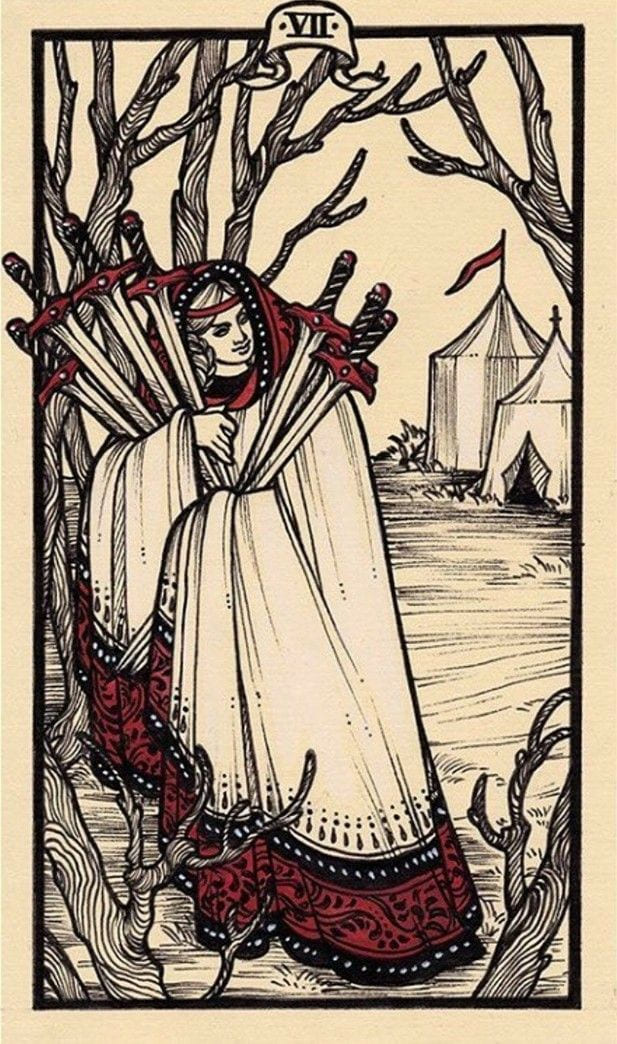
Seven of Swords. This is the deception card. The figure sneaking away with stolen swords, looking over their shoulder. In relationship readings, the Seven of Swords says: someone is not being fully honest. They’re hiding something, taking something that isn’t theirs, or operating behind your back. This card doesn’t always mean cheating — it could mean financial dishonesty, hidden addictions, or simply avoiding a difficult conversation. But when it appears in a question about fidelity, it’s hard to ignore.
The Moon. Illusion, confusion, things hidden in shadow. The Moon in a fidelity reading says: you don’t have the full picture. Something is being obscured — deliberately or not. The Moon is tricky because it also represents your own fears and projections. Is something actually hidden, or are your anxieties creating shadows where there are none? This card asks you to look deeper, but it also warns you that what you find might not be what you expect.
Three of Swords. Heartbreak, betrayal, a painful truth. The Three of Swords is blunt: something in this situation is going to hurt. In infidelity readings, this card often confirms that the pain you’re sensing is real — there’s a reason your gut is telling you something is wrong. But the “three” also suggests a third party or a dynamic involving more than two people.
High Priestess reversed. The High Priestess upright represents intuition and hidden knowledge. Reversed, she points to secrets being deliberately kept from you, or your own intuition being suppressed. In fidelity readings, the reversed High Priestess says: you already know something is off. You’ve been ignoring the signs. Stop intellectualizing and trust what your gut has been telling you.
The Magician reversed. Manipulation, illusion, someone using charm to deceive. The reversed Magician in a fidelity reading suggests a partner who is skilled at making you see what they want you to see. The “magic” is misdirection — look where they’re drawing your attention, then look at where they’re pointing you away from.
Five of Swords. Winning at all costs, dishonest tactics, someone who values being “right” over being truthful. In relationship readings, the Five of Swords often shows a dynamic where one person is gaining at the other’s expense — and not feeling particularly guilty about it.
Knight of Cups reversed. The charmer whose intentions aren’t genuine. Reversed, this knight is a sweet-talker, someone who says all the right things but doesn’t follow through. In fidelity questions, this card suggests a partner who is emotionally unfaithful — flirting, maintaining inappropriate connections, or keeping romantic options open while appearing committed.
What these cards DON’T mean
Here’s where I need to be careful and honest with you, because this matters:
One card doesn’t prove cheating. If you pull the Seven of Swords as a daily card, it doesn’t mean your partner cheated last night. Cards operate in context. A single “deception” card in an otherwise positive spread might point to a small dishonesty, a withheld opinion, or even deception aimed at you from yourself.
Reversed cards are not automatically negative. A reversed Empress doesn’t mean your partner is unfaithful. A reversed Lovers doesn’t confirm an affair. Reversals add nuance, but they’re not universal red flags.
Your anxiety affects the reading. This is critical. If you sit down already convinced your partner is cheating, your energy will influence which cards you pull and how you interpret them. Confirmation bias is real, and it works in tarot just as powerfully as anywhere else.
Tarot reads energy, not facts. The cards can show deceptive energy in a situation, but they can’t tell you the specific details. “Deception” could mean an affair, but it could also mean a surprise party, a hidden financial problem, a personal struggle they’re not ready to share, or a dozen other things.
How to read about fidelity responsibly
If you’re going to ask the cards about your partner’s faithfulness, do it with intention and care:
Ground yourself first. Meditate, breathe, or do whatever helps you reach a neutral state. You want to read from curiosity, not from fear. The difference matters enormously.
Ask better questions. Instead of “is he cheating?”, try:
- “What energy is present in my relationship right now?”
- “What is being hidden from me, if anything?”
- “What does my partner need to communicate but isn’t?”
- “What do I need to pay attention to in this relationship?”
These questions give the cards room to show the full picture, not just confirm your worst fear.
Read the whole spread. Don’t fixate on one card. If the Seven of Swords appears surrounded by the Ten of Cups, the Empress, and the Ace of Pentacles — the “deception” might be a surprise gift, not an affair. Context is everything.
Consider the source of your suspicion. Before reading, honestly ask yourself: do I have concrete reasons to suspect cheating (behavioral changes, unexplained absences, caught lies)? Or am I reading from past trauma, general anxiety, or insecurity? Both are valid starting points, but they lead to very different interpretations.
Don’t read repeatedly about the same question. If you pull cards about fidelity, accept the reading and sit with it. Pulling again because you didn’t like the answer will only create confusion and feed obsessive thinking.
A spread for truth in relationships
Six cards for when you need clarity about what’s really happening:
- The current energy between us. The overall state of the relationship right now.
- What’s being hidden. Not necessarily from you — what’s hidden in the situation generally. Could be something your partner is hiding from themselves.
- My intuition. What my gut is telling me — trust this card deeply.
- Their intention. What is my partner’s genuine intention in this situation?
- What I need to see. The truth the cards want me to understand, regardless of whether it’s about cheating.
- What to do next. Practical guidance — not about the relationship, but about my next step.
Read this spread slowly. Card 3 (your intuition) is often the most accurate card in the entire reading — because your subconscious already knows the answer. The cards are just giving it a voice.
The hardest conversation: what to do with the reading
Let’s say you’ve done a reading and it strongly suggests deception. Now what?
Do NOT confront your partner with the tarot reading. Saying “the cards say you’re cheating” will not go well, regardless of whether they’re actually cheating. It either sounds unhinged (if they’re not) or gives them an easy deflection (if they are).
Instead, use the reading as a compass. The cards pointed you toward something. Now use normal human tools to investigate:
- Pay attention to behavioral patterns
- Have an honest conversation about how you’re feeling
- Notice if their actions match their words
- Consider couples counseling if you’re struggling to communicate
Consider the possibility that you’re wrong. This is uncomfortable but necessary. Sometimes readings about cheating are actually readings about your own trust wounds, attachment patterns, or unhealed betrayal from previous relationships. The “deception” in the cards might be your own self-deception — telling yourself everything is fine when your needs aren’t being met.
Get professional support. If you’re in a relationship where you constantly suspect cheating — whether it’s happening or not — that’s a sign that something needs attention. A therapist can help you distinguish between intuition and anxiety, and can support you through whatever comes next.
When the cards confirm what you already knew
Sometimes the reading just makes official what your body has been telling you for weeks. The pit in your stomach when they pick up their phone. The story that doesn’t quite add up. The distance that appeared out of nowhere.
If the cards confirm what you already knew, honor your own knowing. You didn’t need the cards to tell you — you needed them to give you permission to believe what you already felt.
And here’s what I want you to remember: whatever the cards reveal about your partner’s behavior, the reading is ultimately about you. Your choices. Your boundaries. Your willingness to accept the truth and act accordingly.
The Seven of Swords doesn’t just show someone else’s deception. It asks: where are you deceiving yourself? What truth are you sneaking away from? What are you pretending not to know?
Those questions are harder than “is he cheating?” But they’re the ones that actually set you free.
Frequently Asked Questions
Which tarot cards indicate cheating?
The Seven of Swords (deception and sneaking), The Moon (hidden truths and illusion), the Three of Swords (heartbreak and betrayal), and the reversed High Priestess (secrets being kept from you) are the strongest indicators. However, no single card 'proves' cheating — context, surrounding cards, and the overall spread narrative matter more than any individual card.
Can tarot really tell if someone is cheating?
Tarot can reveal energetic patterns — secrecy, deception, emotional distance, divided attention — that may indicate infidelity. But tarot reads energy, not facts. A spread showing deception could mean cheating, but it could also mean your partner is hiding a surprise, struggling with something privately, or that your own anxiety is coloring the reading. Use tarot as one data point, not as proof.
What should I do if my tarot reading suggests cheating?
Don't confront your partner with 'the cards said you're cheating.' Instead, use the reading as a prompt for honest reflection: what specifically makes you suspicious? Are there concrete signs beyond the cards? Consider having an honest conversation about your concerns, or working with a therapist or counselor to process what you're feeling.
How do I avoid bias when reading about cheating?
If you're already suspicious, your energy will influence the reading. Try to ground yourself before pulling cards, ask open-ended questions rather than yes/no, and consider having someone else read for you. Also, be honest about whether you're seeking truth or seeking confirmation of what you already believe.