Tarot Major Arcana: Complete Guide to the 22 Cards of Destiny
When I first started reading tarot, the Major Arcana felt like heavy artillery. A Minor Arcana card? Okay, this is about everyday stuff. But a Major Arcana card? Something serious is happening.
After years of practice, I’ve come to see it differently. The Major Arcana aren’t “scary” cards. They’re teacher cards. They speak to the stages and lessons that every one of us moves through. And once you understand their language, they become your best guides.
What makes the Major Arcana special
Out of 78 cards in a tarot deck, only 22 are Major Arcana. But they set the tone for the entire reading.
The Minor Arcana describe everyday events: a conflict at work, a new connection, a financial question. The Major Arcana address the big life themes: identity crisis, moment of truth, deep transformation, spiritual growth.
When several Major Arcana cards appear in a single reading, pay attention. This isn’t an ordinary period. Something significant is happening at a deep level.
The Fool’s Journey: a story in 22 cards
All 22 Major Arcana tell one story — The Fool’s Journey. It’s the path from complete innocence (card 0 — The Fool) to wise wholeness (card 21 — The World). And each of us walks this path — sometimes more than once.
Let’s walk it together.
The Beginning (0–IV)
0 — The Fool
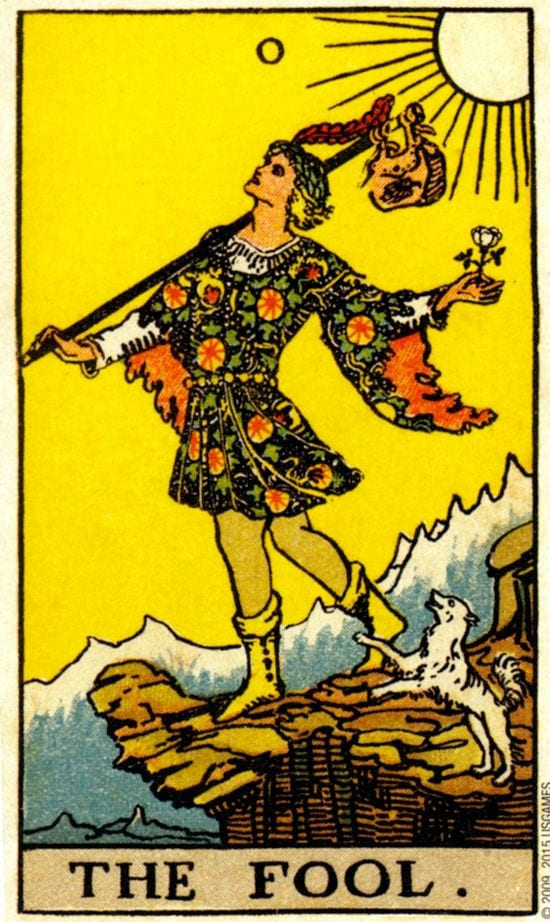
The starting point. The Fool stands at the cliff’s edge, completely unafraid — because they don’t know what they don’t know yet. Their bag holds all the potential in the world, and beside them is a little dog that’s either warning or encouraging them.
This is the card of new beginnings, trust in life, and leaping into the unknown. When it appears, the world is inviting you to start something fresh. Important distinction: not “from scratch” — from a clean slate. There’s a big difference.
I — The Magician
The Fool has landed and looked around. Before them on the table lie the tools — symbols of the four suits. The Magician reminds you: you already have everything you need. Act.
I love how on the Smith-Waite card, one hand points up and the other down. “As above, so below” — your thoughts shape your reality.
II — The High Priestess
After the Magician’s action comes a moment of stillness. The Priestess sits between two pillars — black and white — and chooses neither. She knows that wisdom lies in listening, not acting.
When this card appears in a reading, I always say: “Don’t rush. The answer is already inside you; it just needs time to surface.”
III — The Empress
Abundance, creativity, nurturing energy. The Empress is everything that grows and blossoms. She teaches receiving, creating, and enjoying.
IV — The Emperor
Structure, boundaries, responsibility. Where the Empress creates, the Emperor builds the system. Not limitation — but foundation.
The Formation (V–X)
V — The Hierophant
Traditions, teachers, systems of knowledge. The Hierophant is the moment when you seek a mentor or turn to time-tested teachings. Not blind faith — but a conscious choice to learn from those who walked before you.
VI — The Lovers
This card isn’t only about romance — though it’s about that too. The Lovers is about choices based on values. Which path reflects who you truly are?
VII — The Chariot
Willpower in motion. You’ve gathered knowledge and tools, you’ve found your direction — now you move forward. The Chariot is victory through inner discipline.
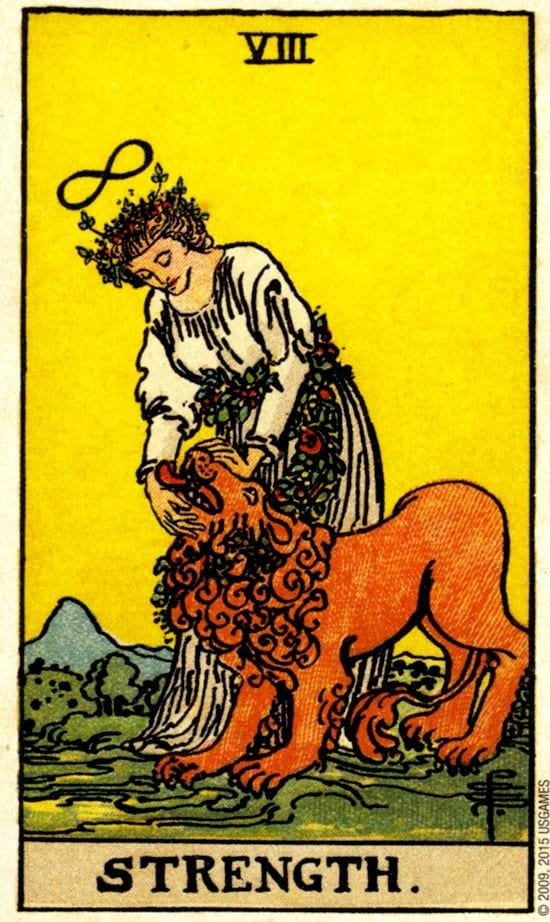
VIII — Strength
One of my favorite cards. Notice: in the Smith-Waite deck, the woman isn’t fighting the lion — she’s gently closing its mouth. True strength isn’t aggression. It’s patience, compassion, and the ability to meet your inner fears with love.
IX — The Hermit
The soul needs quiet. The Hermit withdraws from the outer world not from despair, but for deep inner searching. His lantern illuminates the path — but only his own.
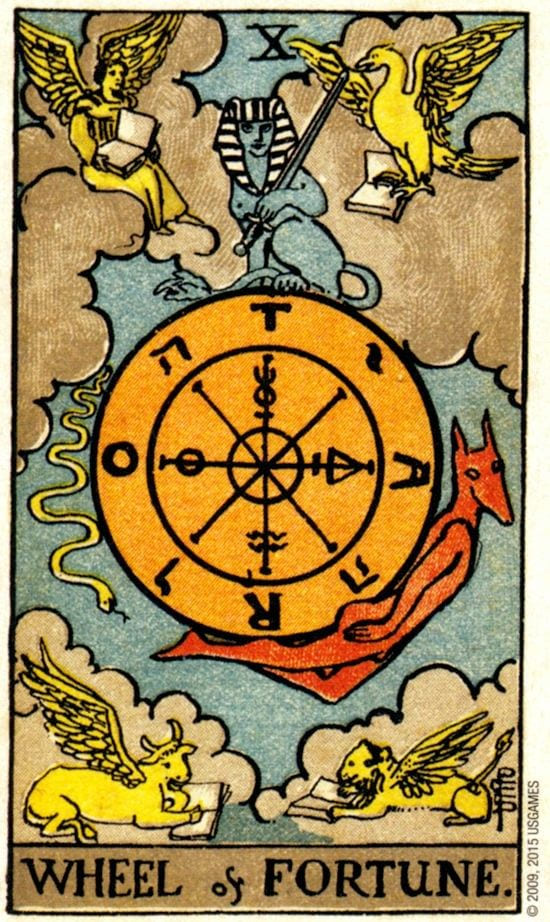
X — Wheel of Fortune
Life is cyclical. What’s on top will find itself at the bottom, and what’s at the bottom will rise. The Wheel reminds us: we can’t control circumstances, but we can control our response to them.
The Trials (XI–XVI)
XI — Justice
Cause and effect. Justice doesn’t punish — it balances. Everything that was sown bears fruit. This card asks for an honest look at the situation.
XII — The Hanged Man
A paradoxical card. The person hangs upside down — yet their face is calm. The Hanged Man teaches: sometimes you need to flip your usual perspective to see something fundamentally new. Surrender isn’t defeat — it’s transformation.
XIII — Death
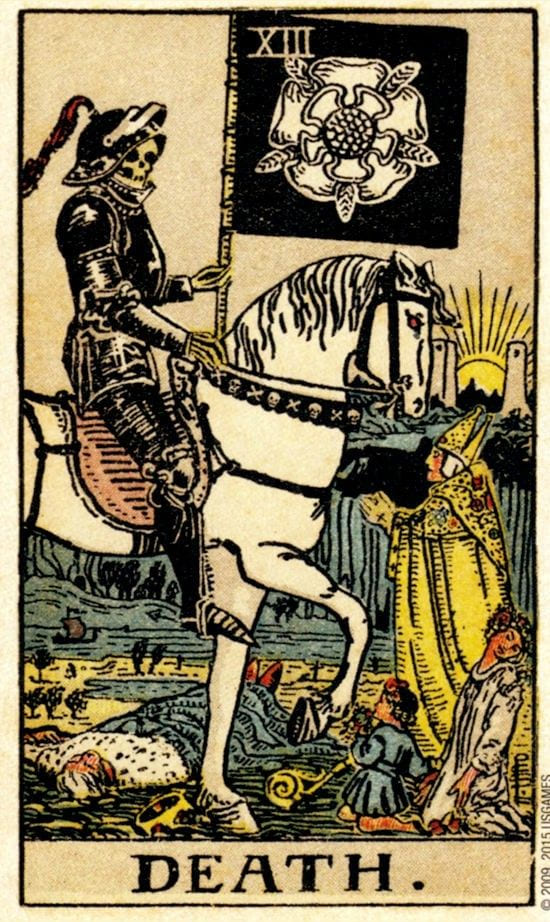
The most misunderstood card in the deck. I’ll say it straight: in all my years of practice, the Death card has never spoken to me about physical death. It’s always about the end of a cycle. A relationship, a job, a habit, a belief — something has run its course, and it’s time to let go.
Yes, it can hurt. But without that letting go, there’s no room for the new.
XIV — Temperance
After the storm of Death comes Temperance — an angel calmly pouring water between two cups. Integration, balance, patience. Time to reassemble yourself.
XV — The Devil
Our shadow sides, addictions, illusions. Look at the card closely: the chains around the figures’ necks are loose. They can be removed at any moment. The Devil doesn’t hold us — we hold ourselves.
XVI — The Tower
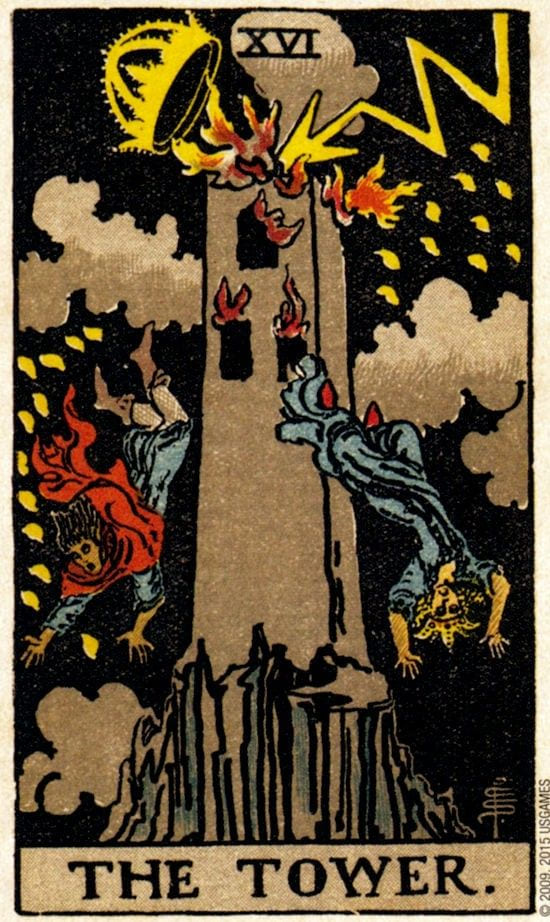
Lightning strikes the tower, people fall — it looks terrifying. But here’s what I’ve noticed over years of working with this card: The Tower only destroys what was built on a faulty foundation. Yes, it’s a shock. Yes, it hurts. But after the Tower always comes…
The Return to Light (XVII–XXI)
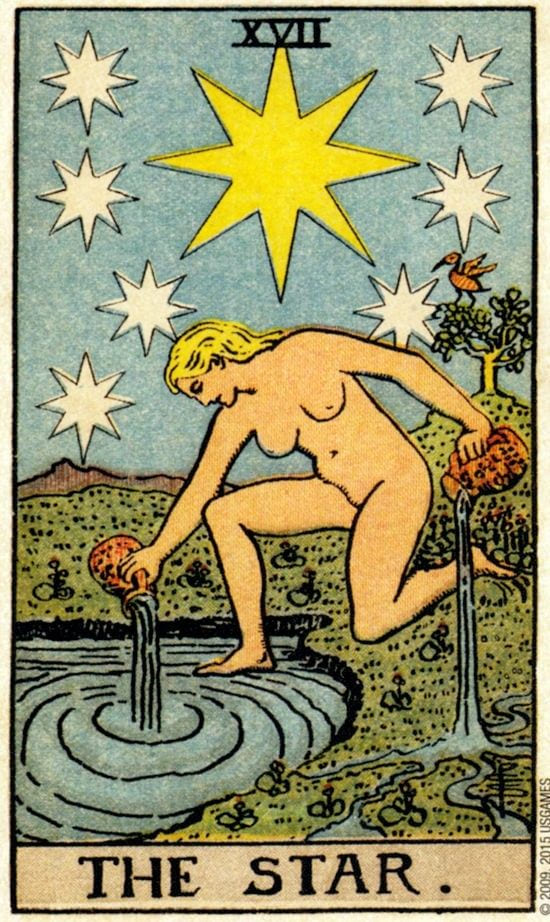
XVII — The Star
…hope. After the Tower’s destruction, The Star is like a drink of pure water. Healing, inspiration, a promise that everything will be okay. Not “like before” — but truly okay.
XVIII — The Moon
The unconscious speaks in symbols and dreams. The Moon is the most mystical card in the deck. It asks: don’t fear the unknown. Keep moving forward even when the path isn’t clear. Not everything needs to be understood rationally.
XIX — The Sun
Joy, energy, childlike spontaneity. After the Moon’s dark night comes dawn. The Sun celebrates everything you’ve become on this journey — authentic, alive, open.
XX — Judgement
Awakening. Judgement isn’t divine punishment but a call to your higher self. Time to take stock, answer your calling, become who you’ve always been.
XXI — The World
Completion. Wholeness. The dancer on the World card is the Fool who has walked the entire path and become wise. The cycle is complete. And a new one can begin — at a higher level.
How to work with the Major Arcana
Here are some practical tips from my experience:
Don’t fear the “heavy” cards. The Tower, Death, The Devil — these aren’t sentences. They’re signposts pointing to areas of growth. They show where the work is needed.
Pay attention to quantity. If three out of five cards in a reading are Major Arcana, you’re in a significant life period. If they’re all Minor — the situation is more everyday.
Study the connections. The Tower and The Star often appear together — destruction and healing. The Fool and The World — beginning and completion of one cycle. Death and The Empress — letting go and new birth.
Try card meditation. Choose one Major Arcana card and study it in detail. Close your eyes and imagine stepping into the image. What do you see? What do you feel? What does the figure on the card say to you? Write down your impressions.
Exercise: Find your personal Arcana
Take your birth date and add all the digits. For example, March 15, 1990 = 1+5+0+3+1+9+9+0 = 28 = 2+8 = 10 = Wheel of Fortune. If you get a number greater than 21, add the digits again.
This is your teacher card. Not a horoscope or destiny — but a theme that runs like a red thread through your life. Find it in the deck, read its meaning, and think: how does this theme show up in your experience?
Frequently Asked Questions
What are the Major Arcana cards in tarot?
The Major Arcana are the 22 cards numbered 0 through 21, from The Fool to The World. They represent significant life themes, soul-level lessons, and turning points — the 'big picture' forces shaping your journey, as opposed to the everyday situations covered by the Minor Arcana.
What is the Fool's Journey in tarot?
The Fool's Journey is the narrative that runs through all 22 Major Arcana cards. Beginning as the naive Fool (card 0), the traveler encounters teachers, challenges, and transformations on the way to the wholeness represented by The World (card 21). This arc mirrors the universal human experience.
What does it mean when you get mostly Major Arcana in a reading?
Several Major Arcana cards in one reading signal that you are in a significant life period. Big forces are at work — not just surface-level events, but deep patterns, important lessons, or turning points that will shape who you are becoming.
What is the difference between Major and Minor Arcana cards?
Major Arcana cards address life's big themes — identity, transformation, spiritual growth. Minor Arcana cards address everyday situations — conflicts, relationships, finances, daily choices. Both types of cards appear in most readings, and both have value.
Which Major Arcana card is the most powerful?
This depends on context, but The World (XXI) represents completion and wholeness, making it one of the most positive. The Tower (XVI) carries the most dramatic energy of sudden change. The Wheel of Fortune (X) and Judgement (XX) are among the most significant for major life shifts.