Review: Oriens Animal Tarot — Cosmic Wildlife
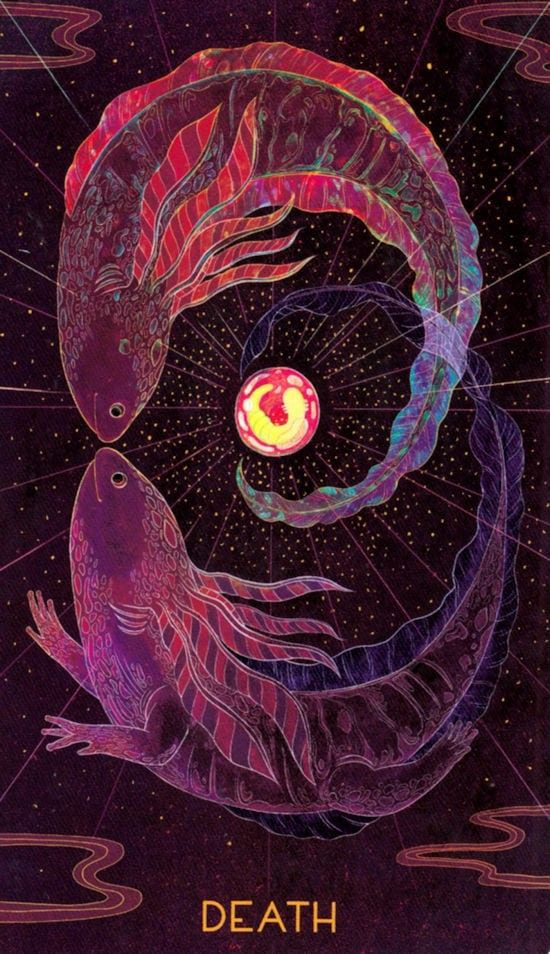
I discovered this deck through one of my clients — a marine biologist. He looked at the axolotl on the Death card and said, “That’s exactly the right animal for this card.” And only then did I realize that Oriens Animal Tarot works differently from most “animal” decks.
Here the animals aren’t just pretty illustrations — they’re chosen for real biological reasons. This is tarot through a zoological lens.
First Impressions
The first thing you notice is the glow. Literally. The deck uses a bioluminescence aesthetic: the animals seem to shine from within against dark cosmic backgrounds. Not “drawn brightly” — actually glowing, like deep-sea fish, like jellyfish, like fireflies.
The second is the backgrounds. These aren’t landscapes — they’re outer space. Starry skies, nebulae, distant galaxies. Each animal exists not in its natural habitat but in some mythic, astral space. That gives them significance — they aren’t zoological specimens, they’re spiritual beings.
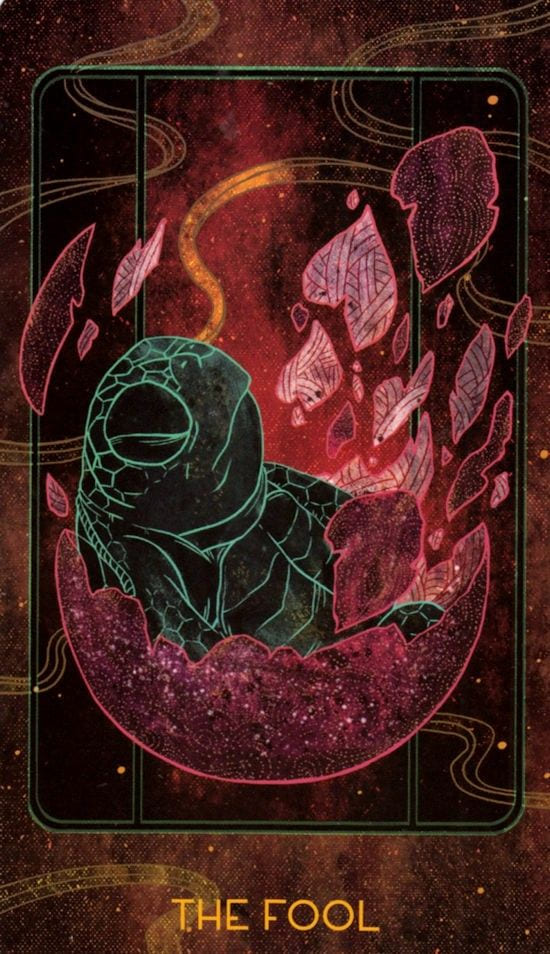
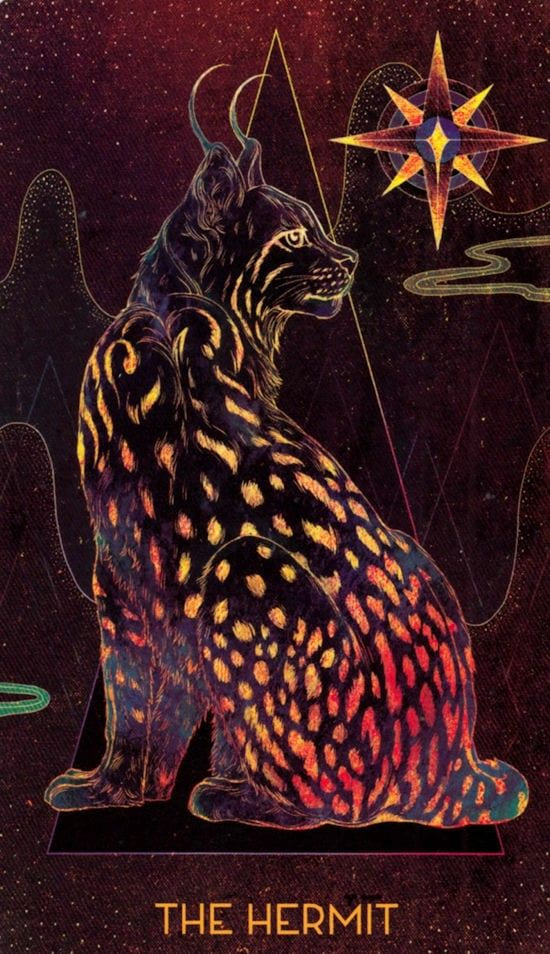
The third is the animal choices. They aren’t obvious. On Death — not a skull, but an axolotl. On the Hermit — a lynx (not a wolf or an owl). On the Fool — a newborn sea turtle. Ambi Sun clearly thought carefully about each choice.
About the Deck
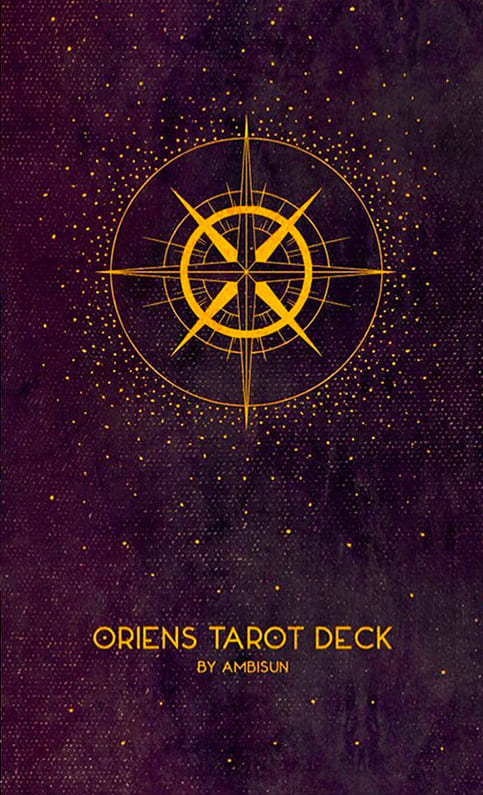
Oriens Animal Tarot was created by Malaysian Chinese artist Ambi Sun. The deck was funded on Kickstarter and has become a cult favorite among nature lovers and animal-spirituality practitioners.
78 cards, classic Rider-Waite-Smith structure. Standard suits: Cups, Pentacles, Wands, Swords. Court cards: Page, Knight, Queen, King. But instead of humans, every card features a specific animal whose real traits are tied to the arcana’s meaning.
The companion book explains each correspondence in detail: why this particular animal, what biological or behavioral traits reflect the card’s meaning. It turns the deck into a small zoology course.
Technique: digital illustration with incredible attention to detail — scales, feathers, fur, eyes — all rendered carefully, using fine line work and glow effects.
Visual Style
Ambi Sun’s style is recognizable from the first card. Saturated warm colors (pinks, purples, golds, turquoises) contrast with dark cosmic backgrounds. The animals often have bioluminescent glow — as if they exist in a deep-sea world or in a distant galaxy’s nebula.
Compositions are strong and balanced. The animal usually sits in the center, surrounded by stars, symbolic plants, ornamentation. Not cluttered, not empty — each card works as a small painting.
What particularly stands out is the attention to anatomy. The artist knows how her animals are built. Axolotls with their delicate gill fringes. A lynx with precisely rendered spotted fur. Koi with perfectly drawn scales. Biological accuracy multiplied by mystical mood.
Core Themes
Zoology as philosophy. The deck’s main distinction from other “animal” decks is its approach. Most animal decks use cultural symbolism: “wolf = loneliness,” “owl = wisdom.” Oriens goes deeper — it chooses animals for their real biological traits. The axolotl on Death because it can regenerate limbs. The newborn sea turtle on The Fool because a just-hatched turtle has to make the journey to the ocean alone, without any adult guidance.
Silence and attentiveness. The deck contains almost no human figures. That means the spread isn’t about people in their scenes — it’s about nature in its rhythms. It works more slowly, requires a pause, attunes you to observation.
Cosmic perspective. The starry backgrounds aren’t just aesthetic. They place each animal on the scale of the universe. The card says: look at yourself from this distance. It gives you a rare sense of perspective.
Respect for nature. The deck reminds you that we are part of the biological world, not separate from it. An important spiritual note, especially for work on themes of earth connection and animal allies.
Favorite Cards
The Fool — a newborn sea turtle hatches from a pink egg against a cosmic background. Glowing crystal shards radiate around. It’s the best Fool I’ve seen in any animal deck. Why? Because a just-hatched turtle has to make the journey alone, without parents, across the beach to the water in just a few minutes — and most of them die along the way. That’s the Fool at its purest: a journey where no one will lead you.
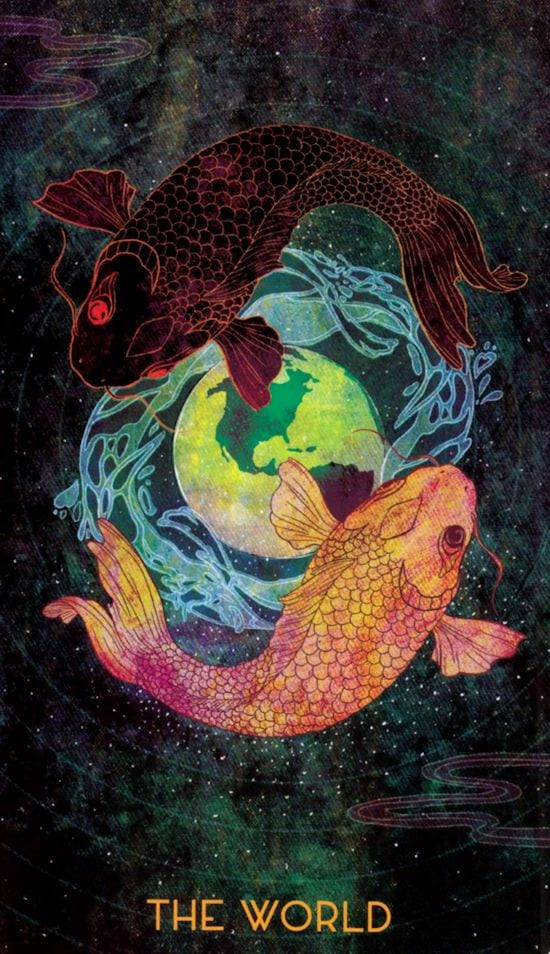
The World — two koi (one black, one golden) circle a glowing green Earth at the center of the composition. A starry cosmic background. This is yin-yang through koi — classic Asian symbolism, but with the planet in the heart of it. The World as harmony of opposites still orbiting the center. Beautiful and precise: completion isn’t finality, it’s balance that keeps turning.
Death — two axolotls face each other with a glowing red embryo-sphere between them. A cosmic starry background. Axolotls are famous for being able to regenerate almost any part of the body — including parts of the brain and heart. A more precise symbol for Death in the alchemical sense (death as transformation, not as end) I’ve never encountered. When this card comes up, I often tell the querent: “You’re not dying — you’re changing material.”
The Hermit — a lynx with fiery spotted fur sits alone against a dark sky, gazing up at a bright star in the upper right. Lynxes are among the most solitary of predators — they hunt alone, spend the day in silence, interact with the world through hearing and observation. The Hermit through a lynx isn’t the monk-hermit — it’s the observer-hermit: someone who retreats into silence not to reject the world but to be attentively present in it.
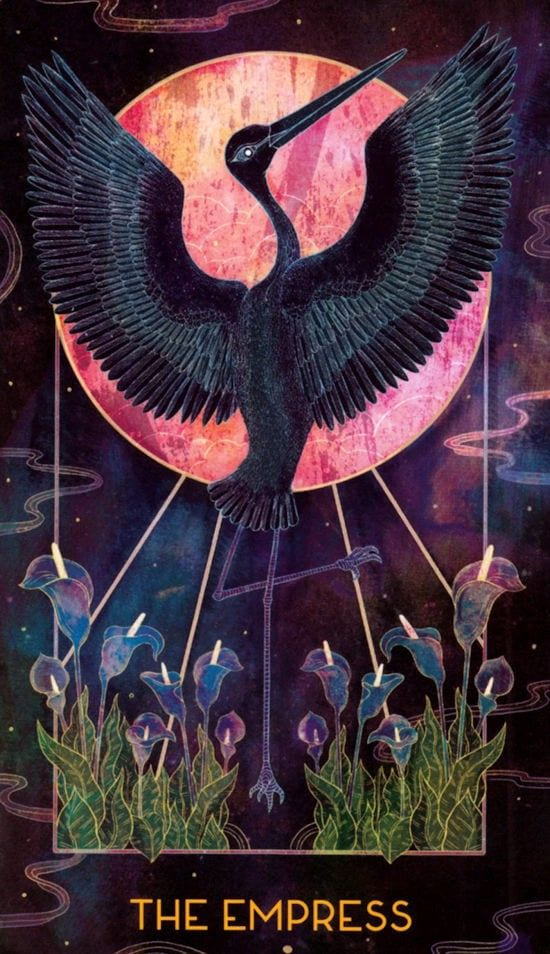
The Empress — a black heron with wings spread stands in front of a large pink-salmon cosmic sun disk. White calla lilies surround her. Herons are symbols of grace and fertility in many cultures, but what matters here is the specific pose: she isn’t fishing, she isn’t guarding a nest — she just stands with wings open. The Empress as a feminine power that doesn’t do, simply is.
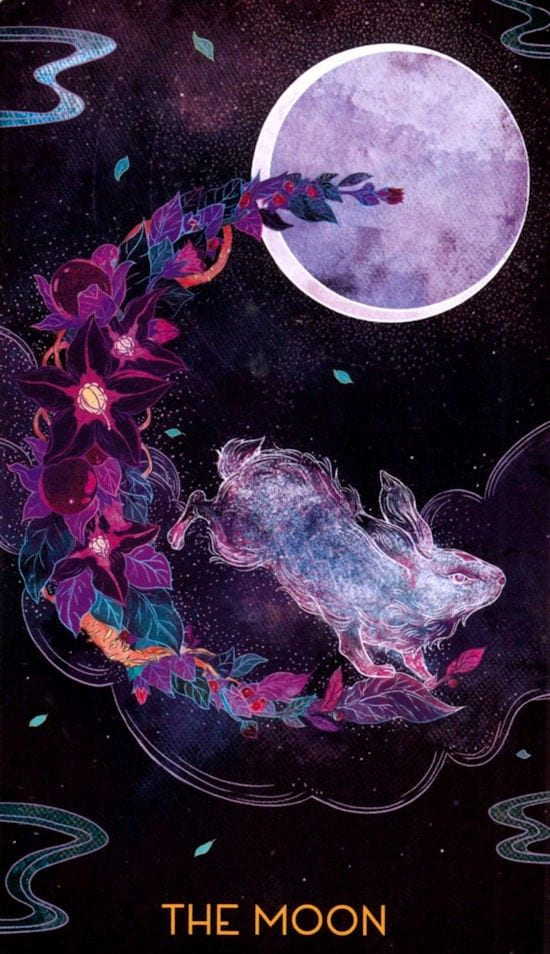
The Moon — a translucent, ghostly rabbit leaping, a full pearl moon behind it. Surrounded by a wreath of purple leaves and flowers. In Chinese and Japanese mythology, the moon rabbit lives on the Moon and pounds the elixir of immortality. A perfect choice: the Moon as mystery, as another world, as a call to intuition. The rabbit isn’t fear — it’s a gentle invitation into the dream realm.
How to Work with This Deck
Readings in nature. Literally. If you can, do readings outdoors, by water, in the forest. The deck responds to the environment it was made for.
Working with animal guides. If your practice includes totem animals, natural forces, or animism, this deck fits right in. Every card gives you a specific guide.
Slow readings. Not for quick yes/no questions. It asks for contemplation of the image, reading the guidebook, reflection. Works best on deep questions with time to sit with the answer.
Learning through zoology. A side effect of working with this deck: you start to understand animals. What an axolotl is, how a lynx lives, why koi are circular. It turns reading into studying.
Not ideal for human-centered themes (relationships, conflicts — harder to interpret through animals), strict esoteric practice (no Kabbalah or astrological correspondences here), people who don’t feel a connection to the natural world.
Who Is This Deck For
Nature lovers. If you watch Attenborough documentaries for fun, this deck is yours.
Those working with animal-spirituality. Shamanic practice, totem work, animal languages — the deck supports all of it.
Those tired of human figures. If classic decks feel too anthropocentric to you, this is a shift of perspective.
Slow readers. Those who love to sit with a card, examine details, think. The deck rewards it.
Who it may not be for: lovers of quick answers (the deck is slow), beginners who need human figures for grounding, those who require traditional esoteric correspondences.
Deck Pairings
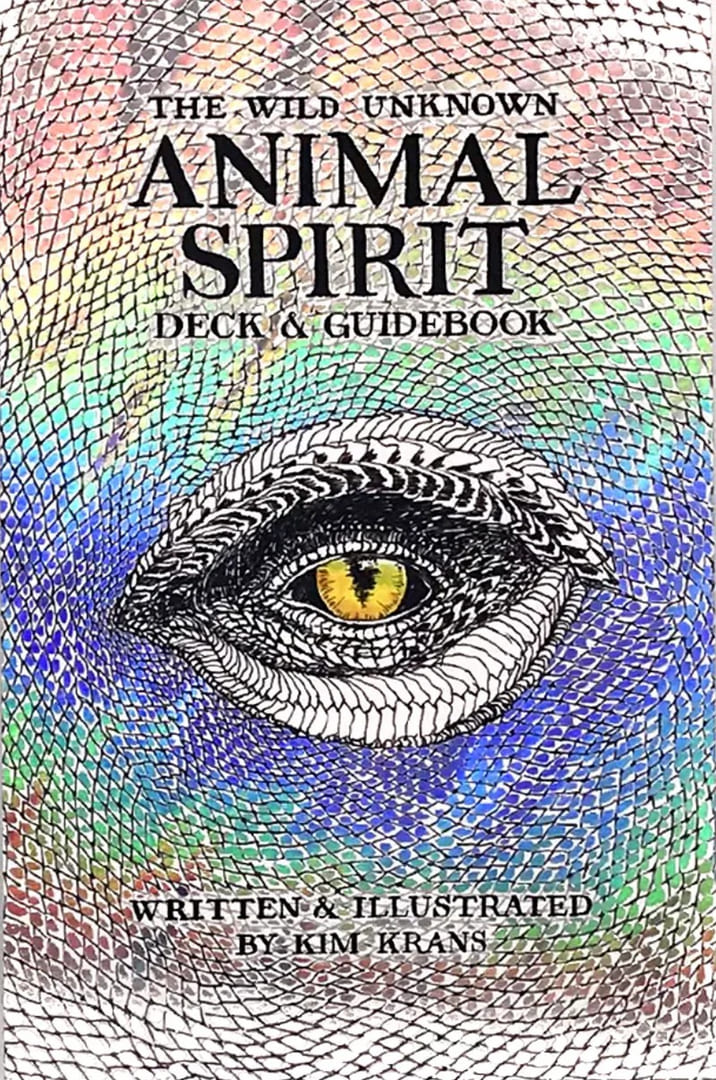
Wild Unknown Animal Spirit — the most obvious pairing. Both decks are about animals as guides, but in very different aesthetics: Wild Unknown is watercolor and minimalism, Oriens is digital and cosmic. Together they give a rich palette of animal symbolism.
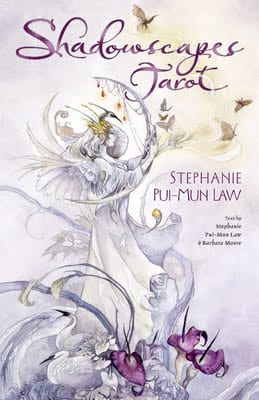
Shadowscapes Tarot — an ethereal, nature-based aesthetic with plenty of animals and natural elements. If you like Oriens’s atmosphere, Shadowscapes offers a kindred mood in a different technique.
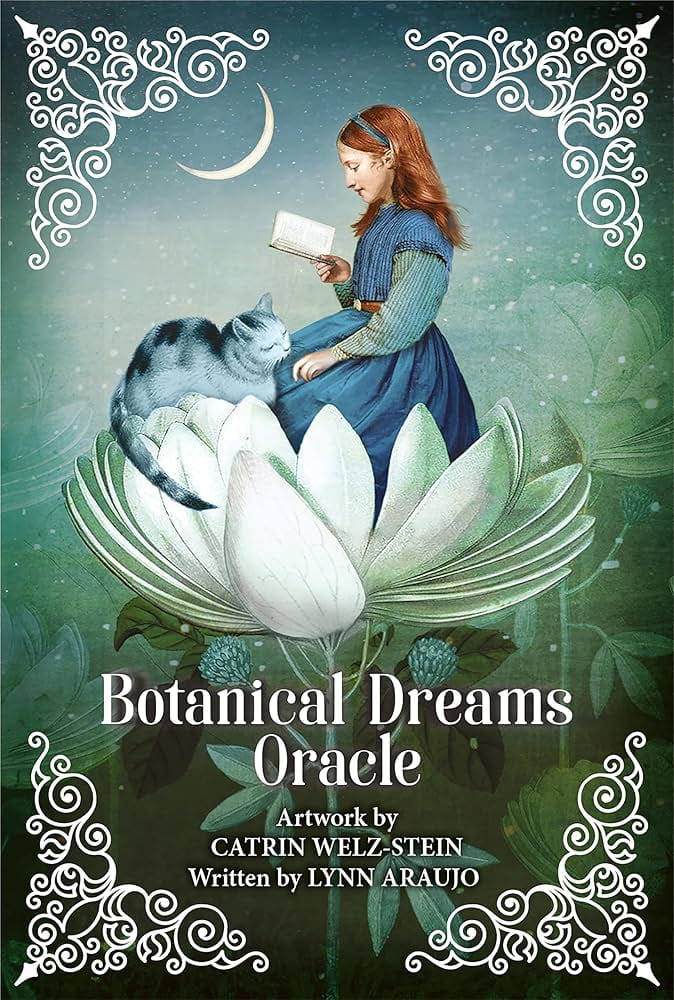
Botanical Dreams Oracle — if Oriens is about animals, this oracle is about plants. Together they cover the biological world completely: fauna and flora, everything alive.
Try this deck in our Telegram bot — it’s available for readings right now.
Frequently Asked Questions
Is Oriens Animal Tarot good for beginners?
Yes, with one caveat. The Rider-Waite-Smith structure is preserved and the images are clear, but instead of the familiar scenes you get animals. You'll need to be willing to study which animal corresponds to which arcana and why. A detailed companion guidebook explains all the connections.
How many cards are in Oriens Animal Tarot?
78 cards — classic Rider-Waite-Smith structure. 22 Major Arcana and 56 Minor (Cups, Pentacles, Wands, Swords). Court cards are Page, Knight, Queen, King. Every card features a specific animal whose real-world behavior reflects the meaning of the arcana.
Who created Oriens Animal Tarot?
Ambi Sun, a Malaysian Chinese artist. The deck was funded via Kickstarter and immediately gathered a devoted fan community. The illustrations are digital but sit in a unique aesthetic of bioluminescence and cosmic backgrounds.
What are the main themes of Oriens Animal Tarot?
The central idea is a zoological rather than cultural or esoteric approach to tarot. Each animal is chosen not for its mythological symbolism but for its real biological traits: an axolotl on Death (regeneration), a moon rabbit on The Moon (Asian myth), a baby sea turtle on The Fool (first journey to the ocean).