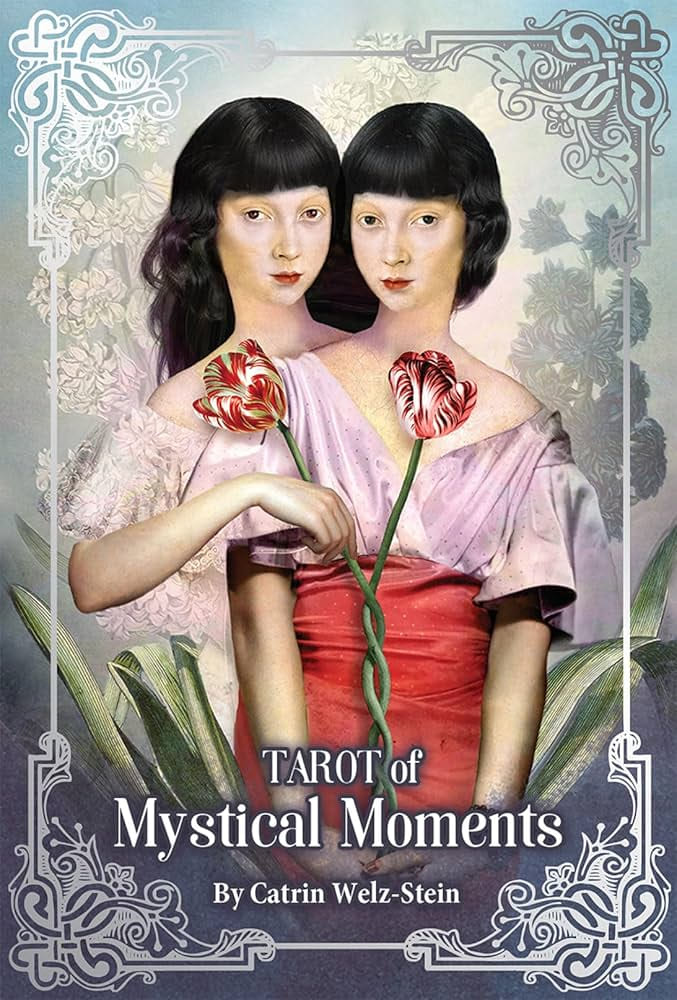
Tarot of Mystical Moments Review: Where Surrealism Meets Classic Tarot
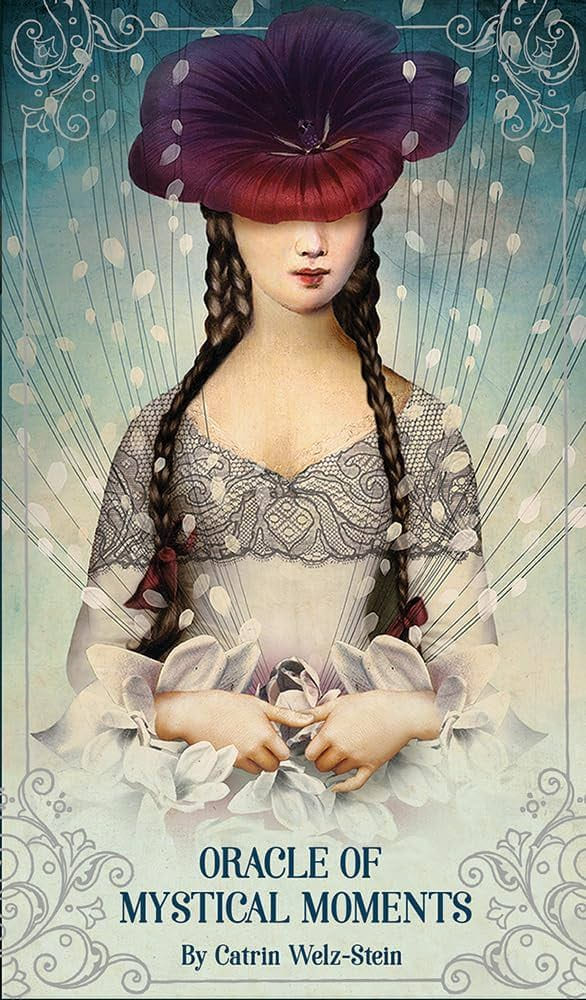
If you’ve read my review of Oracle of Mystical Moments, you know how deeply Catrin Welz-Stein’s surrealist world captured my imagination. Tarot of Mystical Moments is the natural continuation of that journey, and I’m grateful the artist didn’t stop at the oracle.
First Impressions
When this deck arrived, I was pleasantly surprised. Many of my clients who struggled with the oracle’s abstractness immediately connected with the tarot version. And I completely understand why — it preserves the same enchanting visual style, but the cards are organized within the familiar framework of classic tarot.
Looking at both decks side by side, I see them as two sides of the same coin. Where the oracle speaks directly to the subconscious through pure imagery and symbols, the tarot builds a bridge between intuitive and rational understanding — thanks to the archetypal structure of the Major and Minor Arcana.
About the Deck
Tarot of Mystical Moments was created by artist Catrin Welz-Stein and published by U.S. Games Systems in 2021. The deck contains 83 cards — five more than the standard 78. Where do the extras come from?
Originally, Welz-Stein planned to replace all Kings and the Emperor with feminine figures. But during publication, the decision was made to include both versions: traditional masculine imagery alongside feminine counterparts. So the deck features a feminine Emperor and feminine versions of all four Kings.
This opens up fascinating possibilities: you can choose which energy to work with in a given reading — traditional, fully feminine, or your own custom approach, switching between versions depending on the question.
The cards feature silver gilded edges, a glossy finish, and titles at the bottom color-coded by element: reddish for Wands, blue for Cups, grey-green for Swords, and earthy tones for Pentacles. The card back is soft blue with a bronze pattern, matching the oracle companion.
Visual Style
Catrin Welz-Stein works in digital collage, combining elements from vintage photographs, public domain artwork, and Old Master paintings. This isn’t simple assembly of different elements — it’s genuine transformation, turning familiar images into something entirely new.
The deck’s style is vintage aesthetics with a modernist edge. Medieval fantasy elements sit alongside post-Industrial Revolution imagery — skyscrapers on Justice and Judgement stand next to mystical forests and fantastical creatures.
The influence of surrealists, especially Rene Magritte, is evident in the multilayered compositions filled with symbolism and unexpected visual metaphors. Many reviewers compare the aesthetic to “Alice in Wonderland” — and I agree. There’s that same fairy-tale atmosphere, but with deep psychological undertones.
At first glance, the imagery appears soft and gentle, but closer inspection reveals emotionally complex, even unsettling, layers. The artist didn’t simplify or soften the difficult cards — and this is one of the deck’s greatest strengths.
Core Themes
- Feminine energy and archetypes — feminine imagery predominates, exploring different facets of femininity from tender and vulnerable to powerful and transformative
- The subconscious and dreams — the layering technique gives cards an ephemeral quality, as if we’re looking through a veil between worlds
- Transformation through imagery — familiar tarot archetypes are reborn in a new artistic form
- Balance of intuitive and structural — surrealist images are set within tarot’s clear system, bridging feeling and reason
- Duality — even traditionally masculine cards carry a certain softness and fluidity
Favorite Cards
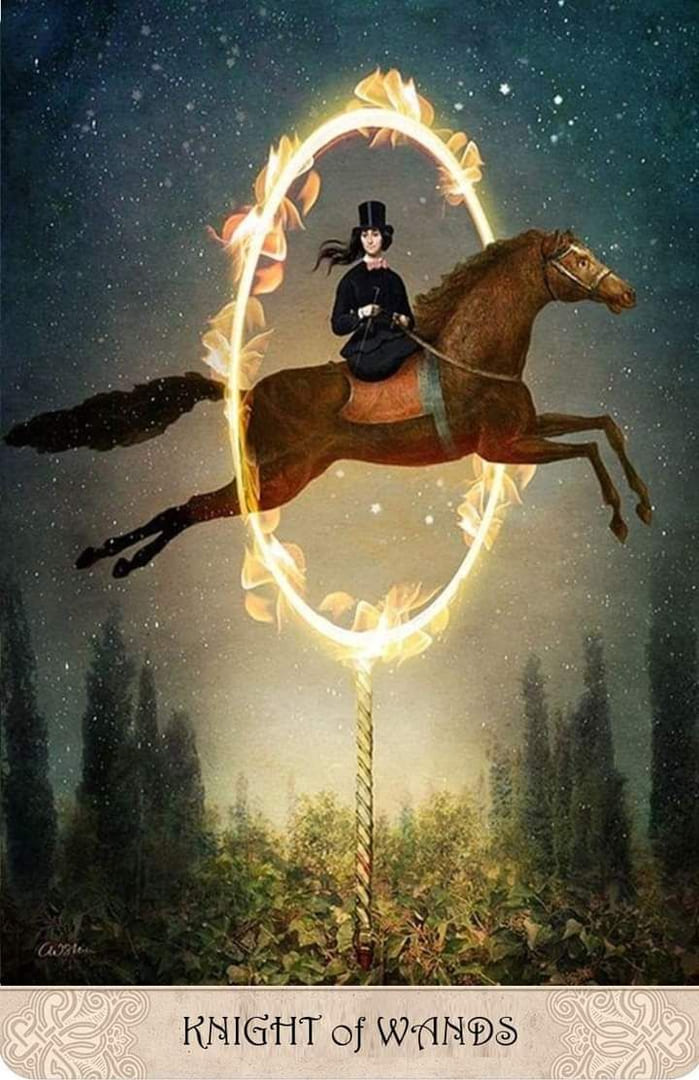
Knight of Wands
Depicted leaping through a ring of fire — capturing this card’s essence better than many traditional versions. There’s risk, courage, and passion for adventure all at once. When this card appears, I always ask: “What fiery hoop are you willing to jump through for your goal?” The answer often surprises even the client.
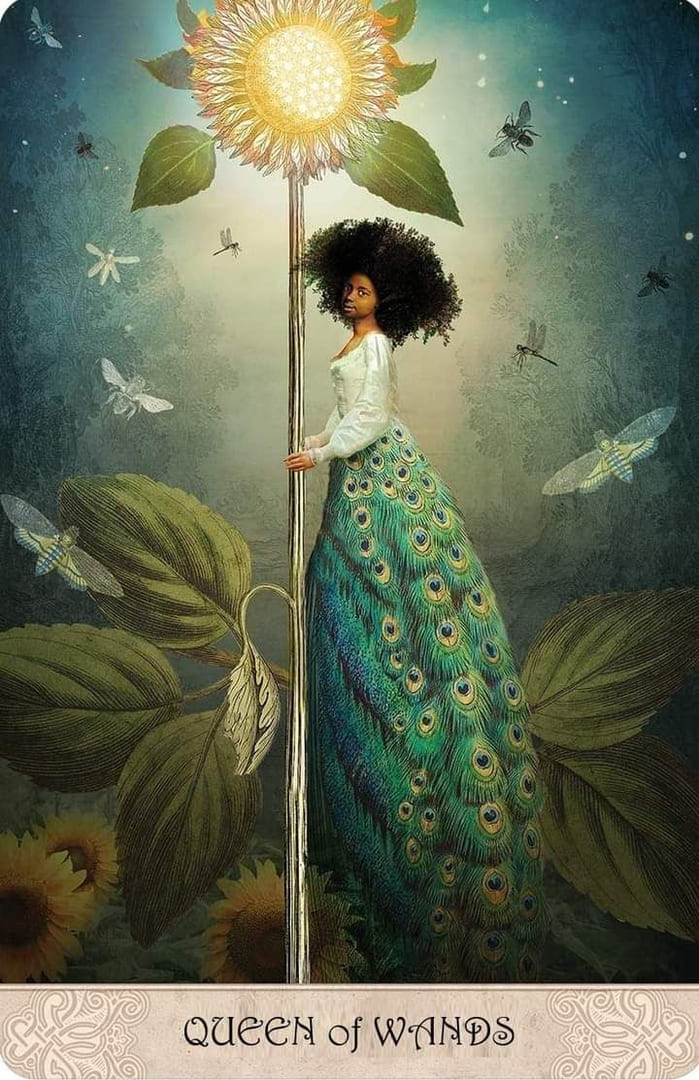
Queen of Wands
Dressed in a peacock-feather pattern — one of the most memorable interpretations of this card I’ve encountered. The peacock perfectly symbolizes self-confidence, vibrancy, and self-expression. I frequently use this card in readings about creativity and self-presentation — it’s a reminder that shining brightly is nothing to be ashamed of.
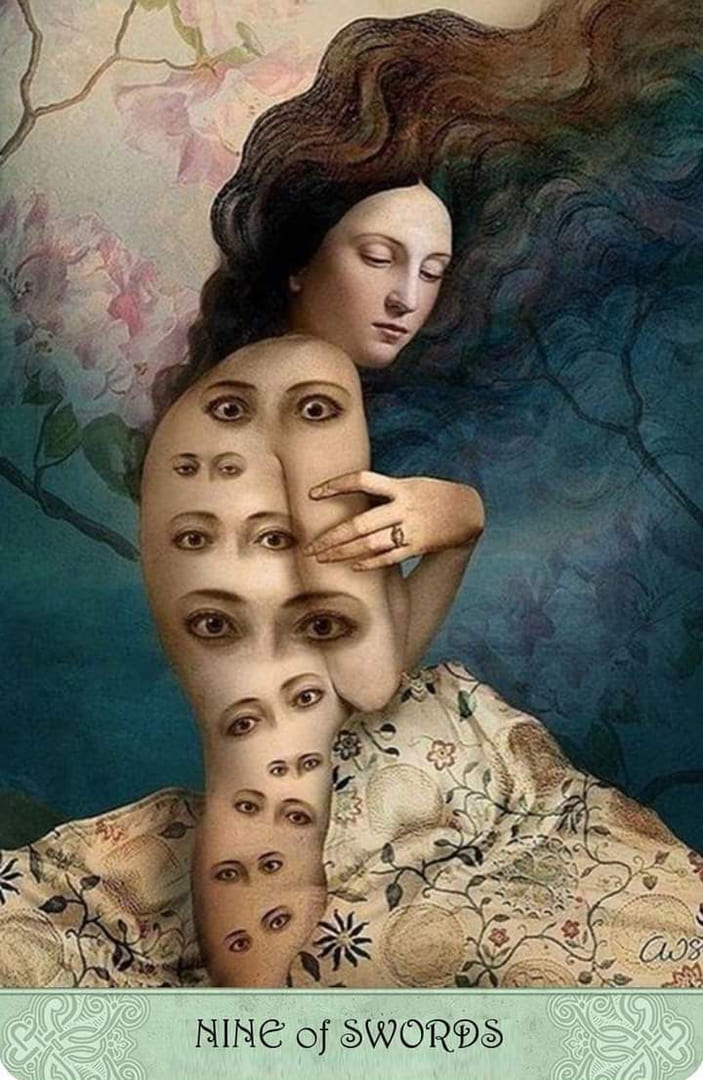
Nine of Swords
The image of a bare figure watched by numerous eyes evokes the exact feelings of vulnerability and anxiety that the traditional meaning describes. Despite the fairy-tale aesthetic, it triggers a genuine emotional response. It resonates especially strongly with clients going through periods of intense anxiety or fear of judgment.
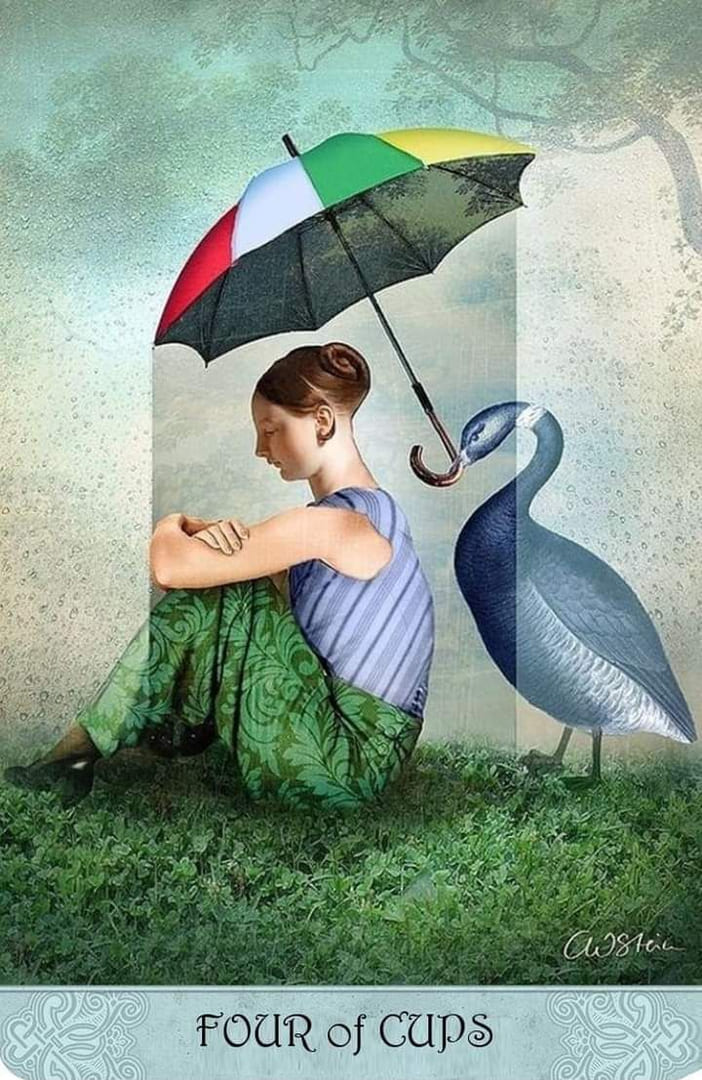
Four of Cups
The masterful interplay of light and shadow visualizes the “blindness to opportunities” that lies at this card’s heart. When it appears, it’s always a powerful reminder: sometimes we can’t see the good that’s already present in our lives. One of those cards that makes clients pause and genuinely reflect.
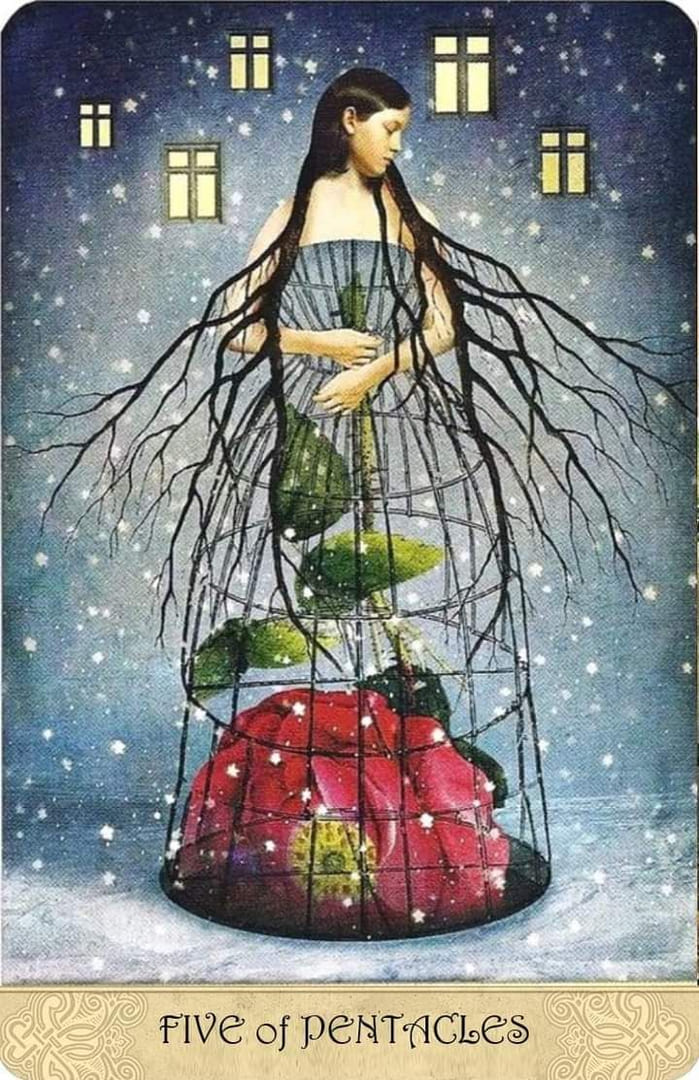
Five of Pentacles
Instead of the traditional figures beneath a stained-glass window, this version uses a more abstract yet equally piercing image of emptiness and loss. Clients often note that the card precisely captures their inner state during moments of self-doubt and lack. It doesn’t frighten — rather, it lets you see your own experience from the outside.
How to Work with This Deck
Intuitive reading. This deck works best when you let the images speak directly, without over-relying on traditional meanings. Even if you know the tarot system well, give yourself time to simply look at the card — each viewing reveals new details and symbols.
Oracle pairing method. Use the tarot for your spread’s main structure and Oracle of Mystical Moments as the “voice of the subconscious.” For example, in a Situation — Obstacle — Advice spread, draw the first two positions from the tarot and the advice card from the oracle. This gives you structured understanding through tarot and an intuitive message from the oracle.
“Mirror Worlds” spread. I developed this specifically for working with both decks:
- Center (tarot) — the heart of the question
- Top (oracle) — the spiritual dimension
- Right (tarot) — visible actions and manifestations
- Bottom (oracle) — hidden motivations
- Left (tarot) — past influences
- Final (oracle) — the path forward
Working with alternate cards. Try running one spread with traditional Kings, then another with their feminine versions. Compare how the reading’s energy shifts. This is especially interesting for relationship and self-discovery questions.
Who Is This Deck For?
The deck is especially well-suited for:
- Those who loved the Mystical Moments oracle but want more structure
- People working with the subconscious and dreams
- Experienced readers seeking a fresh perspective on familiar archetypes
- Creative inquiries: blocks, inspiration-seeking, self-expression
- Emotional healing and shadow work
Despite the soft fairy-tale aesthetic, the deck gives surprisingly direct and sometimes blunt answers. It doesn’t sugarcoat difficult situations — instead, it offers a way to see them through symbolic language, which often makes accepting hard truths easier.
Pairing with Other Decks
Tarot of Mystical Moments is the second part of Catrin Welz-Stein’s trilogy:
- Oracle of Mystical Moments — the ideal companion, creating layered, deeply resonant readings
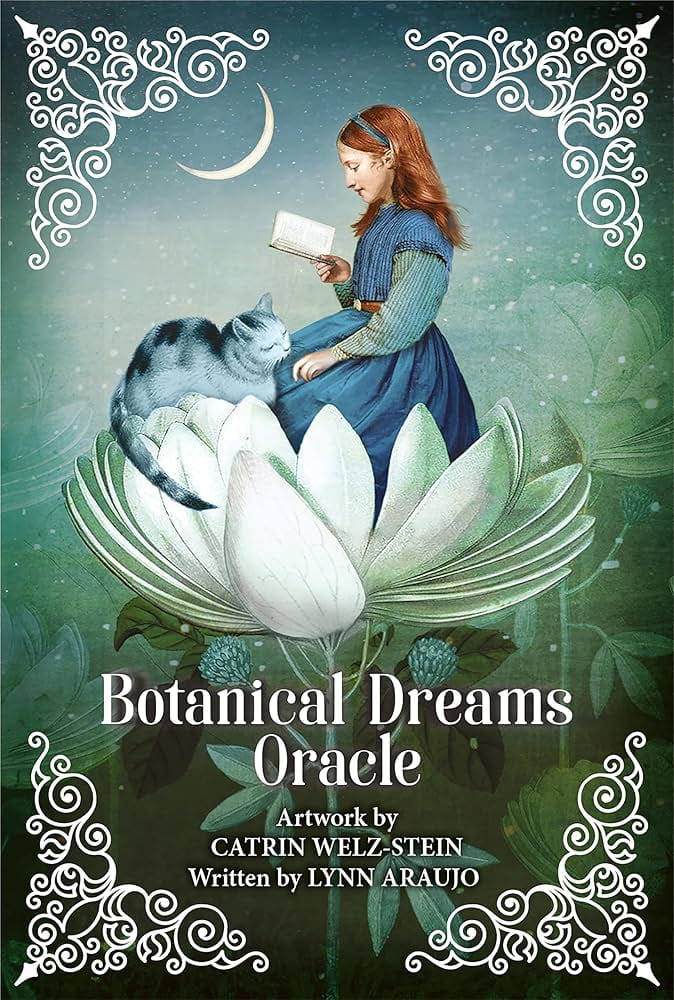
- Botanical Dreams Oracle — the trilogy’s finale with botanical themes, adding a natural element
- Any classic tarot — fascinating to compare interpretations of the same archetypes in surrealist versus traditional styles
All three trilogy decks are available in our app — try them and feel how they complement each other!
Frequently Asked Questions
Why does Tarot of Mystical Moments have 83 cards instead of 78?
Catrin Welz-Stein originally planned to replace all Kings and the Emperor with feminine figures. The publisher kept both versions, adding feminine counterparts to the Emperor and all four Kings — giving the deck 5 extra cards and unique flexibility for readers.
Is Tarot of Mystical Moments good for beginners?
It works well for beginners who are visually drawn to surrealist art. The familiar 78-card tarot structure provides grounding, while the element-coded suit colors and silver-edged cards make navigation easier than the companion oracle.
What art style is used in Tarot of Mystical Moments?
Catrin Welz-Stein uses digital collage, combining vintage photographs, public domain art, and Old Master paintings. The result is a surrealist aesthetic often compared to Alice in Wonderland, with influence from Rene Magritte.
How does Tarot of Mystical Moments relate to Oracle of Mystical Moments?
Both decks are by Catrin Welz-Stein and share the same visual style and card back design. The oracle speaks through pure intuitive imagery, while the tarot organizes that imagery within the traditional 78-card arcana structure.