Self-Love Tarot Spread: 5 Layouts for When You Need to Put Yourself First
Why self-love needs its own spread
Here’s what I’ve noticed in my practice: people will do love spreads about partners, career spreads about bosses, and shadow work spreads about their parents — but almost nobody asks the cards about their relationship with themselves. And that relationship is the foundation everything else is built on.
Self-love isn’t bubble baths and face masks (though those are nice). It’s knowing your worth when no one is validating it. It’s setting a boundary that makes someone else uncomfortable. It’s choosing yourself even when guilt shows up. These spreads are designed for that kind of work — the real kind.
Spread 1: The Daily Self-Care Check-In (3 cards)
Best for: A quick morning or evening ritual. Takes 5 minutes but shifts your whole energy.
| Card 1 | Card 2 | Card 3 |
|---|---|---|
| What I need today | What I’m giving too much of | How to nurture myself |
Card 1: What I need today — The emotional, physical, or spiritual need that’s most pressing right now. Listen to this card like it’s a message from your body.
Card 2: What I’m giving too much of — Where you’re overextending. This card often reveals the self-sacrifice patterns you don’t even notice anymore because they feel “normal.”
Card 3: How to nurture myself — The specific type of self-care that will actually help. Not generic advice — what YOU need today.
How to read it: Card 2 is the truth bomb. Most people who struggle with self-love are chronic over-givers. This card names what you need to pull back on so card 3 becomes possible.
Spread 2: The Mirror of Strengths (5 cards)
Best for: When you can’t see your own value. When imposter syndrome is loud. When you need evidence that you’re enough.
Layout: A mirror shape — center card with two on each side.
[2]  [1]  [3]
[4]       [5]
Card 1: Your core essence — Who you are at your deepest level, beneath the roles and masks. This is the you that exists even when you’re not performing.
Card 2: The gift you underestimate — A strength or talent you have that you dismiss, minimize, or take for granted. Other people see this clearly. You don’t.
Card 3: The strength others see — How people around you actually perceive you. The gap between this card and how you see yourself is often where self-love work needs to happen.
Card 4: What makes you resilient — The specific quality that has gotten you through hard times. You’ve survived everything so far. This card names why.
Card 5: The power you’re not claiming — Something available to you that you haven’t stepped into yet. Not because you can’t — because you don’t believe you deserve to.
How to read it: Read this spread slowly. Sit with card 1 for at least a minute before moving on. If any card makes you uncomfortable, that’s exactly where your self-love work is needed. Resistance to seeing your own greatness IS the problem this spread addresses.
Spread 3: The Boundary Blueprint (4 cards)
Best for: When you know you need to set a boundary but feel guilty about it. When someone’s needs keep overriding your own.
| Card 1 | Card 2 | Card 3 | Card 4 |
|---|---|---|---|
| The situation | What I keep sacrificing | The boundary needed | What I gain |
Card 1: The situation — The relationship or dynamic that’s draining you. Name it clearly.
Card 2: What I keep sacrificing — What you give up or push down to keep the peace. Energy, time, opinions, needs — what are you trading away?
Card 3: The boundary needed — The specific limit that would protect your energy. This card often surprises people because the boundary it suggests is usually smaller and more reasonable than they expected.
Card 4: What I gain — What becomes possible when you hold this boundary. This isn’t about what the other person loses — it’s about what you reclaim.
How to read it: If card 3 is a Swords card, the boundary needs to be communicated directly — words, a conversation, a clear statement. If it’s a Pentacles card, the boundary is practical — time, space, money. Cups suggest an emotional boundary, and Wands suggest protecting your creative energy or enthusiasm.
Spread 4: Self-Worth Archaeology (6 cards)
Best for: Deep work. Understanding where your self-worth patterns come from and how to rewrite them. Do this one monthly, not weekly — it surfaces heavy material.
Layout: Two rows — the past pattern on top, the new story below.
[1]  [2]  [3]    ← Old story
[4]  [5]  [6]    ← New story
Card 1: The original wound — Where your self-worth first took a hit. This often points to childhood, family dynamics, or early experiences that taught you your value was conditional.
Card 2: The story I made up — The narrative you created to make sense of that wound. “I’m too much.” “I’m not enough.” “I have to earn love.” Whatever story you wrote, this card reveals it.
Card 3: How it shows up now — The current behavior, relationship pattern, or self-talk that stems from this old story. This is the wound in action — usually so familiar you don’t question it.
Card 4: The truth underneath — What’s actually true about you, underneath the old narrative. This is the counter-evidence your inner critic doesn’t want you to see.
Card 5: The new story — The belief you’re ready to step into. Not a forced affirmation — a genuine reframe that honors both your pain and your growth.
Card 6: The first step — One concrete action that moves you from the old story to the new one. Something you can do this week.
How to read it: Read the top row first as a complete narrative. Then read the bottom row as a response. The most powerful moment in this spread is the contrast between card 2 (the lie you believe) and card 4 (the truth underneath). That gap is where healing happens.
Spread 5: The Overflow Reading (5 cards)
Best for: When you’ve been giving so much that there’s nothing left. When “I’m fine” has become your autopilot answer but you’re running on empty.
Layout: A cup shape — the vessel and what fills it.
         [1]
    [2]       [3]
    [4]       [5]
Card 1: My current cup — How full or empty your emotional reserves are right now. Be honest about this one.
Card 2: What drains me — The biggest energy drain in your life. A person, a habit, a responsibility, a thought pattern.
Card 3: What fills me — The thing that genuinely replenishes you. Not what should fill you — what actually does.
Card 4: What I need to release — What you’re holding onto that’s preventing your cup from refilling. Sometimes you have to pour something out before new energy can come in.
Card 5: How to overflow — What happens when you’re full — how your energy naturally wants to extend outward. This card shows that self-love isn’t selfish. When your cup is full, everyone around you benefits.
How to read it: The key insight of this spread is that you can’t pour from an empty cup — and card 4 usually reveals that you’re trying to. The sequence is: acknowledge where you are (1), identify the drain (2), reconnect with what fills you (3), release what blocks that (4), and see what becomes possible (5).
Self-love cards to know
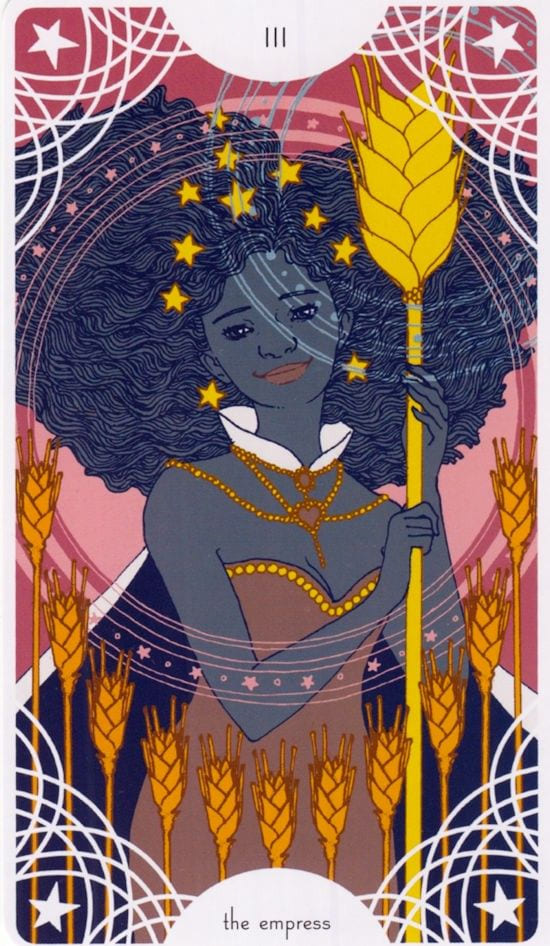
The Empress — The ultimate self-love card. She nurtures herself first, not out of selfishness but because she knows her own fullness is what allows her to give. When she appears, the message is: treat yourself the way you treat the people you love most.
The Star — Healing after devastation. The Star says: you’ve been through it, and you’re still here, and now it’s time to gently rebuild. She pours water for herself AND the earth — self-care and service aren’t opposites.
Nine of Pentacles — Self-sufficiency and pleasure. This card says you don’t need anyone to complete you. Enjoy your own company. Build your own garden. You are enough on your own.
Queen of Cups — Emotional maturity and self-compassion. She feels deeply but isn’t overwhelmed by feelings. When she appears in self-love spreads, the message is about holding space for your own emotions without drowning in them.
Four of Swords — Rest is a form of self-love. Sometimes the most radical act of self-care is doing absolutely nothing. This card gives you permission to stop.
Ace of Cups — A new emotional beginning. Your heart is ready to open again — starting with opening it to yourself.
Making self-love spreads a practice
The most powerful thing about self-love tarot isn’t any single spread — it’s the habit of regularly asking yourself how you’re doing and actually listening to the answer. Most of us know how to check in on everyone else. These spreads teach you to check in on yourself with the same care.
Start with the Daily Check-In (spread 1) for a week. Notice what patterns emerge. Then try the deeper spreads as you’re ready. Self-love isn’t a destination you arrive at — it’s a practice you return to. The cards just make the practice tangible.
Your relationship with yourself is the longest one you’ll ever have. It’s worth a spread.
Frequently Asked Questions
What tarot cards represent self-love?
The Empress is the primary self-love card — she embodies nurturing yourself with the same devotion you give others. The Star represents healing and renewed self-worth after hardship. The Nine of Pentacles signals self-sufficiency and enjoying your own company. The Ace of Cups points to emotional renewal and opening your heart to yourself first.
Can tarot help with low self-esteem?
Tarot won't fix self-esteem on its own, but it's a powerful mirror. Self-love spreads reveal the stories you tell yourself about your worth — stories you might not even be aware of. Seeing those patterns laid out in cards creates distance from them, which is the first step toward changing them. Many readers use tarot alongside therapy or journaling for deeper work.
How often should I do a self-love tarot reading?
A quick self-love check-in works well weekly, especially on Sundays or whenever you feel drained. Deeper spreads like the Self-Worth Archaeology are better monthly — they surface heavy material that needs time to process. The key is consistency: regular self-love readings build a practice of checking in with yourself.
What's the best tarot spread for building confidence?
The Mirror of Strengths spread (spread #2 in this guide) is designed specifically for confidence. It shows you your natural gifts, the strength others see in you, and the power you're not claiming yet. It works because it forces you to look at evidence of your worth rather than relying on how you feel in the moment.