Should I Stay or Should I Go? A Tarot Spread for Relationship Decisions
The question you keep circling back to
You’ve had this conversation with yourself a hundred times. In the shower. At 2 AM. While they’re sitting right next to you, completely unaware that you’re mentally rehearsing your exit — or talking yourself out of it for the fifth time this week.
Should I stay? Should I go?
It’s the question that lives in the space between “this isn’t working” and “but I still love them.” Between the bad days that feel unbearable and the good days that feel like proof. Between the version of them you fell in love with and the version sitting across from you right now.
If you’re here, you already know something needs to change. You just don’t know if that change means fixing what exists or walking away from it.
I’ve read for hundreds of people in this exact spot. And I’ll tell you what I’ve learned: the cards don’t tell you what to do. But they show you what you’re actually choosing between — stripped of the stories you’ve been telling yourself.
Why this decision feels impossible
Before we get to the spread, let’s talk about why you’re stuck. Because understanding what’s keeping you frozen is half the reading.
You’re comparing two unknowns. Staying means dealing with problems you know. Leaving means facing problems you don’t. Your brain can’t calculate risk when both options feel uncertain, so it loops.
Love and dysfunction can coexist. The hardest relationship decisions aren’t between love and indifference — they’re between love and pain that happens to live in the same house. You can genuinely love someone and still need to leave. Those two truths don’t cancel each other out.
You’re afraid of regret. What if you leave and realize you gave up too soon? What if you stay and realize you wasted years? Regret feels worse than almost anything, and the fear of it can keep you paralyzed indefinitely.
External pressure complicates things. Kids, finances, shared friends, family expectations, the apartment lease — sometimes the question isn’t “do I want to go?” but “can I afford to?”
The cards can’t solve the practical problems. But they can show you what’s actually happening energetically — and that clarity is worth more than you think.
Cards that say “stay and work”
These cards suggest the relationship has genuine foundation worth preserving:
Temperance. Patience, balance, the slow work of blending two lives. Temperance in a stay-or-go reading says: this isn’t broken — it’s unbalanced. The fix requires patience, compromise, and willingness from both sides. It’s not sexy advice. But it’s honest.
The Star. Hope after difficulty. The Star says: what you’re going through right now is not the permanent state of this relationship. There’s healing available here. But the Star requires vulnerability — you have to be willing to strip down emotionally and trust the process.
Two of Cups. The connection is real. Whatever problems exist, the Two of Cups says: the foundation of mutual care, respect, and emotional investment is still intact. Problems on top of a solid foundation are workable. Problems on top of nothing aren’t.
Strength. Not the strength to endure suffering — the strength to have the hard conversations, set boundaries, and show up authentically even when it’s uncomfortable. Strength in this context says: you have what it takes to work through this. The question is whether you want to.
Four of Wands. Stability, home, something worth protecting. The Four of Wands reminds you what you’ve built together — and asks whether the problems are bigger than the foundation, or just louder.
Cards that say “it’s time to go”
These cards suggest the healthier path is forward, not backward:
The Tower. Something is already crumbling. The Tower in a stay-or-go reading says: the question isn’t whether to leave — it’s whether to leave before or after the collapse. Sometimes the kindest thing is to walk away while there’s still something good to remember.
Eight of Cups. Walking away from something that once filled you but no longer does. The Eight of Cups is possibly the most relevant card for this question — it’s literally a person turning away from stacked cups (emotional investment) to walk toward something unknown. It doesn’t mean the love was fake. It means it’s complete.
Three of Swords. Ongoing heartbreak. If the Three of Swords keeps appearing in your relationship readings, the cards are asking: how much more pain are you willing to absorb? Staying in hope of change is different from staying in a pattern of hurt.
Five of Cups. Grief and fixation on loss. The Five of Cups can mean you’re staying because you’re mourning the relationship you wanted rather than seeing the relationship you have. The two remaining cups behind you represent what’s still possible — but you have to stop staring at what spilled.
Ten of Swords. Something has already ended. The Ten of Swords doesn’t always mean dramatic betrayal — sometimes it means the energy, the growth, the mutual investment has reached its conclusion. Staying past the ending doesn’t change the ending. It just delays the grief.
A seven-card spread for the stay-or-go question
This spread doesn’t tell you what to do. It shows you what each choice actually means.
- The relationship now. What this relationship looks like right now — honestly, without the filter of hope or fear.
- What keeps me staying. The real reason I haven’t left — not the noble story, the actual force.
- What pulls me toward leaving. The real reason I’m considering going — the core dissatisfaction.
- What staying looks like. If I commit to staying and working on this — what does that path look like in practice?
- What leaving looks like. If I choose to go — what does that transition actually involve?
- What I’m avoiding. The truth I haven’t faced yet in either direction.
- The wisest next step. Not “stay or go” — but the single most important thing to do right now.
How to use this spread
Be brutally honest with Card 2. The reasons we stay aren’t always noble. Love, commitment, genuine connection — those are real reasons. But so are fear, convenience, financial dependence, and not wanting to be alone. Whatever Card 2 shows, don’t dress it up. Name it.
Don’t romanticize Card 5. Leaving isn’t a montage of freedom and fresh starts. It’s grief, logistics, loneliness, and eventually — eventually — something new. If Card 5 shows difficulty, that doesn’t mean “don’t go.” It means “go with open eyes.”
Card 6 is the most important. Everyone wants to skip to the answer. But Card 6 shows what you’re not looking at — the conversation you won’t have, the truth you won’t admit, the pattern you won’t name. Whatever this card shows, sit with it before making any decision.
Card 7 is often surprising. It rarely says “stay” or “go” directly. More often, it says something like “have the conversation first” (Page of Swords), “take care of yourself before deciding” (the Empress), or “stop asking everyone else what to do” (the Hermit). The wisest next step is usually smaller and more specific than the big decision.
What the cards can’t tell you
I want to be honest about this: no spread can account for everything.
Safety. If you’re in a relationship where you feel unsafe — physically, emotionally, psychologically — the cards are not the tool for this decision. Your safety comes first. Always. If you need help, reach out to someone who can actually help you leave safely.
Children. The cards can’t weigh custody considerations, financial logistics, or what’s best for kids. They can show you the energetic truth of the relationship, but practical decisions involving dependents need practical guidance too.
Sunk cost. “But I’ve invested so much” is not a reason to stay. The cards will sometimes show this clearly — a spread full of Pentacles reversed or the Hanged Man in position 2, suggesting you’re staying because of investment, not because of love.
Other people’s opinions. Your mother thinks you should stay. Your best friend thinks you should leave. The internet thinks you should go to therapy. The cards show your energy and your path — not what other people think is right for you.
The decision after the decision
Here’s something nobody talks about: the stay-or-go question doesn’t end with the decision. It ends with the commitment.
If you decide to stay — you have to actually stay. Not with one foot out the door, not keeping your options open, not comparing your relationship to what-ifs. Staying means recommitting fully, having the hard conversations, and doing the work. Half-staying is worse than leaving.
If you decide to go — you have to actually go. Not hovering, not checking their social media, not keeping the door cracked just in case. Leaving means grieving what was, accepting what is, and walking toward what’s next. Half-leaving is worse than staying.
The cards can show you which path holds more energy, growth, and alignment right now. But the courage to commit to that path — fully, honestly, without looking back every five minutes — that’s yours.
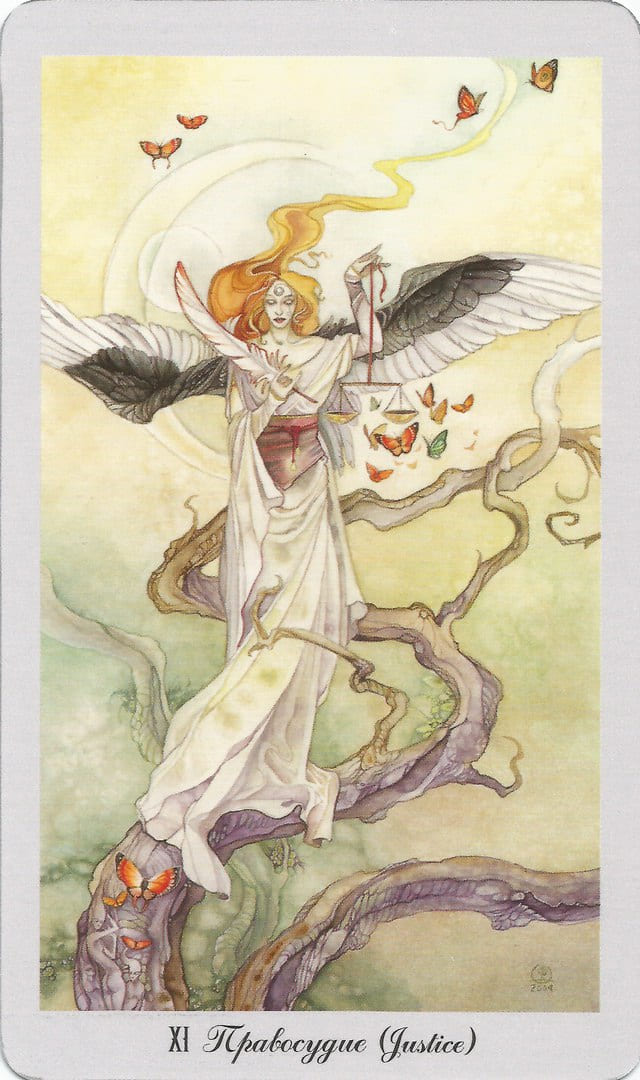
What Justice really means here
Justice isn’t about punishment. It’s about clarity — seeing things exactly as they are, without the distortion of fear, hope, or habit.
In a stay-or-go reading, Justice asks: if you strip away the emotions, the history, the fear of being alone, the guilt of leaving, the pressure to stay — what is the truth of this relationship? Not what it was. Not what you hoped it would be. What is it, right now, today?
That clear-eyed assessment is the hardest part. And it’s the only part that actually leads to a decision you can live with.
Whatever you choose — choose it because you saw the truth and decided anyway. Not because you were too afraid to look.
The cards are ready when you are.
Frequently Asked Questions
Can tarot tell me whether to stay or leave a relationship?
Tarot won't make the decision for you — and that's by design. What it can do is show you the energy of each path: what staying looks like, what leaving looks like, and what you might be avoiding in either direction. The clarity comes from seeing both options honestly, not from the cards choosing for you.
What tarot cards suggest it's time to leave a relationship?
The Tower (foundation already crumbling), the Three of Swords (ongoing heartbreak), the Five of Cups (stuck in grief), the Eight of Cups (walking away for growth), and the Ten of Swords (something has already ended) often appear when leaving is the healthier path. But context matters — these cards can also mean transformation within the relationship.
What tarot cards suggest staying and working things out?
The Two of Cups (genuine mutual connection), Temperance (patience and balance needed), the Star (hope after difficulty), the Four of Wands (strong foundation worth preserving), and the Strength card (inner resilience to work through challenges) often appear when the relationship has real potential worth fighting for.
How do I know if I'm reading the cards objectively about my relationship?
Complete objectivity is impossible when you're emotionally invested — and that's okay. What helps is paying attention to your body's response to each card. If a card suggesting 'stay' makes your stomach tighten, or a card suggesting 'go' brings relief — that physical response is data. The cards work with your intuition, not against it.