Tarot and Ayurveda: Your Dosha and the Cards That Represent It
Ancient systems, shared elements
Ayurveda and tarot were born thousands of miles and centuries apart — Ayurveda in ancient India, tarot in medieval Europe. They’ve never been formally connected. Yet they share the same foundational language: elements.
Ayurveda organizes the body and mind through five elements — earth, water, fire, air, and ether — combined into three doshas (body-mind types). Tarot organizes its 78 cards through four elements — earth, water, fire, and air — distributed across four suits and the Major Arcana.
The overlap is remarkable. When Ayurveda says your Pitta (fire) is too high and you need cooling, calming energy, that’s the same thing a tarot reading shows when your spread is full of Wands and you need more Cups. Different systems, same diagnosis.
This guide connects the two — showing you which cards mirror which doshas, how to read tarot through an Ayurvedic lens, and how to use the cards as a quick check on your elemental balance.
The three doshas in tarot
Vata: the air dosha
Elements: Air + Ether Qualities: Light, dry, mobile, cold, subtle, rough Personality: Creative, quick-thinking, enthusiastic, changeable, anxious when imbalanced
Tarot suit: Swords (Air)
Vata is the energy of movement and change. When balanced, Vata people are brilliant, creative, and full of ideas. When excess, they’re scattered, anxious, and unable to settle.
Vata Major Arcana cards:
- The Fool — Spontaneity, lightness, the leap into the unknown. Pure Vata energy at its most inspired.
- The Star — Ethereal, connected to higher realms, airy and otherworldly. The Star floats between heaven and earth — Vata territory.
- The Wheel of Fortune — Constant change, cycles, nothing staying the same. Vata’s restless mobility in archetypal form.
- The Hanged Man — Suspended, ungrounded, seeing from an inverted perspective. Vata excess can feel exactly like this.
Vata Minor Arcana cards:
- Ace of Swords — A flash of mental clarity. Vata’s brilliant mind at its sharpest.
- Knight of Swords — Moving fast, thinking fast, not looking back. Vata in action (and sometimes in overdrive).
- Seven of Swords — Overthinking, mental strategy, sleeplessness. Vata imbalance in card form.
- Six of Swords — Travel, transition, moving away from something. Vata’s constant motion.
Pitta: the fire dosha
Elements: Fire + Water Qualities: Hot, sharp, light, oily, liquid, spreading Personality: Driven, intelligent, competitive, passionate, angry or critical when imbalanced
Tarot suit: Wands (Fire)
Pitta is the energy of transformation and digestion — literally and metaphorically. Balanced Pitta people are leaders, visionaries, and doers. Excess Pitta manifests as rage, criticism, and burnout.
Pitta Major Arcana cards:
- The Emperor — Authority, control, leadership, and the shadow side of domination. Pure Pitta ambition.
- The Chariot — Willpower, drive, and the determination to win. Pitta moving through obstacles by sheer force.
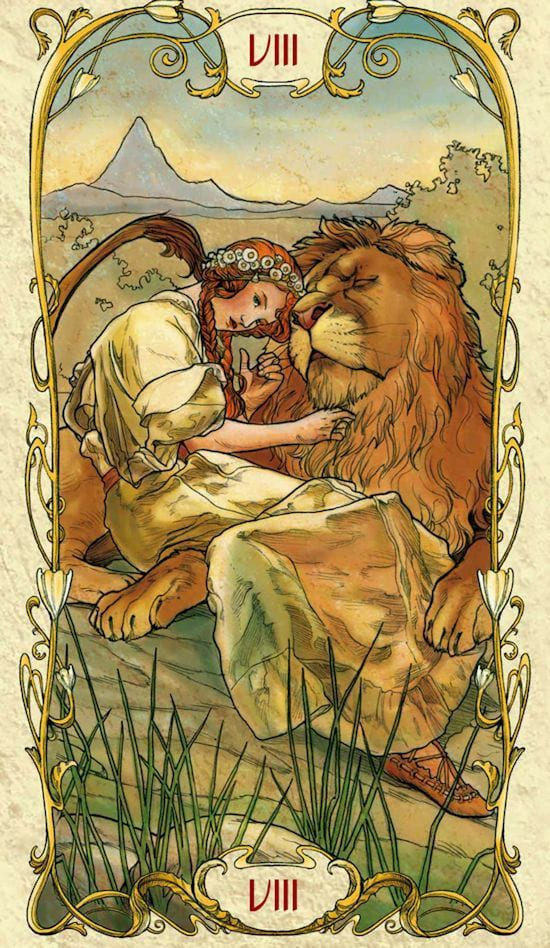
- Strength — The evolved Pitta — passion tempered by patience, fire controlled by compassion.
- The Tower — Pitta excess exploding. Too much fire, too much pressure, and everything combusts.
Pitta Minor Arcana cards:
- Ace of Wands — A spark of inspiration that demands action. Pitta’s creative fire igniting.
- King of Wands — Leadership through passion and vision. Pitta at its most mature and effective.
- Five of Wands — Competition, conflict, everybody fighting. Pitta imbalance where fire meets fire.
- Ten of Wands — Burnout. Carrying too much fire for too long. The Pitta crash.
Kapha: the earth dosha
Elements: Earth + Water Qualities: Heavy, slow, cool, oily, smooth, soft, stable Personality: Nurturing, patient, steady, loyal, lethargic and resistant to change when imbalanced
Tarot suit: Pentacles (Earth)
Kapha is the energy of stability and nourishment. Balanced Kapha creates the foundation everything else rests on — health, abundance, emotional security. Excess Kapha becomes stagnation, attachment, and the inability to let go.
Kapha Major Arcana cards:
- The Empress — Abundance, fertility, nurturing, and the sensual pleasure of the physical world. The Empress is Kapha’s highest expression.
- The Hierophant — Tradition, structure, and the comfort of established patterns. Kapha’s love of stability in spiritual form.
- The World — Completion, wholeness, and the satisfaction of a cycle fulfilled. Kapha’s gift of endurance reaching its reward.
- The Devil — Attachment, materialism, and the chains of comfort. Kapha excess — too much stability becoming a prison.
Kapha Minor Arcana cards:
- Ace of Pentacles — A new opportunity for material security. Kapha’s foundation stone.
- Queen of Pentacles — Nurturing through practical care. The Kapha caretaker in card form.
- Four of Pentacles — Holding on too tight. Kapha’s shadow — security becoming hoarding.
- Ten of Pentacles — Family wealth, legacy, and the stable foundation built through patience. Kapha’s dream realized.
Where’s the water element?
Cups (Water) cuts across all three doshas:
- Vata has no water — which is why Vata people need Cups energy to stay emotionally grounded
- Pitta includes water — Cups moderate Pitta’s fire, bringing emotional intelligence to raw ambition
- Kapha includes water — Cups amplify Kapha’s nurturing nature, sometimes to the point of emotional smothering
When Cups cards dominate a reading, they’re pointing to the water element’s role in your current dosha balance — too much (emotional overwhelm), too little (emotional dryness), or just right (emotional flow).
Reading tarot through the dosha lens
The elemental scan
After laying out a spread, count the suits before reading individual cards:
- Lots of Swords? Vata is high. You’re in your head. The reading is calling for grounding — earth energy, Pentacles medicine, physical practices.
- Lots of Wands? Pitta is high. You’re burning. The reading wants cooling — water energy, Cups medicine, rest and reflection.
- Lots of Pentacles? Kapha is high. You’re stuck. The reading needs movement — air energy, Swords medicine, change and mental stimulation.
- Lots of Cups? Water is flowing strong. Check which dosha needs its emotional element balanced.
The dosha balance spread
Position 1: Vata — Your air/mental energy right now Position 2: Pitta — Your fire/drive energy right now Position 3: Kapha — Your earth/stability energy right now Position 4: The imbalance — Which dosha is out of balance and how Position 5: The remedy — What energy you need more of to restore balance
This spread takes your three doshas’ temperature and shows you where to adjust. It’s not a medical diagnosis — it’s an energetic weather report.
Seasonal dosha readings
Ayurveda teaches that doshas fluctuate with seasons:
- Late fall/winter (cold, dry, windy) — Vata season. Pull cards asking: “Where do I need grounding?”
- Late spring/summer (hot, intense) — Pitta season. Pull cards asking: “Where do I need cooling?”
- Late winter/early spring (heavy, damp, slow) — Kapha season. Pull cards asking: “Where do I need movement?”
Aligning your tarot questions with the seasonal dosha creates readings that are relevant to what your body and mind are actually experiencing right now.
The bridge card: Temperance
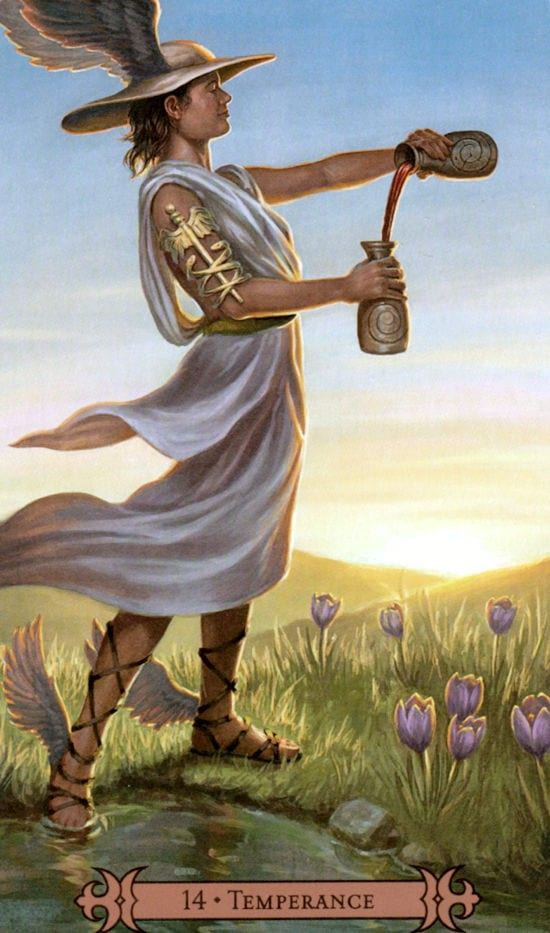
If there’s one tarot card that embodies the Ayurvedic approach to life, it’s Temperance. The angel pouring water between two cups — blending, balancing, finding the exact proportion that creates harmony.
Ayurveda is the science of balance. Tarot, at its best, is the art of seeing where balance has been lost. Temperance is where the two systems meet — the moment of perfect proportion, where fire doesn’t burn and water doesn’t drown and air doesn’t scatter and earth doesn’t stagnate.
That’s the goal. Not eliminating any element, but finding the blend that keeps you whole.
Frequently Asked Questions
What are doshas and how do they connect to tarot?
Doshas are the three fundamental energy types in Ayurveda: Vata (air/ether), Pitta (fire/water), and Kapha (earth/water). Each one has distinct characteristics — Vata is creative and changeable, Pitta is driven and intense, Kapha is steady and nurturing. Tarot's four suits are built on the same elements, so the connection is natural: Swords (air) align with Vata, Wands (fire) with Pitta, and Pentacles (earth) with Kapha.
Which tarot cards represent Vata dosha?
Vata is air and ether — movement, creativity, change, and sometimes anxiety. The Swords suit carries Vata energy, especially the Ace of Swords (mental clarity), the Knight of Swords (rapid movement), and the Seven of Swords (overthinking). In the Major Arcana, the Fool (spontaneity), the Star (ethereal connection), and the Wheel of Fortune (constant change) are all Vata cards.
Can tarot help me balance my doshas?
Tarot can reveal which dosha is dominant or imbalanced in your current state. A reading full of Swords might indicate Vata excess — too much mental activity, not enough grounding. Lots of Wands could mean Pitta is running hot — passion tipping into burnout. The cards don't prescribe Ayurvedic remedies, but they show you where you're out of balance, which is the first step toward correction.
Do I need to know Ayurveda to use this approach?
Not deeply. Knowing your primary dosha type (many free quizzes can help you identify it) is enough to start seeing connections. If you know you're Vata-dominant, noticing when your readings are full of air energy versus earth energy becomes a practical wellness check. The basics of both systems are enough to create a meaningful combined practice.