Tarot and Numerology: The Hidden Numbers in Every Reading
Numbers hiding in plain sight
Every tarot card has a number. You see it printed right on the card — the III on the Empress, the 7 on the Seven of Swords, the Roman numerals marching across the Major Arcana. But most readers treat these numbers as labels rather than messages.
That’s like reading a book and ignoring every other sentence.
Numerology — the study of number symbolism and patterns — is built into tarot’s structure. The deck wasn’t designed with numbers slapped on randomly. Each number carries specific energy, and that energy shapes every card it touches. The Three of Cups and the Three of Swords share the energy of Three (creation, expression, expansion) even though their expressions couldn’t be more different.
Learning to read the numbers adds a second language to your tarot practice — one that reveals patterns, connections, and themes you’d miss by reading cards in isolation.
The core numbers: 1 through 10
One (Ace): beginning, potential, spark
The Aces are seeds. Pure, undifferentiated energy waiting to become something. In numerology, One is the first impulse — “I exist, I am possible.”
When Aces appear in a reading, something is beginning. The suit tells you what (Cups = emotional beginning, Pentacles = material opportunity), but the One energy tells you it’s raw and unformed. Potential, not product.
In the Major Arcana: The Magician (I) carries this energy — the first conscious act, the moment of “I can create.”
Two: duality, balance, choice
Twos introduce relationship — between people, between options, between forces. Where One was alone, Two creates a pair and asks: how do these things relate?
The Two of Cups is partnership. The Two of Swords is an impossible choice. Different expressions, same numerical core: two things, held in tension or harmony.
In the Major Arcana: The High Priestess (II) — the ultimate holder of duality, sitting between light and dark, knowing and mystery.
Three: creation, expression, growth
When two forces combine, they create a third thing. Three is the number of creative output — art, communication, collaboration, the first tangible result.
The Three of Pentacles is craftsmanship and teamwork. The Three of Wands is expansion and vision. Three energy says: something has been made, and it wants to be seen.
In the Major Arcana: The Empress (III) — creation itself, fertility, the abundance that flows when creative energy meets nurturing force.
Four: structure, stability, foundation
Four is the builder’s number. Four walls, four corners, four legs on a table. It’s about creating security, establishing order, and sometimes getting stuck in rigidity.
The Four of Pentacles is holding on too tight. The Four of Wands is celebration of something built. Four energy always asks: is this structure protecting you or trapping you?
In the Major Arcana: The Emperor (IV) — order, authority, the structure that both enables and restricts.
Five: conflict, disruption, change
Five is the midpoint crisis. The stability of Four gets shaken. Something disrupts the pattern. This is uncomfortable but necessary — without Five, nothing would ever change.
The Five of Cups is grief and loss. The Five of Swords is conflict and defeat. The Five of Wands is competition and struggle. Every Five says: something is breaking open.
In the Major Arcana: The Hierophant (V) — challenging conventional wisdom, the tension between doctrine and personal truth.
Six: harmony, healing, balance restored
After Five’s disruption, Six rebuilds. It’s the number of resolution, generosity, and things finding their way back to balance.
The Six of Cups is nostalgia and innocent connection. The Six of Pentacles is giving and receiving in balance. Six energy says: the worst has passed, and something gentler is forming.
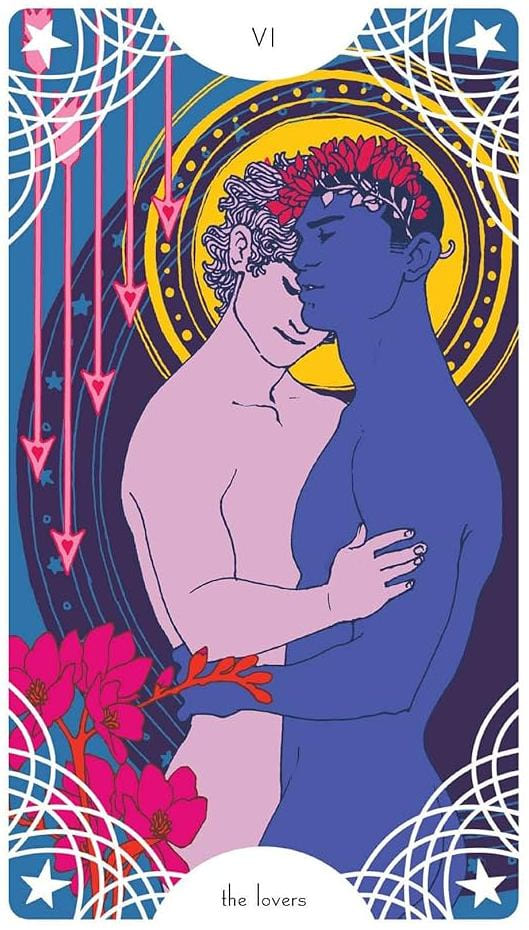
In the Major Arcana: The Lovers (VI) — harmony between opposing forces, the choice that creates integration rather than division.
Seven: reflection, seeking, inner work
Seven turns inward. It’s the seeker’s number — the pause between doing and understanding, the moment you stop to ask “why?”
The Seven of Cups is dreaming and illusion. The Seven of Swords is strategy and stealth. Seven energy says: stop acting and start questioning.
In the Major Arcana: The Chariot (VII) — willpower directed by purpose, the inner determination that moves you forward.
Eight: power, mastery, momentum
Eight is controlled force. The energy that was questioned in Seven now moves with direction and authority. This is competence, manifestation, and the results of sustained effort.
The Eight of Pentacles is dedicated craftsmanship. The Eight of Wands is rapid movement and communication. Eight energy says: you’ve built the skill, now use it.
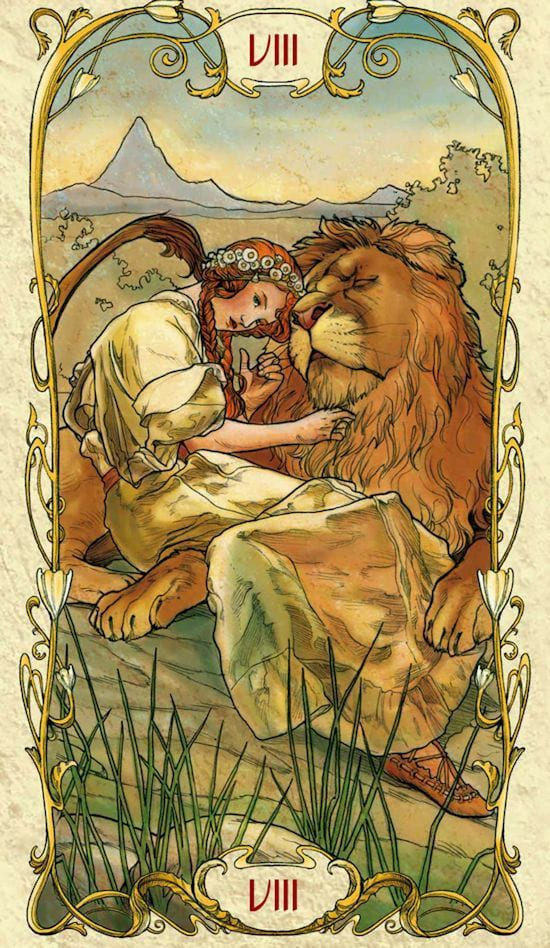
In the Major Arcana: Strength (VIII) — quiet, patient power that subdues through gentleness rather than force.
Nine: completion approaching, wisdom, near-culmination
Nine is almost done. It’s the number just before the ending — the last mile, the final lesson, the wisdom that comes from having nearly completed the journey.
The Nine of Cups is emotional fulfillment (the “wish card”). The Nine of Swords is anxiety and mental anguish. Nine energy says: you’re carrying everything you’ve learned, and it’s almost time to set it down.
In the Major Arcana: The Hermit (IX) — solitary wisdom, the lantern-bearer who has walked the full path and now illuminates it for others.
Ten: completion, ending, transformation into beginning
Ten is the cycle’s end — and simultaneously the start of something new. In numerology, 10 reduces to 1 (1+0=1), so every ending contains a beginning.
The Ten of Cups is family happiness and emotional completion. The Ten of Swords is total collapse — the ending that clears the ground for rebirth. Ten energy says: this chapter is finished.
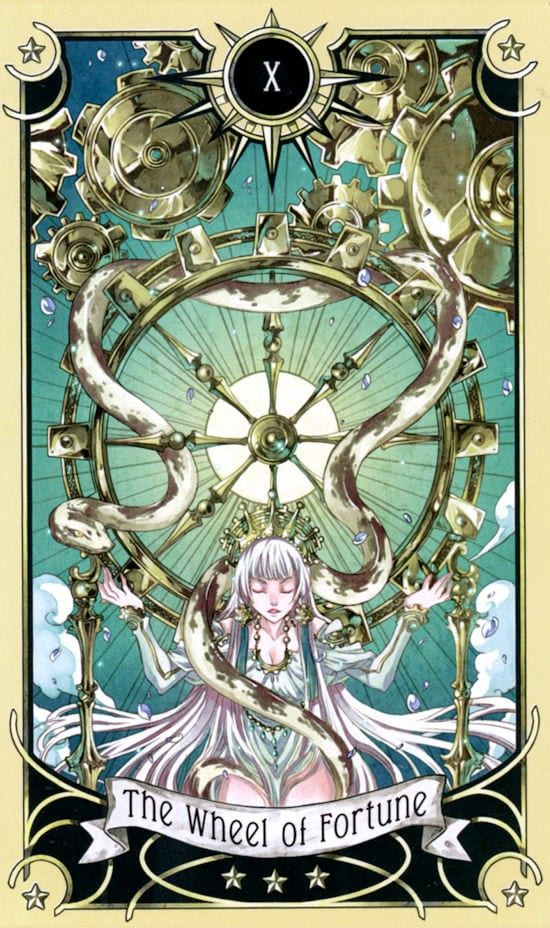
In the Major Arcana: The Wheel of Fortune (X) — the cycle itself, turning from ending to beginning and back again.
Reading number patterns in spreads
When the same number appears multiple times in a single spread, it’s a signal. The universe is underlining a theme.
Multiple Aces: A time of massive new beginnings. Multiple areas of life are resetting simultaneously.
Multiple Twos: Decisions everywhere. Partnerships and relationships are the central theme, whatever the question was about.
Multiple Fives: Upheaval across the board. Nothing is stable right now, and the reading is saying: stop trying to hold things in place and let the shaking happen.
Multiple Eights: Things are moving fast. You’re in a period of competence and manifestation — ride the momentum.
Sequential numbers (3, 4, 5): A narrative arc. Things are progressing through natural stages. The sequence tells you where you are in the story.
Descending numbers (8, 6, 3): Energy is winding down or simplifying. This can mean completion or retreat, depending on context.
Your personal tarot cards
Numerology gives you a personal connection to specific cards through your birth date.
How to calculate: Add all digits of your full birth date. Keep reducing until you reach a number between 1 and 22.
Example: July 23, 1985 0 + 7 + 2 + 3 + 1 + 9 + 8 + 5 = 35 3 + 5 = 8
Birth card: Strength (VIII)
If your first sum is between 10 and 22, you have two birth cards — the unreduced number and the reduced one. So if someone gets 17, their cards are the Star (XVII) and Strength (VIII, from 1+7=8).
Your birth card represents a core theme of your life — a lesson you’re always learning, an energy you naturally embody, a card that will feel like home every time it appears in a reading.
Practical numerology in your next reading
You don’t need to become a numerologist. Just start noticing:
- What numbers repeat? After laying out a spread, scan for numerical patterns before interpreting individual cards.
- What’s the numerical energy of the reading? Add the numbers of all cards in the spread and reduce to a single digit. This gives you the reading’s overall numerical theme.
- Where does the number fall in the 1-10 cycle? Early numbers (1-3) suggest beginnings. Middle numbers (4-6) suggest structure and challenge. Late numbers (7-9) suggest reflection and approaching completion. Ten resets the cycle.
The numbers have been there all along, printed on every card. Now you know what they’re saying.
Frequently Asked Questions
How are tarot and numerology connected?
Every tarot card carries a number, and every number carries meaning. The Aces (1s) are beginnings, the Fives are conflict, the Tens are completion. When you notice number patterns in a spread — three Fives, or a sequence like 3-4-5 — numerology adds a layer of interpretation that goes beyond individual card meanings. The numbers tell their own story.
How do I calculate my tarot birth card?
Add all the digits of your birth date together. For example, March 15, 1990: 0+3+1+5+1+9+9+0 = 28. Then 2+8 = 10. Your birth card is the Wheel of Fortune (X). If the first sum is 19 or less, that's also a card — so you'd have both The Wheel of Fortune and The Sun (XIX isn't applicable here, but for a sum of 19, you'd have The Sun and The Wheel). Most people have a pair of birth cards.
What does it mean when the same number appears multiple times in a reading?
Repetition is emphasis. Multiple Threes suggest creative expansion or collaboration is the dominant theme. Multiple Sevens point to spiritual seeking or assessment. Multiple Nines indicate endings and completion across different areas of life. The more a number repeats, the louder its message — the universe is underlining that theme for you.
Do court cards have numbers in numerology?
Traditionally, Pages are associated with 11, Knights with 12, Queens with 13, and Kings with 14. Some systems use different assignments. For practical purposes, court cards are better read as personality archetypes than numerical energies — but if you're analyzing number patterns in a spread, you can include their traditional values.