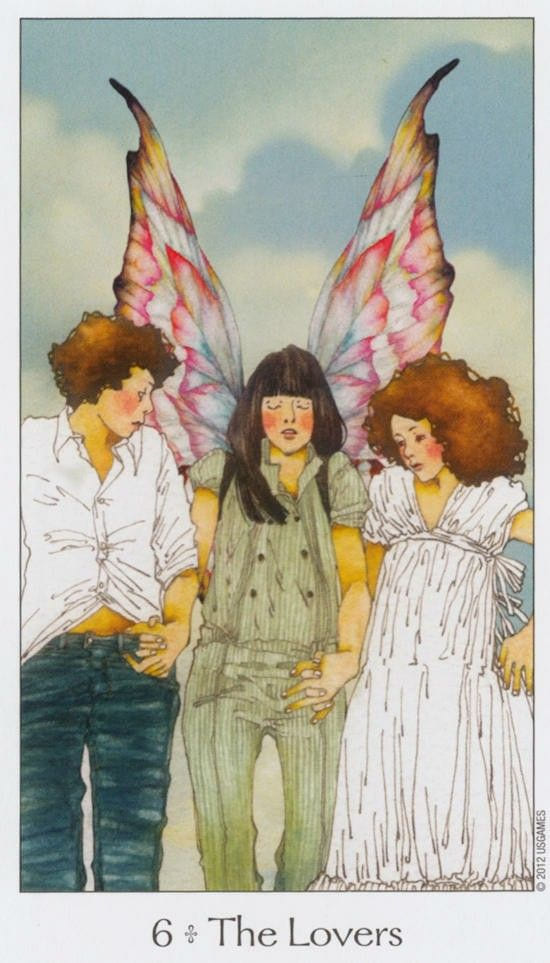
Tarot Spread for Forgiveness: Releasing Anger and Finding Peace
The forgiveness myth
There’s a version of forgiveness that gets sold everywhere — in self-help books, in Instagram quotes, in well-meaning advice from people who haven’t been hurt the way you’ve been hurt. It goes something like this: forgiveness is a gift you give yourself. Just let it go. Holding resentment is like drinking poison. Release it and be free.
It sounds beautiful. And it’s not entirely wrong. But it skips about fifteen steps between “I’m furious” and “I’m at peace,” and those missing steps are where the actual healing happens.
This article isn’t about arriving at forgiveness. It’s about the messy, honest, nonlinear process of getting there — or not getting there, because forgiveness is a choice, not a moral requirement. The spreads below don’t push you toward any particular outcome. They help you see clearly what you’re holding, what it’s costing you, and what release might look like on your own terms.
Why tarot is useful for forgiveness work
Forgiveness is complicated because it involves conflicting truths that your rational mind struggles to hold simultaneously:
This person hurt me AND they had their own pain. I want to let go AND the anger protects me. Moving on is healthy AND minimizing what happened feels like betrayal.
Your thinking mind wants to pick one. Choose a side. Decide. Tarot holds all sides at once. The cards don’t ask you to resolve contradictions — they lay them out on the table so you can see the full picture instead of whichever fragment you’ve been stuck on.
Tarot is also useful because forgiveness has layers, and you can’t always see which layer you’re on. You might think you’re struggling to forgive someone else, and the cards reveal you’re actually struggling to forgive yourself. You might think the issue is anger, and the cards show grief. You might think you’ve already forgiven, and the cards pull up a residue of resentment you buried so deep you forgot it was there.
Cards that appear in forgiveness readings
Temperance. The ultimate card of integration. Temperance doesn’t rush. It pours back and forth, blending opposites until something new emerges. In forgiveness readings, Temperance says: this process takes exactly as long as it takes. You can’t force alchemy. But you can stay present for it.
The Star. Hope that arrives after the storm. The Star in a forgiveness reading usually represents what’s possible on the other side — not a return to how things were, but a new kind of peace you haven’t experienced yet. The Star is naked, vulnerable, pouring water on both land and water. Healing requires that kind of openness.
Judgement. Reckoning and renewal. Judgement in forgiveness work often signals the moment when you’re ready to look at the full truth — not just what they did, but the whole story, including your part in it. Not to blame yourself. To see clearly. Judgement calls things by their true names.
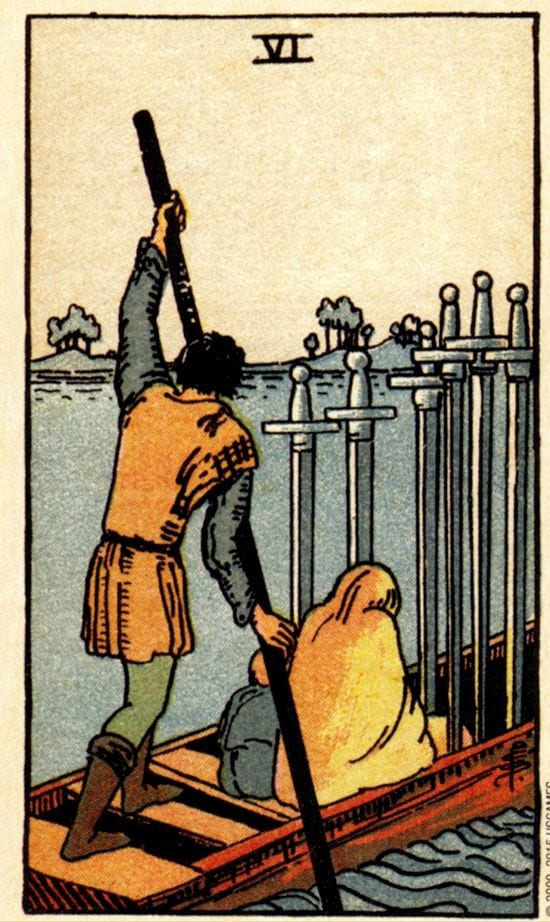
Six of Swords. Moving away from troubled waters. The Six of Swords is quiet passage — not a dramatic departure, but a steady, deliberate movement toward calmer shores. Forgiveness sometimes looks exactly like this. Not a lightning bolt of grace, but a slow, daily choice to turn toward peace.
Five of Swords. Unresolved conflict where someone won and someone lost. The Five of Swords in forgiveness work often represents the dynamic you’re trying to release — the argument that was never fairly resolved, the power imbalance, the situation where being right didn’t make you feel better.
Three of Swords. The wound itself. When this appears, the forgiveness process hasn’t started yet because the pain hasn’t been fully acknowledged. You can’t forgive what you haven’t let yourself fully feel. The Three of Swords says: feel this first. All of it.
The Devil. An attachment that keeps you bound. In forgiveness readings, the Devil often represents the strange comfort of resentment — how holding onto anger gives you a sense of identity, righteousness, or protection. The Devil asks: what would you be without this grudge? And are you ready to find out?
Spread 1: The Forgiveness Landscape (5 cards)
The foundational spread. Use it to understand where you actually are in the forgiveness process.
- Position 1: What I’m holding onto (The resentment, the wound, the unforgiven thing)
- Position 2: What this resentment costs me (The price I pay for holding on)
- Position 3: What this resentment protects me from (The hidden function of staying angry)
- Position 4: What forgiveness would actually look like (Not the ideal — the realistic version)
- Position 5: My next step toward release (The smallest possible movement)
Position 3 is the card that changes the entire reading. Resentment always protects something. It might protect you from vulnerability (if I forgive, they might hurt me again). It might protect your identity (being the wronged party gives you moral authority). It might protect you from grief (anger is easier to feel than sadness). Until you see what the resentment is doing for you, you can’t find a better replacement.
Position 4 is deliberately realistic. I don’t ask “what would complete forgiveness look like?” because that question assumes a destination that might not exist for your situation. Instead, I ask what forgiveness would look like — which might be less dramatic than you think. It might be simply not flinching when their name comes up. It might be wishing them well from a distance. It might be neutrality instead of rage.
Spread 2: Self-Forgiveness (4 cards)
Sometimes the person you most need to forgive is yourself. This spread is for guilt, shame, and the things you did that you can’t undo.
- Position 1: What I did that I haven’t forgiven (The action or inaction)
- Position 2: What I believed about myself at the time (The internal context)
- Position 3: What I’ve learned since (How I’ve changed)
- Position 4: What release looks like (How to put this down)
Position 2 is where compassion enters. You did what you did. And at the time, you were operating from a particular set of beliefs, fears, capacities, and limitations. This doesn’t excuse the action. But it contextualizes it. Understanding why you made the choice you made is different from condoning it.
This spread often brings people to tears. Self-forgiveness is harder than forgiving others because you can’t create distance from the perpetrator — they live inside your own skin. But the cards have a way of reflecting back a kinder version of the story. Not a false version. A more complete one.
Spread 3: The Cord-Cutting Spread (3 cards)
For when you don’t need to understand the resentment anymore — you just need to release it.
- Position 1: The cord (What still connects me to this person/situation)
- Position 2: What I take with me (What I’ve gained that I keep)
- Position 3: What I leave behind (What I release)
This is a ritual spread. I recommend doing it with intention: light a candle, shuffle slowly, and when you place the third card, say out loud what you’re releasing. It doesn’t have to be eloquent. “I’m done carrying this” works perfectly.
Position 2 matters because forgiveness doesn’t mean erasing. Every painful experience taught you something — compassion, resilience, discernment, the ability to recognize red flags. Those gifts are yours. Forgiveness means releasing the pain while keeping the wisdom.
Spread 4: Forgiving Someone Who Isn’t Sorry (4 cards)
The hardest kind. When the person who hurt you doesn’t acknowledge it, doesn’t care, or isn’t available for accountability.
- Position 1: What I needed from them that I didn’t get (The unmet need)
- Position 2: Can I give this to myself? (Self-sourcing what was missing)
- Position 3: What holding onto this does to my future (The forward cost)
- Position 4: How I reclaim my power (Agency and autonomy)
This spread exists because traditional forgiveness assumes a relationship where accountability is possible. But sometimes the person who hurt you is gone, unwilling, or incapable of understanding. You’re left holding the weight of something they don’t even think about.
Position 2 is revolutionary for some people. The need that went unmet — validation, apology, acknowledgment, love — might be something you can learn to give yourself. Not as a substitute. As a sovereign act. The Queen of Pentacles nurtures herself. The Emperor gives himself structure. The Star pours her own healing water.
Position 4 reframes the entire question. Forgiveness stops being about them and becomes about you reclaiming territory. What would you do with all the energy you spend being angry? Where would that energy go? Who would you become?
When you’re not ready
If you do these spreads and every card screams anger — the Tower, the Five of Wands, the Nine of Swords, the Devil — that’s not a failed reading. That’s an honest one.
You’re not ready. And that is completely acceptable.
Premature forgiveness is suppression in a spiritual disguise. It’s bypassing the anger and sadness that need to be felt before genuine release is possible. If the cards say you’re still angry, honor that anger. It exists for a reason. It’s protecting something. It’s telling you something important about your values and boundaries.
Come back to these spreads in a month. Three months. A year. The cards will reflect wherever you are — and wherever you are is exactly the right place to be in your own timeline.
Forgiveness as practice, not event
The biggest misconception about forgiveness is that it happens once. You forgive, you’re free, you move on. In reality, forgiveness is more like a daily practice — some days it’s easy and some days the old anger comes roaring back because a song played or you drove past a certain building or you had a dream.
The spreads above aren’t one-time tools. They’re practices you return to. The Forgiveness Landscape might show different cards every time you pull it, because forgiveness has phases, and each phase reveals a new layer of what you’re carrying.
Temperance — the card on the hero image of this article — pours water continuously. Not once. Continuously. Back and forth, earth and water, conscious and unconscious. That’s what real forgiveness looks like. Not a single dramatic act of letting go, but the patient, daily practice of choosing peace over poison, presence over past.
You don’t have to do it perfectly. You don’t even have to do it completely. You just have to do it honestly.
Frequently Asked Questions
Can tarot help me forgive someone?
Tarot can't force forgiveness, and it shouldn't. What it can do is show you what you're actually holding onto, what it's costing you, and what forgiveness might look like for your specific situation. Sometimes the cards reveal that what you need isn't to forgive the other person — it's to forgive yourself for staying, for not seeing it sooner, or for being human.
What tarot cards represent forgiveness and letting go?
Temperance (balance and healing), the Star (hope after pain), Judgement (integration and release), the Six of Swords (moving away from turbulent waters), and the Ace of Cups (emotional renewal). The Four of Swords can also appear, suggesting that rest and distance are part of the forgiveness process, not obstacles to it.
What if I pull angry cards in a forgiveness reading?
That's honest, and honesty is more valuable than false peace. Cards like the Five of Wands, the Tower, or the Nine of Swords in a forgiveness reading mean you're not ready yet — and that's okay. Premature forgiveness is just suppression with a nicer label. The angry cards are saying: honor your anger first. Forgiveness built on unprocessed rage doesn't hold.
Do I have to forgive someone who hurt me?
No. Forgiveness is a choice, not an obligation. Some hurts don't require your forgiveness to be processed — they require your honesty, your boundaries, and your willingness to stop letting the past dictate your present. The tarot spreads in this article aren't about forgiving because you should. They're about finding whatever form of release actually serves you.