Tarot Spread for Setting Boundaries: Know When to Say No
The thing about “just say no”
Everyone makes it sound so simple. Just say no. Set a boundary. Protect your energy. As if the problem were a lack of vocabulary and not the full-body panic that rises when you imagine disappointing someone you care about.
If setting boundaries were easy, you’d already be doing it. You’re not here because you don’t understand the concept. You’re here because understanding it and doing it are two completely different things — and the gap between them is filled with guilt, fear, old stories about what makes you a good person, and the deeply embedded belief that your needs are somehow less important than everyone else’s.
I want to start there. Not with a spread layout, not with card positions, but with the honest acknowledgment that boundary-setting is one of the hardest emotional skills there is. And tarot doesn’t make it easy. What tarot does is make it visible. It shows you the invisible architecture of why you keep saying yes when your whole body is screaming no.
Why boundaries are a tarot problem
You might not think of boundaries as a spiritual topic, but they absolutely are. Every time you override your own needs to keep someone else comfortable, you’re making a choice about whose energy matters more. Every time you swallow resentment instead of speaking a truth, you’re storing something in your body that will eventually demand to be felt.
Tarot excels at revealing these patterns because the cards bypass your rational explanations. You can tell yourself you’re “just being helpful” or “it’s easier to do it myself” — but when the Ten of Wands shows up in the position of “what you’re carrying that isn’t yours,” the image of a person buckling under the weight of too many burdens is harder to rationalize away.
The cards also have a gift for showing you the cost. Not the cost of setting boundaries — that’s the part you’re already fixated on. The cost of not setting them. The slow erosion of energy, identity, and self-respect that happens when you consistently choose other people’s comfort over your own truth.
Cards that carry boundary energy
Before we get to the spreads, let’s talk about cards that frequently appear in boundary readings. Knowing these archetypes helps you interpret more accurately.
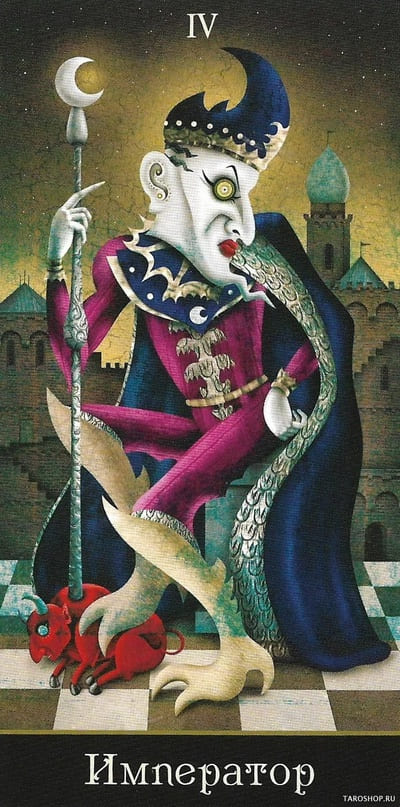
The Emperor. This is the boundary card. Structure, authority, clear rules. The Emperor doesn’t apologize for having standards. He doesn’t negotiate his non-negotiables. When The Emperor appears in a boundary reading, the cards are saying: you know exactly where the line is. The question is whether you’re willing to hold it.
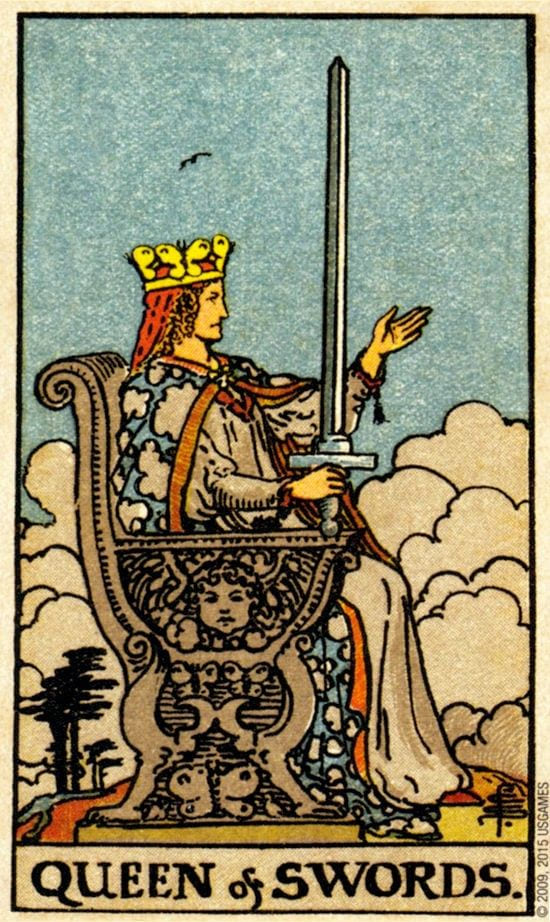
Queen of Swords. She speaks truth with precision. Not cruelty — precision. The Queen of Swords says what needs to be said without softening it into meaninglessness. If she appears, your situation calls for clear, direct communication. No hinting. No hoping the other person will just figure it out.
Nine of Pentacles. Independence. Self-sufficiency. The garden you’ve built for yourself. The Nine of Pentacles represents the life you get to have when you stop letting everyone trample through your garden uninvited. It’s the reward on the other side of the boundary.
Two of Swords. A decision you’re avoiding. Arms crossed, eyes covered. The Two of Swords in a boundary reading means you already know what you need to do — you’re just not ready to face the consequences. The card doesn’t judge you for that. But it does name it.
Ten of Wands. Carrying too much. Other people’s responsibilities, emotions, expectations. The Ten of Wands in a boundary reading is the clearest possible signal that you’ve been saying yes for too long and your body is paying the price.
The Chariot. Willpower and forward momentum. The Chariot says: you can move through this discomfort. Setting the boundary will feel terrible for about fifteen minutes. Not setting it will feel terrible for months. Choose your discomfort wisely.
Spread 1: The Boundary Check-In (5 cards)
This is the core spread. Use it when you feel that familiar resentment building — the one that means you’ve been overgiving again.
- Position 1: Where am I overextending right now? (The area of life where your boundaries are thinnest)
- Position 2: What am I afraid will happen if I say no? (The fear underneath the people-pleasing)
- Position 3: What is actually happening because I haven’t said no? (The real cost of silence)
- Position 4: What boundary needs to be set? (The specific line that needs drawing)
- Position 5: What supports me in holding this boundary? (Your strength, resource, or ally)
Position 2 is where the real work happens. Most people think they’re afraid of conflict. But when the cards show up, the fear is usually deeper — abandonment, unworthiness, the belief that they’re only lovable when they’re useful. Seeing the actual fear changes everything, because you can address the real problem instead of the surface symptom.
Position 3 is the mirror. It’s the card that shows you what the absence of boundaries is actually costing you. I’ve seen the Five of Cups here (grief over lost self-respect), the Eight of Cups reversed (wanting to walk away but feeling trapped), and the Devil (an unhealthy dynamic you keep feeding). Whatever shows up, it’s usually more costly than the discomfort of saying no.
Spread 2: The “No” Practice Spread (3 cards)
For when you have a specific situation — a request, an invitation, an expectation — and you need help deciding whether to honor it or decline.
- Position 1: What happens if I say yes? (The energy, outcome, and cost of agreeing)
- Position 2: What happens if I say no? (The energy, outcome, and cost of declining)
- Position 3: What I need to know before deciding
Simple. Direct. No room for waffling. Pull these three cards, lay them side by side, and let them show you the two paths. The third card often reveals the factor you’ve been ignoring — the detail that makes the decision obvious once you see it.
I use this spread constantly, not just for big boundary decisions but for small ones. The dinner invitation you don’t want to accept. The favor someone asked that would take your entire Saturday. The project at work that isn’t yours but keeps landing on your desk. These small yeses are where boundaries erode fastest, and they deserve the same clarity as the big ones.
Spread 3: The Resentment Excavation (4 cards)
Use this when you’re already resentful — when the boundary should have been set weeks or months ago and now there’s a backlog of frustration to process.
- Position 1: What I’m resentful about (The surface issue)
- Position 2: The boundary I should have set (What I needed to say and didn’t)
- Position 3: Why I didn’t set it (The internal block)
- Position 4: How to address this now (The path forward, even if it’s late)
Resentment is a boundary alarm. It’s your psyche’s way of telling you that something has been violated — maybe by someone else, maybe by yourself. This spread doesn’t make the resentment disappear, but it transforms it from a vague toxic feeling into specific, actionable information.
Position 4 is crucial. People often think that if they missed the moment to set a boundary, it’s too late. It’s not. The conversation might be harder now, the dynamic more entrenched, but “late” is still infinitely better than “never.” The cards in this position usually offer surprisingly practical guidance.
Spread 4: Boundaries in a Specific Relationship (6 cards)
When one particular relationship is the problem — a parent, partner, friend, coworker, or anyone whose presence consistently leaves you drained.
- Position 1: My current energy in this relationship
- Position 2: Their current energy in this relationship
- Position 3: What I give that isn’t appreciated or reciprocated
- Position 4: What they expect from me that I can’t sustain
- Position 5: The boundary that would transform this dynamic
- Position 6: The likely response if I set this boundary
Position 6 scares people, and I understand why. But here’s the thing: the card that appears here isn’t a prediction of doom. It’s information. Maybe the likely response is anger (The Tower), withdrawal (Eight of Cups), or — and this happens more often than you’d expect — relief (The Star). Some people are waiting for you to set the boundary they couldn’t set themselves.
If Position 6 shows something difficult, that doesn’t mean you shouldn’t set the boundary. It means you should set it prepared. There’s a difference between walking into conflict blindly and walking into conflict having already seen the shape of what’s coming.
The cards you don’t want to see (and what they mean)
The Devil in a boundary reading doesn’t mean the situation is hopeless. It means the dynamic has become addictive — there’s something you’re getting from the boundary-less arrangement, even if it’s unhealthy. Maybe it’s the feeling of being needed. Maybe it’s avoiding the emptiness that would appear if you stopped being everyone’s savior. The Devil asks: what are you hooked on?
The Tower means the boundary, when set, will cause a rupture. Not a gentle conversation — a rupture. That sounds terrifying, but Towers are honest. If a relationship can only survive when you’re self-abandoning, it’s not a relationship. It’s a hostage situation. The Tower liberates.
The Moon means you can’t see clearly yet. Something is being hidden — from you, or by you. Before setting a boundary, you need more information. What’s really going on beneath the surface? The Moon says: investigate before you act.
The Hanged Man suggests surrender, but not the kind you think. It’s not about surrendering your boundary. It’s about surrendering your attachment to controlling the outcome. Set the boundary. Release the need for the other person to understand, approve, or validate it.
Why guilt is not a reason to abandon a boundary
This is the part that trips people up most. They do the reading, they see the clarity, they set the boundary — and then the guilt hits. And the guilt feels so bad that they convince themselves the boundary was wrong.
It wasn’t wrong. Guilt after boundary-setting is almost universal, especially if you grew up in an environment where your needs were treated as inconveniences. The guilt is an old alarm system. It was installed by people who benefited from your compliance. It fires every time you deviate from the pattern of self-sacrifice.
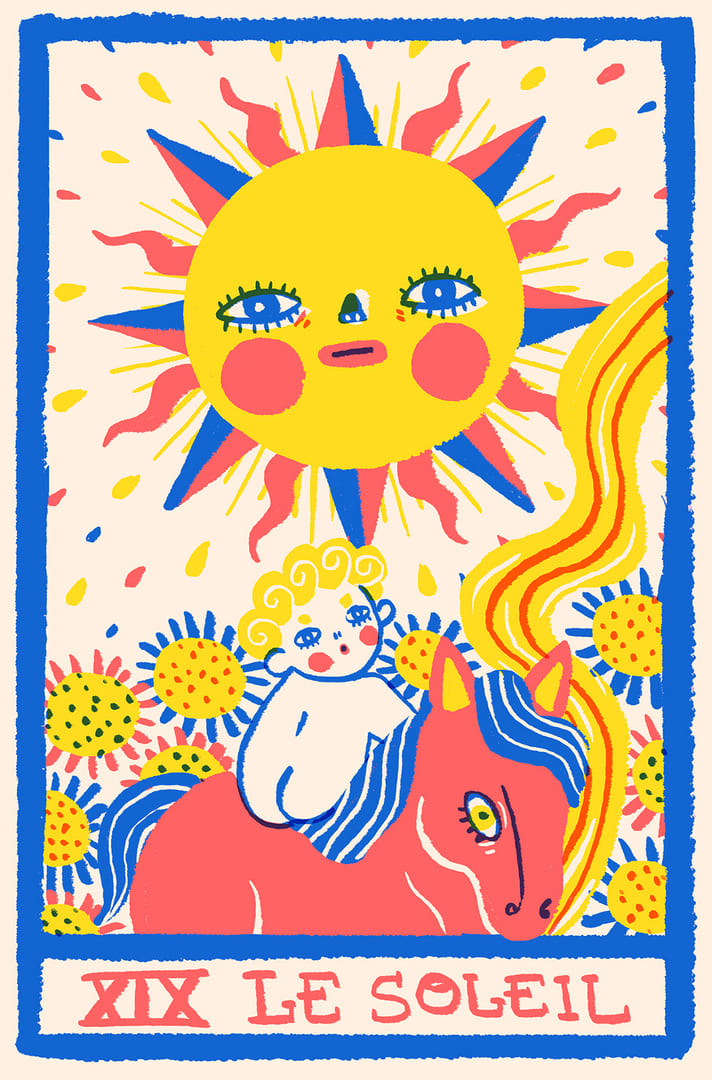
If you pull cards after setting a boundary and they reflect peace, relief, or growth (The Star, Ace of Cups, The Sun), trust them over the guilt. The cards don’t feel guilty. They just show you truth.
Reading boundaries for yourself vs. others
A note on reading boundary spreads for someone else: be extremely careful. Boundary issues are deeply personal, and the temptation to project your own opinions onto the reading is enormous.
If a friend asks you to read their boundary spread and you can already see what boundary they need to set — pause. Your job as a reader is to reflect the cards, not to deliver your opinion through a tarot-shaped megaphone. Ask questions instead of making declarations. “What does this card bring up for you?” is always more useful than “This card clearly means you should stop talking to your mother.”
For your own boundary readings, journal after every spread. Write down not just what the cards said, but how you felt seeing them. The emotional response is data. A card that makes you defensive is pointing at something you’re not ready to face. A card that makes you cry is pointing at something you’ve known for a long time.
The boundary no one talks about: the boundary with yourself
Most boundary content focuses on other people — saying no to their requests, protecting yourself from their energy. But some of the most important boundaries are internal.
The boundary between working and resting. The boundary between scrolling and living. The boundary between taking care of others and taking care of yourself. The boundary between who you actually are and who you’ve been performing as.
Try pulling a single card for this question: What boundary do I need to set with myself?
The answer might surprise you. It might be the Hermit (you need to stop avoiding solitude). It might be the Empress (you need to stop denying yourself pleasure). It might be Temperance (you need to stop swinging between extremes and find a middle ground).
Internal boundaries are quieter than external ones. No one applauds you for going to bed on time or putting your phone in another room. But they’re often the foundation that makes external boundaries possible. When you’re rested, nourished, and aligned with yourself, saying no to others becomes infinitely easier.
A boundary is not a wall
One last thing. Boundaries are not about shutting people out, building walls, or becoming unavailable. A wall says “nobody gets in.” A boundary says “here’s how you get in.”
The Nine of Pentacles — that card of independent abundance — isn’t standing in an empty garden. There are birds, fruits, a beautiful landscape. She has a rich life. She just also has a fence. And a gate. And she decides who walks through it.
That’s the energy of a healthy boundary. Not fortress. Garden with a gate.
The spreads above will help you find your gate. The cards will show you who deserves a key, who needs to knock first, and who has been climbing the fence when you weren’t looking.
Frequently Asked Questions
Can tarot help me set better boundaries?
Tarot won't enforce your boundaries for you, but it's remarkably good at showing you where they're missing and why. The cards reveal patterns you might not see — where you're overgiving, what you're afraid will happen if you say no, and what you're actually protecting by staying silent. That awareness is the first step toward change.
What tarot cards represent boundaries?
The Emperor (structure and authority), the Nine of Pentacles (self-sufficiency and personal space), the Queen of Swords (clear communication and emotional honesty), and the Two of Swords (a decision you're avoiding) all carry strong boundary energy. The Four of Pentacles can signal either healthy protection or fearful over-guarding, depending on context.
What does the Emperor mean in a boundaries reading?
The Emperor in a boundaries spread represents the part of you that knows how to say no clearly and without apology. It's structure, authority, and the ability to define where you end and others begin. If The Emperor appears, the cards are telling you that you already have the strength — you just need to use it.
How do I know if my boundaries are too rigid or too loose?
Pull two cards: one for 'what happens when I say yes too easily' and one for 'what happens when I shut people out.' If the first shows exhaustion or resentment (Ten of Wands, Five of Cups), your boundaries are too loose. If the second shows isolation or missed connection (Hermit reversed, Four of Cups), they might be too rigid. Healthy boundaries live in the space between.