The Three-Card Tarot Spread: A Complete Guide with Examples and Variations
If you ask me which spread to start with, I’ll always give the same answer: three cards. Not one — because a single card gives too little context. And definitely not a 10-position Celtic Cross — a beginner will drown in that.
Three cards are the sweet spot. Enough to see a story. Too few to get lost.
Why three?
Three is a special number in virtually every tradition. Beginning, middle, end. Thesis, antithesis, synthesis. Past, present, future.
Three cards create a narrative — a small story with a setup, development, and resolution. And it’s this story that gives you understanding of a situation that one card simply can’t.
Over years of practice, I’ve realized something else: the three-card spread is incredibly flexible. You can “tune” the same three positions to different questions just by changing what each position represents.
6 spread variations
1. Past — Present — Future
The classic. The most well-known and most universal variation.
- Past — What led to the current situation
- Present — Where you are now, what energies are at play
- Future — Where things are heading on the current trajectory
Works for general questions: “What’s happening in my life?”, “How is this situation developing?“
2. Situation — Action — Outcome
My favorite spread for concrete challenges.
- Situation — The true nature of what you’re dealing with
- Action — What you can do about it
- Outcome — The likely result if you follow the cards’ guidance
Use this when you need not just analysis but practical advice.
3. Mind — Body — Spirit
A self-check and balance spread.
- Mind — Mental state, thoughts, thinking patterns
- Body — Physical energy, health, resources
- Spirit — Emotional and spiritual condition
Perfect for morning practice or when you feel that “something’s off but I can’t tell what.”
4. Option A — Option B — Advice
A decision-making spread.
- Option A — Energy and consequences of the first path
- Option B — Energy and consequences of the second path
- Advice — What will truly serve your highest good
Important: the cards don’t say “do this.” They show the energy of each option. The choice is always yours.
5. What to Release — What to Keep — Where to Move
A spread for transitions and periods of change.
- What to Release — What it’s time to let go of
- What to Keep — What remains your resource
- Where to Move — The direction of growth
6. You — The Other Person — The Relationship
A spread for understanding dynamics in any pair (romantic, business, friendship).
- You — Your role and energy in the relationship
- The Other — Their role and energy
- The Relationship — The overall dynamic and potential
How to read three cards together
The most common beginner mistake is reading each card in isolation. Pull three cards, look up each meaning, write them down. Done.
But the magic of a spread is in how the cards talk to each other. Here’s what to watch for:
The story. Read the three cards as a narrative from left to right. What’s the setup? What happens in the middle? How does it end?
The suits. If all three cards share the same suit (say, three Cups) — the theme is unified. Three Swords — the situation is about thoughts and communication. A mix of suits — the situation is multifaceted.
The numbers. Lots of low numbers (Aces, Twos, Threes) — early stage. High numbers (Nines, Tens) — the situation is mature, nearing completion. Court cards (Page, Knight, Queen, King) — specific people matter in this situation.
The middle card. Often this is the key to the whole reading. It bridges past with future, situation with outcome, one extreme with another.
A sample reading with analysis
Let’s say you asked: “What do I need to know about my career?”
And you drew three cards:
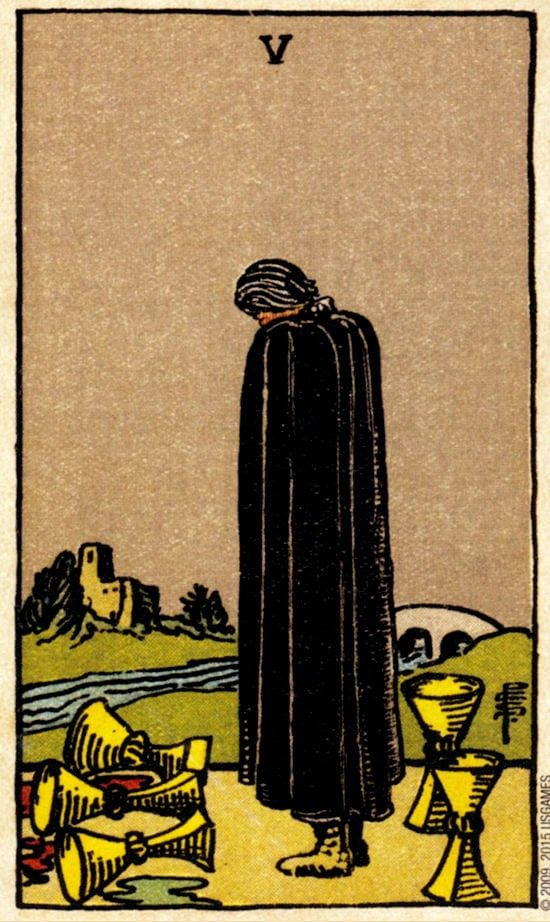
Past: Five of Cups — You experienced disappointment. Maybe you didn’t get the position, maybe a project fell through. The three overturned cups in the foreground represent what was lost. But notice: behind the figure stand two full cups. Not everything is gone.
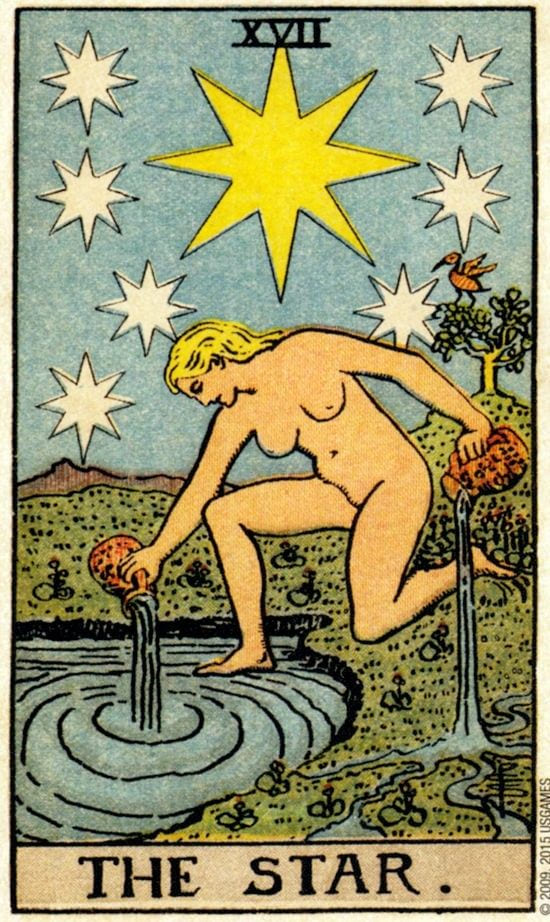
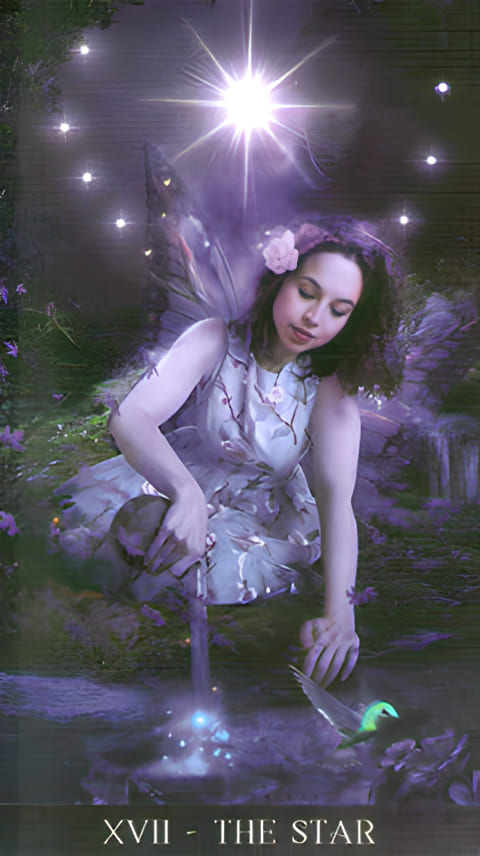
Present: The Star — You’re in a period of recovery and renewal. The Star is one of the most healing cards in the deck. It says: confidence is returning, and you’re on the right path. Keep believing in yourself.
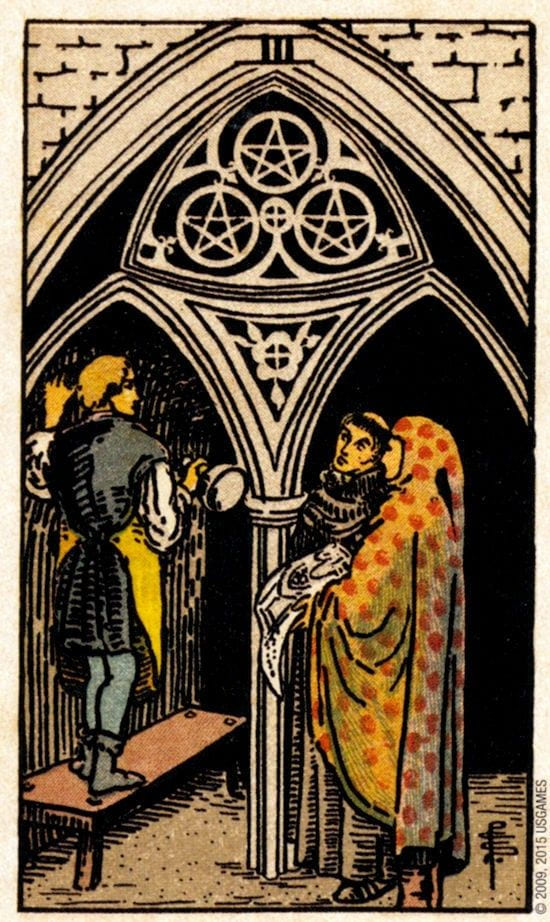
Future: Three of Pentacles — Teamwork and recognition of your skills. Someone will appreciate what you can do. Perhaps it’s a collaborative project or a new role where your expertise is visible and valued.
The full story: Past disappointment forced you to reassess. Now you’re recovering your confidence (The Star’s gift), and if you stay open, collaboration and recognition lie ahead. The three cards together say: the worst is behind you, the best is ahead.
Practical tips
Ask open questions. Not “Will I get a promotion?” (closed question, yes/no), but “What do I need to know about my career growth?” (open question, room for a story).
Write it down. Keep a spread journal. Date, question, three cards, your interpretation — and a week later, a note about how things actually played out. After a month of these entries, you’ll understand the cards much more deeply.
Don’t re-ask. If you don’t like the answer, the temptation to pull three more cards “for clarification” is strong. Don’t do it. The first spread is the most honest. Give it time to settle.
Start with a morning spread. Every morning, pull three cards and ask: “What do I need to know today?” In the evening, come back and reflect on how the cards showed up in your day. After a week, you’ll feel the rhythm of the cards in a whole new way.
Exercise for this week
Choose one variation out of the six and use only that one for the whole week. One spread per day, one theme.
For example, take “Mind — Body — Spirit” and check your balance every morning. By the end of the week, you’ll notice patterns: maybe Swords cards keep showing up in the Mind position (too much thinking), or Cups dominate the Spirit position (emotions running the show).
Those patterns are real gold for self-knowledge.
Frequently Asked Questions
What are the three positions in the classic three-card tarot spread?
The classic three-card spread uses Past, Present, and Future. The past card shows what led to the current situation, the present card shows what is happening now, and the future card shows the most likely direction if things continue as they are.
How do you read three tarot cards together?
Read each card individually first, then look for the story they tell together. Notice suit patterns (many Cups suggests emotional themes), progression from challenge to resolution, or tensions between cards that reveal the complexity of the situation.
What is the best three-card spread for a yes or no question?
The Situation-Action-Outcome spread works better than past-present-future for decisions. It shows the current reality, what you can do, and the likely result of that action — giving you a directional answer with practical guidance attached.
Can you use the three-card spread for relationship questions?
Yes. The You-The Other Person-The Relationship variation is specifically designed for this. Each position reveals a different energetic layer of the dynamic, and together they paint a clearer picture than asking about the relationship in general.
How many cards should I read as a beginner?
Start with three cards. One card gives context but limited story; ten cards overwhelm new readers. Three cards create a narrative arc — enough to understand without getting lost. Master three cards thoroughly before expanding to larger spreads.