The Future of Tarot: How Technology Is Changing Ancient Divination
The oldest technology meets the newest
Tarot has always been a technology. Not a digital one — a human one. A system for organizing intuition, a framework for seeing patterns, a tool for asking better questions. It’s done this job for over 500 years using nothing but printed images on card stock.
Now it’s meeting a different kind of technology, and the collision is producing things nobody expected.
What’s already here
AI readings
The most visible change. Large language models can now interpret tarot cards with a level of nuance that would have seemed impossible five years ago. The best AI readers don’t just recite textbook meanings — they weave cards together into coherent narratives, consider positional relationships, and respond to follow-up questions.
Are they as good as a skilled human reader? Not for deep emotional work. But for daily guidance, learning, and accessible readings? They’ve crossed a threshold that matters.
Digital deck libraries
Your phone can now hold more decks than you could physically store in your house. Digital platforms offer hundreds of decks — from classic Rider-Waite-Smith to indie art decks that might have print runs of only 500 copies.
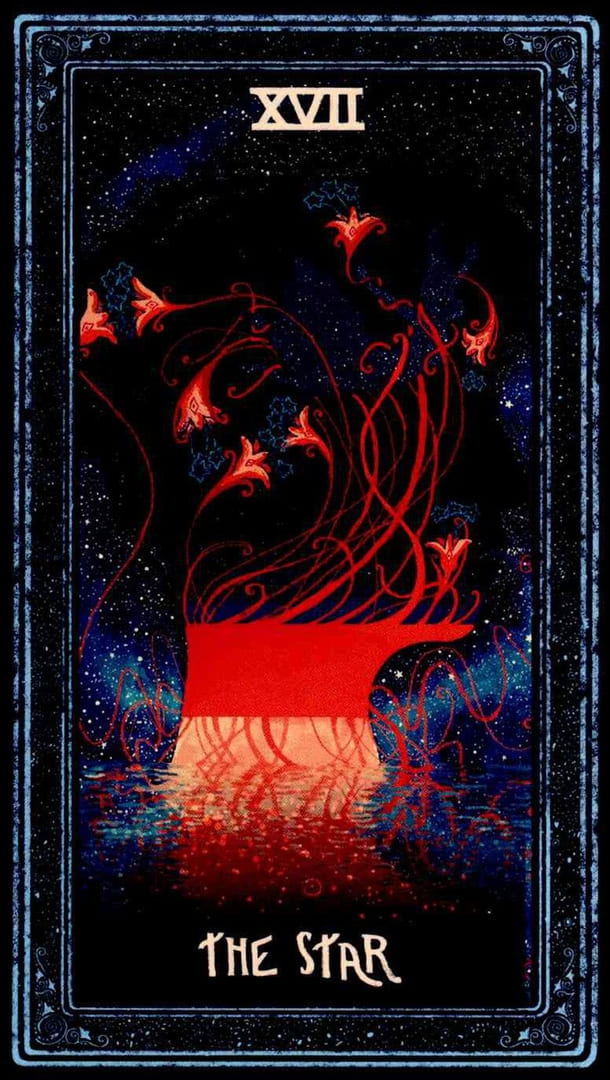
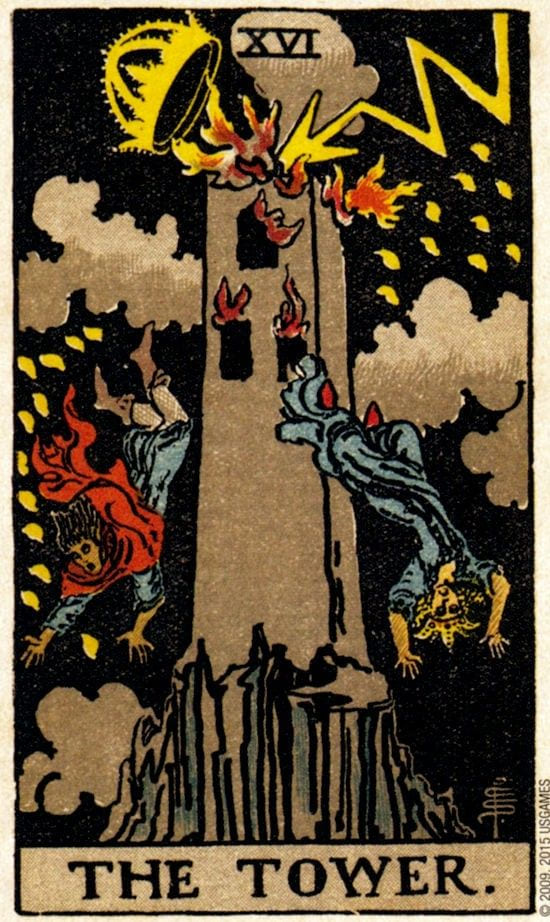
This changes what’s possible. A reader in a small town who used to have access to whatever their local bookstore stocked can now explore the full breadth of tarot art. A student who wants to compare how six different decks depict the Tower can do it in seconds.
Global community
Tarot used to be local. You learned from whoever was near you, or you studied books alone. Now, tarot communities on social media connect millions of practitioners across every continent. A reader in Buenos Aires shares a spread that a reader in Tokyo tries the next morning.
This cross-pollination is accelerating the evolution of tarot practice in real time. New spread designs, interpretation approaches, and deck concepts travel globally in hours.
Online reading platforms
Professional readers can now serve clients anywhere in the world through video calls, chat, and email readings. Geography is no longer a barrier to finding a reader whose style matches your needs.
This has been quietly revolutionary. The best readers used to be accessible only to people who lived near them. Now they’re accessible to anyone with an internet connection.
What’s emerging
Personalized AI readers
The next step beyond generic AI readings: AI that learns your reading style, remembers your history, tracks recurring cards, and personalizes interpretations based on what it knows about your life situation and preferences.
This is already beginning. Apps that remember your past readings and notice patterns — “The Five of Cups has appeared in your last four readings, suggesting an unresolved grief theme” — are creating a new category of tarot experience that didn’t exist before.
Augmented reality
Imagine pointing your phone at a physical tarot card and seeing its symbolism animated — the water flowing in the Star, the tower crumbling, the Fool stepping off the cliff. Or laying out a physical spread and having an AR overlay show the energetic connections between cards.
This technology exists in prototype form. When it matures, it could bridge the gap between physical and digital tarot in ways that serve both traditions.
Tarot education technology
Interactive learning platforms that teach tarot through spaced repetition, visual recognition games, and progressive difficulty are replacing static textbooks for a new generation of students.
Instead of reading about the Seven of Pentacles, you see it in context across dozens of readings, track your interpretation accuracy over time, and build card knowledge through practice rather than memorization.
Data-informed practice
Journaling apps that track every reading create datasets that reveal patterns invisible to memory alone. Which cards appear most frequently for you? How do your interpretations of the same card change over time? What spreads give you the most useful insights?
This kind of self-tracking was always theoretically possible with paper journals, but the analysis was impractical. Digital tools make pattern recognition automatic.
What this doesn’t change
The human element
Technology can simulate conversation, but it can’t replicate the experience of sitting across from someone who is genuinely paying attention to you. The warmth of a human reader, the moment of eye contact when a card hits close to home, the intuitive leap that comes from reading a person, not just cards — these aren’t technical problems waiting for solutions.
They’re human experiences that technology serves differently.
The physicality of cards
There’s something about shuffling physical cards that digital interfaces don’t replicate. The weight of the deck, the sound of cards sliding, the tactile ritual of cutting the deck and turning cards over. These sensory experiences are part of what makes tarot work for many people.
Physical deck sales are growing, not shrinking. The rise of digital hasn’t replaced physical — it’s created new entry points that often lead back to physical cards.
The mystery
Tarot works partly because we don’t fully understand why it works. The card you drew is random, but it feels meaningful. The interpretation could apply to anyone, but it lands specifically for you. This productive ambiguity — the space between chance and meaning — is where tarot does its best work.
Technology can enhance this experience, but it can’t explain it away. And most practitioners don’t want it to.
The tensions
Accessibility vs. depth
Technology makes tarot more accessible than ever. Anyone with a phone can get a reading. But does easier access mean shallower engagement? Some traditional practitioners worry that instant AI readings create consumers, not practitioners — people who receive interpretations passively rather than developing their own reading skills.
The counterargument: accessibility is the first step. Many serious practitioners started with a casual app reading that sparked deeper interest.
Democratization vs. quality
When anyone can offer AI-generated readings, how do you distinguish quality? When hundreds of new decks launch monthly, how do you find the ones worth your time? The flood of content creates a discovery problem that didn’t exist when the tarot world was smaller.
Tradition vs. innovation
Every technology shift in tarot’s history has generated resistance. Printing was a technology that transformed tarot from hand-painted art to a mass medium. The internet was a technology that transformed tarot from a local practice to a global conversation. AI is the latest in this line.
The pattern is consistent: the tradition absorbs the technology, transforms it, and continues — changed but intact.
What the cards might say
If you pulled a card for the future of tarot, you’d probably get something from the suit of Wands — creative energy, new beginnings, rapid growth. Maybe the Ace of Wands: raw potential that could become anything, depending on how it’s directed.
The direction depends on practitioners. Technology is a tool. Whether it deepens or cheapens tarot practice depends on how the community uses it, what it demands, and what it refuses to accept.
The cards have survived printing presses, religious persecution, cultural erasure, and five centuries of change. They’ll survive smartphones. They always find new ways to reach the people who need them.
Frequently Asked Questions
How is technology changing tarot?
Technology is transforming tarot in several ways: AI-powered apps provide instant readings with sophisticated interpretations, digital decks make hundreds of art styles accessible on your phone, online communities connect readers globally, and social media has made tarot mainstream. More experimental developments include augmented reality cards, personalized AI readers that learn your style, and digital-first decks designed specifically for screens.
Will technology replace traditional tarot reading?
No. Technology is expanding tarot, not replacing it. Physical cards, in-person readings, and human intuition offer experiences that technology enhances but doesn't replicate. Most practitioners use both — digital tools for daily practice and convenience, physical cards for ritual and depth. The market for physical decks is actually growing alongside digital adoption.
Are digital tarot readings as valid as physical ones?
This depends on your framework. If you believe readings work through synchronicity or psychological reflection, digital readings are equally valid — the meaning comes from interpretation, not the physical medium. If you believe in energetic connection through touch, digital feels different. Most modern practitioners find both valuable for different purposes.
What tarot technology exists today?
Current tarot technology includes AI reading apps with natural language interpretation, digital deck libraries with hundreds of decks, online reading platforms connecting readers with clients globally, tarot journaling apps that track patterns over time, social media communities with millions of members, and educational platforms teaching card meanings through interactive methods.