Tarot Reading for Friends: How to Do It Without Making Things Weird
The moment everything changes
You’ve been reading tarot for yourself, getting good at it, maybe posting about it on social media. Then a friend says those words: “Can you read for me?”
And suddenly the stakes are different. This isn’t you pulling cards alone in your room. There’s another person across from you — someone you care about, whose life you already know things about, who’s trusting you with something personal.
Reading tarot for friends is one of the most rewarding and most treacherous things you can do as a developing reader. Rewarding because the feedback is immediate and honest. Treacherous because the things that make you a good friend can make you a biased reader.
Here’s how to do it well.
Before you start: set the frame
Ask what they want
Not everyone wants the same thing from a reading. Some friends are genuinely seeking guidance. Others are curious and want entertainment. Some want deep emotional processing. Others want a fun party trick.
Ask directly: “Do you want a real reading, or more of a fun thing?” This one question prevents most awkwardness. If they want fun, keep it light. If they want real, shift into reading mode.
Clarify your role
Say something like: “I’m going to tell you what I see in the cards. I’m not giving you advice about what to do — that’s your call. The cards show possibilities, not commands.”
This protects both of you. It keeps you from falling into the advice-giving trap that friends naturally slide into, and it keeps them from feeling pressured by your interpretation.
Ask for a real question
“What should I ask about?” is the most common question. Help them focus: “Think about something in your life that you’d like clarity on. It doesn’t have to be dramatic — it can be as simple as ‘what should I focus on this month?’”
Vague questions produce vague readings. A specific question gives the cards something to work with.
The reading itself
Read the cards, not your knowledge
This is the hardest part. You know your friend is going through a divorce. The Three of Swords comes up. Your brain immediately connects the card to the divorce because you know about it.
But the card might not be about the divorce. It might be about something else entirely — a betrayal at work, a friendship ending, grief about something they haven’t told you.
Describe what you see in the card before you interpret. “I see heartbreak, a painful truth coming to light, grief that needs to be felt.” Let them tell you where it lands. Don’t assume you know.
Avoid the projection trap
When you know someone well, it’s tempting to read the cards through the filter of what you already know about their life. This feels like intuition, but it’s often just projection.
Check yourself: “Am I interpreting this card based on what it shows, or based on what I know about their situation?” If it’s the latter, pull back and stick to the imagery.
Handle difficult cards with grace
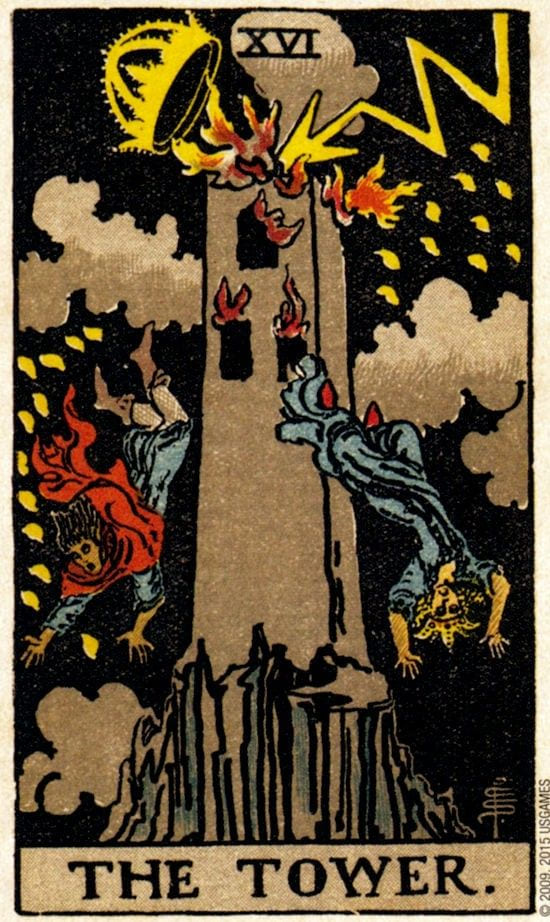
The Tower. The Ten of Swords. The Five of Cups. Death.
With a stranger, you’d deliver these with professional detachment. With a friend, you might panic internally because you know exactly what difficult thing in their life this card might connect to.
Don’t panic. Don’t soften the card into meaninglessness. Don’t say “don’t worry about it.”
Instead: “This is a challenging card. It speaks to endings, to things breaking down so something new can be built. Does that resonate with anything you’re going through?” Give them the meaning. Let them do the connecting.
Let them respond
Leave space after each card for them to react. Their response tells you more than the card does. Watch for:
- The card that makes them go quiet (that’s the one that hit)
- The card that makes them argue (“that doesn’t apply to me” often means it very much does)
- The card that makes them cry (stop interpreting and just be present)
- The card that makes them light up (that’s their answer)
After the reading
Don’t bring it up later
This is crucial. Whatever came up in the reading stays in the reading unless they bring it up first. Don’t mention it at brunch next week. Don’t reference it when they’re making a decision. Don’t say “remember when the cards said…”
The reading is a contained space. Dragging it into everyday friendship creates an uncomfortable dynamic where they feel watched or judged.
Don’t follow up
Resist the urge to check in: “So, did that reading make sense? Did the thing the Tower predicted happen?” This creates pressure and can feel intrusive. If they want to discuss it, they will.
Don’t read repeatedly for the same question
If a friend asks for another reading about the same topic a week later, gently redirect. “The cards already gave us a clear message on this. Let’s see how it unfolds before we ask again.” Repeat readings on the same question often indicate the person is looking for permission rather than guidance.
Common scenarios and how to handle them
The friend who wants you to tell them to leave their partner
They didn’t ask “should I leave?” but every question they ask circles back to the relationship. Every card, they interpret through the lens of “does this mean I should go?”
Don’t take the bait. Read the cards honestly, but don’t make the decision for them. “The cards show a pattern of unhappiness and a desire for change. What you do with that information is up to you.”
The friend who tests you
“I already know what’s going on in my life — let’s see if the cards get it right.” This competitive energy undermines the reading. Address it directly: “Tarot works better as a conversation than a test. Can you come at this with an open question instead?”
The friend who gets upset
Sometimes a reading hits too hard. If your friend gets emotional or angry:
- Stop the reading if needed
- Switch from reader mode to friend mode
- Don’t apologize for what the cards said
- Offer comfort without retracting your interpretation
- “That was a lot. Do you want to take a break, or do you want to keep going?”
The friend who wants readings all the time
Boundaries. “I love reading for you, but I need to do it when I’m in the right headspace. Let’s plan it rather than doing it spontaneously every time we hang out.”
A reading that happens too often loses its power. Scarcity makes the experience more meaningful.
The golden rule
Read for your friends the way you’d want to be read for: honestly, kindly, without judgment, and with respect for their autonomy. The cards deliver the message. You deliver it with care. The rest is up to them.
And when it’s done, go back to being their friend. Not their reader. Not their advisor. Their friend — who happens to have an interesting skill that they sometimes share.
Frequently Asked Questions
Should I read tarot for friends?
Yes, with awareness. Reading for friends is one of the best ways to develop your skills — you get honest feedback and genuine questions. But it requires extra care because you already know personal details about their lives, which can bias your interpretations. Set clear expectations, maintain boundaries, and remember that you're reading cards, not dispensing advice as a friend.
What if I see something bad in a friend's reading?
Deliver it with context and care. Don't panic, don't catastrophize, and don't pretend you didn't see it. Frame challenging cards as opportunities for awareness: 'This card suggests a period of difficulty — what area of your life feels challenging right now?' Let them lead the interpretation rather than projecting your knowledge of their situation onto the cards.
How do I handle friends who don't take the reading seriously?
Set the tone from the start. If someone treats it as pure entertainment, that's fine — give them a fun, light reading. But if you want them to engage more seriously, say so gently: 'The reading works better if you bring a real question.' If they can't or won't take it seriously, keep it light and save your deeper readings for people who want them.
Can reading tarot for friends damage the friendship?
It can if you're not careful. The most common issues are: telling them something they didn't want to hear, giving unsolicited relationship advice through the cards, or creating an uncomfortable dynamic where they feel judged. Prevent this by asking what level of honesty they want, sticking to what the cards show rather than what you personally think, and never bringing up reading content in future conversations unless they do first.