How to Celebrate Imbolc: Rituals for Returning Light
Imbolc is a festival of small fires
You don’t need an elaborate ceremony. You don’t need an outdoor space. You don’t need to know Gaelic. What you need for Imbolc is one candle, a quiet hour, and the willingness to do something on purpose.
Below are seven rituals that carry the essence of the sabbat. Some take five minutes. Some take an afternoon. All of them are gentle, solitary-friendly, and rooted in the tradition of the Celtic hearth. Pick one. Pick three. Pick them all across the week. There is no wrong way.
1. The candle vigil (the oldest ritual)
This is the most traditional Imbolc practice and the one from which many others descend.
What you need: One candle. A safe holder. A dark room.
How to do it:
- On the evening of January 31 or February 1, turn off all artificial lights in one room.
- Place your candle on a table, altar, windowsill, or mantle.
- Light it. Say, aloud or silently: “Welcome, returning light. I see you. I honor you. I am ready to receive you.”
- Sit with the flame for at least 10 minutes. Don’t read, don’t scroll, don’t do. Just watch.
- Before blowing out the flame (or letting it burn safely down), say: “I carry your light into the days to come.”
Why it works: For thousands of years, Celtic communities lit candles in every window on Imbolc Eve to guide Brigid as she walked the land. Your single flame is part of that long chain. You’re not inventing anything — you’re joining.
2. The sacred cleaning (one space, fully)
Imbolc cleansing is not the full spring cleaning. It’s ceremonial — a small act with large meaning.
What you need: One space (a drawer, altar, desk, shelf). Cleaning supplies. A candle.
How to do it:
- Light your candle before beginning.
- Empty the chosen space completely. Everything out.
- Clean it thoroughly — wipe, dust, polish, whatever it needs.
- Pause. Breathe. Notice how it feels empty.
- Return only the things you actually want there. Anything you don’t want, set aside.
- As you return each item, say silently: “I make space for this.”
- Leave the candle burning in the cleansed space for an hour if safe.
Why it works: Imbolc is a preparation festival. You’re not yet planting (that’s Ostara) — you’re making the soil ready. Physical cleansing mirrors the inner cleansing the season invites.
3. The purification bath
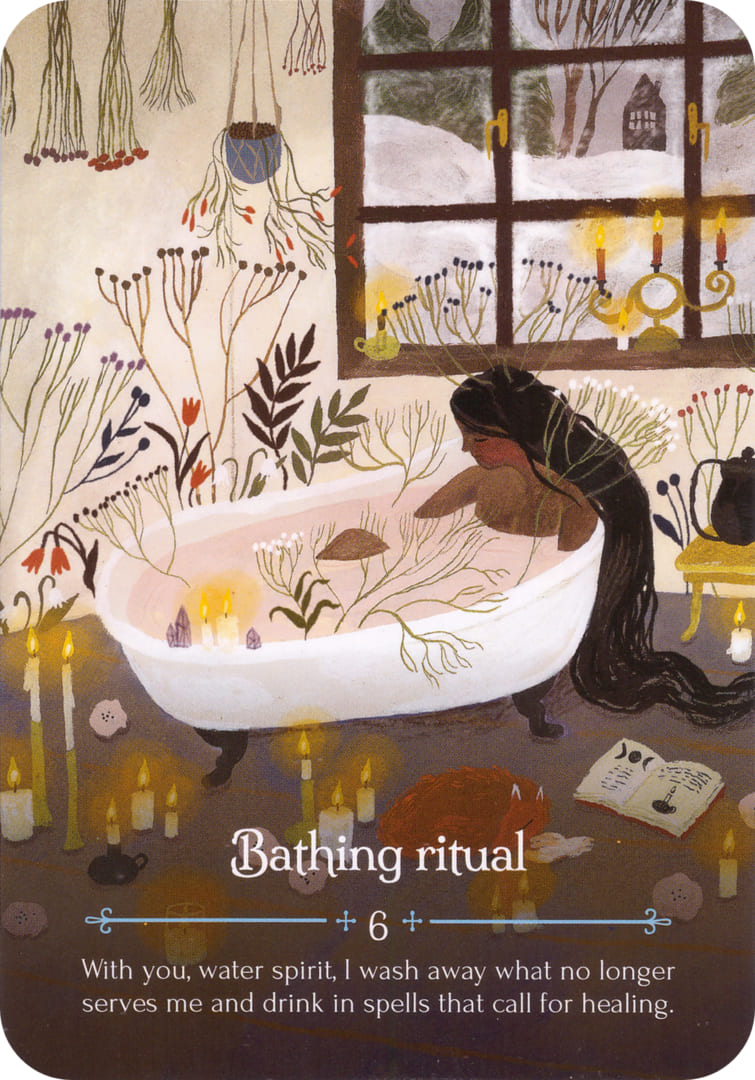
Water is one of Imbolc’s sacred elements — Brigid is the goddess of holy wells. A ritual bath is one of her most beloved offerings.
What you need: A bathtub, or a large bowl for a foot soak. Salt (sea salt or Epsom). Dried herbs (rosemary, lavender, or white flowers). A candle.
How to do it:
- Draw a warm bath. As the water runs, add salt and a pinch of herbs. Say: “This water cleanses what no longer belongs to me.”
- Light the candle in the bathroom. Turn off overhead lights if safe.
- Enter the water slowly. Sit for a few minutes. Let your body settle.
- Submerge up to your neck (or dip your feet). Imagine winter’s heaviness leaving through the water.
- When ready, drain the water. Stay seated as it drains — feel what’s being carried away.
- Step out. Dry off. Say: “I am ready.”
If you don’t have a bath, a foot soak with warm water, salt, and herbs works just as well. The element is what matters, not the volume.
4. Braiding Brigid’s cross
The Brigid’s cross is a four-armed woven cross made of reeds or straw, traditionally hung above doorways to protect the home. It’s the most iconic Imbolc craft.
What you need: 12-16 dried reeds, rushes, straw, long grass, or pipe cleaners (if you can’t find natural materials). A tutorial video (YouTube has many good ones).
How to do it:
- Soak reeds/rushes for 1-2 hours to make them pliable (skip if using pipe cleaners).
- Follow a tutorial — the weaving pattern is hard to describe in words but easy to learn from video.
- As you weave, set a protection intention: “May this home be blessed. May all who enter be welcome. May Brigid’s warmth remain here.”
- Tie the ends with twine or thread.
- Hang above a doorway — traditionally the kitchen or front door. Replace each Imbolc.
Why it works: You’re making something with your hands, which honors Brigid’s role as goddess of smithcraft and craft. And you’re carrying a 1,500-year-old tradition forward. That matters.
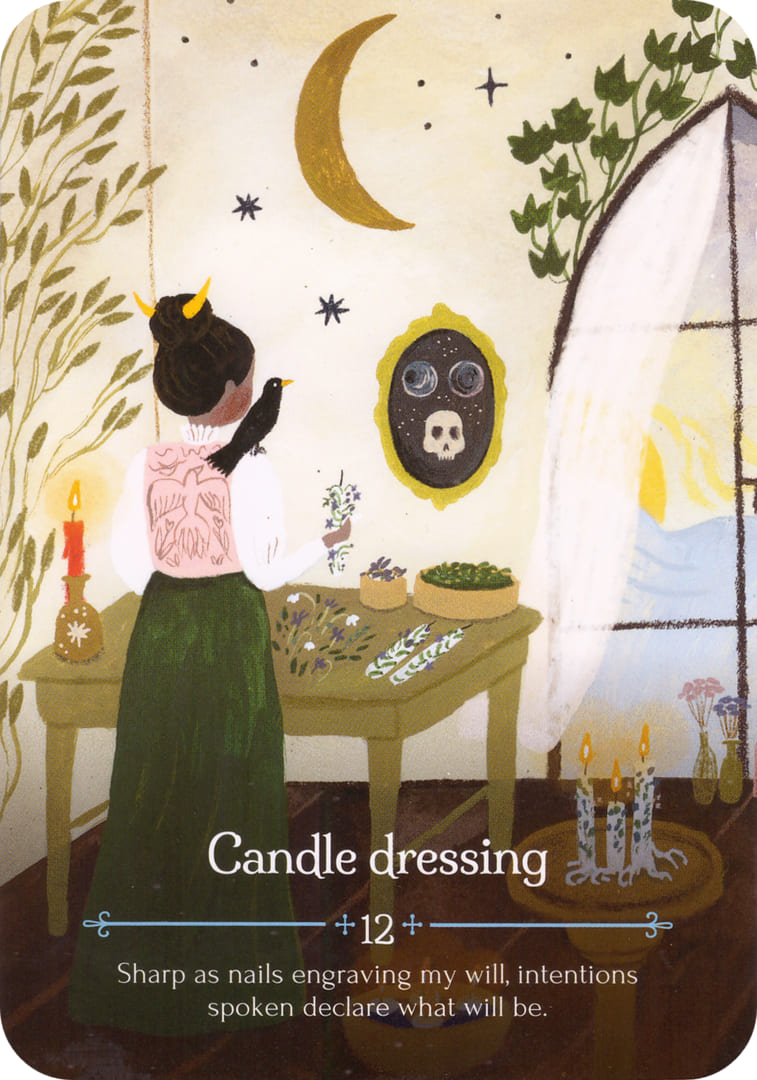
5. Candle dressing (advanced candle magic)
If the basic candle vigil is ready for more, try dressing a candle.
What you need: A white or pale-yellow taper candle. Olive oil (or a carrier oil). Dried herbs (rosemary, bay, or white flowers). A pin or toothpick.
How to do it:
- Decide your intention — one clear, simple thing you want to invite into the returning light. Write it down.
- Use the pin to carve your intention into the candle wax. Can be a word, a symbol, your name.
- Dip your finger in oil. Starting from the middle of the candle, rub oil upward (toward the wick) if you’re drawing something in. Then from the middle downward if you’re releasing. For Imbolc, you’re mostly drawing in.
- Roll the oiled candle in crushed herbs.
- Light the candle. Sit with it until it’s mostly burned down (a taper takes a few hours).
- Let it burn out safely if possible. If not, snuff (don’t blow) it and continue another evening.
Why it works: Candle dressing is folk magic — you’re physically encoding your intention into the flame. The combination of oil, herbs, and focused thought makes the candle more than a candle. It becomes a small ceremony.
6. Making a Brídeóg (Brigid’s doll)
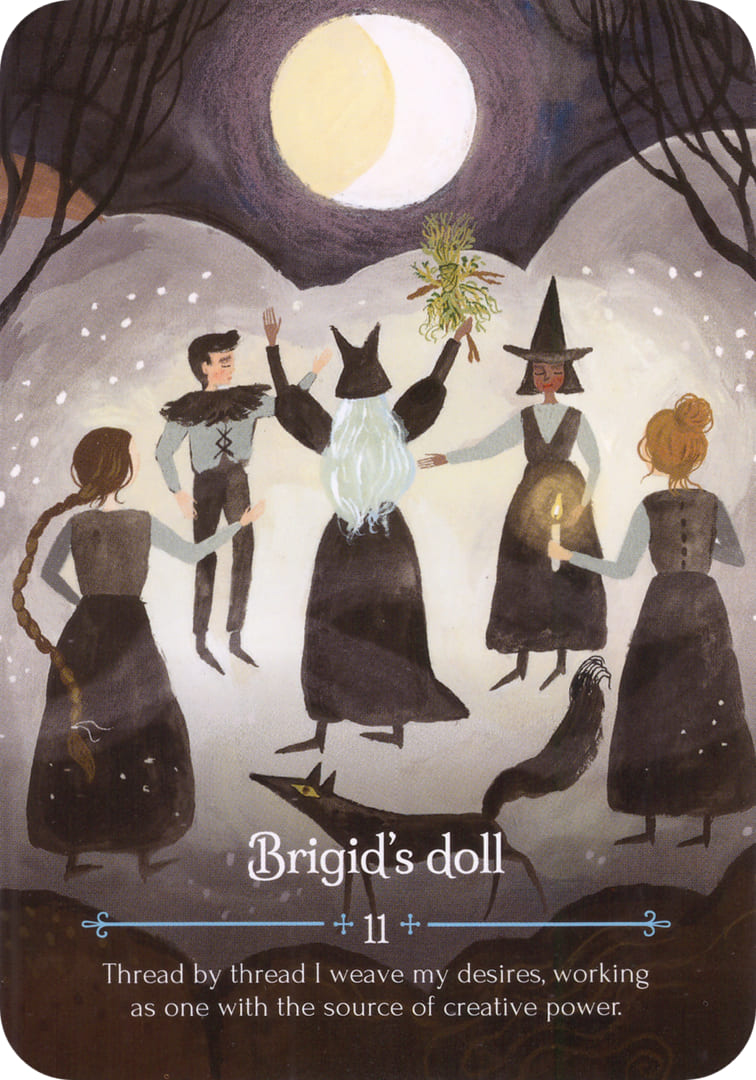
In Irish tradition, families on Imbolc Eve would make a small doll representing Brigid and carry her from house to house, welcoming her into each home.
What you need: Scraps of cloth or straw. Ribbon or cord. A small bit of herb or lavender for stuffing. Optional: embroidery thread for a face.
How to do it:
- Form a small bundle of straw or rolled cloth into a body shape.
- Tie at the neck to make a head.
- Tie a smaller bundle crosswise to make arms.
- Dress her — a simple piece of white cloth as a robe, a ribbon for a belt.
- If you like, embroider or draw a simple face.
- Place her in a small bed made of cloth, beside your altar or fireplace, for the night of Imbolc.
- In the morning, thank her and keep her on the altar until Ostara, when she can be returned to the earth or kept for next year.
Why it works: You’re making Brigid physically present in your home. Even if you approach this symbolically, there’s something powerful about having a small, tangible representation of the goddess you’re welcoming.
7. The Imbolc tarot ritual
For those who work with the cards, this is one of the deepest Imbolc practices.
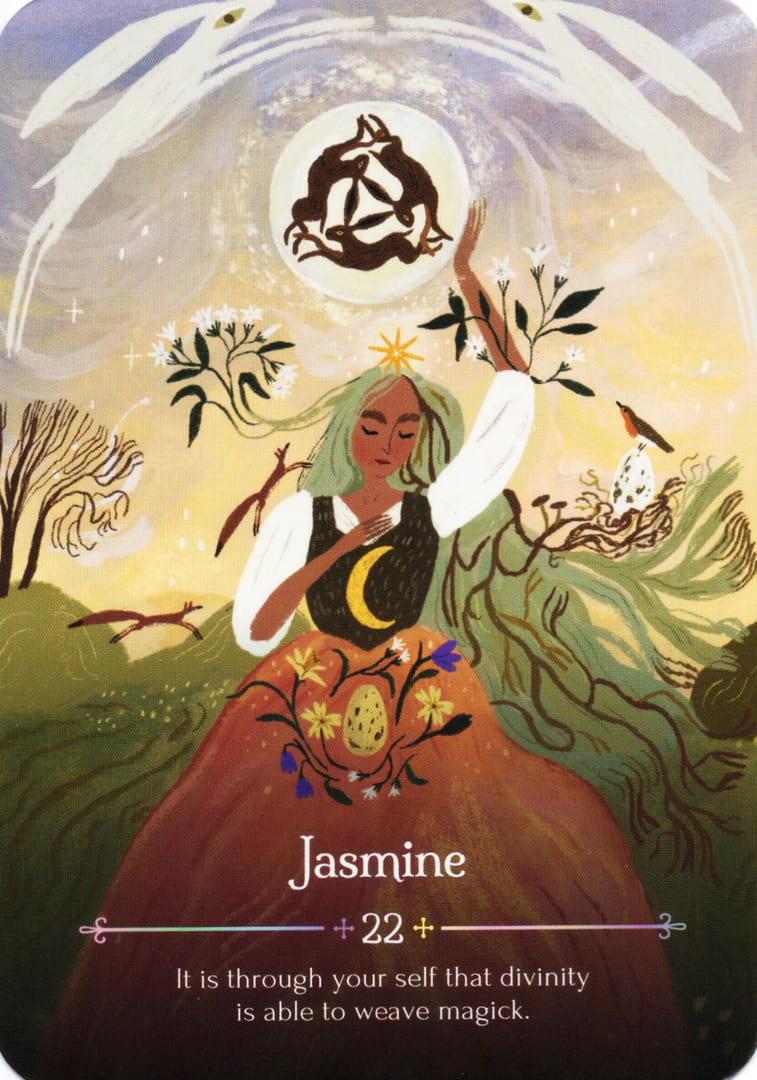
What you need: Your tarot deck, or an oracle deck built for the season (the Seasons of the Witch: Imbolc Oracle is perfect). A candle. A journal.
How to do it:
- Light your candle. Sit at a table where you won’t be disturbed.
- Shuffle slowly, asking: “What is ready to stir in me this season?”
- Pull five cards, laid left to right:
- Card 1 — What kept me alive through winter. What inner fire I’ve been tending, consciously or not.
- Card 2 — What is stirring beneath the surface. The movement that’s begun but isn’t yet visible.
- Card 3 — What wants to be cleansed or released. The energy that’s ready to leave.
- Card 4 — What wants to be welcomed. The new guest I’m invited to receive.
- Card 5 — My gentle first step. The small, doable action Brigid is pointing me toward.
- Sit with each card for 3-5 minutes. Write one sentence about what it tells you.
- When finished, thank the cards. Snuff the candle. Keep the journal entry.
- Return to the reading at Ostara (March 20) to see what has moved.
Why it works: Imbolc is about tending invisible beginnings. Tarot is a language for making the invisible visible. The combination is native — they speak the same tongue.
A full Imbolc evening (combining three rituals)
If you want a full experience, here’s a simple order for an Imbolc evening:
- 6:00 PM — Cleansing bath (30 minutes)
- 7:00 PM — Candle vigil with dressing (30-60 minutes)
- 8:00 PM — Tarot ritual with journaling (45 minutes)
- 9:00 PM — Quiet cup of tea, candle still burning. Journal entry. Bed.
That’s your Imbolc. Two hours total. No elaborate preparations, no special equipment. Just you, a candle, some water, and your attention.
After the ritual
Whatever you do on Imbolc, the ritual isn’t over when you blow out the candle. The sabbat continues into the days that follow.
Keep an eye out for the first snowdrops (they usually appear within days of Imbolc in temperate climates). Notice the lengthening daylight — each day is now about 2 minutes longer than the last. Pay attention to what your body and mind want. Something is stirring. You made the space for it.
By Ostara (March 20), what felt like an invisible seed in early February should be starting to show. Return to your Imbolc journal. Ask: what has moved?
Usually, something has.
For a structured Imbolc spread built around Brigid’s energy, try the Imbolc reading in the Elvi app. The Imbolc Oracle is available there for the full seasonal experience.
Frequently Asked Questions
When exactly should I do an Imbolc ritual?
Traditionally, Imbolc rituals are done on the evening of January 31 (Imbolc Eve) or on February 1st. If those dates don't work, do your ritual on the closest weekend — the energy of the festival extends a few days around the exact date.
Do I need to do all these rituals?
No. Pick one or two that resonate. Imbolc is a gentle, introverted sabbat — more is not better. A single ritual done attentively is worth more than seven done mechanically.
Can I do an Imbolc ritual if I don't have a fireplace?
Absolutely. A single candle on a table serves the same purpose as a hearth fire. The point is the living flame — what it contains is a flame, whether that's a bonfire or a birthday candle.
Is it okay to modify traditional rituals?
Yes. Imbolc has been celebrated for over 2,000 years across many cultures. There is no single correct version. Adapt rituals to your space, your abilities, and your beliefs — sincerity is worth more than orthodoxy.