What Is Ostara? The Pagan Spring Equinox Festival Explained
A festival of balance and awakening
There’s a moment every spring when you feel it — the air shifts, the light changes, and something deep inside you uncurls after months of winter stillness. That feeling has a name. In pagan and Wiccan traditions, it’s called Ostara (pronounced oh-STAR-ah), and it marks the spring equinox — the day when light and darkness stand in perfect balance before the sun takes the lead.
In 2026, Ostara falls on Friday, March 20, and it’s one of those holidays that feels both ancient and startlingly relevant. Whether you follow a pagan path, read tarot, or simply feel drawn to seasonal rhythms, understanding Ostara can change the way you experience spring.
The goddess behind the name
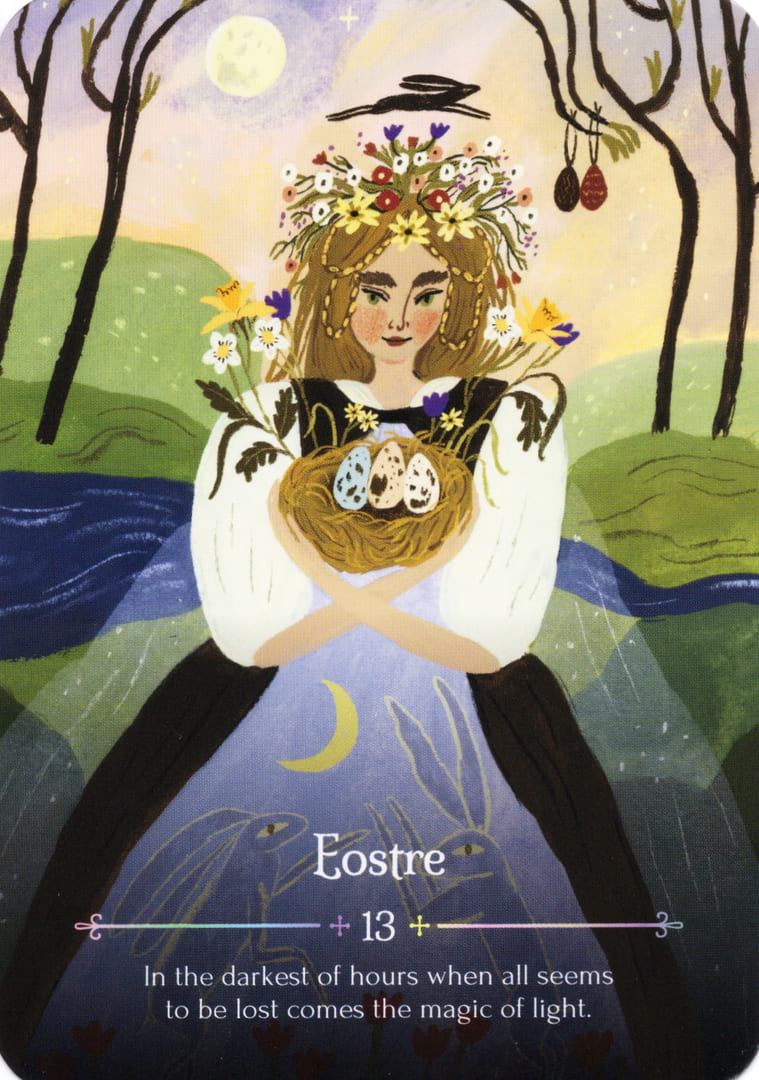
The word “Ostara” traces back to Eostre (also spelled Ēostre or Ostara), an Anglo-Saxon goddess of dawn and spring. The earliest written record comes from the Venerable Bede, an English monk who noted in his 8th-century work De Temporum Ratione (“The Reckoning of Time”) that the Anglo-Saxons named their fourth month Ēosturmōnaþ after this goddess and held feasts in her honor.
Bede’s account is brief — just a few sentences — but what it tells us is significant: the spring celebrations were already old in his time. The connection runs deeper than one culture, too. Linguists have traced Eostre’s name to the Proto-Germanic root *austrō, meaning “dawn” or “east” — the direction where the sun rises. Similar dawn goddesses appear across Indo-European traditions, from the Roman Aurora to the Greek Eos to the Vedic Ushas.
The modern holiday name “Ostara” was adopted in 1974 by Aidan Kelly, who was developing the Wiccan Wheel of the Year. He chose the name deliberately, connecting the spring equinox celebration to this ancient lineage of dawn and renewal.
Ostara and Easter — the real connection
Here’s something many people are surprised to learn: the English word “Easter” almost certainly comes from the same goddess. Bede wrote explicitly that the Christian Paschal season inherited the name of the older pagan month.
The connections go beyond the name:
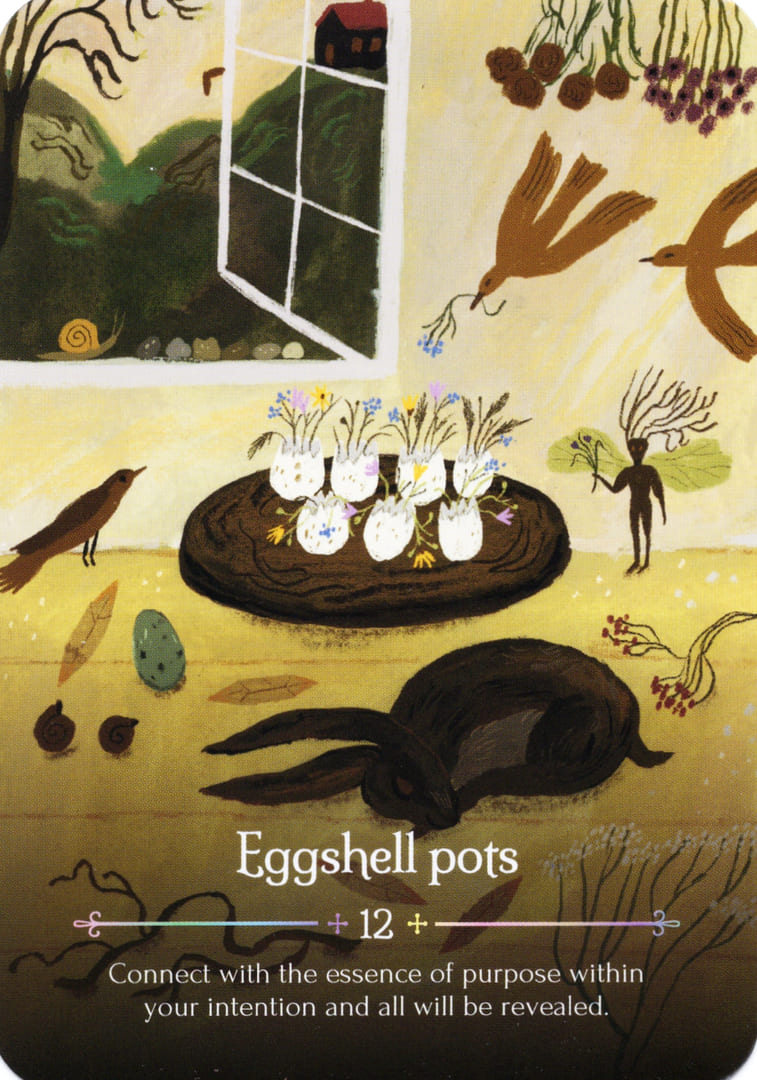
- Eggs have been symbols of fertility and new life in spring celebrations for thousands of years. Long before Easter egg hunts, people decorated eggs as Ostara offerings
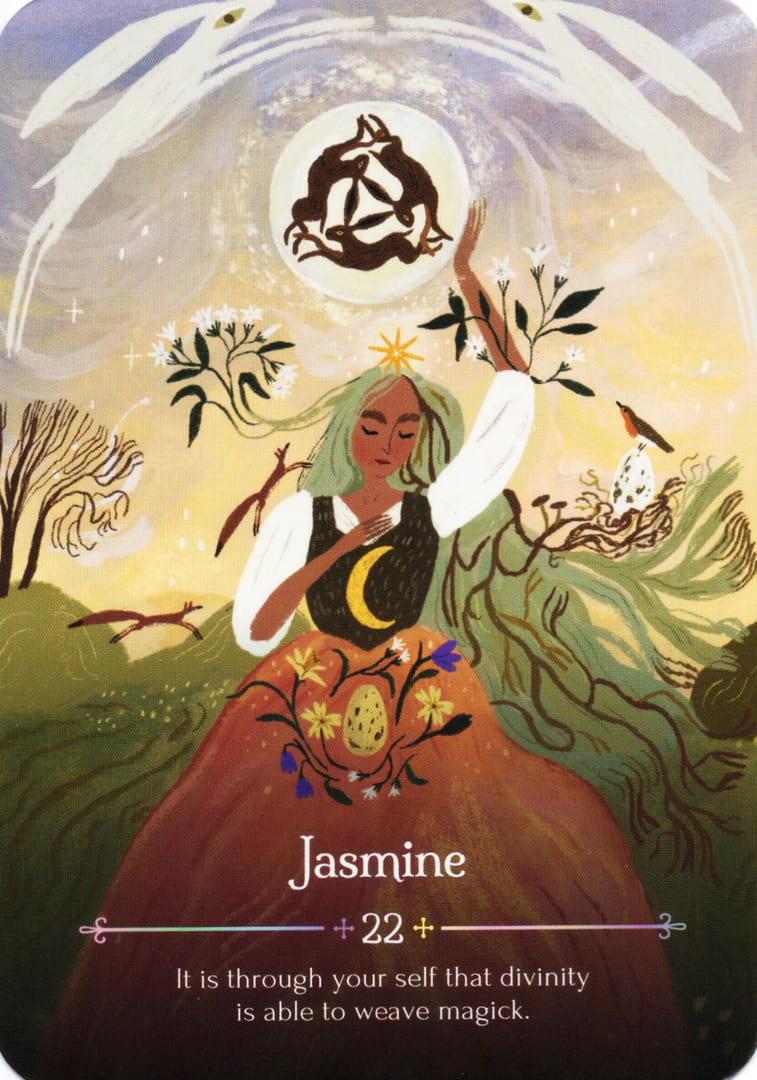
- Hares and rabbits were sacred to Eostre as symbols of fertility and the return of spring. One popular legend tells of Eostre transforming a bird into a hare who could still lay eggs — possibly the origin of the Easter Bunny
- Dawn celebrations — Eostre is a dawn goddess, and Easter sunrise services echo much older traditions of greeting the equinox sun
This doesn’t mean Easter “stole” from paganism in a hostile way. Cultural traditions flow and merge over centuries. But knowing these roots adds a layer of depth when you see eggs and rabbits every March.
Where Ostara sits on the Wheel of the Year
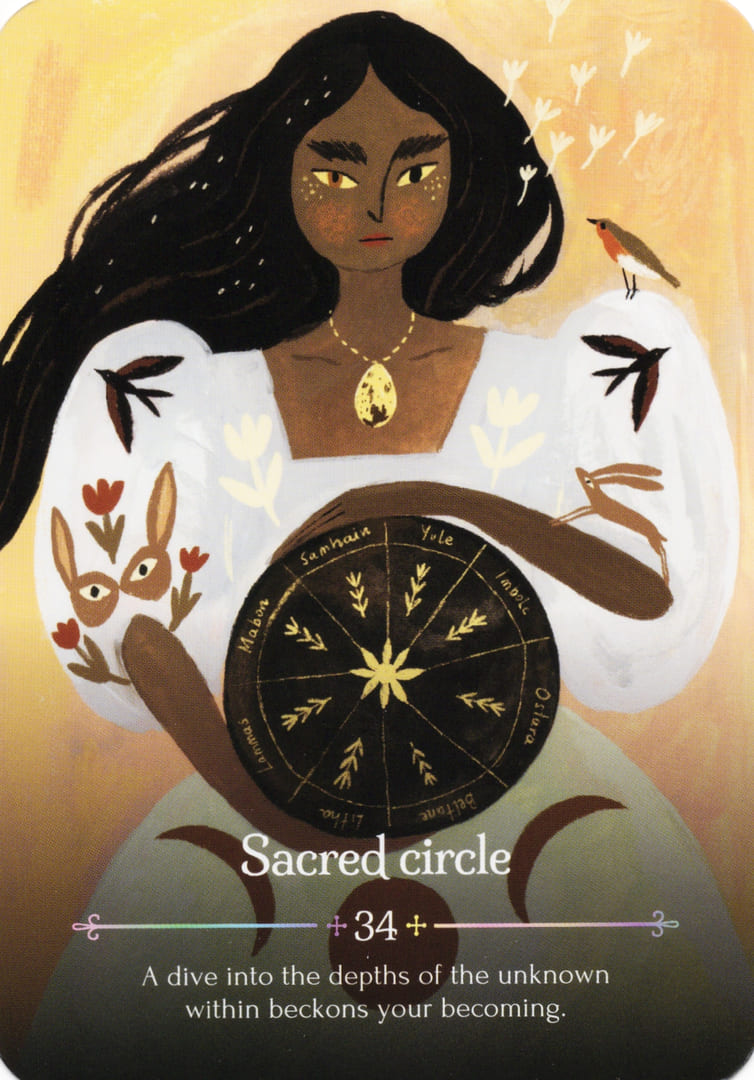
The Wheel of the Year is a cycle of eight seasonal festivals observed in Wiccan, neopagan, and many nature-based spiritual traditions. Ostara is the fourth sabbat in the cycle:
- Samhain (October 31) — the witch’s new year, honoring ancestors
- Yule (Winter Solstice, ~December 21) — the return of the light
- Imbolc (February 1-2) — first stirrings of spring
- Ostara (Spring Equinox, ~March 20) — balance and awakening
- Beltane (May 1) — passion and full bloom
- Litha (Summer Solstice, ~June 21) — peak of the light
- Lammas/Lughnasadh (August 1) — first harvest
- Mabon (Autumn Equinox, ~September 22) — gratitude and balance
Ostara is the second of three spring festivals, sitting right between Imbolc’s first whispers of warmth and Beltane’s full explosion of life. If Imbolc is the moment you notice the days getting a bit longer, Ostara is when you step outside and feel it in your bones.
Something I’ve come to understand after years of practice: the Wheel of the Year festivals aren’t rigid calendar dates — they’re energy phases. When we say “Ostara,” we mean not just the equinox day itself but the entire period of spring awakening that stretches from mid-March into April. The traditional Wheel was based on Celtic agricultural cycles in a specific climate. Your spring might arrive earlier or later than March 20, and that’s perfectly fine. Follow what you feel around you, not just the calendar.
Ostara symbols and their meanings
Every sabbat has its correspondences — colors, symbols, and natural elements that carry the energy of the season. For Ostara, these all center on the themes of new life, balance, and growth:
Symbols: Eggs (rebirth, potential), hares (fertility, playfulness), butterflies (transformation), seeds (intentions planted), spring flowers — especially daffodils, crocuses, and tulips
Colors: Soft pastels — pale green, lavender, light yellow, sky blue, blush pink, and white. These are the colors of early spring, when nature’s palette is gentle before the bold summer hues arrive
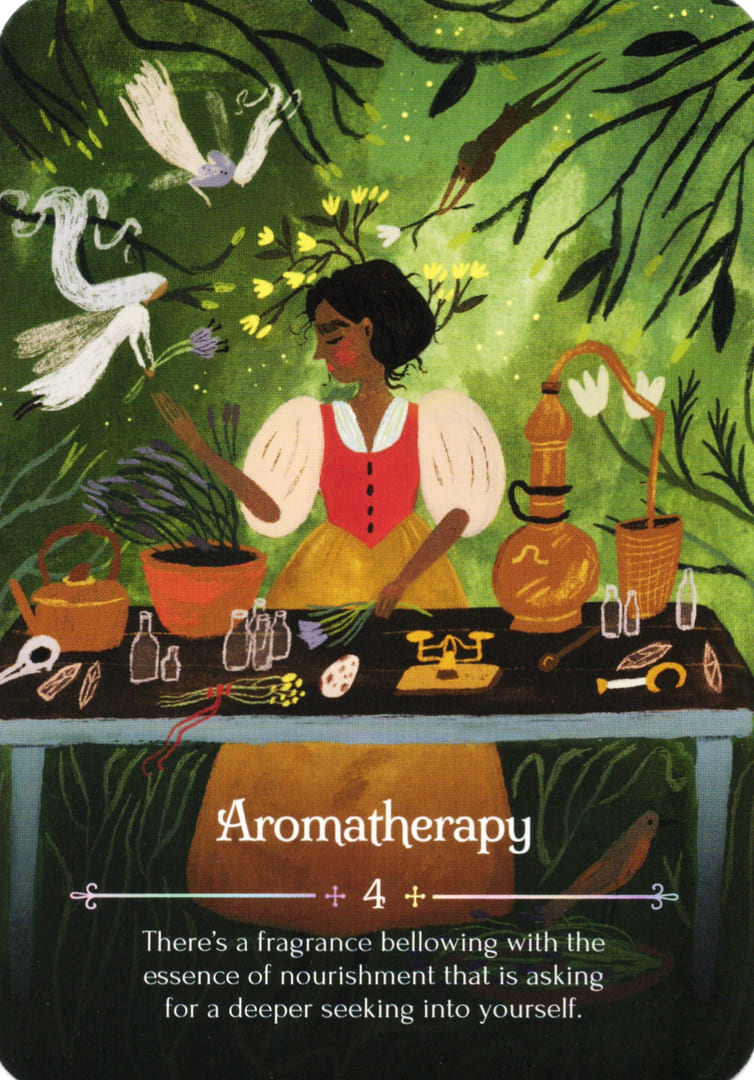
Herbs: Lavender (peace), lemon balm (renewal), jasmine (love), dandelion (wishes and resilience), nettle (protection and vitality)
Crystals: Green aventurine (growth and luck), rose quartz (love and self-care), citrine (joy and solar energy), moonstone (intuition and cycles), clear quartz (clarity and fresh starts)
What Ostara means for tarot readers
If you read tarot or oracle cards, Ostara is one of the most potent moments in the yearly cycle for a reading. The equinox is a threshold — equal parts light and shadow — and thresholds are where divination shines.
Several cards carry strong Ostara energy:
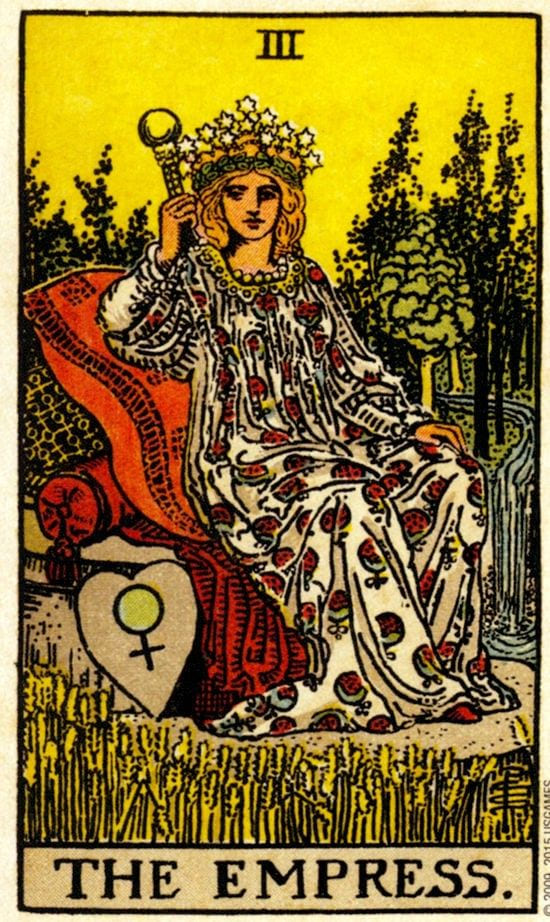
The Empress is the Ostara card. She sits in her lush garden, surrounded by wheat and flowing water, wearing a crown of stars. Everything about her says fertility, creativity, and the unstoppable force of nature coming alive. When The Empress appears in a spring reading, it’s a signal that whatever you’ve been nurturing is ready to grow.
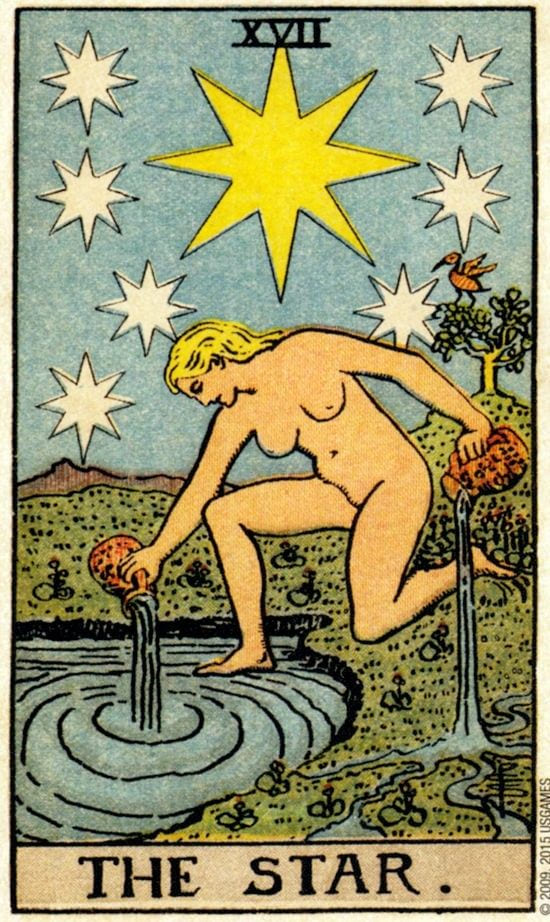
The Star mirrors Ostara’s theme of hope after darkness. After the destruction of The Tower, The Star appears as a calm, renewing presence — just like spring after winter. In an equinox reading, she says: the hard part is over, now trust what comes next.
Other spring-resonant cards include The Fool (brave new beginnings), Judgement (rebirth and answering a call), Ace of Wands (the creative spark), and The Sun (pure, growing light). If any of these show up in readings around the equinox, pay attention — they carry extra weight during this season.
How people celebrate Ostara today
Modern Ostara celebrations blend ancient symbolism with personal practice. There’s no single “right” way to mark the equinox. Some ideas:
- Plant something — literally or metaphorically. Put seeds in soil with a spoken intention, or write down a goal and “plant” it in a special box or journal
- Decorate eggs — draw symbols, sigils, or words of intention on eggs. This is thousands of years old and still powerful
- Set up a spring altar — fresh flowers, pastel candles, crystals, seeds, and images that represent what you want to grow
- Do a tarot or oracle reading — ask the cards what’s emerging for you this spring, what needs balance, what’s ready to bloom
- Take a walk at dawn — greeting the equinox sunrise connects you to the most ancient layer of this holiday
- Spring clean with intention — clear physical clutter and stagnant energy together
The beauty of Ostara is its accessibility. You don’t need special tools, years of practice, or a particular belief system. You just need willingness to notice the shift that’s already happening around you and lean into it.
Ostara isn’t just for pagans
One of the things I love about the Wheel of the Year is how it gives us a framework for paying attention to the world around us. You don’t have to identify as pagan, Wiccan, or anything else to benefit from marking seasonal shifts with intention.
The spring equinox is an astronomical event — it happens whether or not you celebrate it. The question is simply: do you want to move through it consciously, or let it pass unnoticed?
For tarot readers especially, the equinox offers a natural checkpoint. It’s a perfect time to review what the winter months taught you, set clear intentions for the growing season, and pull cards for guidance on what’s ahead.
This year, with Ostara falling on a Friday, there’s an extra note of celebration energy — the weekend stretches out after it, inviting you to spend time with the season rather than rushing past it.
However you choose to mark it — with a full altar ritual, a quiet card pull at sunrise, or simply stepping outside and breathing in the changing air — you’re connecting to something humans have honored for thousands of years. The light is returning. The seeds are ready. What will you grow?
Frequently Asked Questions
When is Ostara in 2026?
Ostara falls on Friday, March 20, 2026. The exact moment of the spring equinox is at 10:46 AM EST, when day and night are equal in length before the light takes over.
Is Ostara the same as Easter?
Not exactly, but they share roots. Both take their name from the Anglo-Saxon goddess Eostre, and symbols like eggs and hares originated as Ostara fertility symbols long before they became Easter traditions. Ostara always falls on the astronomical equinox, while Easter moves with the lunar calendar.
Do you have to be Wiccan to celebrate Ostara?
Not at all. While Wicca popularized the modern Wheel of the Year, Ostara's themes of renewal, balance, and fresh starts are universal. Many people who aren't religious or pagan still mark the spring equinox with intention-setting, spring cleaning, or simply spending time in nature.
Which tarot cards represent Ostara and the spring equinox?
The Empress is the quintessential Ostara card — she embodies fertility, growth, and the creative force of nature in spring. The Star carries themes of hope and renewal, The Fool represents fresh starts, and the Ace of Wands signals the spark of new creative energy.
What is the Wheel of the Year?
The Wheel of the Year is a cycle of eight seasonal festivals (sabbats) observed in many pagan and Wiccan traditions. Ostara is the fourth sabbat, falling between Imbolc (early February) and Beltane (May 1). Each festival marks a shift in seasonal energy and offers a framework for living in rhythm with nature.