Twin Flame vs Soulmate: What's the Difference and How Tarot Shows Each
The question everyone asks
“Is this person my twin flame or my soulmate?”
I hear this question more than almost any other in love readings. It comes from a real place — the sense that a particular connection is different from anything else you’ve experienced, and the desire to understand why. Is this the once-in-a-lifetime mirror? Or the soul family member you’ve been waiting for?
Here’s what I’ve learned after years of reading for people navigating these connections: the label matters less than you think. But the distinction is genuinely useful — because twin flames and soulmates ask very different things of you, and knowing which pattern you’re in can save you years of confusion.
So let’s get clear on what each one actually is, how they show up in tarot, and what to do with the information.
What is a soulmate?
A soulmate is someone from your soul family — a being you’ve connected with across lifetimes (if you believe in that framework) or, in more grounded terms, someone with whom you share an unusually deep resonance. When you meet a soulmate, there’s a sense of recognition. “I know you,” something inside you says, even if you’ve just met.
Key qualities of a soulmate connection:
Harmony. Soulmate relationships tend to feel comfortable, even from the beginning. Not boring — comfortable. There’s an ease to how you communicate, how you understand each other, how you navigate conflict. It feels like coming home.
Support. Soulmates make your life better in tangible ways. They support your growth without demanding it. They see you clearly and love what they see. They’re not trying to break you open — they’re holding space for you to open on your own.
Multiplicity. You can have many soulmates. Not just romantic partners — friends, family members, mentors, even brief encounters that change your life. The person who said exactly what you needed to hear at exactly the right time? Possibly a soulmate.
Stability. While no relationship is without challenges, soulmate connections tend toward stability. Even after arguments, you return to a baseline of trust and understanding. The connection doesn’t make you question your sanity.
What is a twin flame?
A twin flame is a different creature entirely. The concept — rooted in various spiritual traditions — suggests that your soul was once whole and split into two, with your twin flame carrying the other half. Whether you take this literally or metaphorically, the dynamic it describes is distinct and recognizable.
Key qualities of a twin flame connection:
Mirroring. Your twin flame reflects you — not just your best qualities, but your shadow, your wounds, your unhealed parts. Being with them is like looking into a mirror that shows everything, including what you’d rather not see. This is why twin flame connections are so intense — they force you to confront yourself.
Intensity. Twin flame connections are rarely calm. They can feel overwhelming, consuming, almost addictive. The highs are extraordinary. The lows can be devastating. There’s a magnetic pull that feels beyond your control, and the emotional range is wider than in any other relationship.
Transformation. The purpose of a twin flame connection (in the spiritual framework) is not comfort — it’s growth. Specifically, the kind of growth that comes from having your patterns, defenses, and illusions stripped away. Twin flames don’t let you hide. They trigger everything that needs healing.
Separation cycles. Twin flame relationships often involve periods of separation — what the twin flame community calls “runner and chaser” dynamics. One person pulls away (often because the intensity is too much), while the other pursues. These cycles can repeat for years.
Singularity. In the traditional framework, you have only one twin flame. This makes the connection feel uniquely precious — and uniquely painful when it’s difficult.
The crucial difference
Here’s the simplest way I can describe it:
A soulmate makes you feel at home. A twin flame makes you grow.
Both involve deep recognition. Both feel “meant to be.” But the experience of each is radically different. Soulmate energy is warm water — enveloping, comforting, gentle. Twin flame energy is fire — transformative, illuminating, and capable of burning you if you’re not careful.
Neither is “better.” They serve different purposes. And it’s entirely possible (common, even) to end up in a healthy, lifelong partnership with a soulmate and to have a brief, volcanic twin flame encounter that changes your life without becoming a relationship.
How tarot shows a soulmate
When I read for soulmate connections, certain cards and patterns appear consistently:
The Two of Cups. The classic soulmate card. Two people facing each other, cups extended, meeting as equals. Reciprocity. Mutual recognition. The ease of a connection where both people show up fully.
The Sun. Joy, clarity, simplicity. Soulmate connections often have a solar quality — they make things brighter, clearer, warmer. You feel more yourself with this person, not less. The Sun says: this person brings out your light.
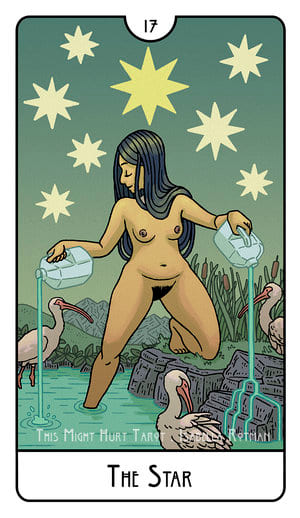
The Star. Hope, spiritual connection, healing. The Star often appears for soulmate connections that feel divinely guided — not in a dramatic, tower-crumbling way, but in a quiet, starlit way. You feel held by something larger.
Ten of Cups. The ultimate emotional fulfillment card. The rainbow over the family, the shared joy. This card in a reading about a connection says: this has “happily ever after” potential — not in a fairy tale way, but in a real, built-together way.
Ace of Cups. New love arriving. When asking about soulmates, the Ace says: this connection is a gift. It’s being offered to you. Receive it.
The Empress. Nurturing, abundant, fertile. Soulmate connections often carry Empress energy — they’re generative. They create things: families, homes, art, shared projects, joy.
Overall reading energy: Soulmate readings tend to feel warm. There’s an absence of dramatic tension. The cards lay peacefully. Even challenge cards (Reversed Five of Cups, Seven of Pentacles) point to workable issues, not foundational crises.
How tarot shows a twin flame
Twin flame readings look different. The energy is bigger, more volatile, and the Major Arcana tends to dominate:
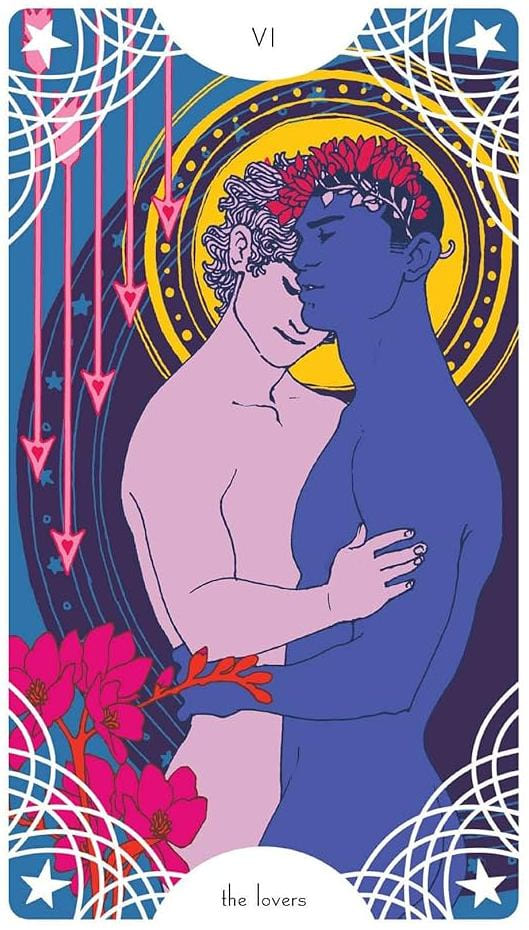
The Lovers. Choice at the soul level. In twin flame contexts, The Lovers often speaks to the moment of recognition — the choice to engage with this connection despite knowing it will change everything. There’s a gravity to it that goes beyond simple attraction.
The Devil. Attachment, obsession, shadow. This card appears so frequently in twin flame readings that some readers consider it the twin flame card. The Devil represents the parts of the connection you can’t control — the addictive pull, the shadow patterns that get triggered, the intensity that feels like bondage as much as love.
The Tower. Sudden, dramatic transformation. Twin flames have a habit of demolishing your existing life structure. The Tower in a twin flame reading says: this connection will tear down what isn’t true. It won’t be gentle. But what’s left standing will be authentic.
Temperance. Alchemical union. This card represents the sacred purpose of twin flame connections — to integrate opposites, to transmute base metal into gold. When Temperance appears, it suggests the connection is serving its higher purpose: transformation through balance.
The Hermit. Solitary reflection. This card often appears during twin flame separations — the periods where you’re apart and forced to do your own inner work. The Hermit says: the growth doesn’t happen together. It happens within you, alone, and then you bring it back.
Reversed cards. Twin flame readings tend to include more reversed cards than soulmate readings. This reflects the turbulence, the blocked energy, the things that need to be turned right-side-up within each person before the connection can stabilize.
Overall reading energy: Twin flame readings feel electric. There’s tension. The Major Arcana is disproportionately present. The cards might even feel uncomfortable to look at together. There’s a sense of something much larger than two people having a relationship.
The dangerous confusion
I need to say something that might be unpopular: not every intense relationship is a twin flame connection, and calling it one can keep you in situations you should leave.
I’ve seen people stay in abusive, manipulative, or deeply unhealthy relationships because they labeled the intensity “twin flame energy.” They interpreted the pain as transformation. They saw the chaos as spiritual growth. They excused terrible behavior because “twin flames trigger each other.”
Here’s the test: is this connection making you grow, or is it making you smaller?
Twin flame connections involve intense confrontation with your shadow — but they should ultimately expand you. You should be becoming more yourself, not less. If a relationship is consistently diminishing you — your confidence, your friendships, your sense of reality — that’s not a twin flame. That’s a harmful relationship using spiritual language as camouflage.
The tarot can help here. If every reading about this person is full of The Devil reversed, the Seven of Swords, the Five of Cups, the Moon reversed — the cards aren’t describing a twin flame journey. They’re describing a situation that’s hurting you.
A spread for clarity
Here’s a simple five-card spread to help you understand a soul connection:
- The nature of this connection. What type of bond is this?
- What this person mirrors in me. What they reflect back to me.
- What I’m learning. The growth this connection offers.
- The challenge. What I must navigate or overcome.
- The highest potential. Where this connection leads if I honor it.
If position 1 shows warm, stable cards (Two of Cups, The Sun, Ten of Pentacles) — you’re likely looking at soulmate energy. If it shows intense, transformative cards (The Tower, The Devil, Temperance) — you may be dealing with twin flame dynamics. And if it shows something else entirely — trust that. Not every important connection fits neatly into either category.
What matters more than the label
After years of reading for people asking “twin flame or soulmate?”, here’s what I’ve come to believe:
The label doesn’t determine your behavior. The connection does.
Whether you call someone your twin flame or your soulmate, the real questions are the same:
- Is this connection making me a better person?
- Am I being treated with respect?
- Is the growth mutual, or is one person always sacrificing?
- Can I be fully myself in this relationship?
- Does this connection feel like love, or does it feel like survival?
The tarot can illuminate the dynamics. It can show you patterns, energies, potentials. But it can’t — and shouldn’t — be used to justify staying in something that hurts you, regardless of what spiritual label you put on it.
The card that bridges both
There’s one card that appears in both soulmate and twin flame readings with equal frequency: The Lovers.
And I think that’s meaningful. Because The Lovers isn’t really about the type of connection — it’s about the choice. The choice to engage with this soul on whatever terms the connection offers. The choice to grow. The choice to love, even when love is complicated.
Whether you’ve found a soulmate or a twin flame, The Lovers asks the same question: are you choosing this with your eyes open? Not because it’s easy. Not because it’s dramatic. But because it’s true.
That’s the only question that really matters.
Frequently Asked Questions
What is the difference between a twin flame and a soulmate?
A soulmate is someone who harmonizes with your soul — a deep, comfortable, stabilizing connection. A twin flame is someone who mirrors your soul — an intense, transformative, often turbulent connection. You can have many soulmates but only one twin flame. Soulmates make you feel at home. Twin flames make you grow, sometimes painfully.
Which tarot cards indicate a twin flame?
Cards commonly associated with twin flames include The Lovers (soul-level choice), The Devil (intense attachment and shadow work), The Tower (sudden transformation), Temperance (alchemical union), and the Two of Cups (mutual recognition). Twin flame readings often include Major Arcana cards because the connection is karmic and life-altering.
Which tarot cards indicate a soulmate?
Soulmate cards tend to include the Two of Cups (mutual love), The Sun (joy and clarity), The Star (hope and spiritual connection), the Ten of Cups (emotional fulfillment), and the Ace of Cups (new love). Soulmate readings often feel warmer and more peaceful than twin flame readings.
Can tarot tell you if someone is your twin flame or soulmate?
Tarot can show the energy and dynamics of a connection, but it can't definitively label someone as your twin flame or soulmate. What it can do is reveal whether a relationship carries twin flame patterns (intensity, mirroring, transformation) or soulmate patterns (harmony, support, comfort). The label matters less than understanding what the connection is asking of you.