How to Read Tarot Cards: The Complete Beginner's Guide
You’re here because you want to learn tarot. Maybe you just bought your first deck and the 78 cards are staring at you from the table. Maybe you haven’t bought anything yet and you’re trying to figure out where to even start. Maybe someone read your cards once and you thought: I want to do that.
Good news: you can. Tarot isn’t reserved for psychics, witches, or people with special gifts. It’s a skill. Like cooking or playing guitar — except the learning curve is gentler and the first results come faster than you’d expect.
I’ve been reading tarot for years, and I still remember the mix of excitement and total confusion when I started. This guide is everything I wish someone had told me on day one.
What you’re actually learning
Before we get practical, let’s clear up what tarot reading actually is — because there’s a lot of mystique around it that can be intimidating.
Tarot reading is a conversation between you and 78 illustrated cards. Each card carries a set of meanings, symbols, and emotional tones. When you lay them out in a pattern (called a spread), the cards create a story. Your job is to interpret that story in the context of a question or situation.
That’s it. No supernatural prerequisites. No initiation ceremony. No requirement to “believe” in anything specific.
Some people approach tarot as a spiritual practice. Others use it as a psychological tool — a way to access intuition and explore feelings that are hard to articulate. Both approaches are valid. You’ll find your own relationship with the cards over time. For now, all you need is curiosity.
Step 1: Choose your first deck
You need a deck. Here’s what to know:
Start with the Rider-Waite-Smith (RWS). Published in 1909, it’s the most widely used tarot deck in the world — and for good reason. Artist Pamela Colman Smith illustrated every single card with detailed scenes, including the Minor Arcana. Most other modern decks are based on its imagery. Almost every tarot book and guide references it. Learning with RWS means every resource out there speaks your language.
Modern alternatives that keep the same structure: If the 1909 art style doesn’t appeal to you, look for decks described as “RWS-based” or “Rider-Waite inspired.” These keep the same card meanings and visual storytelling but with updated art. Popular beginner-friendly options include Modern Witch Tarot, The Light Seer’s Tarot, and This Might Hurt Tarot.
What to avoid as a first deck: Thoth-based decks (different system, steeper learning curve), Marseille decks (unillustrated Minor Arcana makes learning harder), and oracle decks (not tarot — different structure entirely).
The “choose the deck that calls to you” advice? Partially true. You should like looking at your cards — you’ll spend a lot of time with them. But for learning, structure matters more than aesthetics. Pick something RWS-based that you find visually appealing, and you’re set.
Step 2: Understand what’s in the box
A standard tarot deck has 78 cards divided into two groups:
The Major Arcana (22 cards)
These are the big cards — the life themes, the turning points, the soul-level lessons. They’re numbered 0 through 21, from The Fool to The World.
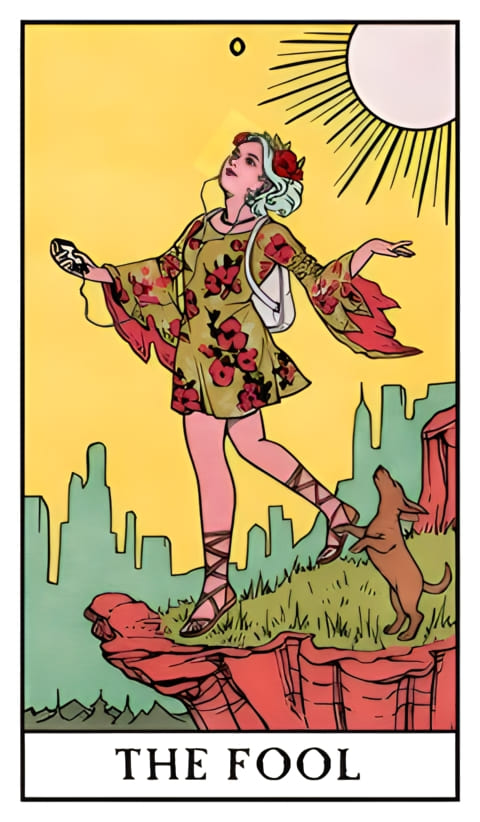
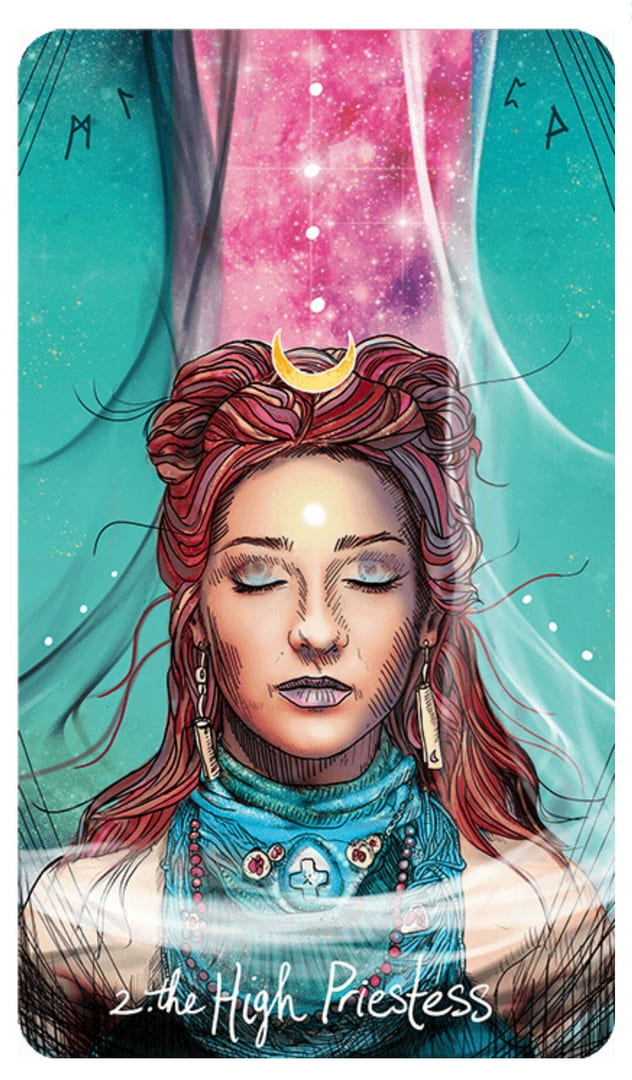
Think of the Major Arcana as a story. The Fool (0) starts a journey as a naive traveler. Along the way, he meets teachers (The Magician, The High Priestess), faces challenges (The Tower, Death), and ultimately reaches completion (The World). This sequence is sometimes called “The Fool’s Journey,” and it mirrors the arc of human experience.
When Major Arcana cards appear in a reading, they signal something significant. Not “what you had for breakfast” significant — more like “what you’re learning at this stage of your life” significant.
The Minor Arcana (56 cards)
These are the everyday cards — the daily situations, feelings, actions, and practical matters. They’re divided into four suits of 14 cards each:
Wands — Energy, passion, creativity, ambition, action. The fire suit. Think: what drives you.
Cups — Emotions, relationships, intuition, love, connection. The water suit. Think: what you feel.
Swords — Thoughts, communication, conflict, truth, decisions. The air suit. Think: what you think.
Pentacles — Money, health, work, home, material reality. The earth suit. Think: what you have.
Each suit runs from Ace (1) through 10, then four court cards: Page, Knight, Queen, King.
The numbered cards (Ace–10) tell a story within each suit. Aces are beginnings and potential. The numbers build through development, challenge, and completion. Tens are endings or fulfillment.
The court cards (Page, Knight, Queen, King) can represent people in your life, aspects of yourself, or energy you’re being called to embody. Pages are students and messages. Knights are action and movement. Queens are mastery through nurturing. Kings are mastery through authority.
You don’t need to memorize all 78 cards before you start reading. You’ll learn them gradually through practice. But understanding this structure — Major vs. Minor, four suits, the progression from Ace to King — gives you a framework to hang everything on.
Step 3: Your first reading
Here’s where most guides lose people. They say “learn all the meanings first” and hand you a 300-page reference book. That’s like memorizing a dictionary before having a conversation.
Instead, start reading now. Here’s how:
The one-card daily pull
This is the single most effective way to learn tarot. Every morning:
-
Shuffle your deck. There’s no wrong way to shuffle. Overhand, riffle, spread them on a table and swirl — whatever feels comfortable. Shuffle until you feel ready to stop.
-
Ask a simple question. Start with: “What do I need to know about today?” or “What energy should I focus on?”
-
Draw one card. Look at it before reaching for any book.
-
Spend 30 seconds just looking. What do you see? What’s the figure doing? What colors stand out? What emotion does the image give you? What story does the picture tell?
-
Then check the meaning. Use your deck’s guidebook, a tarot app, or a trusted website. Compare the “official” meaning with your first impression. Notice where they overlap.
-
At the end of the day, reflect. Did the card’s theme show up? Maybe you drew the Three of Swords (heartbreak) and had a difficult conversation. Maybe you drew The Star (hope) and received unexpected encouragement. These connections build your understanding faster than any textbook.
Do this every day for a month. By week two, you’ll start recognizing cards without checking the book. By week four, you’ll have a personal relationship with dozens of cards.
Moving to three cards
Once the daily pull feels comfortable (usually 2-4 weeks), try a three-card spread:
Past — Present — Future: The classic. Card 1 shows the background, Card 2 shows where you are now, Card 3 shows where things are heading.
Situation — Action — Outcome: Card 1 describes the situation, Card 2 suggests what to do, Card 3 shows the likely result.
Mind — Body — Spirit: Card 1 reflects your mental state, Card 2 your physical state, Card 3 your spiritual state.
Pick one format and use it consistently for a while. The structure helps you practice connecting cards into a narrative — which is the core skill of tarot reading.
Step 4: How to actually interpret a card
This is the question everyone asks: “But how do I know what a card means?”
Here’s the honest answer: you use three sources, and over time, the balance shifts.
Source 1: The image itself
Tarot cards are pictures. Look at them like pictures. A woman sitting between two pillars with a scroll on her lap suggests something different from a man hanging upside-down from a tree. Before you know any “official” meanings, the images already communicate.
Ask yourself:
- What’s happening in this scene?
- How does the figure look — happy, sad, anxious, peaceful?
- What objects stand out?
- What would you tell a friend if you were describing this picture?
Source 2: Traditional meanings
Each card has established meanings developed over centuries. You don’t need to memorize them all at once, but learning them gradually gives you a vocabulary. The Magician traditionally means manifestation and skill. The Ten of Swords means an ending, usually painful. These meanings are consistent across most sources.
Use a reference guide alongside your readings. Over time, the meanings stick naturally.
Source 3: Your intuition
This is where tarot gets personal. Sometimes a card will trigger a thought, a memory, or a feeling that doesn’t match the textbook definition — but feels exactly right for the question. That’s your intuition talking.
Beginners often ask: “Should I go by the book or by my gut?” The answer is both. Use the traditional meaning as a foundation, then let your intuition add color. The book tells you the Ten of Cups means happiness and family fulfillment. Your gut tells you it’s specifically about the phone call you’ve been putting off to your sister. Both are right. The gut just made it useful.
Step 5: Reversals — to use or not to use
When a card comes out of the deck upside-down, it’s called a “reversal.” Some readers interpret reversals as a modified or blocked version of the upright meaning. Others ignore them entirely and read all cards upright.
My recommendation for beginners: skip reversals at first. You’re already learning 78 cards. Adding reversed meanings doubles that to 156 interpretations. That’s a lot. Get comfortable with the upright meanings first. Once they feel solid (usually a few months in), start experimenting with reversals if the concept interests you.
If you do use reversals, they generally suggest one of these:
- The card’s energy is blocked or delayed
- The theme is present but internalized rather than external
- The opposite or shadow side of the card’s meaning
- A need to look inward before acting outward
Step 6: Build a practice that sticks
Learning tarot is less about single study sessions and more about consistent contact. Here’s what works:
Daily card pull. Five minutes a morning. Non-negotiable. This is the single habit that separates people who learn tarot from people who own a tarot deck.
Keep a tarot journal. Nothing fancy — a notebook, a notes app, whatever. Write the date, the card you drew, your first impression, and (later) how it played out. After a month, flip back and notice patterns.
Read for yourself before reading for others. You are your own best practice subject. You know your own life, so you can immediately evaluate whether an interpretation makes sense.
Study in small doses. One card at a time. Read about a card, then look for it in your daily pulls. Learning feels organic this way — each card enters your awareness when you’re ready for it.
Don’t try to memorize. This is the biggest beginner mistake. Tarot isn’t a test. You’re building a relationship with the cards, not cramming for an exam. The meanings that matter will stick through repeated exposure.
The 7 mistakes every beginner makes
I’ve seen these patterns in every new reader, including myself:
1. Trying to learn all 78 cards before doing a single reading. You’ll burn out and forget everything. Start reading immediately. Learn as you go.
2. Asking the same question repeatedly until you get the answer you want. The cards said what they said. If you don’t like the answer, that’s information too. Reshuffling five times doesn’t change the underlying reality — it just makes you trust the process less.
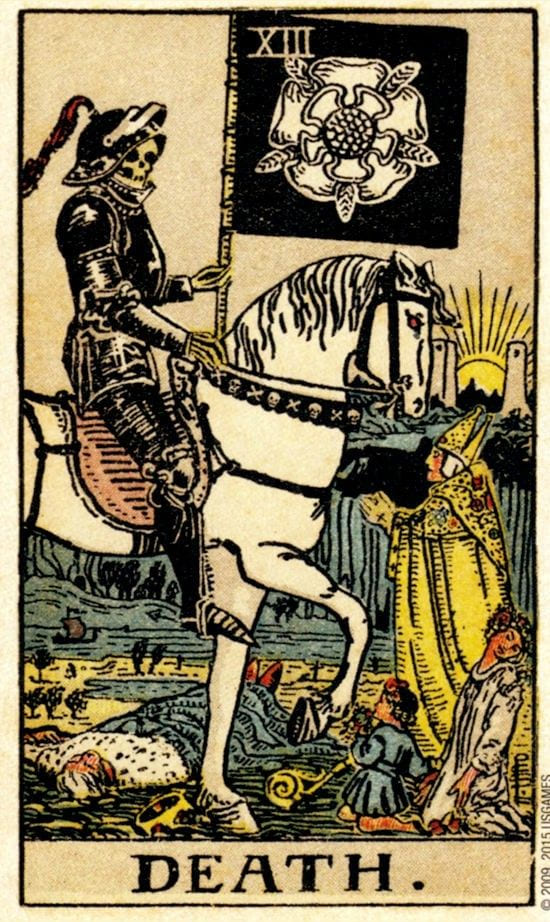
3. Panicking over “scary” cards. Death doesn’t mean death. The Tower doesn’t mean your life is falling apart (usually). The Devil doesn’t mean evil. These cards have nuanced meanings that are often about transformation, breakthrough, and liberation. Context matters enormously.
4. Reading for other people too soon. Get comfortable with your own readings first. Reading for others adds the pressure of performance, which can silence the intuition you’re trying to develop.
5. Believing there’s one “right” interpretation. There isn’t. Tarot is a language with many dialects. Two experienced readers can look at the same spread and give different — but equally valid — interpretations. That’s a feature, not a bug.
6. Ignoring the Minor Arcana. The Major Arcana gets all the attention, but the 56 Minor Arcana cards make up most of your readings. Don’t skip them. The daily situations they describe are where tarot becomes genuinely useful.
7. Thinking you need to be psychic. You don’t. Tarot works through pattern recognition, symbolic thinking, and the willingness to look at your life honestly. These are skills anyone can develop. Being “psychic” is not a prerequisite — being curious is.
Your first exercise: the three-card morning check-in
Try this tomorrow morning:
- Shuffle your deck while thinking about the day ahead
- Draw three cards and lay them left to right
- Card 1: What energy am I carrying into today?
- Card 2: What challenge or opportunity might arise?
- Card 3: What should I keep in mind?
Look at the images first. Notice what strikes you. Then check the meanings. Write down your impressions in 2-3 sentences.
At the end of the day, revisit your notes. Did any of it resonate? What surprised you?
This exercise takes five minutes and teaches you more than an hour of reading about tarot ever could.
What to do next
You’ve got the foundation. Here’s where to go from here:
Week 1-2: Daily one-card pulls. Focus on the Major Arcana — you’ll encounter them naturally, and they’re the most immediately meaningful.
Week 3-4: Move to three-card spreads. Try different formats (past/present/future, situation/action/outcome) to see what feels most useful.
Month 2: Start exploring the Minor Arcana suit by suit. Spend a week with Cups, a week with Swords, etc. Notice how each suit has its own emotional texture.
Month 3: Try reading for a friend. Start with simple questions and three-card spreads. Pay attention to how the dynamic changes when you’re reading for someone else.
Ongoing: Explore larger spreads when you’re ready. The Celtic Cross (10 cards) is the classic deep-dive spread, but there are dozens of specialized layouts for love, career, spiritual growth, and more.
The most important thing? Start. Don’t wait until you feel ready. Don’t wait until you’ve memorized enough. Don’t wait until you understand every symbol. Pick up your deck, shuffle, draw a card, and look at it.
That’s the first step. And The Fool — card zero, the beginning of everything — will tell you: the journey starts the moment you decide to take it.
Frequently Asked Questions
How do beginners learn to read tarot cards?
Start by choosing a Rider-Waite-Smith based deck, learn the basic structure (22 Major Arcana + 56 Minor Arcana in four suits), then begin reading immediately with a simple three-card spread. Learning through practice with real questions beats memorizing all 78 meanings before you start.
Do you need psychic abilities to read tarot?
No. Tarot reading is a skill anyone can develop. It combines knowledge of card meanings with intuition and the ability to interpret symbols in context. No supernatural prerequisites are required — just curiosity and practice.
What is the best tarot deck for beginners?
The Rider-Waite-Smith (also called the Smith-Waite deck) is the standard recommendation for beginners because every card features illustrated scenes, nearly all modern tarot books reference it, and most other decks are based on its imagery.
How long does it take to learn tarot?
You can do useful readings after your first session. Building genuine fluency — where the cards speak to you intuitively — typically takes six months to a year of regular practice. Deep expertise develops over years, but you do not need expertise to benefit from tarot.
What is a tarot spread?
A tarot spread is a layout pattern where each card position has a specific meaning (for example, Position 1 = the past, Position 2 = the present, Position 3 = the future). Spreads give structure to a reading and help you interpret multiple cards in relationship to each other.