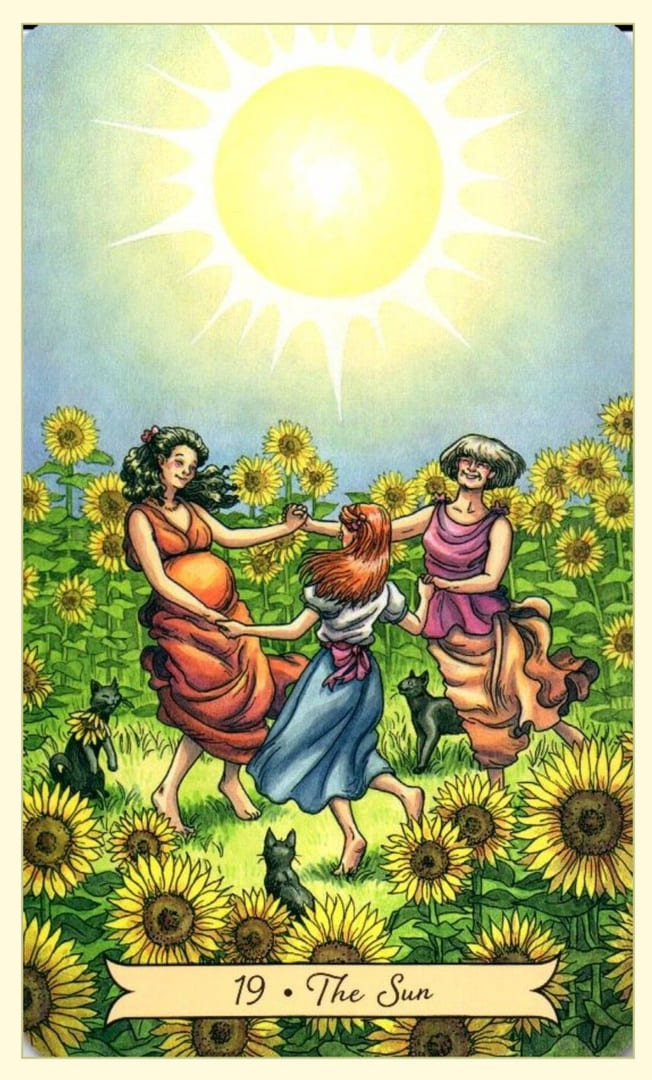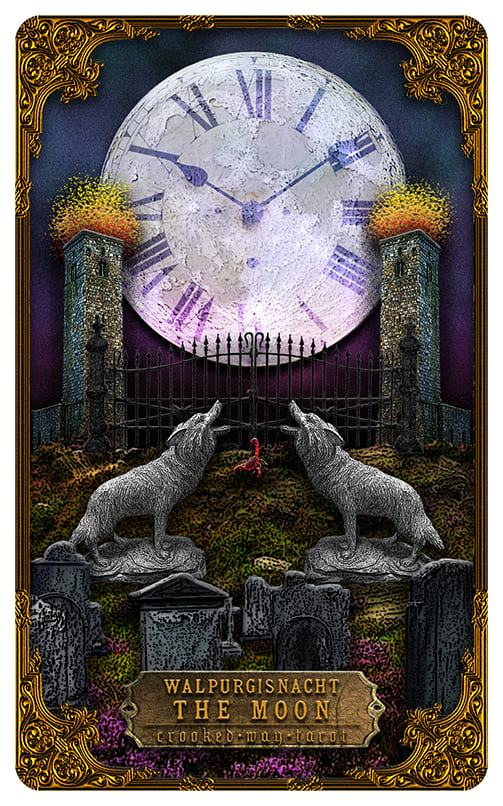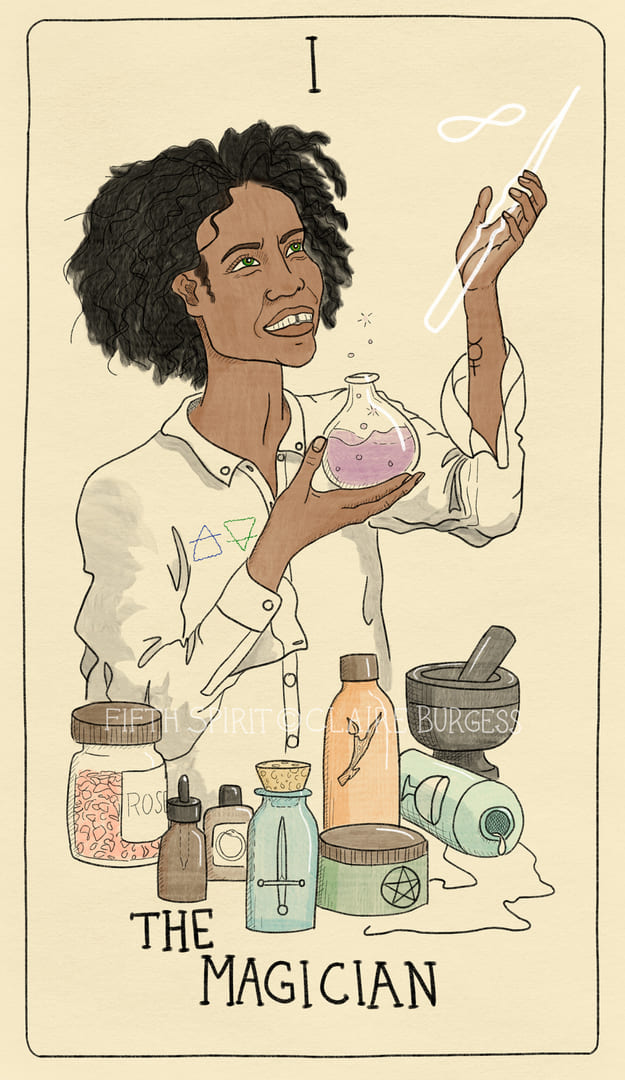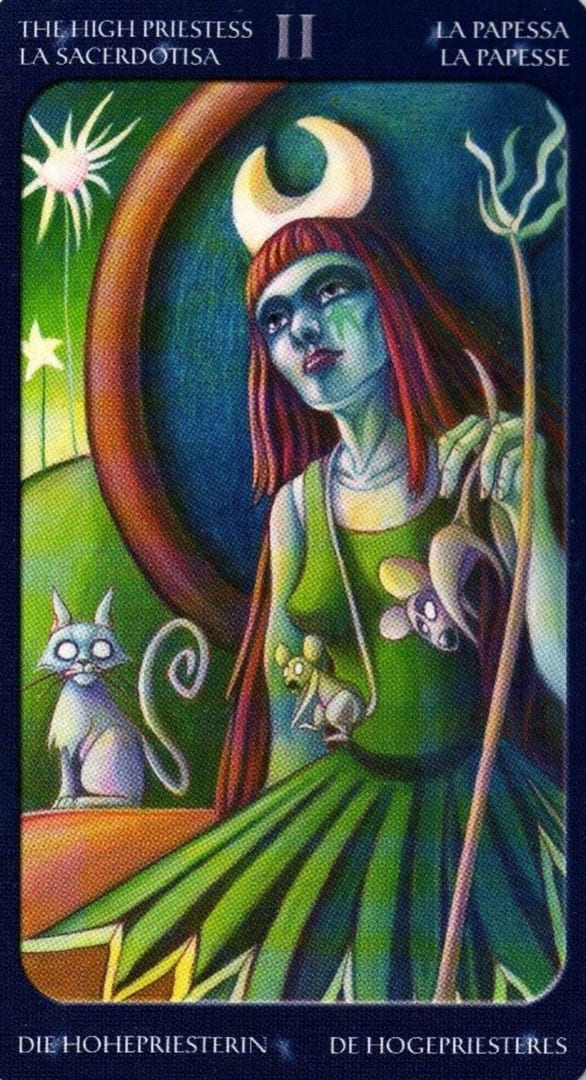
How to Read Tarot Intuitively (Without Memorizing All 78 Meanings)
The guidebook problem
You pull a card. You don’t know what it means. You reach for the little white booklet that came with the deck, or you open an app, or you google it. You read a paragraph of generic meaning. You try to apply it to your question. It sort of fits. You move to the next card and repeat the process.
This is how most people start reading tarot, and there’s nothing wrong with it. But there’s a reason it feels mechanical: you’re reading about the card instead of reading the card itself.
Intuitive tarot reading is the practice of letting the card speak to you directly — through the image, the colors, the figures, the feeling it creates — before consulting any external source. It’s not about ignoring traditional meanings. It’s about making the card a conversation rather than a dictionary lookup.
And here’s the thing nobody tells beginners: you don’t actually need to memorize 78 meanings to give a powerful reading. You need to learn how to look.
Step 1: Describe what you see
This is the foundation of intuitive reading, and it’s embarrassingly simple.
Look at the card. Describe what you see. Out loud or in your head, narrate the image as if you’re explaining it to someone who can’t see it.
“There’s a person sitting up in bed. It’s dark. There are nine swords hanging on the wall behind them. Their head is in their hands. It looks like the middle of the night.”
You’ve just described the Nine of Swords, and without knowing any textbook meaning, you’ve captured the essence: sleepless worry, nighttime anxiety, mental distress. The image told you everything.
Try it with any card. The Eight of Cups: “Someone is walking away from eight stacked cups. They’re heading toward mountains. It’s nighttime. They look like they’ve made a decision.” That’s the meaning — leaving behind emotional investments that no longer serve you. The image IS the meaning.
Step 2: Notice the colors
Every tarot deck uses color deliberately, and your brain reads color emotionally — even if you don’t realize it.
Red: Passion, anger, urgency, danger, desire Blue: Calm, intuition, communication, sadness, depth Yellow: Intellect, joy, energy, consciousness, optimism Green: Growth, healing, abundance, nature, envy Black/Dark: Mystery, shadow, the unknown, endings, protection White: Purity, clarity, truth, beginnings, sometimes emptiness Gold: Success, spiritual illumination, wealth, divine connection Grey: Ambiguity, neutrality, fog, indecision
When a card is predominantly one color, that color carries emotional information. A card bathed in warm golden light feels very different from one shrouded in grey fog — and that feeling is part of your reading.
Step 3: Read the body language
Figures in tarot cards have body language, and you already know how to read it — you do it every day with real humans.
Facing forward: Confronting, inviting, present, direct Facing away: Leaving, withdrawing, turning from something, looking ahead Looking down: Introspection, grief, contemplation, loss Looking up: Hope, prayer, aspiration, seeking something higher Arms open: Receiving, welcoming, vulnerable Arms crossed or holding tight: Protecting, guarding, unwilling to let go In motion: Change, transition, progress, urgency Still/seated: Stability, patience, contemplation, stuckness
When multiple figures appear in a card, notice their relationship. Are they facing each other or away from each other? Is one higher than the other? Are they touching? These spatial relationships tell relationship stories.
Step 4: Tell the story
Here’s where intuitive reading really comes alive: read the cards in your spread as a story, not as individual definitions.
Instead of: “Card 1 means this. Card 2 means that. Card 3 means the other thing.”
Try: “In the first card, someone is carrying a heavy load. In the second card, someone is walking away. In the third card, there’s a sunrise. So the story is: you’ve been carrying too much, you’re about to put it down, and something new is dawning.”
The narrative emerges from connecting the images rather than stacking isolated meanings. Your spread is a comic strip — three (or five, or ten) panels that tell a single story. Read it that way.
This works especially well when cards seem contradictory. A “positive” card next to a “negative” one isn’t a contradiction — it’s a plot twist. “Things are bad right now, but something good is coming.” That’s a story, not a conflict between card meanings.
Step 5: Trust the first hit
When you first look at a card, something happens in the first one to three seconds — a flash of feeling, a word, a thought, an image. This first hit is your intuition speaking.
Then your analytical mind kicks in: “Wait, that can’t be right.” “That’s not what the card means.” “I’m just making things up.” And the intuitive impression gets buried under doubt.
Practice catching that first hit and honoring it. Write it down before you think about it. Say it out loud before your inner critic can object. Over time, you’ll find that your first impression is often more accurate — for this specific reading, this specific question — than the textbook meaning.
This doesn’t mean your first hit is always right. But it’s always worth listening to. It’s data from a part of your mind that processes faster than your conscious thoughts.
Step 6: Use the question as a lens
Intuitive reading doesn’t happen in a vacuum. The question shapes everything.
The same card means different things depending on what you asked. The Ace of Swords in a career reading means a breakthrough idea at work. In a relationship reading, it means a conversation that cuts to the truth. In a health reading, it means surgery or a decisive medical action.
The image doesn’t change, but the question tells you which layer of the image is relevant. Let the question guide your eyes to the right details.
Common fears about intuitive reading
“What if I’m just making things up?”
You are — and that’s exactly how it works. Your subconscious mind makes connections that your conscious mind hasn’t figured out yet. The “made up” interpretation is often your intuition packaging real insight in story form. The cards are a projection screen for your deeper knowing.
“What if I get it wrong?”
You will, sometimes. So do readers who memorize every traditional meaning. No approach guarantees accuracy. But intuitive readings tend to be more specific and personally relevant than textbook readings, which means when they’re right, they’re very right.
“Don’t I need to learn the traditional meanings first?”
It helps. Traditional meanings give you a shared vocabulary and a foundation to build on. But you don’t need to memorize all 78 before you start reading intuitively. Learn the major patterns — the suits, the number cycle, the big themes of the Major Arcana — and let intuition fill in the rest.
“Is intuitive reading real or am I just projecting?”
Projection IS the mechanism. You project meaning onto ambiguous images, and in that projection, you reveal what your subconscious already knows. That’s not a flaw in the system — it’s the whole system. Psychology and intuition aren’t opposites. They’re the same process described in different languages.
Exercises to build intuitive muscle
The one-word exercise. Pull a card. Say one word. Not a meaning — a feeling. “Heavy.” “Bright.” “Lonely.” “Growing.” That word is your intuitive reading of the card. Practice this until single-word reads come naturally.
The story chain. Pull three cards. Tell a 30-second story using only the images. No traditional meanings allowed. Just: “First this happened, then this, then this.” The story IS the reading.
The blind pull. Ask a question, pull a card, but don’t look at it yet. Sit with the question for a moment. What answer do you expect? What do you hope for? What do you fear? Now look at the card. Notice how it relates to what was already in your mind.
The face-down read. Lay out a spread face-down. Before flipping any card, touch each position and say what you think might be there — not the specific card, but the energy. “This position feels heavy.” “This one feels hopeful.” Then flip the cards and see how your impressions compare.
The balance point
The best tarot readers aren’t purely intuitive and they aren’t purely traditional. They live in the overlap — using traditional meanings as a foundation and intuition as a guide for how to apply those meanings to specific situations.
Think of traditional meanings as the vocabulary and intuitive reading as the conversation. You need words to speak, but a conversation is more than a list of definitions. It’s alive, responsive, shaped by who you’re talking to and what you’re talking about.
Learn the vocabulary. Then put the dictionary down and talk.
Frequently Asked Questions
Can you read tarot without memorizing all the meanings?
Yes, and many experienced readers do exactly that. Intuitive tarot reading relies on visual storytelling, personal associations, and the feelings cards evoke rather than memorized textbook definitions. Knowing traditional meanings helps, but it's a foundation — not a script. The most powerful readings come from combining basic knowledge with your own intuitive response to the images.
How do I develop my tarot intuition?
Practice daily one-card pulls where you describe what you see and feel before checking any guidebook. Over time, your personal associations become stronger than memorized meanings. Also: read the cards as a story rather than individual definitions, pay attention to colors and body language in the images, and trust your first impression before your second-guessing kicks in.
Is intuitive tarot reading less accurate than traditional reading?
Not at all. Many readers find intuitive readings more accurate because they respond to the specific context of the question rather than applying generic textbook meanings. Traditional meanings provide a shared language, but intuition provides the nuance that makes a reading feel personal and relevant. The best readers use both — structure and instinct together.
What if my intuitive interpretation contradicts the traditional meaning?
Go with your intuition, especially if the traditional meaning doesn't fit the context. Card meanings aren't laws — they're starting points. If the Six of Cups traditionally means nostalgia but you look at it and feel trapped by the past, that feeling is your reading. Over time you'll find that your intuitive hits are often more accurate than the textbook for specific situations.