Human Tarot Reader vs AI: When Each Is Better (Honest Comparison)
The real question isn’t which is better
Every week, someone posts in a tarot community: “Is AI tarot as good as a real reader?” The question assumes one must be better than the other. It doesn’t.
A hammer isn’t better than a screwdriver. They’re different tools for different jobs. The same is true for human and AI tarot readings. Each has genuine strengths. Each has real limitations. The useful question isn’t “which is better?” but “which is better for what I need right now?”
This is an honest comparison from someone who respects both.
When a human reader is better
Deep emotional situations
You just found out your partner has been unfaithful. Your parent was diagnosed with a serious illness. You’re considering leaving a career you’ve built for twenty years. You feel lost in a way you can’t articulate.
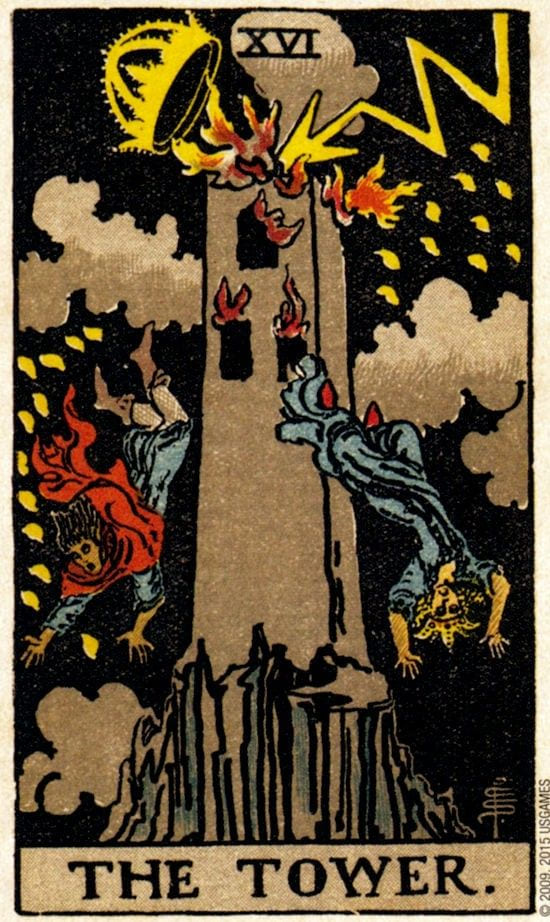
These situations need a human. Not because AI can’t interpret cards about these topics — it can, and sometimes insightfully. But because what you need in these moments isn’t just interpretation. You need someone to witness your pain, to hold space for your confusion, to respond to the tears that come when the Tower card appears and hits too close to home.
A skilled human reader adjusts their approach when they see you struggling. They slow down. They choose their words more carefully. They might reach across the table and say “this is a hard card, but let me tell you what I see on the other side of it.” AI can approximate this in text, but the experience is fundamentally different.
When you need to be truly seen
There’s a moment in a great reading where the reader says something so specific and accurate that you feel genuinely understood. They didn’t get it from the cards alone — they got it from reading you. Your body language, your tone, the pause before you answered their question, the way your eyes moved when a particular card was turned over.
This is the human reader’s superpower. They’re reading two things simultaneously: the cards and the person. The intersection of those two readings is where the magic happens.
Complex, multi-layered questions
“Should I leave my marriage, move to another city, change careers, and reconnect with my estranged family — or stay where I am?” Real life questions are messy, interconnected, and layered. A human reader can navigate this complexity through conversation — asking follow-up questions, exploring priorities, noticing which parts of the reading you respond to most strongly.
AI can address complex questions, but it tends to treat each element systematically rather than sensing which thread to pull. A human reader follows the energy of the conversation to find what matters most.
Accountability and follow-up
A human reader who knows you over time tracks your growth. They remember what came up last session. They notice patterns across readings. They might say “remember six months ago when the Eight of Cups kept appearing? Look where you are now.” This continuity creates a relationship that deepens the practice.
Some AI apps are building memory features, but the experience of being known by another person isn’t something technology replicates well.
When AI is better
Daily practice
Pulling a daily card with AI interpretation is a powerful, sustainable practice. You can do it every morning in two minutes, build your card knowledge over time, and maintain consistency without scheduling or paying for daily human readings.
For learning tarot, this kind of regular practice with immediate, comprehensive feedback is invaluable. AI never gets tired of explaining what the Seven of Pentacles means for the fourteenth time.
Accessibility
Not everyone can afford $100+ for a professional reading. Not everyone lives near a good reader. Not everyone feels comfortable sitting across from a stranger and discussing personal matters.
AI removes all these barriers. A teenager in a rural area with $0 to spend can access quality tarot interpretation at midnight. That’s democratization of a spiritual practice that has historically been gatekept by cost, geography, and social access.
Judgment-free exploration
You want to ask about something embarrassing. You want to explore a question you’re not ready to say out loud to another person. You want to pull cards about a topic that might make a human reader uncomfortable or judgmental.
AI doesn’t judge. It doesn’t raise an eyebrow. It doesn’t tell stories about you to other clients. For exploratory, private, or sensitive questions, AI provides a safe container.
Learning and study
AI can explain card symbolism, Kabbalistic correspondences, astrological associations, and historical context with encyclopedic thoroughness. It can show you how different traditions interpret the same card, compare reading styles, and answer an endless stream of “but what about…?” questions without getting impatient.
For tarot students, AI is an infinitely patient teacher.
Consistency and availability
3 AM anxiety spiral? AI is there. Quick question during lunch break? AI is there. Need a reading while traveling? AI is there. No scheduling, no waiting list, no travel, no awkward small talk.
The cost comparison
Let’s be honest about money:
| Human Reader | AI App | |
|---|---|---|
| Single reading | $50-$200+ | Free to $2-5 |
| Monthly cost | $50-200 (1-2 readings) | $0-20 (unlimited) |
| Annual cost | $600-2400 | $0-240 |
This doesn’t mean AI is “better value.” A $150 human reading and a free AI reading are not the same product. But accessibility matters, and the cost difference means that AI opens tarot to people who couldn’t otherwise access it.
The quality spectrum
Here’s what people miss: the comparison isn’t “human vs AI.” It’s “this specific human vs this specific AI.”
A mediocre human reader who recites textbook meanings without connecting to the querent is worse than a well-designed AI app. A rushed, distracted human reader who’s on their fifteenth reading of the day is worse than a fresh AI interpretation.
Conversely, a skilled, experienced, empathetic human reader operating at their best provides something no current AI can match.
The comparison should be: the best human reader I can access vs the best AI tool I can access, for this particular need, at this particular moment.
How to use both
The smartest approach is complementary:
Use AI for:
- Daily card pulls and journaling practice
- Learning new cards, spreads, and techniques
- Quick guidance on everyday questions
- Private exploration of sensitive topics
- Building tarot knowledge between human sessions
Use a human reader for:
- Major life transitions and decisions
- Emotional processing and healing work
- Readings where you need to feel genuinely heard
- Annual or quarterly deep-dive readings
- Questions that require conversation and follow-up
This isn’t compromise — it’s optimization. You get the accessibility and consistency of AI for daily practice while preserving the depth and connection of human reading for the moments that matter most.
The future
AI tarot will get better. The interpretations will become more nuanced, the conversations more natural, the personalization more sophisticated. But the fundamental thing that makes human reading powerful — the experience of being seen, heard, and understood by another consciousness — isn’t a technology problem. It’s a human need that technology serves differently than people do.
The readers who will thrive aren’t the ones fighting AI. They’re the ones who embrace what makes them irreplaceable: their presence, their intuition, and their genuine care for the person sitting across from them.
The cards don’t choose sides. They work with whoever pays attention.
Frequently Asked Questions
Is a human tarot reader better than AI?
For deep personal readings, emotional situations, and complex life decisions — yes, a skilled human reader is generally better. They can read your energy, adapt in real time, and provide the empathetic connection that meaningful readings often require. But for daily practice, learning, accessibility, and quick guidance, AI has real advantages including 24/7 availability, consistency, and no social pressure.
How much does a human tarot reading cost vs AI?
Human readings typically cost $50-$200+ for a session (30-60 minutes), with experienced readers charging more. AI tarot apps range from free to $10-20/month for premium features. The cost difference is significant, but they're not equivalent services — comparing them is like comparing a therapy session to a self-help app. Both have value, but they serve different needs.
Can AI replace human tarot readers?
No, and it's unlikely to. AI and human readers serve different needs. AI excels at accessibility, consistency, and knowledge breadth. Human readers excel at intuitive depth, emotional connection, and personalized insight. Most people who use AI tarot regularly still seek human readers for important readings. The market is expanding, not replacing.
How do I choose between AI and a human reader?
Ask yourself what you need from the reading. Quick daily guidance or learning? AI works great. Deep emotional exploration, major life decisions, or situations where you need to feel heard? Find a human reader. Processing grief, relationship crises, or identity questions? A human reader's empathy makes a real difference. Many practitioners use both — AI for routine and humans for depth.