Imbolc Correspondences: Colors, Crystals, Herbs, Symbols
Imbolc in one sentence
White candles. Fresh milk. Snowdrops. Brigid. The first stirring.
That’s Imbolc in five correspondences. If you remember nothing else, remember those. Everything below deepens and elaborates, but those five contain the essence of the sabbat.
Imbolc correspondences are softer than most. Where Beltane correspondences roar (red, fire, passion) and Samhain’s whisper from the dark (black, obsidian, shadow), Imbolc’s correspondences shine gently. They’re the color of first snowmelt, the taste of warm milk, the scent of rosemary wafting through a kitchen. Quiet. Clean. Beginning.
Colors
Imbolc’s color palette is the palette of late winter: white, silver, pale blue, and green just barely beginning.
White — The dominant Imbolc color. Snow, milk, candles, Brigid’s robes. White is the color of purity, cleansing, and the blank canvas of what hasn’t yet been written. Wear it. Light it. Drape it on your altar.
Silver / Pale grey — The color of moonlight on snow, and of the hearth’s ash. Silver is the color of Brigid’s healing waters. It carries the energy of intuition and quiet knowing.
Pale yellow / Cream — The first warmth returning. The color of beeswax candles, of early daffodils, of Brigid’s flame. Yellow at Imbolc isn’t the bright yellow of summer — it’s the gentle butter-yellow of first light.
Soft green — The color of the first shoots, barely showing through the snow. Pale emerald, sage, the green of the snowdrop stem. Green at Imbolc is the promise of spring, not yet spring itself.
Purple / Violet — The color of amethyst, Imbolc’s most associated crystal. Associated with healing, transformation, and Brigid’s role as a goddess of sacred wells.
Use: Wear a white or pale-colored outfit on Imbolc Eve. Light candles in white or pale yellow. Drape a white cloth on your altar. Include soft green or silver accents.
Crystals and stones
Imbolc crystals emphasize cleansing, healing, and intuitive clarity.
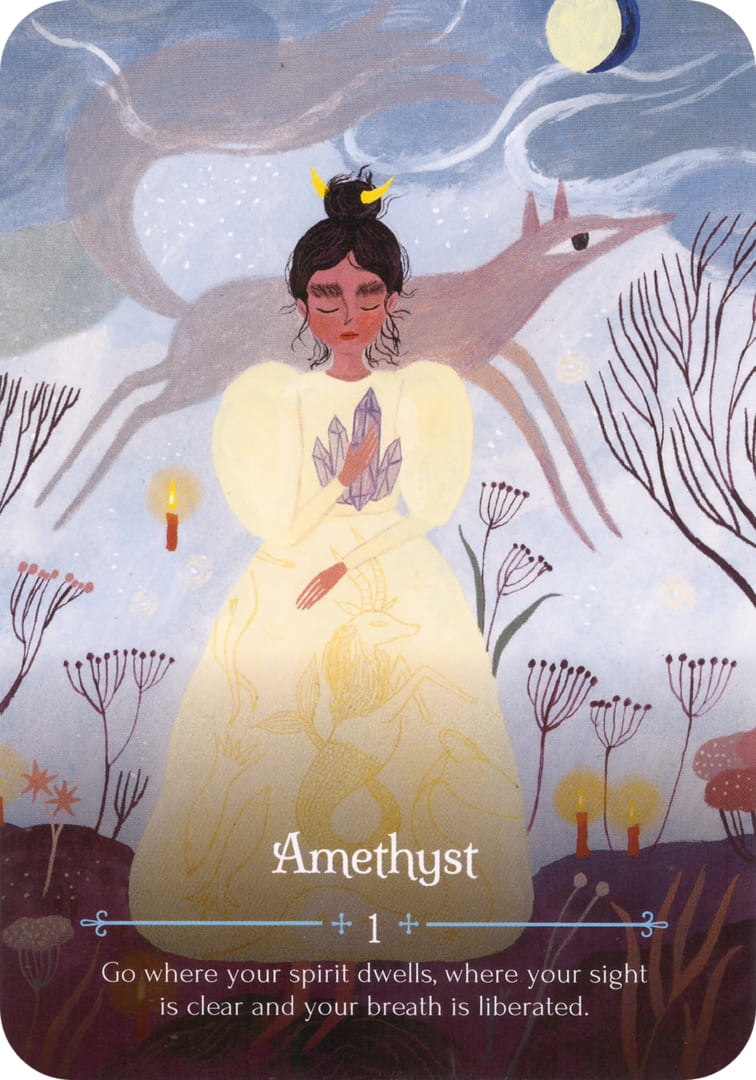
Amethyst — The primary Imbolc stone. Purple quartz associated with spiritual insight, calm, and purification. Place an amethyst on your altar or carry one in your pocket throughout the sabbat.
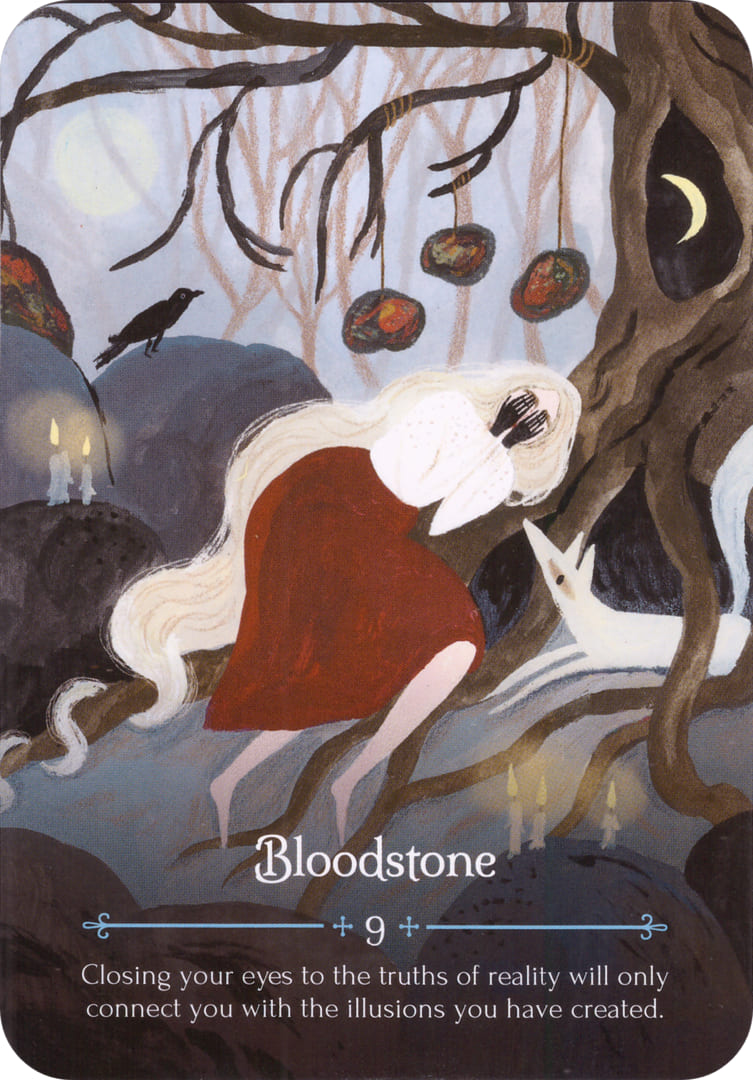
Bloodstone — Green jasper with red flecks. Bloodstone represents courage and the returning life-force — perfect for Imbolc’s energy of quiet strength emerging from winter.
Clear quartz — The all-purpose amplifier. Clear quartz aligns with Imbolc’s theme of clarity and new light. Use it to enhance any other crystal in your ritual.
Moonstone — The stone of feminine intuition and cycles. Moonstone honors Brigid’s connection to the moon and the month of emerging light.
Calcite (white or clear) — Gentle cleansing energy, connected to the first snowmelt. Place white calcite near your Imbolc altar to purify the space.
Selenite — Pure white crystal that never needs charging. Selenite is often called “liquid light” — a perfect Imbolc correspondence for the return of light after darkness.
Use: Place one or more on your altar. Hold during meditation. Keep one near your bed on Imbolc Eve for dream work.
Herbs and plants
Imbolc herbs are about purification, protection, and welcoming gentle new growth.
Angelica — A sacred Imbolc herb associated with healing and protection. Its name means “angelic” and it’s said to have been given to humans by the archangel Raphael. Perfect for Brigid’s healing energy.
Rosemary — The herb of remembrance, but also of protection and purification. Use in a cleansing bath, sprinkle at thresholds, or cook with it for a simple Imbolc offering.
Bay laurel — Associated with Brigid’s role as poet-goddess. Bay leaves are traditionally used in wish-work: write your Imbolc intention on a bay leaf and burn it.
Lavender — Gentle, cleansing, calming. Lavender works well in bath rituals and in Brigid’s bed (see the Brídeóg ritual).
Sage — Especially white sage for cleansing space before ritual. A smoke cleanse (or a sage-scented candle for those who don’t use smoke) is a traditional Imbolc preparation.
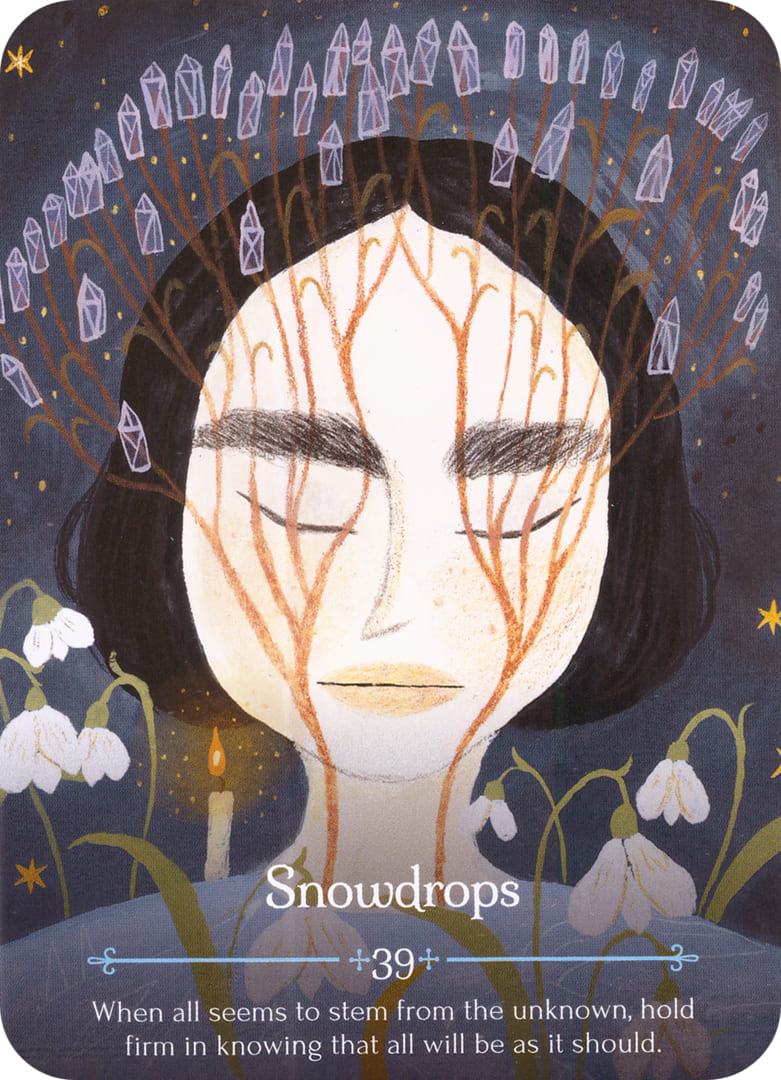
Snowdrops — The flower of Imbolc. If you can find them growing, bring a small bouquet indoors. If not, a single image or painted representation on your altar is fine.
Garlic — Protection herb, associated with Brigid’s protective role. Hang a braid of garlic in your kitchen for Imbolc blessings on the hearth.
Heather — White heather especially. Associated with solitude and contemplation — fitting for Imbolc’s introspective energy.
Use: Brew into teas, burn as incense, add to baths, weave into crafts, use in cooking. Cooking with Imbolc herbs is one of the most intimate ways to honor the sabbat.
Foods and drinks
Imbolc foods are dairy-based, warming, and simple.
Milk — The defining Imbolc food. Imbolc means “in the belly” and refers to the lactation of ewes. Warm milk, milk sweetened with honey, or milk with cinnamon are all traditional.
Dairy generally — Butter, cheese, cream, yogurt. Any food that celebrates the returning milk of early spring.
Seeds and grains — Poppy seeds, sesame, oats. Seed-based foods honor the unborn potential that Imbolc celebrates.
Root vegetables — What the earth stored through winter. Turnips, beets, potatoes, carrots. A simple roasted root vegetable plate is an Imbolc feast.
Braided bread — Brigid’s bread, often baked in a braid or sun shape. Warm, fresh bread with butter is the ultimate Imbolc comfort food.
Honey — Brigid’s sweetness. Used in teas, on bread, or as an offering left on the altar.
Herbal tea — Rosemary, chamomile, or thyme tea. Warm, cleansing, simple.
Use: Make a small Imbolc meal. Leave a portion on the altar as an offering to Brigid.
Animals and creatures
Ewes and lambs — The Imbolc animals. The sabbat is named for the lactation of ewes and the impending lambs.
Serpents and snakes — Brigid’s serpent emerges from the earth at Imbolc (the Celtic version of the groundhog tradition). Serpents represent rebirth, renewal, and shedding the old skin.
Badgers — Another animal associated with emerging from winter dens.
Swans — Brigid’s sacred bird. White swans represent loyalty, love, and the transformation from ugly duckling to beauty.
Dragons — In some Celtic traditions, dragons stir beneath the earth at Imbolc.
Cows — Brigid is associated with sacred cows who give her milk.
Symbols
Brigid’s cross — The four-armed woven cross that protects the home. Hung above doorways at Imbolc. The most iconic symbol of the sabbat.
Candles and flames — Any open flame is an Imbolc symbol. Candles, hearth fires, oil lamps.
Sun wheels — Circles divided into four or eight parts, representing the returning solar cycle.
Snowdrops and crocuses — The first flowers to push through late-winter ground.
Bowls and cauldrons — Brigid’s cauldron of inspiration. Place a small bowl of water on your altar.
Keys and locks — Symbolic of unlocking the earth for spring.
The Brídeóg (Brigid’s doll) — A small cloth doll representing the goddess, traditionally placed in a small bed on Imbolc Eve.
Tarot cards
Imbolc energy lives in specific cards across the tarot:
- The Star — returning hope after darkness (primary Imbolc card)
- The High Priestess — inner listening, quiet wisdom
- The Hermit — solitary winter insight
- The Empress — fertility still gestating
- The Moon — intuition, dream work
- Ace of Pentacles — the first seed, the first green shoot
- Page of Cups — tender new feelings
- Three of Pentacles — craftsmanship, small beginnings (Brigid’s smithcraft)
- Six of Cups — innocent renewal, the childlike freshness of new beginnings
- Four of Swords — rest before the work begins, winter’s final retreat
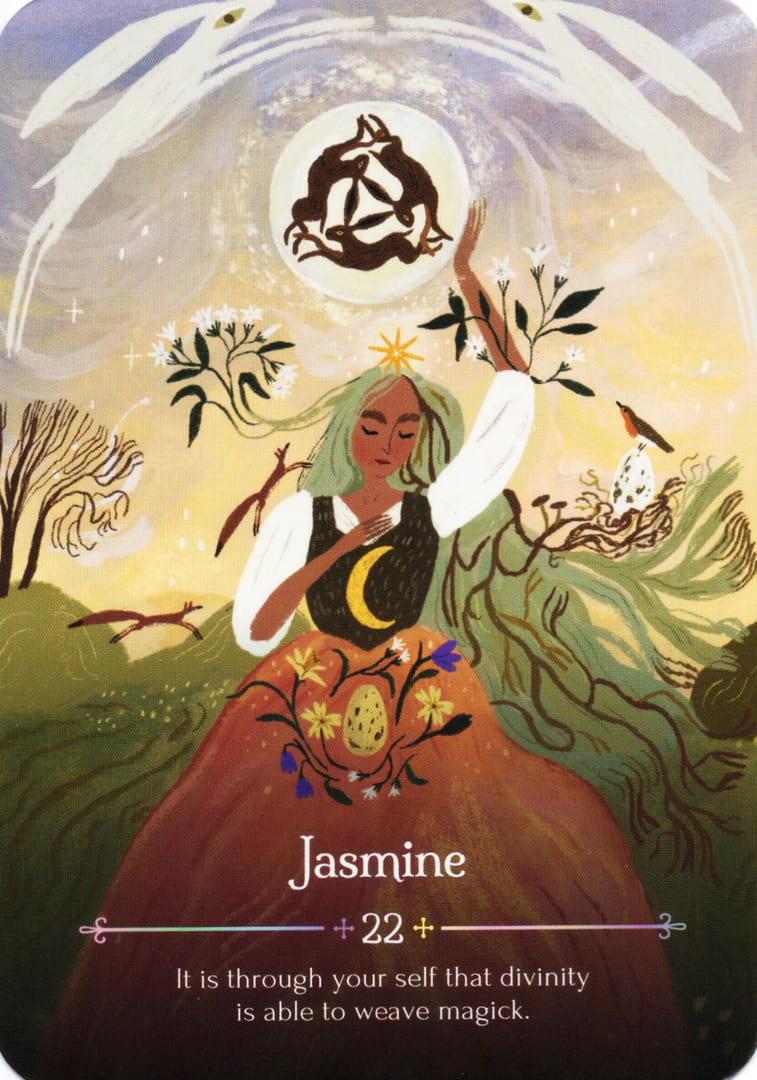
For a pure Imbolc reading, use the Seasons of the Witch: Imbolc Oracle — every one of its 44 cards is an Imbolc correspondence in visual form.
Deities and spirits
Brigid / Brighid / Brigit — The primary deity of Imbolc. Celtic goddess of fire, poetry, healing, smithcraft, and sacred wells. Also honored as Saint Brigid in Catholic tradition.
Bride — The Scottish version of Brigid, walking the land on Imbolc Eve to bring warmth.
Danu — The primordial mother goddess of the Celts. Sometimes honored at Imbolc as Brigid’s mother or predecessor.
The Cailleach — The winter crone goddess. Imbolc is her handover day — she transforms into Brigid, ending winter and beginning spring. In some traditions, if the weather is fine on Imbolc, it means the Cailleach is out gathering wood to extend winter; if the weather is foul, she’s asleep, and spring comes early.
Directions and elements
Element: Fire (hearth flame, not bonfire) and Earth (still frozen, gestating) Direction: South (fire) or East (dawn, new beginnings) Time: Dawn. Imbolc is a morning sabbat. Moon phase: New moon or waxing crescent — the returning light.
Astrology
Sun sign: Aquarius (January 20 – February 18). Imbolc falls deep in Aquarius season, carrying the sign’s themes of visionary independence and unconventional hope.
Key planet: Venus (Brigid’s nurturing, healing aspect) and Uranus (Aquarius’ ruler, sudden awakening).
Your personal Imbolc correspondence list
You don’t need all of this. Here’s what a complete, beginner-friendly Imbolc correspondence kit looks like:
- One white candle
- One amethyst (or any purple/clear stone)
- A sprig of rosemary (fresh or dried)
- A small bowl of milk (can be plant-based)
- One snowdrop image (real or printed)
- Your tarot deck or Imbolc Oracle
That’s the full kit. Six items. You probably already have most of them.
Gather these on Imbolc Eve. Place them on a white cloth. Light the candle. Begin.
For a guided Imbolc reading that uses these correspondences, try Elvi’s Imbolc spread with the Imbolc Oracle deck.
Frequently Asked Questions
What are correspondences and how do I use them?
Correspondences are symbolic associations that align with a specific energy — in this case, Imbolc. You use them by incorporating them into rituals: wearing the colors, lighting candles in the right shades, placing crystals on your altar, cooking with seasonal herbs. They amplify the intention.
Do I need ALL the correspondences for a proper Imbolc?
No. Pick two or three that speak to you. Imbolc is simple by nature — a white candle and a sprig of rosemary is a complete correspondence kit. The point is resonance, not accumulation.
Can I substitute correspondences I don't have?
Absolutely. Correspondence lists are guidelines, not rules. If you don't have amethyst, use any clear or purple stone. No rosemary? Lavender or sage works. The energy is about alignment with the season, not brand-name ingredients.
What's the most essential Imbolc correspondence?
A white candle. If you had to choose one single correspondence, it would be the living flame of a white or pale candle. Everything else — crystals, herbs, colors — amplifies that central fire, but the flame itself is Imbolc.