Imbolc for Beginners: A Gentle First Celebration
If this is your first Imbolc
Imbolc is the easiest sabbat to start with.
No outdoor bonfire. No elaborate altar. No public ritual. You don’t need to know herbalism, crystal correspondences, or the full Celtic pantheon. You just need a candle, a quiet hour, and the willingness to pay attention to something small.
If you’ve been curious about the Wheel of the Year but haven’t known where to begin, Imbolc — February 1st — is your invitation. This is the sabbat of gentle first steps.
What Imbolc actually is
Imbolc (pronounced IM-olk) is the Celtic festival marking the midpoint between winter solstice and spring equinox. It’s the moment when light is visibly returning but the ground is still cold — the first stirring of life, happening mostly below the surface.
The goddess of Imbolc is Brigid — the keeper of the hearth, the healer, the one who brings warmth back. Her feast day is February 1, and in many traditions, she walks the land on Imbolc Eve, blessing homes that welcome her.
You don’t have to believe in Brigid literally. You don’t have to be pagan or Celtic. You can experience Imbolc simply as a seasonal pause — a quiet acknowledgment that winter isn’t forever, that the light is returning, and that something within you might be stirring too.
The simplest possible Imbolc
If you do nothing else, do this:
On the evening of January 31 or February 1, light a candle.
That’s it. That’s the ritual.
Imbolc is a hearth festival. For thousands of years, people in the British Isles would light a candle in every window of the house on Imbolc Eve to welcome Brigid as she passed. The symbolism is simple: you’re saying to the returning light, I see you. You’re welcome here.
Sit with the candle for at least ten minutes. Don’t scroll your phone. Just watch the flame. Let your mind wander. Notice what surfaces — a memory, a longing, a small plan. That’s Imbolc speaking. She speaks softly.
Five gentle ways to celebrate
If the candle feels right and you want more, here are five additions — none required, all optional. Pick whichever call to you.
1. Clean one small space
Imbolc is a festival of ceremonial cleansing. Not the full spring cleaning (that’s Ostara’s job). Just one small space — a drawer, a shelf, an altar, your desk. Clear it fully. Wipe it down. Return only what you actually want there. As you clean, imagine you’re preparing for something good to arrive.
2. Write three gentle intentions
Imbolc is a planting festival, but the seeds are still underground. The intentions you set now should be soft, small, and early. Not “I will completely transform my life.” More like: “I want to remember to drink tea in the morning.” “I’d like to walk outside once a week.” “I want to start — gently, badly — writing again.”
Write three on a piece of paper. Fold it. Place it under your candle. Burn it on Ostara (March 20) if you like — let the intentions be carried by fire from first stirring to visible bloom.
3. Make something small by hand
Brigid is the goddess of smithcraft and creative fire. Making something with your hands — anything — is an Imbolc act. Bake bread. Weave a simple cord. Sew a button. Cook from scratch. It doesn’t have to be a masterpiece. The point is the act of making.
The most traditional Imbolc craft is Brigid’s cross — a small four-armed cross woven from reeds or straw. You can find tutorials online. It takes about 20 minutes and the result is beautiful.
4. Leave a blessing cloth for Brigid
In the old traditions, on Imbolc Eve you’d leave a piece of cloth outside overnight. As Brigid passed, she’d bless it — and for the rest of the year, that cloth carried her protection. A white scarf, a handkerchief, a small piece of fabric. Leave it on a windowsill or outside a door. Bring it in at dawn.
This is a genuinely ancient practice, and there’s something quietly powerful about it even if you approach it as pure symbol. You’re saying: if grace is passing through, I’d like to catch some.
5. Pull an Imbolc tarot or oracle reading
A three-card pull is enough:
- What kept me warm this winter?
- What’s beginning to stir?
- What gentle step is ready?
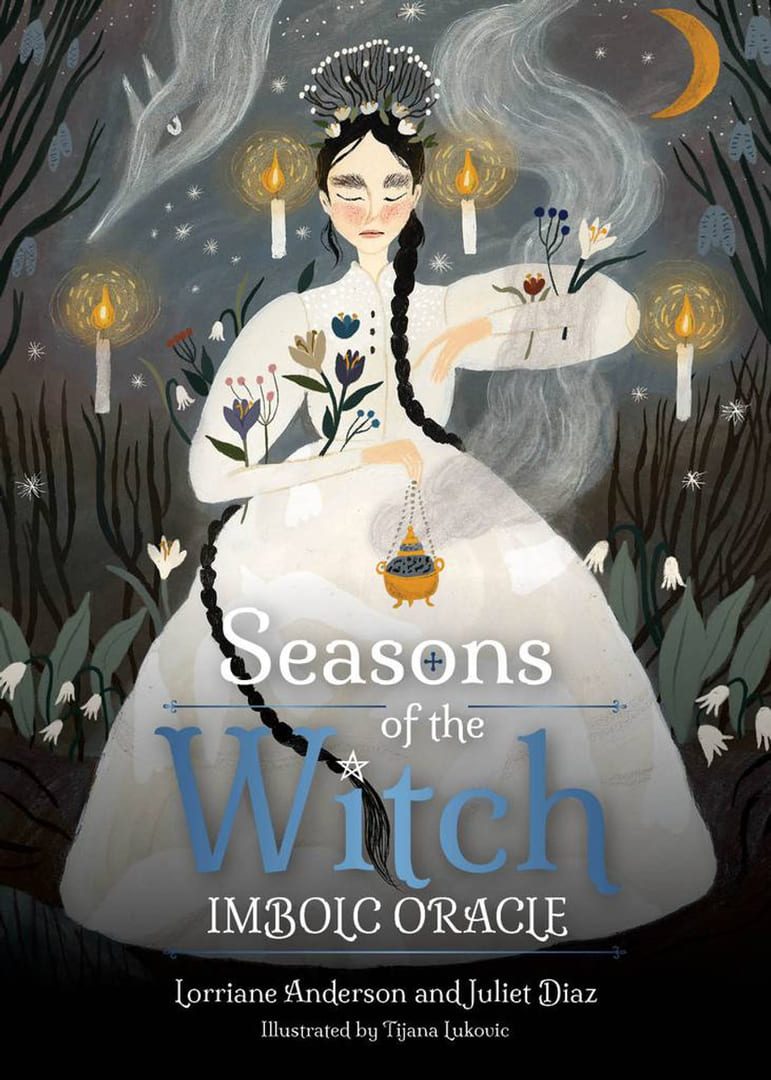
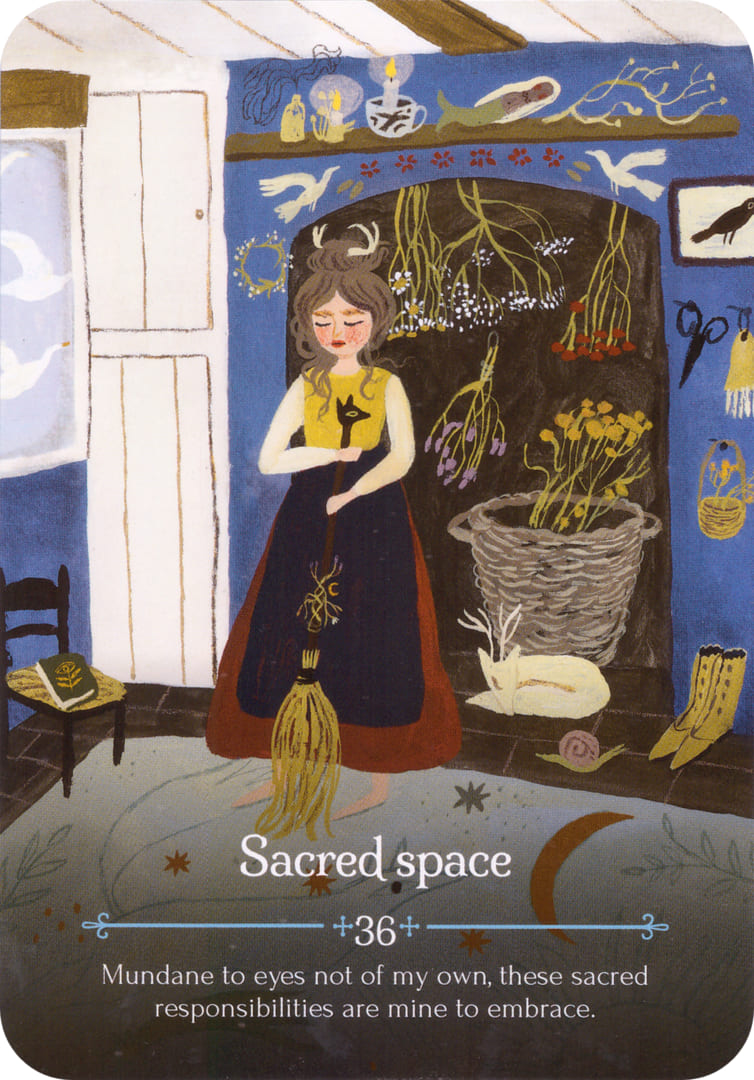
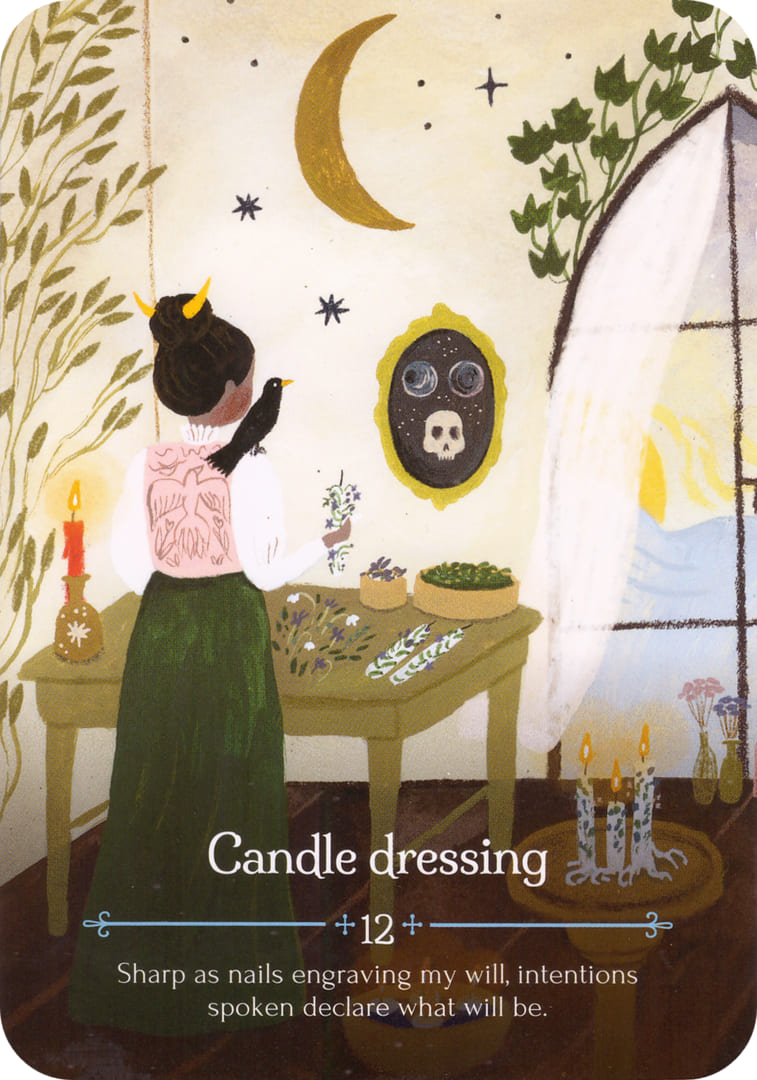
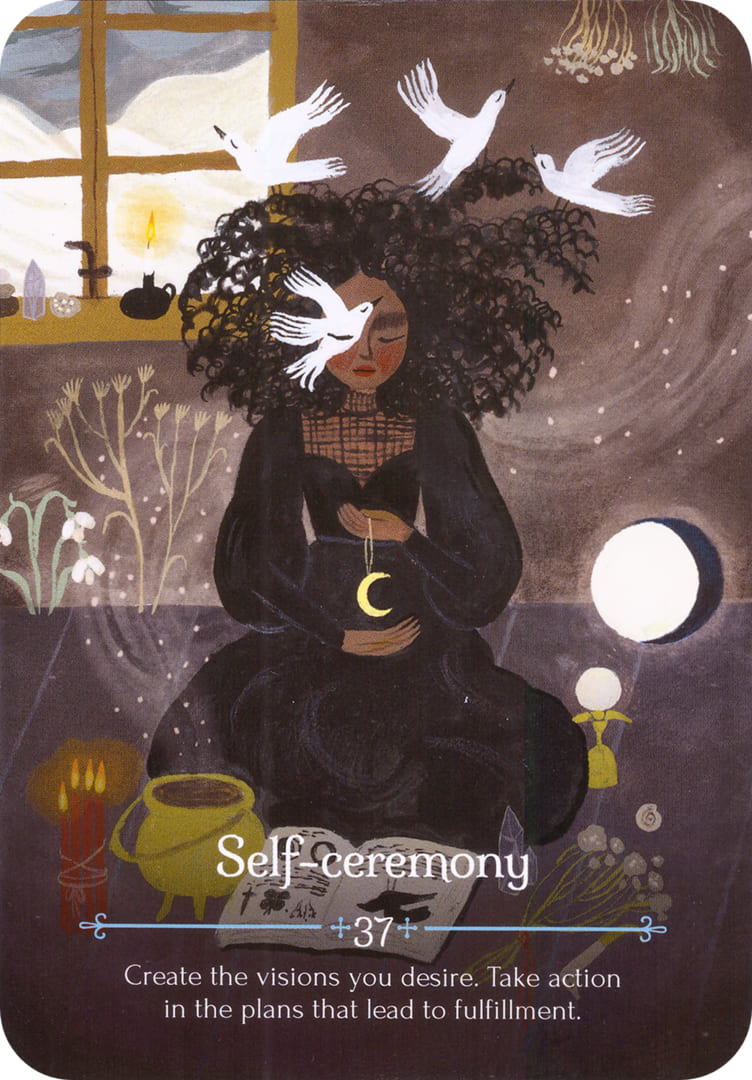
The Seasons of the Witch: Imbolc Oracle is built specifically for this sabbat. Every card is an Imbolc image — Brigid, snowdrops, dawn, sacred space, self-ceremony — and it pairs beautifully with any tarot deck you already own.
Common beginner questions
Do I have to be pagan?
No. You don’t have to believe in anything specific. Imbolc is a seasonal marker, like Thanksgiving or the Equinox — a moment to pause and notice. You can approach it as spirituality, as folk tradition, as mindful ritual, or as simple seasonal attention.
Can I celebrate Imbolc if I live in the Southern Hemisphere?
If you’re in Australia, New Zealand, South America, or southern Africa, you can either:
- Celebrate Imbolc on February 1 in solidarity with the Celtic calendar (and acknowledge that the seasons are flipped for you)
- Celebrate your own “Imbolc” around August 1, which is when your hemisphere is at the same seasonal point (midpoint between winter solstice and spring equinox)
Neither is wrong. Many Southern Hemisphere pagans do both.
Is there a “right” way to do this?
No. The “right” way is the one that feels sincere to you. Imbolc doesn’t have priests who will grade your performance. It’s a relationship with the season, and relationships look different for everyone.
What if I mess it up?
You can’t mess up Imbolc. The worst-case scenario is you light a candle, feel nothing, and blow it out. That’s still an Imbolc celebration. The season will come again next year — and most importantly, every year you do this, it deepens.
A gentle Imbolc tarot practice for beginners
If you’re new to tarot and new to Imbolc, here’s a practice that respects both.
Light your candle. Breathe for a minute.
Shuffle your deck (any tarot deck works — Rider-Waite-Smith, whatever you have). Don’t worry about doing it “correctly.” Just move the cards until they feel mixed.
Ask one question: What’s quietly ready to grow in me?
Cut the deck and pull the top card. Look at the image before looking up the meaning. Let it sink in. What do you notice? What feeling does it give you? Is there a color, a figure, a detail that catches your eye?
Only then look up the traditional meaning. Let it deepen what you already noticed, not replace it.
Write one sentence in a journal or on a slip of paper. Just one. “This year, I’m ready to ___.”
Blow out the candle.
That’s it. You’ve celebrated Imbolc.
You’re allowed to start small
Here’s the thing: you don’t have to do this perfectly. You don’t have to know what Brigid looks like or remember the Gaelic name of the sabbat. You don’t have to own any crystals.
What Imbolc asks is smaller than any of that. It asks you to notice the light coming back. To light a candle in honor of it. To whisper — aloud or silently — I’m ready to let something gentle begin.
The ewes don’t know it’s Imbolc. The snowdrops don’t know. The earth doesn’t know. They’re just doing what they do — quietly returning. You’re the only one who knows how to name it.
So name it. Light your candle. Begin.
If this is your first seasonal ritual, the Elvi app includes an Imbolc spread specifically designed for beginners. Gentle, guided, and built around the Imbolc Oracle.
Frequently Asked Questions
Do I need any tools or special items to celebrate Imbolc?
No. A single candle and a quiet moment are enough. If you want to add more, a small bowl of milk, a sprig of greens, or a piece of white cloth to leave out for Brigid's blessing are all traditional — but nothing is required. Imbolc is a gentle, flexible holiday.
Is it okay to celebrate Imbolc alone?
Yes — most people do. Unlike Beltane or Samhain, Imbolc is traditionally a quiet, hearth-based festival. A solitary candle ritual is one of the most authentic ways to honor it.
What's the difference between Imbolc and Candlemas?
Both fall on February 1-2. Imbolc is the Celtic/pagan festival honoring Brigid and the returning light. Candlemas is the Christian feast day celebrating the presentation of Jesus at the Temple. Both involve candles and the theme of returning light — they have deep historical overlap.
Can I combine Imbolc with tarot practice?
Absolutely, and many people do. A simple Imbolc tarot ritual — lighting a candle and pulling three cards on what's stirring beneath the surface — is one of the most accessible ways to engage with the sabbat. The Imbolc Oracle deck is specifically built for this.