Is AI Tarot Accurate? Does It Really Work?
“Wait — is this actually about me?”
That’s how almost everyone reacts to their first AI reading. I remember the feeling myself: a little disbelief mixed with goosebumps — how does it know? The question you probably googled — “is AI tarot accurate,” “does AI tarot work” — actually splits into two. Are the cards accurate? And is the AI that interprets them accurate?
Let’s be honest about it, without “the cards know everything” and without “it’s just random.” The truth, as usual, sits in the middle — and it’s more interesting than either extreme.
What “accurate” even means for tarot
The first trap is measuring tarot like a weather forecast. To most people, “accurate” means “tells me what happens on Tuesday.” That’s not how tarot works — paper or digital.
The accuracy of a reading isn’t about events. It’s about recognition. A good interpretation names what you already feel but keep unformed. Not “you’ll get the promotion in March,” but “you outgrew this job a while ago and you’re afraid to admit it.” The first is fortune-cookie stuff. The second is the reason people come to the cards at all.
And at that real kind of accuracy, AI is surprisingly good.
Why an AI reading feels so accurate
Three things are working at once here, and it’s only fair to name all three.
AI genuinely knows the cards. It doesn’t mix up Cups and Swords, it remembers hundreds of combinations, and it can tie the cards you drew to your specific question. That’s not a trick — it’s knowledge, and it’s more than many human readers carry.
The Barnum effect. There’s a quirk in psychology: we readily recognize ourselves in fairly general descriptions. “Sometimes you doubt yourself even though you look confident to others” — and forty out of forty people nod. Part of the “wow, so accurate” comes from there. Knowing this isn’t a downer; it’s a vaccine against believing a reading blindly.
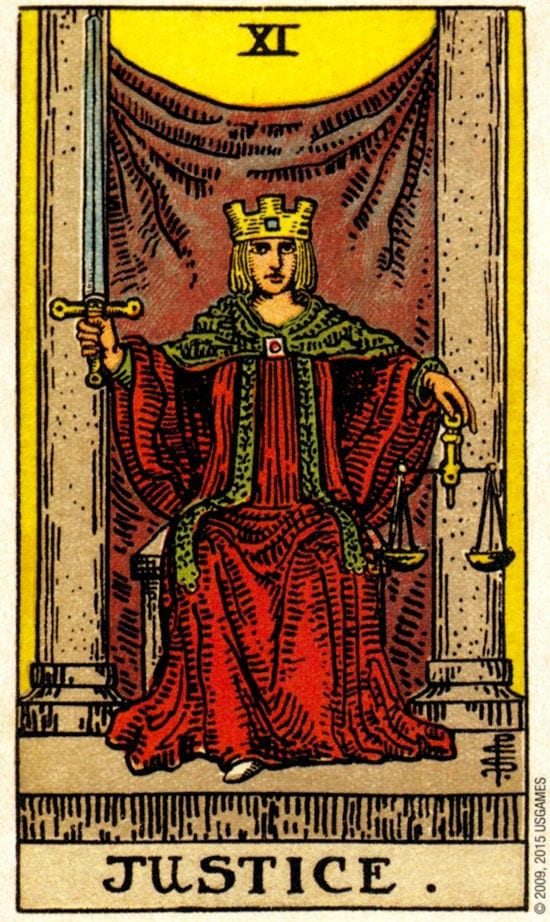
You finish the meaning yourself. The reading gives a frame; you fill it with your story — the one the AI doesn’t know. When you recognize your situation in a card, the sense of accuracy is born in that meeting, not in the card itself. That’s why an honest, specific question gets a far more “accurate” answer than a vague “what’s coming for me.”
When AI tarot misses
Now the limits — because without them the conversation isn’t honest.
AI tarot misses exactly where tarot itself doesn’t work. It won’t name a date. It won’t tell you whether he’ll call on Thursday. It won’t hand you a guaranteed yes or no where life isn’t binary. If a reading — AI or human — promises you a precise outcome and a precise deadline, that’s a reason to be wary, not to trust it.
There’s a technical limit too. A general-purpose AI like ChatGPT doesn’t shuffle a real deck and doesn’t remember your past readings — which means it can’t see the same cards returning to you month after month. And often the most accurate thing of all is hiding in those repeats.
How to test a reading on yourself
Don’t take my word for it — and don’t take the reading’s word either. Test it.
Ask one specific question. Read the interpretation slowly. And mark it honestly: what lands, and what misses. Don’t bend yourself to fit the text — on the contrary, catch the moment where you want to say “well, that’s not quite right.” That moment is worth more than all the matches: it shows you where you disagree with the reading, which means where you already hold your own knowing.
A working reading leaves you not with a prediction but with clarity. Afterward, the next step is visible. If that’s the case — it worked, and no mysticism is required for it.
So does it work, or not?
It works — if you know what for. AI tarot won’t predict the future, because nobody predicts the future. But helping you see your situation more soberly, naming what you’ve been avoiding putting into words, and lighting up the next step — yes, it can do that. Sometimes better than we manage on our own at three in the morning, alone with the anxiety.
What matters is who’s interpreting. An AI that shuffles the deck honestly, shows you the cards, and remembers your story is closer to a human reader than a faceless chat answering from a blank slate. That’s how Elvi works. And the “accuracy” here is born not from magic, but from a tool that finally speaks about you — not about people in general.
Frequently Asked Questions
Are AI tarot readings accurate?
AI knows card meanings, symbolism, and combinations precisely — it won't misremember or skip one. But 'accuracy' in tarot isn't about predicting events; it's about how well the interpretation helps you see your situation clearly. In that sense, a good AI reading can be more accurate than a mediocre human reader.
Why does an AI reading feel so accurate about me?
Partly because AI genuinely connects the cards to your question. Partly the Barnum effect: we easily recognize ourselves in fairly general statements. Accuracy goes up when you ask a specific question and honestly check the interpretation against yourself instead of nodding along to everything.
Can AI tarot predict the future?
No — and no tarot can, AI or human. The cards don't name dates or events. They show what's happening now and where it leads if nothing changes. If an AI reading promises an exact date or a guaranteed outcome, that's a reason to be wary, not to believe it.
How do I know if an AI reading really works for me?
Test it: ask a specific question, read the interpretation, and mark what lands and what misses. A working reading names something you already felt but hadn't put into words. If you walk away seeing the situation more clearly and knowing your next step, it worked — no mysticism required.