Tarot and Mental Health: When to Pull Cards and When to Call a Therapist
The line nobody talks about
I love tarot. I’ve built my entire practice around it. And I’m going to tell you something that might surprise you coming from a tarot reader: there are moments when you should put the cards down and pick up the phone instead.
Not because tarot is harmful. It’s not. But because tarot is a mirror, not a doctor. It can show you what you’re feeling — it can’t treat what’s hurting you.
I’ve watched people use tarot beautifully as a self-care practice. Daily pulls that ground them, journaling prompts that help them process difficult emotions, spreads that illuminate patterns they couldn’t see otherwise. That’s tarot at its best.
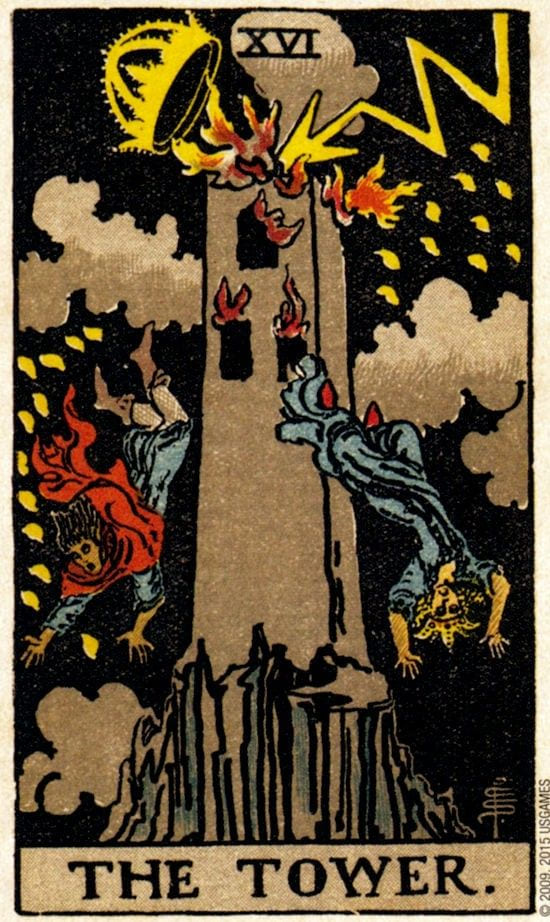
I’ve also watched people do eight readings in one day about the same question, pulling cards until they get the answer they want, then falling apart when they pull the Tower at 2 AM. That’s not self-care. That’s compulsion wearing a spiritual costume.
The difference between these two scenarios is what this article is about.
When tarot genuinely supports mental health
Let’s start with the good news. Used thoughtfully, tarot can be a powerful mental health ally. Here’s what it does well:
Externalizing inner chaos. When everything feels overwhelming and you can’t name what’s wrong, pulling a card gives you an image to point at and say “that — that’s what I’m feeling.” The Nine of Swords for anxiety. The Five of Cups for grief you haven’t processed. The Eight of Swords for feeling trapped. Naming the feeling is the first step to working with it.
Creating pause. The simple ritual of shuffling, breathing, pulling a card — it interrupts the spiral. For a few minutes, you’re not scrolling doom content or replaying that conversation for the hundredth time. You’re present with cardboard and imagery. That pause has real value.
Pattern recognition. When you keep a tarot journal, you start to notice themes. If the Four of Cups appears every time you read about your job, that’s data. If the Devil shows up repeatedly in relationship readings, that’s a pattern worth examining. Tarot makes the unconscious visible.
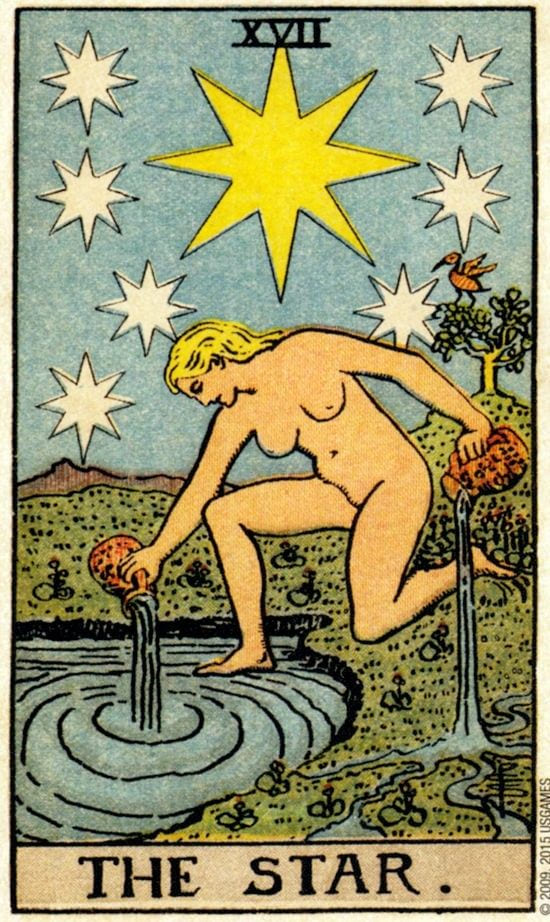
Permission to hope. Sometimes you need the Star to remind you that healing is real. That things genuinely can get better. When someone is going through a dark period, a card that reflects hope or strength can be profoundly comforting — not because the card predicted anything, but because it reminded them of something they already knew but forgot.
Structured self-reflection. A spread with specific positions (what I need to release, what I need to embrace, what I’m avoiding) does something similar to guided therapeutic journaling. It asks you targeted questions and invites honest answers.
The 7 warning signs that tarot has crossed the line
Here’s where I need to be direct. I’ve seen each of these in my community, and they’re all signals that tarot has stopped being a tool and started being a problem:
1. You can’t make decisions without pulling cards first
If you need to consult the deck before choosing what to eat, whether to reply to a text, or whether to go to that job interview — that’s dependency. Tarot should inform your intuition, not replace it.
2. You’re doing multiple readings on the same question
You pulled the Tower about your relationship. So you pulled again. Got the Three of Swords. Pulled again. The Five of Cups. And now you’re devastated — but you keep pulling, hoping the next card will say something different.
This is the tarot equivalent of googling symptoms at 3 AM. Stop. The first reading was your answer. The rest is anxiety driving the deck.
3. You’re reading while in crisis
If you’re actively in a mental health crisis — suicidal thoughts, panic attacks, severe dissociation — this is not the time for a tarot reading. Cards cannot hold you. Cards cannot call an ambulance. Cards cannot de-escalate a crisis.
Call a crisis line. Text a friend. Go to an ER. Do the human thing first. The cards will be there when you’re stable.
4. Scary cards send you spiraling
If pulling the Death card ruins your entire day, if the Tower makes you cancel plans, if the Ten of Swords convinces you something terrible is about to happen — your relationship with tarot has become fear-based, not insight-based.
Tarot should not make you more anxious than you were before the reading.
5. You’re using tarot to avoid dealing with real problems
“I don’t need to have that hard conversation with my partner — the cards said the energy will shift on its own.” “I don’t need to see a doctor about this symptom — the Star says healing is coming.”
This is spiritual bypassing. Tarot is not a substitute for action. When the cards suggest change, they’re asking YOU to make it — not promising the universe will handle it.
6. You’re reading for other people’s thoughts and feelings
“What is he thinking about me?” “Does she regret leaving?” These readings feel compelling, but they can feed obsessive thinking patterns. You’re not actually learning what someone else thinks — you’re projecting your anxieties onto cards and treating the projection as fact.
If you notice you’re doing these readings multiple times a week about the same person, that’s not insight. That’s rumination with a spiritual wrapper.
7. You feel worse after readings, not better
This is the simplest test. If your tarot practice consistently leaves you more anxious, more confused, more hopeless, or more dependent — it’s not working for you right now. A healthy practice should leave you feeling clearer, calmer, or at least more curious. Not worse.
When to call a therapist instead
Here’s the practical boundary. Choose a professional when:
The feelings are persistent. Sadness that lasts more than two weeks. Anxiety that doesn’t respond to your usual coping tools. Anger that keeps intensifying. These need human help, not card help.
There’s a trauma component. If your readings keep surfacing memories of abuse, loss, or traumatic events, those memories need to be processed with a trained professional who can ensure your emotional safety. A tarot spread can crack open a wound. A therapist can help you heal it.
You’re thinking about self-harm. Full stop. No tarot reading is appropriate here. Call your local crisis line, text HOME to 741741 (Crisis Text Line in the US), or go to your nearest emergency room.
Your daily functioning is affected. Can’t sleep. Can’t work. Can’t eat. Can’t stop crying. Can’t leave the house. These are signs that what you’re experiencing is beyond the scope of self-help — including tarot.
You’re using tarot as your only support system. If the cards are the only place you bring your pain, you need more support. Tarot can be one tool among many. It shouldn’t be your only one.
A mental health check-in spread (for the good days)
This spread is designed for days when you’re stable and want to check in with yourself. It’s NOT for crisis moments.
3 cards, face down:
- How am I actually doing? (Not how I’m performing — how I’m really feeling underneath)
- What do I need right now that I’m not giving myself? (Rest? Boundaries? Connection? Movement?)
- One small thing I can do today for my wellbeing (Concrete, actionable, achievable today)
Rules for this spread:
- Do it once per week maximum
- Journal your answers — don’t just think about them
- If the reading surfaces intense emotions, write them down and bring them to your therapist
- If you can’t identify a concrete action for card 3, that itself is information worth sharing with a professional
How to use tarot AND therapy together
For those who have both a tarot practice and a therapist (or are considering starting therapy), here’s how they complement each other beautifully:
Bring your readings to sessions. “I pulled the Eight of Swords three times this week” gives your therapist useful information about your inner state. The repetition matters. The specific card matters less than what you see in it.
Use tarot between sessions. Therapy homework can feel clinical. “Pull a card about what came up in today’s session” makes reflection feel more accessible and personal.
Let therapy inform your readings. The insights you gain in therapy — about patterns, triggers, attachment styles — make you a better reader. You start seeing your cards through a more self-aware lens.
Respect the boundaries of each. Tarot for daily reflection, pattern noticing, creative exploration. Therapy for processing trauma, managing symptoms, building coping strategies, navigating crises. They’re different tools for different depths.
Tarot readers: you’re not a therapist (and that’s okay)
If you read for others, please hear this: knowing your limits is not a weakness. It’s the most responsible thing you can do.
You don’t need to fix someone’s depression with a Celtic Cross. You don’t need to process their childhood trauma through the Major Arcana. You don’t need to be their crisis hotline.
What you CAN do: listen with compassion, reflect what you see in the cards, and say the words that matter most — “Have you thought about talking to a therapist about this? What you’re describing sounds really heavy, and you deserve more support than a tarot reading can give.”
That sentence has more healing power than any spread I’ve ever designed.
The bottom line
Tarot is a brilliant self-reflection tool. It’s a terrible replacement for mental health care.
Use it for the questions it can answer: What am I feeling? What patterns am I repeating? What do I need to pay attention to? What’s my intuition telling me?
Leave it alone for the questions it can’t: Am I clinically depressed? Is this normal grief or complicated grief? Why can’t I stop these intrusive thoughts? Am I safe?
The most powerful reading you’ll ever do is the one where you put the cards down and say: “I need help that’s bigger than this deck.” That’s not failure. That’s wisdom.
And if you’re not sure which category your situation falls into — that uncertainty itself is a reason to talk to a professional. A good therapist will never tell you to stop using tarot. They’ll help you use it from a place of strength instead of desperation.
Frequently Asked Questions
Can tarot cards help with anxiety?
Tarot can help with mild, everyday anxiety by giving you a structured way to externalize worries and examine them from a distance. Pulling a card and journaling about it works similarly to worry-mapping in CBT. But if your anxiety is persistent, interferes with daily life, or involves panic attacks, tarot isn't enough — a therapist can offer tools and support that cards can't.
Is it bad to do tarot readings when you're depressed?
It depends on how you use them. A single reflective card pull can be grounding. But doing multiple readings hoping for a 'good' card, or spiraling when you pull the Tower or Ten of Swords, can worsen depressive thinking. If you notice tarot is making you feel worse rather than better, pause the practice and talk to a professional.
How often should I do tarot readings for mental health?
For self-care purposes, one daily card pull or one weekly check-in spread is a healthy rhythm. If you find yourself doing multiple readings per day on the same question, or feeling unable to make decisions without consulting cards first, that's a sign of dependency — not self-care.
Should I tell my therapist I use tarot?
Yes, if it's a meaningful part of your life. A good therapist will be curious about what the practice means to you, even if they don't use tarot themselves. Your readings can actually provide useful material for therapy sessions — the cards you pull often reflect what's on your mind.