Lammas for Beginners: Celebrate with Tarot
You have already grown more than you think
Here is what most people miss about Lammas: you do not need a field of wheat to have a harvest. You do not need a bonfire on a hilltop or a Celtic prayer in Old Irish. You do not even need to know the word “Lughnasadh” — though it is a beautiful word, and we will get to it.
What you need is the willingness to stop, look at what has grown in your life since January, and call it enough.
Lammas (pronounced LAM-us) falls on August 1st. It is the first of three harvest festivals on the Wheel of the Year — the moment when the grain is ripe, the bread can be baked, and the earth begins its long, generous exhale of everything it has been growing since spring.
If you have never celebrated it, this guide will show you how. The only requirement is honesty about what you have planted and what has actually grown.
What Lammas is about (the short version)
Lammas (also called Lughnasadh, pronounced LOO-nah-sah) sits at the midpoint between the summer solstice and the autumn equinox. It mirrors Imbolc (February 1st) on the opposite side of the Wheel: where Imbolc lit the first candle of hope in darkness, Lammas cuts the first sheaf of grain in full light.
The core themes are:
- First harvest — the grain is ripe, the work has paid off, something real is in your hands
- Gratitude — specific, earned, not abstract. This bread from this grain from this work
- Sacrifice — to make bread, the wheat must be cut. Something is given up so something else can be nourished
- Skill and craft — honoring not just what grew, but the work that made it grow
- The waning sun — still warm, still generous, but now beginning its slow decline toward autumn
The name “Lammas” comes from Anglo-Saxon hlaf-mas (loaf mass) — the blessing of the first bread. “Lughnasadh” comes from the Celtic god Lugh, who created the festival to honor his foster mother Tailtiu, who died clearing the forests so crops could grow. Both names say the same thing: something was given so something could live.
Five simple ways to celebrate (no wheat field required)
You do not need land, a coven, or any particular belief. You need fifteen minutes and the willingness to notice what is ripe in your life.
1. Bake (or break) bread
This is the single most important Lammas act. Bake a loaf from scratch if you enjoy it, from a mix if you do not, or buy one from a bakery you love. The point is not the skill level — the point is the intention.
Before you eat the first piece, pause. Think about what the bread represents: grain that grew, sun that fed it, hands that shaped it. Your work this year has produced something. The bread is a stand-in for everything you have grown.
Break it with someone if you can. Eat it slowly if you are alone.
2. Write a harvest list
This is Lammas’s most underrated practice. Grab a journal or a piece of paper and write down everything you have harvested since January. Not just big achievements — include small ones:
- Skills you learned or improved
- Relationships that deepened
- Fears you faced (even if you did not conquer them — facing counts)
- Projects that moved forward
- Habits you built
- Moments of courage
Read the list back to yourself. You have grown more than you thought. Lammas says: notice it. Name it. Claim it.
3. Visit a farmers market or gather seasonal food
The simplest way to connect with harvest energy: go where food is being sold directly by the people who grew it. Buy berries, fresh bread, early apples, corn, herbs — whatever is in season where you live.
If you cannot get to a market, buy seasonal produce at a grocery store with intention. Hold each item and think: someone grew this. The sun fed it. The earth held it. That pause turns shopping into ceremony.
4. Name what you are willing to release
The wheat must be cut to make bread. The harvest requires sacrifice — something ends so something else can be nourished.
Write down one thing you are willing to release as the year moves toward autumn. A habit that served you once but no longer does. A belief about yourself that has expired. A project that has run its course. Lammas sacrifice is not punishment — it is clearing space for the next season.
5. Sit outside and notice the shift
Go outside on August 1st and pay attention. The light is different from June — warmer, more golden, lower in the sky. The air smells of dry grass and ripe fruit. Birds are louder in the morning and quieter by afternoon.
This is the shift from growth to harvest. You can feel it in the land. Lammas asks you to feel it in yourself.
Common mistakes beginners make
Overcomplicating it
You do not need a full altar with grain sheaves and a hand-woven bread basket. A slice of bread eaten with genuine gratitude carries more power than an elaborate setup you did not feel.
Thinking it is too early for harvest
August 1st can feel like the middle of summer, not the beginning of autumn. But Lammas is not about autumn — it is about the first harvest, the moment when something is ripe right now. Not everything. Just the first thing. Look for what is ready.
Skipping the sacrifice part
Gratitude without sacrifice is only half of Lammas. The festival asks both: what have you grown? AND what are you willing to cut? The second question is harder, but it is where the real power lives.
Forgetting that it is a celebration
Lammas is not solemn. It is a harvest party. Lugh’s festival included athletic games, poetry contests, and feasting. The bread is meant to be eaten with joy, not guilt. You worked for this. Enjoy it.
How to use tarot during Lammas
If you read tarot (or want to start), the first harvest is one of the most satisfying times to pull cards. The deck speaks in results right now — not potential, not wishes, but what is actually in your hands.
The one-card harvest pull
Shuffle your deck while thinking: What have I harvested this year?
Pull one card. Look at the image. What result does it show you? During Lammas season, the cards are remarkably literal — trust what you see.
The three-card Lammas spread
Lay three cards in a row:
- What have I reaped? — The result of my work since January
- What am I willing to sacrifice? — What needs to be cut so the next season can grow
- What sustains me into autumn? — The strength I carry into the darker months
Break bread before this reading — literally. Eat a piece of bread, then pull the cards. It sounds simple, but the grounding effect of food before divination is real and ancient.
Cards to watch for
Some cards carry extra weight during Lammas:
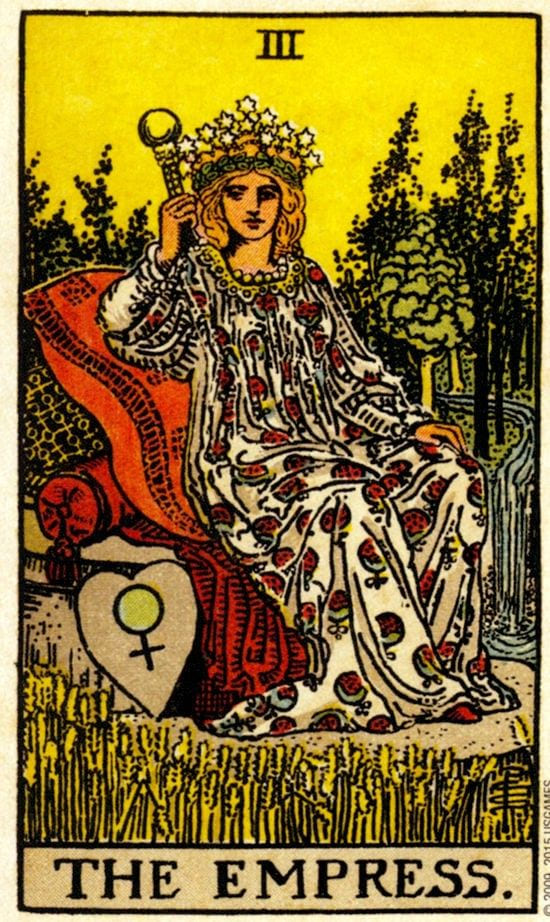
- The Empress — Abundance and harvest in human form. She is Lammas. If she appears, the earth is generous with you right now.
- Nine of Pentacles — Your personal harvest. Self-sufficiency, pride in what you have built. The most Lammas card in the Minor Arcana.
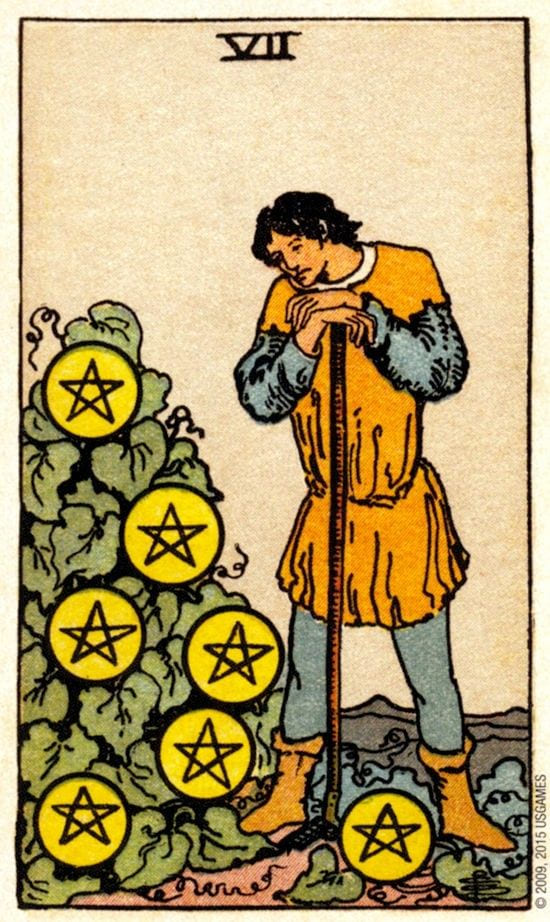
- Seven of Pentacles — Patience paying off. Looking at what has grown and deciding: was it worth it? (At Lammas, the answer is almost always yes.)
- Ace of Pentacles — A material blessing arriving. The first grain in your hand.
- The World — A cycle complete. Something has reached its fullest expression.
- Death — Not literal. Transformation — the old form dies so the new can be nourished. Pure Lammas sacrifice energy.
If Pentacles cards dominate your Lammas reading, the season is speaking directly to your material life — finances, health, home, career. Listen closely.
What to do after Lammas
Lammas is the first harvest, not the last. Two more follow: Mabon (the autumn equinox, around September 22) and Samhain (October 31). The harvest season is long and generous.
After August 1st:
- Revisit your harvest list weekly. Add new items as they ripen.
- Watch the light change. Each day is shorter than the last. This is not sad — it is the rhythm that makes each season meaningful.
- Start thinking about what you want to carry through the dark months. The seeds of winter are chosen in summer.
- Pull a weekly card asking: What is ripening that I have not noticed yet?
The harvest does not happen all at once. Lammas is just the beginning.
Start with bread
You do not need to wait for the perfect setup. You need a piece of bread, a few minutes of quiet, and the willingness to look at your life and say: something grew here. Something real. And it is mine.
August 1st is coming. The grain is ripe. And you — whether or not you have ever heard the word “Lammas” before today — have been growing things all year.
It is time to see what they have become.
Frequently Asked Questions
Do I need to be pagan or Wiccan to celebrate Lammas?
No. Lammas is a harvest celebration rooted in nature's cycles. Anyone who wants to honor the season of reaping, practice gratitude for what has grown, or bake bread with intention can celebrate. You don't need a title — you just need a willingness to notice what is ripe.
What is the easiest way to celebrate Lammas at home?
Bake or buy a loaf of bread, break it with intention, and write a list of what you've harvested this year — skills, growth, accomplishments, not just material things. That's a complete Lammas celebration. Bread and gratitude are all you need.
Can I celebrate Lammas in a city apartment?
Absolutely. Bake bread (even from a mix), visit a farmers market, buy seasonal berries, and do a tarot reading by a window. Lammas energy reaches you wherever you are — the harvest happens inside you as much as in a field.
What should I do with tarot cards on Lammas?
Pull a single card asking 'What have I harvested this year?' Or try the three-card harvest spread: what I've reaped, what I'm willing to sacrifice, and what sustains me into autumn. Break bread before you read — it grounds the energy.