Mabon Correspondences: Colors, Herbs, Stones and Tarot
Why correspondences matter
Correspondences are not arbitrary lists. They are the language the season speaks — the colors, textures, tastes, and energies that Mabon carries naturally. When you place amber on your altar, you are not following a rule. You are holding preserved sunlight in your hand during the last days of equal light. When you burn sage, you are using a plant that clears what needs clearing at the exact time of year when clearing is the point.
Think of correspondences as the season’s vocabulary. You do not need all the words to speak the language. But the more you know, the more precisely you can say what you mean.
Colors of Mabon
The Mabon palette is the palette of a September orchard at golden hour.
Deep red — the last apples on the tree, the color of wine in the press. Red at Mabon is not the bold red of Beltane’s passion. It is the deeper red of maturity, of fruit that took all summer to ripen.
Burnt orange — pumpkins, changing leaves, the warmth still held in the earth. Orange is the bridge color between summer’s gold and autumn’s brown.
Gold — the last warm sunlight, ripe wheat, honey, amber. Gold at the equinox carries a bittersweet weight — this is the most beautiful light of the year, and it is leaving.
Brown — earth, bark, acorns, the soil that receives everything the season releases. Brown is the color of composting, of transformation happening underground.
Dark green — evergreens, the plants that survive the dark. At Mabon, dark green says: some things endure.
Burgundy and copper — wine and the turning leaves at their most dramatic. These are the colors that make September feel like a painting.
Use them for: Altar cloths, candle choices, the clothes you wear for your equinox ritual, the colors you bring into your home as the season turns.
Herbs and plants
The herbs of Mabon are the herbs of harvest, preservation, and letting go.
| Herb | Why it belongs to Mabon |
|---|---|
| Apple | The sacred fruit of the equinox, knowledge, and harvest divination |
| Sage | Clearing and wisdom — clears what must go before winter |
| Rosemary | Remembrance — honors what was before releasing it |
| Chamomile | Peace and rest — preparation for the quiet half of the year |
| Marigold | The last bright flowers before frost, solar energy preserved |
| Hops | Used in brewing; transformation of harvest into something that sustains |
| Hazel | Wisdom and divination; hazel nuts ripen at the equinox |
| Cinnamon | Warmth entering — the first warming spice of the cooling season |
| Oak leaves | Strength and endurance through the dark months |
| Ivy | Growth that persists through winter; fidelity |
How to use them: Add dried herbs to altar decorations. Make teas with chamomile and cinnamon. Burn sage or rosemary to clear a space before ritual. Scatter marigold petals on your Mabon table. Carry an acorn in your pocket as a talisman of endurance.
Crystals and stones
Each stone carries an aspect of Mabon’s energy — balance, harvest, release, or preparation for the dark.
Amber — Not technically a crystal but fossilized tree resin — literally preserved ancient sunlight. At Mabon, amber holds the warmth of summer after summer has gone. Place it on your altar as a reminder that light endures even in its absence.
Lapis lazuli — Deep blue like the September twilight sky. The stone of deep wisdom, inner knowing, and truth. At the equinox, when the light and dark are equal, lapis helps you see clearly in both.
Smoky quartz — The grounding stone. Smoky quartz absorbs what you release and transforms it. Perfect for the letting-go side of Mabon. Hold it while you name what you are composting.
Carnelian — Warm orange, the color of harvest energy and vital force. Carnelian at Mabon celebrates what is still alive and vibrant even as the year descends. It is the stone of the fruit still on the branch.
Sapphire — The September birthstone. Clear, precise, balanced — like the equinox itself. Sapphire brings clarity to the weighing that Mabon asks you to do.
Citrine — Golden abundance energy. Where carnelian celebrates the active harvest, citrine helps you feel gratitude for it. The stone of the full table.
Black tourmaline — Protection. As you prepare to enter the darker, more inward half of the year, black tourmaline guards the threshold. Place it at the entrance of your home or on the western side of your altar.
Animals
The animals of Mabon are the animals of the autumn landscape — gathering, migrating, preparing.
Owl — Vision in the dark. The owl hunts equally well in light and shadow, making it the perfect equinox animal. As the dark half begins, the owl says: you can see here too.
Stag — The mature masculine, the king of the forest entering the season of the hunt. The stag at Mabon represents what has grown to its full strength.
Crow — Transformation, intelligence, the bridge between worlds. Crows are louder in autumn, as if announcing the season change.
Salmon — The salmon’s upstream journey is an ancient symbol of returning home, of wisdom gained through difficult travel. At Mabon, the salmon returns to where it began.
Spider — The weaver. Spiders are most visible in autumn, their webs catching the September dew. The web represents the interconnection of all things — everything you planted, tended, and harvested, connected.
Foods and drinks
The Mabon table is the Witch’s Thanksgiving — and these are its staples.
| Food | Significance |
|---|---|
| Apples | The quintessential Mabon fruit. Eat them, press them, bake them, divine with them |
| Grapes and wine | The wine harvest, transformation under pressure |
| Pears | Patience and sweetness — pears ripen slowly, like the best autumn lessons |
| Squash and pumpkin | The earth’s abundance, stored energy for winter |
| Root vegetables | What grew underground, hidden work made visible |
| Nuts (walnuts, hazels, acorns) | Wisdom, endurance, concentrated energy for the dark months |
| Bread | The bridge from Lammas’s grain to Mabon’s feast |
| Pomegranate | Persephone’s fruit — the food of the underworld, the choice to descend |
| Cider | Apple transformed — the harvest made into something that warms |
| Honey | Preserved sweetness, summer’s labor stored in golden jars |
Direction and element
Direction: West — The direction of the setting sun, of water, of endings and emotional depth. At Mabon, the year is setting. The west is where the light goes.
Elements: Earth and Water — Earth for the harvest, the material world, what you can hold and taste. Water for the emotional depth of the season, the tears of gratitude and release, and the rain that begins to replace summer’s dry heat. At the equinox, these two elements are in balance — the practical and the emotional, the tangible and the fluid.
Tarot correspondences
The tarot cards of Mabon are the cards of the great weighing.
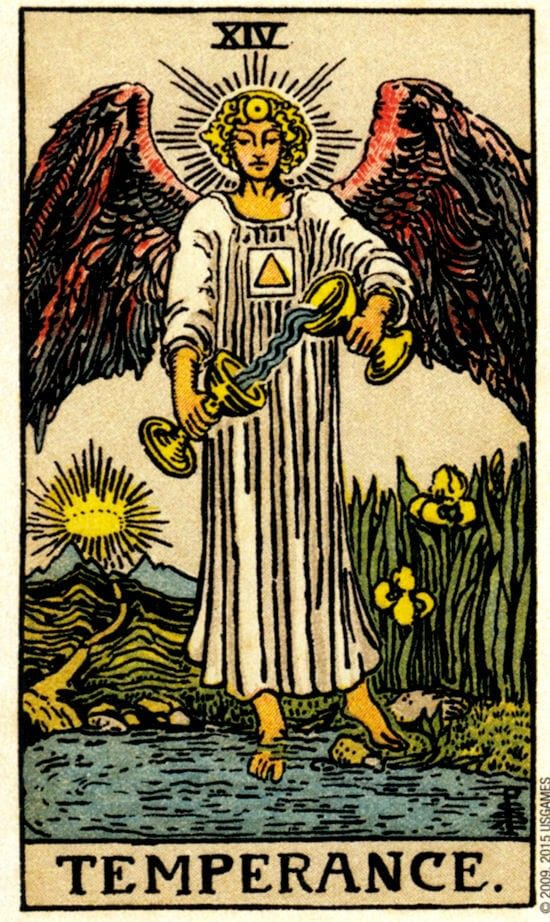
Temperance (XIV) — The card of the equinox itself. Two vessels, one pour, perfect balance. If you place one card on your Mabon altar, let it be this one.
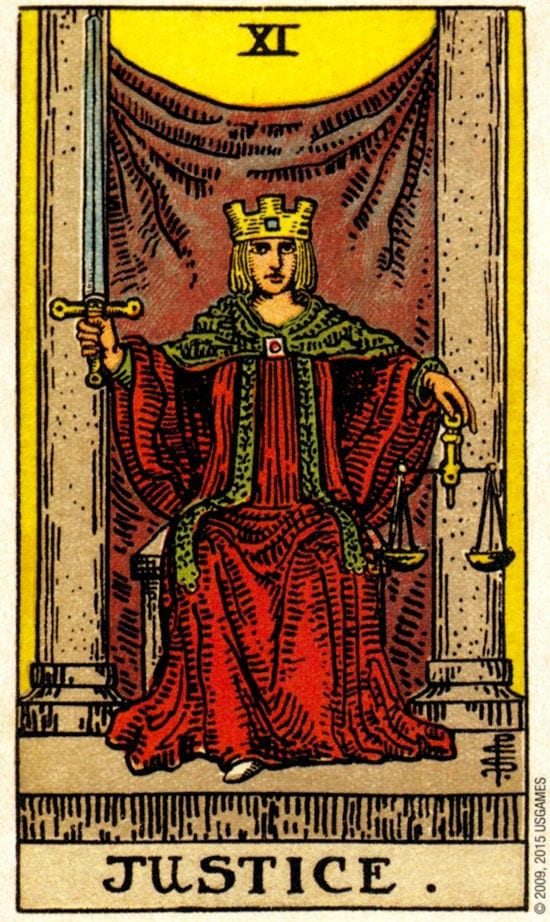
Justice (XI) — The scales. Equal weight, no sentiment. Justice at Mabon asks what is truly fair in your life — what deserves to stay and what has overstayed.
Death (XIII) — The great composter. At Mabon, Death is not frightening — it is the necessary transformation that turns the garden into next year’s soil.
The Hanged Man (XII) — The voluntary pause, seeing from a new perspective. The willingness to let the old season end before the new one has shown you what it holds.
Wheel of Fortune (X) — The wheel is turning. The Wheel of the Year is the Wheel of Fortune is the cycle of everything. At Mabon, the wheel passes the midpoint and begins its descent.
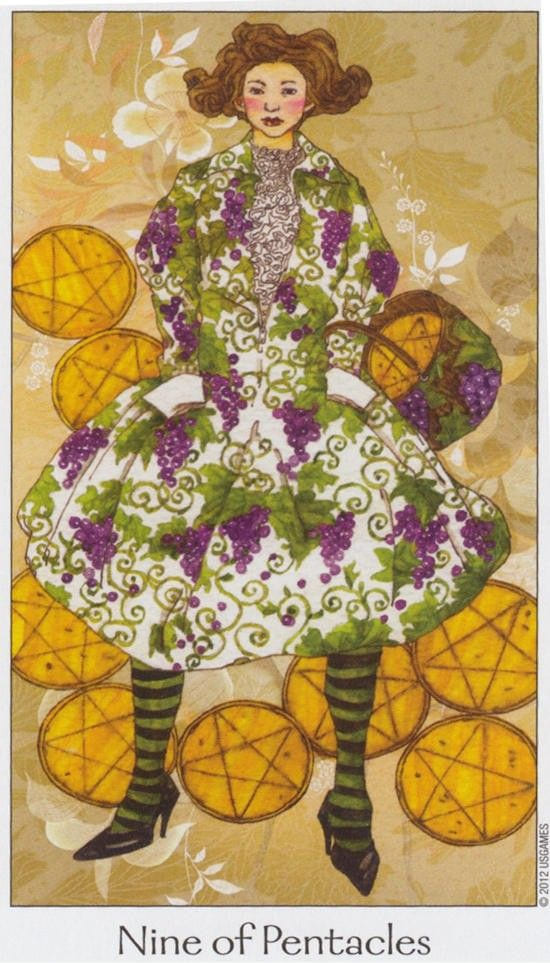
Nine of Pentacles — Standing in the full harvest. Everything you worked for, visible and real.
The entire Pentacles suit — The suit of earth, material reality, work and its rewards. The Pentacles carry the harvest energy that defines this sabbat.
Building your Mabon altar
With these correspondences, you have everything you need. Here is one way to bring them together:
Lay a cloth in autumn colors — deep red, orange, or brown. Place two candles at the center: one light, one dark. Between them, set Temperance from your tarot deck. Around the candles, arrange what the season has given you: an apple, fallen leaves, acorns, a small pumpkin, a sprig of rosemary or sage. Place your chosen crystal nearby. If you have wine or cider, pour a small glass and set it on the altar.
This is not decoration. It is a conversation with the season — every object a word, every color a tone. When you sit before it and breathe, the altar speaks the language of the equinox back to you.
And that is what correspondences are for. Not to memorize. To feel.
Frequently Asked Questions
What colors represent Mabon?
Deep red, burnt orange, gold, brown, dark green, burgundy, copper, and amber. These are the colors of the autumn landscape — ripe fruit, turning leaves, rich earth, and the warm last light of the equinox. Use them for candles, altar cloths, and seasonal decorating.
What crystals should I use for Mabon?
Amber (preserved light), lapis lazuli (deep wisdom), smoky quartz (grounding and release), carnelian (harvest vitality), sapphire (equinox clarity), citrine (abundance gratitude), and black tourmaline (protection entering the dark). Choose the one that calls to you — there is no wrong crystal for a sabbat.
What tarot cards are associated with Mabon?
Temperance (perfect balance), Justice (equal weight), Death (transformation and composting), The Hanged Man (surrender before change), Wheel of Fortune (the turning year), Nine of Pentacles (full harvest), and the entire Pentacles suit (material abundance). If any of these appear in an equinox reading, they are especially potent.
What foods should I put on my Mabon altar?
Apples (the quintessential Mabon fruit), grapes, pomegranates, pumpkins, squash, acorns, nuts, bread, dried corn, and a glass of cider or wine. These represent the second harvest — the fruit harvest that follows the grain harvest of Lammas.