Mabon for Beginners: How to Celebrate with Tarot
You do not need permission
Here is the thing about Mabon that nobody tells beginners: there is no entry requirement. No test. No lineage check. No one standing at the door of autumn asking for your credentials.
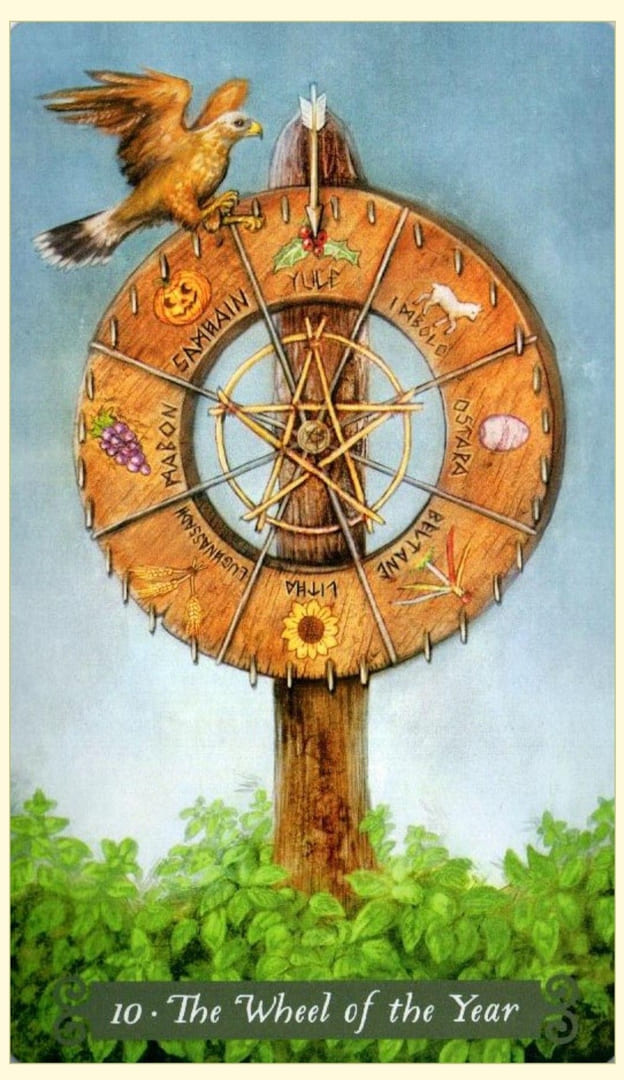
Mabon is the Autumn Equinox — the day around September 22 when day and night are exactly equal. It is one of eight seasonal celebrations on the Wheel of the Year, an ancient cycle that marks the turning points of the earth’s journey around the sun. And it is one of the most accessible sabbats to begin with, because its themes are things you already know.
Gratitude. Letting go. The bittersweet beauty of a season ending.
If you have ever stood in the September air and felt something shift — something quieter, deeper, more honest than summer — you have already been touching Mabon. This guide just gives it a name and a few practices to make it intentional.
What Mabon is (the short version)
Mabon (pronounced MAY-bon) is the second of three harvest festivals on the Wheel of the Year. The first is Lammas (August 1), which celebrates the grain harvest. The third is Samhain (October 31), which honors the final harvest and the beginning of winter. Mabon sits between them — the fruit harvest, the wine pressing, the moment when the cellar is full and the garden begins to rest.
The name comes from Mabon ap Modron, a figure in Welsh mythology who was stolen as an infant and later rescued — a story of loss and return that mirrors the season. The Autumn Equinox itself has been observed for thousands of years across every culture that tracked the sun.
The core themes are:
- Balance — equal day and equal night, the last equilibrium before darkness grows
- Harvest — gathering what you have grown, materially and spiritually
- Gratitude — the Witch’s Thanksgiving, naming what the year has given you
- Release — letting the garden die so next year’s soil can be rich
- Descent — Persephone going underground, the turn toward the inner half of the year
That is really all you need to know to begin.
Five simple ways to celebrate (no experience required)
You do not need an altar, a coven, or a single piece of special equipment. You need fifteen minutes and some honesty about what this year has been.
1. Eat something seasonal
This is the simplest Mabon ritual and the oldest. Eat an apple. Drink cider. Roast squash. Make soup from root vegetables. The act of tasting the harvest is the act of celebrating it. If you want to make it more intentional: before your first bite, name one thing you are grateful for.
2. Take a gratitude walk
Go outside. Notice what has changed since summer. The angle of light. The color of leaves. The temperature of the air. As you walk, count your harvests — not just literal ones, but everything that grew this year. A friendship that deepened. A skill you learned. A hard thing you survived. Let the walk be the accounting.
3. Light two candles
One light, one dark. Place them side by side. This is the equinox in miniature — equal light, equal dark, neither one winning. Sit with them for a few minutes and feel what balance feels like. Then let them burn. After today, the dark candle gets a head start.
4. Write and release
On a small piece of paper, write something you are ready to let go of. A habit. A fear. A chapter that has ended but you have been re-reading. Fold the paper. Then bury it in the earth, drop it into moving water, or burn it safely. The earth knows how to compost everything — including your finished stories.
5. Pull tarot cards
We will get to this in detail below. But even one card pulled with the question “What do I carry into the dark?” is a complete Mabon practice.
Mabon and tarot — why they fit so well
The Autumn Equinox is the most tarot-friendly sabbat on the Wheel of the Year, and here is why: tarot is fundamentally a tool for weighing. Every reading asks you to look at both sides — what is here, what is missing, what is growing, what is dying. And Mabon is the day the universe itself is weighing. Light and dark on the scales. What you gathered against what you released. What stays and what goes.
The cards that resonate most with Mabon are the ones that deal in balance and transformation:
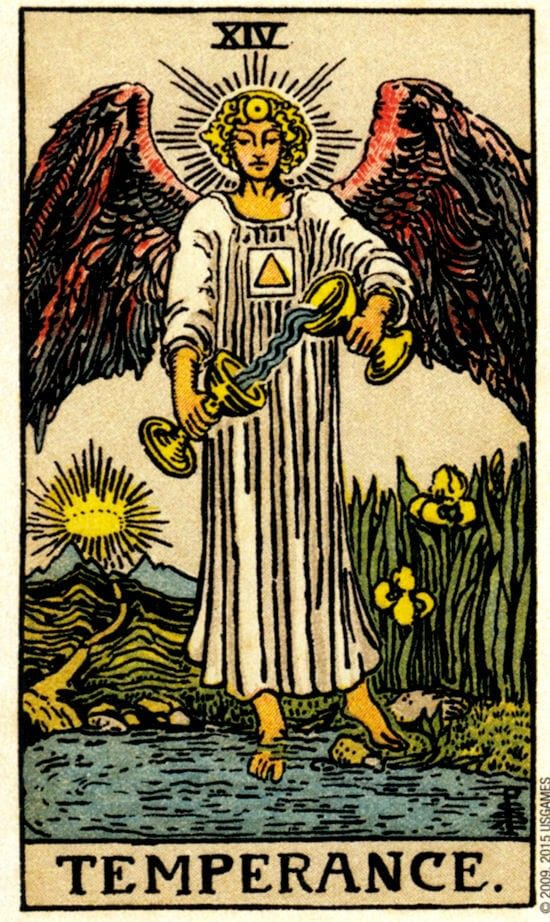
Temperance — the angel pouring between two cups, finding the exact middle. This is Mabon in a single image.
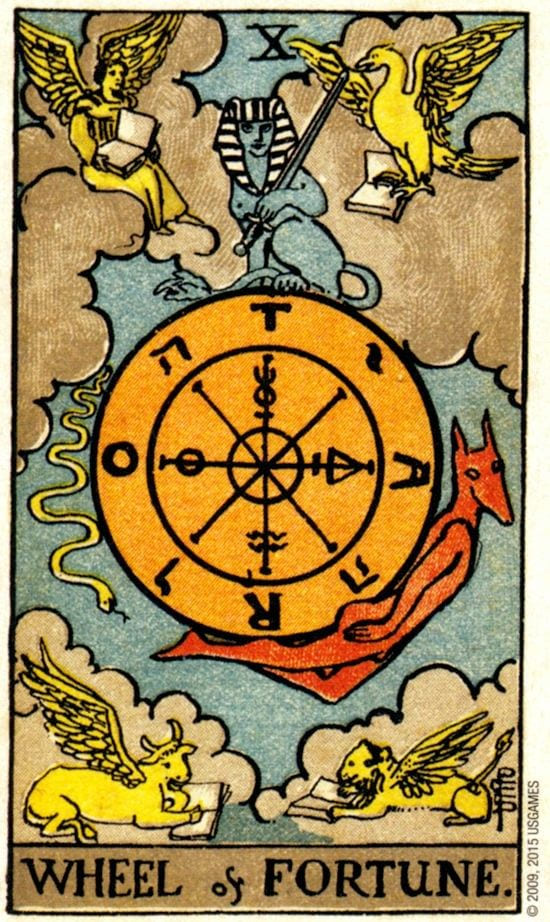
The Wheel of Fortune — the wheel is turning. The Wheel of the Year is turning. This card says: do not fight the season. Trust the cycle.
Justice — weighing without sentiment. What is fair? What has earned its place? What has not? The equinox asks these questions with a steady hand.
Death — not an ending but a composting. The garden dies to feed next year’s garden. This card at Mabon is pure transformation.
Nine of Pentacles — standing in your harvest, surveying what you built. The fullest expression of the second harvest energy.
You do not need to memorize these. Just know that if any of them appear in a Mabon reading, they are especially at home.
Your first Mabon tarot spread
This spread is designed for beginners. You do not need to know every card meaning. You just need to be willing to sit with what comes up.
Shuffle your deck while thinking about the season — the cooling air, the shorter days, the feeling of something completing. Then pull three cards:
Card 1 — What is my harvest? What grew this year? What can I be grateful for? This card shows you the abundance you may have stopped noticing.
Card 2 — What do I release? What has served its purpose? What is ready to return to the earth, to become compost for something new? This card names the thing you already know you need to let go of.
Card 3 — What do I carry into the dark? The dark half of the year begins today. What strength, skill, lesson, or love do you bring with you? This card shows you what will sustain you through winter.
Sit with each card for at least a minute before moving to the next. Let the answers come slowly, like fruit ripening. There is no rush. The equinox gives you equal time for everything.
Common beginner questions
“What if I do it on the wrong day?” The equinox is an astronomical moment, but Mabon energy lasts the whole week. Any day between September 19-25 works beautifully. The season does not check your calendar.
“What if I do not have tarot cards?” You can still celebrate Mabon fully. The gratitude walk, the seasonal meal, the candle lighting, the writing and releasing — all of these are complete practices. Tarot is one path in, not the only one.
“What if I pull a ‘scary’ card?” There are no scary cards at Mabon. Death means transformation. The Tower means a necessary clearing. The Ten of Swords means the worst is over. At the equinox, even the most intense cards carry the message: the wheel is turning. What falls will rise. What ends will feed what begins.
“What about the Southern Hemisphere?” If you live south of the equator, your Autumn Equinox falls in March. Follow your seasons, not the calendar of the Northern Hemisphere. When it is Mabon for them, it is Ostara for you — and both are beautiful.
The permission you already have
Mabon does not require years of study. It does not require a teacher, a tradition, or a perfectly decorated altar. It requires one thing: your willingness to stand at the turning point of the year, feel what is ending and what remains, and say thank you.
The apples are ripe. The light is shifting. The wheel is turning whether or not you name it.
But naming it — pulling a card, eating the fruit, lighting the candle, writing the thing you are ready to release — turns a season into a ceremony. And ceremonies, even small ones, change the way you move through the world.
Your first Mabon starts now. Whenever now is.
Frequently Asked Questions
Do I need to be pagan or Wiccan to celebrate Mabon?
No. Mabon is a seasonal celebration rooted in nature's rhythms. Anyone drawn to marking the shift from summer to autumn, practicing gratitude, or reflecting on what to release can celebrate. There are no rules about who gets to eat an apple on the equinox.
What is the simplest way to celebrate Mabon at home?
Set out a bowl of seasonal fruit (apples, grapes, pears), light a candle, and spend five minutes writing down three things you are grateful for and one thing you are ready to release. That is a complete Mabon ritual. Everything else is beautiful but optional.
Can I celebrate Mabon even if I have never done anything like this?
Absolutely. Mabon has no prerequisites, no required readings, and no test. If you have ever paused to notice the changing leaves, felt the air cool, or taken a deep breath at the end of a long season — you have already been celebrating Mabon. Now you are just naming it.
What tarot spread should I use for my first Mabon reading?
Start with three cards: What is in balance? What needs to be released? What do I carry into the dark half of the year? This simple spread mirrors the core themes of Mabon — equilibrium, letting go, and preparation — and works beautifully even if you are new to tarot.