Review: Tarot of the Divine Masculine — Soft Power
This deck changed how I understand masculine energy in readings. I say that literally, not as a turn of phrase.
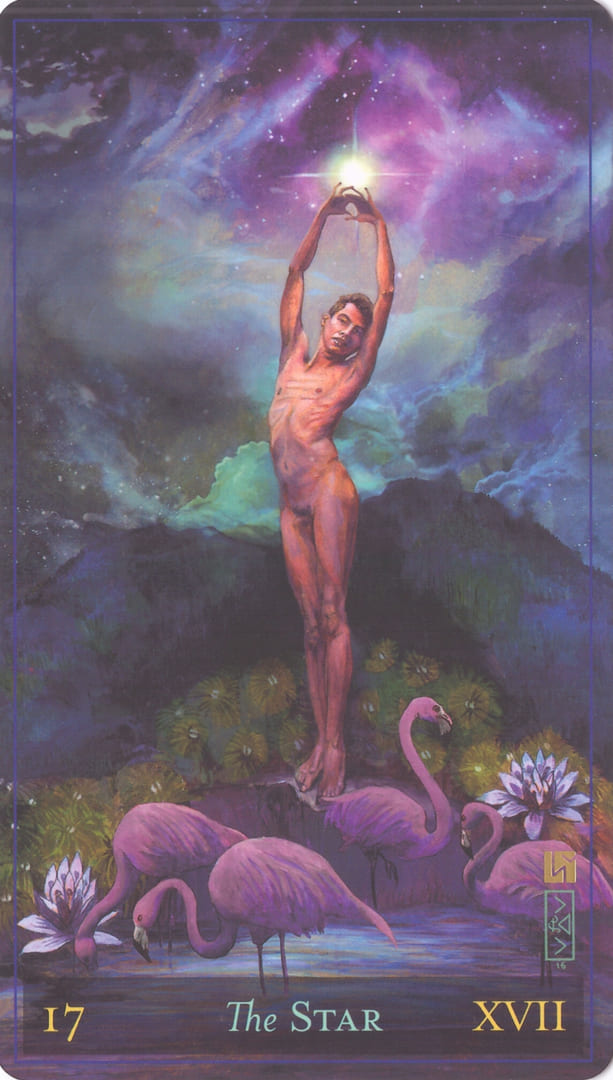
Before this one, my sense of masculine energy was fairly flat: strength, action, rationality. Then I saw a nude man holding a star between his hands, flamingos wading around him. And I realized the deck was speaking a language I’d been missing.
First Impressions
The first thing you notice is that this isn’t illustration — it’s painting. Every card is a real oil painting. And you can tell: layers of pigment, soft transitions, the way light falls on skin. All the things only traditional technique can give you, not digital rendering.
The second thing is the bodies. They’re varied. Thin, heavy, wiry, young, old. Different ethnicities and skin tones. Not idealized, not stylized. Real. That alone says something important: this deck isn’t about “the ideal man.” It’s about men.
The third is the absence of clichés. The men here cry, hold children, carry flowers, dance, meditate. Masculinity as a spectrum, not a set of stock poses. That’s rare in tarot.
About the Deck
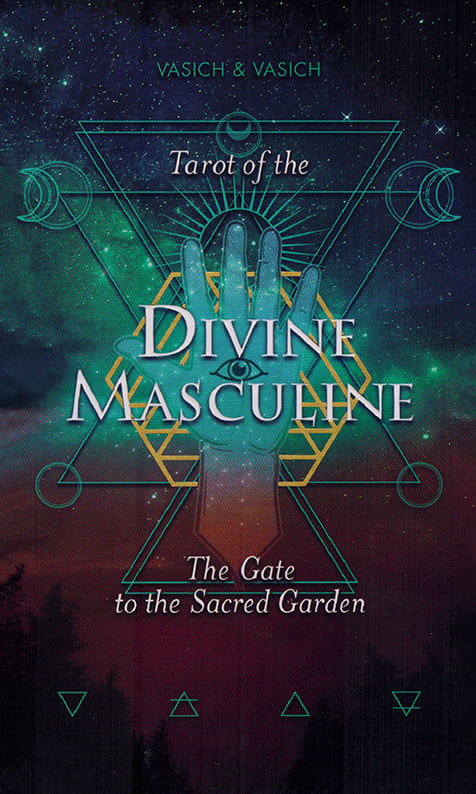
Tarot of the Divine Masculine was created by Serbian brothers Filip and Marko Vasich of Vasich Arts. It was funded via Kickstarter in 2019.
78 cards, classic Rider-Waite-Smith structure, with two renamings among the Major Arcana:
- High Priestess → Intuition (masculine intuition as a theme in its own right)
- Empress → The Protector (masculine care as a parallel to maternal care)
All the cards are original oil paintings made with the Flemish multi-layering technique. This is the technique of the old masters: thin transparent layers of pigment applied one over another to create depth and luminosity. You can’t mistake this work for digital illustration.
Standard card size, thick stock, matte finish. The deck ships with a guidebook in which the brothers explain their concept.
Visual Style
The style is true oil painting in the European realist tradition. No stylization. Figures are anatomically accurate, light and shadow follow painterly logic, not illustrative shorthand.
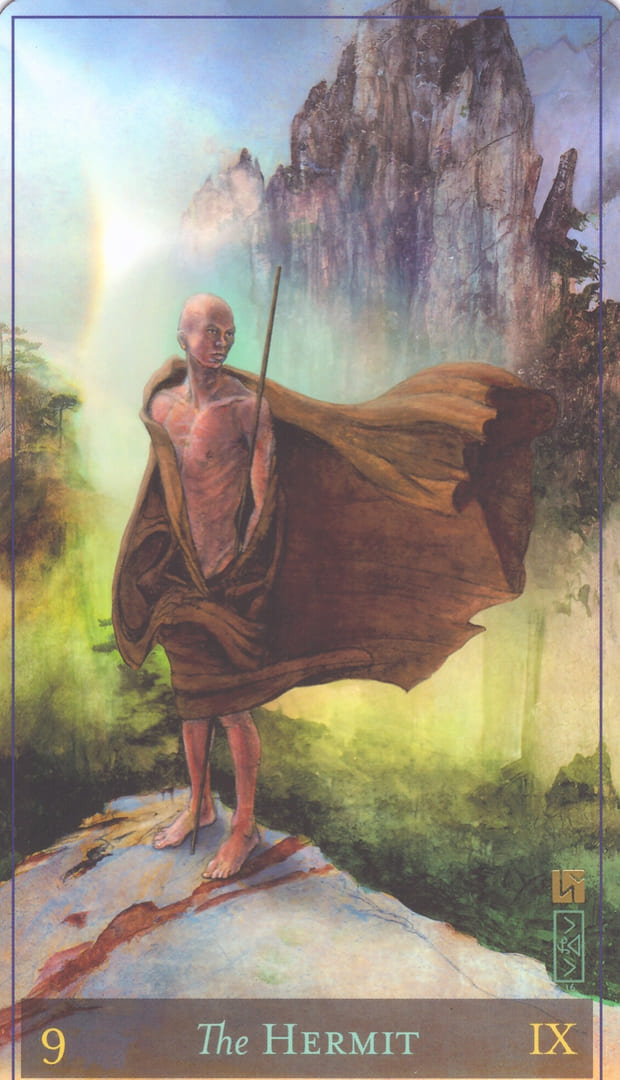
The palette is warm and deep — plenty of ochre, green, wine, purple, and turquoise. The landscapes are recognizable but slightly mythic: mountains, forests, bodies of water, starry skies. The effect is of looking into a world where everything feels a little enchanted, but still real.
What’s most valuable is how light works. On skin, on water, on fabric. That’s the Flemish layering technique in action: color glows from within rather than shining on the surface.
Core Themes
Masculinity as a spectrum. The deck’s central idea is that masculine energy isn’t one color — it’s a palette. It can be tender, intuitive, vulnerable, protective, destructive, creative. The deck tries to show all those facets — and that’s where its main value lies.
Moving away from the aggressive archetype. Most decks show men through power and force: warrior, ruler, master. Here the emphasis shifts: care, intuition, and vulnerability appear more often. That’s not weakness — it’s another side of the same strength.
Representation of male bodies. This matters: the men here look different. Not just athletes and warriors, but slim, heavy, aged. It breaks the idea of “the one right” male body.
Working with father wounds. An unexpected but powerful use case. Many of my clients carrying the wound of an absent or emotionally unavailable father respond to this deck especially strongly. It shows them the masculine figures they missed growing up.
Favorite Cards
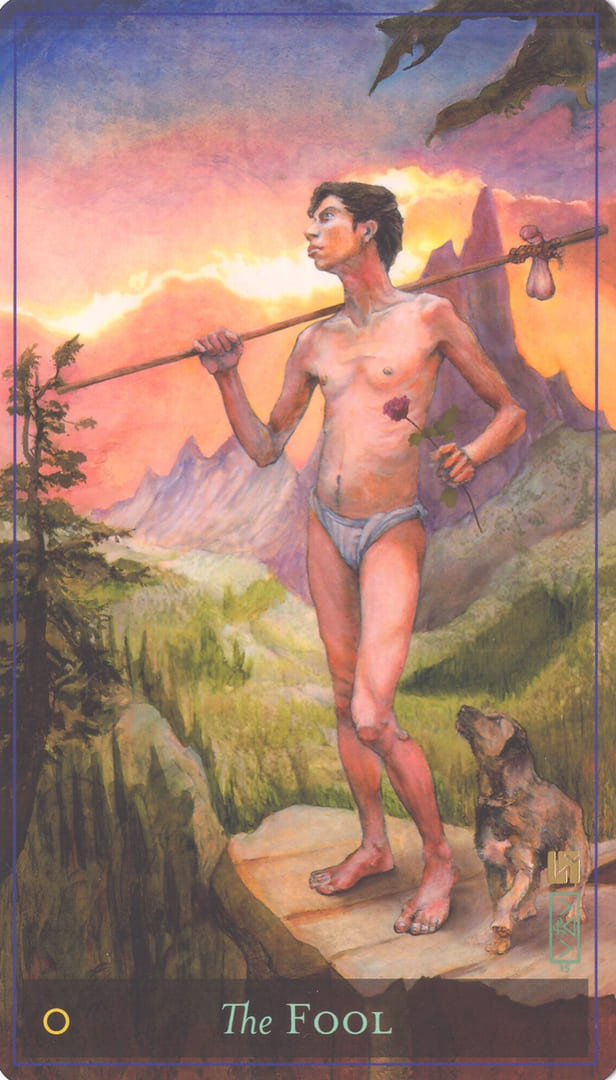
The Fool — a young man with dark hair, barefoot, wearing only white briefs, at the edge of a cliff. A stick with a small bundle rests on his shoulder. A red rose in one hand. A small black dog beside him. Purple mountains in the light of a sunset sky behind. The nudity here isn’t sexual — it speaks of the vulnerability of beginnings. The rose is an unexpected touch: the Fool isn’t just chasing adventure, he’s carrying tenderness too.
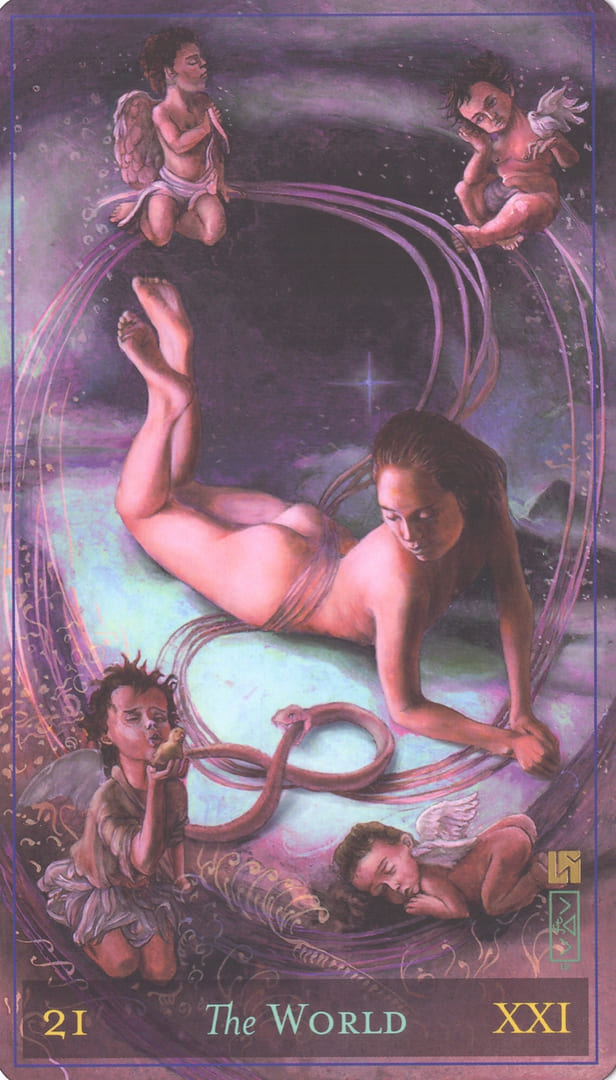
The World — a nude man reclines within a wreath of green vines, his body relaxed. In the four corners, cherubs (as in the classic Rider-Waite, but here they’re child angels). Above him, a cosmic purple sky with a single bright star. This is the World not through triumph, but through rest. A male body finally allowing itself to simply be.
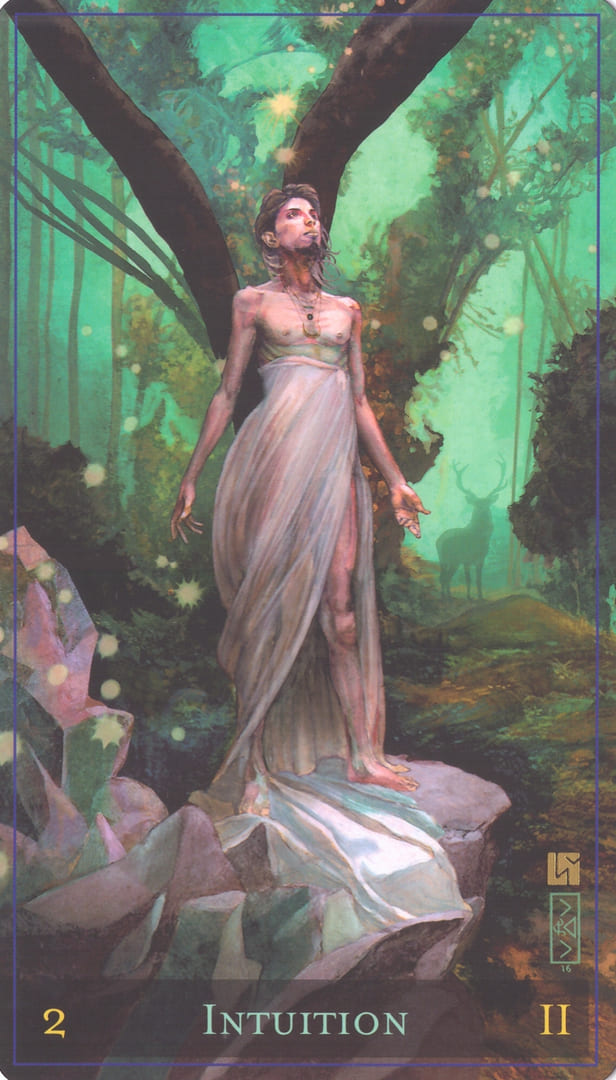
Intuition (the renamed High Priestess) — a tall, slender man with short dark hair wears long flowing grey-white robes, almost dress-like, standing on crystals in a misty green forest. A deer in the distance. This is one of the boldest cards in the deck: a man in garments usually coded feminine doesn’t lose his masculinity — he finds a new one. Intuition as a male capacity, not a “feminine trait.” Deep, quiet strength.
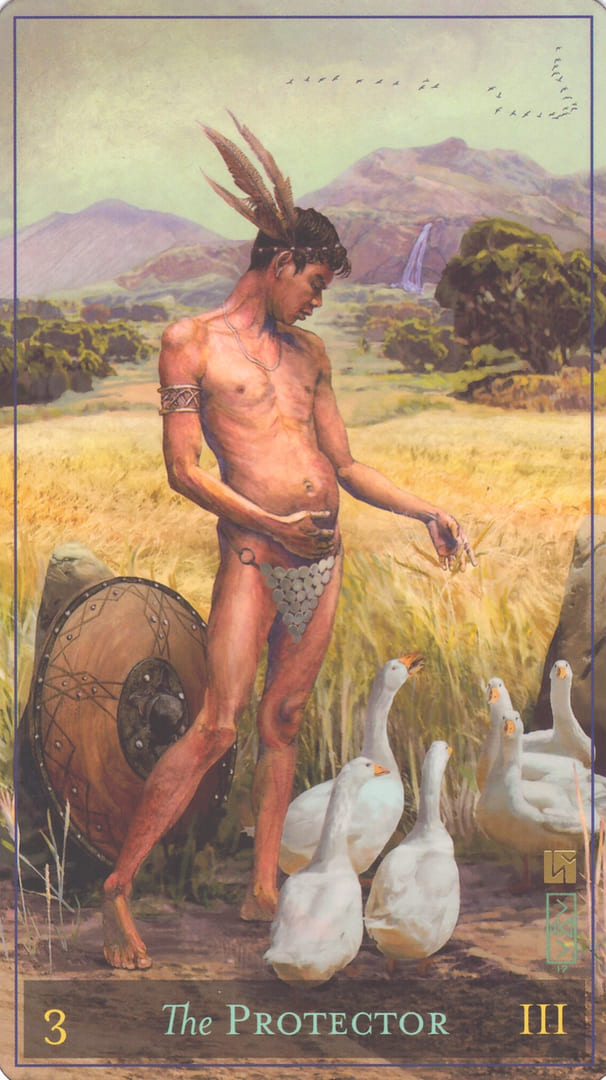
The Protector (the renamed Empress) — a man with feathers in his hair, in a simple loincloth, stands in a golden wheatfield. At his feet, a shield and a flock of white geese. Seeds in hand. This is the Empress through the masculine — not motherhood, but fatherhood as defense and provision. The one who guards the farm, feeds the animals, makes sure everything alive survives. This card means a lot to me: it shows paternal care as a force equal to maternal care.
The Star — a nude man stands in shallow water, arms raised above his head, holding a bright star between his palms. Pink flamingos wade in the water around him. Lilies. A cosmic pink-purple sky. This is the Star — hope — channeled through a male body that knows how to be gentle. Grace, vulnerability, blessing: qualities men are often forbidden from showing. This card makes space for them.
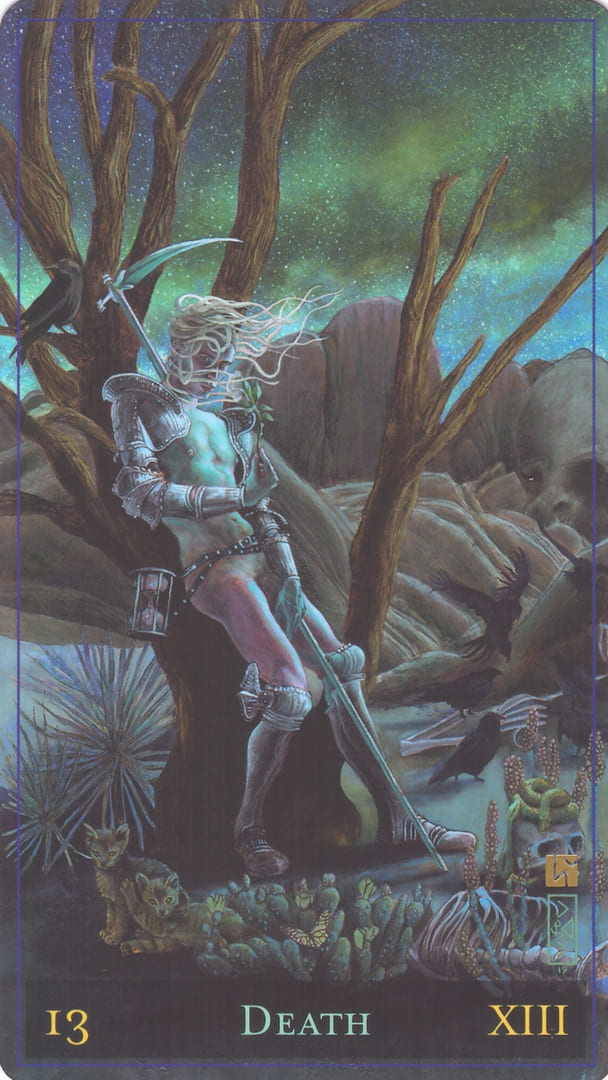
Death — a tall, thin figure with long white hair, wearing armor that looks like bone, walks through a dark landscape with a withered tree. Holding a scythe. Starry sky. This is Death not as fear, but as a process moving through the body — a slow decay of the old. The figure is androgynous, but distinctly masculine. A reminder that dying is also part of the masculine path.
How to Work with This Deck
Spreads on masculine themes. Fatherhood, male identity, relationship to the paternal figure, working with male roles — this deck speaks to these in a way no other does.
Working with male clients. Many men feel uncomfortable with classic decks where most figures are female. Here they find themselves immediately. I’ve noticed that conversations flow differently when a male client sees men on the cards.
Childhood wounds and father wounds. If you’re working with the theme of an absent or emotionally unavailable father, this deck is a tool. It shows masculine figures that may have been missing in childhood and allows a meeting with them.
Healing the inner masculine. For women and non-binary clients — also a powerful tool. Everyone carries an inner masculine, and this deck helps meet it without stereotypes.
Not ideal for quick daily pulls (the imagery asks for contemplation), lighthearted readings (the tone is serious), or work in a strictly feminine aesthetic (this is about the masculine).
Who Is This Deck For
Those working with masculine themes. Male identity, fatherhood, brotherhood, masculine emotion — the deck was made for these conversations.
Male clients and male readers. Finally, a deck where a man on a card isn’t a stereotype but a whole person with a full emotional range.
Those working with trauma. Especially father wounds. The deck shows what may have been missing in childhood.
Lovers of oil painting. If you value traditional painting and are tired of digital illustration, this deck is a return to fine art.
Who it may not be for: those preferring feminine aesthetics (there’s little of it here), complete beginners (the renamed cards and non-standard symbolism can be confusing), those seeking a lighter mood (the deck is serious and dense).
Deck Pairings
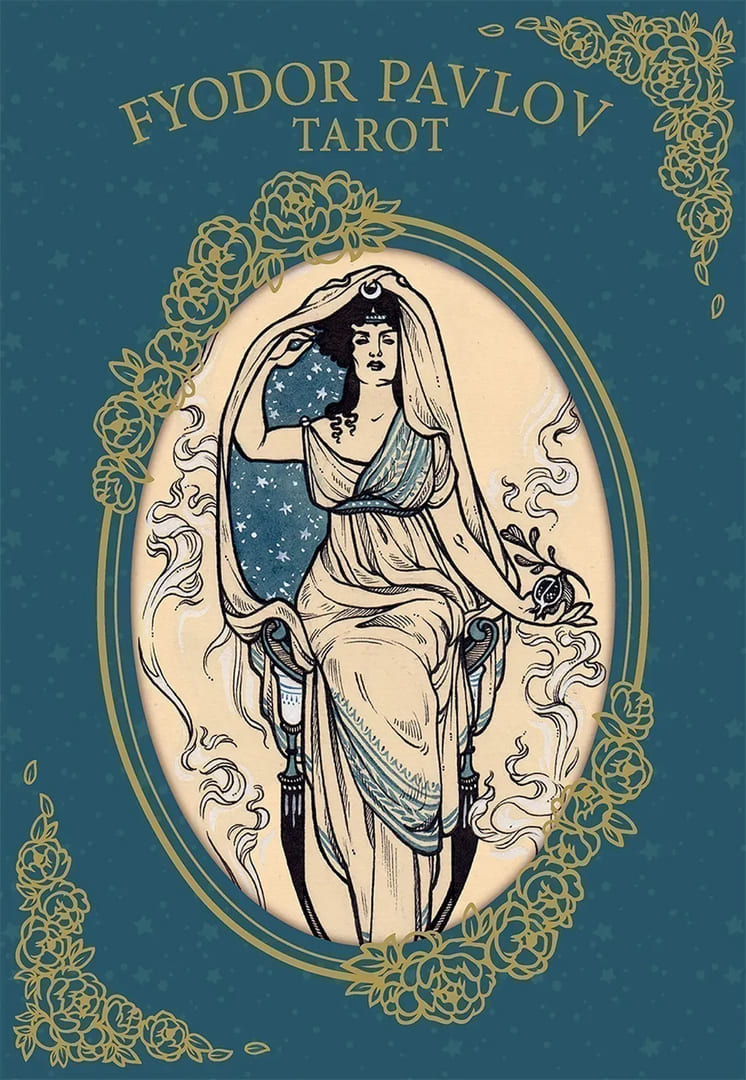
Fyodor Pavlov Tarot — another deck engaging with gender and the body, but through a queer lens. Where Tarot of the Divine Masculine shows the spectrum of masculine, Fyodor Pavlov shows the spectrum of human. They complement each other.
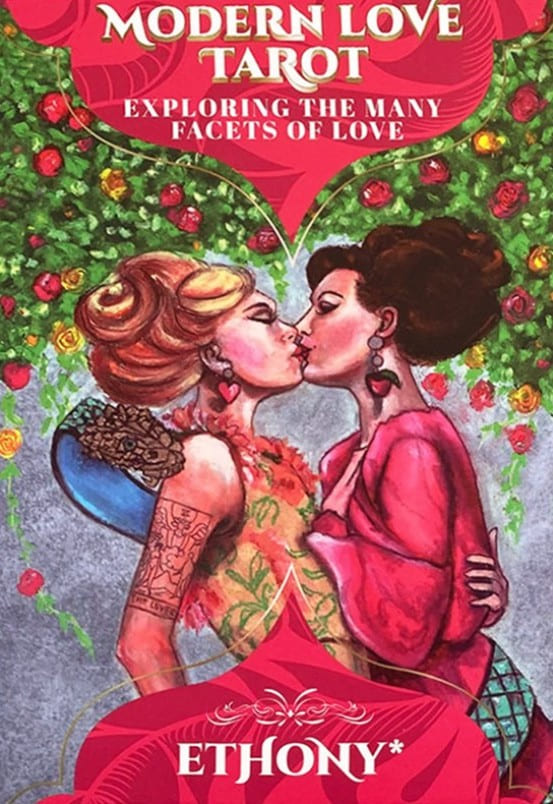
Modern Love Tarot — a deck about relationships and emotion, with a strong emphasis on diverse bodies and couples. Together they give rich material for work on relationships and identity.
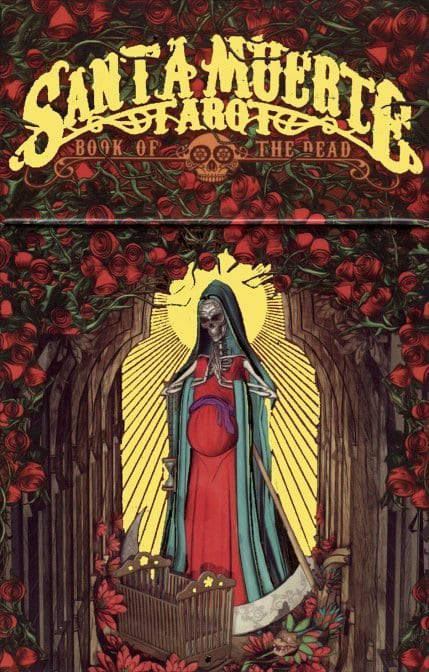
Santa Muerte Tarot — similar oil-painting aesthetic and serious tone. If you love the technique and atmosphere of Tarot of the Divine Masculine, Santa Muerte offers the same level of painterly craft with an entirely different subject.
Try this deck in our Telegram bot — it’s available for readings right now.
Frequently Asked Questions
Is Tarot of the Divine Masculine good for beginners?
Better for intermediate readers. The Rider-Waite-Smith structure is preserved, but two Major Arcana are renamed (the High Priestess becomes 'Intuition' and the Empress becomes 'The Protector'). The imagery is metaphorical and asks for openness to non-standard interpretations of masculine archetypes.
How many cards are in Tarot of the Divine Masculine?
78 cards — classic Rider-Waite-Smith structure. Court cards are Page, Knight, Queen, King. Two Major Arcana are renamed: the High Priestess becomes Intuition and the Empress becomes The Protector. This reframing emphasizes that masculine energy includes intuitive and protective sides.
Who created Tarot of the Divine Masculine?
Brothers Filip and Marko Vasich of Vasich Arts, based in Serbia. The deck was funded through Kickstarter in 2019. All 78 cards are original oil paintings made with the Flemish multi-layering technique, which gives them their unusually luminous, radiant colors.
What are the main themes of Tarot of the Divine Masculine?
Masculine energy in its full range: vulnerability, intuition, protection, emotional depth, fatherhood, tenderness. The cards show men of different ages, ethnicities, and body types. The deck consciously moves away from the 'warrior-conqueror' stereotype toward a fuller picture of masculinity.