Review: Fyodor Pavlov Tarot — Art & Freedom
First impressions
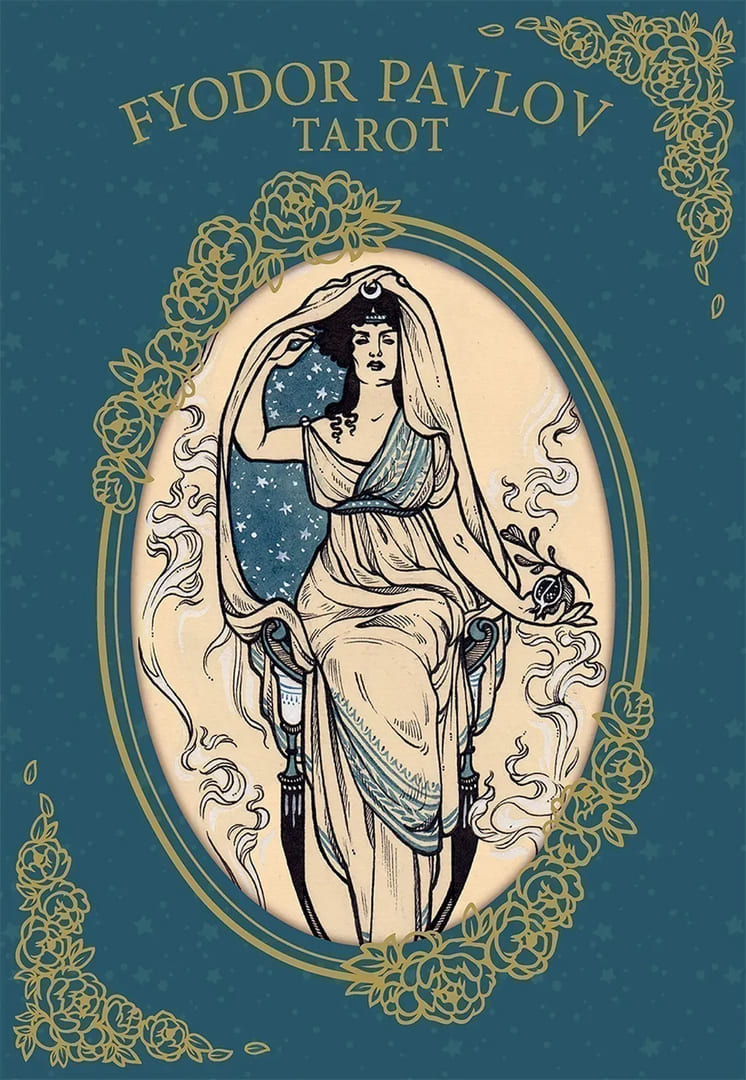
The Fyodor Pavlov Tarot is a deck that takes your breath away. Not from shock — from beauty. Every card is hand-painted in watercolor and ink on cream paper, and you can see it: the brushstrokes, the lines, the living hand of the artist. The style blends Art Nouveau with Japanese printmaking and Pre-Raphaelite influences, yet the content is thoroughly contemporary.
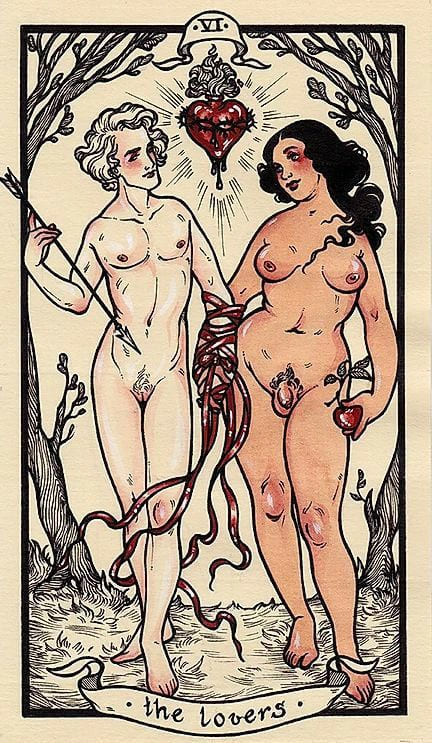
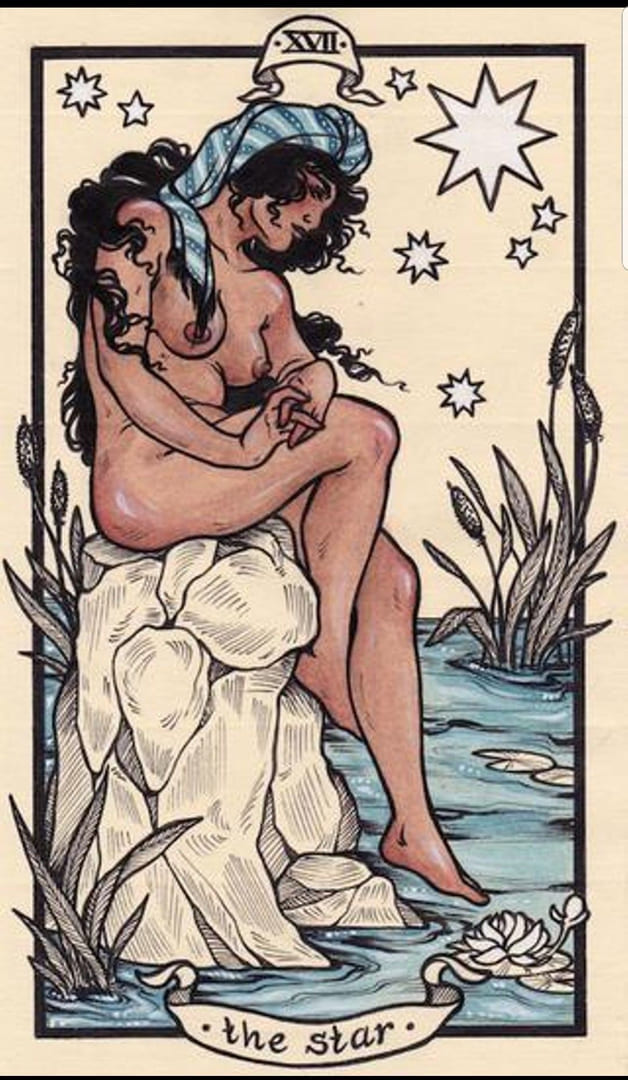
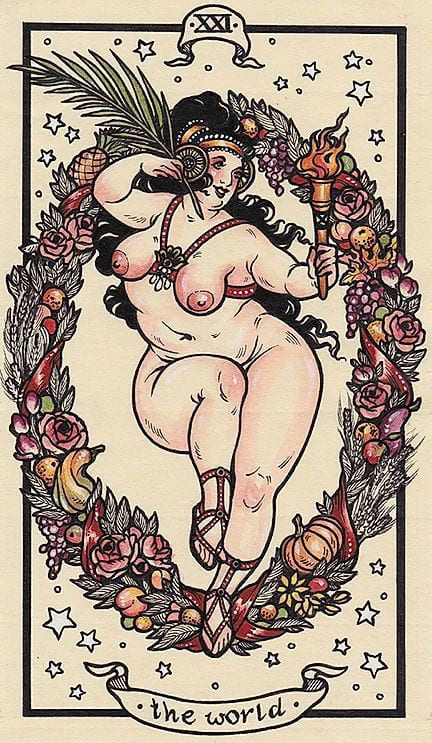
The Lovers shows two nude women standing together — one light-skinned, one dark-skinned. A sacred heart with an arrow between them. The Star shows two dark-skinned women in a tender embrace by the water under stars. The World features a plus-size figure dancing in a wreath of roses. This is tarot where every body deserves to be depicted, and every love is real.
About the deck
Creator: Fyodor Pavlov, a queer and trans artist who spent five years creating this deck, drawing on deep research into history and culture alongside his own personal experience. Published by U.S. Games Systems in 2024.
78 standard-structure cards with gold gilt edges and linen-textured cardstock. The guidebook is 172 pages in hardcover, with detailed descriptions and the artist’s personal reflections on every card. Premium quality throughout.
Pavlov intentionally shifts gender on certain characters, includes non-binary figures and queer couples, while preserving the canonical meaning of each card. This isn’t “change for change’s sake” — it’s an expansion of perspective.
Visual style
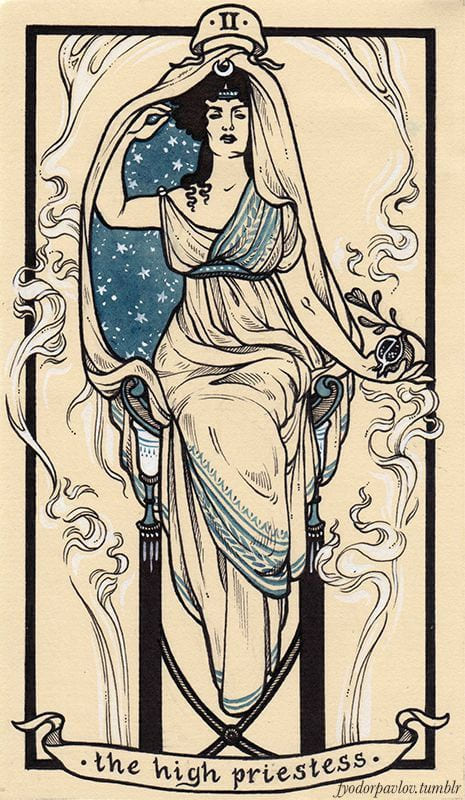
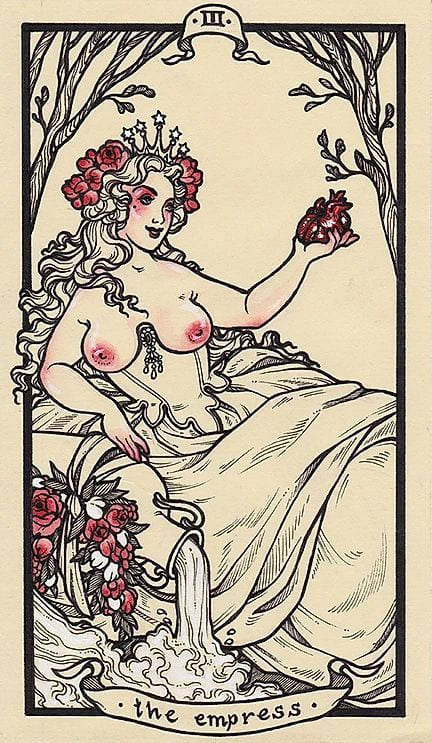
Pavlov’s style is ink on cream paper with watercolor accents. The primary palette is sepia, black ink, with pink and red highlights. The aesthetic recalls Parisian Art Nouveau, Japanese ukiyo-e woodblock prints, and Victorian book illustration.
Each card is framed with decorative borders and a banner title at the bottom. Nudity is frequent but always rendered with respect and artistic tact. Bodies are diverse: various races, sizes, gender expressions, and abilities.
Core themes
The Fyodor Pavlov Tarot is an inclusivity manifesto wrapped in classical craft:
- Queer representation — same-sex couples, trans and non-binary characters — organic, not tokenistic
- Body diversity — full-figured, thin, with disabilities — all bodies deserve card space
- Cultural diversity — characters of various races and cultural backgrounds
- Classical craft — five years of hand-work, Art Nouveau, gold gilt edges
Favorite cards
The Lovers (VI)
Two nude women face the viewer — one light-skinned with light hair, the other dark-skinned with dark hair. A sacred heart with an arrow between them. Small hearts drawn on their bodies. Trees frame the scene. These Lovers represent equality: two different women bound not by hierarchy, but by love.
Death (XIII)
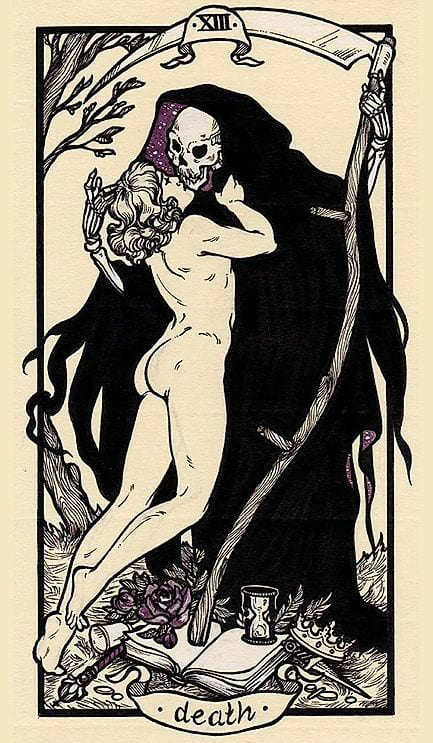
A skeleton in a dark cloak tenderly embraces a nude female figure. A scythe behind, an hourglass at their feet, roses on the ground. This isn’t violence — it’s an embrace. Death as intimacy, as a final dance. One of the most beautiful and touching Death cards in all of tarot.
The Star (XVII)
Two dark-skinned women by the water — one holding the other in her arms. Stars shine above. Tenderness, vulnerability, healing — all in one scene. After Death’s embrace — the embrace of hope. Queer love as a source of light.
The World (XXI)
A plus-size figure dances in a wreath of roses, feathers, fruit, and stars. Partially nude, confident, joyful. Torches flanking. The classic World composition, but with a body that rarely appears on tarot cards. And that’s exactly why it matters: journey’s completion is for every body.
The Fool (0)
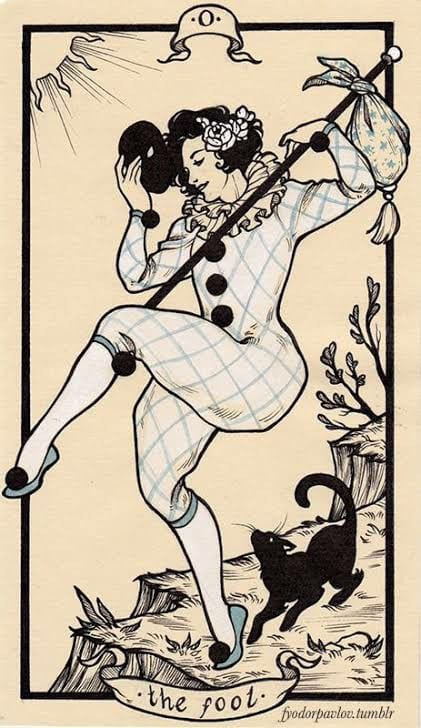
A figure in a checkered Pierrot costume with pom-pom buttons dances on a cliff’s edge. Black cat, bundle on a stick. The style echoes Victorian circus posters. This Fool isn’t a naive traveler — they’re a performer for whom life is the show.
Strength (VIII)
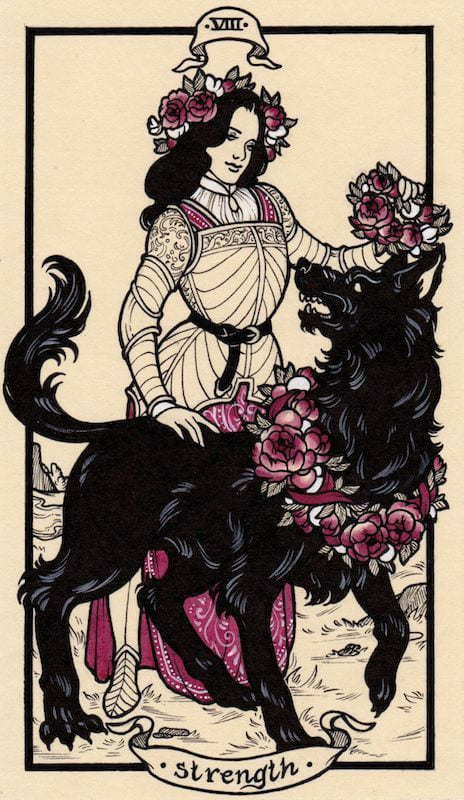
A woman in a Victorian dress with a flower crown adorns a dark wolf with rose garlands. Not a lion — a wolf. Roses everywhere. Strength here isn’t taming — it’s adorning the wild.
How to work with this deck
- Identity spread — three cards: who I am, how I’m seen, who I’m becoming. Perfect deck for self-determination questions
- Body meditation — choose a card with a character whose body differs from yours. What do you feel? The deck teaches acceptance
- Guidebook as literature — Pavlov’s 172-page personal reflections are worth reading independently from the cards
- Card of the day — the classic approach, enhanced by the artistic depth of every image
Who is this deck for
If representation matters to you — this is one of the most inclusive decks in the world. LGBTQ+, body diversity, cultural variety — all without feeling forced.
If you value art — every card is hand-painted, and it shows. Gold gilt edges, linen texture, 172-page hardcover guidebook — collector quality.
An honest downside: the deck contains significant nudity. If that doesn’t suit your context (conservative client readings, readings with children present) — keep that in mind. Also the price: premium quality costs accordingly.
Deck pairings
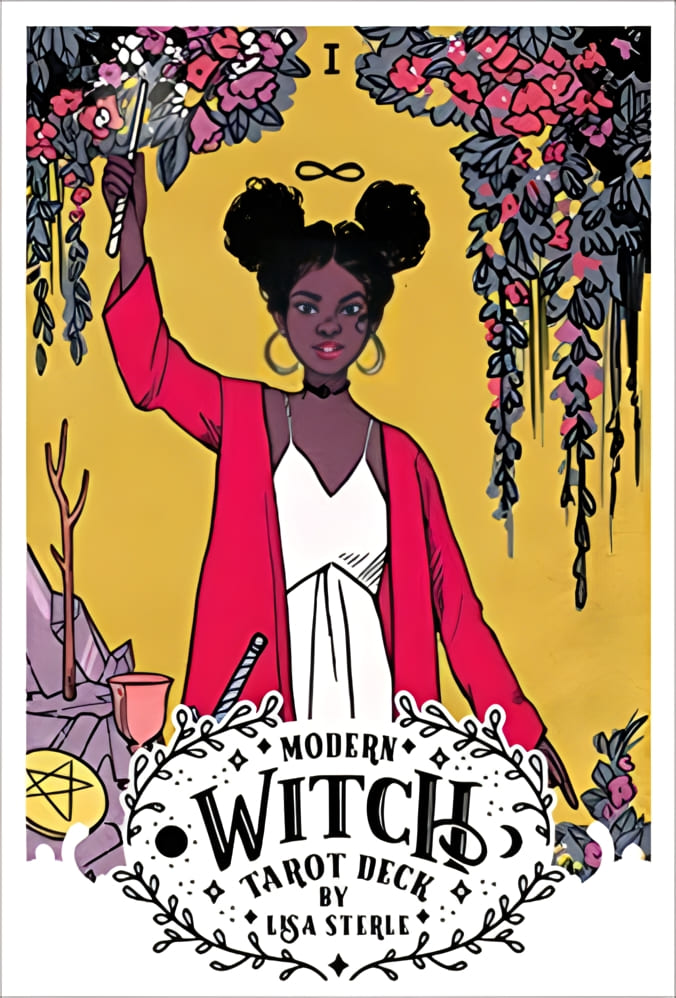
- Modern Witch Tarot — another inclusive deck in a different style: comic vs Art Nouveau. Together they show two approaches to diversity
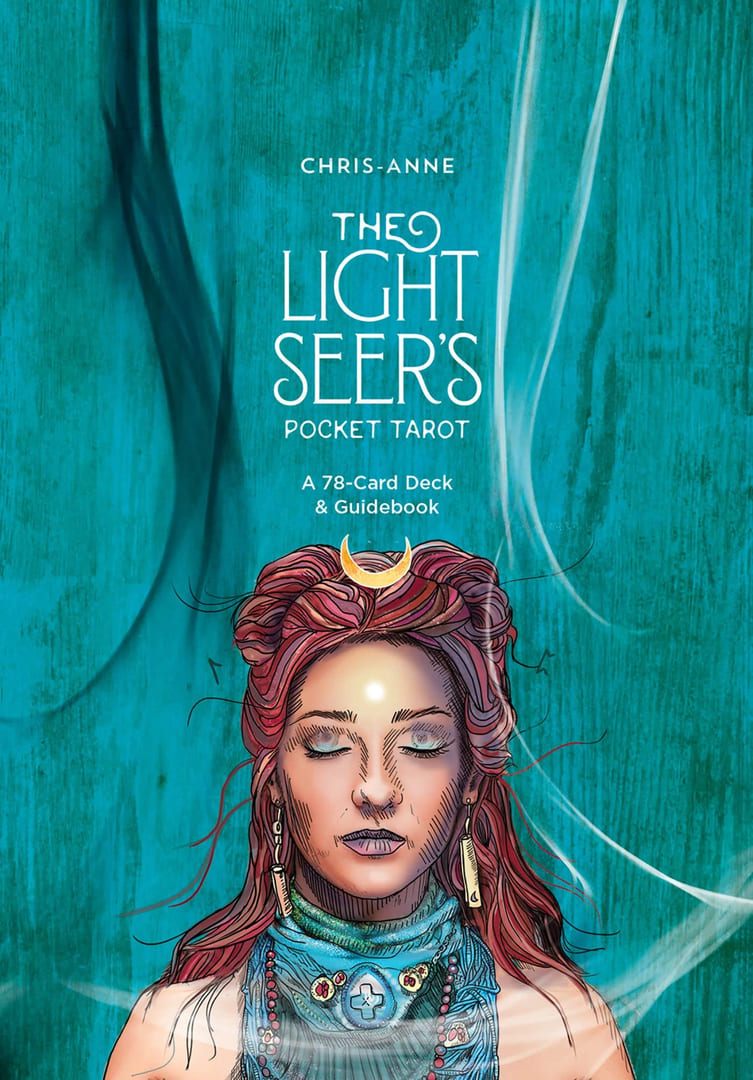
- Light Seer’s Tarot — a gentler, more clothed alternative for days when something less revealing is needed
- Shadowscapes Tarot — if Pavlov celebrates the human body, Shadowscapes celebrates nature spirits. Together — the full picture
Try the Fyodor Pavlov Tarot in our app — Elvi Tarot 🎨
Frequently Asked Questions
Is the Fyodor Pavlov Tarot good for beginners?
Yes, with a note: the deck includes nudity and queer representation. If that's comfortable, the symbolism is classic, the guidebook detailed, and the cards read intuitively.
How many cards are in the Fyodor Pavlov Tarot?
78 cards in the standard structure. Gold gilt edges, linen finish, hand-painted watercolor illustrations. The guidebook is 172 pages in hardcover.
What are the main themes of this deck?
LGBTQ+ representation, body diversity, queer love and identity, cultural diversity. Classic tarot reimagined through an inclusive, Art Nouveau lens.
Who created this deck?
Fyodor Pavlov — a queer and trans artist working in watercolor and ink. Five years in the making. Published by U.S. Games Systems in 2024.