Review: Santa Muerte Tarot — Book of the Dead
First impressions
The first thing you feel opening Santa Muerte is life. Sounds paradoxical for a deck where every character is a skeleton, but that’s exactly it. These skeletons dance, fall in love, trade at markets, pray, and laugh. They wear vibrant Day of the Dead outfits, surrounded by flowers, candles, and altars. Death here isn’t an ending — it’s life’s inseparable partner.
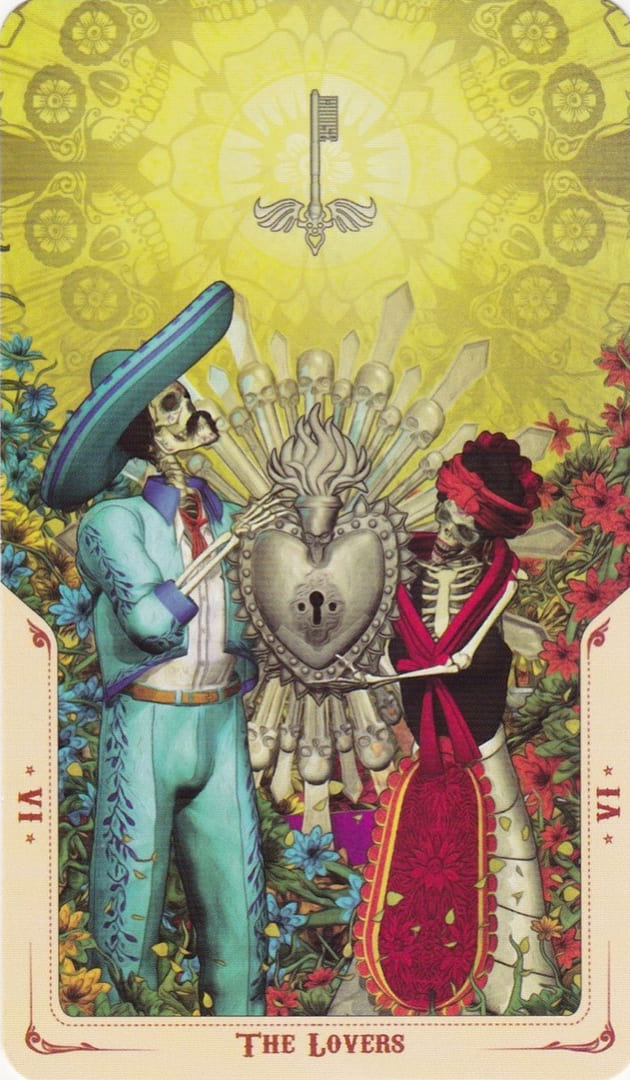
When I first saw the Lovers card — two skeletons dressed as bride and groom, a silver sacred heart with a keyhole and daggers between them — I realized: this deck speaks about love more honestly than most “living” decks. Because when the skin is gone, there’s nowhere to hide.
About the deck
Creator: Fabio Listrani, an Italian digital artist who also made the Night Sun Tarot and Notoria Tarot. Published by Lo Scarabeo in 2017, subtitled “Book of the Dead.”
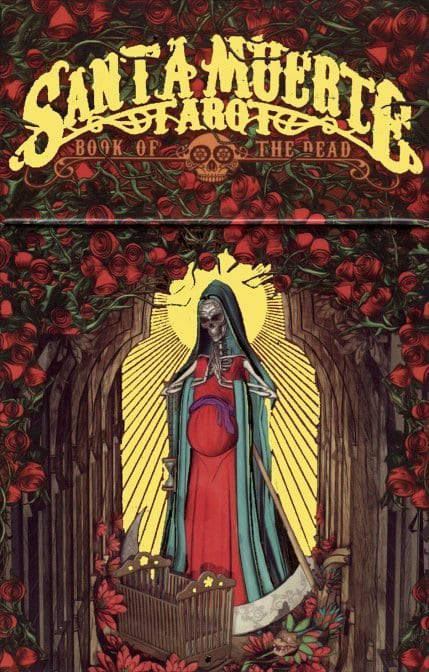
78 cards in the standard structure. Arcanum XIII is titled “Santa Muerte” (Holy Death) instead of the usual “Death” — and it’s the central card of the entire system. Listrani drew inspiration from the Mexican folk cult of Santa Muerte and Day of the Dead aesthetics, though he himself isn’t Mexican — this has sparked discussions about cultural appropriation, but the artistic quality is universally acknowledged.
Standard-sized cards, sturdy cardstock, vivid printing. Cream-colored frames with decorative altar-style elements. Every card is a small altar.
Visual style
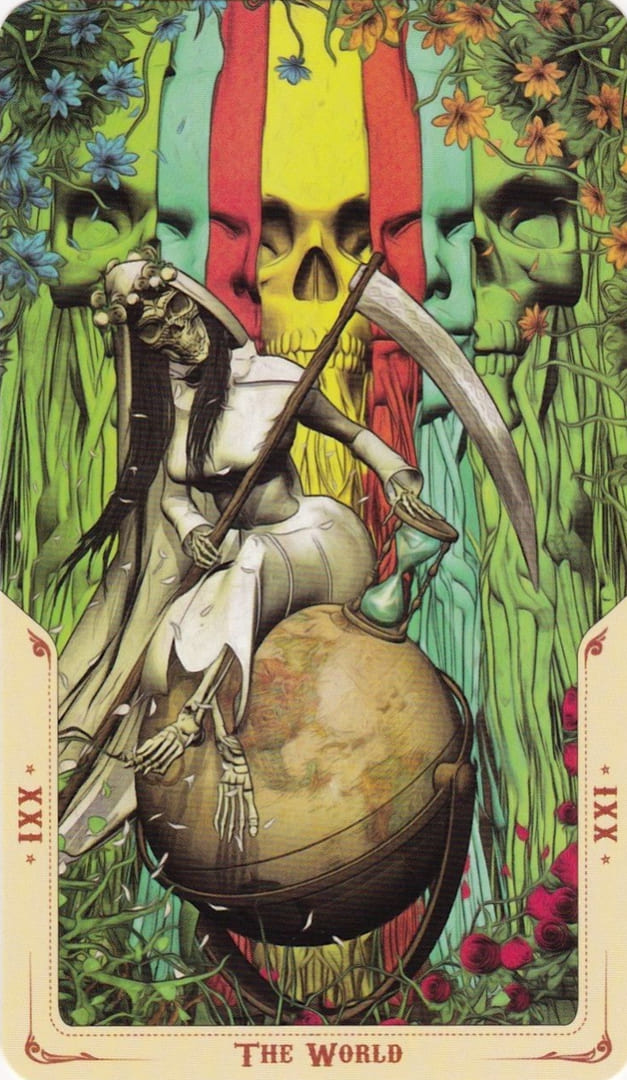
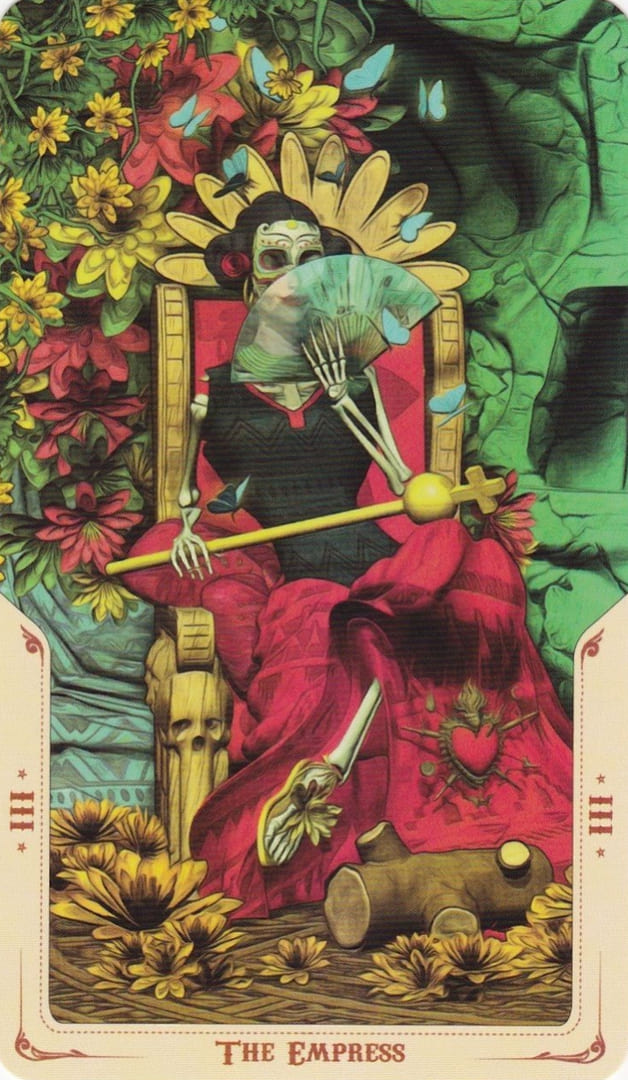
Listrani works digitally, and his style is vivid, saturated realism with elements of Mexican folk art. The palette is incredibly bold: deep reds, golds, emeralds, purples. Backgrounds overflow with flowers, skulls, candles, fruits, and objects from daily life.
Every character is a skeleton, but Listrani gives them such expressiveness and emotion that you forget about the absence of flesh. His anatomical mastery creates figures of extraordinary beauty and grace from nothing but bone.
Core themes
At the deck’s heart lies the idea that death is sacred. Not as an ending, but as a transition, transformation, a necessary condition for rebirth. The Santa Muerte cult is a folk tradition where Death acts as protector — patron saint of those society has rejected.
Central motifs:
- Death as rebirth — Arcanum XIII doesn’t frighten; it promises new life
- Cycles — everything dies to be reborn. The Tens of each suit are transition points
- Shadow alchemy — the deck doesn’t hide dark sides; it transforms them into sources of power
- Celebration of life — even in death, there’s joy, color, and dance
Favorite cards
Santa Muerte (XIII)
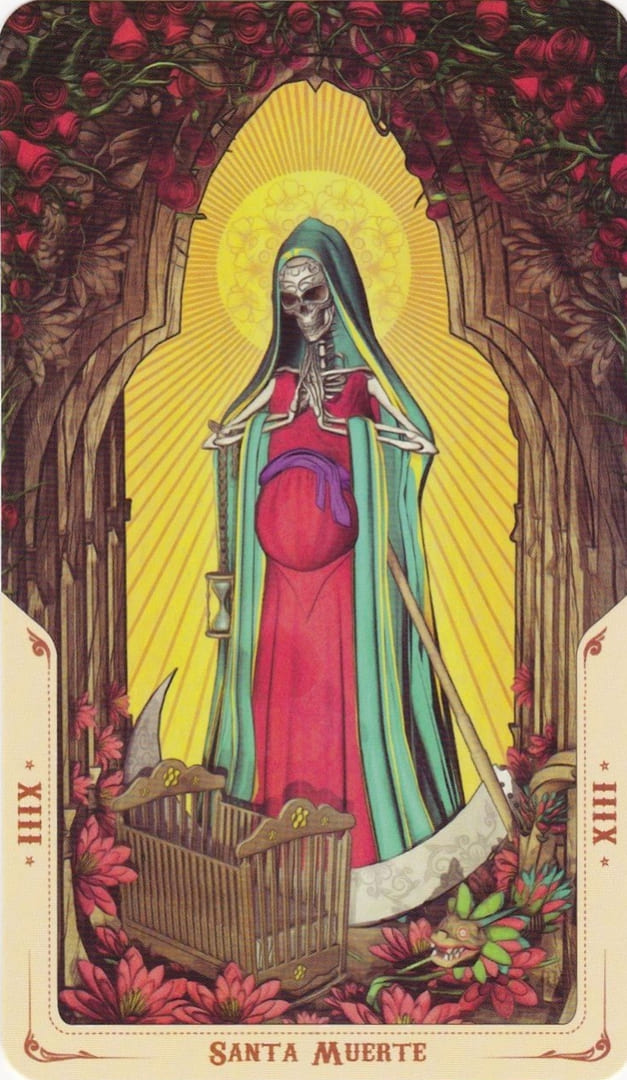
The deck’s central card. A skeleton woman in a red dress and green cloak stands in golden radiance like a saint on an icon. She’s visibly pregnant — new life growing within Death herself. A scythe in one hand, an hourglass nearby. At her feet — a baby’s cradle and lush red roses. This isn’t simply a “change card” — it’s Death as Mother, who takes and gives simultaneously.
The Lovers (VI)
Two skeletons in Day of the Dead finery — he in a blue suit and sombrero, she in a red dress with flowers. Between them a silver sacred heart with a keyhole, pierced by daggers. A golden key hangs above. Love here is a choice: open your heart or keep it locked. And the daggers remind you that love always wounds.
The Devil (XV)
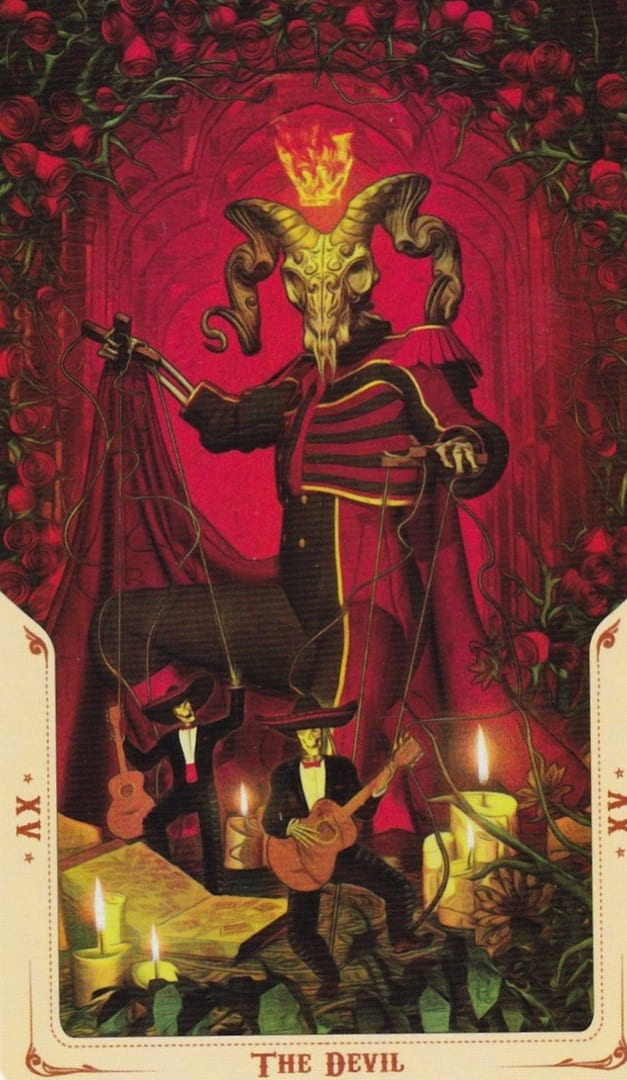
A figure wearing a ram-skull mask in a red military coat holds marionette strings. Below, two small “puppets” in suits — one clutching a guitar. Red roses frame the scene, candles burn. This Devil is a charismatic puppeteer — not brute force, but charming manipulation. Beside the Lovers, it asks: is your bond a free choice or someone’s control?
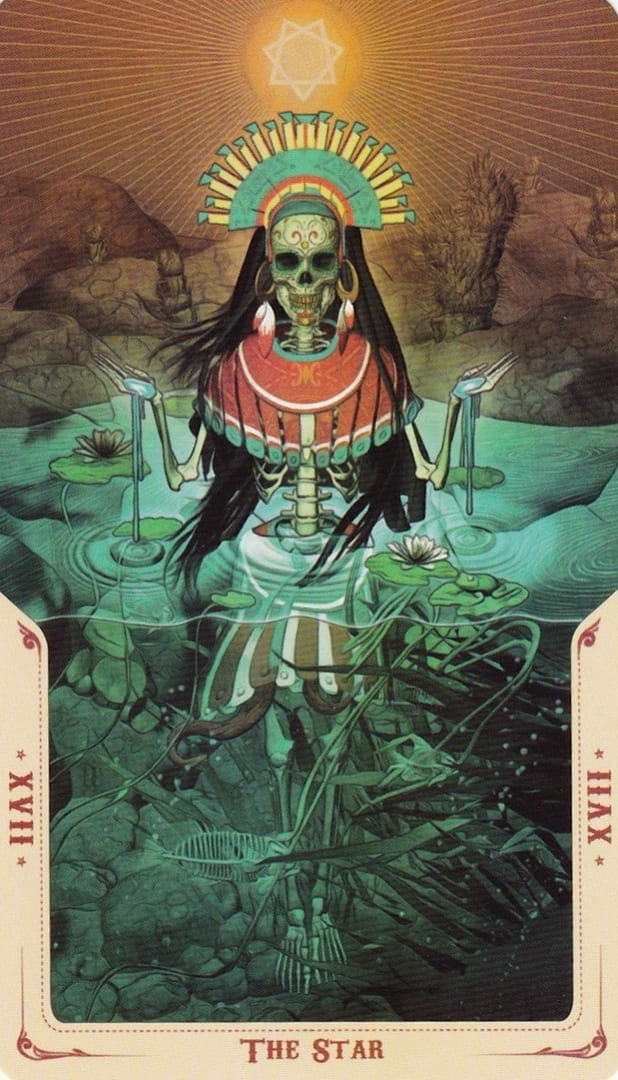
The Star (XVII)
A skeleton wearing an Aztec headdress sits in dark green water among lily pads, holding two vessels. A golden star burns above. Pre-Columbian aesthetics intertwine with classic tarot — and an image of ancient wisdom emerges, one that heals through connection to water and earth.
The Fool (0)
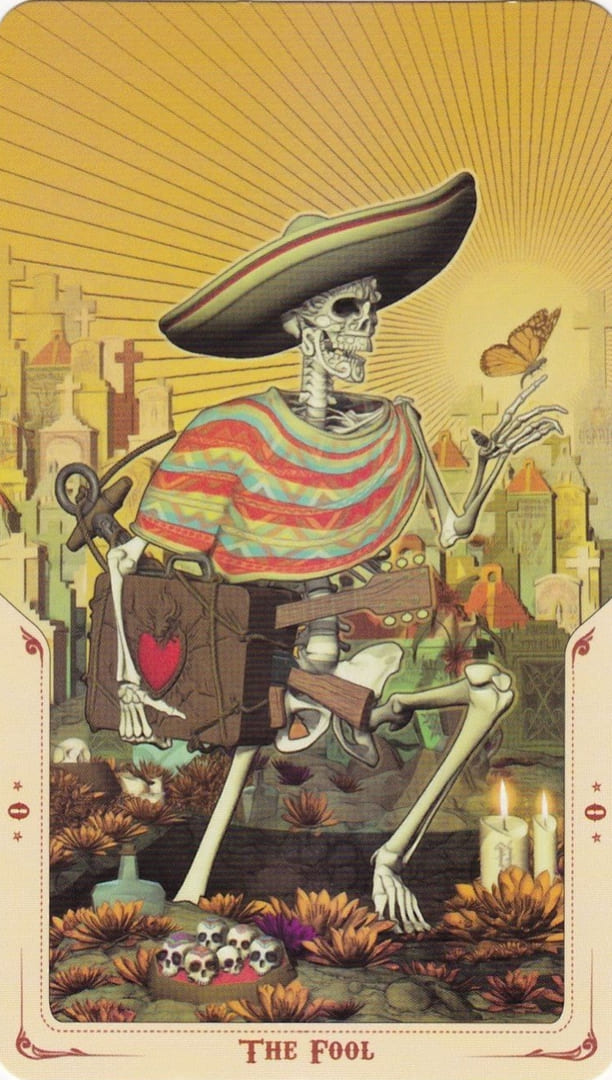
A skeleton in a striped poncho and wide sombrero sits on a suitcase marked with a heart, surrounded by skulls and candles. A monarch butterfly — symbol of transformation — flutters nearby. A golden city behind. This Fool begins the journey not from the land of the living — they emerge from the underworld, carrying past-life karma. And they’re still smiling.
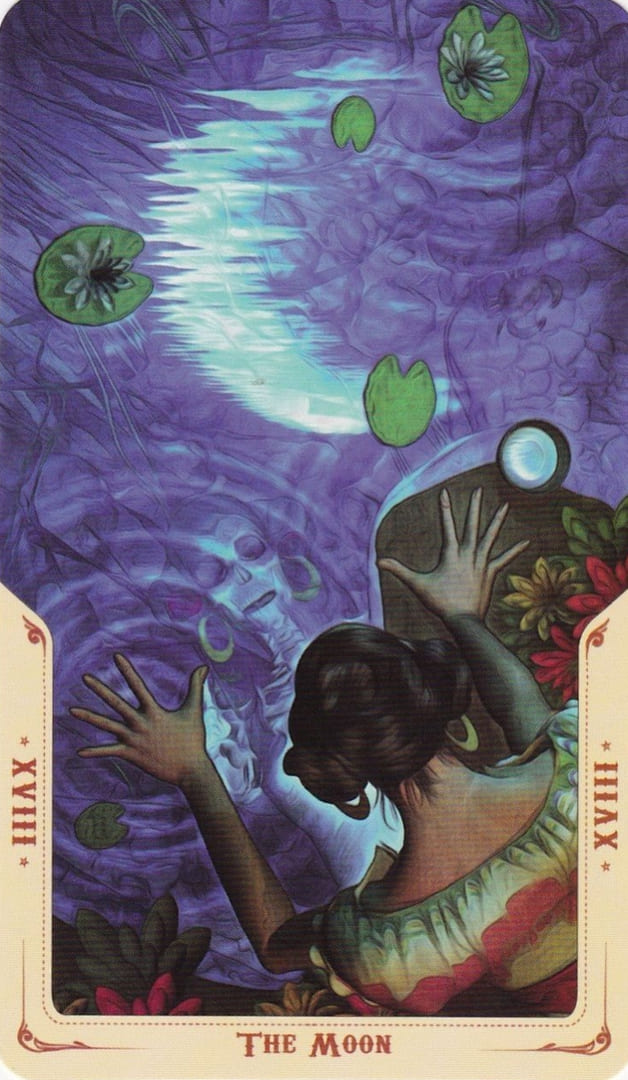
The Moon (XVIII)
A completely unexpected composition — an overhead view of a woman reaching into purple water with lily pads. The moon’s reflection shimmers below the surface. You’re literally looking down into the depths of illusion. One of the most unusual Moon cards I’ve seen in tarot.
How to work with this deck
- Meditate on Arcanum XIII — start your relationship with the deck through Santa Muerte. Study every detail: the pregnancy, the scythe, the cradle, the roses. It’s the key to the entire system
- Transformation spread — three cards: what’s dying, what’s being born, what remains. Perfect for this deck
- Day of the Dead — on November 1-2, do a special spread with this deck. It was made for this moment
- Shadow work — draw a card and ask: “What am I afraid to let go of?”
Who is this deck for
If Mexican culture, Day of the Dead aesthetics, and transformation philosophy speak to you — this deck will resonate. It’s joyful even in its darkness, and working with it is surprisingly easy.
If shadow work appeals to you but the Deviant Moon feels too bleak — Santa Muerte offers a warmer, more festive approach to the same themes. Here death isn’t a nightmare — it’s a carnival.
An honest note: Listrani is Italian, not Mexican. For some this doesn’t matter (the artistic quality is undeniable), for others it raises questions of cultural sensitivity. Decide for yourself.
Deck pairings
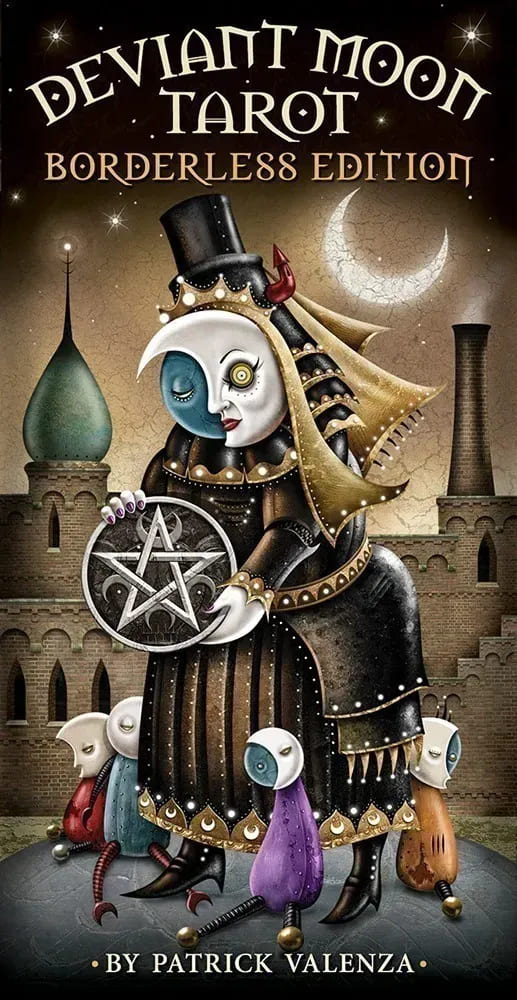
- Deviant Moon Tarot — if Santa Muerte is the festive side of death, Deviant Moon is the nightmare side. Together they show the full spectrum
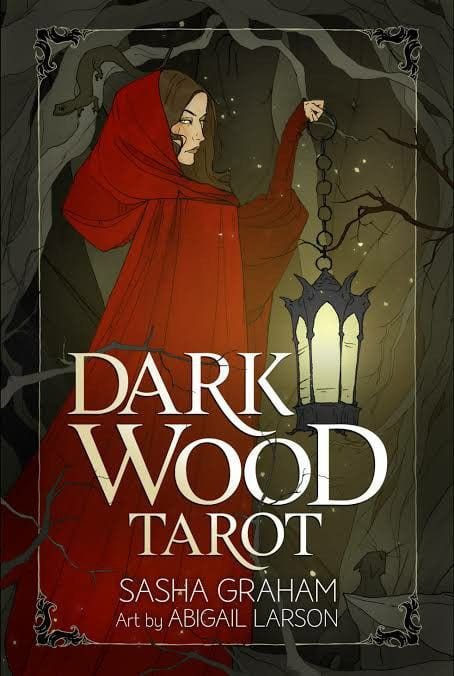
- Dark Wood Tarot — Abigail Larson’s forest gothic complements Listrani’s Mexican gothic for varied dark aesthetics
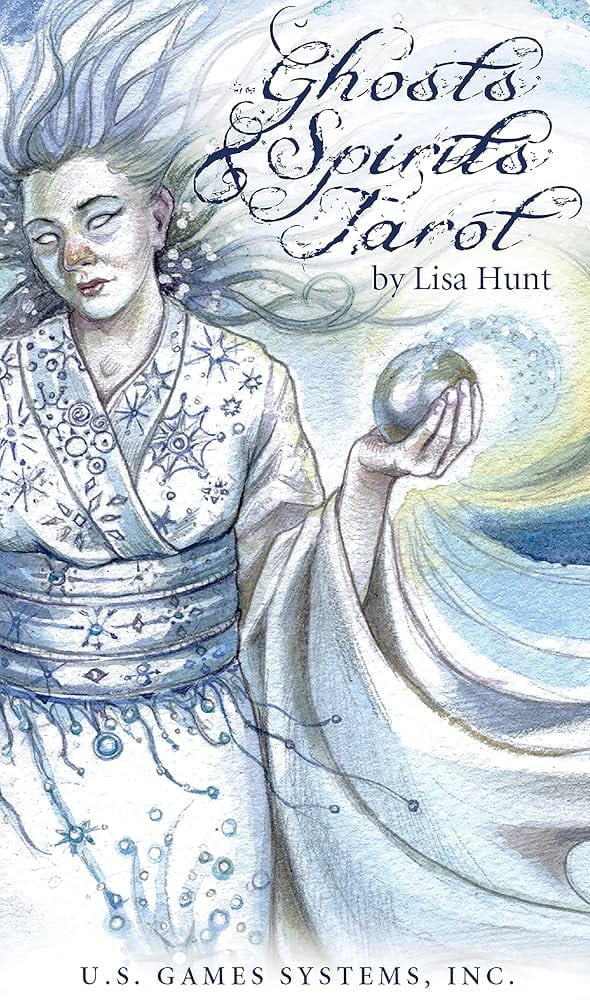
- Ghosts & Spirits Tarot — Lisa Hunt’s spectral imagery creates a third vector: death as presence, not as character
Try the Santa Muerte Tarot in our app — Elvi Tarot 💀
Frequently Asked Questions
Is the Santa Muerte Tarot good for beginners?
It works for anyone comfortable with skeleton imagery and death themes. The symbolism reads intuitively and the guidebook provides detailed descriptions. But a basic understanding of tarot helps for full appreciation.
How many cards are in the Santa Muerte Tarot?
78 cards — 22 Major Arcana and 56 Minor. Standard structure, but Arcanum XIII is titled 'Santa Muerte' (Holy Death) instead of just 'Death' — it's the key card of the entire deck.
What are the main themes of this deck?
Transformation through accepting death, the Mexican Santa Muerte folk tradition, cycles of rebirth, shadow work, and spiritual alchemy. Every character is a skeleton, yet the cards overflow with life, flowers, and color.
Who created this deck?
Italian digital artist Fabio Listrani, also creator of Night Sun Tarot and Notoria Tarot. Published by Lo Scarabeo in 2017. Listrani is not Mexican, which has sparked discussions about cultural appropriation.