Review: Harry Potter Tarot — Wizarding World in Pencil
This is one of the most unusual decks I’ve ever held. And it isn’t just about the aesthetics — it’s about the fact that this deck even exists.
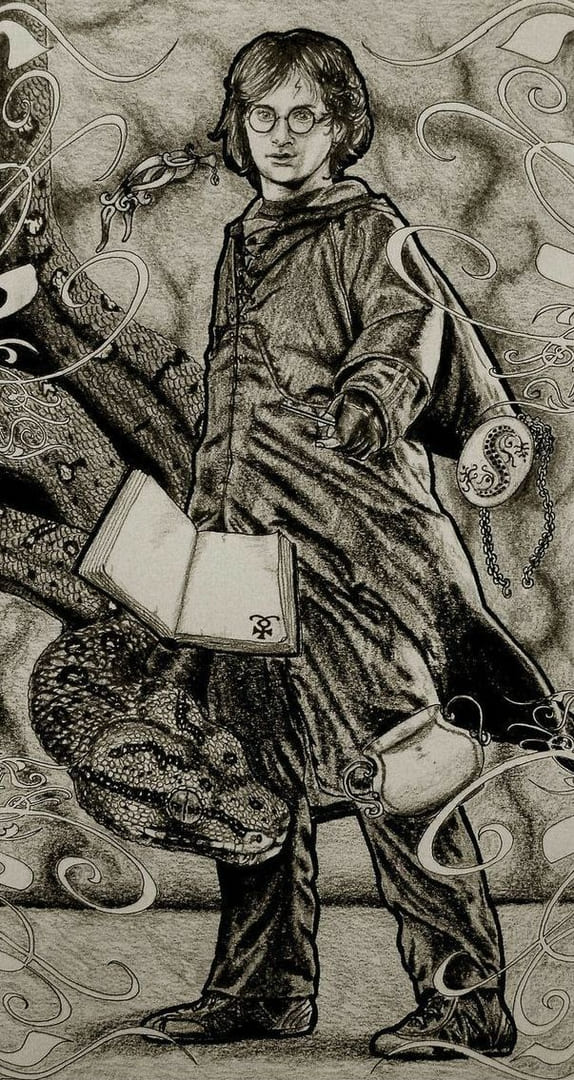
Harry Potter Tarot is a fan-made deck created by hand by one person over years of meticulous work. No color. No Photoshop. Just pencil. Just black-and-white drawing. Just deep knowledge of two worlds — the Potterverse and tarot.
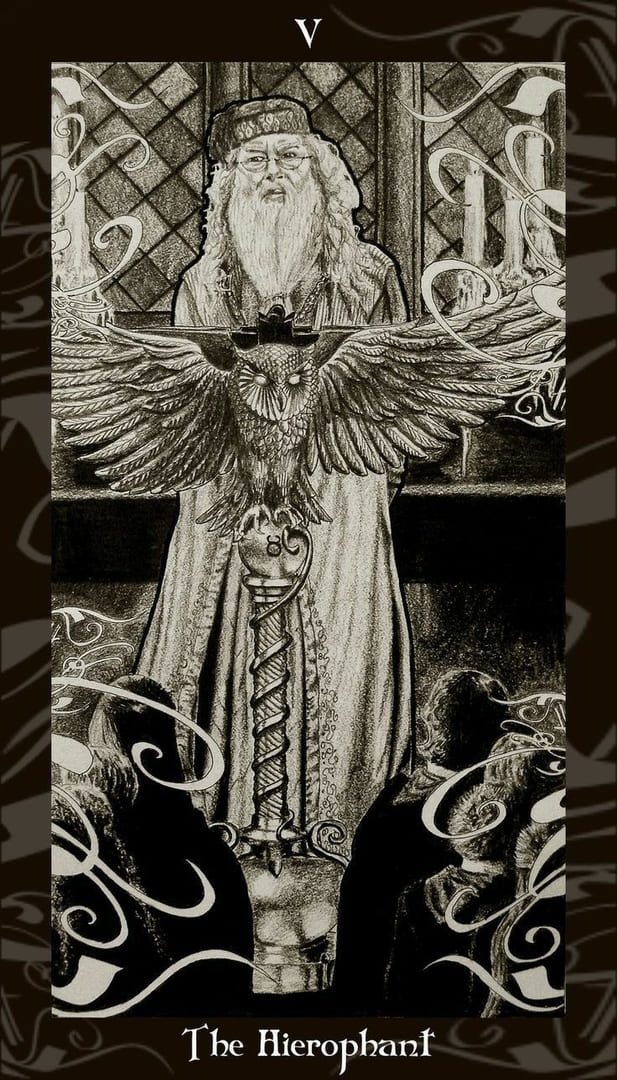
And when I first saw Dumbledore as the Hierophant — something clicked. It worked.
First Impressions
The first thing you notice is the technique. It’s pencil. Real pencil, no filters, no digital post-processing. Every line of shading is drawn by hand. The deck has a quality rare in our era — the feel that a human made it, not an algorithm.
The second is recognition. Dumbledore. Snape. Bellatrix. Voldemort. Fawkes the phoenix. The Death Veil from the Department of Mysteries. If you know the books or films, you recognize the scenes immediately. If you don’t, half the deck remains a mystery.
The third is the palette. Or rather, its absence. Black-and-white graphics force you to look at form, not color. At shading, shadow, contour. This isn’t a limitation — it’s a deliberate choice.
About the Deck
Harry Potter Tarot was created by Eleonore F. Pieper (Ellygator) — a tarot practitioner with over 20 years of experience. The deck is fan-made — without official permission from Warner Bros or the Rowling estate. It circulates in small print runs among tarot readers and Potter fans.
78 cards, classic structure. The defining feature is the Potterverse mapping:
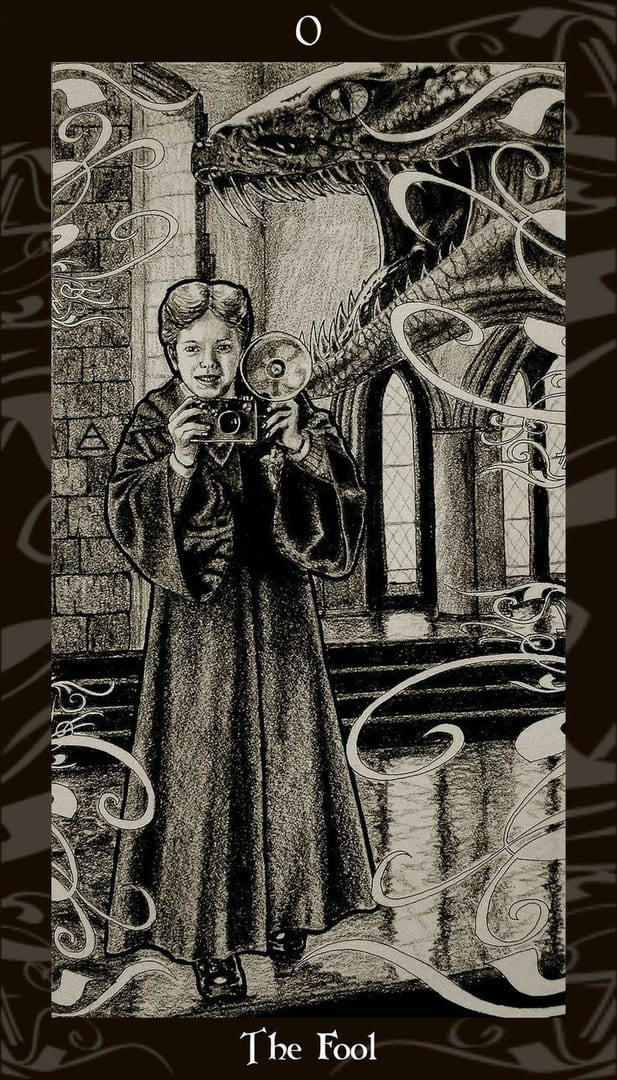
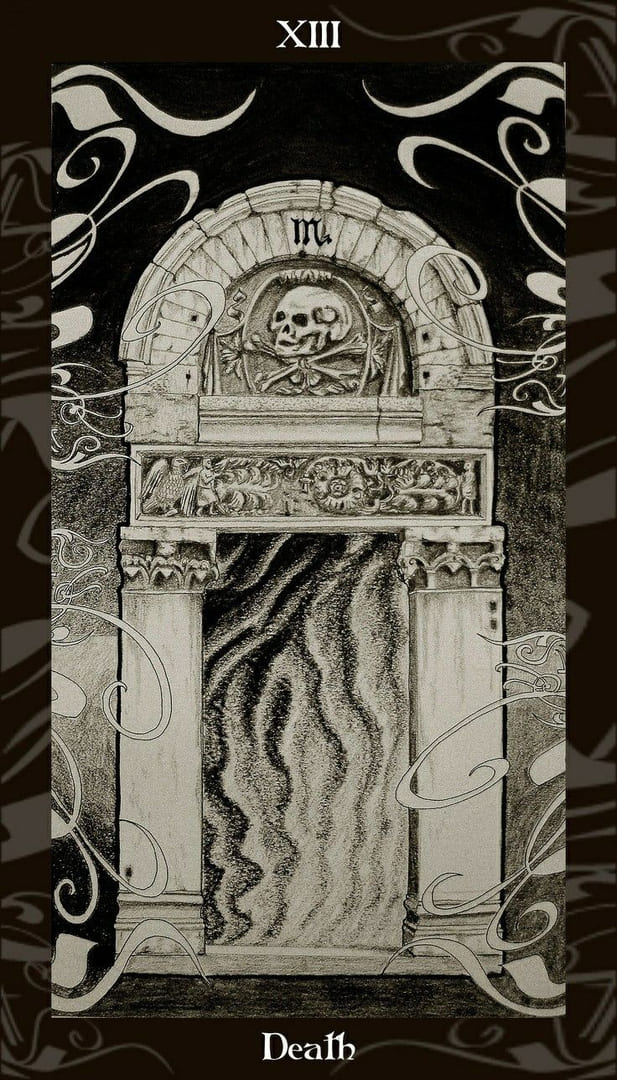
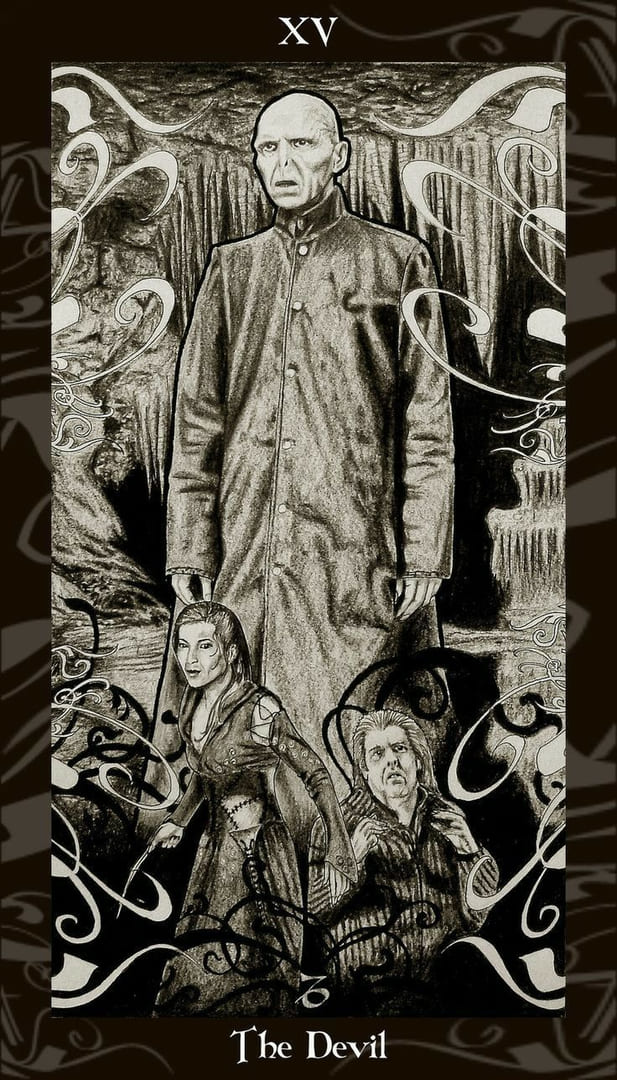
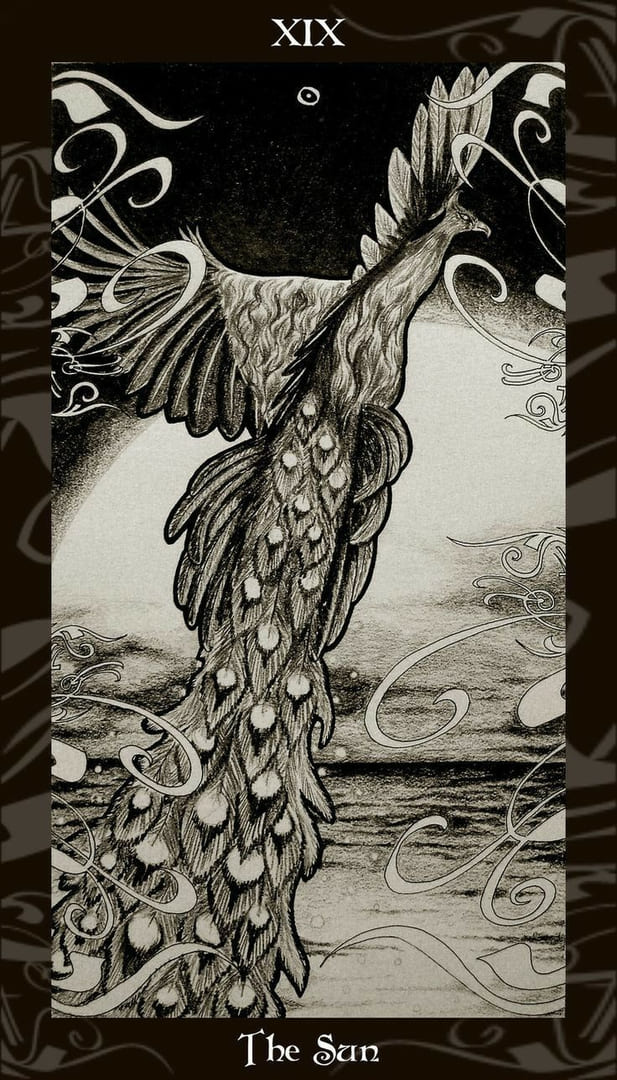
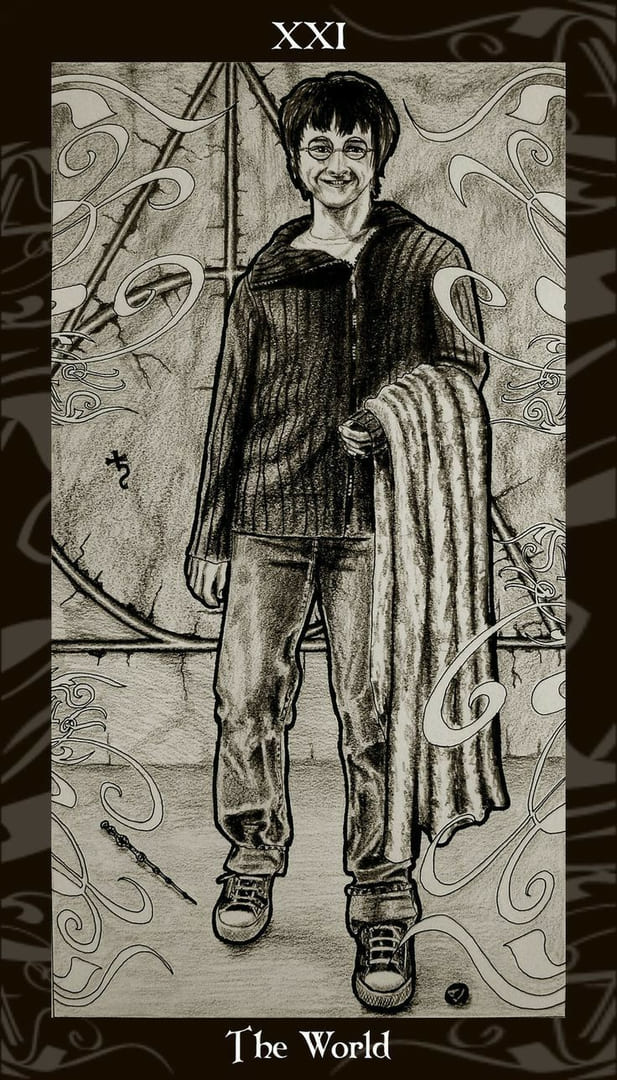
- Major Arcana — key characters and scenes: The Fool (Snape with infant Harry), Hierophant (Dumbledore), The Devil (Voldemort), Death (the Veil in the Department of Mysteries), The Sun (Fawkes the phoenix), The World (Harry after victory).
- Suits correspond to Hogwarts Houses through their elements:
- Slytherin = Cups (Water)
- Gryffindor = Wands (Fire)
- Ravenclaw = Swords (Air)
- Hufflepuff = Disks (Earth)
- Court cards — Page, Knight, Queen, King — also distributed across character archetypes.
It’s a deeply considered system. Not “characters slapped onto tarot cards” but real questions: which Potterverse character best embodies the Hierophant archetype? Dumbledore. Who is the Devil? Voldemort. Simple, precise, aesthetically working choices.
Visual Style
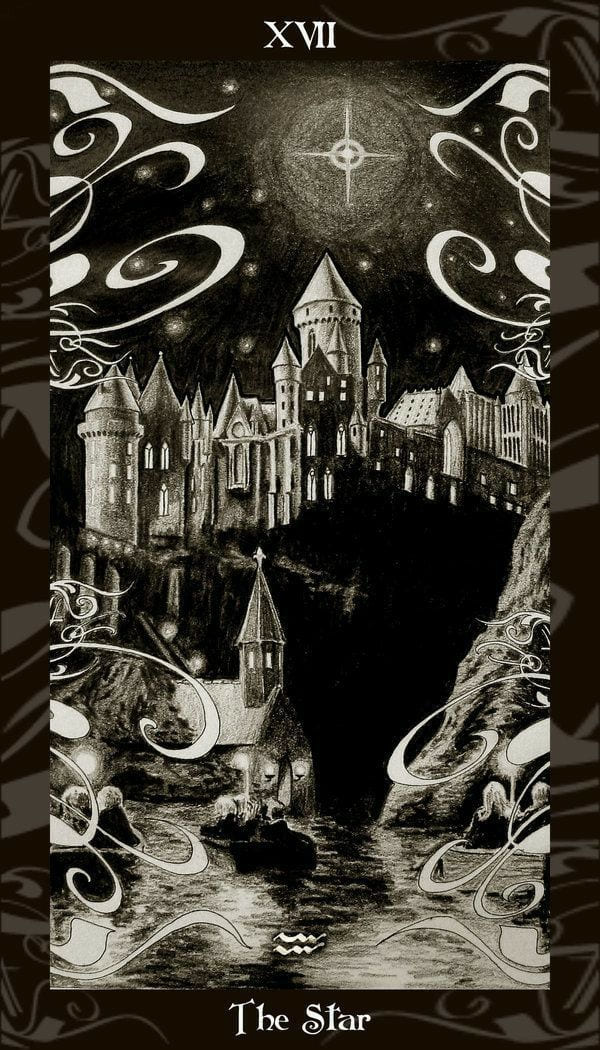
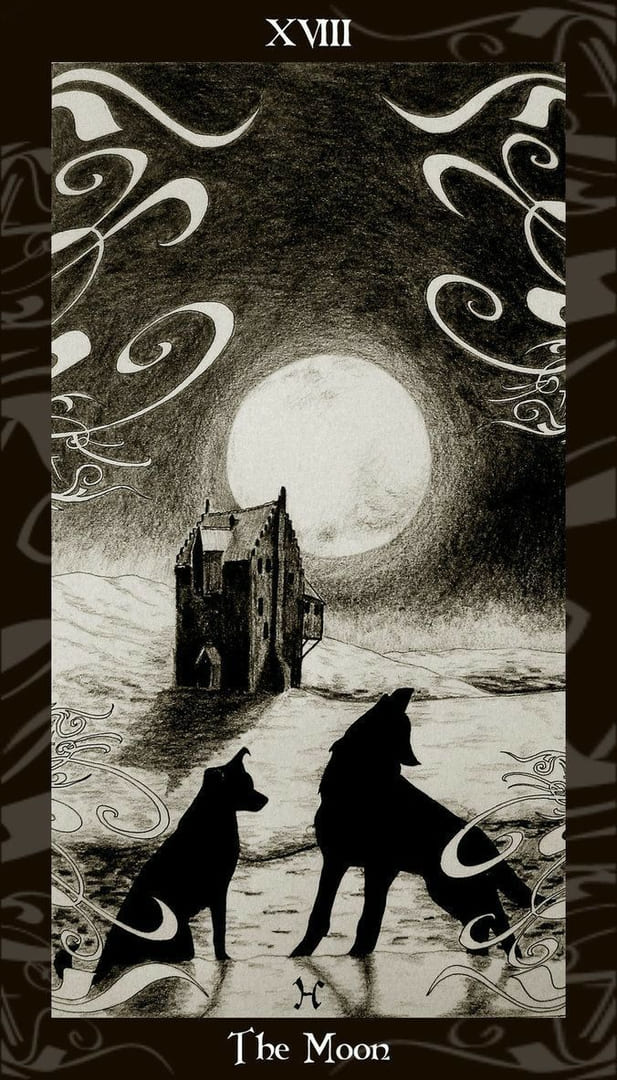
The deck’s style is detailed pencil drawing. Not simplified, not stylized — actual academic-quality graphic art. Faces are worked through, costumes too, backgrounds aren’t lazy.
The palette is monochrome. Black, white, and every shade of gray. This gives the deck the look of illustrations from an old magic textbook — which in a Hogwarts context works perfectly. The cards feel like pages from the school library.
A signature detail is the borders. Each card has a thin decorative border with curling ornament, adding a Victorian flavor. The deck feels old-fashioned — but it’s the right kind of old-fashioned.
Core Themes
Archetype through recognition. This is the deck’s main strength. When you see Dumbledore as the Hierophant, you don’t learn the card’s meaning — you remember Dumbledore. And with him — everything the Hierophant means: teacher, tradition, wisdom, sometimes its limits.
The school of magic as structure. Hogwarts is the perfect metaphor for the tarot system. Four Houses, each with their values and element. The card structure maps onto this naturally.
Seriousness under a familiar surface. Many assume a fan-deck is a joke. This one isn’t. Eleonore F. Pieper approaches the work with respect — for both the Potterverse and tarot. The experience shows.
Black-and-white as constraint and strength. The refusal of color is a strong artistic decision. It transforms the deck from “fan souvenir” into “real artistic object.”
Favorite Cards
Hierophant (Dumbledore) — long-bearded wizard in robes with half-moon glasses, before him the phoenix Fawkes with wings spread. The perfect choice: the Hierophant is the teacher, the mediator between student and ancient wisdom. Which Potterverse character better embodies that than Dumbledore? The card works instantly — no explanation needed.
Death (the Veil in the Department of Mysteries) — a stone arch with a dark fluttering veil, a skull and snake symbolism above. This is the very arch through which Sirius falls. A flawless choice for Death: not a frightening skeleton but a boundary, through which someone passes — and doesn’t return. The arch remains, the passing ones do not.
The Devil (Voldemort) — bald serpentine figure in dark robes, beside him two figures (likely Bellatrix and another) standing at his feet. Voldemort here is the Devil: the one who promises power for the price of the soul. The Death Eaters at his feet are those who agreed. The card works on multiple levels.
The Sun (Fawkes the phoenix) — the rising phoenix, drawn with incredible detail. Fine graphic work in the feathers. This is the Sun through rebirth: a bird that burns to ash and rises from it. If you think about it, this is the most precise rendering of the Sun I’ve seen — it’s not about not fading, it’s about eternal return.
The Fool (Snape with infant Harry) — a figure in dark robes holds a baby against the backdrop of a Hogwarts archway. A dragon above. This is a complex Fool: not Harry himself, not the naive beginner, but the moment the story could still go differently. Snape holds the child of the woman he indirectly caused to die. The Fool as a point of no return, as the first step that changes everything.
The World (Harry after victory) — Harry in simple clothes, glasses, with the invisibility cloak and wand. A simple scene, but that’s exactly why it works. The World isn’t the pomp of triumph. It’s when a person who has walked the whole path is finally standing on their own feet.
How to Work with This Deck
Spreads for Potter fans. If you or your querent are fans of the series, this deck works on two levels at once: the language of tarot and the language of Potter. Deeper immersion, warmer emotion.
Archetypal study. When you learn tarot through familiar faces, meanings stick more easily. This deck is an excellent learning tool for those who already know the Potterverse.
Card meditation. Black-and-white images invite long looking. Cards don’t distract with color, they let you focus on form and symbol.
House-based spreads. You can do spreads built on Slytherin/Gryffindor/Ravenclaw/Hufflepuff affiliations — especially useful for working with different aspects of personality.
Not ideal for those unfamiliar with the Potterverse, lovers of vibrant aesthetics, those working in a strictly traditional system without cultural references.
Who Is This Deck For
Potterverse fans. Obvious, but worth saying: if the books/films mean something to you, this deck deepens every reading.
Experienced readers. Not a first deck. A third, fifth, or tenth — once you have a base understanding of tarot and want something culturally specific.
Lovers of graphic art. If you value hand drawing, black-and-white illustration, academic-style shading — this deck will please you.
Collectors. Fan-decks aren’t officially reprinted. Each copy is rare. If you collect, this deck has its own value.
Who it may not be for: those who don’t know the Harry Potter world; lovers of bright colorful decks; those who work strictly esoterically without cultural references.
Deck Pairings
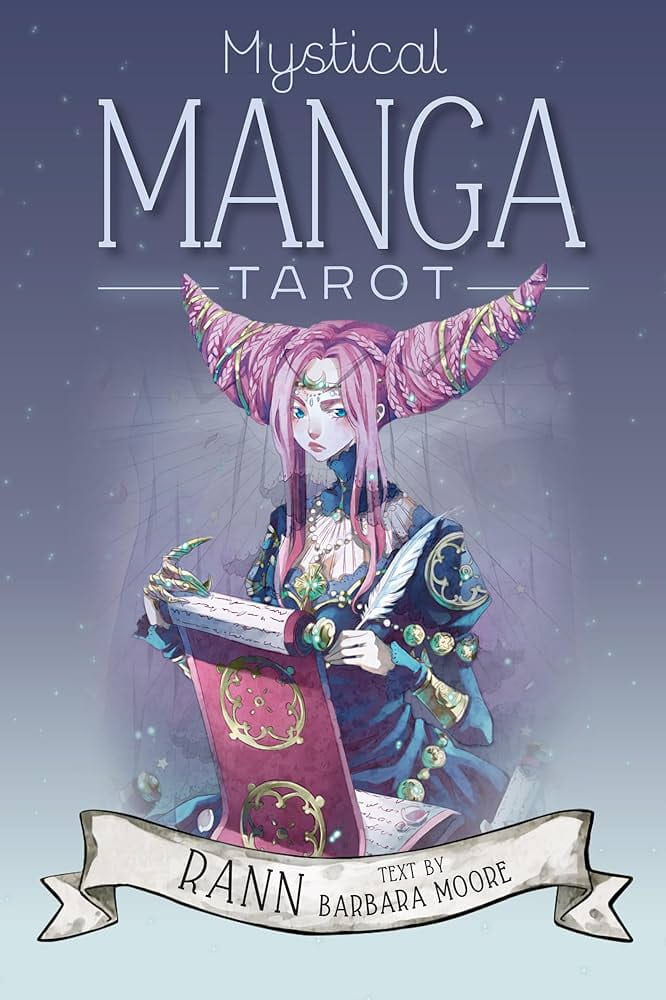
Mystical Manga Tarot — another deck built on a cultural layer (anime). If you like the idea of “tarot through a familiar universe,” these two work beautifully together.
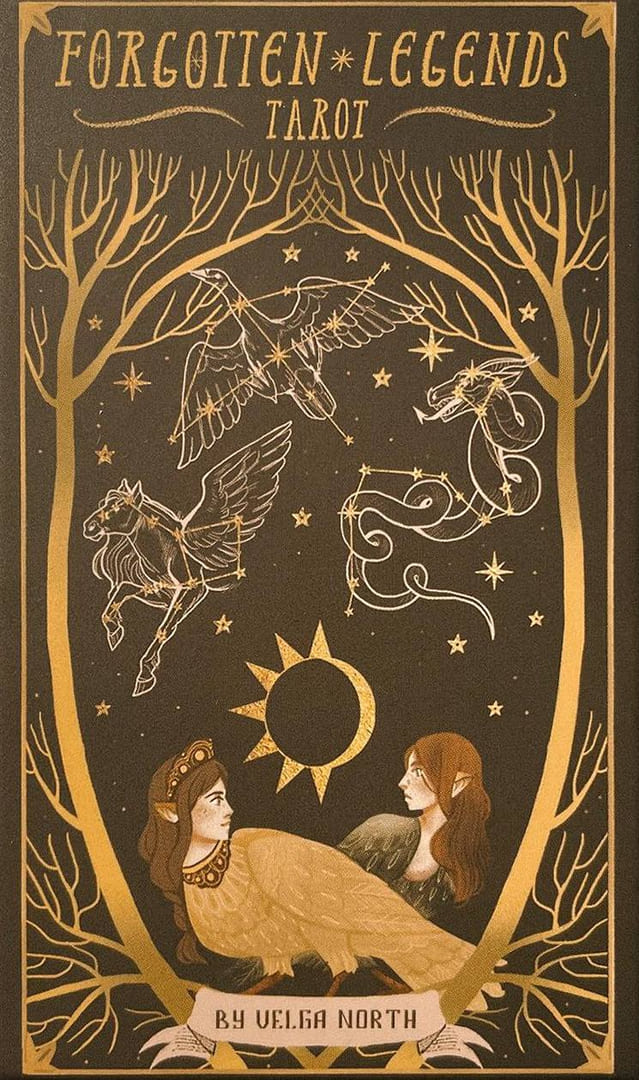
Forgotten Legends Tarot — similar in spirit: individual auteur work, academic detail, mythological roots. Both require reader knowledge of context.
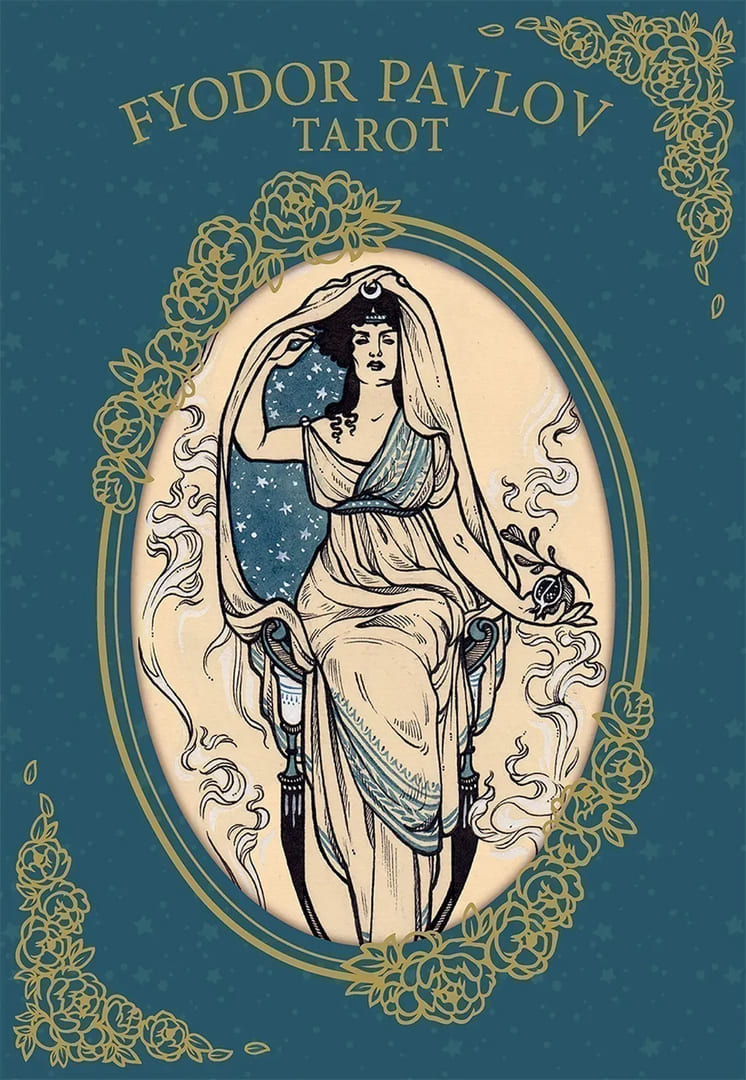
Fyodor Pavlov Tarot — similar in technique: careful shading, portrait approach. If you value character-focused decks with deeply worked faces, this is a good complement.
Try this deck in our Telegram bot — it’s available for readings right now.
Frequently Asked Questions
Is Harry Potter Tarot good for beginners?
Not really — especially if you're not familiar with the Harry Potter universe. The deck depends on character recognition, and without that knowledge many cards lose their meaning. Excellent for fans who already have basic tarot experience.
How many cards are in Harry Potter Tarot?
78 cards in classic structure. The Major Arcana correspond to key characters and scenes. The suits map to the four Hogwarts Houses: Slytherin (Cups/Water), Gryffindor (Wands/Fire), Ravenclaw (Swords/Air), Hufflepuff (Disks/Earth).
Who created Harry Potter Tarot?
Eleonore F. Pieper (known as Ellygator) — a tarot practitioner with 20+ years of experience. The deck is fan-made, not licensed by Warner Bros. All 78 cards are hand-drawn in detailed black-and-white pencil.
Is this an officially licensed deck?
No, this is a fan-made deck. The creator did not receive permission from the rights holders. The deck circulates in small print runs among fans and tarot practitioners. It's a collector's item, not a mass product.