Review: Mystical Manga Tarot — Anime Meets Tarot
First Impressions
I keep this deck for specific moments. When someone walks in and says “I love anime, but tarot seems scary and confusing,” I pull out the Mystical Manga Tarot and watch the fear dissolve in about sixty seconds. There’s something about the manga style that makes tarot feel less like mysterious fortune-telling and more like stepping into a story you already know how to read.
The first thing that struck me: this isn’t just “cards with anime pictures.” Rann, the illustrator, genuinely knows the genre from the inside — the poses, facial expressions, clothing details are all authentic. And Barbara Moore wrote a guidebook that is, honestly, one of the best I’ve held in my hands. Not just card meanings, but a real textbook with sample readings and step-by-step breakdowns.
About the Deck
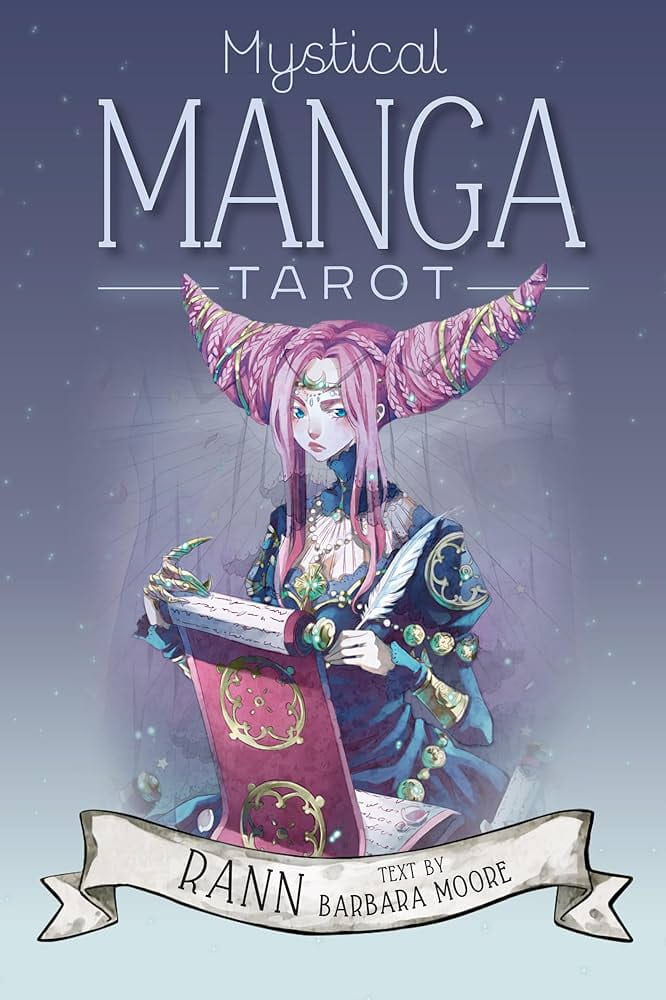
The Mystical Manga Tarot was published by Llewellyn in 2017. The text comes from Barbara Moore, one of the most prolific authors in the tarot world with over 35 years of experience. The illustrations are by Rann, a French artist and colorist known in the comics scene and a regular at Japan Expo.
The set includes 78 cards and a 216-page full-color guidebook. The book deserves its own spotlight: it contains a glossary of tarot terminology, step-by-step sample readings with real interpretations, and a unique section — the Fool’s Journey told as a continuous narrative from the first to the last Major Arcana card. For beginners, this is invaluable.
Cards come in a sturdy magnetic box. Standard size, fully reversible backs. The downside — the cardstock is thinner than you’d want, and the cards are slick. But the magnetic box protects them well.
Visual Style
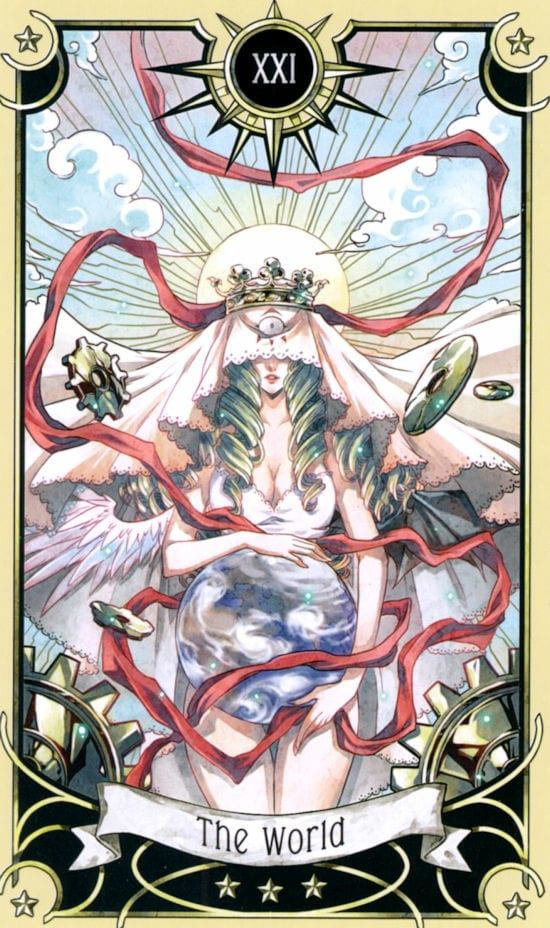
Vivid, saturated colors. Dynamic poses. Detailed clothing with ornamental patterns. If you know manga aesthetics, everything checks out: large expressive eyes, characteristic proportions, high-fantasy settings. At the same time, the card compositions follow classic Rider-Waite-Smith, so if you know RWS meanings, you won’t get lost.
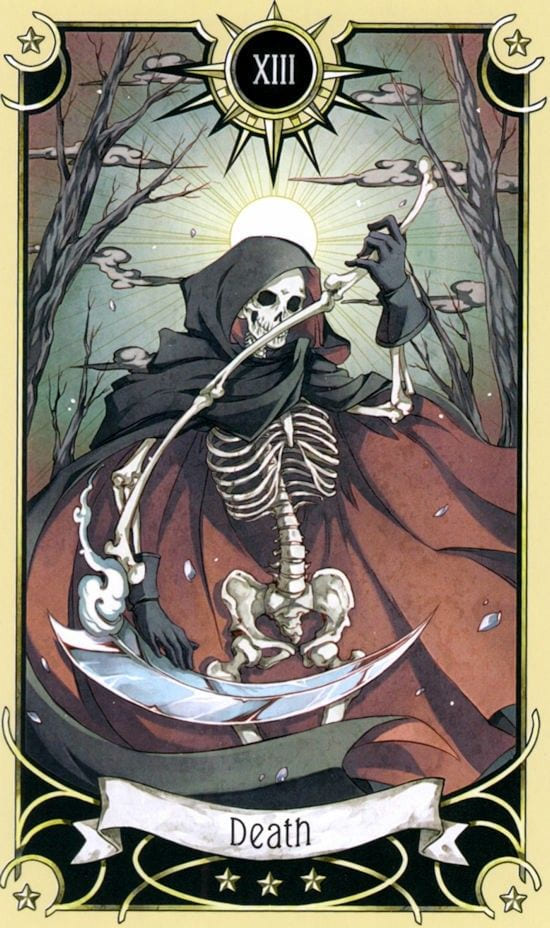
The palette is bright and open — no gothic tones, no darkness. Even “heavy” cards like Death or The Tower are rendered in vivid colors with dramatic but non-threatening energy. This is a deliberate choice: the deck wants to be accessible, not intimidating.
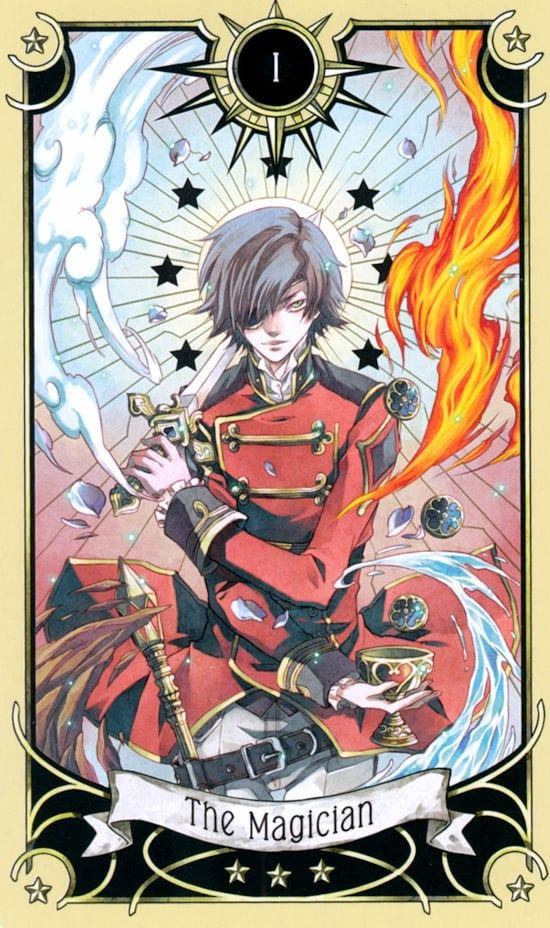
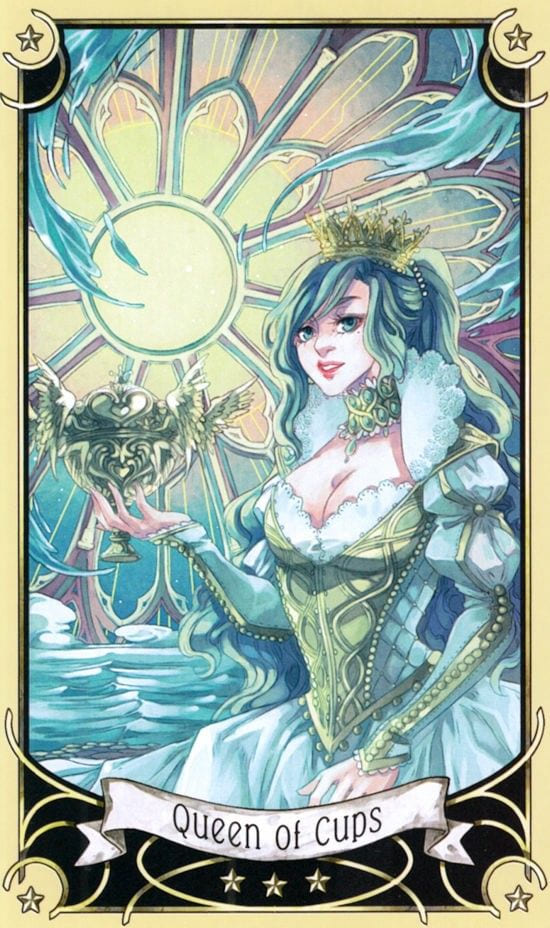
The Magician is depicted in a classic manga hero pose — confident, hand raised, four magical tools before him. The Queen of Cups is pure shōjo manga: soft, intuitive, surrounded by water and moonlight.
Core Themes
- The hero’s journey — the guidebook tells the Major Arcana as a single continuous story, and this maps perfectly onto manga narrative. Each Arcana is a chapter in the adventure.
- Magic as skill — not an innate gift but a mastery that develops. The Magician learns to wield his tools, Strength learns to face inner demons — like leveling up a character in an RPG.
- Emotional transparency — the characters on the cards don’t hide what they feel. Joy, grief, fear, triumph — it’s all written large on their faces, just like manga. This makes reading the cards significantly easier.
- Accessibility without simplification — the deck isn’t a “lite” version of tarot. It’s a full Rider-Waite-Smith system in a different visual wrapper. The depth is preserved; the barrier to entry is lowered.
Favorite Cards
The Fool
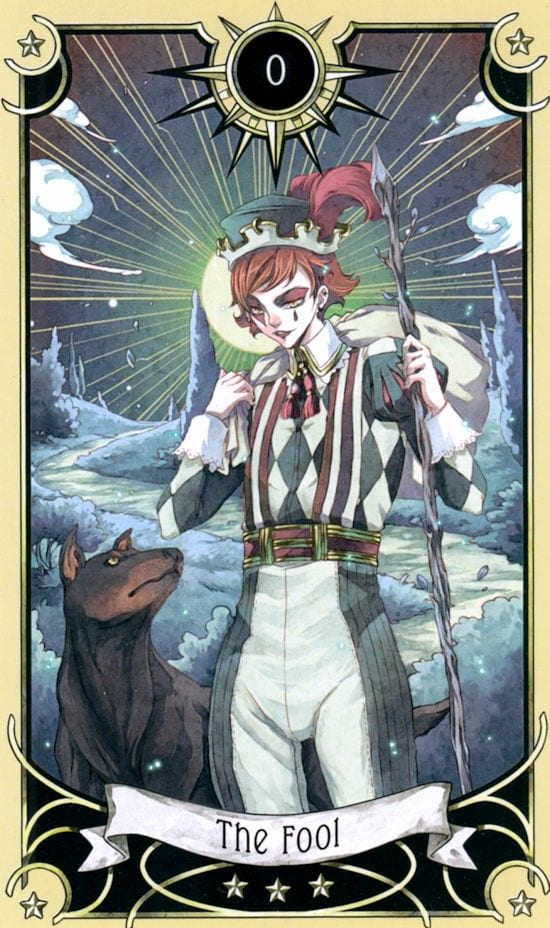
The start of the Fool’s Journey — and the beginning of the entire manga story. A young soul ready to incarnate and set off on an adventure with a faithful companion-intuition at their side. The guidebook describes this moment like the opening episode of an anime series: the hero knows nothing about the world yet but carries everything they need inside. Pure potential.
The Magician & The High Priestess
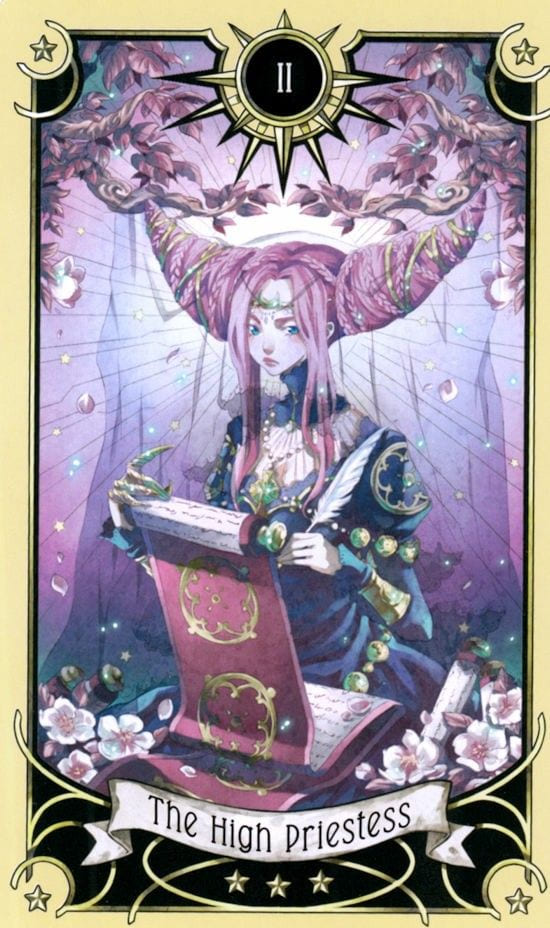
Two sides of one coin. The Magician — extroverted power, experiment, will, and action. The Priestess — introverted wisdom, intuition, and hidden knowledge. In manga style, this contrast works especially well: the Magician is a shōnen hero with raised hand, the Priestess is a mysterious shōjo heroine with closed eyes. Together they show that true power lies in balance.
Strength
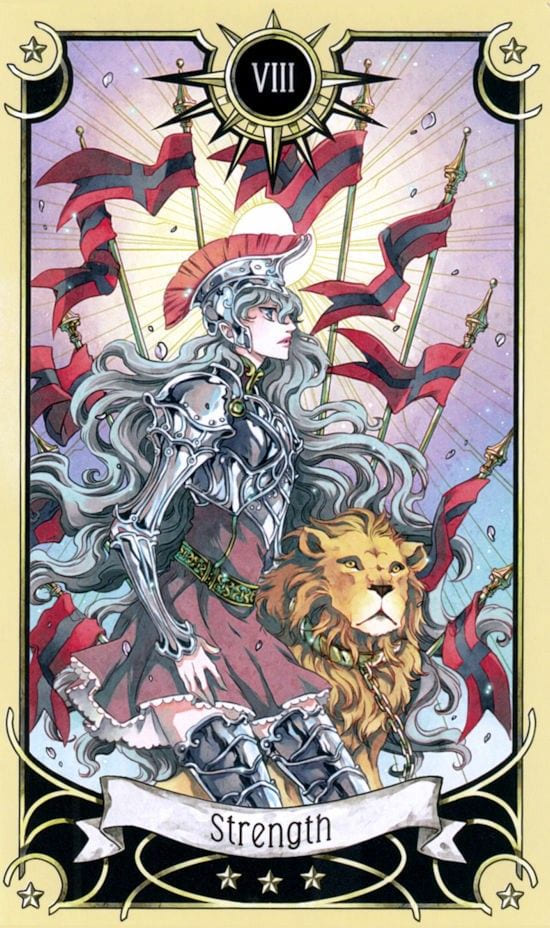
The moment the Fool gathers their will and prepares to face inner demons. In the context of the Fool’s Journey, this is the turning point: the hero stops drifting and starts acting. The card feels like that classic anime scene where the character finally accepts their power.
The Star
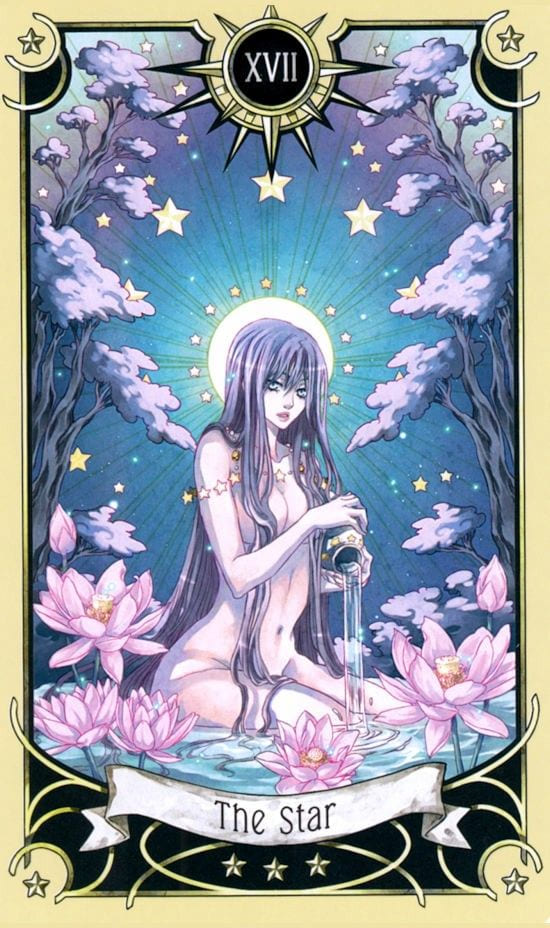
Rest and healing after trials. In manga style, this card is like the quiet episode after an epic battle: the heroine finally breathes, wounds close, spirit renews. A gentle, peaceful image that reminds you: after every fight, you need rest.
Queen of Cups
The embodiment of emotional connection and intuition. In Rann’s manga aesthetic — a classic shōjo heroine: soft, sensitive, surrounded by water and moonlight. She creates a space of closeness and trust. The card for those moments when you need to feel, not think.
How to Work with This Deck
- Walk the Fool’s Journey — lay out all 22 Major Arcana in order and read the narrative in the guidebook. It’s the best way to understand the deck and memorize meanings through story.
- Card of the day — the ideal format. Pull a card each morning, read the entry, return in the evening and compare with what actually happened. The guidebook gives enough context for each card.
- Use the sample readings — the book includes real spread breakdowns step by step. If you’re learning to read tarot, you won’t find a better training tool.
- Social readings — the deck works brilliantly at parties and casual gatherings. The manga style dissolves fear for people who worry about “dark predictions.”
Who Is This Deck For
Great fit:
- Absolute beginners — especially with the guidebook, it’s a complete learning kit
- Manga and anime fans who want to try tarot
- Younger readers intimidated by classical tarot imagery
- Anyone who needs a bright, cheerful deck for daily readings
Probably not:
- Experienced readers seeking conceptually new interpretations — this is a faithful RWS clone
- Fans of dark, gothic aesthetics — everything here is bright and light
- If diversity in representation matters to you — characters are visually homogeneous
- The cardstock is thin for intensive daily use
Deck Pairings
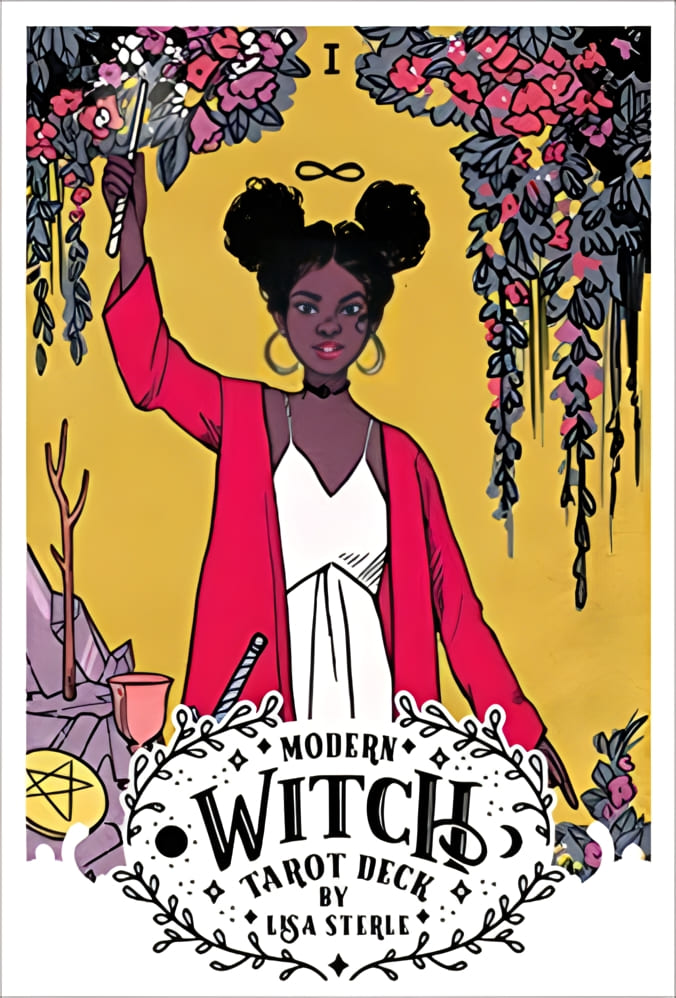
- Modern Witch Tarot — similar approach: classic RWS in a contemporary wrapper. Manga for anime fans, Modern Witch for pop-culture enthusiasts. Together they prove tarot can look like anything.
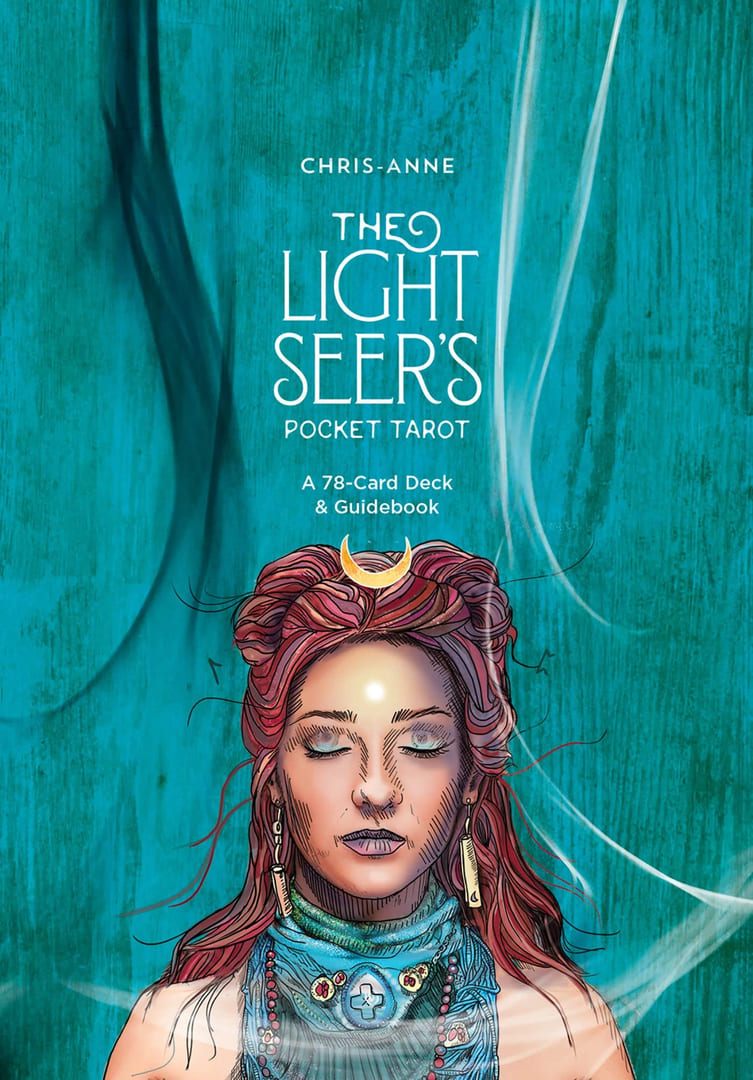
- Light Seer’s Tarot — another excellent beginner deck, but with different energy: boho-spirituality instead of fantasy-action. Good to alternate depending on mood.
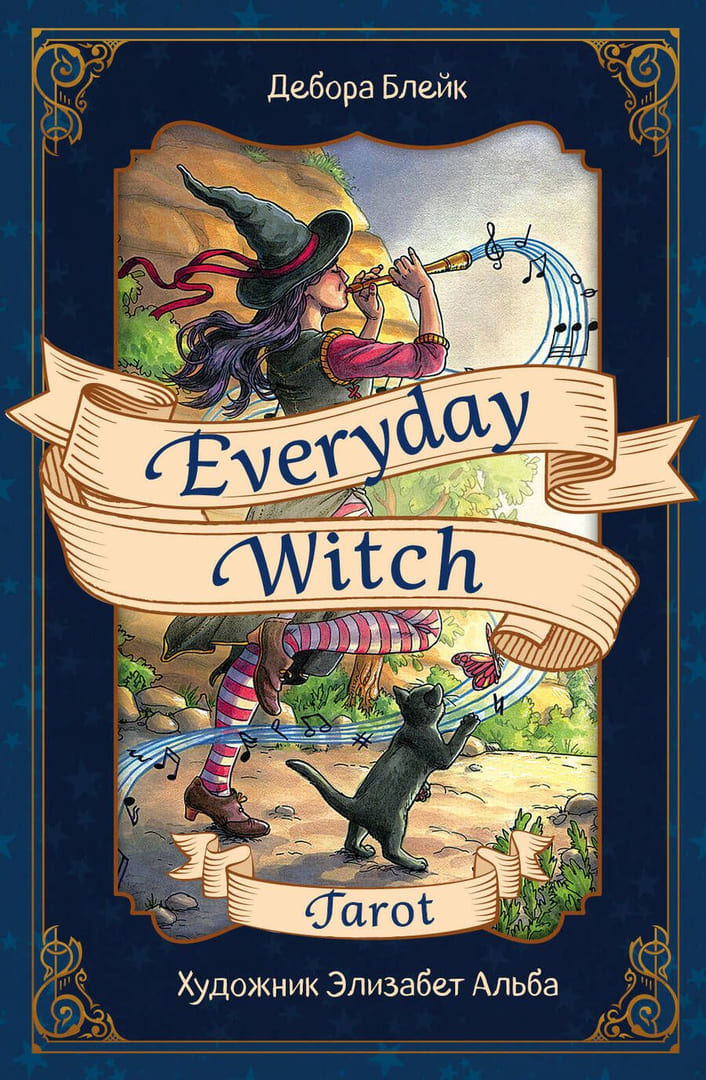
- Everyday Witch Tarot — a third wonderful starter deck. If Manga is the adventure, and Light Seer’s is the meditation, then Everyday Witch is a cozy evening with a friend.
Try this deck in our app — start your anime adventure with tarot!
Frequently Asked Questions
Is the Mystical Manga Tarot good for beginners?
Yes, it's one of the best starter decks available. Barbara Moore's 216-page full-color guidebook includes sample readings with step-by-step walkthroughs, a glossary of tarot terms, and a Fool's Journey narrative — a complete learning package.
How many cards are in the Mystical Manga Tarot?
78 cards: 22 Major Arcana and 56 Minor Arcana in four suits. The structure follows the Rider-Waite-Smith system exactly, making it easy to cross-reference with other RWS-based resources.
Who created the Mystical Manga Tarot?
Rann, a French illustrator and colorist known in the comics world and at Japan Expo, created the artwork. Barbara Moore, a tarot practitioner with over 35 years of experience, wrote the guidebook. Published by Llewellyn in 2017.
How does it compare to traditional tarot decks?
It follows standard RWS compositions faithfully, translated into dynamic manga-style art with vibrant colors and expressive characters. Experienced readers will recognize every scene; newcomers will find the anime aesthetic less intimidating than classical imagery.
Does the Mystical Manga Tarot have any drawbacks?
The cardstock is thinner than average and slick, making shuffling tricky. There's also limited diversity in the character designs, which is consistent with the manga genre but noted as a limitation by reviewers.