Review: Horror Tarot — Classic Horror in Cards
This deck is for those who love horror not for the fear, but for the aesthetics. The Horror Tarot takes iconic characters from horror — literature, film, mythology — and transforms them into tarot cards. It sounds like a gimmick, but it works as a serious tool.
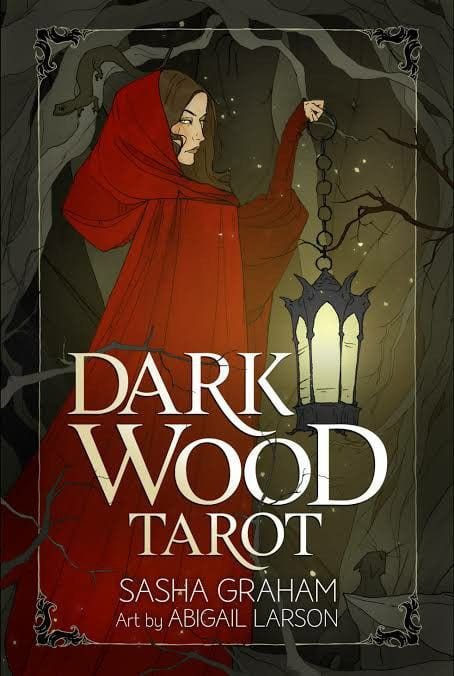
Abigail Larson draws in a way that makes the frightening beautiful. If you know her work from the Dark Wood Tarot — imagine that same elegant gothic style, but now with Dracula, witches, and giant spiders.
First impressions
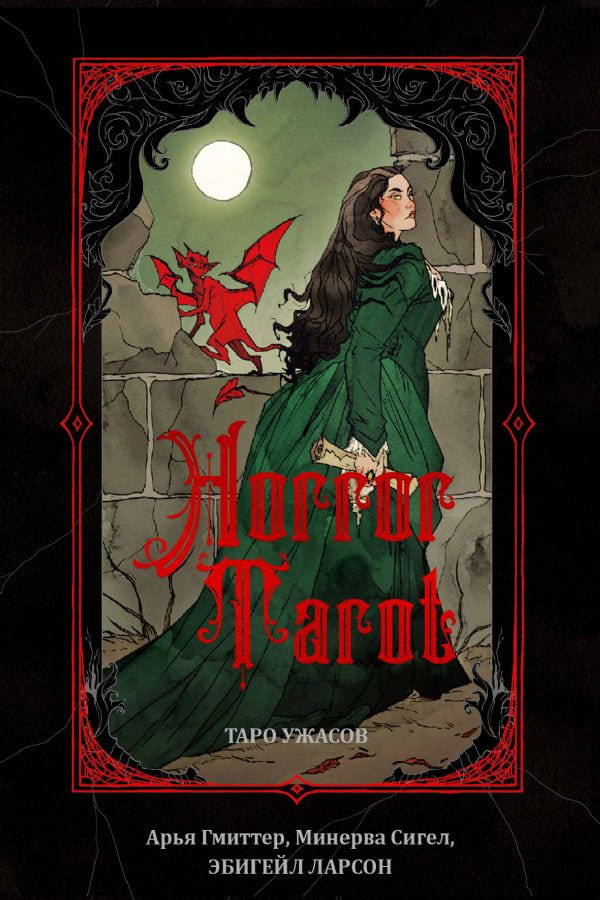
The deck comes as a set with a guidebook. Cards are standard size with red foil on titles and numbers. The frames are decorative, dark red with black — very cinematic. The overall palette builds on red and black, creating the feel of a velvet curtain in an old theater.
The guidebook is substantial, with color illustrations, meaning descriptions, and explanations of which horror character appears on each card and why. This is an essential part of the deck — without it, the connection between the genre imagery and tarot meaning isn’t always obvious.
About the deck
Horror Tarot features illustrations by Abigail Larson, a Hugo Award-winning artist specializing in gothic fantasy illustration. Text by Aria Gmitter and Minerva Siegel. Published by Insight Editions. 78 cards, RWS structure.
Larson uses a unique combination of traditional and digital techniques. Her style is elegant gothic with Art Nouveau influence: elongated proportions, flowing lines, rich textures. If you’ve seen her work on the Dark Wood Tarot — same artist, different theme.
Visual style
The deck’s palette is red-and-black with touches of gold and white. Every card feels like a poster for a classic horror film. Larson’s style isn’t crude shock — it’s refined dread: beautiful faces with unsettling expressions, elegant silhouettes in dangerous poses, creatures that frighten through their beauty.
Red ornamental frames unify all cards into a single visual space. Red foil on titles adds tactile pleasure — the cards feel good in hand.
Core themes
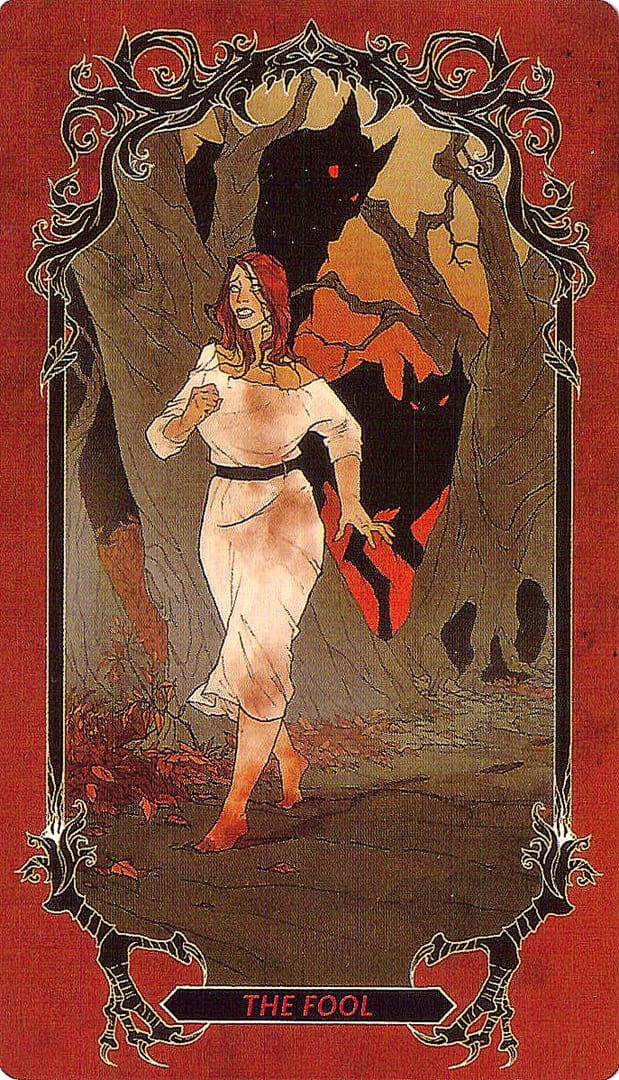
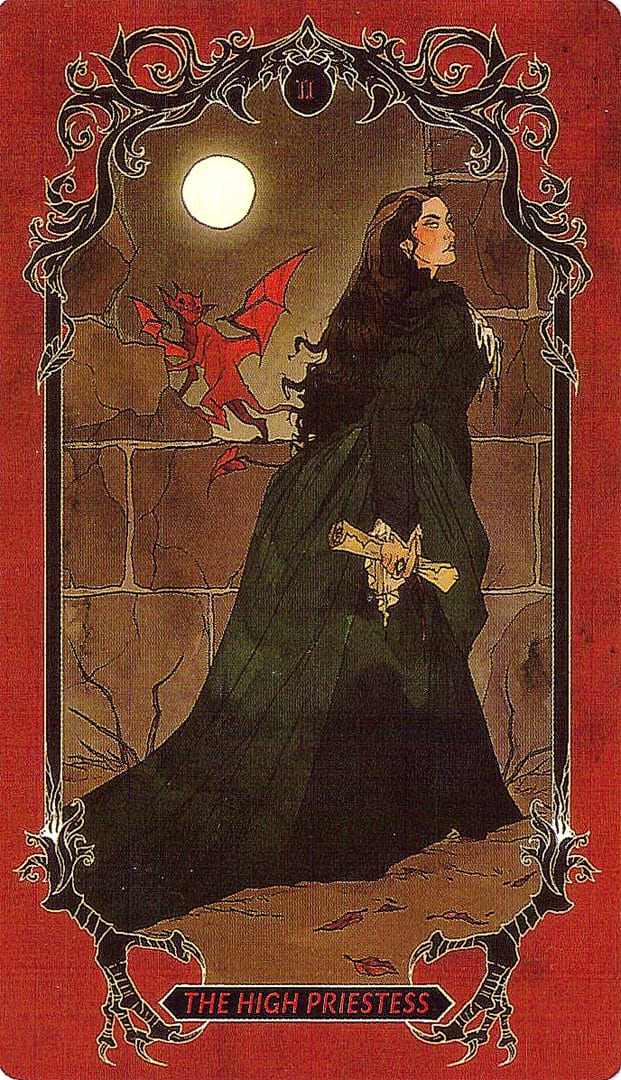
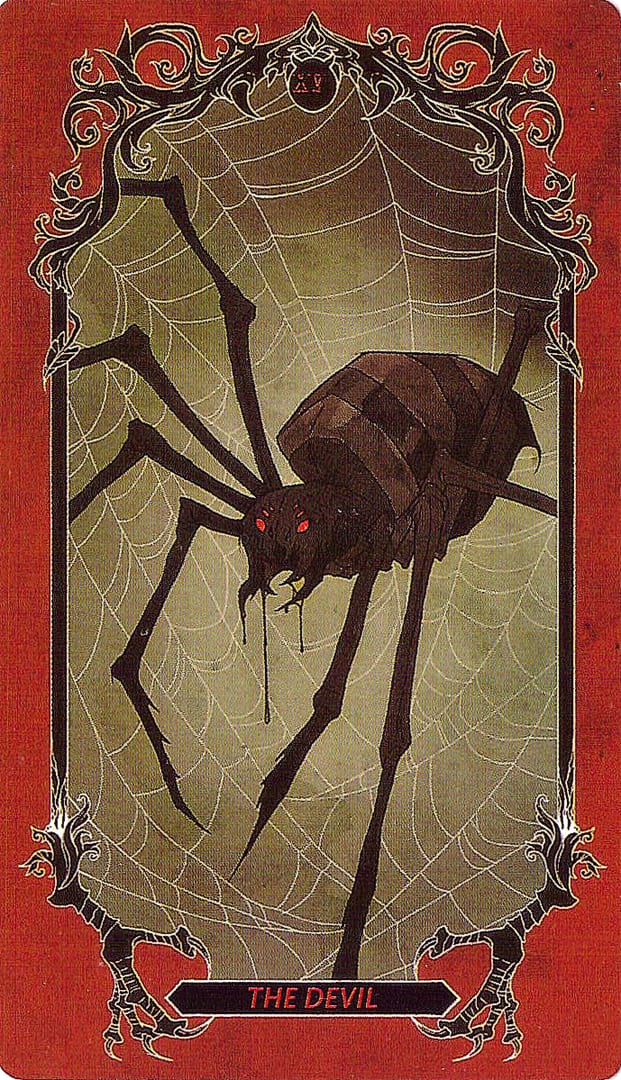
Horror as archetype. The deck doesn’t just paste monsters onto cards — it finds genuine parallels between tarot archetypes and horror archetypes. The Fool is a victim fleeing the unknown. The High Priestess is a keeper of dark knowledge. The Devil is a spider in its web. These parallels work.
Beauty in darkness. Larson transforms the horrifying into an aesthetic experience. Her demons are beautiful, her victims elegant, her monsters graceful. This isn’t horror that wants to scare — it’s horror that wants to enchant.
Shadow as resource. For those who work with shadow aspects of personality, the deck becomes a powerful tool. Fears, suppressed desires, dark sides — here they get visual form and become material for growth.
Favorite cards
The Fool — a young woman in a white nightgown running through crimson darkness. Behind her — a dark horned creature. A classic horror movie frame: the heroine fleeing the unknown. And that’s exactly what the Fool does — steps into the unknown without knowing what lies ahead.
The High Priestess — a woman in a long black robe stands by a stone wall under a full moon. A small red dragon perches on her hand, a golden amulet at her waist. A keeper of secret knowledge — and simultaneously a classic gothic witch. An image that works on both levels.
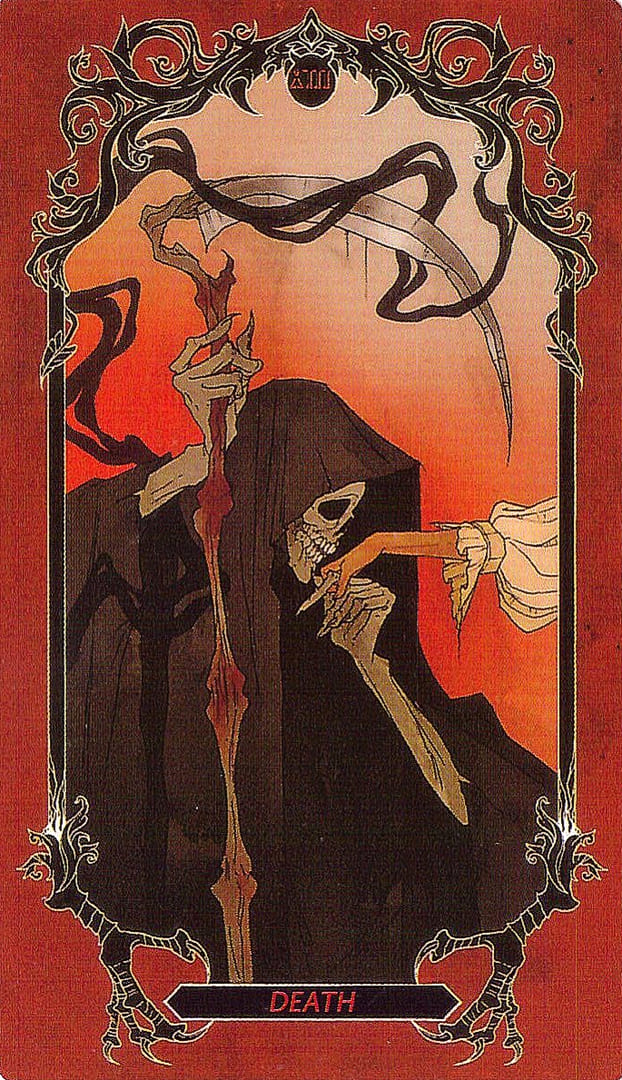
Death — an elongated Reaper figure in dark robes with a staff against a red background. A sinister grin, spectral forms swirling around. Stylistically like an illustration from an old book of gothic tales. Elegant but genuinely unsettling.
The Devil — a giant dark spider in its web. No horned figures — just an enormous arachnid against a yellowish background. This is the Devil as trap: you don’t see the threads until you’re stuck. Simple and powerful.
How to work with this deck
Shadow work — the deck’s greatest strength. Horror imagery helps surface what frightens, what’s suppressed, what’s hidden. Spreads about fears, blocks, repressed emotions — right at home here.
Halloween and themed readings — the perfect choice for October sessions, nighttime spreads, dark season work.
Card of the day — works, but keep in mind: a morning card featuring a demon over breakfast is a particular experience. Not for every mood.
Professional readings — with caution. The deck is provocative, and clients need to be ready for intense imagery. But for the target audience — horror fans — it’s a direct hit.
Who is this deck for
Horror genre fans. If you love horror and tarot — this deck was made for you. Two worlds collide.
Shadow workers. The deck doesn’t soften — it shows darkness directly. For shadow work, that’s a valuable tool.
Abigail Larson fans. If you love the Dark Wood Tarot — Horror Tarot offers another facet of her style.
Who might look elsewhere: those seeking a gentle, comforting deck. No comfort here — just beauty and truth in dark form.
Deck pairings
Dark Wood Tarot — same artist, different theme. Dark Wood is a fairy-tale forest with dangers. Horror Tarot is classic horror. Together they show the full range of Larson’s work.
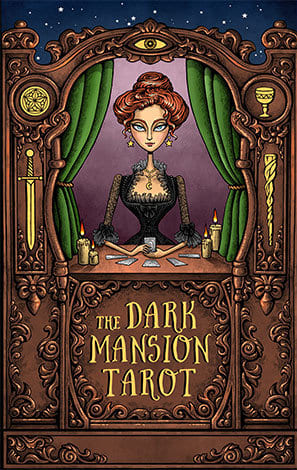
Dark Mansion Tarot — if Horror Tarot is serious horror, Dark Mansion is playful gothic. Like a slasher film and a Burton cartoon. A contrast that expands readings.
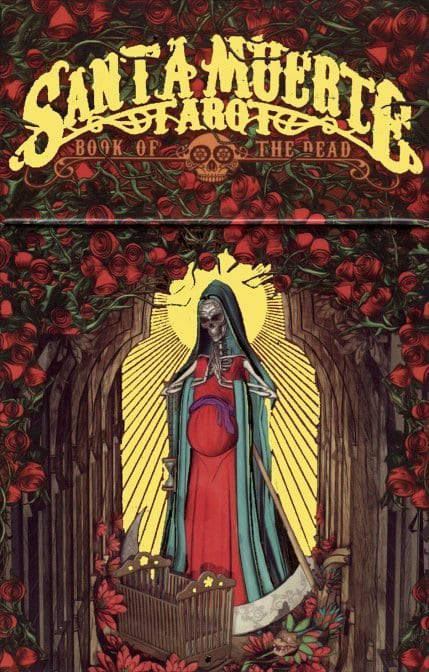
Santa Muerte Tarot — another deck unafraid of death and darkness. Together they create powerful space for transformation work.
Try this deck in our Telegram bot — it’s available for readings right now.
Frequently Asked Questions
Is the Horror Tarot good for beginners?
Somewhat — the RWS structure is preserved, but imagery is heavily reimagined through horror. Beginners may find it difficult to connect movie monsters to traditional meanings. The included guidebook helps bridge the gap.
How many cards are in the Horror Tarot?
78 cards: 22 Major Arcana and 56 Minor Arcana. Standard tarot structure. Cards are titled with red foil lettering.
Who created the Horror Tarot?
Illustrations by Hugo Award-winning artist Abigail Larson. Text by Aria Gmitter and Minerva Siegel. Published by Insight Editions. Larson also illustrated the Dark Wood Tarot.
What horror characters appear in the deck?
Characters from classic horror literature and film: vampires, werewolves, ghosts, demons, giant spiders. Each card reimagines a familiar tarot archetype through an iconic horror figure.