Review: Dark Wood Tarot — Fairy Tale Gothic
First impressions
When I opened the Dark Wood Tarot box, it felt like finding an ancient storybook in an attic — the kind where the wolf really eats grandmother, and the fairy might be more dangerous than the dragon. Abigail Larson draws a world where beauty and horror intertwine so tightly that one can’t exist without the other.
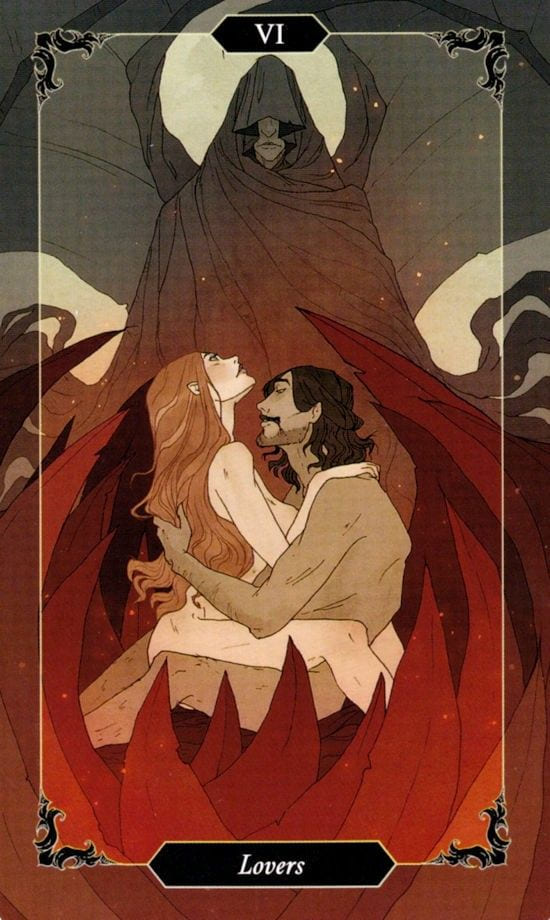
The first card that caught my eye — the Lovers. Two figures in a passionate embrace, wrapped in crimson flame or wings, while a dark hooded figure looms above — Death, or perhaps fate itself. Love here isn’t pastoral bliss — it’s a force you pay for. And that sets the tone for the entire deck.
About the deck
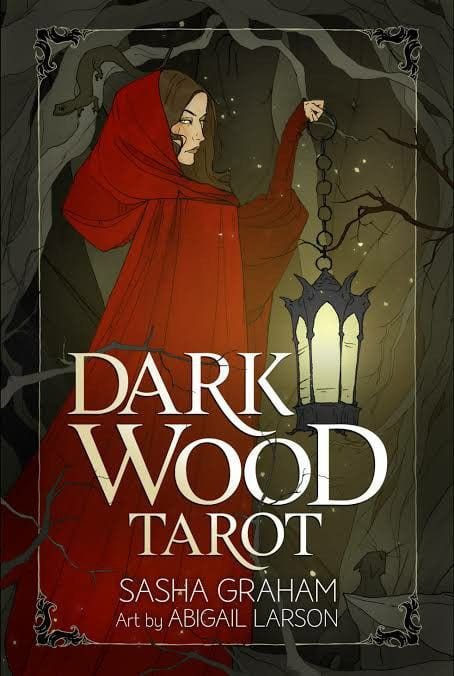
Text author: Sasha Graham, a well-known tarot practitioner and author of several tarot books. Artist: Abigail Larson, whose style is compared to Arthur Rackham and Edmund Dulac — illustrators from the “golden age” of late 19th-century book art. Publisher: Llewellyn, 2020.
78 cards in the standard structure. The deck’s world is a gloomy forest inhabited by enchanting beauties, vampires, fairies, demons, and folkloric creatures. The box and guidebook are high quality — sturdy, beautiful, with gold embossing. The cardstock of the cards themselves, unfortunately, is thinner than you’d expect from such premium packaging — that’s the only physical complaint.
The guidebook is detailed, with archetypal descriptions, reflection questions, and shadow aspects for each card. Sasha Graham writes concisely and with dark humor.
Visual style
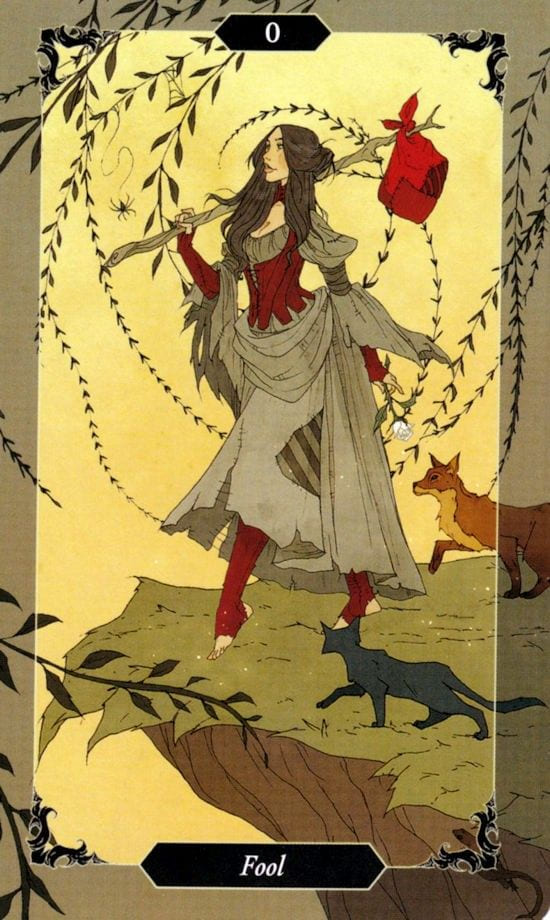
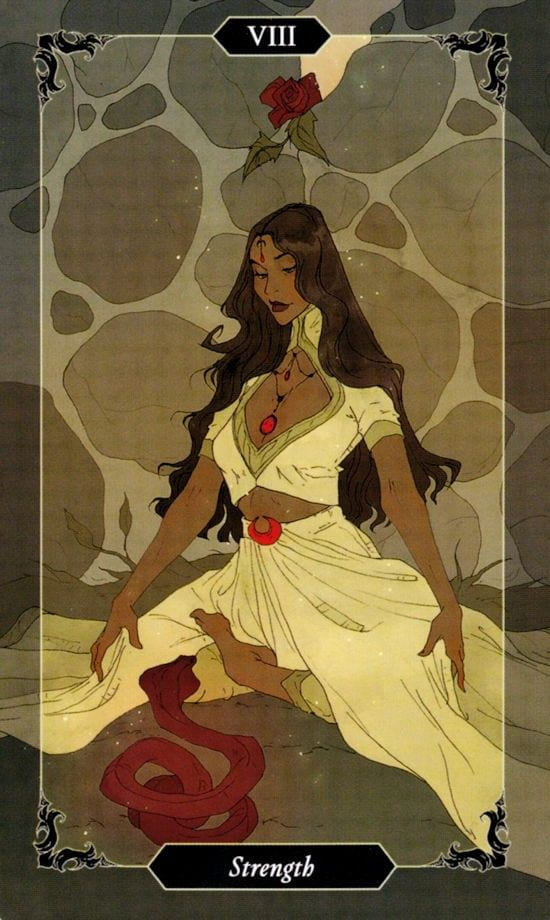
Abigail Larson’s style is folkloric gothic: fine lines, muted palette (olive, burgundy, gold, grey-green), elegant figures with elongated proportions. Each card looks like a page from an illustrated Victorian fairy tale book.
The forest is the main character: crooked trees, craggy cliffs, twisting rivers. The characters aren’t just people — they’re archetypes from dark tales: witches, werewolves, enchanted princesses. The frames are decorative, Art Nouveau style with gothic elements.
Core themes
Dark Wood Tarot is shadow work through fairy-tale archetypes. The dark forest isn’t just scenery — it’s a metaphor: to find yourself, you must enter the woods where it’s frightening.
Central motifs:
- The dark forest as path to self — every spread is a journey inward
- Fairy-tale archetypes — characters from folklore and gothic tales
- Beauty in darkness — horror and enchantment are inseparable here
- Dark humor — Sasha Graham’s guidebook doesn’t lack irony and black comedy
Favorite cards
The Lovers (VI)
Two figures embrace, wrapped in crimson flame or wings. Above them, a dark hooded figure — an angel, or Death itself. This card says: love isn’t safety. It’s a force that binds, and there’s always a price. One of the most emotionally powerful cards in any deck.
Death (XIII)
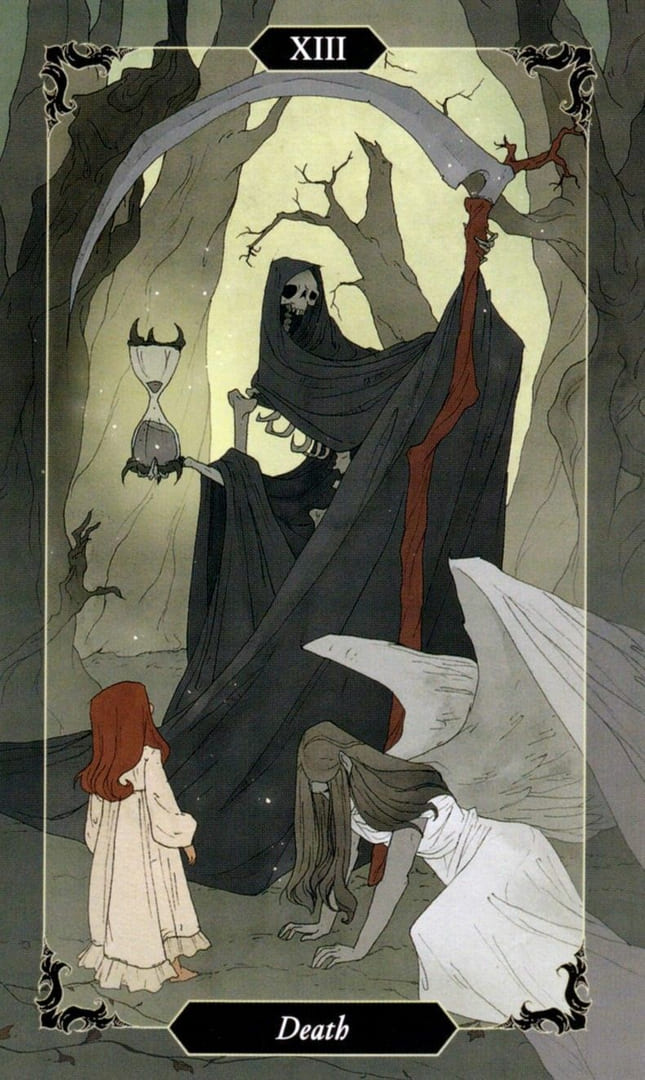
A classic Grim Reaper in black robes with a scythe stands in a forest of twisted trees. An hourglass with bat wings. Before it — a small red-haired girl in a white dress, looking Death straight in the face. Another figure bows nearby. Fairy-tale horror — a child meeting a monster in the woods. But the child isn’t afraid.
The Devil (XV)
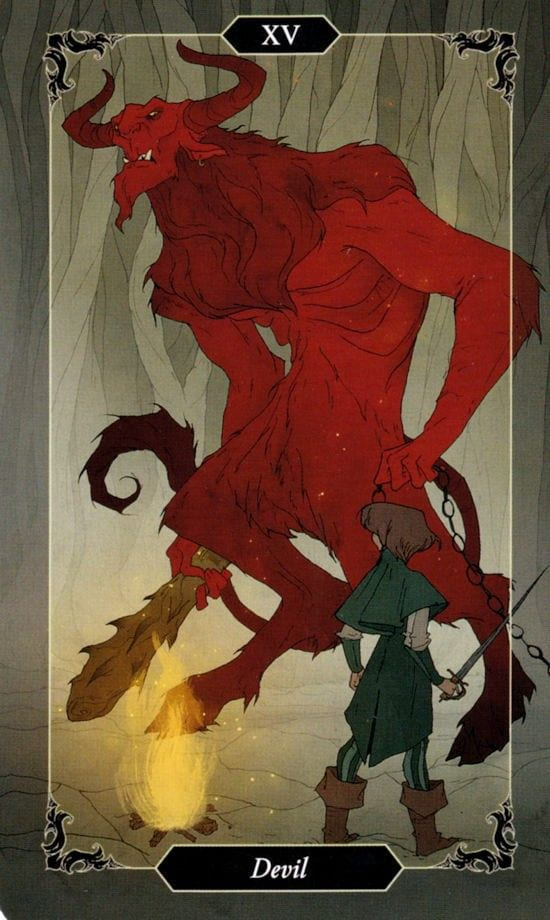
An enormous red demon towers over a tiny human figure holding a torch in the dark forest. The scale contrast is striking — the person is minuscule next to the beast. But notice: the person isn’t running. They’re standing and looking. That’s the essence of Graham’s shadow work — you meet your shadow face to face, and it turns out not as invincible as it seemed.
The High Priestess (II)
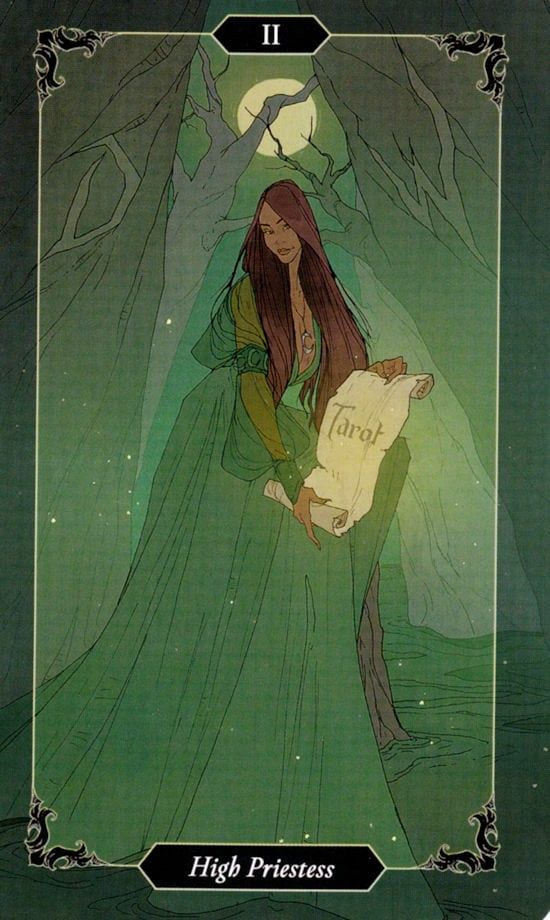
A woman in green robes stands in a dark forest, holding a glowing scroll inscribed “Tarot.” The moon peeks through the branches above. She’s the keeper of the forest’s knowledge, one who knows secrets but isn’t in a hurry to share. Mystery and silence in every brushstroke.
The Star (XVII)
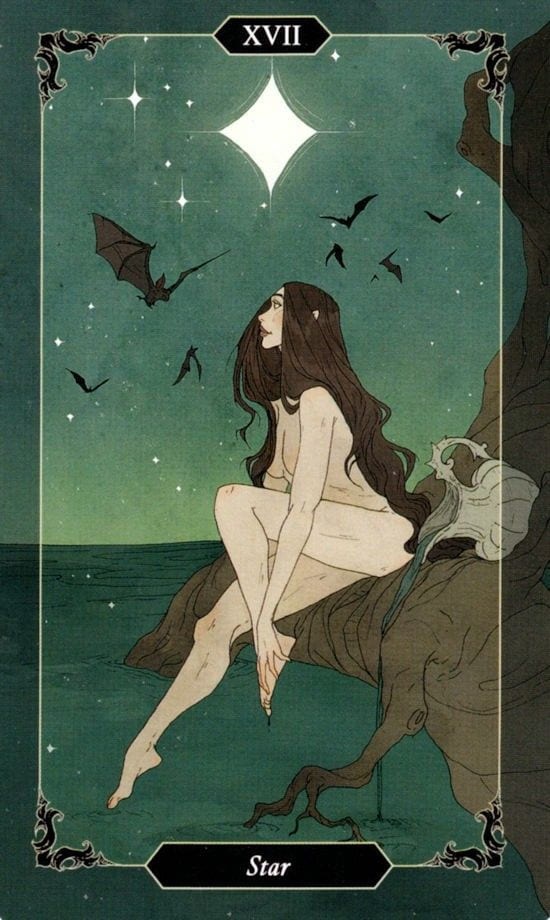
A naked woman sits on a rock by the water, head tilted back toward a brilliant diamond-shaped star. Bats are not a threat — they’re part of this world. Teal night sky. After the Tower’s destruction — healing, vulnerability, and hope. One of the deck’s most tender cards.
The Moon (XVIII)
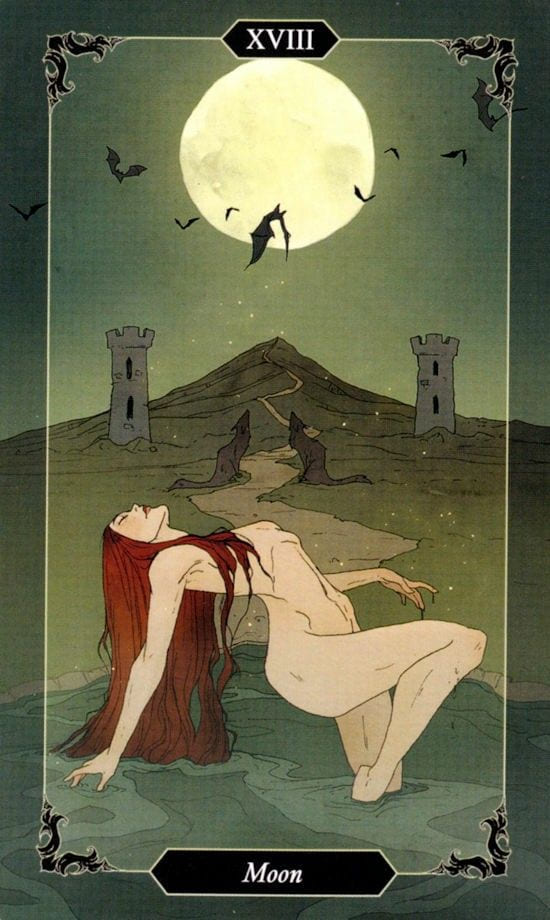
A woman reclines by the water, head thrown back. Behind her — a giant full moon above a mountain with twin towers. A witch’s silhouette flies across the moon. Wolves walk the path. The classic Moon scene, retold in the language of gothic fairy tales — with witches and night creatures.
How to work with this deck
- Shadow spread — three cards: what hides in the forest, what you don’t want to see, what brings light. Perfect deck for this
- Archetypal meditation — choose a card and imagine yourself inside it. What do you see? Hear? Feel? Larson’s forest draws you in
- Before bed — Dark Wood is ideal for evening spreads when the subconscious is closer to the surface
- Fairy tale journal — record each daily card as a story episode. After a month, you’ll have your own tale
Who is this deck for
If you love gothic aesthetics, dark fairy tales, Neil Gaiman, and Tim Burton — this deck was made for you. Larson’s style is so beautiful you’ll want to frame the cards as art.
For shadow work, Dark Wood offers a gentler entry than Deviant Moon: fear is wrapped in fairy-tale form here, making it less traumatic but no less deep.
An honest downside: the cardstock is thinner than you’d expect from the premium packaging. The box and guidebook are gorgeous, but the cards themselves are average in density.
Deck pairings
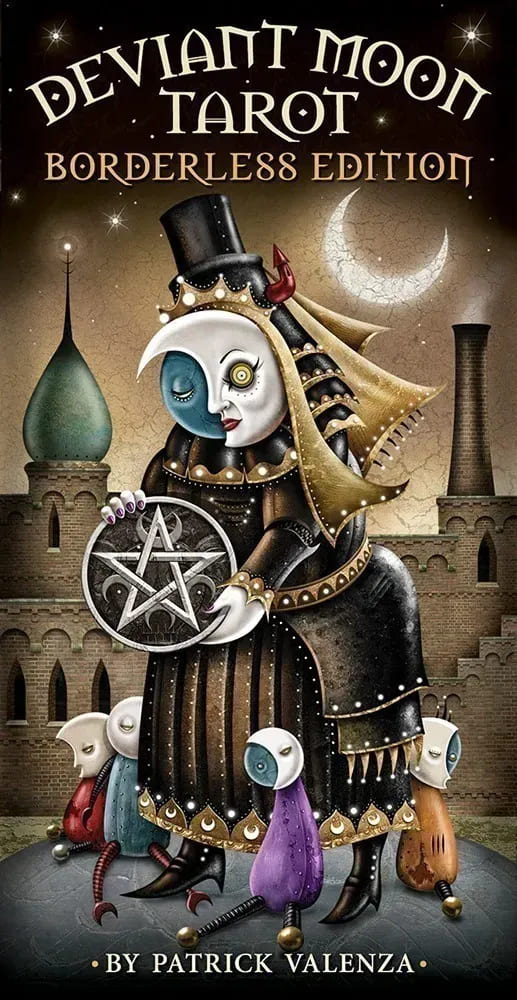
- Deviant Moon Tarot — if Dark Wood is the fairy-tale side of shadow tarot, Deviant Moon is the surrealist side. Together — the full spectrum
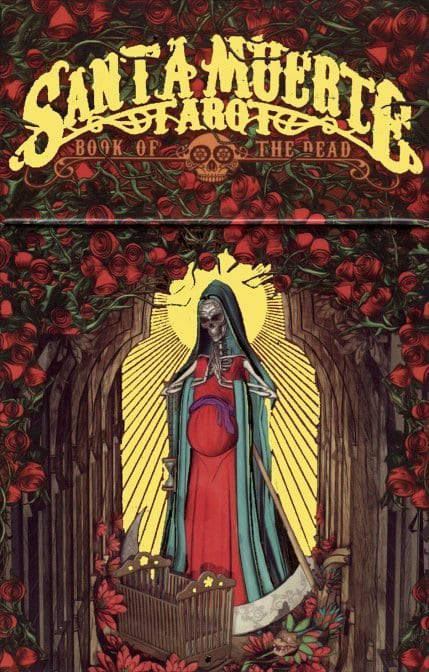
- Santa Muerte Tarot — Listrani’s Mexican gothic complements Larson’s European gothic
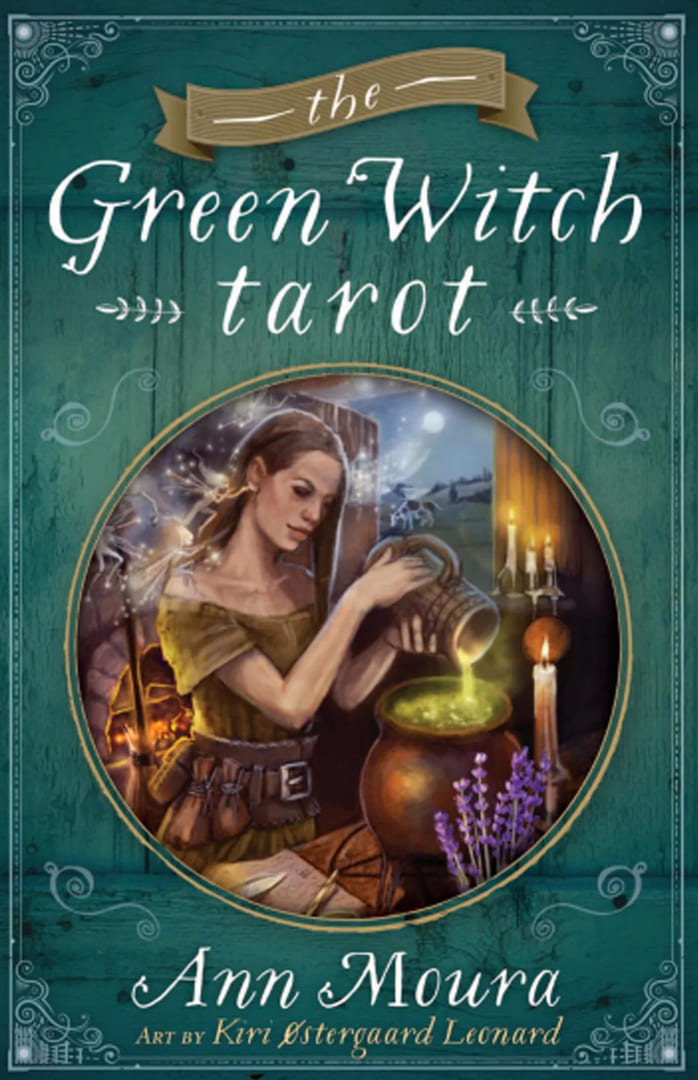
- The Green Witch Tarot — the bright counterweight. If Dark Wood is the night forest, Green Witch is the sunlit clearing. Together they create the complete picture of forest magic
Try the Dark Wood Tarot in our app — Elvi Tarot 🌲
Frequently Asked Questions
Is the Dark Wood Tarot good for beginners?
Yes, if gothic aesthetics appeal to you. The imagery is fairy-tale-like and reads intuitively, and the detailed guidebook helps with every card.
How many cards are in the Dark Wood Tarot?
78 cards — 22 Major Arcana and 56 Minor. Standard Rider-Waite structure with an author-driven folkloric interpretation.
What are the main themes of this deck?
Shadow work through fairy-tale archetypes, the dark forest as a metaphor for self-discovery, gothic tales, mythology, and folklore. Each card is a page from a dark storybook.
Who created this deck?
Text by Sasha Graham, author of several tarot books. Art by Abigail Larson, an illustrator in the style of Arthur Rackham and Edmund Dulac. Published by Llewellyn in 2020.