Review: Runic Tarot — Norse Mythology in Cards
Some decks offer aesthetics. Others offer an entire world. The Runic Tarot is the second kind. Here, tarot meets Norse mythology, runes complement the arcana, and every card looks like a frame from a cinematic epic about the gods of the North.
If the Northern tradition speaks to you, this deck deserves your attention.
First impressions
You open the kit and immediately understand: this isn’t just a deck, it’s a world. The cards are rendered in hyper-realistic digital style, approaching concept art for film or video games. Warriors in furs, the World Tree Yggdrasil, dragons, runes carved in stone. Every card is large-scale, detailed, atmospheric.
The cardstock is solid, size is standard. Jaymi Elford’s guidebook is a separate strength: it connects each tarot card with a rune and mythological narrative, offering triple-layer readings.
About the deck
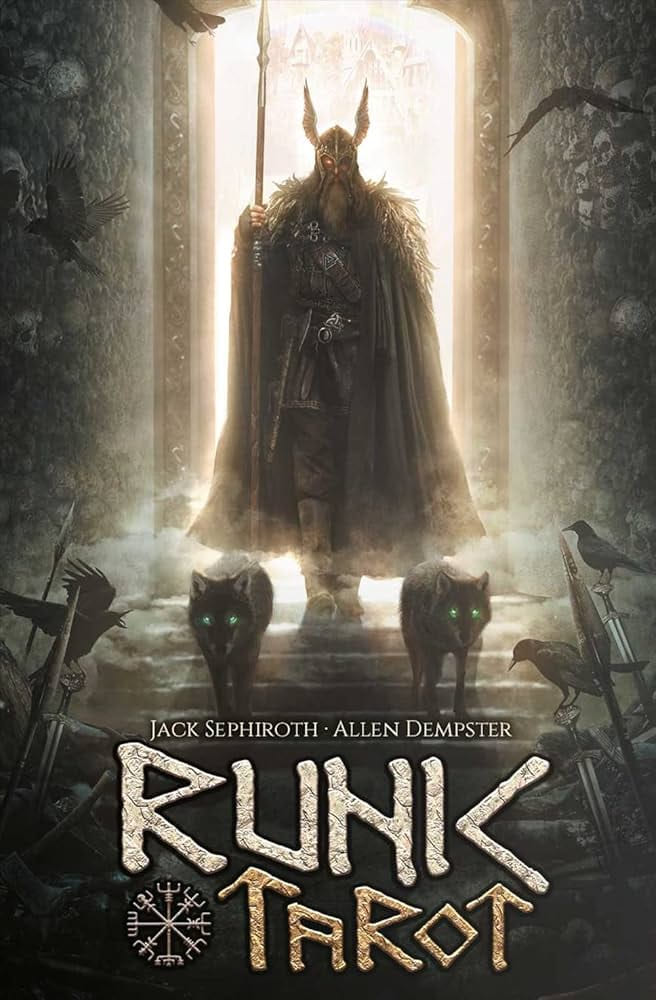
Runic Tarot is a Lo Scarabeo deck created by Jack Sephiroth (concept) and Zhang Chao (illustrations). 78 cards, RWS structure. The guidebook was written by Jaymi Elford. Available as the Runic Tarot Kit with companion book.
The deck’s concept unites three systems: tarot, runes, and Norse mythology. Each card contains not only the familiar arcana scene but also runic symbolism and references to the myths of the Edda.
Visual style
The style is cinematic digital realism. Zhang Chao’s illustrations approach concept art: high detail, dramatic lighting, volumetric figures. These aren’t drawn cards — they’re full digital paintings.
The palette builds on muted tones: silver, steel, ochre, dark green. Lots of fog, stone, ice, wood. The atmosphere is harsh but majestic — like the Norse myths themselves. Runic symbols are organically woven into each card’s design.
Core themes
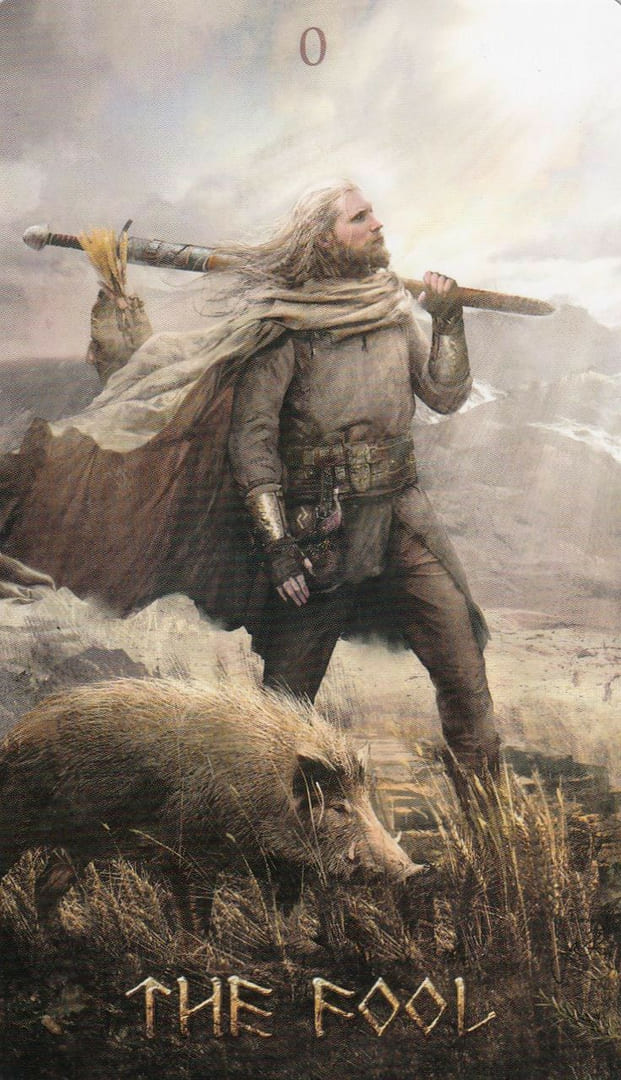
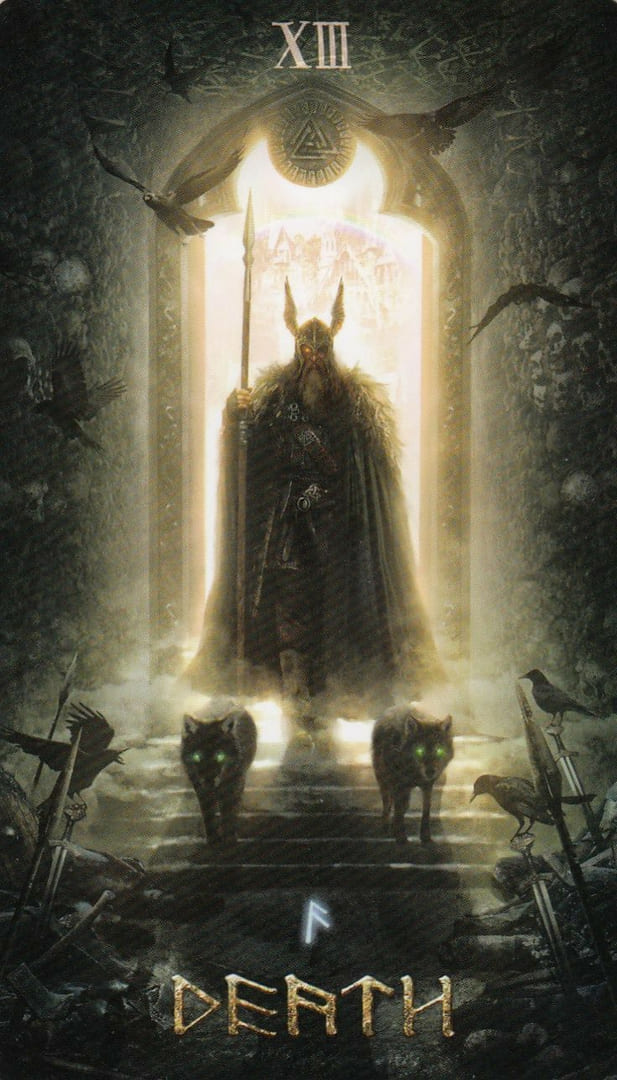
Mythology as language. The deck isn’t decorated with mythology — it speaks it. The Fool is a traveler with a battle boar, setting out into the unknown. Death is Odin in a horned helmet, standing in the glowing gates of Valhalla. Every card is a mythological narrative.
Runes as a second layer. The runic symbol on each card isn’t decorative — it adds meaning. For those who work with runes, this is a dual system in a single deck.
Masculine energy. The deck carries strong masculine energy — warriors, gods, smiths, seafarers. This doesn’t exclude feminine images (valkyries, Freyja), but the overall tone is Northern masculinity.
Favorite cards
The Fool — a man with long white hair in leather armor and furs, carrying axes and a staff over his shoulders. A wild boar at his feet. Mountain landscape, dust of the road. This isn’t the carefree youth of classic tarot — he’s a seasoned traveler who chooses the unknown. Strength and freedom in one image.
Death — one of the most impressive cards. A figure in a horned helmet and fur cloak stands atop a stone staircase in a glowing doorway. Wolves with glowing eyes at his feet. Ravens circling. This is Odin, Lord of Valhalla, greeting the fallen. Death here isn’t an end — it’s a gateway. Cinematic and powerful.
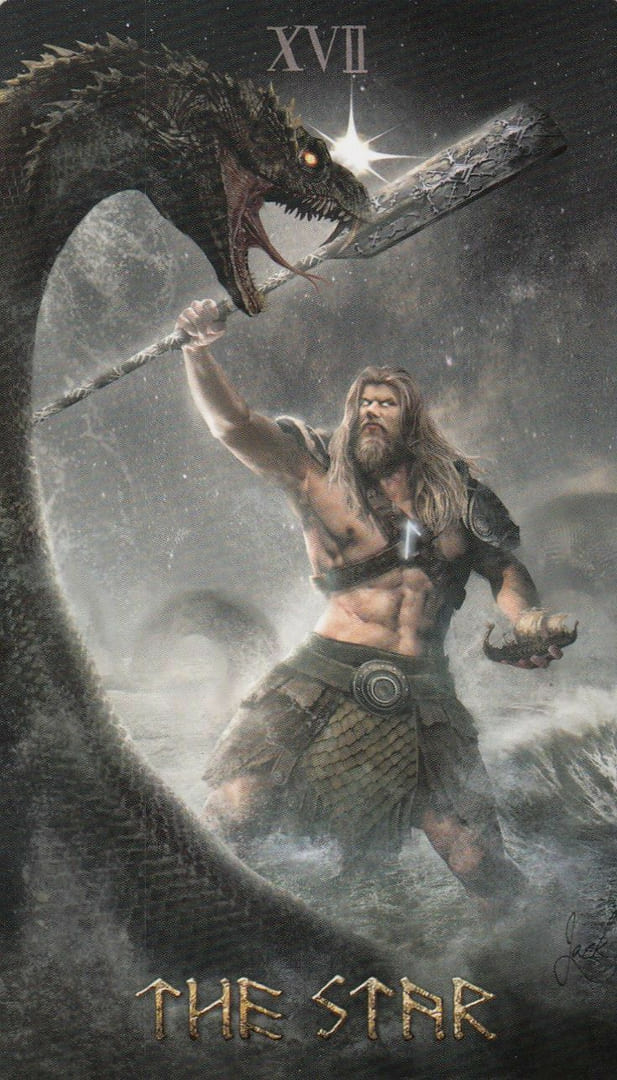
The Star — instead of the familiar nude woman by the water, here’s a mighty warrior battling a sea serpent. He raises his sword toward a star shining in the sky. This isn’t meditative comfort — it’s hope through struggle. A radical reimagining of The Star, and it’s surprisingly convincing.
How to work with this deck
Runes and tarot simultaneously — the deck’s unique offering. You can read it purely as tarot, purely as a runic message, or combine both layers.
Questions about strength, resolve, and trials — the deck excels at questions requiring courage and clarity. Not for gentle comfort — for honest answers.
Norse archetype meditation — if the Northern pantheon speaks to you, the deck becomes a powerful meditative tool.
Card of the day — works excellently. The scale of the imagery creates the feeling that every morning you’re opening a chapter from a myth.
Who is this deck for
Rune practitioners. The deck unites two systems — that’s its main advantage.
Norse mythology enthusiasts. If the Edda, Odin, and Yggdrasil are your language — this deck speaks it.
Those seeking a “masculine” deck. If most decks feel too soft — the Runic Tarot offers austere Northern energy.
Who might look elsewhere: those who prefer gentle, feminine aesthetics. The deck is harsh, masculine, and that’s a deliberate choice. Also, the digital style may not appeal to those who value hand-drawn illustration.
Deck pairings
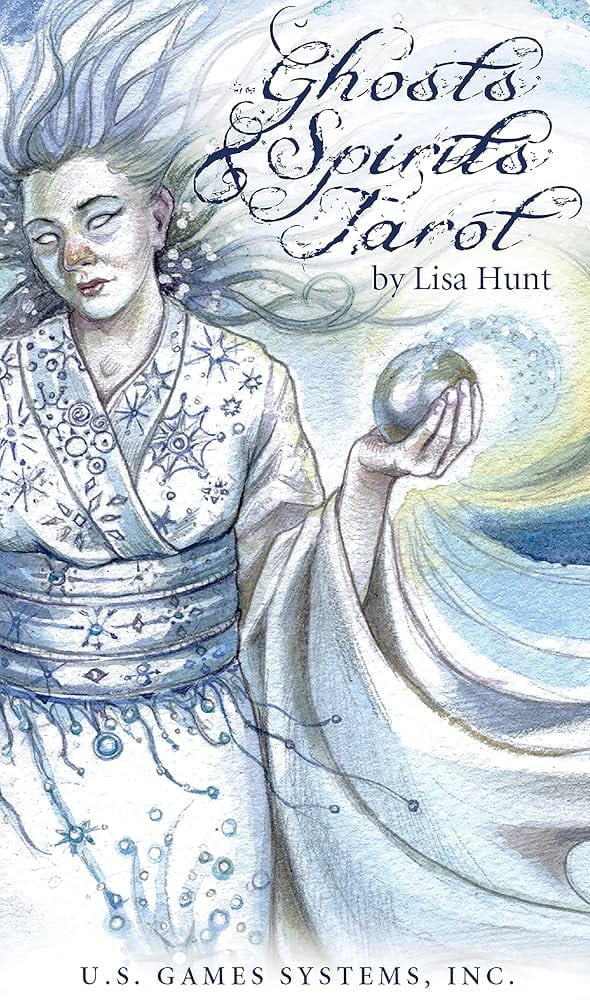
Ghosts & Spirits Tarot — for mythological contrast. Ghosts & Spirits works with spirits across cultures; Runic Tarot focuses on the specific Northern tradition.
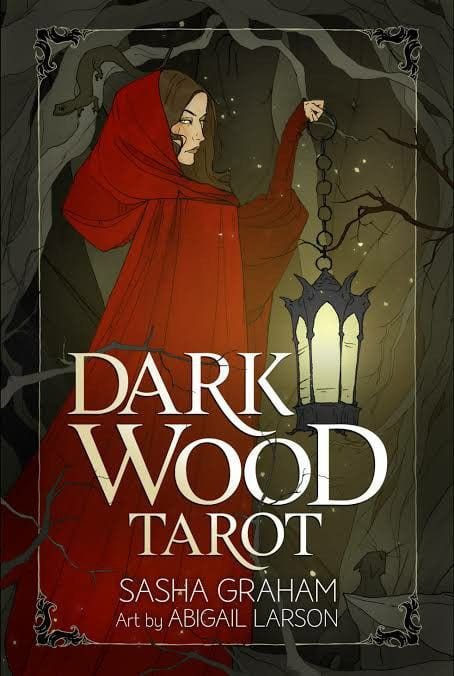
Dark Wood Tarot — a different approach to dark forest mythology. Dark Wood is fairytale; Runic is epic. Together they cover the full spectrum.
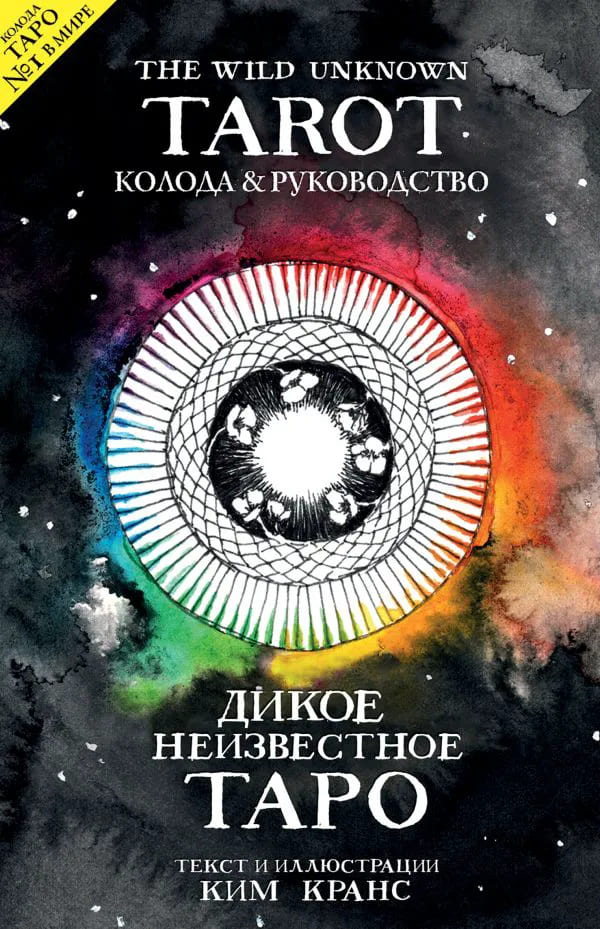
The Wild Unknown Tarot — minimalist, nature-based, intuitive. A good contrast to the cinematic scale of the Runic Tarot.
Try this deck in our Telegram bot — it’s available for readings right now.
Frequently Asked Questions
Is the Runic Tarot good for beginners?
For tarot — yes, the RWS structure is preserved. But the deck also integrates runes and Norse mythology, adding a learning layer. The guidebook helps connect all three systems.
How many cards are in the Runic Tarot?
78 cards with standard tarot structure. Each card additionally contains runic symbolism linking tarot to the Norse tradition.
Who created the Runic Tarot?
Concept by Jack Sephiroth, illustrations by Zhang Chao, guidebook by Jaymi Elford. Published by Lo Scarabeo. Available as a kit with a companion book.
How is the Runic Tarot different from regular tarot?
Every card is reimagined through Norse mythology — gods, valkyries, giants, the World Tree. Runes are added as an additional symbolic layer. This is tarot for those drawn to the Northern tradition.