Review: Wild Unknown Tarot — Nature's Wisdom
First Impressions
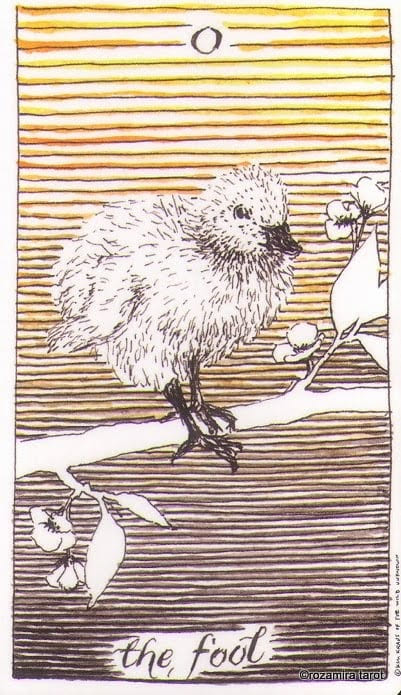
The first thing you notice is what’s missing: people. No robed figures, no medieval courts, no gendered characters telling you how to interpret the card. Instead, a baby chick stands at the edge of the unknown. A lone owl sits in perfect darkness. A snake coils around a branch engulfed in flame. The absence of human figures isn’t a limitation — it’s liberation. Every card becomes a mirror, and what you see in it is entirely yours.
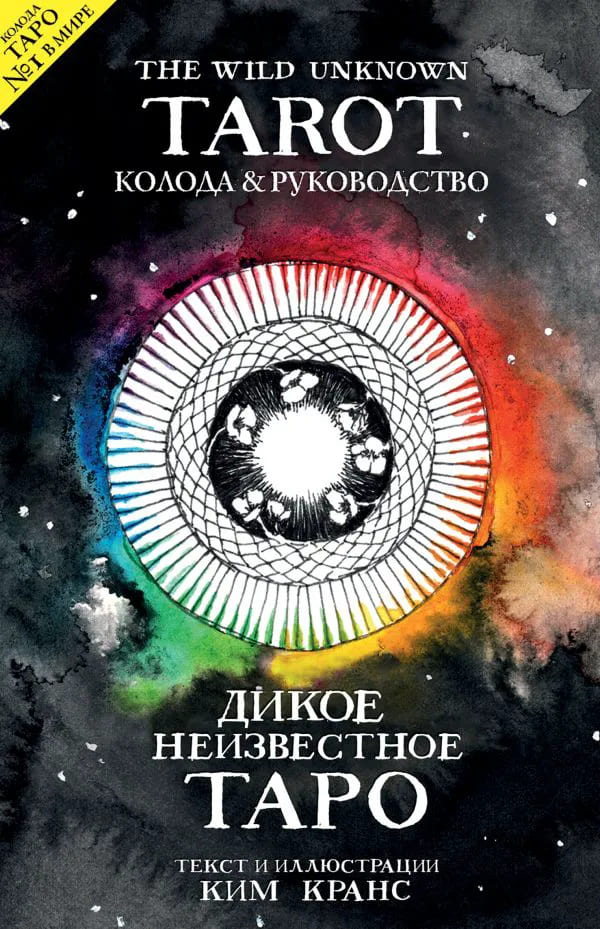
The second thing you notice is the line work. Each card was hand-drawn in black ink, then touched with watercolor. There’s a rawness to it — you can almost feel the hand that made these cards. The card backs show a black-and-white snake-scale pattern, and the whole set comes in a magnetic box with a ribbon and a guidebook that Kim Krans wrote from the heart after a tarot reader pulled The Hermit and told her: “Write something that comes from inside you.”
This is one of those rare decks that changed what tarot could look like. Before The Wild Unknown, indie tarot was a quiet undercurrent. After it — the floodgates opened.
About the Deck
The Wild Unknown Tarot was created by artist Kim Krans and self-published in 2012. She hand-printed the first runs herself, selling them through her website and at markets. The name comes from a Bob Dylan lyric in “Isis”: “I rode straight away to the wild unknown country where I could not go wrong.”
Word spread organically — through Instagram, through tarot communities, through the kind of genuine word-of-mouth that only happens when something truly resonates. By 2016, HarperOne (HarperCollins) republished the deck with a companion guidebook, and it became a New York Times Bestseller. Kim Krans proved that one artist with a vision could create something that rivals — and in many ways surpasses — decks backed by major publishers.
The deck follows the standard 78-card structure: 22 Major Arcana and 56 Minor Arcana across four suits. Court cards are renamed Daughter, Son, Mother, and Father — a choice that feels more primal and archetypal than Page, Knight, Queen, King. Each suit has a dedicated animal family: Swans for Cups, Snakes for Wands, Owls for Swords, and Deer for Pentacles.
Visual Style
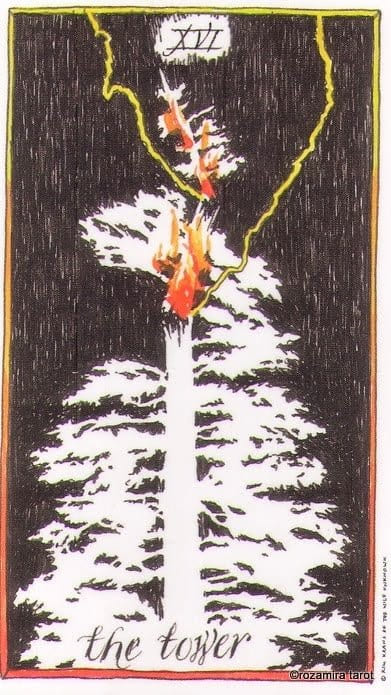
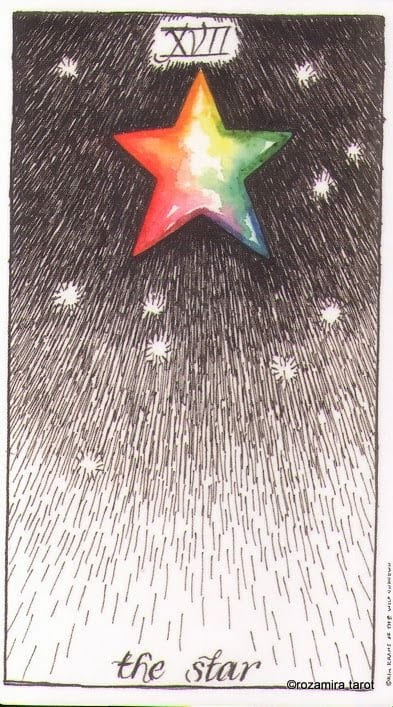
Kim Krans works in black ink and watercolor on white backgrounds. The palette is deliberately restrained — most cards live in black, white, and grey, with strategic bursts of color that hit like a spotlight in darkness. The rainbow radiating from The Star. The warm gold of the Ace of Pentacles. The blood-red of the Ten of Swords.
The minimalism is intentional. Krans learned from a high school art teacher that energy lives in a few bold strokes, not in filling every inch. This principle defines the deck: each card is stripped to its essence, with just enough detail to spark recognition and just enough emptiness to invite your own meaning.
Core Themes
- Nature as teacher — animals carry different wisdom than human figures. The cheetah (Magician) embodies focused power. The horse (Chariot) is pure forward motion. The dove (Judgement) brings gentle awakening. Each creature was chosen for its essential quality, not decorated onto a human template.
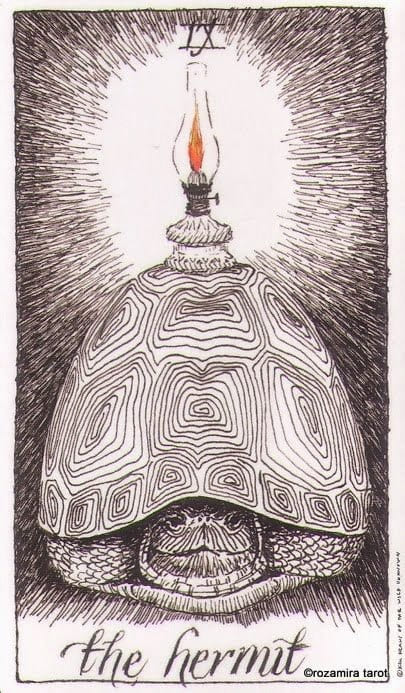
- Solitude and inner truth — The Hermit as a tiny owl in vast darkness is perhaps the most iconic tarot image of the 2010s. The deck repeatedly returns to the idea that wisdom comes from going inward, not outward.
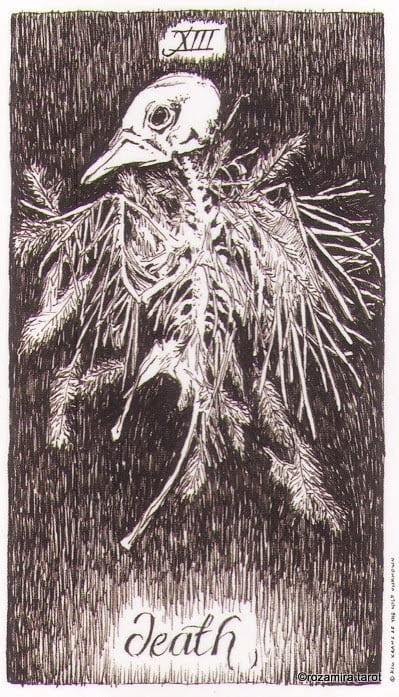
- Cycles of nature — birth, growth, death, rebirth. No sugar-coating. The Death card is stark and final-looking, and that honesty is the deck’s strength.
- Stripped-back truth — without busy backgrounds or detailed scenes to decode, you’re left with the bare archetype and your own response to it. The deck tells you what you need to hear, not what you want to hear.
- Gender-neutral universality — by removing human figures, Krans removed assumptions about who the querent might be. Anyone can see themselves in these cards.
Favorite Cards
The Hermit
A small owl sitting alone in complete darkness, a single point of light above. If I had to choose one card to represent this entire deck, it would be this one. The Hermit doesn’t need a mountain or a lantern or a flowing robe — just an owl, darkness, and light. The image says: you already know the answer. You just need to get quiet enough to hear it. I’ve gifted this deck more than any other, and every time, the person tells me The Hermit was the card that made them understand what tarot could be.
The Fool & The World
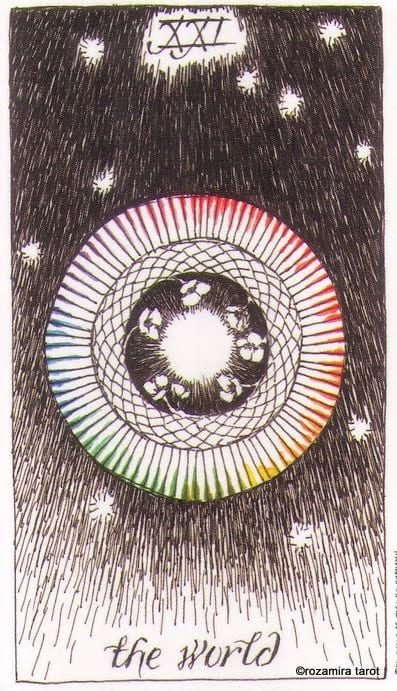
Beginning and end. A baby chick standing at the edge of something vast, and then — at the journey’s completion — the full circle. Place these two cards side by side and you see the entire Major Arcana story in a glance: innocence, adventure, every lesson between, and the return home as someone new. Krans captures the cycle of tarot in its purest form.
The Empress
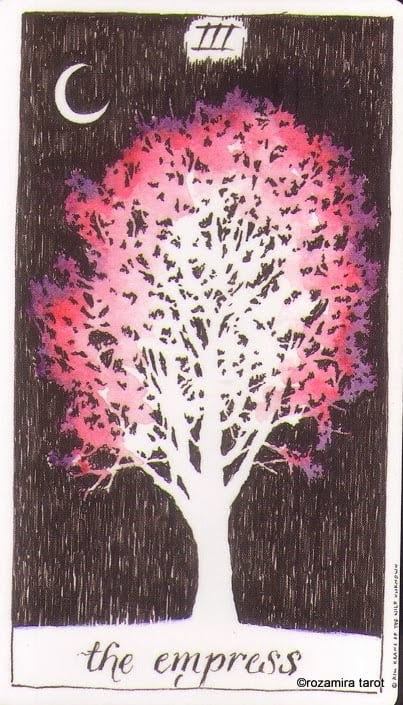
A tree — rooted, branching, full of life. No human figure needed. The Empress here is creation itself: warm, fertile, endlessly generative. The tree as Empress is one of those choices so obvious in hindsight that you wonder why no one thought of it before. It shifts the card from “a powerful woman” to “the force that makes all things grow.”
The Star
One of the few cards where Krans uses full color — and the effect is stunning. After the darkness of Death and The Tower, The Star explodes with a rainbow of light. Hope rendered as pure radiance. The contrast with the ink-heavy cards before it makes this card hit harder than any painted Star I’ve seen.
Ace of Wands
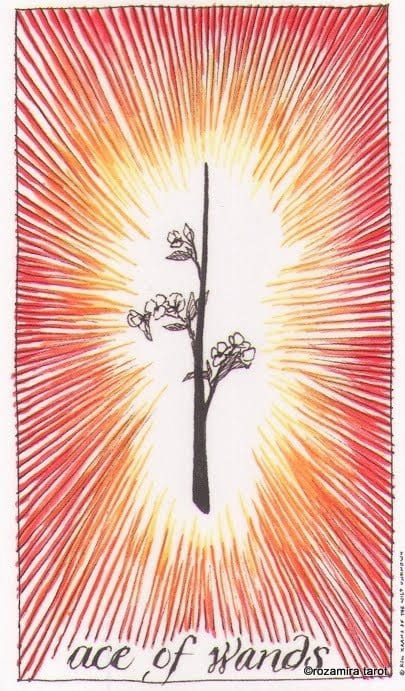
A single branch with lightning radiating from its center. Raw creative energy in one image. High energy, growth, development — your ideas are promising and expanding. This is the card I pull when I need a yes from the universe, and in this deck, its simplicity makes the message undeniable.
How to Work with This Deck
- Card of the day — the ideal format. Pull one card each morning and sit with the image before reading any meaning. What animal do you see? What is it doing? How does the space around it feel? The deck rewards first impressions.
- Meditation — choose a card, set it in front of you, and let your eyes rest on it. The minimalist images create space for your mind to wander productively. Five minutes with The Hermit can be worth an hour of journaling.
- Nature walks — pull a card before going outside and look for its energy in the real world. The deck bridges tarot and the natural world better than anything I know.
- Shadow work — don’t shy away from Death, The Tower, The Devil. The stripped-back imagery means there’s nowhere to hide from what the card is saying. These readings are direct, sometimes uncomfortably so, and that’s the point.
Who Is This Deck For
Great fit:
- Anyone who connects with nature more than human symbols
- Intuitive readers who work through feeling and image rather than memorized meanings
- Beginners who find classical imagery intimidating — the animals are approachable and universal
- Minimalism lovers — if you appreciate clean design, this deck is a masterpiece
Probably not:
- If you need human figures to relate to cards emotionally
- Those wanting rich, detailed symbolic scenes to decode
- If you prefer colorful, maximal art — this deck lives in black, white, and strategic color
- The thin companion guidebook (in early editions) left some readers wanting more — the HarperOne edition improved this
Deck Pairings
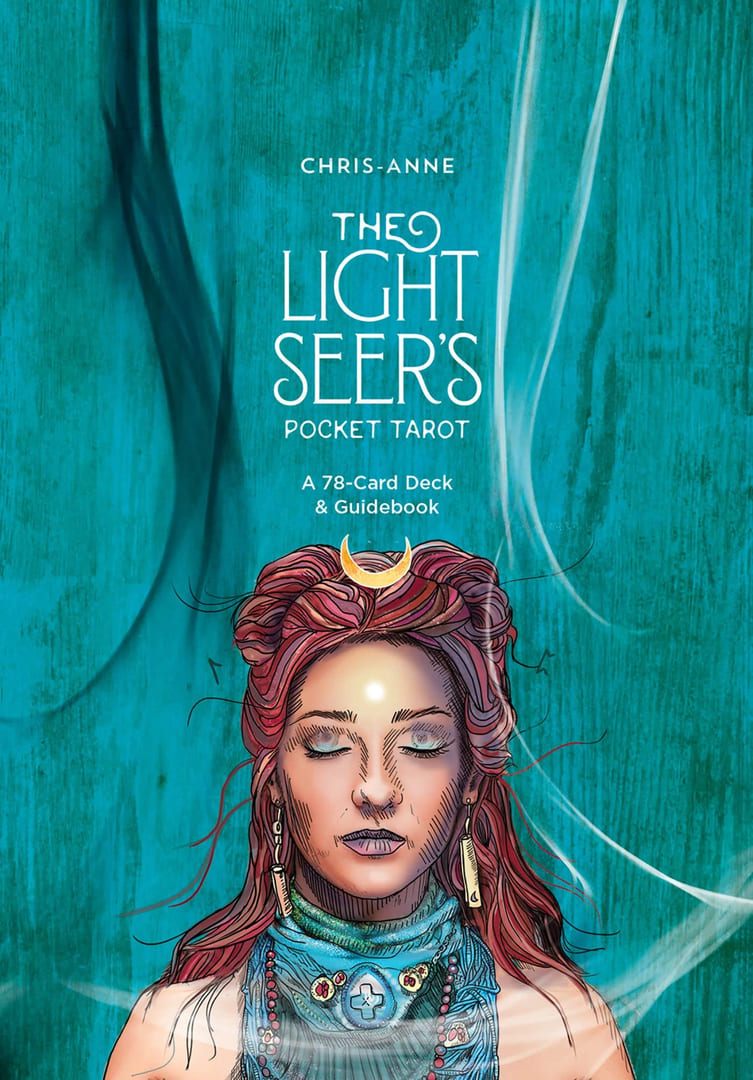
- Light Seer’s Tarot — the warm, human counterpart to Wild Unknown’s nature focus. When you need faces and feelings, reach for Light Seer’s. When you need stripped-back truth, reach for Wild Unknown.
- Prisma Visions Tarot — the opposite visual approach: impressionistic maximalism vs. ink minimalism. Together they prove there’s no one right way to do tarot art.
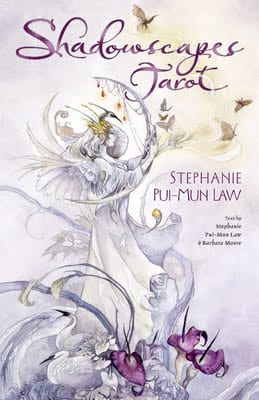
- Shadowscapes Tarot — if Wild Unknown is the forest at dawn in black and white, Shadowscapes is that same forest at twilight in full watercolor. Two nature decks, two completely different moods.
Try this deck in our app — let the animals show you what you already know.
Frequently Asked Questions
What makes The Wild Unknown Tarot different from traditional decks?
It removes all human figures and replaces them with animals, plants, and natural elements drawn in black ink and watercolor. This avoids themes like social class and gender, making the deck universally accessible — every card becomes a mirror reflecting your own experience.
Is The Wild Unknown Tarot good for beginners?
Yes, with a note: the Major Arcana and Aces are intuitive and easy to read (a baby chick for the Fool, a lone owl for the Hermit). Some numbered Minor Arcana cards are more abstract, so pairing with the companion guidebook or an RWS reference helps.
Who created The Wild Unknown Tarot and when?
Kim Krans hand-drew and self-published the first edition in 2012, printing decks herself. HarperOne (HarperCollins) republished it in 2016 with a companion guidebook, and it became a New York Times Bestseller. The name comes from a Bob Dylan lyric in 'Isis.'
What animals represent the court cards?
Each suit has a dedicated animal family: Swans for Cups, Snakes for Wands, Owls for Swords, Deer for Pentacles. Court cards are renamed Daughter, Son, Mother, and Father — progression from youthful exploration to mature wisdom within each animal family.
Can The Wild Unknown Tarot be used for shadow work?
Absolutely. The stripped-back imagery hits harder than busier decks because there's nowhere to hide. Death, The Tower, and the Ten of Swords carry raw emotional weight rendered in stark black and white — just the essential truth of each archetype.