Tarot Ethics: What Every Reader (and Querent) Should Know
Why ethics matter in tarot
Tarot ethics aren’t abstract philosophy. They’re practical guidelines that protect real people from real harm.
When someone sits down for a reading — whether with a friend at a kitchen table or a professional in a studio — they’re in a vulnerable position. They’re opening up about fears, hopes, relationships, and life decisions. The reader holds temporary power in that dynamic, and how they use that power matters.
Bad ethics in tarot cause real damage: people who make terrible decisions based on irresponsible predictions, clients who develop unhealthy dependency on their reader, individuals who suffer anxiety after a fear-based reading, and people who are financially exploited by readers who manufacture urgency.
Good ethics prevent all of this. They’re not restrictions on your practice — they’re the foundation of it.
The principles
Consent
Never read for someone who hasn’t asked. This seems obvious, but it comes up constantly:
- Don’t ambush people with unsolicited readings at social gatherings
- Don’t read “about” someone who isn’t present without considering the ethical implications
- Don’t announce what you see in someone’s cards unless they’ve invited it
- Respect “no” immediately and without pressure
The gray area: reading about your relationship with someone (where they appear as a factor in your life) is different from reading on them directly. But even here, be thoughtful about what you’re doing and why.
Confidentiality
What happens in a reading stays in the reading. Full stop.
- Don’t share client reading details with others, even anonymously if they could be identified
- Don’t use client stories as social media content without explicit permission
- Don’t discuss one client’s reading with another client
- If you need to discuss difficult readings for your own processing, do it with a mentor or supervisor, not casually
This applies to casual readings too. If your friend gets a reading from you about their marriage, that information isn’t for sharing at dinner parties.
Honesty without cruelty
Tarot readings sometimes reveal uncomfortable truths. The ethical reader delivers these with care — not sugarcoating, but not using the cards as a weapon either.
Honest and kind: “This card suggests the relationship may not be giving you what you need. What does that bring up for you?”
Honest and cruel: “The cards say your relationship is doomed. You should leave.”
Dishonest and kind: “Everything looks great! Don’t worry about anything.”
The first option is the ethical one. It tells the truth, it respects the client’s autonomy, and it opens a conversation rather than delivering a verdict.
Scope of practice
You are a tarot reader. Unless you have additional credentials, you are not:
- A therapist or counselor
- A medical professional
- A financial advisor
- A legal expert
- A psychic (unless you explicitly claim that identity with informed consent)
This means:
- Don’t diagnose mental health conditions based on card readings
- Don’t advise people to stop or start medications
- Don’t make specific financial predictions that could influence major decisions
- Don’t provide legal guidance
- If someone needs professional help, say so directly and provide resources
The most ethical thing a tarot reader can say is sometimes: “I think you need to talk to a professional about this.”
No dependency creation
An ethical reader empowers clients to make their own decisions. An unethical reader creates dependency — making clients feel they need a reading before making any choice, manufacturing urgency that drives repeat visits, or positioning themselves as the only source of guidance.
Red flags of dependency creation:
- “You need to come back next week or this won’t work”
- “Only I can see what’s really happening”
- “Don’t make any decisions until we do another reading”
- Encouraging daily paid readings for the same question
Good readings should make people feel more capable of navigating their lives, not less.
No fear-based manipulation
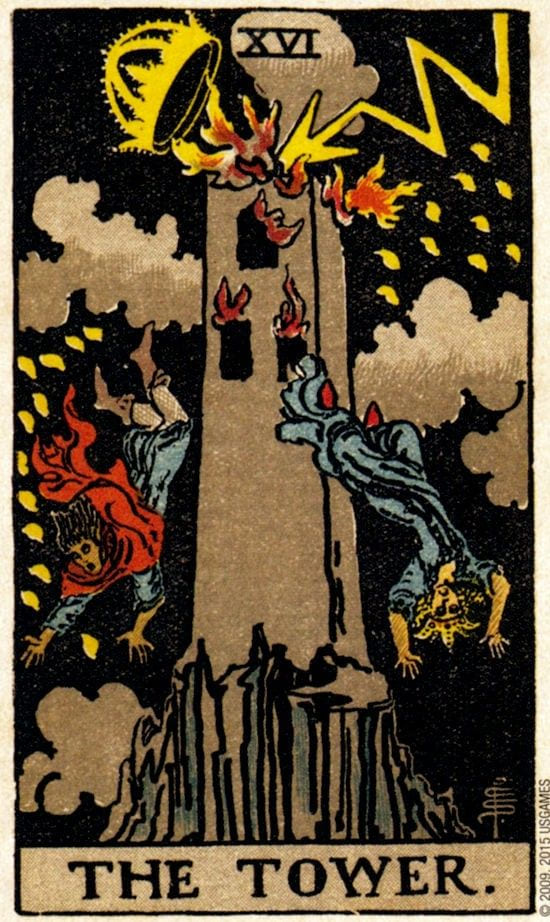
The Death card does not mean someone will die. The Tower does not mean their life will be destroyed. The Ten of Swords does not mean they should give up hope.
Fear-based reading — emphasizing worst-case interpretations, predicting catastrophe, or creating anxiety that drives return visits — is one of the most harmful things a reader can do. It exploits vulnerability for profit (or ego), and it causes real psychological harm.
If a reading contains genuinely challenging cards, deliver them with context, nuance, and hope. Every difficult card in tarot also contains the seeds of transformation. Focus there.
Common ethical dilemmas
Reading about third parties
“What does my ex think about me?” “Will my boss fire me?” “Is my partner cheating?”
These questions are about other people who haven’t consented to being read. Options:
- Refuse completely: Some readers won’t address third parties at all
- Reframe: “Instead of what your ex thinks, let’s look at what you need from this situation”
- Read the dynamic: Focus on the querent’s experience of the relationship, not the other person’s inner world
- Read with awareness: Acknowledge that any impressions about third parties are filtered through the querent’s energy and may not be accurate
There’s no single right answer, but being thoughtful about the question matters.
When you see something alarming
What if the cards strongly suggest danger — abuse, self-harm, serious illness? This is where ethics and intuition collide.
Guidelines:
- Don’t panic or catastrophize in the reading
- If you genuinely believe someone is in danger, say so gently and recommend appropriate resources
- National crisis lines, domestic violence hotlines, and emergency services are always appropriate referrals
- You are not obligated to be the sole support for someone in crisis
- Document referrals you make (for your own protection)
Repeat clients with the same question
A client keeps booking readings about the same relationship, hoping for different answers. This is a dependency pattern, and the ethical response is to name it.
“I notice we’ve explored this question several times. The cards keep saying similar things. I think the guidance is clear, and another reading may not give you what you need. Have you considered talking to a counselor about this?”
This might lose you a client. It’s still the right thing to do.
Reading for minors
Teenagers and young people seek tarot readings with increasing frequency. Consider:
- Younger clients may be more impressionable and take predictions more literally
- Parental consent may be appropriate depending on age and context
- Keep readings empowering and age-appropriate
- Be especially careful about relationship and health questions
For querents: your ethical responsibilities
Ethics aren’t just for readers. If you’re getting a reading:
- Be honest about what you’re seeking. Don’t test the reader with trick questions.
- Respect boundaries when a reader declines a question or topic
- Don’t expect certainty. Tarot offers perspective, not prophecy.
- Take responsibility for your decisions. The reader offered guidance; you chose what to do with it.
- Don’t blame the reader if life doesn’t follow the reading. You were always the one making choices.
Building an ethical practice
Ethics aren’t a one-time decision. They’re an ongoing practice:
- Define your principles before you start reading for others
- Communicate boundaries clearly at the start of each reading
- Review regularly. Ethics evolve as your practice deepens.
- Seek supervision or peer support for difficult readings
- Stay humble. The cards are wise. You’re the interpreter, not the oracle.
The most ethical thing you can do as a reader is remember that you’re serving the person in front of you. Not your ego, not your business, not your reputation. Them.
The cards will help you do this. They always point toward truth — if you’re willing to deliver it with care.
Frequently Asked Questions
What are the basic ethics of tarot reading?
Core ethical principles include: obtaining consent before reading for someone, maintaining confidentiality about reading content, being honest without being cruel, knowing the limits of your competence, not making medical/legal/financial diagnoses, avoiding creating dependency in clients, respecting when someone doesn't want a reading, and never using readings to manipulate or control others.
Is it ethical to read tarot for someone without their knowledge?
This is one of tarot's most debated ethical questions. Many readers consider it inappropriate to do a full reading about a specific person without their consent, as it feels like an invasion of privacy. Others argue that reading about how a situation affects the querent — which may include other people — is different from reading 'on' someone. A common middle ground: read about your own relationship to the situation, not about the other person directly.
Should tarot readers predict death or serious illness?
Most ethical tarot readers avoid making specific predictions about death, serious illness, or catastrophic events. Even if you believe you see such things in the cards, delivering such predictions can cause real psychological harm and is outside a tarot reader's scope of practice. If a client seems to be in crisis, the ethical response is to recommend professional help, not to deliver frightening predictions.
How do I handle it when a client asks me something I can't ethically answer?
Be honest and direct. Say something like: 'That's outside what tarot can reliably address. I'd recommend speaking with [appropriate professional] for that kind of guidance.' Good boundary-setting actually increases client trust. Most people respect a reader who knows their limits more than one who claims to know everything.