Tarot in Different Cultures: How the World Reads the Cards
One deck, many worlds
The 78 cards of tarot depict universal human experiences — birth and death, love and loss, power and surrender, the journey from innocence to wisdom. That’s why tarot has traveled so far from its Italian origins. The archetypes don’t belong to any single culture. They belong to all of them.
But while the archetypes are universal, how people use tarot is deeply cultural. A reading in a Buenos Aires botanica doesn’t look like a reading in a Tokyo metaphysical shop, which doesn’t look like a reading in a Moscow apartment. The cards may be the same, but the context — the beliefs, the rituals, the relationship between reader and querent — changes everything.
This is a tour of tarot around the world. Not comprehensive (that would fill a book), but enough to show how a deck of Italian playing cards became a global spiritual practice.
Latin America: tarot and folk spirituality
Mexico
In Mexico, tarot is woven into a rich spiritual fabric that includes folk Catholicism, indigenous Mesoamerican beliefs, and the cult of Santa Muerte. Tarot readers (known as “tarotistas”) often work in markets, small shops, or from home, and their practice integrates seamlessly with other forms of spiritual work — candle magic, herbal remedies, prayer.
The Death card carries particular resonance in Mexican culture, where death is not feared but celebrated and honored. Dia de los Muertos traditions give the Death card a context that European readers often lack — transformation as a community celebration, not a solitary crisis.
Mexican tarot decks often feature iconography from both Catholic and pre-Columbian traditions, creating a visual language that is distinctly neither European nor indigenous but something new.
Brazil
Brazil has one of the world’s most vibrant tarot cultures, deeply connected to Afro-Brazilian religious traditions — Candomble, Umbanda, and Spiritism (the Kardecist tradition brought from France in the 19th century).
Brazilian tarot readers frequently work alongside mediums and spiritual healers. A reading might incorporate Orisha energy, spirit communication, and tarot simultaneously. The cards are seen not just as symbolic tools but as channels for spiritual entities to communicate.
The Brazilian market for tarot is enormous — Rio de Janeiro and Sao Paulo have dedicated tarot schools, regular conferences, and a publishing industry that produces both translated and original decks reflecting Brazilian culture and spirituality.
Argentina
Argentina has a sophisticated tarot culture influenced by European immigration (particularly Italian and Spanish) and a strong psychoanalytic tradition. Buenos Aires may have more tarot readers per capita than any other city in the world.
What makes Argentine tarot distinctive is its relationship with psychology. Many readers are also trained therapists, and the reading often functions as a structured conversation about personal development rather than fortune-telling. The Jungian concept of archetypes — so central to modern tarot theory — fits naturally with Argentina’s deep engagement with psychoanalysis.
Russia and Eastern Europe: the fortune-telling tradition
Russia
Russia has a tarot tradition that predates the modern Western occult revival. Russian “gadanie” (fortune-telling) is a centuries-old practice that originally used regular playing cards and folk methods. When tarot arrived in Russia (largely through French occult literature in the 19th century), it was absorbed into this existing tradition.
Russian tarot reading tends to be more predictive than the modern Western approach. Where American and British readers often emphasize self-exploration and personal development, Russian readers are more likely to give direct, specific predictions — “this will happen, that person feels this way, this is what’s coming.”
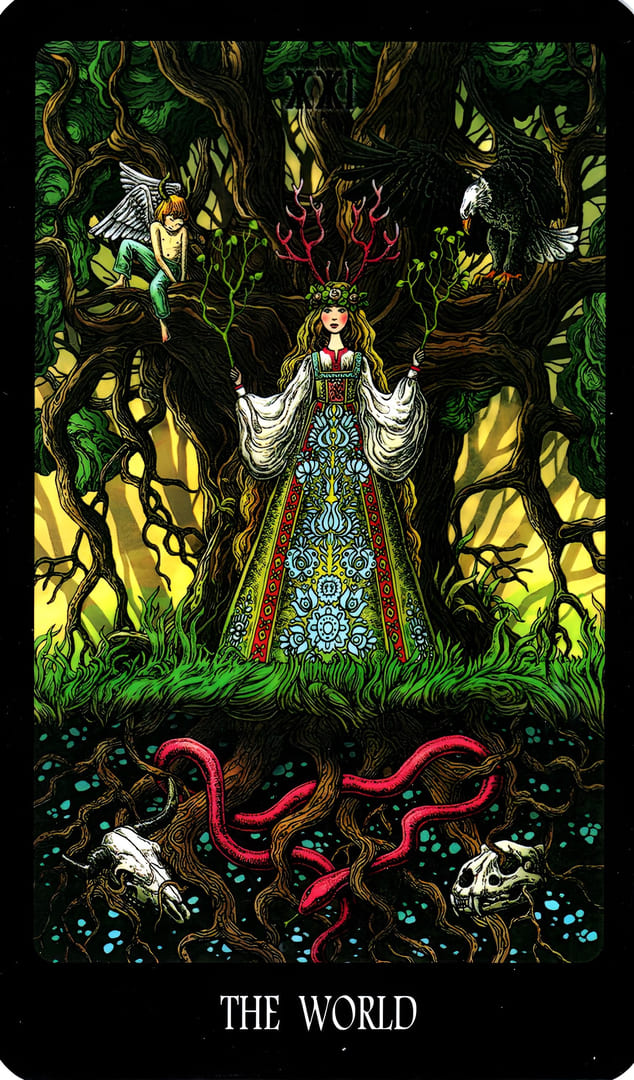
The Russian tarot community is large and active, with dedicated schools, certification programs, and a publishing industry that produces Russian-language tarot education alongside translated works. Russian-designed decks often incorporate Slavic folk imagery, Orthodox Christian symbolism, and the visual language of Russian fairy tales.
Eastern Europe
Poland, Czech Republic, and Hungary all have tarot traditions influenced by both Western European occultism and local folk magic. The practice often connects to herbalism, seasonal rituals, and the rich folk mythology of the region. Tarot in Eastern Europe tends to be more private than public — readers work from home rather than shops, and the practice is passed through personal relationships rather than commercial structures.
East Asia: adaptation and reinvention
Japan
Japan discovered tarot largely through the manga and anime subculture in the 1990s and 2000s. Tarot imagery appears frequently in Japanese media — the Major Arcana feature prominently in popular series, and the visual drama of the cards fits naturally with manga’s storytelling style.
Japanese tarot practice tends to be highly aesthetic. The emphasis on visual beauty, card design, and the ritual presentation of the reading reflects Japanese cultural values around presentation and craft. Japanese-designed decks are often visually stunning, blending Western tarot symbolism with ukiyo-e influences, kawaii aesthetics, or modern illustration styles.
The interpretation style tends to be gentler than Western readings — more suggestive than directive, more focused on harmony and flow than confrontation with shadow material.
South Korea
South Korea has seen a massive tarot boom in the 2010s and 2020s, driven by social media and a young, digitally connected audience. Tarot cafes — where you can get a reading alongside your coffee — have become a significant cultural phenomenon in Seoul and other cities.
Korean tarot culture is strongly connected to K-pop and celebrity culture, with fans using tarot to explore questions about their favorite artists and their own lives. The practice skews younger than in most Western countries, and online tarot readings on YouTube and social media platforms are enormously popular.
Africa and the diaspora: card divination in context
West Africa
Card divination in West Africa connects to older oracle traditions — particularly Ifa divination, which uses a complex system of signs and stories to provide guidance. When playing cards and later tarot cards arrived through European colonial contact, some practitioners integrated them into existing divination frameworks.
In this context, tarot cards aren’t a separate system — they’re another tool within a broader divinatory practice that might include cowrie shells, palm nuts, and other traditional methods. The cards are read through the lens of existing spiritual knowledge rather than Western tarot tradition.
The African diaspora
Throughout the Caribbean, the American South, and parts of South America, card divination plays an important role in African diaspora spiritual practices — Vodou, Hoodoo, Santeria, and others. The cards (sometimes tarot, sometimes regular playing cards) serve as communication tools between practitioners and spiritual entities.
In New Orleans, tarot is deeply embedded in the city’s cultural identity, connected to both its African American spiritual traditions and its French Catholic heritage. New Orleans tarot readers are among the most visible and celebrated in the world.
The Middle East and South Asia
Tarot’s relationship with the Middle East is complex. Court de Gebelin’s false claim that tarot originated in ancient Egypt created a lasting but fictional connection. However, genuine card divination practices exist throughout the Middle East and South Asia, using both tarot and traditional card systems.
In India, tarot has gained significant popularity in the 21st century, particularly among urban professionals seeking guidance outside traditional religious structures. Indian tarot practitioners often blend tarot with Vedic astrology, chakra work, and Ayurvedic concepts, creating a uniquely Indian approach to the cards.
What the global spread tells us
Tarot’s ability to thrive in radically different cultural contexts tells us something important about the cards themselves: they work because they deal in universals. Birth and death, love and conflict, hope and fear — these experiences don’t belong to any single culture.
But the specific way each culture reads these universals reflects something equally important: divination is always local. How you read the cards depends on who you are, where you come from, what spiritual traditions shaped your understanding of the world.
There is no “correct” way to read tarot. There are only the ways that work — and those ways are as diverse as the people who practice them.
Frequently Asked Questions
Is tarot a Western practice?
Tarot originated in 15th-century Italy, so its roots are European. But it has been adopted and transformed by cultures worldwide. Latin American tarot is deeply intertwined with folk Catholicism and indigenous traditions. Japanese tarot blends with Eastern philosophy. Russian tarot has its own distinct tradition. The cards themselves are universal — the archetypes they depict (death, love, power, transformation) belong to every human culture.
Do different cultures use different tarot decks?
Yes. Many cultures have created decks that reflect their own mythology, art, and spiritual traditions. There are Afro-Brazilian decks incorporating Orisha imagery, Japanese manga-style decks blending Eastern and Western symbolism, Mexican decks connected to Dia de los Muertos, and Slavic decks drawing from folk tales. The Rider-Waite-Smith template is widely used but far from the only tradition.
How does tarot differ from culture to culture?
The biggest differences are in context and integration. In Brazil, tarot often works alongside Candomble and Umbanda. In Russia, it blends with a strong fortune-telling tradition called 'gadanie.' In parts of West Africa, card divination connects to existing Ifa and oracle traditions. The card meanings may be similar, but what the reading means within the culture — who does it, when, and why — varies enormously.
Can I use a culturally themed deck if I'm not from that culture?
This is a personal and ongoing conversation. Generally, using a deck created by artists from that culture with the intention of learning and respect is different from using sacred imagery superficially. Research the deck's origins, understand what traditions it draws from, and approach with genuine curiosity rather than exoticism. When in doubt, learn from practitioners within that tradition.