What Is Beltane? Tarot and the Celtic Fire Festival
You can feel it before you name it
There is a day in late April when the air shifts. You step outside and something has changed overnight — the green is deeper, the breeze is warmer, and there is a hum beneath everything, as if the earth itself is holding its breath before exhaling into summer.
That hum has a name. It is Beltane.
Beltane (pronounced BEL-tayn) falls on May 1st, and it is one of the oldest fire festivals in the Celtic calendar. Where winter asks you to rest, and spring asks you to plant — Beltane asks you to burn. Not destructively. Joyfully. It is the festival of sacred fire, of passion moving through the body, of seeds bursting into visible life, of dancing around flames because you are alive and that alone is worth celebrating.
For those of us who work with tarot, Beltane is one of the most powerful times of the year to read. The energy is generous, sensual, and unapologetically alive. And the cards feel it too.
The ancient roots of Beltane
The word “Beltane” comes from the Old Irish Bel-tene, meaning “bright fire” or “lucky fire.” An early 10th-century text in the Sanas Cormaic (Cormac’s Glossary) describes how druids would light two great bonfires and drive cattle between them as a purification rite before sending them to summer pastures. The smoke and flames were believed to carry protective power — not just for animals, but for people, crops, and the land itself.
Beltane marked a real, practical threshold in Celtic life. Winter was over. The dark months of staying indoors, rationing food, and hoping the livestock would survive — all of that ended at Beltane. People opened their doors. They left their homes and went into the fields. Life moved outward again.
But it was never only practical. On Beltane Eve (April 30th), communities gathered on hilltops to light fires that could be seen for miles. Young couples disappeared into the woods. Hawthorn branches — the “May tree,” blooming white and fragrant right on schedule — were cut and brought inside to decorate doorways. Flower crowns were woven. The Maypole was raised and wound with ribbons, each dancer weaving their thread into the pattern of the coming season.
The message was clear: life is returning, and you are part of it.
What Beltane means spiritually
Beltane sits at the midpoint between the spring equinox (Ostara) and the summer solstice (Litha). On the Wheel of the Year, it is the mirror opposite of Samhain — the great autumn festival of death, ancestors, and the thinning veil. If Samhain is the inhale, Beltane is the exhale. If Samhain looks back, Beltane looks forward. Both thin the veil between worlds — but what pours through at Beltane is not the whisper of the dead. It is the roar of the living.
Fire — purification and passion
Fire is Beltane’s central symbol. Not the contained fire of a hearth, but the wild fire of bonfires on hilltops, visible across the countryside. This fire does two things at once: it purifies and it ignites. The old Celts walked between two fires to cleanse themselves. But they also leaped over fires — and the higher you jumped, the taller your crops would grow. Fire burns away what has outlived its purpose and sets ablaze what is ready to live.
Fertility — the world in bloom
Beltane fertility is not only about children or physical reproduction (though it includes that). It is about creative fertility — the explosion of life in all its forms. Ideas that have been germinating since winter. Projects you planted at Ostara. Relationships that are ready to deepen. At Beltane, everything that has been building beneath the surface breaks through.
Sacred union — the marriage of opposites
One of Beltane’s most beautiful themes is the sacred marriage (hieros gamos) — the union of the May Queen and the Green Man, feminine and masculine, earth and sky, the cultivated and the wild. This is not about gender roles. It is about integration: the coming together of different forces to create something neither could alone.
Joy — pleasure as sacred
Perhaps Beltane’s most radical teaching: pleasure is not a distraction from the spiritual path. It is the spiritual path. Dancing, feasting, wearing flowers, making love, laughing until your sides ache — all of it is worship at Beltane. The body is not something to transcend. It is something to inhabit fully, with gratitude and delight.
How to celebrate Beltane today
You do not need a hilltop bonfire or a community of druids to honor Beltane. The fire lives wherever you choose to light it.
Light a flame. A candle will do. Red for passion, green for growth, white for purification. Light it at sunset on April 30th and let it burn as you sit with the turning season.
Bring in flowers. Hawthorn is traditional, but any wildflowers, fresh blooms, or green branches will carry the energy. Fill your home with living things. Put flowers in your hair if you want — no one is watching, and even if they were, it is Beltane.
Move your body. Dance. Walk barefoot in the grass. Stretch in the sun. Beltane honors the body as sacred ground. Move in whatever way feels like pleasure, not obligation.
Honor your desires. Write down what you want — not what you think you should want, but what you genuinely, hungrily desire. Beltane has no patience for “should.” It asks: what makes you feel alive?
Make something. A meal, a drawing, a poem, a garden. The creative act is a Beltane ritual in itself — taking raw potential and shaping it into something real.
Leave an offering. The Celtic tradition of leaving milk, honey, or flowers for the fae is a way of acknowledging that you are not alone in this world — that the land has its own life and its own spirits, and they deserve gratitude.
Beltane correspondences
| Element | Correspondences |
|---|---|
| Colors | Red, green, white, gold, pink |
| Herbs | Hawthorn, rose, lavender, mint, meadowsweet, nettle |
| Stones | Rose quartz, carnelian, citrine, emerald, garnet |
| Element | Fire (primary), Earth (grounding) |
| Direction | South |
| Animals | Bee, rabbit, cow, robin, horse |
| Themes | Passion, fertility, sacred union, joy, creativity, purification |
Beltane and tarot — the cards of fire and desire
Tarot and the Wheel of the Year are old friends. Each season illuminates different cards, and Beltane lights up the deck like no other sabbat.
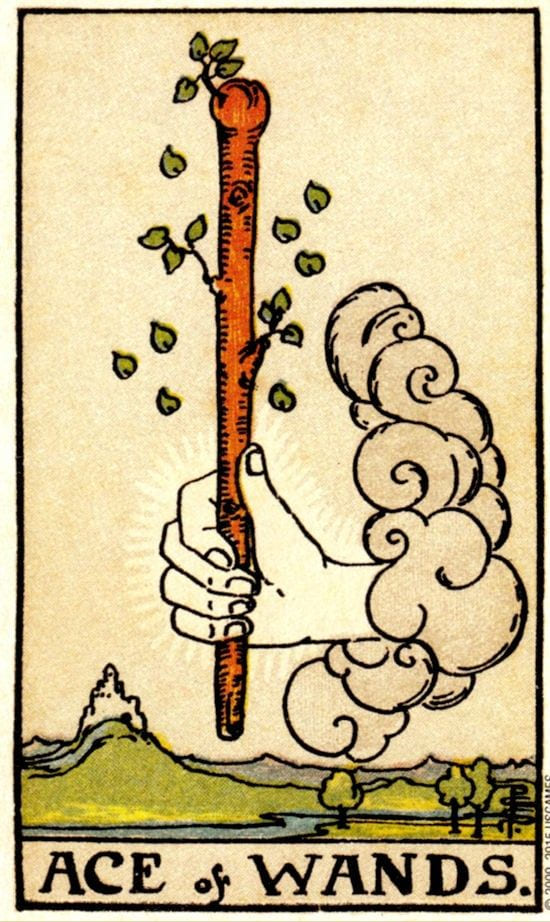
The element of fire belongs to the suit of Wands — the cards of passion, will, creativity, and spiritual drive. During Beltane, every Wands card carries extra weight. An Ace of Wands pulled at Beltane is not just a “new beginning.” It is the bonfire itself, the great flame at the center of the celebration, calling you to leap.
Cards that carry Beltane energy
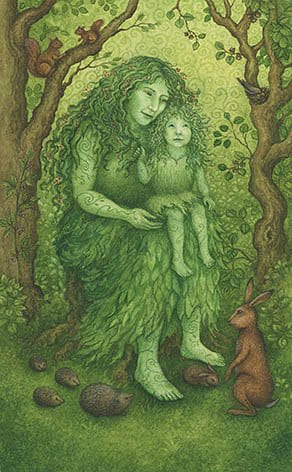
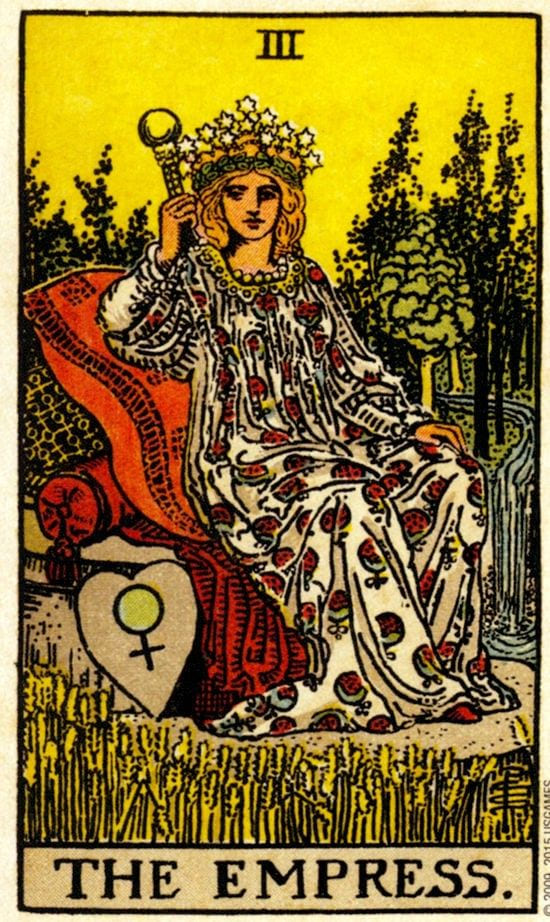
The Empress — The queen of fertility and sensual abundance. She is Beltane in human form: the earth in full bloom, the body honored as sacred, the creative force that makes everything grow. When The Empress appears during Beltane season, she is asking you to receive — pleasure, beauty, abundance, love.
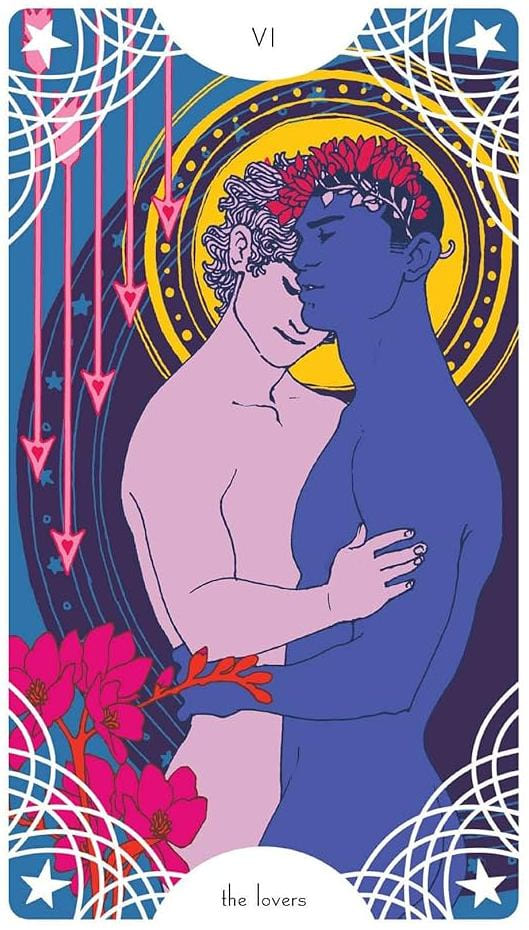
The Lovers — The card of sacred union, choice, and desire. At Beltane, The Lovers speaks to the marriage of opposites that the festival celebrates. This is not just about romantic love (though it can be). It is about choosing what you are devoted to, and giving yourself to it fully.
Ace of Wands — Pure creative fire. The spark before the flame. At Beltane, this card says: you have everything you need to begin. Light the match.
Queen of Wands — Magnetic, confident, radiant fire. She knows what she wants and is not apologizing for it. During Beltane, the Queen of Wands reminds you that desire is not something to manage — it is something to follow.
The Sun — Unfiltered joy. The Sun is what Beltane feels like when you stop thinking and just let yourself be alive. Warmth, clarity, vitality, celebration. No shadows, no second-guessing. Just light.
Three of Cups — The celebration card. Friends around a fire, dancing with flowers, raising glasses. Beltane is not a solitary festival by nature — it thrives in community, in shared pleasure, in the collective exhale of we made it through winter.
A simple Beltane tarot practice
You do not need an elaborate ritual. On Beltane Eve or May morning, light a candle. Shuffle your deck and pull three cards:
- What am I ready to create? — The seed that is bursting into visible life right now
- What passion needs my attention? — The desire I have been ignoring or suppressing
- What is blooming in my life? — What the universe is already growing on my behalf, whether I see it or not
Sit with each card. Do not rush to look up meanings — let the images speak first. Beltane readings respond to feeling before intellect.
If you want a deeper seasonal reading, try the Beltane Fire spread — a six-position layout designed to map your creative fire, hidden desires, and what you are called to bring into the world this season. You can find it in the Elvi tarot app.
The fire is already lit
Beltane does not ask you to be perfect. It does not ask you to have a plan or a five-year vision. It asks you to be honest about what you want, and brave enough to move toward it.
The earth is blooming. The fire is lit. The veil between what you desire and what you dare to reach for is thinner than you think.
Step through.
Frequently Asked Questions
When is Beltane celebrated?
Beltane is celebrated on May 1st, with festivities traditionally beginning at sunset on April 30th (Beltane Eve). It marks the midpoint between the spring equinox and the summer solstice — the moment when the Celtic year shifts from its dark half to the light half.
Is Beltane only about romantic love?
Not at all. While sacred union is one of Beltane's themes, the festival celebrates passion in all its forms — creative fire, desire for life, fertility of ideas and projects. You can honor Beltane as a celebration of anything that makes you feel vividly alive.
What tarot cards represent Beltane energy?
The Empress (fertility, sensuality), The Lovers (sacred union), Ace of Wands (creative spark), Queen of Wands (magnetic confidence), and The Sun (pure joy) are the cards most aligned with Beltane. The entire Wands suit carries the fire energy of this festival.
Can I celebrate Beltane if I'm not pagan?
Absolutely. Beltane is a seasonal celebration rooted in nature's rhythms, not a specific religion. Anyone who feels drawn to honoring the earth's cycles, creative energy, and the shift into summer can celebrate in whatever way feels authentic to them.