What Is Litha? Tarot and the Summer Solstice
The longest day finds you whether you mark it or not
There is a night in late June when the light refuses to leave. The sun sinks low but never quite disappears — the sky stays pale, the air stays warm, and something electric hums through everything. You might not have a name for it yet. But your body knows. Something has peaked.
That peak has a name. It is Litha.
Litha (pronounced LEE-tha) falls on the Summer Solstice — June 20th, 21st, or 22nd, depending on the year — and it is the longest day. Not just the longest day of summer. The longest day of the entire year. The sun climbs to its highest arc, hangs there as if reluctant to descend, and pours more hours of light onto the earth than any other day will offer. Everything is bright. Everything is full. Everything is at its absolute maximum.
For those of us who work with tarot, Litha is one of the most clarifying moments on the Wheel of the Year. Where Beltane burned with desire and Ostara whispered about potential, Litha shows you everything — including what you might prefer not to see. There are no shadows to hide in on the longest day.
The ancient roots of Litha
The word “Litha” has Anglo-Saxon roots, appearing in the Venerable Bede’s 8th-century text De Temporum Ratione, where he recorded the Old English names for the months: Ærra Liða (before Litha, roughly June) and Æftera Liða (after Litha, roughly July). The solstice fell between them — the hinge point of summer.
But the celebration stretches back far further than any written name. Stonehenge in England aligns precisely with the solstice sunrise, and archaeologists believe its builders — working around 3000 BC — designed it specifically to mark this day. The Grange Stone Circle in Ireland and the passage tomb at Newgrange show similar solar alignments. Humans have been tracking the sun’s peak for at least 5,000 years.
For early European cultures, the solstice was both practical and sacred. It marked the beginning of the harvest countdown — from this day forward, the days would shorten, and everything planted needed to ripen before autumn. Communities lit great bonfires on hilltops, not just for celebration but for protection. The fires were believed to strengthen the sun at the very moment it began to wane, and the smoke purified people, livestock, and crops. In some traditions, farmers rolled burning wheels downhill — sun symbols tumbling toward the fields to bless them.
The Norse celebrated Midsommar with feasting, dancing, and flower-crowned rituals that survive in Swedish tradition today. Celtic communities gathered herbs believed to be at their most potent on the solstice — especially St. John’s Wort, which flowers right around June 21st. In European folklore, the solstice was also a night of fairy magic, when the veil between worlds thinned and the fae were especially active. Shakespeare set A Midsummer Night’s Dream on this boundary for a reason.
What Litha means spiritually
Litha sits directly opposite Yule on the Wheel of the Year. If Yule is the inhale — the longest night, the return of light, the seed buried in darkness — then Litha is the exhale. The full expression. The bloom that Yule’s seed was always reaching toward.
The sun at its zenith — power without apology
The central symbol of Litha is the sun at its absolute peak. This is not the tentative warmth of spring or the fading gold of autumn. This is full solar power — radiant, generous, unapologetic. Litha teaches that there are moments when your only job is to shine. Not to plan, not to prepare, not to worry about what comes next — just to stand in the fullness of what you have become and let it be seen.
The turning point — celebrating while knowing
Here is what makes Litha bittersweet and beautiful: the longest day is also the first day the light begins to wane. From June 21st onward, each day loses a few minutes of sunlight. The harvest has not arrived yet, but the countdown has begun.
This is not a reason for sadness. It is a reason for presence. Litha teaches a profound spiritual skill: the ability to celebrate something at its peak while knowing it will not last forever. This is the wisdom at the heart of every good tarot reading — seeing what is true right now, without clinging to it or rushing past it.
Fire — illumination and purification
Like Beltane, Litha is a fire festival. But where Beltane’s fire is wild and passionate, Litha’s fire is a beacon — steady, blazing, visible from miles away. Solstice bonfires were lit on the highest points so they could be seen across the countryside, symbolizing the sun’s dominance over darkness. Jumping over the fire was believed to bring luck and purify the jumper. Couples who leaped together strengthened their bond.
Fairy magic — the veil thins in the light
In Celtic and European folklore, the Summer Solstice is one of the great liminal moments — a threshold between worlds. But unlike Samhain, where the dead cross over, Litha opens the door to the fae. This is why Shakespeare’s fairies are mischievous rather than somber: Midsummer magic is playful, unpredictable, and a little wild. If you feel slightly enchanted on the longest day — trust that feeling.
How to celebrate Litha today
You do not need a hilltop bonfire or an ancient stone circle. Litha lives wherever the sun reaches you.
Chase the light. Wake early and watch the sunrise. Stay up to watch it set. The Solstice invites you to be present for as many hours of light as your body can hold. Even if it is just ten minutes on a balcony — face the sun and let it warm you.
Light a fire. A candle, a bonfire, a ring of tea lights — any flame honors the solstice tradition. Gold, orange, and yellow candles are traditional. Light them at sunset and let them carry the sun’s energy into the brief night.
Gather herbs. St. John’s Wort, lavender, chamomile, rosemary, and thyme are all at their most potent around the solstice. Even picking a small bunch of wildflowers or herbs from your garden connects you to the ancient practice of solstice harvesting.
Make a sun wheel. Weave a circle from sticks, vines, or straw and decorate it with flowers, ribbons, and herbs. Hang it on your door or place it on your altar. The sun wheel is one of Litha’s oldest symbols — a circle representing the sun’s perfect completeness at its peak.
Honor your achievements. Litha is a celebration of what has grown. Write a list of everything you have accomplished since January — every seed that has become visible, every effort that has started to bloom. This is your personal harvest preview. You earned this light.
Leave an offering. Honey, flowers, or a small glass of mead left outdoors honors the land spirits and the fae. Litha’s fairy magic is real, at least in the sense that stepping into a spirit of wonder and gratitude changes how you see the world.
Litha correspondences
| Element | Correspondences |
|---|---|
| Colors | Gold, yellow, orange, green, white |
| Herbs | St. John’s Wort, lavender, chamomile, mugwort, thyme, sunflower |
| Stones | Sunstone, citrine, tiger’s eye, amber, carnelian |
| Element | Fire (primary), Air (secondary) |
| Direction | South |
| Animals | Bee, butterfly, horse, robin, firefly |
| Themes | Peak power, abundance, illumination, celebration, fairy magic, the turning point |
Litha and tarot — the cards of solar power
If Beltane lights up the Wands suit, Litha sets the entire deck on fire. The solstice energy is so clarifying that every card reads louder, sharper, with less ambiguity than usual. But certain cards carry Litha’s frequency as their own.
Cards that carry Litha energy
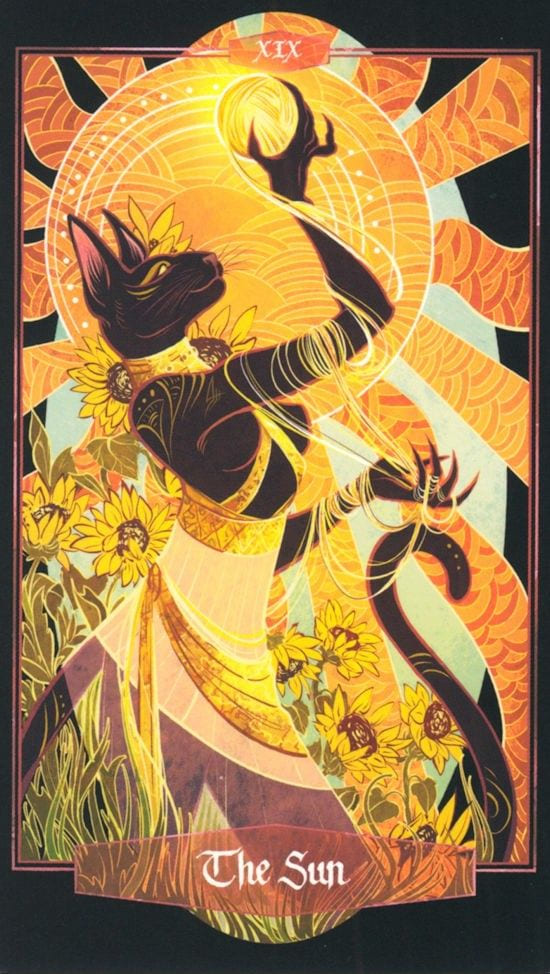
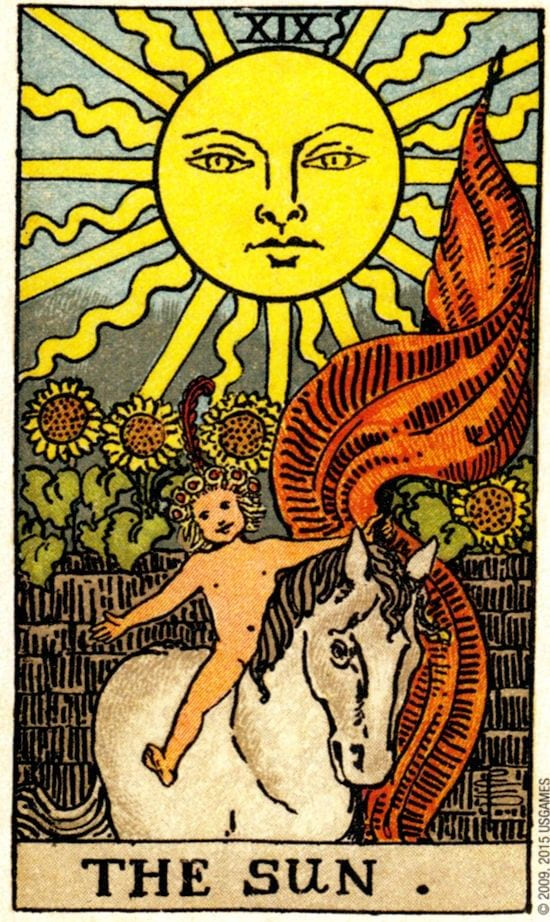
The Sun — This is the Solstice card. The sun at its zenith, life at its most radiant, joy without condition. When The Sun appears during Litha season, it is the universe saying: this is your peak. Stand in it. No hedging, no dimming yourself for someone else’s comfort. Full brightness.
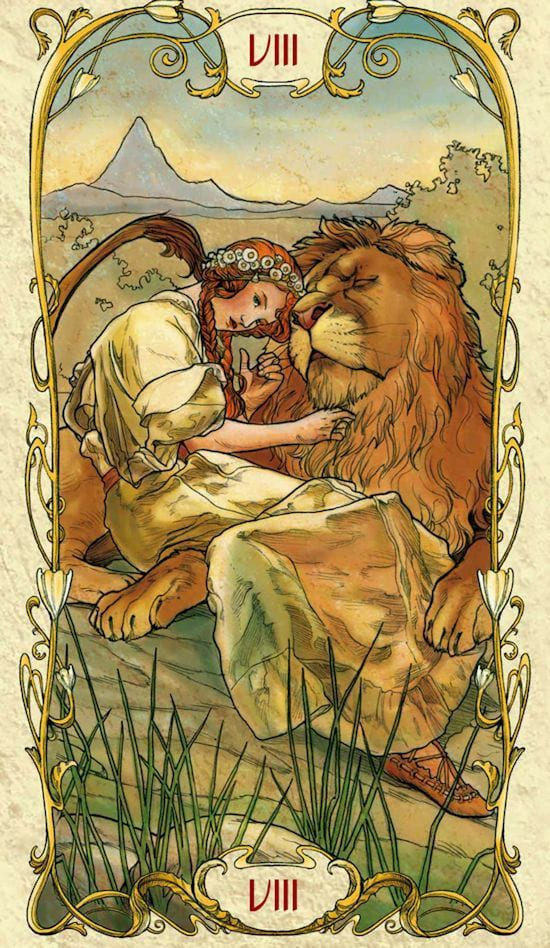
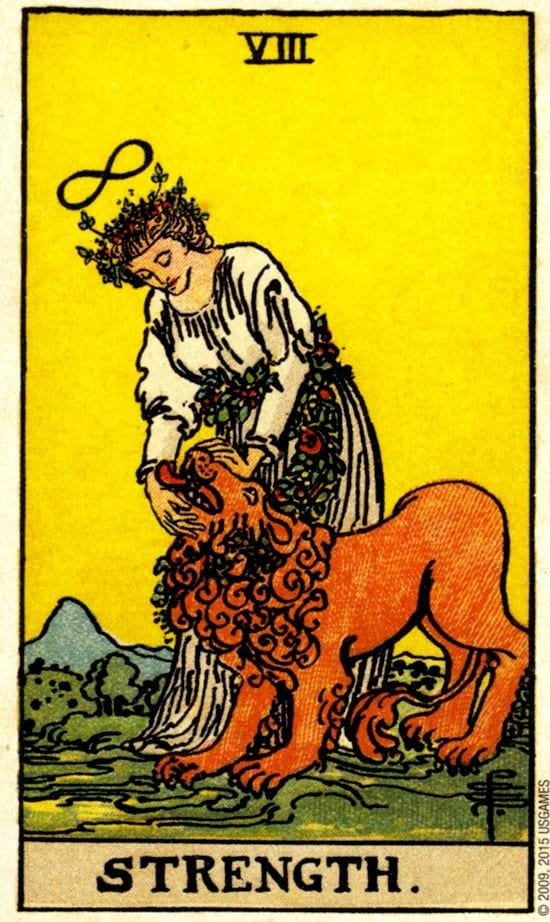
Strength — The quiet confidence of power that does not need to prove itself. The sun at the Solstice does not strain to be bright — it simply is. Strength asks the same of you. During Litha, this card says your inner fire is already at its peak. You do not need to push harder. Trust what is already burning.
The Chariot — Astrologically linked to Cancer, whose season begins at the Summer Solstice. The Chariot is willpower in motion, direction fueled by solar energy. When this card appears near the Solstice, the road ahead is lit. Move.
Ace of Wands — Pure creative fire. On the longest day, the Ace of Wands is not just a spark — it is a spark with the full force of the sun behind it. Whatever this card points to, act within 48 hours. The solar momentum is real.
Six of Wands — Victory and recognition. Litha celebrates what has grown and what has been achieved. The Six of Wands during the Solstice says: what you have been building is working. Let yourself be seen. Accept the garland.
The World — Completion and wholeness. If The World appears in a Litha reading, something in your life has reached its full expression — a cycle complete, a journey fulfilled. This card and Litha share the same energy: the moment of perfect fullness before the wheel turns again.
A simple Litha tarot practice
On the morning of the Solstice — or any time on that long, bright day — find a spot where sunlight can reach you. Shuffle your deck and pull three cards:
- What has reached its peak in my life? — The bloom that this year’s work has produced
- What does the longest light reveal? — Something I have been avoiding seeing, now illuminated
- How do I carry the light forward? — What sustains me as the days begin to shorten
Do not rush to look up meanings. Sit with the images. Let the sun warm the cards in your hands. Litha readings are most powerful when you read with your body first and your mind second.
If you want a deeper seasonal experience, try the Summer Solstice tarot ritual — a complete guide to working with the Solstice energy through specific spreads and practices.
The light is yours
Litha does not ask you to be humble. It does not ask you to dim yourself or save your brightness for later. It asks one thing: stand in the fullness of what you are, right now, at the peak of the year, and let it be enough.
The sun is as high as it will ever be. The day is as long as it will ever be. And you — right here, right now — are exactly as bright as you need to be.
Shine.
Frequently Asked Questions
When is Litha celebrated?
Litha is celebrated on the Summer Solstice, which falls between June 20-22 in the Northern Hemisphere (most commonly June 21). It marks the longest day of the year — the moment when the sun reaches its highest point and daylight lasts up to 16 hours.
What is the difference between Litha and Midsummer?
They refer to the same celebration. Litha is the Wiccan/Neopagan name for the Summer Solstice sabbat on the Wheel of the Year, while Midsummer is the broader European folk tradition. In Scandinavian countries it's called Midsommar, and in Celtic traditions it overlaps with the solstice fire festivals.
What tarot cards represent Litha energy?
The Sun (peak solar power), Strength (confident power without force), The Chariot (willpower in motion — astrologically linked to Cancer season which begins at the solstice), Ace of Wands (pure fire energy), and Six of Wands (victory in full light) are the cards most aligned with Litha.
Can I celebrate Litha if I live in the Southern Hemisphere?
Yes, but your Summer Solstice falls in December (around December 21). Follow the sun's actual cycle where you live. When the Northern Hemisphere celebrates Litha in June, the Southern Hemisphere is honoring the Winter Solstice (Yule), and vice versa.