What Is Samhain? Tarot and the Witch's New Year
The night the veil thins
There is a night at the end of October when something shifts. The air gets a particular weight. The dark arrives earlier and feels different — not empty but full. If you’ve ever felt that Halloween carries something older and more serious than costumes and candy, you’ve been sensing Samhain.
Samhain (pronounced SAH-win or SOW-in) is the ancient Celtic festival that marks the boundary between autumn and winter, between the world of the living and the world of the dead. In many pagan traditions, it’s considered the most powerful night of the year. And for those of us who read cards — it’s the night when the cards speak clearest.
What Samhain actually is
Samhain is one of the eight festivals on the Wheel of the Year — the annual cycle of sabbats observed in Wiccan, Druidic, and many Neopagan traditions. It falls on October 31 – November 1 (Northern Hemisphere) and marks the midpoint between the autumn equinox (Mabon) and the winter solstice (Yule).
Historically, Samhain was the Celtic New Year — the beginning of the dark half of the year. The Celts divided their calendar into light and dark halves, and Samhain was when the old year died and the new one was born from darkness. Cattle were brought in from pastures, the last harvest was gathered, and communities prepared for winter.
The most important belief: on Samhain night, the veil between the world of the living and the Otherworld grows thin. The dead can visit, spirits can cross over, and the boundary between what is seen and unseen becomes permeable. This is why divination — including card reading — has been associated with this night for centuries.
Samhain and modern Halloween
Modern Halloween is Samhain’s descendant. The connection runs deep:
- Costumes originated from the Celtic practice of wearing disguises to confuse wandering spirits
- Jack-o’-lanterns evolved from the Irish tradition of carving turnips with faces to ward off evil spirits (pumpkins were the American adaptation)
- Trick-or-treating echoes the practice of leaving food offerings for the dead — “treats” to appease spirits
- Bonfires were central to Samhain celebrations, with communities gathering around communal fires for protection and purification
The spiritual layer that modern Halloween often misses: this isn’t just about the scary. It’s about the sacred. Samhain is a time of honoring those who came before, sitting with mortality, and recognizing that death is part of the cycle — not the end of it.
The Wheel of the Year context
Samhain sits opposite Beltane on the Wheel. Where Beltane (May 1) celebrates life, fertility, and the full bloom of spring, Samhain honors death, completion, and the descent into darkness. Together they form the axis of life and death that the Wheel turns on.
After Samhain comes the deep winter: Yule (Winter Solstice), then Imbolc (February 1) — the first stirring of light. Samhain is the moment of surrender to darkness before the slow return begins.
In the Wheel’s wisdom: darkness is not punishment. It’s gestation. Seeds germinate in the dark. Ideas form in silence. Rest precedes renewal. Samhain teaches this.
Tarot cards that carry Samhain energy
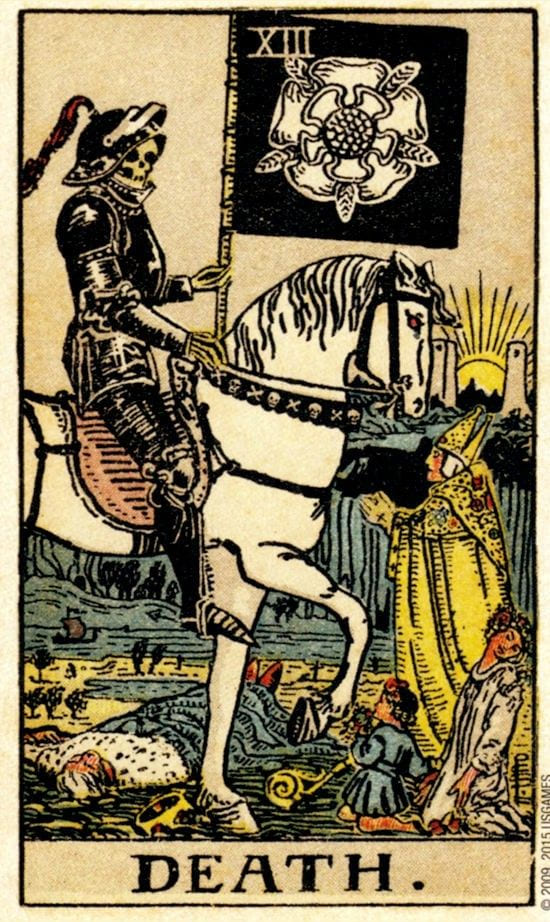
Death — the most obvious and most misunderstood. On Samhain, Death isn’t a warning — it’s the energy of the night itself. Transformation, endings that make space for beginnings, the composting of what was into what will be.
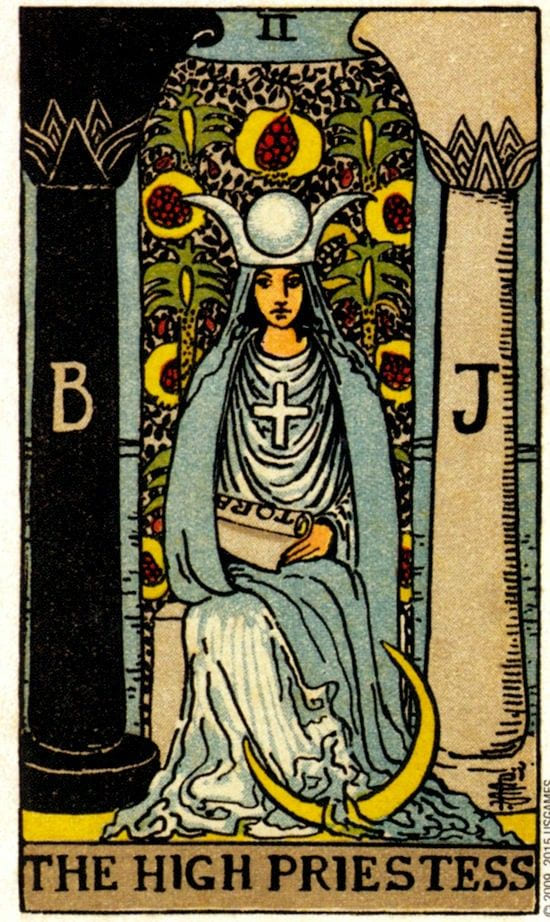
The High Priestess — the keeper of the veil. On Samhain, she stands at the threshold between worlds, holding the knowledge that crosses over. If you pull her on this night, pay attention.
The Moon — everything unseen, intuitive, hidden beneath the surface. Samhain is The Moon’s night — when what’s usually invisible becomes almost tangible. Dreams, visions, gut feelings all intensify.
The Hermit — solitude and inner wisdom. Samhain is a time to go inward, to carry your own lantern into the dark. The Hermit doesn’t fear the night — he navigates it.
Judgement — the call from beyond. Ancestors reaching out, past selves asking to be integrated, old debts settling. On Samhain, Judgement becomes literal: the dead speak, and the living listen.
How to honor Samhain
Even if you don’t follow a specific pagan path, Samhain’s themes are universal:
- Remember your dead. Set a place at dinner for someone you’ve lost. Light a candle. Say their name.
- Do a year-end review. What died this year that needed to? What are you still holding?
- Pull cards. Samhain is traditionally the most powerful night for divination. The veil is thin — the cards respond.
- Sit with darkness. Spend time without screens, without light. Let your eyes adjust. Notice what you see when the distractions are gone.
- Release. Write down what you’re done carrying. Burn it (safely). Let the smoke carry it into the Samhain fire.
A simple Samhain card pull
Before midnight on October 31, shuffle your deck and pull three cards:
- What has died this year — the completion, the ending, the loss
- What message the dead have for me — what crosses the thinned veil
- What seeds I’m planting in darkness — what begins its gestation now
Read slowly. Read by candlelight if you can. And trust whatever comes — Samhain cards don’t lie.
Frequently Asked Questions
When is Samhain celebrated?
Samhain is celebrated from sunset on October 31 to sunset on November 1 in the Northern Hemisphere. It marks the midpoint between the autumn equinox and winter solstice — the beginning of the dark half of the year.
What is the difference between Samhain and Halloween?
Halloween evolved from Samhain. The ancient Celtic festival honored the dead and the thinning veil between worlds. Modern Halloween kept the costumes (originally to confuse spirits) and carved pumpkins (from turnip lanterns) but lost most of the spiritual meaning.
What tarot cards represent Samhain?
Death (transformation, endings), The High Priestess (hidden knowledge, the veil), The Moon (the unseen, intuition), The Hermit (solitude, inner wisdom), and the Ace of Cups reversed (ancestral grief) are the cards most aligned with Samhain energy.
Is Samhain the witches' New Year?
Yes — in many Wiccan and Neopagan traditions, Samhain marks the end of one cycle and the beginning of another. The Wheel of the Year starts here, at the darkest point, because new life begins in darkness — seeds germinate underground before spring.