YOLO Tarot: All 78 Card Meanings Explained
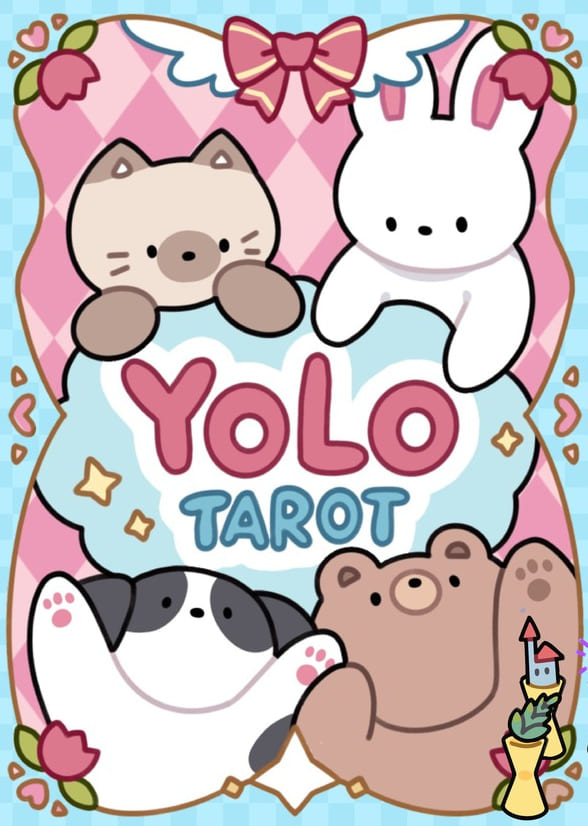
Traditional tarot whispers. YOLO Tarot kicks down the door, turns up the volume, and reminds you that the cards are not here to play it safe — and neither are you.
Created by Spark Deck, this 78-card deck takes the ancient tarot structure and floods it with contemporary energy. The artwork is bold, saturated, and unapologetically modern — bright colors crash against each other, figures leap and pose with the confidence of people who have decided that hesitation is not an option. There is no dusty mysticism here, no somber medieval tableaux. YOLO Tarot speaks the language of right now: vivid, direct, and charged with the kind of urgency that comes from truly believing you only get one shot at this life.
What makes this deck work is that beneath the high-energy surface, the tarot structure is sound. The 78 cards carry their traditional meanings faithfully — Spark Deck did not dilute the depth for the sake of style. The Tower still crumbles. The Ten of Swords still hurts. But they deliver those truths in a voice that meets you where you are instead of asking you to step into someone else’s century.
How the Deck Is Organized
The YOLO Tarot follows the classic 78-card tarot structure:
- Major Arcana (0–XXI): The 22 archetypal turning points — presented here with the energy and urgency of lived experience rather than distant mythology.
- Wands: The suit of fire. Drive, creativity, passion, and the courage to go after what sets your soul on fire.
- Cups: The suit of water. Emotion, love, connection, and the inner landscape where your deepest feelings live.
- Swords: The suit of air. Thought, truth, challenge, and the mental clarity that comes from cutting through illusions.
- Pentacles: The suit of earth. Work, money, health, and the real-world results of showing up and doing the thing.
Each suit runs from Ace through Ten, followed by Page, Knight, Queen, and King — 14 cards per suit and 56 Minor Arcana total.
Major Arcana
The Fool
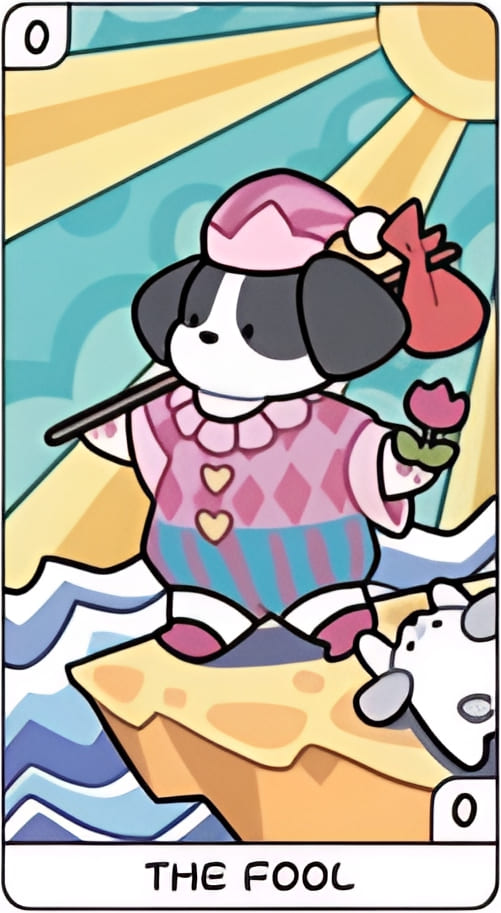
The Fool invites you to embrace spontaneity and adventure, urging a leap of faith into the unknown. The playful dog at the cliff with a sunlit background symbolizes optimism, new beginnings, and life as an open canvas ready for exploration. This card embodies innocence, trust, and the magic of potential while reminding you to learn from every experience. At the same time it warns against recklessness, advising you to balance whims with awareness as you step forward.
The Magician
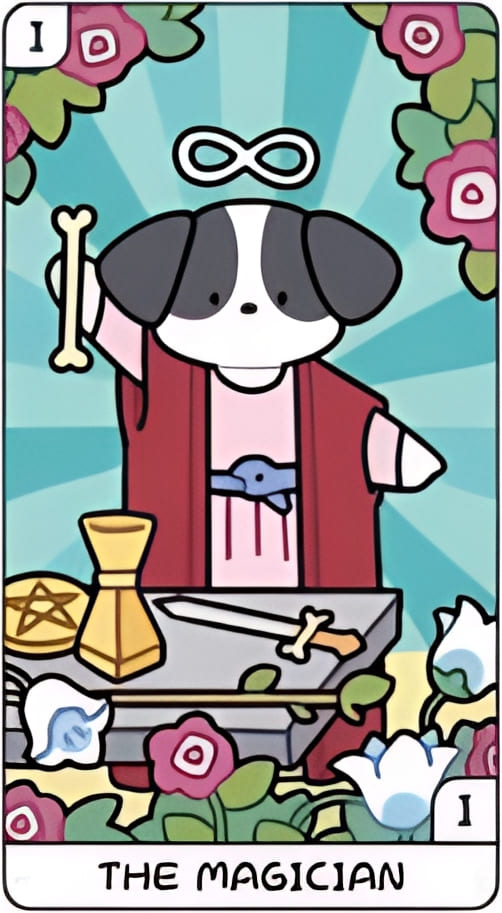
The Magician depicts confident skill and the power of manifestation, shown as a magician dog holding a bone with the infinity symbol overhead, symbolizing boundless potential to turn dreams into reality. The cup, sword, and pentacle on the table represent the four elements and mastery over resources needed to create change. The card urges you to tap into inner talents, unite thought and action, and act boldly and authentically to materialize solutions. It also cautions that creative force can ebb and flow and, when reversed, may signal manipulation or deceit, so integrity is essential.
The High Priestess
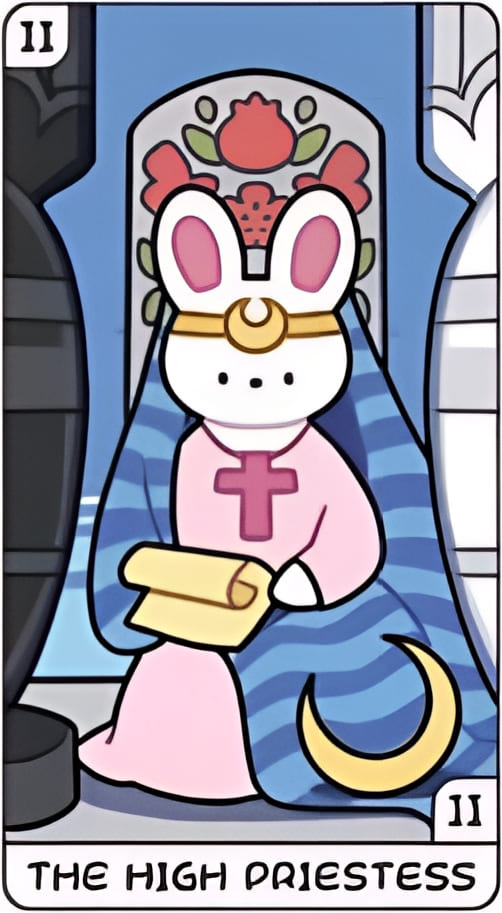
The High Priestess portrays a serene bunny embodying wisdom, intuition, and hidden knowledge. The scroll she holds and the crescent moon suggest secrets, dreams, and guidance from the subconscious. Upright, the card urges trust in inner voice and the exploration of instinct; reversed, it warns of ignoring inner knowledge or being disconnected from deeper truths. Overall, it calls for reflection, receptivity, and recognition of unseen forces shaping understanding.
The Empress
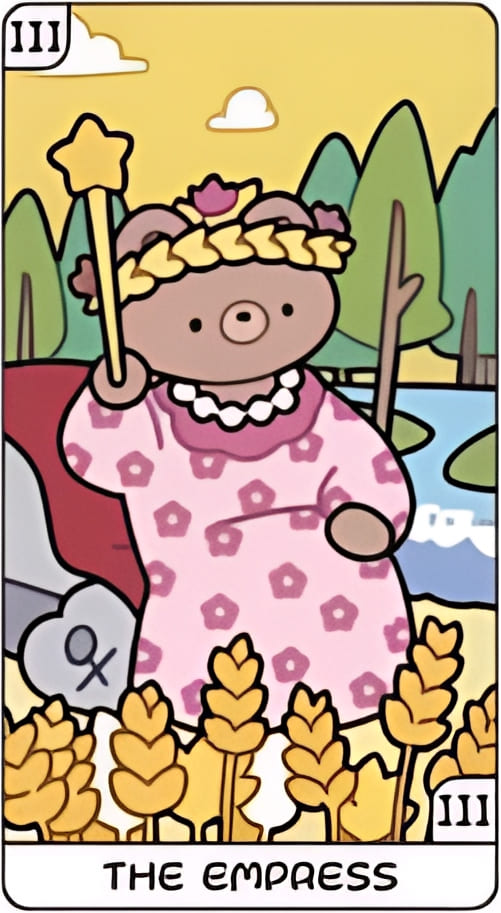
The Empress card portrays a nurturing, abundant presence embodied by a gentle bear in a fertile, sunlit landscape. It symbolizes fertility, creativity, growth, and the supportive strength that helps projects and relationships flourish. The star-tipped staff and crown of leaves point to guidance, authority, and a harmonious connection with nature. The card encourages embracing one’s inner nature, cultivating what you love, and allowing beauty and abundance into life. Reversed, it warns to restore balance by reconnecting with personal needs and practicing self-care when giving has been excessive.
The Emperor
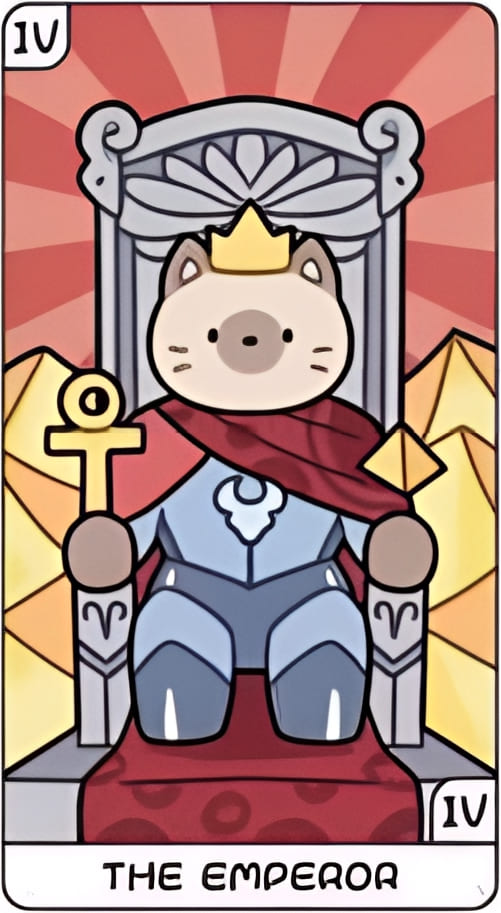
The Emperor depicts a regal feline ruler embodying authority, structure, and stability, symbolized by a cat on a throne with a scepter and an ankh. The imagery of a gold crown, red robe, pyramids, and radiant red rays emphasizes power, leadership, and dominion. The card urges establishing order, discipline, and strong leadership while warning that excessive rigidity can suppress creativity and joy. It advises balancing firm governance with wisdom, compassion, and openness to spontaneity so that leadership becomes a blessing rather than a burden.
The Hierophant
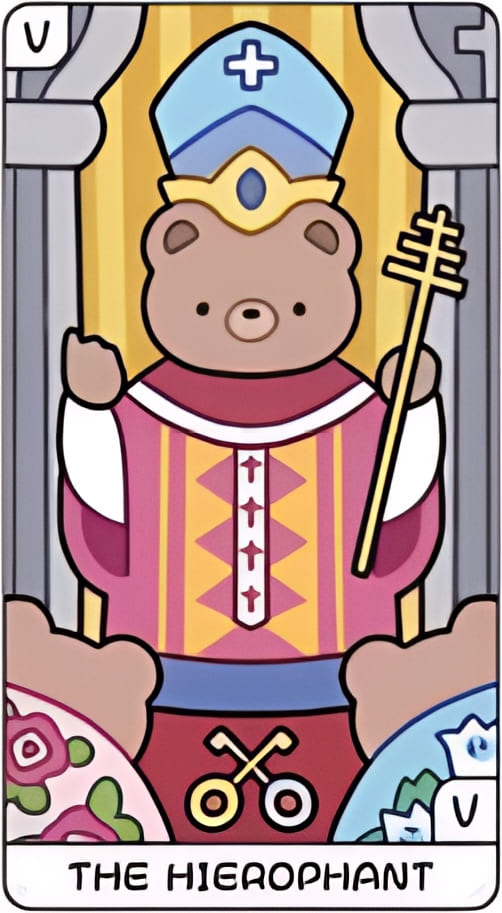
The Hierophant represents the bridge between tradition and spirituality, inviting seekers to engage with established wisdom and rites. The bear figure embodies the comfort and authority of established beliefs while guiding others through complex spiritual journeys. The presence of smaller companions highlights the collective pursuit of knowledge and the nurturing role of community. Reversed, the card can indicate a rebellion against tradition and an urge to forge an independent path, while upright it emphasizes harmony, consensus, and shared understanding as foundations for deeper truths.
The Lovers
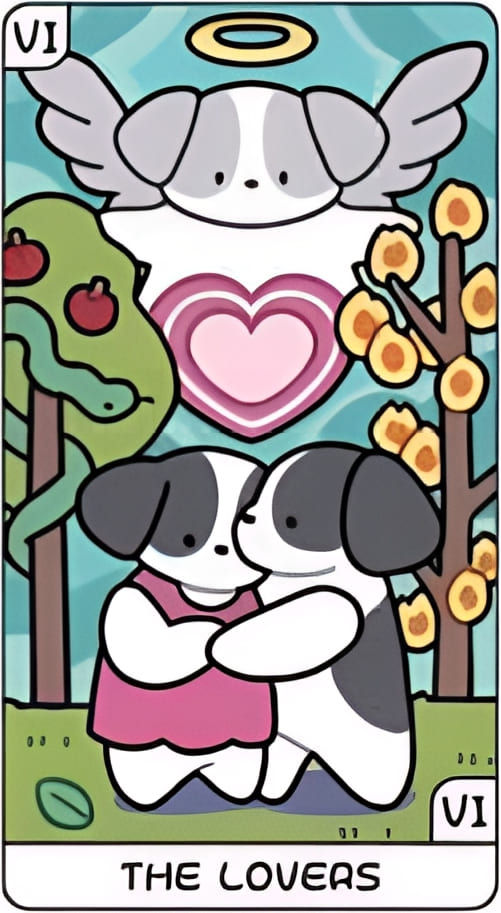
The card shows two animated dogs embracing beneath an angelic presence, symbolizing love, protection, and harmonious partnership. Imagery of a heart, apples, and bright flowers emphasizes romantic joy, abundance, and sweetness. The card highlights themes of partnership and choice, urging thoughtful decision-making to avoid misunderstandings or imbalance. It invites authenticity and clear communication in relationships while cautioning against hasty choices and unequal dynamics.
The Chariot
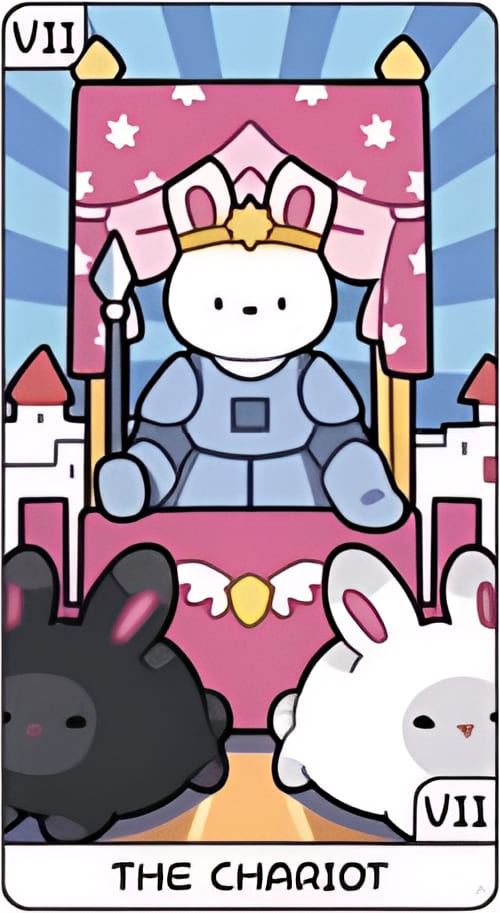
The Chariot represents determination, control, and the courage to steer your own path. The contrasting bunnies symbolize balancing opposing forces and harnessing different aspects of yourself to achieve victory. The bright sky and throne-like chariot add optimism, authority, and ambition to the journey, encouraging confidence and focus in overcoming obstacles. Reversed, the card warns of a lack of direction or control and suggests reassessing your approach to regain momentum.
Strength
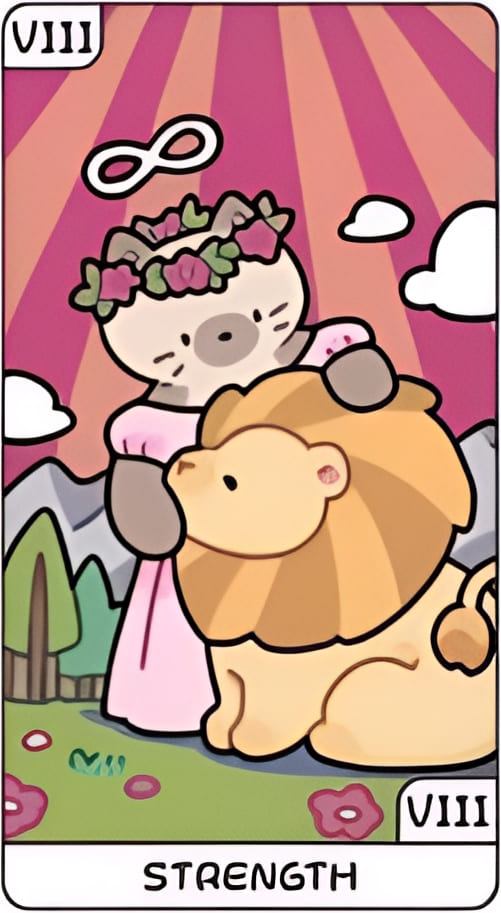
This Strength card depicts gentle power expressed through a tender bond between a sloth-like creature and a calm lion, emphasizing that compassion and patience are sources of inner strength. The imagery — soft pastels, a floral crown, and a serene landscape — invites peace and understanding rather than force. It advises balancing courage and tenderness when facing challenges, suggesting that true fortitude comes from empathy and restraint. Reversed, the card warns that restraint can become fear, and past struggles may hinder confronting the present with grace.
The Hermit
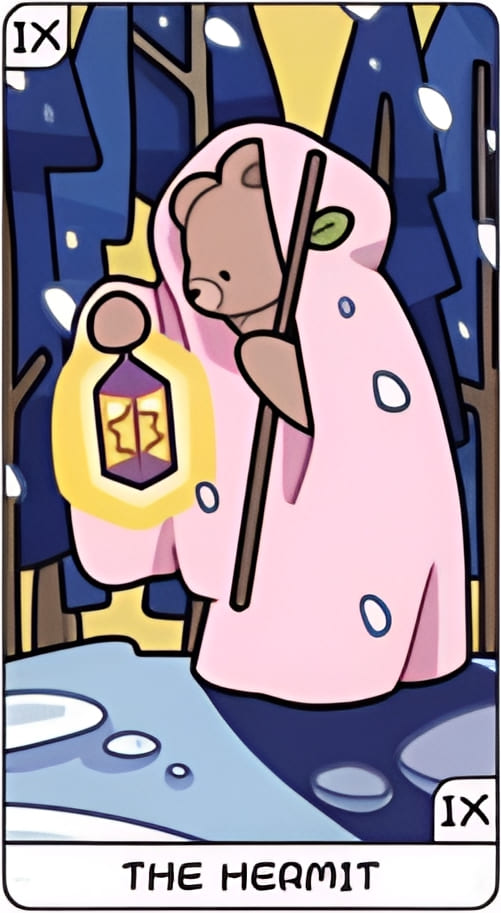
The Hermit depicts a bear in a pink cloak carrying a glowing lantern through a snowy, tree-lined landscape, symbolizing a journey of introspection. The lantern's soft glow represents guidance and the search for wisdom and self-discovery, illuminating the path toward inner understanding. This deliberate withdrawal from daily bustle can yield profound insights and personal growth but may also signal feelings of isolation and a need to reconnect with others. Embrace solitude mindfully, cherishing revelations while remaining open to the clarity and enlightenment that emerge.
Wheel of Fortune
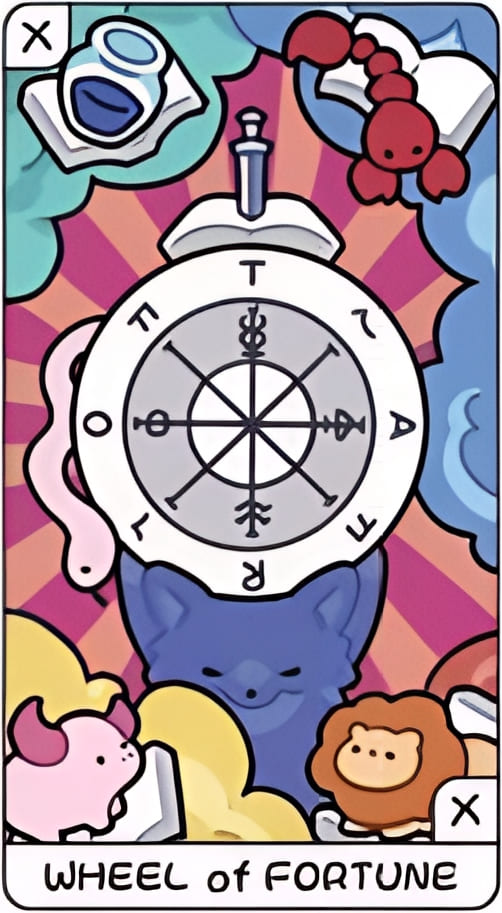
The Wheel of Fortune represents life's cycles and the ever-changing nature of fate, encouraging acceptance of change. Its colorful imagery and playful animals suggest finding joy and lightness amid unpredictability. The turning wheel conveys momentum and the need for adaptability as events bring both opportunities and challenges. Upright, the card invites luck and positive change and urges openness to new possibilities; reversed, it warns of resistance to change or feeling stuck and calls for examining what may be holding you back and trusting the natural flow of life.
Justice
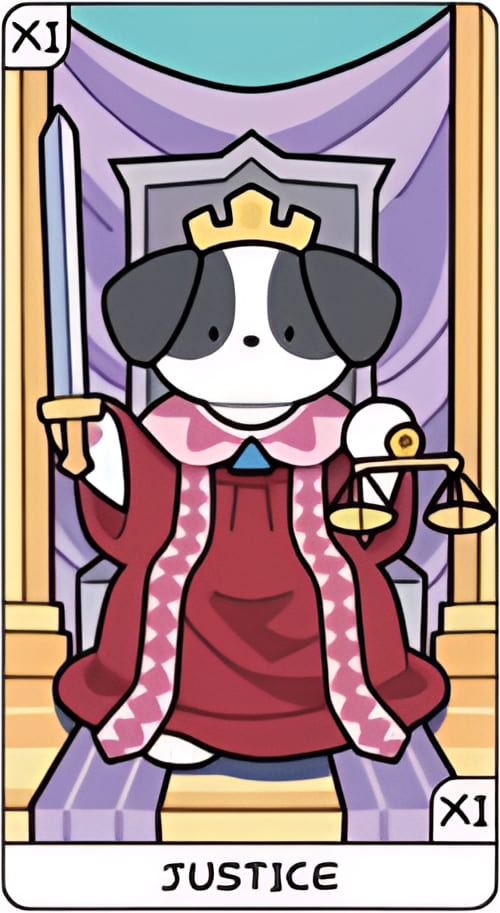
This card symbolizes fairness, balance, and moral authority, depicted by a regal dog holding scales and a sword. It highlights the need for careful consideration of options and the clarity to see and speak the truth. Upright, it calls for ethical reflection, responsibility, and commitment to living with integrity. Reversed, it warns of imbalance and injustice and urges reevaluation of choices and their impact on others.
The Hanged Man
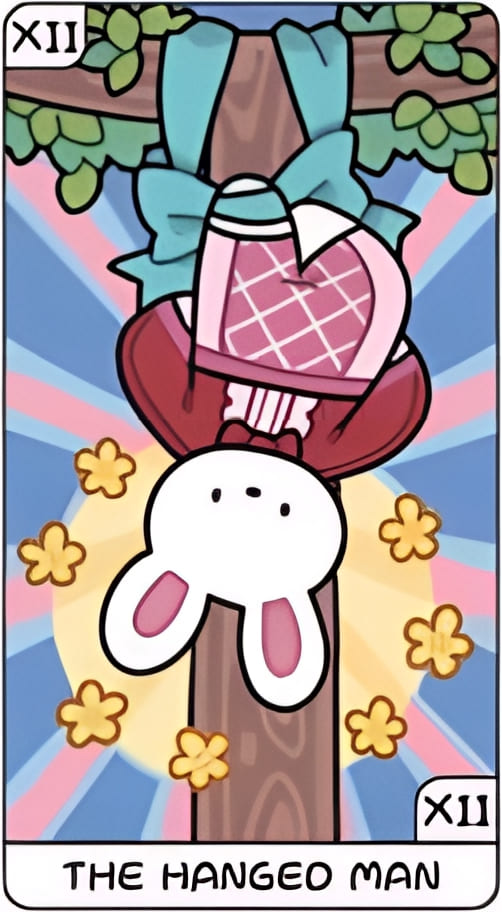
The Hanged Man shows a bunny suspended upside down, symbolizing reflection, surrender, and a shift in perspective. The image encourages reassessment and finding beauty in pause, suggesting that letting go can lead to transformation when the card appears upright. Reversed, it warns of stalled progress or resistance to necessary change. The gentle colors and playful imagery advise a light-hearted attitude during difficult phases, emphasizing that stillness can foster new insights.
Death
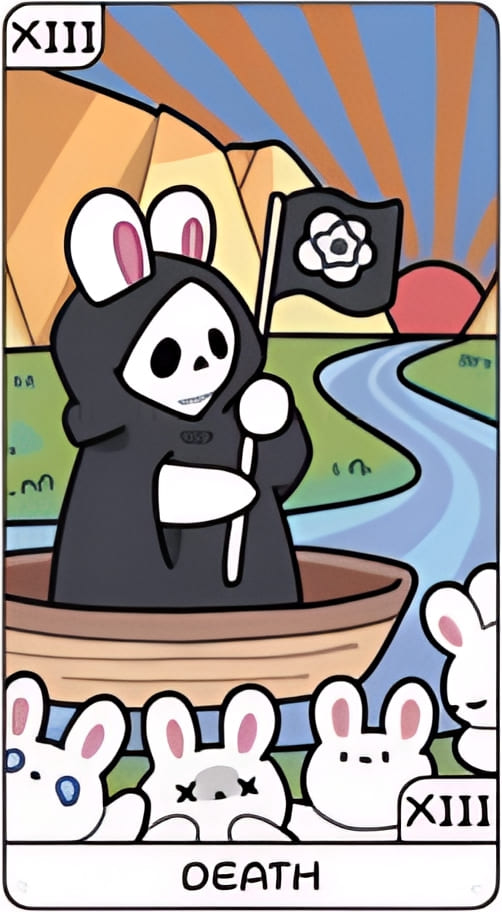
Death depicts transformation and the end of an era, with a skeletal figure navigating waters of change. The rabbits symbolize fragility and the inevitability of mortality, while the flower on the flag promises renewal and new beginnings. The card invites release of the past and embracing discomfort that comes with transition. Reversed, it warns against stagnation and clinging to what no longer serves, and the vibrant landscape underscores that life continues to unfold and urges acceptance of transitions with grace.
Temperance
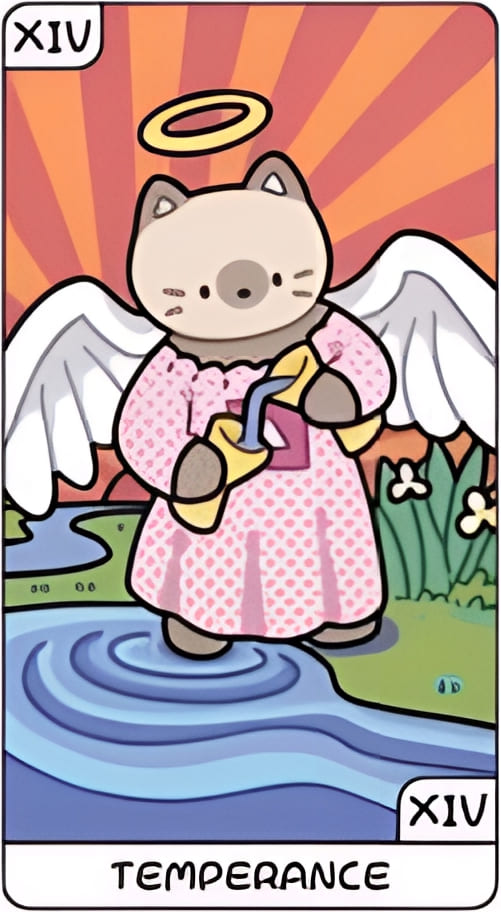
Temperance depicts an angelic, anthropomorphic cat who pours liquid between two vessels, symbolizing harmony through careful blending and moderation. The imagery emphasizes patience, balance, and the synthesis of opposing elements to promote healing and growth. The card advises adapting with purpose, combining passion with wisdom to master life's currents. In adversity, Temperance encourages calm, centered action that transforms challenges into grace.
The Devil
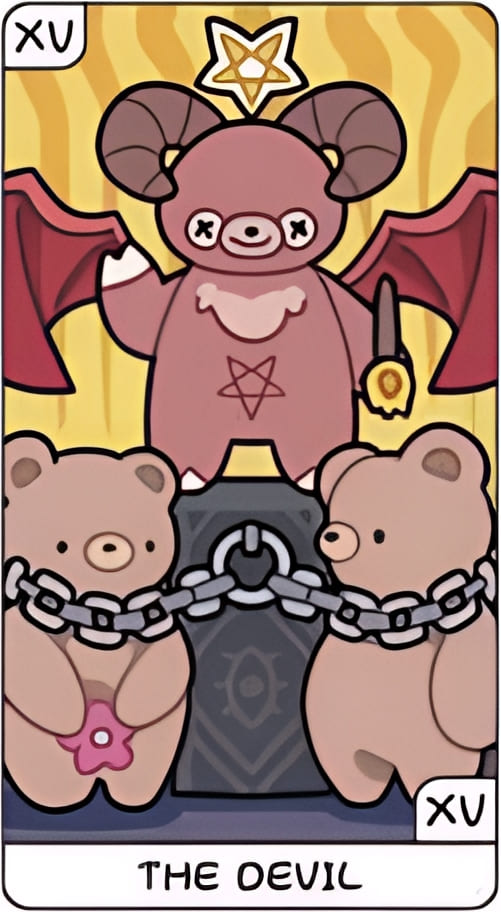
The card presents a cute pink devil symbolizing temptation, indulgence, and material allure that can bind us. Two shackled teddy bears represent innocent attachments and bonds that may lead astray, while the golden object highlights hollow desires and materialism. Upright, the card calls for reflection on attachments and a movement toward liberation; reversed, it signals breaking free and an awakening to inner strength and choice. The whimsical, bright imagery balances darkness with hope, reminding us that joy can coexist with serious themes of bondage and freedom.
The Tower
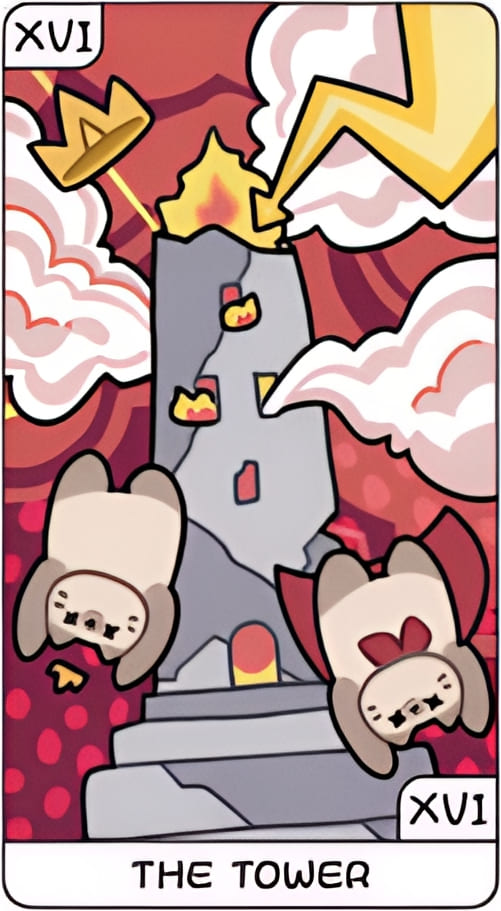
The Tower signifies sudden, often disruptive upheaval that destroys existing structures and assumptions. Lightning and flames represent abrupt revelation and catalytic change that force truth into view. The falling animals embody vulnerability and the frightening loss of security during this process. Although the experience is chaotic and may provoke resistance, it clears away obsolete beliefs and patterns. Ultimately the breakdown makes space for liberation and the possibility of new growth.
The Star
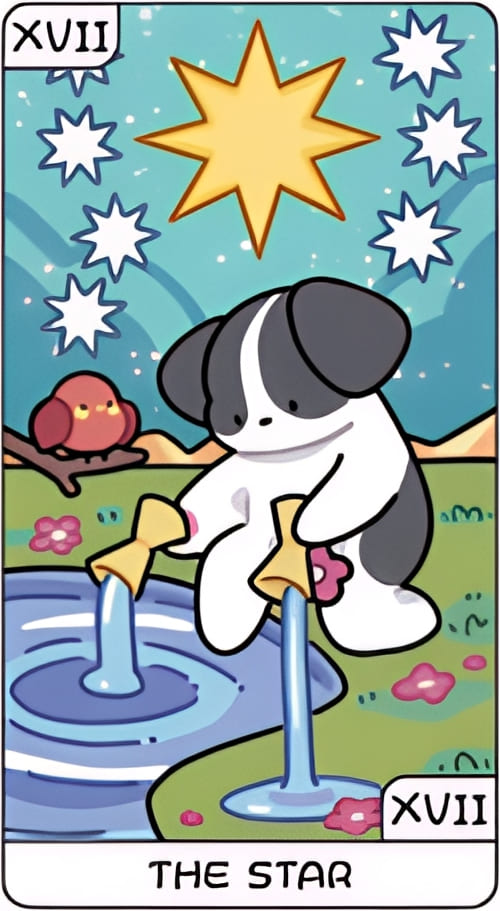
The Star card symbolizes renewal, hope, and inspiration, depicted by a bright star and a playful dog pouring water that nourishes the earth. It speaks to emotional flow, healing, and the release of burdens, inviting serenity and trust in the journey ahead. A small bird on the sidelines suggests quiet vigilance and the importance of staying connected as new beginnings approach. If the waters become stagnant, the card warns to rekindle joy and remain aware of what sustains your spirit.
The Moon
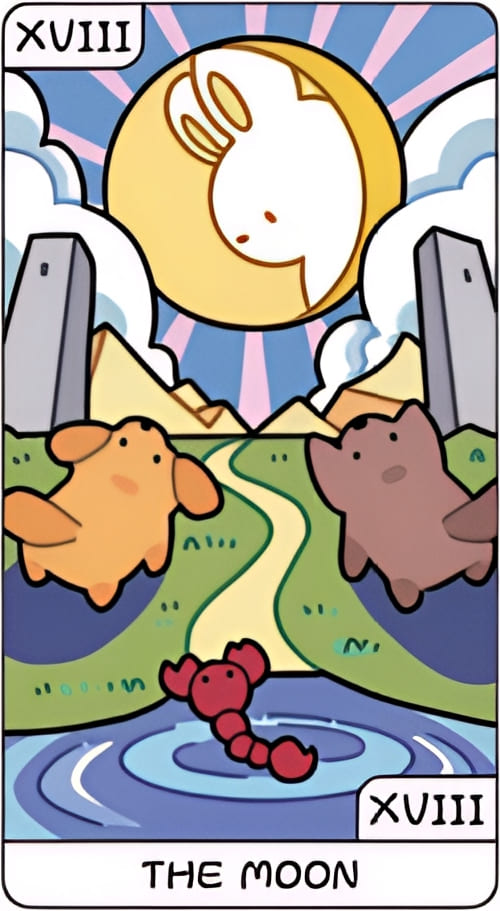
The Moon depicts a dreamlike landscape where a smiling moon illuminates a winding path, signaling confusion and illusion. Playful animals symbolize aspects of the subconscious urging exploration of hidden feelings, while the path indicates a journey that may not be straightforward. Trust your intuition to reveal truths amid shifting light and shadows, and use moments of clarity to transform fear into understanding. Beware of illusions and, when reversed, be alert to delusions or deception and seek clarity in ambiguous situations.
The Sun
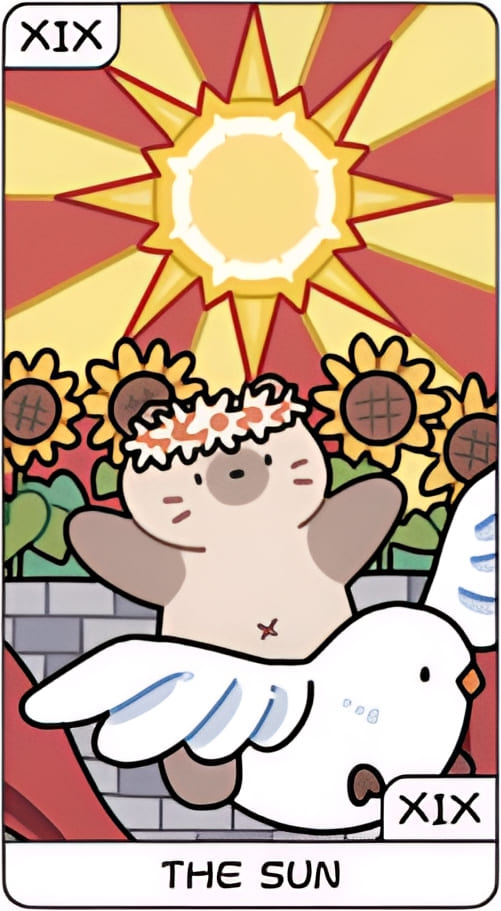
The Sun card embodies warmth, vitality, and unfiltered joy, depicting a cheerful creature riding a white bird beneath a radiant sun and blooming sunflowers. It symbolizes innocence, freedom, and uplifting connections that restore spirit and clarity. Upright, it signals success, happiness, and renewed energy; reversed, it can indicate temporary setbacks or difficulty finding joy. The card encourages embracing playfulness, positivity, and simpler pleasures to return to the light and reclaim vitality.
Judgement
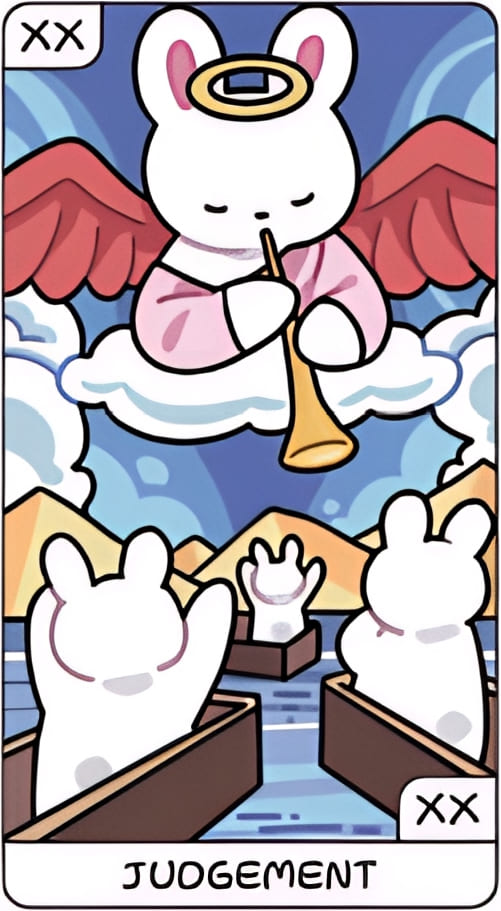
Judgement shows an angelic bunny sounding a trumpet to rouse other bunnies, symbolizing a spiritual calling toward awakening and renewal. The raised arms and tranquil boats suggest readiness to leave comfort and undergo personal transformation guided by higher, clarifying forces. The imagery invites reflection on past choices and presents a crossroads between embracing growth or remaining in familiar safety. Ultimately the card urges a wholehearted response to the clarion call of change, promising rejuvenation of spirit when one answers.
The World
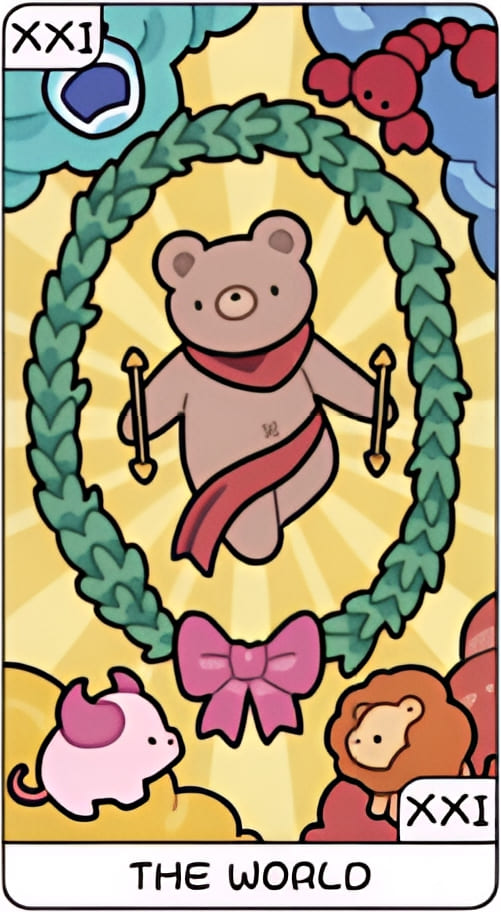
The World represents completion, fulfillment, and the successful culmination of a long journey. The central bear symbolizes the innocence and achievement that come from gathered experiences, surrounded by joyful creatures that indicate harmony and interconnectedness. The imagery radiates warmth and celebration, inviting recognition of lessons learned and milestones reached. This card signals closure and the readiness to embrace new beginnings while honoring past successes.
Wands
Ace of Wands
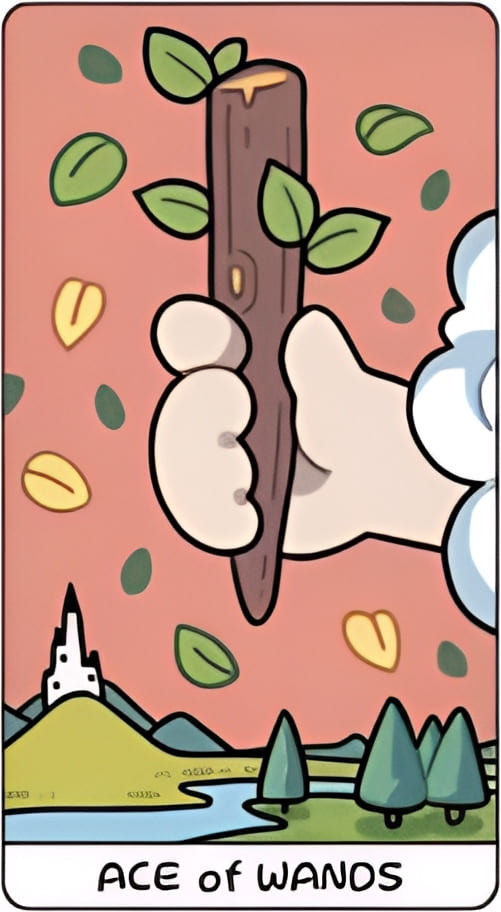
A sudden spark of creative energy and new beginnings is represented by a hand presenting a sprouting wand, urging you to act on fresh inspiration. The sprouting leaves signify growth, potential, and the vitality of ideas taking root. This card encourages bold steps forward and embracing opportunities as they appear, even amid uncertainty. It also warns that hesitation or faltering energy can stifle promising ideas, so now is the time to sow seeds for a fruitful journey.
Two of Wands
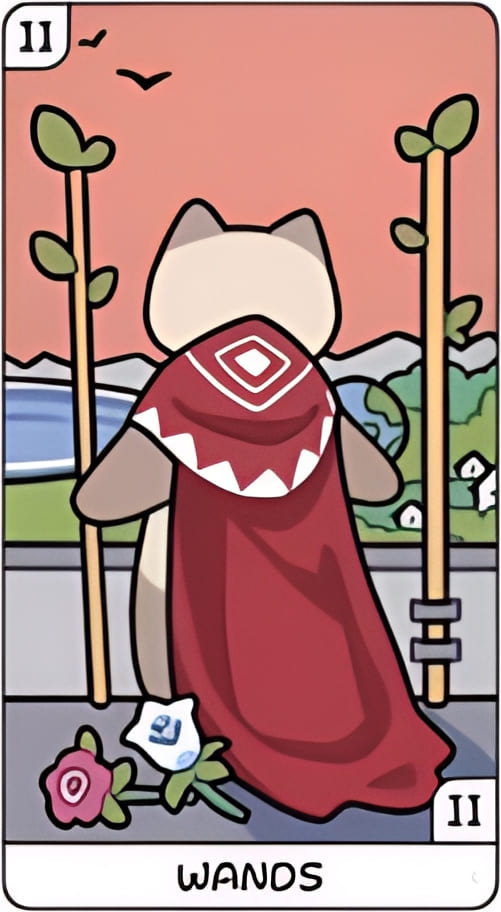
The Two of Wands represents planning and reflection, depicting a moment of standing at the threshold of new opportunities. It emphasizes considering future paths and bringing aspirations forward, indicating confidence and a desire for progress and exploration when upright. Reversed, it can reveal indecision or fear of the unknown, signaling a need to reevaluate goals. The card invites balancing comfort and adventure, encouraging one to embrace potential and the courage to step into uncharted territory.
Three of Wands
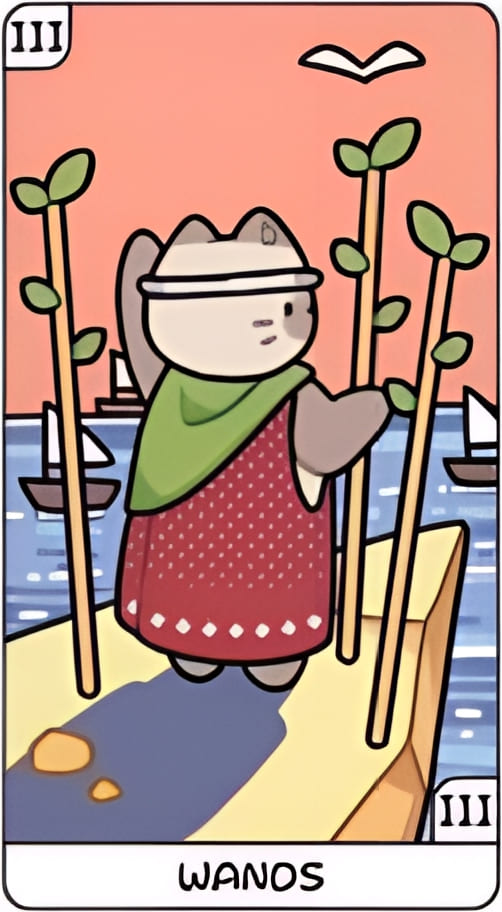
A figure stands at the edge of land looking out over waters filled with boats, symbolizing foresight, exploration, and the anticipation of opportunity. The boats suggest trade, collaboration, and prospects on the horizon, while the three shoots at the figure's side indicate growth and the fruitful outcomes of planning. Upright, the card conveys optimism, confidence, and potential expansion in personal and professional realms; reversed, it can signal stagnation, missed opportunities, or fear of stepping into the unknown. Overall, the card encourages embracing possibilities beyond the horizon, gathering resources, and boldly venturing forward.
Four of Wands
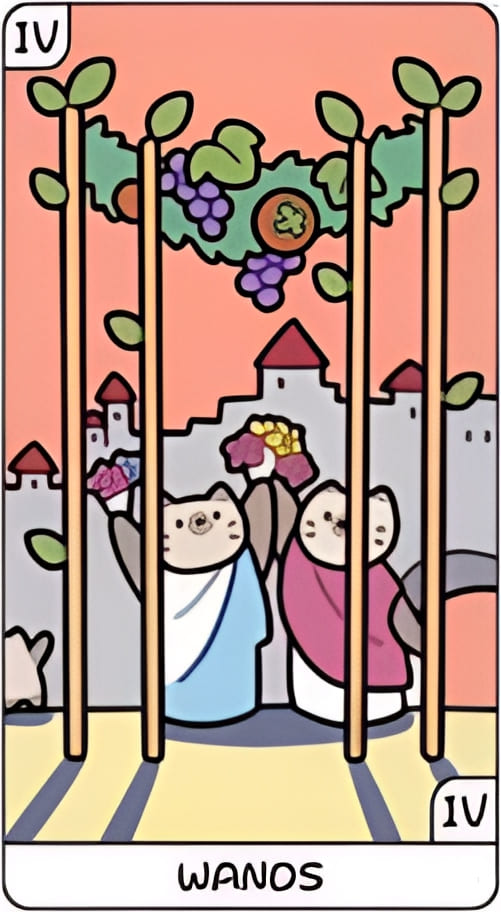
The Four of Wands represents celebration, community, and the stability that comes from shared achievements. It signals harmony, success, and milestones such as weddings, reunions, or personal accomplishments. Upright, it indicates flourishing relationships and lasting bonds built on gratitude and unity; reversed, it warns of disrupted connections or instability that require reevaluation of commitments. The card encourages honoring achievements and nurturing supportive relationships to maintain joy and belonging.
Five of Wands
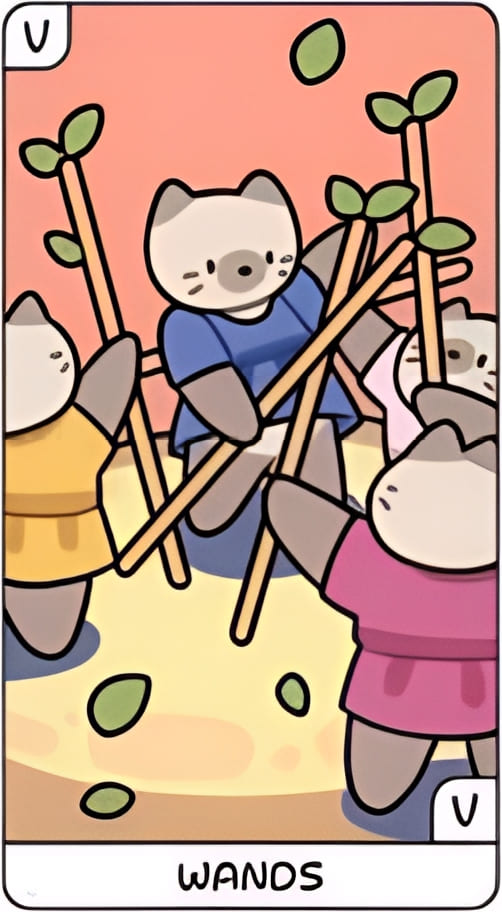
The card portrays playful conflict and lively energy as cats engage in friendly competition with their wands. Leaves and movement symbolize growth that emerges from challenges, suggesting progress through healthy rivalry. It emphasizes camaraderie mixed with competition and encourages finding joy in the struggle rather than avoiding opposition. Reversed, the card warns that conflicts can spiral out of control and highlights the need for resolution and teamwork instead of discord.
Six of Wands
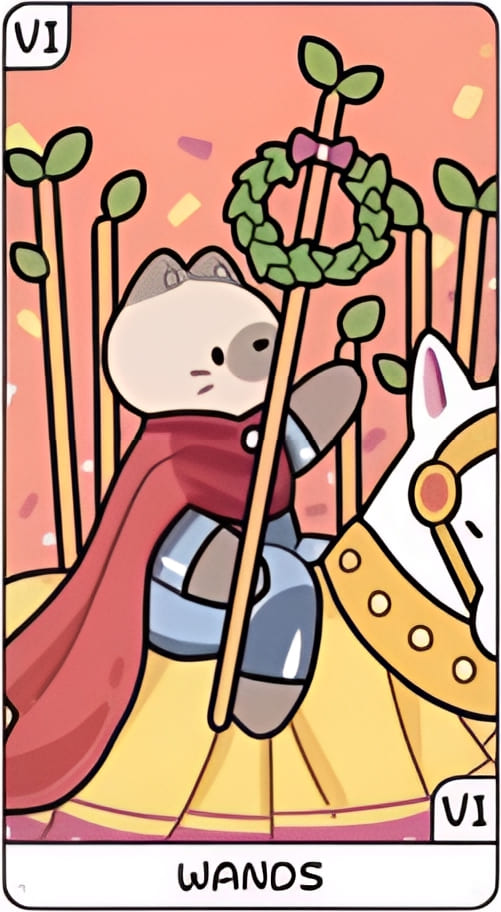
The Six of Wands symbolizes victory, public recognition, and successful outcomes following hard work. Upright, it points to leadership, triumph in competitions, and accolades that boost confidence and motivation. Reversed, it can indicate feelings of defeat, a lack of recognition, or obstacles and criticism that hinder celebration. The card encourages reflection on the balance between personal achievement and the external validation one seeks while urging perseverance.
Seven of Wands
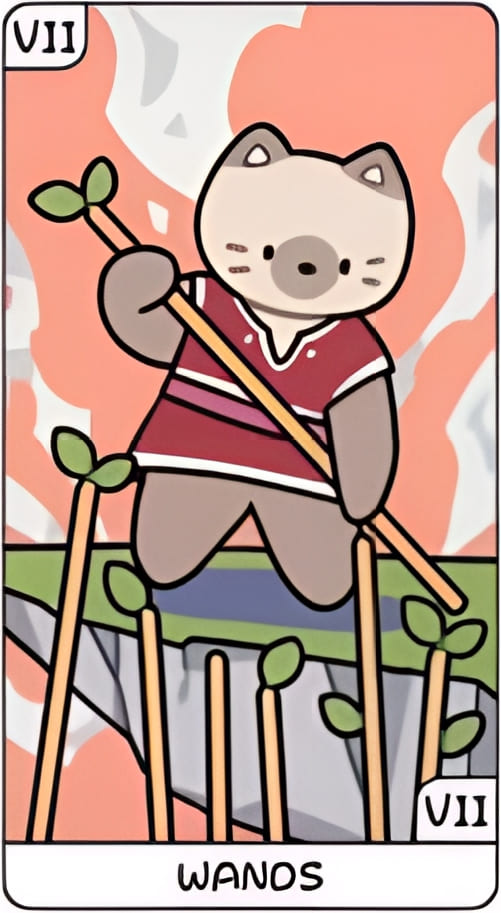
The Seven of Wands represents standing your ground amid challenges and competition, urging perseverance and courage. It depicts facing adversity from multiple fronts and emphasizes that determination can lead to success if you remain steadfast. The card can also point to feeling overly defensive or adopting defensive postures against perceived threats, warning against losing openness. Its vibrant, warm imagery highlights the inner strength and integrity needed to navigate conflicts and uphold your beliefs.
Eight of Wands
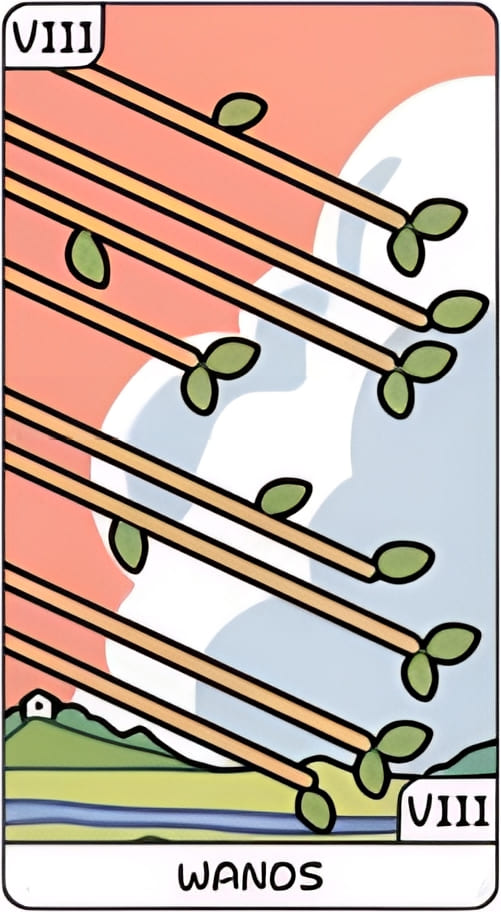
The Eight of Wands represents swift action, rapid progress, and forward momentum, indicating that events and communications may accelerate unexpectedly. It often points to messages, news, or developments that push situations toward quick resolution. When reversed, the card warns of delays, obstacles, or miscommunications that interrupt this momentum. Overall, it encourages seizing the present energetic flow and responding decisively to opportunities.
Nine of Wands
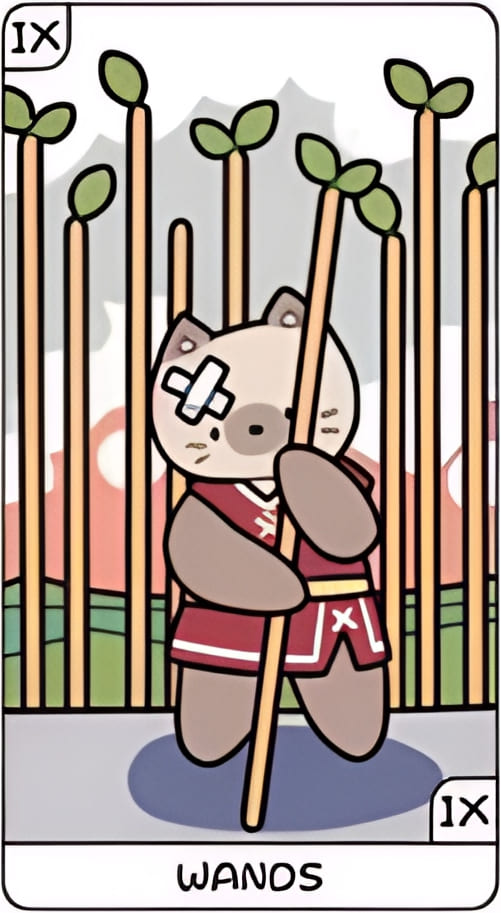
The Nine of Wands depicts endurance and vigilant readiness after hardship, symbolized by a bandaged bear standing guard. Its scars and weary stance represent battles fought and the persistence to continue despite pain. The tall stalks behind the bear promise new growth and renewal, emphasizing resilience and the need to rest and heal. The card advises preparation and guarding against further challenges while encouraging reassessment of fears when dread begins to overshadow the spirit. Ultimately it calls for balancing vigilance with self-care so one can rise stronger and wiser.
Ten of Wands
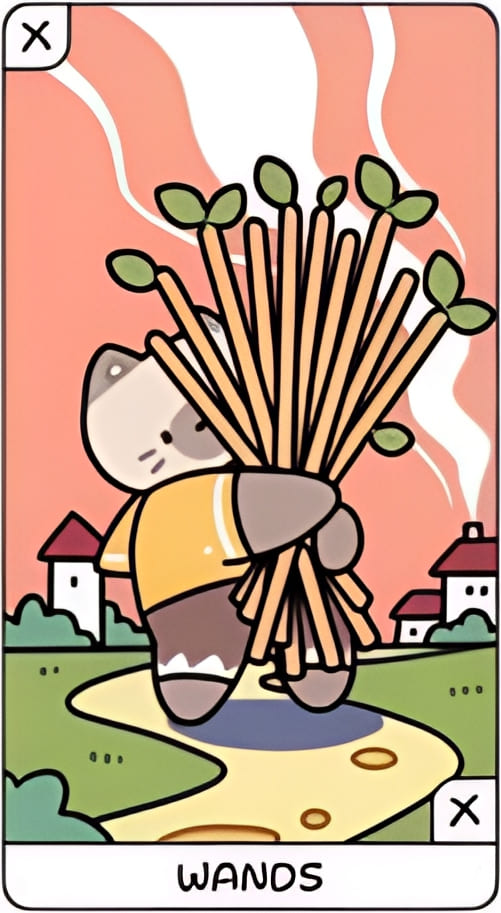
The Ten of Wands depicts a bear carrying a heavy bundle of sticks, symbolizing burdens and responsibilities that weigh one down. A winding path and small houses suggest a challenging journey with potential rewards for perseverance. The card warns against taking on too much and encourages delegating tasks or laying down some wands to restore balance. The bright, pink-hued sky offers hope of success while reminding you to care for yourself and pause to reassess when the load becomes overwhelming.
Page of Wands
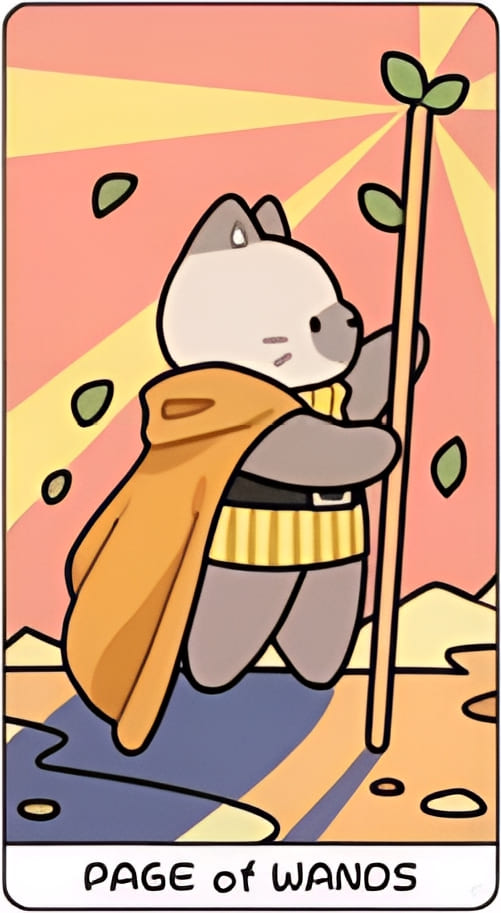
The Page of Wands embodies youthful enthusiasm, creativity, and a readiness to explore new horizons. It symbolizes the blossoming of ideas and a connection to nature, encouraging openness to opportunity and inspiration. There is also a caution about naivety and the potential to overlook practical realities when swept up in excitement. Reversed, this energy can become restlessness or impulsivity, prompting a pause for reflection and careful nurturing of ideas before acting.
Knight of Wands
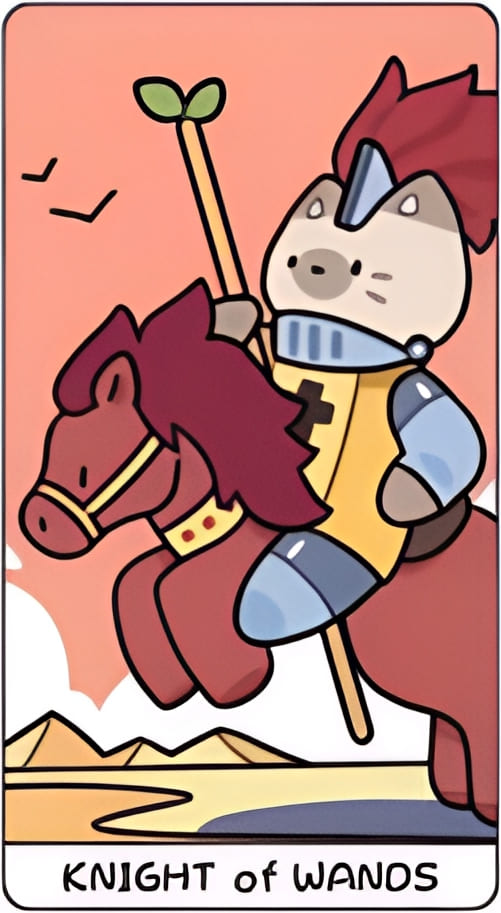
The Knight of Wands represents adventurous energy, enthusiasm, and the drive to pursue new challenges. Depicted as a cheerful knight on a spirited horse with a sprouting wand, the card symbolizes growth, vitality, and bold initiative. Upright, it encourages spontaneity, decisive action, and harnessing inner passion to chase dreams. Reversed, it warns of impulsiveness, hasty actions, and potential burnout, suggesting reflection before charging ahead.
Queen of Wands
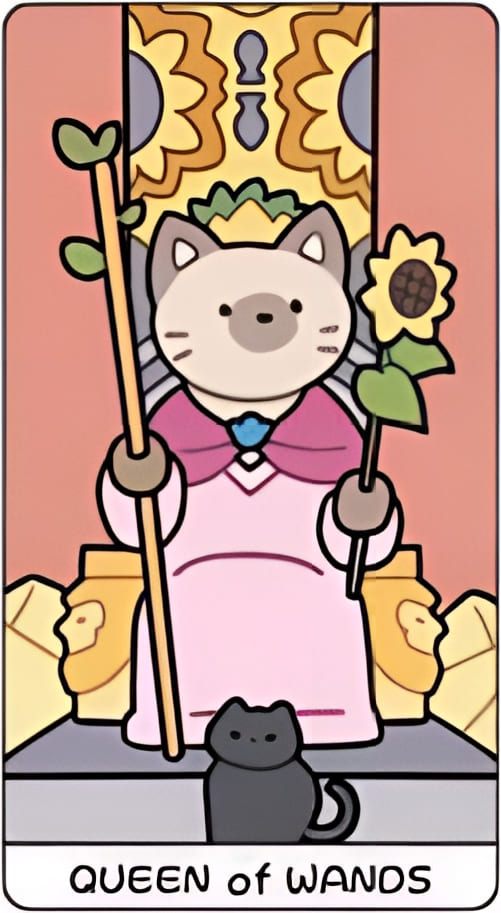
The Queen of Wands represents vibrant, confident energy, creativity, and a warm, magnetic presence that inspires others. She embodies empowerment and encourages you to embrace your passions, take bold action, and lead with both fierceness and nurture. Her connection to nature and intuition — symbolized by sunflowers and the black cat — highlights a balance of outer charisma and inner knowing. Reversed, her force can tip into impatience or conflict, prompting a need to moderate assertiveness and seek harmony.
King of Wands
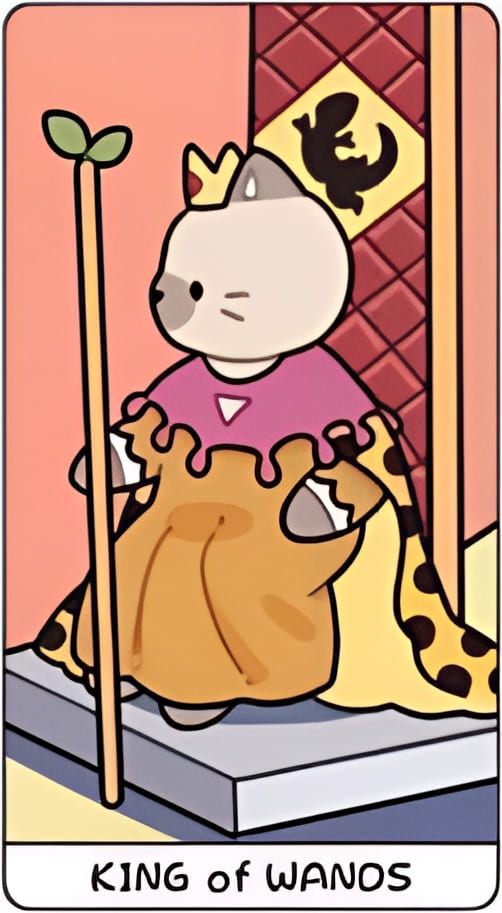
The King of Wands embodies charismatic, creative leadership and confident vision. He invites you to harness passion and lead with inspiration, as shown by his colorful robe and sprouting staff. The imagery emphasizes flourishing ideas and the growth he fosters in others. Reversed, the card warns against overpowering others with ambition and allowing your drive to overshadow their contributions.
Cups
Ace of Cups
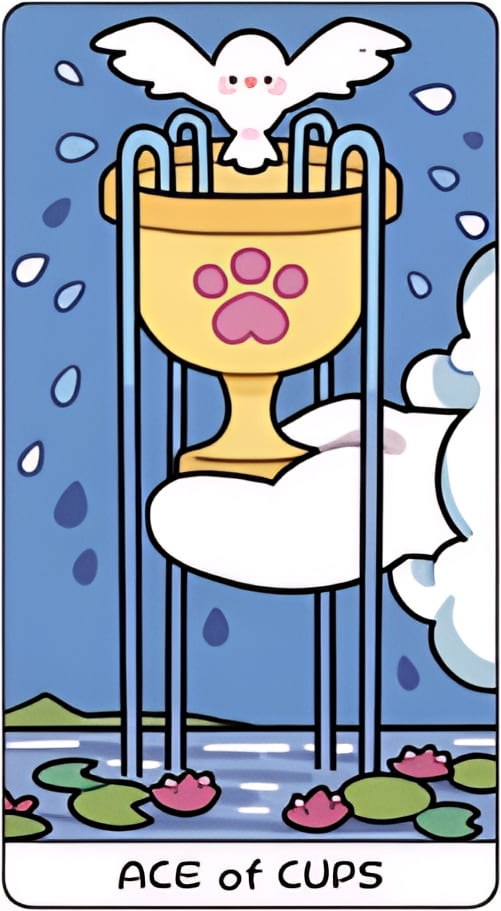
The Ace of Cups represents the purest form of emotional fulfillment and the beginning of new emotional or creative chapters. It signals an overflowing of feelings that can herald a beautiful relationship or a surge of artistic inspiration. When upright, the card encourages opening the heart, embracing intuition, and nurturing relationships; reversed, it warns of emotional blockages and unresolved feelings that need addressing. The cup and dove imagery underscore themes of peace, joy, and emotional connection, inviting one to let inner feelings flow freely.
Two of Cups
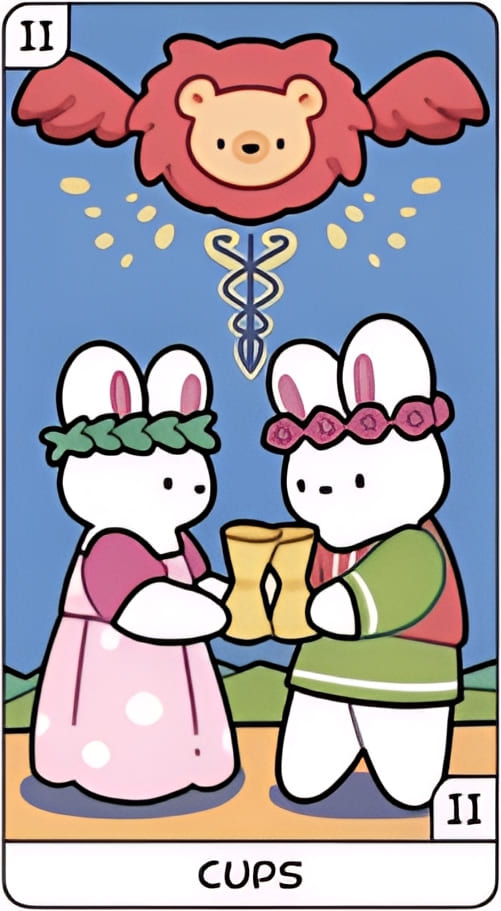
Two of Cups depicts mutual connection, partnership, and emotional sharing, symbolized by two bunnies exchanging a golden chalice under floral crowns. The imagery emphasizes commitment and harmony, while the red winged lion above introduces strength, passion, and vibrant energy. In moments of ease, the card signals unity, mutual respect, and joyful exchanges; in times of discord, it suggests unmet feelings or misunderstandings. It advises reflection and open communication to heal rifts and deepen bonds.
Three of Cups
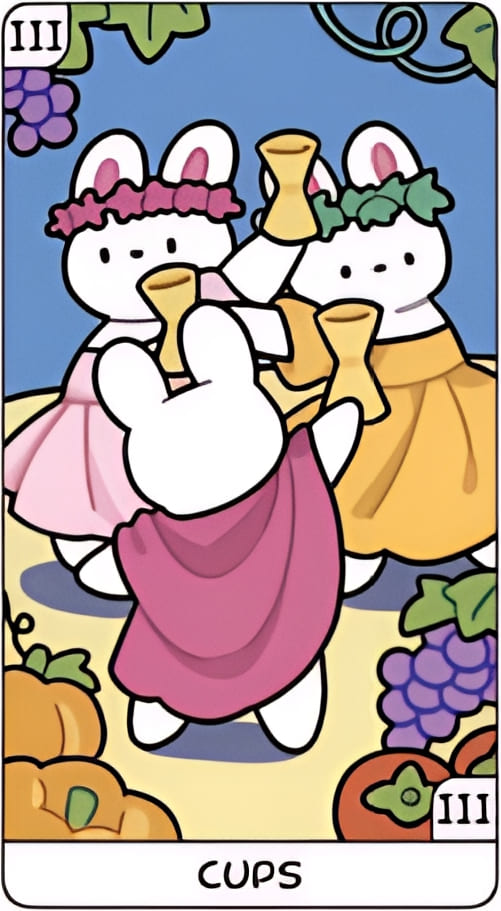
The Three of Cups signifies joyful celebration, strong friendships, and community bonds, encouraging social gatherings and reunions. It highlights togetherness, shared happiness, and creative collaboration as friends unite to support one another. The card often points to festive, communal energy and successful teamwork. Reversed, it can warn of overindulgence, strained social dynamics, or the need to reassess relationships and boundaries. Overall, it invites the cultivation of harmonious connections and shared experiences.
Four of Cups
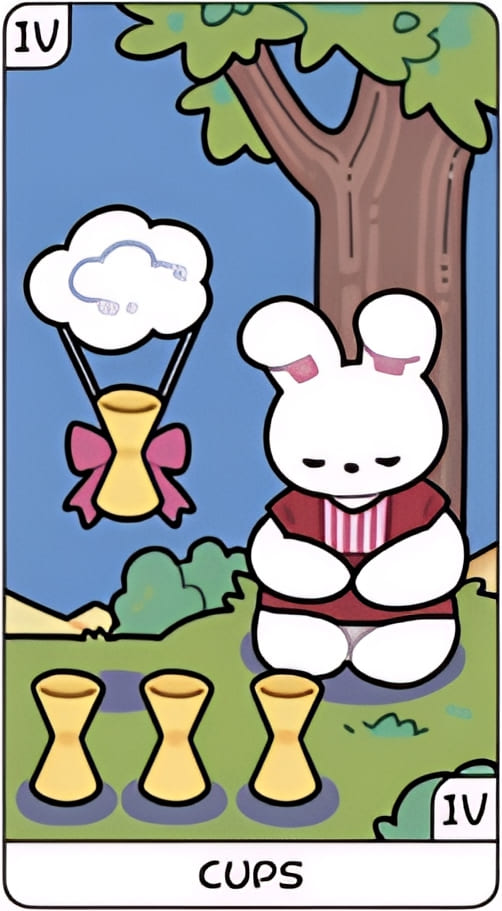
The Four of Cups represents a period of contemplation and introspection, where one may feel disconnected from their surroundings. The image of the rabbit focused on three cups while a cup appears in a thought bubble highlights fixation on what is already present and a missed opportunity. The card cautions against stagnation and urges a reassessment of desires and priorities to become aware of overlooked possibilities. Reversed, it can indicate a refusal to engage with new emotions or experiences, signaling the need to break free and open to fresh perspectives.
Five of Cups
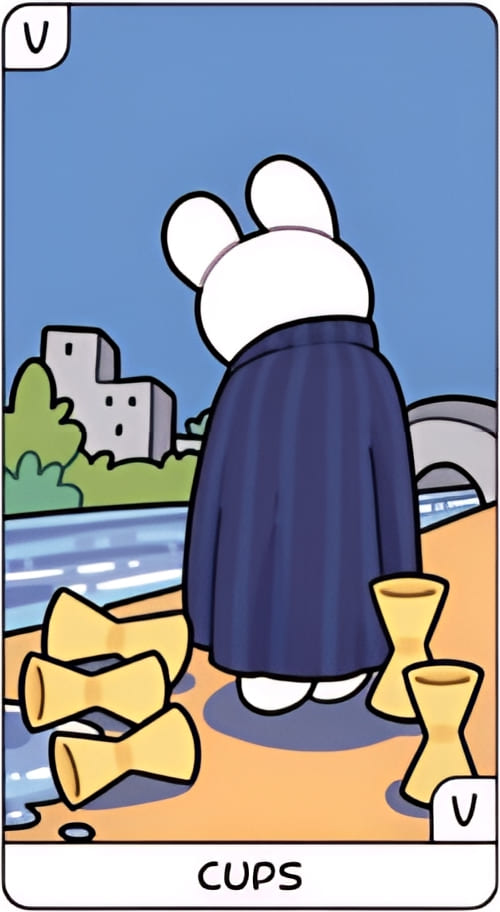
The Five of Cups depicts emotional loss, regret, and sorrow centered on a figure who focuses on what has been spilled rather than what remains. Three overturned cups symbolize disappointment and mourning, while two upright cups point to remaining resources or relationships offering potential recovery. The card invites introspection and a shift in perspective to acknowledge both grief and surviving supports. Reversed, it indicates a turning point toward acceptance, healing, and the possibility of rebuilding hope after adversity.
Six of Cups
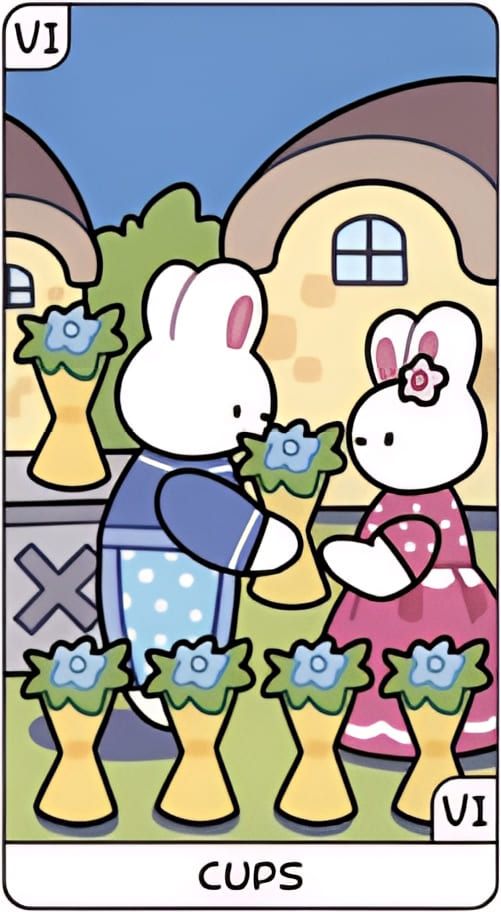
The Six Of Cups centers on memories, nostalgia, and childhood innocence, highlighting the sweetness of reminiscence and the joy of shared moments. It emphasizes giving and receiving, where kindness deepens relationships and fosters a sense of community. Reversed, the card can signal an unhealthy fixation on the past or a longing that prevents present growth. The imagery invites reflection on how past experiences shape the present and encourages cherishing connections and continuity.
Seven of Cups
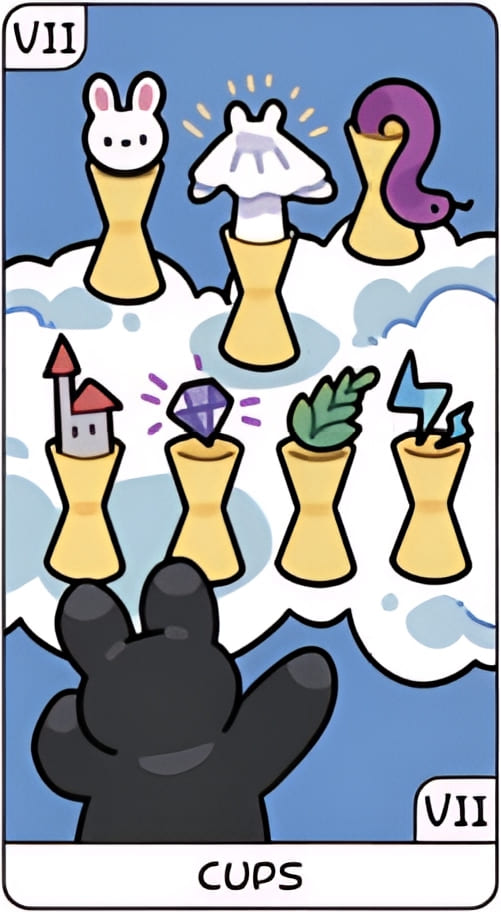
The Seven of Cups portrays a figure faced with seven floating cups, each containing a different symbol that represents tempting choices and possibilities. The imagery emphasizes imagination, desire, and the allure of many potential paths, some delightful and some uncertain. It warns against becoming overwhelmed or distracted by fantasy and urges careful discernment. In reversed position, it can indicate confusion or escapism and advises grounding your desires to make wise decisions.
Eight of Cups
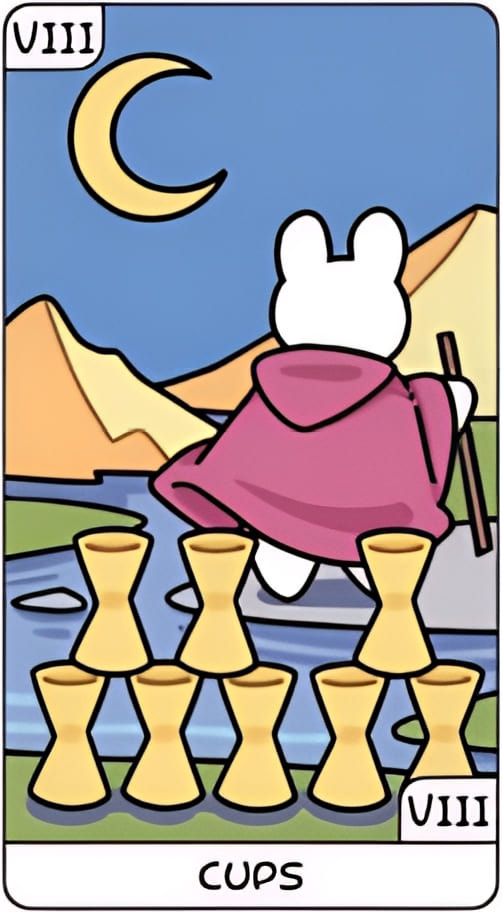
The Eight of Cups represents the decision to leave behind what no longer serves you in search of deeper meaning and fulfillment. The imagery of a figure turning away from eight cups symbolizes emotional withdrawal from past investments and experiences and a yearning to venture into the unknown despite uncertainty. Reversed, it can indicate fear of change or reluctance to abandon familiar but unfulfilling situations, challenging you to examine the emotional ties that bind. Ultimately, the card urges courage to seek new paths and opportunities, reminding you that sometimes walking away is necessary to discover your true self and authentic desires.
Nine of Cups
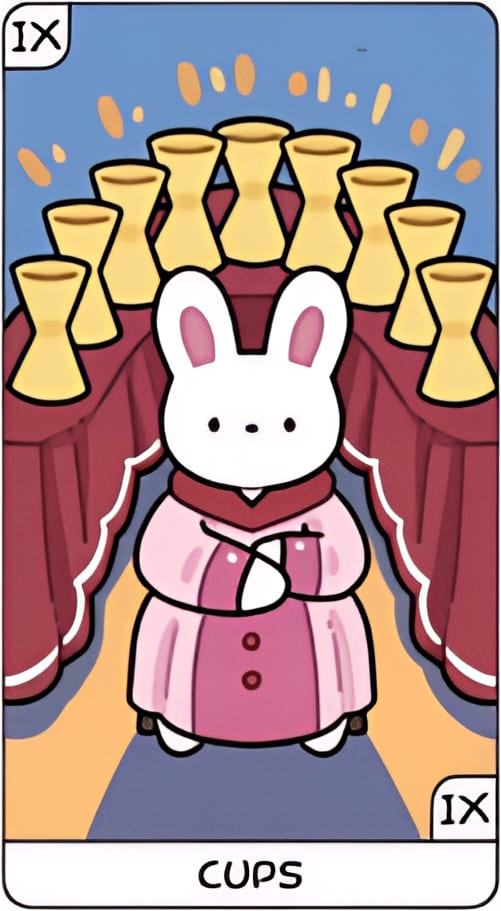
The Nine Of Cups depicts fulfillment, satisfaction, and the realization of wishes, symbolized by a contented rabbit before nine golden cups. It celebrates simple pleasures and the abundant results of desires coming into being. At the same time it prompts reflection on the nature of true satisfaction and the thin line between gratitude and indulgence. The card encourages appreciation for what one has while warning against excess and the loss of balance.
Ten of Cups
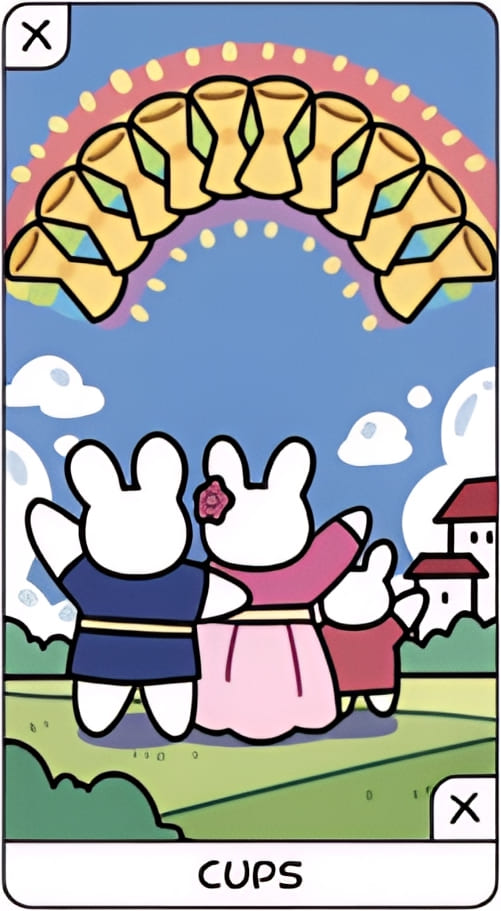
The Ten of Cups symbolizes emotional fulfillment, lasting happiness, and harmony within family and relationships. It portrays a joyful sense of belonging and emotional security, suggesting that dreams of lasting happiness are blossoming into reality. Upright, it emphasizes contentment, connection, and celebration of what truly matters; reversed, it may indicate disillusionment or shattered expectations in personal relationships. The card invites embracing joyful energy while remaining mindful to maintain and nurture strong, healthy connections.
Page of Cups
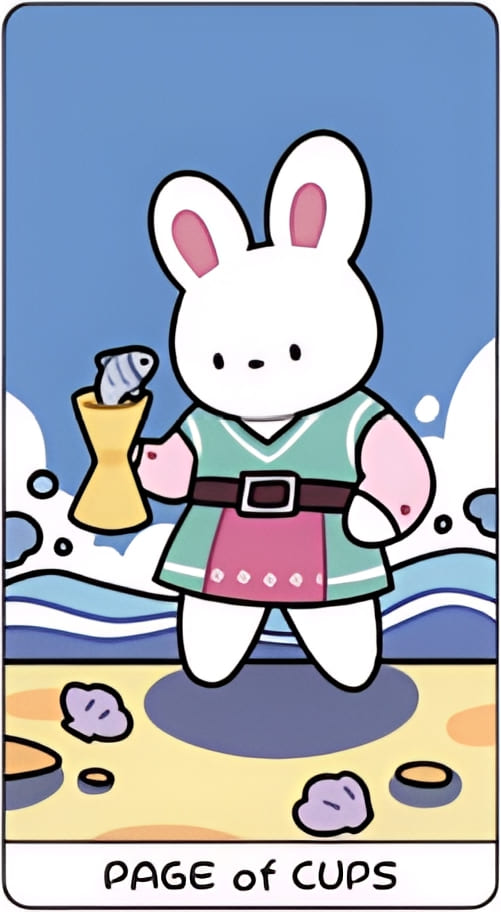
Page of Cups depicts a whimsical rabbit holding a chalice on a breezy beach; the fish in the cup symbolizes intuition and emerging insight. Bright colors and playful imagery point to youthful creativity and openness to new emotional experiences and relationships. The card encourages embracing curiosity, imaginative exploration, and trusting inner feelings as a source of new ideas and inspiration. Reversed, it can indicate emotional naivety or a reluctance to face one's feelings, urging a gentle but confident engagement with personal aspirations.
Knight of Cups
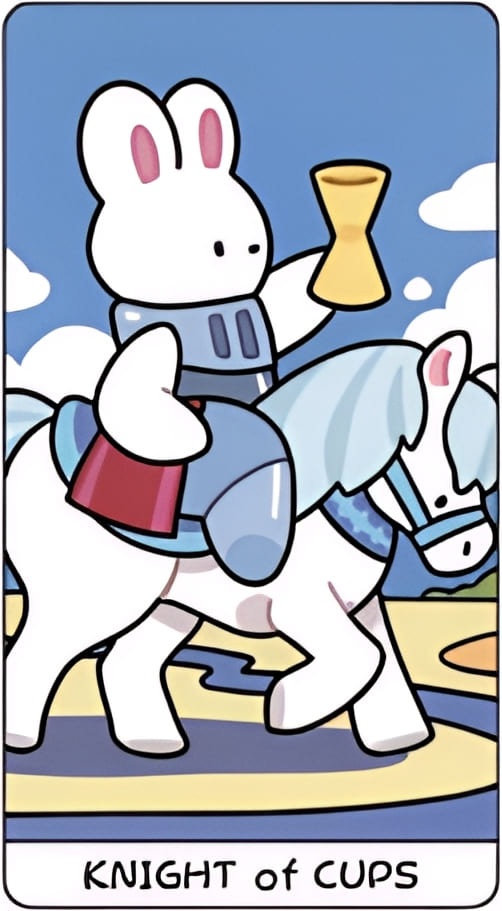
Knight of Cups embodies romantic endeavors and passionate pursuits, urging heartfelt journeys and creative inspiration. It encourages following intuition and embracing imaginative possibilities while warning that the emotional realm can lead to whimsical distractions. When reversed, it cautions against illusion and emotional turbulence and calls for grounding ambitions. The card advises merging feelings with thoughtful strategy, weaving tenderness with resolve in your endeavors.
Queen of Cups
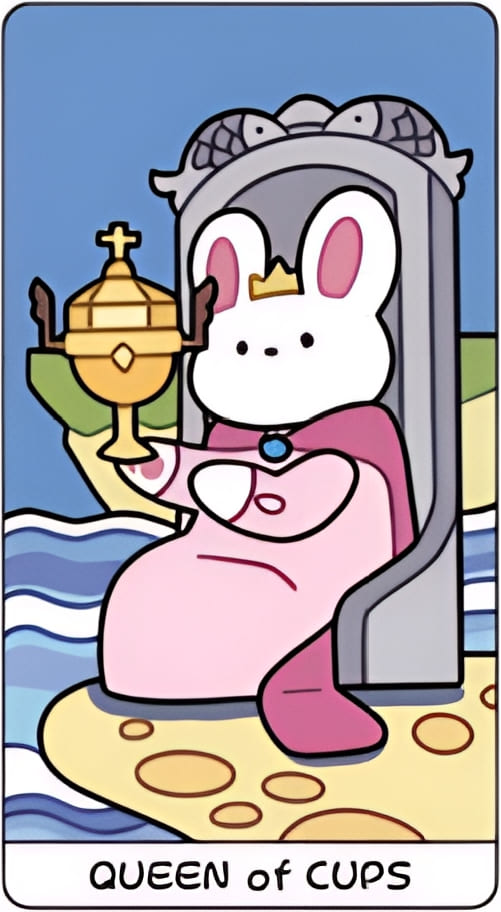
The Queen of Cups represents nurturing compassion, intuition, and deep emotional understanding. She embodies empathy and healing, encouraging others to connect with their inner feelings and explore the waters of the heart. Her calm presence suggests insightful support and the ability to hold space for love, sorrow, and joy. Reversed, her caring can tip into indulgence or emotional overwhelm, prompting the need for balanced vulnerability and healthy emotional awareness.
King of Cups
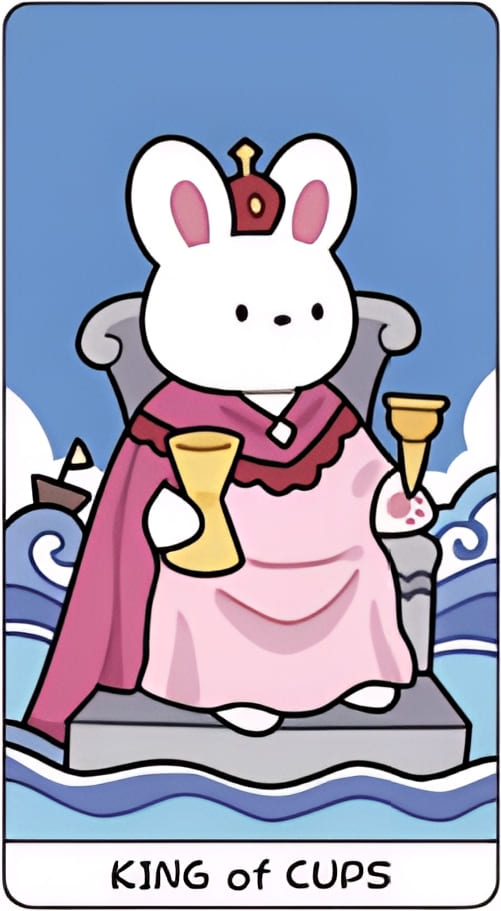
The King of Cups embodies emotional wisdom and compassionate authority, inviting others to share their burdens. He balances empathy and leadership, symbolized by holding cups that represent generosity and care amid turbulent waters. In reverse, his influence can degrade into emotional manipulation or a disconnection from one's feelings. Ultimately, he serves as a reminder to embrace emotions and nurture relationships, as compassion can foster profound growth.
Swords
Ace of Swords
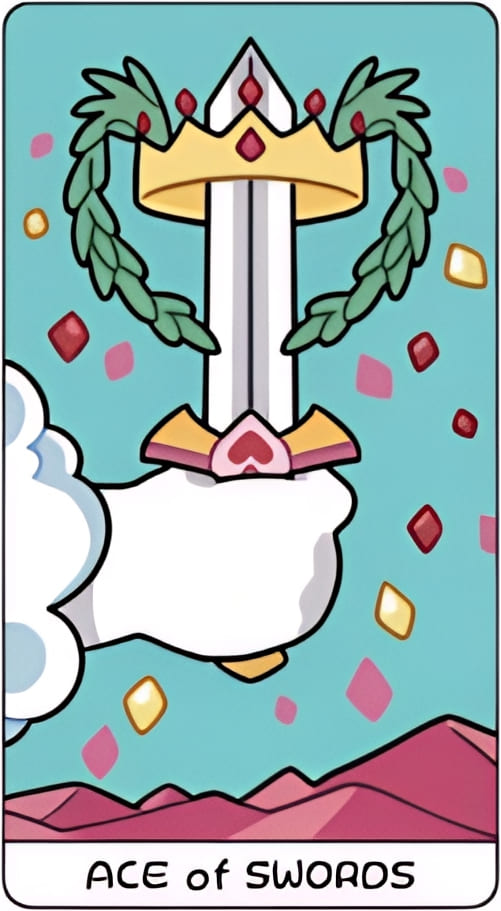
The Ace of Swords depicts a large sword held by a cloud-like hand, crowned and surrounded by laurel leaves with colorful gems falling around the blade, symbolizing a vivid moment of insight. It represents a powerful burst of clarity and truth, new ideas, and the potential for intellectual breakthroughs that cut through confusion. In reversal it warns of miscommunication and a lack of clarity, suggesting the need to rethink one's approach. The card emphasizes both positive and negative aspects of mental power and advises wielding this newfound clarity carefully and wisely.
Two of Swords
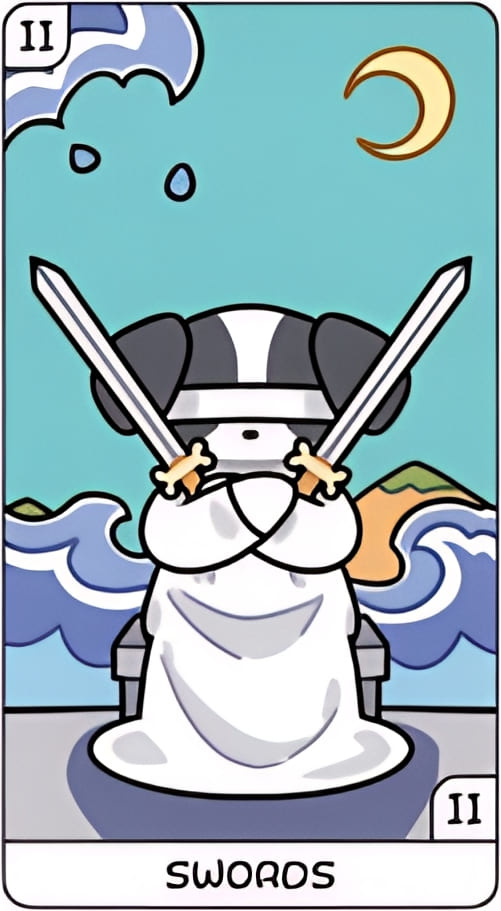
The Two of Swords represents an internal stalemate and the paralysis of indecision, symbolized by a blindfolded figure holding crossed swords. Emotional turmoil lurks beneath the surface, suggested by the churning waves behind the seated figure, while the crescent moon adds an atmosphere of tension and contemplation. The crossed swords highlight opposing ideas or choices that require resolution; upright, the card urges confronting dilemmas directly, while reversed it warns of avoidance. Ultimately it calls for lifting the blindfold—facing fears and uncertainties to find clarity and make a decisive choice.
Three of Swords
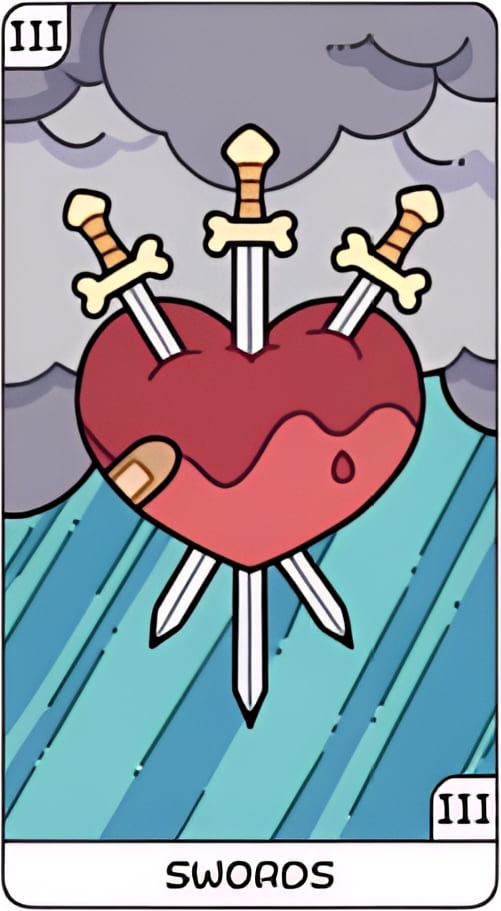
Three of Swords signifies sorrow, heartbreak, and emotional pain, often from betrayal, separation, or loss. Upright it points to acute grief and turbulent feelings in relationships. Reversed it can indicate the start of healing, release of negative emotions, and movement toward reconciliation. The imagery of a pierced, bleeding heart under stormy skies underscores the inevitability of heartache but also the resilience and potential for renewal.
Four of Swords
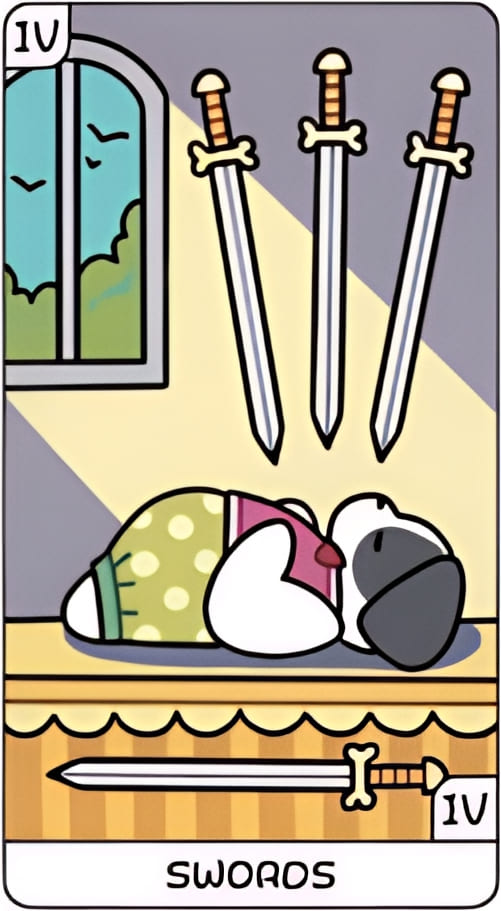
Four of Swords is a card of rest, recovery, and contemplation, depicting withdrawal from activity to restore mental clarity and peace. It emphasizes the healing that comes from pausing and allowing the mind to quiet. Upright, it encourages solitude and deliberate rest for rejuvenation; reversed, it warns of anxiety, unrest, or avoidance of necessary recuperation. The card advises balancing action with pause and embracing a restorative retreat as a step toward renewal.
Five of Swords
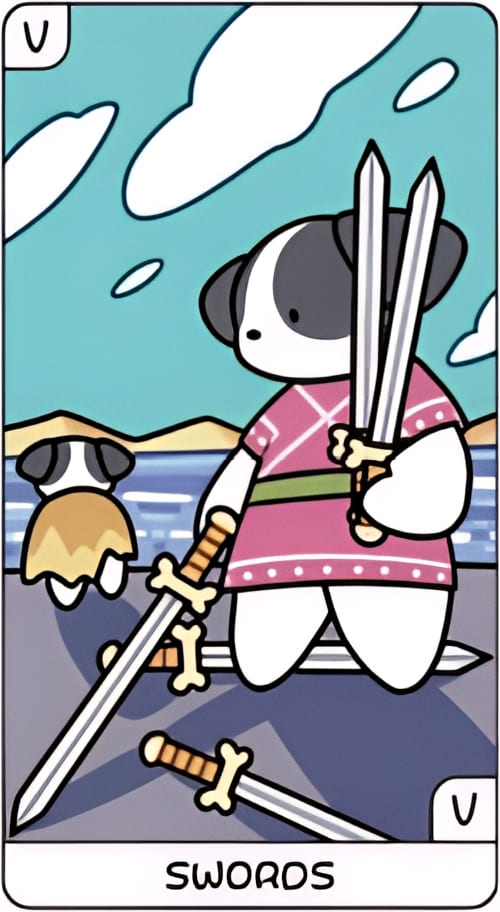
The Five of Swords depicts conflict and the uneasy aftermath of a confrontation, where victory can carry bitterness and lost respect. It warns that triumph at the expense of others may leave lingering pain and damaged relationships. Reversed, the card can indicate the need to surrender grudges and seek reconciliation rather than prolonging strife. Overall, it emphasizes weighing the true cost of one’s actions and choosing peace when the price of winning is too high.
Six of Swords
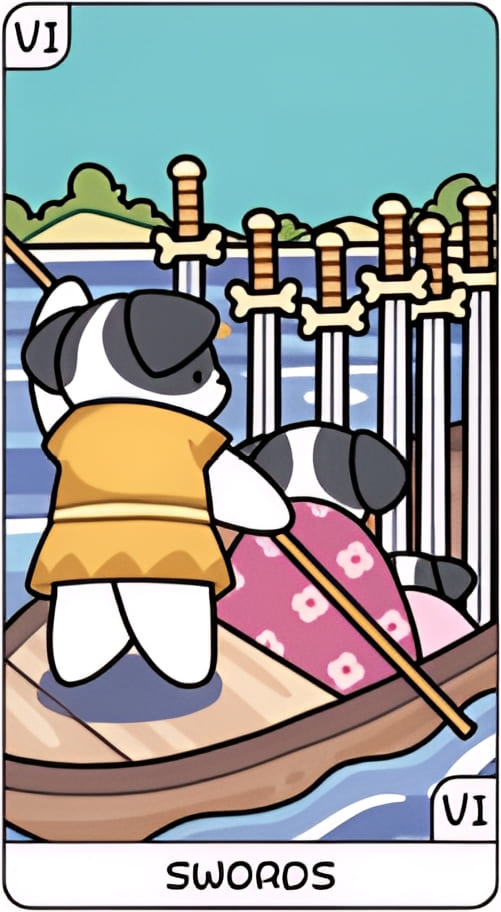
The Six of Swords represents a journey from turmoil to tranquility, indicating a necessary transition toward calmer waters and a shift in perspective. It signifies both physical and emotional movement away from difficult circumstances, offering hope and the promise of healing when upright. Reversed, it can point to reluctance to move on or an inability to acknowledge the need for change. The card urges acceptance of the voyage ahead, reminding us that the difficult passage often leads to growth and a clearer mindset.
Seven of Swords
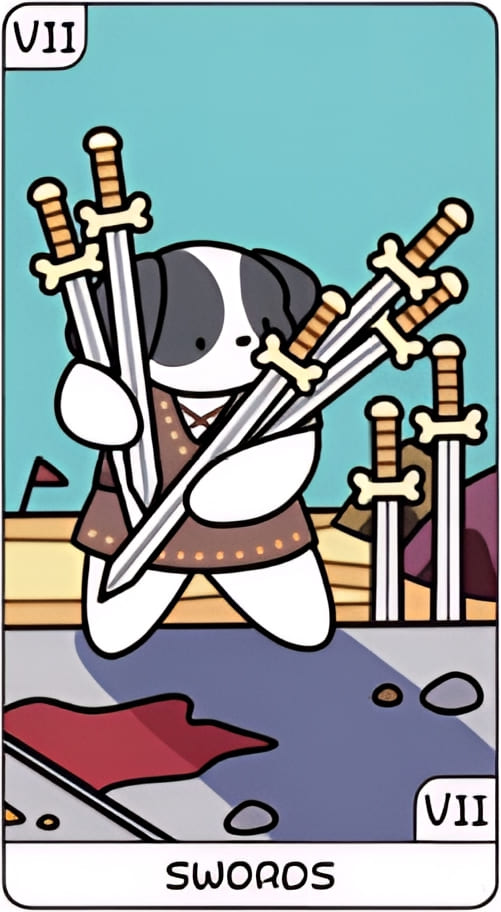
This card shows a playful dog holding seven swords, combining lighthearted imagery with underlying conflict and strategy. The swords represent choices or ideas and suggest that plans may require cunning rather than straightforward action. Scattered stones and a red flag signal obstacles that call for clever navigation and resourcefulness. Upright, it urges inventiveness and thinking outside the box; reversed, it warns of dishonesty or avoidance and prompts facing the truth.
Eight of Swords
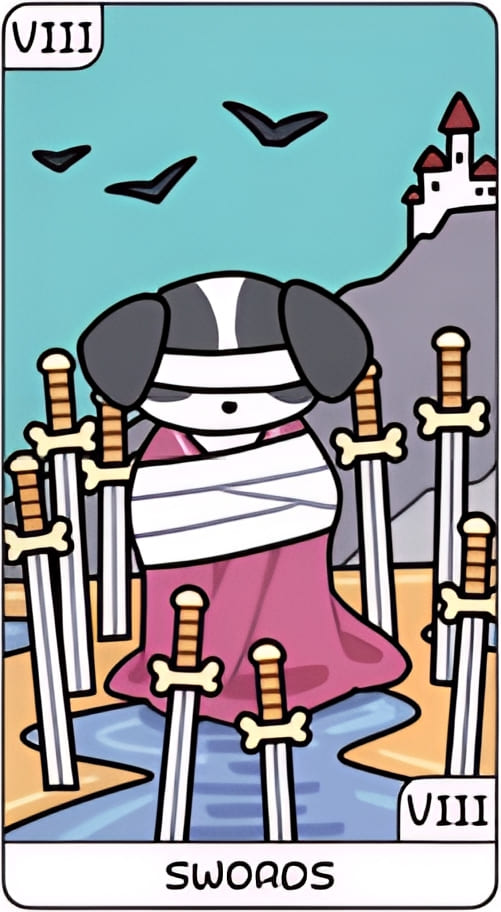
The Eight of Swords highlights feelings of restriction, hopelessness, and self-imposed limitations, often indicating that circumstances may appear worse than they truly are. Its imagery points to internal barriers and mental constraints that can be navigated around once perceived differently. Reversed, the card suggests a release from those limitations, urging clarity, regained control, and the pursuit of practical solutions. Ultimately it encourages a shift in perspective to unlock potential, find safety among uncertainty, and move forward with renewed agency.
Nine of Swords
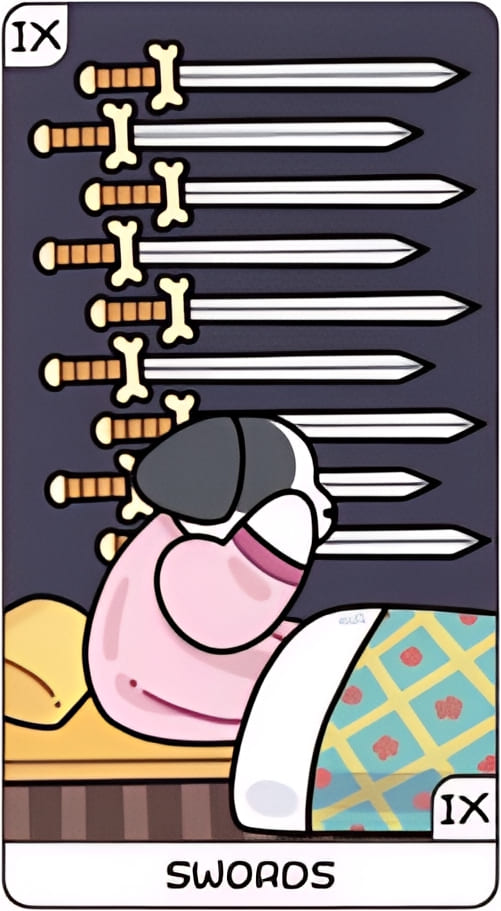
The Nine Of Swords depicts a person curled in bed, overwhelmed by intrusive thoughts and anxieties symbolized by the swords behind them. It signifies sleeplessness, inner turmoil, and distress often rooted in past actions or fears of the unknown. Upright, it calls for confronting those fears to restore peace; reversed, it can indicate anxieties may be unfounded and suggests seeking clarity and reassurance. The card also highlights a tendency to retreat from confrontation while reminding that one has the power to rise, embrace the dawn, and find hope and healing beyond the shadows.
Ten of Swords
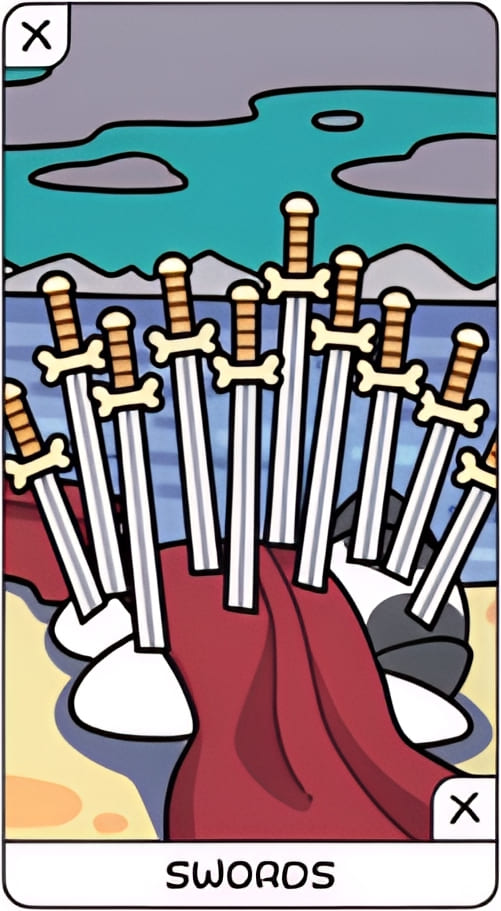
The Ten of Swords depicts a painful ending, often involving betrayal or overwhelming defeat, signaling the conclusion of a cycle. Its imagery emphasizes release and the necessity of letting go so new beginnings can emerge. Though it can evoke despair, it also carries the message that the worst has passed and recovery is possible. Reversed, it points to resilience and the ability to rise after hardship, highlighting the transition from darkness to hope.
Page of Swords
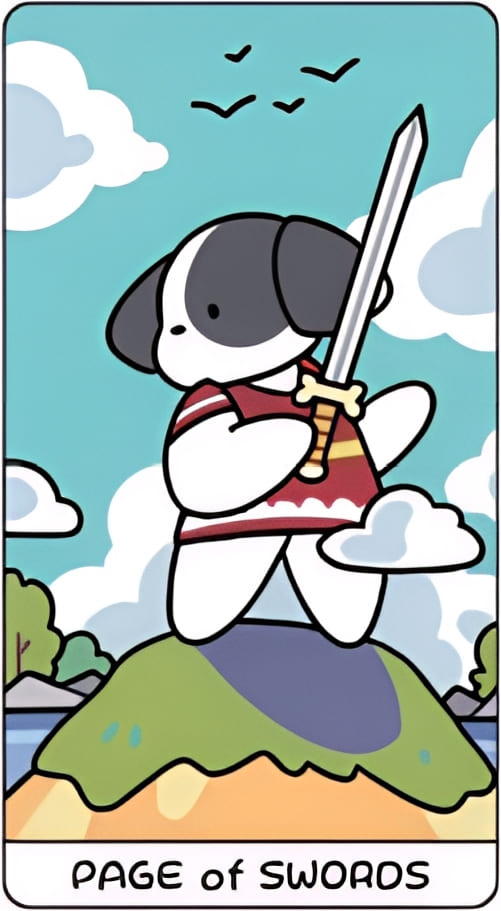
The Page of Swords represents youthful enthusiasm, curiosity, and a keen appetite for truth. Its raised sword symbolizes clarity, the pursuit of knowledge, and a readiness to express ideas boldly. The card's energy is playful yet incisive, urging exploration while maintaining vigilance. It warns against hastiness, advising a balance between eagerness and wisdom to avoid missteps as you seek understanding.
Knight of Swords
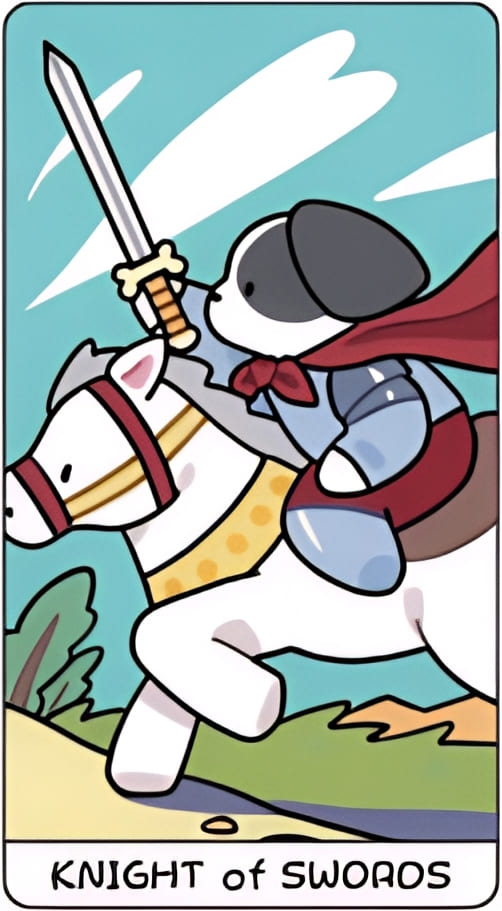
The Knight Of Swords symbolizes swift action, intellectual drive, and decisive momentum. The charging knight and raised sword convey urgency, ambition, and a pursuit of truth. This energy favors boldness and rapid progress but can devolve into recklessness or hasty words if unchecked. Reversed, the card warns of conflicts and impulsive actions, urging caution amid dynamic movement.
Queen of Swords
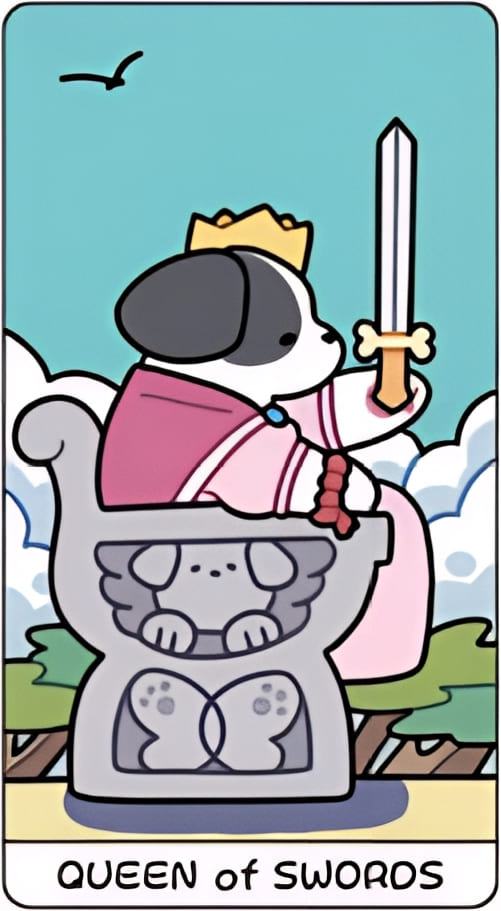
The Queen of Swords symbolizes clarity, intellect, and incisive communication, shown by a regal figure holding a sword that cuts through confusion. She embodies thoughtful analysis and the power of clear expression, guiding decisions by tempering emotion with reason. Her sharp discernment reveals truth and provides a steady perspective in uncertain times. Be mindful that her energy can become overly rigid or critical if unbalanced, and strive to pair insight with compassion when navigating complexities.
King of Swords
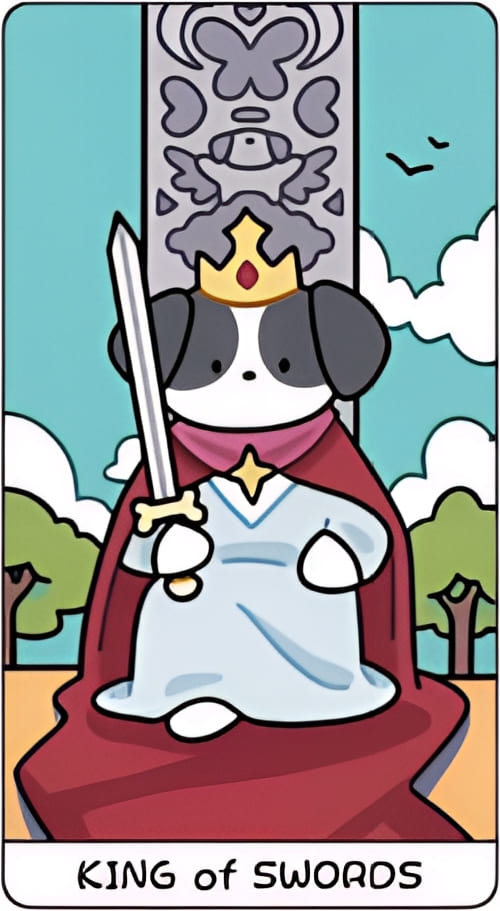
The King of Swords represents clarity of thought, intellectual authority, and decisive judgment. The image of a dog in royal attire conveys intellect supported by power and the ability to navigate complex situations with logic. The sword symbolizes the capacity to reveal truth and cut through confusion, while also warning that pure reasoning can become cold and disconnected from feeling. This card advises balancing reasoned decisions with emotional understanding, using intellect responsibly and compassionately.
Pentacles
Ace of Pentacles
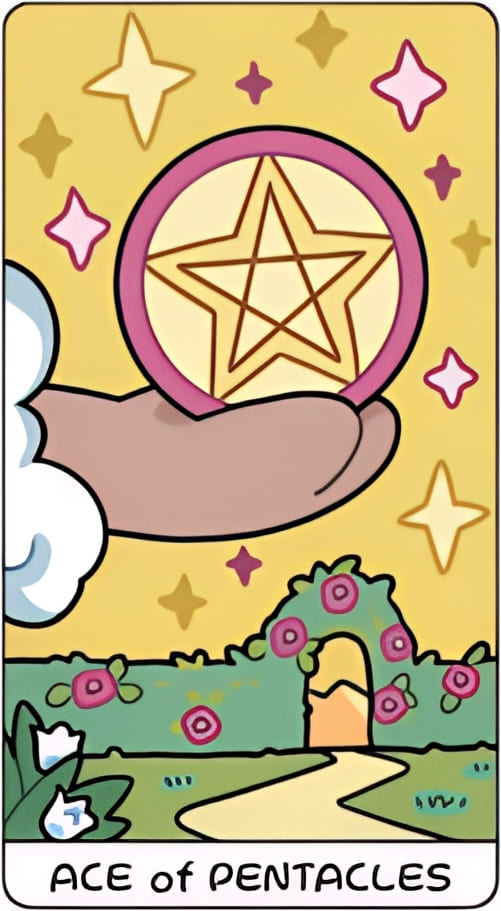
The Ace of Pentacles heralds new beginnings in material and physical realms, offering tangible opportunities for prosperity. It signals that the seeds of prosperity are taking root and invites practical steps toward manifestation, such as investments, new ventures, or improved finances. Reversed, the card can warn of missed opportunities or a disconnect from the physical world that blocks available bounty. Overall, it encourages grounding dreams into reality and nurturing aspirations with openness and discernment to cultivate lasting abundance.
Two of Pentacles
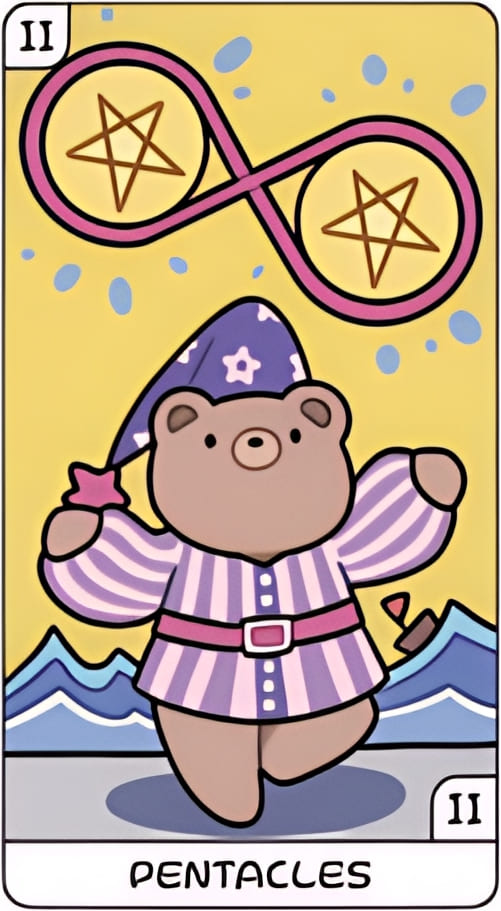
The Two of Pentacles shows a playful bear juggling on a beach, symbolizing the need for balance and adaptability while managing responsibilities. The infinity-enclosed pentacles point to an ongoing flow of resources and endless possibilities, highlighting cycles of challenges and rewards. The card encourages skillful juggling of finances, tasks, and commitments to maintain equilibrium amid fluctuations. Losing balance can lead to feeling overwhelmed or stretched thin, whereas maintaining equilibrium brings prosperity and joy.
Three of Pentacles
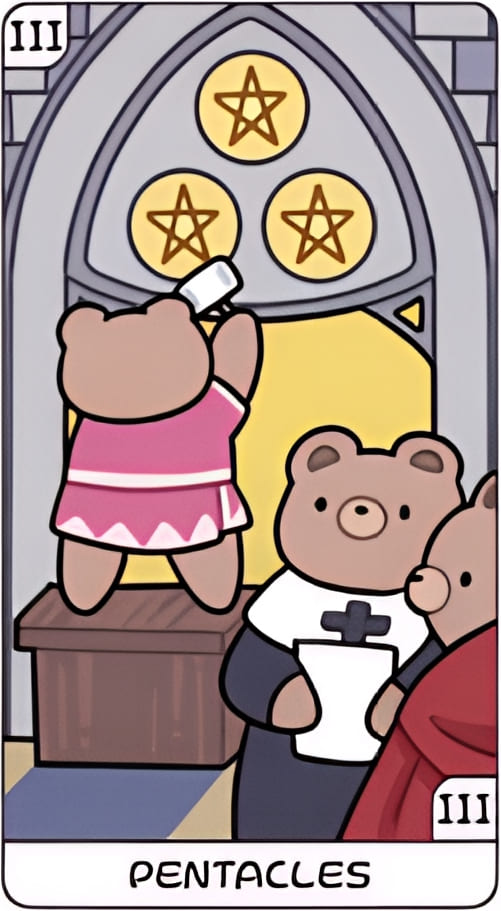
The Three of Pentacles symbolizes collaboration, craftsmanship, and the power of community in achieving shared goals. Upright, it signifies successful teamwork, learning from others, and the joy of creating something meaningful together. Reversed, it warns of disharmony, lack of cooperation, or individuals putting personal ambition above collective effort. The card encourages listening, combining strengths, and building on shared foundations to elevate both personal and group endeavors.
Four of Pentacles
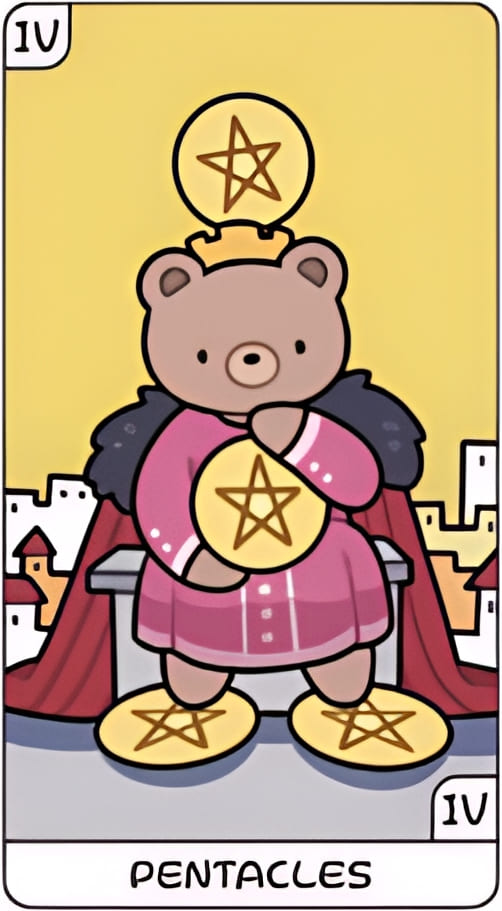
The Four of Pentacles describes a strong attachment to material possessions and a deep desire for security, symbolized by a bear clutching pentacles. It highlights the dual nature of financial stability—comfort and control on one hand, fear of loss and stagnation on the other. Upright, it suggests protective stewardship of resources; reversed, it can reveal fear of change and an inability to let go that limits growth. The card cautions to evaluate the balance between holding on and sharing to avoid restricting personal development.
Five of Pentacles
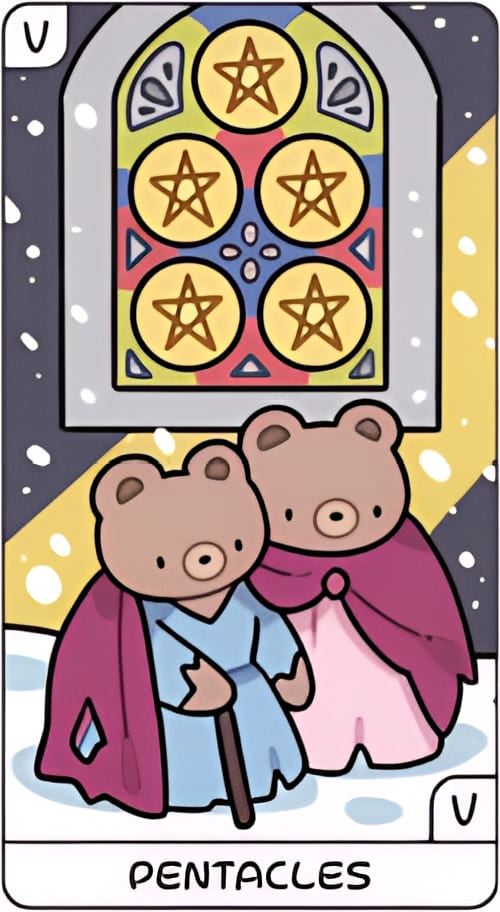
The Five of Pentacles shows two bears in a snowy scene, huddling together and wearing colorful capes that hint at a warmer spirit beneath hardship. A stained-glass window with five pentacles suggests stability and material resources that feel just out of reach. The card highlights the tension between desperation and hope, emphasizing that companionship can provide support through adversity and lead to growth and resilience when approached upright. Reversed, it warns of isolation and neglect of one's support system, and reminds us that seeking help is not a weakness but a step toward recovery.
Six of Pentacles
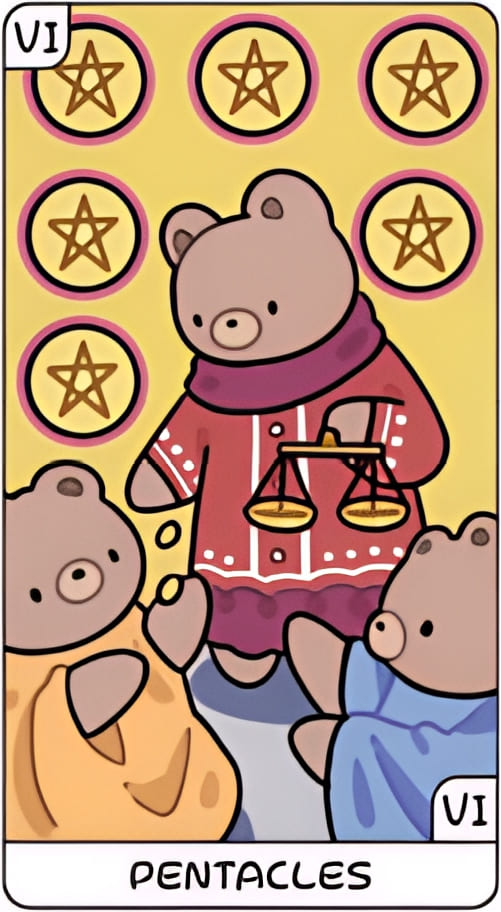
The Six Of Pentacles symbolizes generosity, balance, and reciprocal exchange, represented by the central figure holding scales. It encourages sharing resources and offering assistance while ensuring fairness in how help is given and received. Reversed, the card warns of imbalance, exploitation of generosity, or manipulative giving, prompting a reassessment of contributions and obligations. Ultimately, it urges nurturing connections and fostering goodwill so that support flows both ways and community harmony is sustained.
Seven of Pentacles
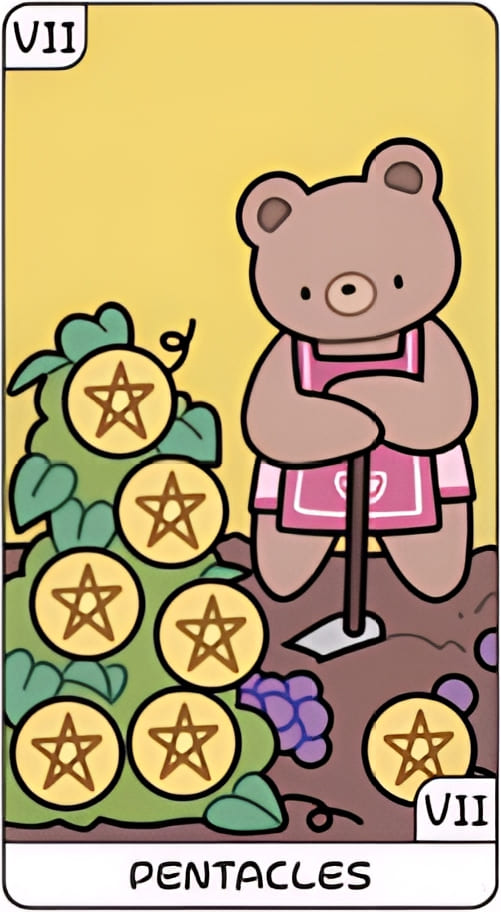
The Seven of Pentacles represents a period of reflection and evaluation after sustained effort, encouraging a deliberate pause to assess progress. The bear symbolizes patience and diligence, standing thoughtfully among the fruits of its labor and emphasizing steady, mindful work. The card invites appreciation of accomplishments while considering future effort and investments in areas like finances, personal growth, or relationships. Reversed, it cautions against impatience or prematurely abandoning a path, urging continued commitment despite challenges.
Eight of Pentacles
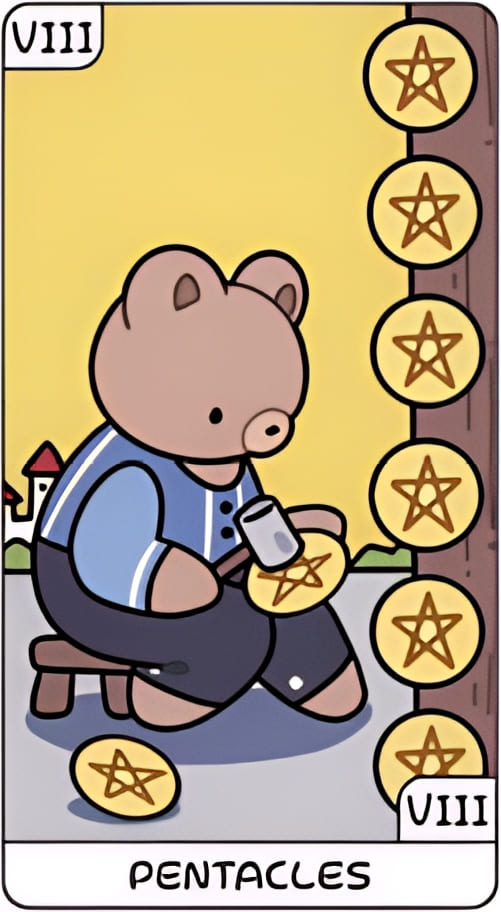
The Eight of Pentacles represents diligence, craftsmanship, and the steady pursuit of mastery. It emphasizes dedication to work, attention to detail, and the importance of honing skills through consistent effort. Upright, it signifies persistence and improvement leading toward mastery; reversed, it can warn of burnout or the need for rest. The card encourages patience, discipline, and a nurturing attitude toward personal and professional development.
Nine of Pentacles
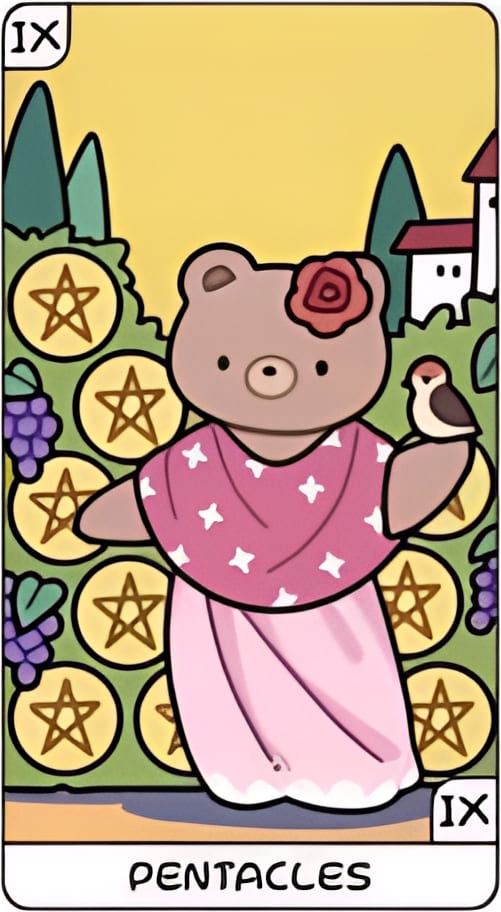
The Nine Of Pentacles portrays a bear in a lush garden, symbolizing self-sufficiency, abundance, and the fruits of personal labor. The small bird companion and the comfortable setting emphasize joy found in solitude and the gentle companionship of nature. The nine pentacles highlight achievement and the rewards of dedication. The card also offers a caution against excessive materialism, reminding that true wealth includes experience and connection.
Ten of Pentacles
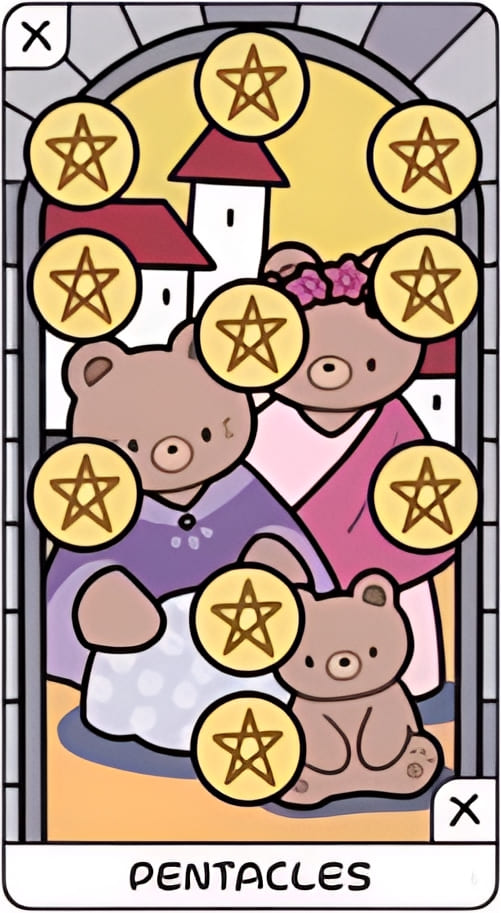
The Ten of Pentacles represents wealth, legacy, and the culmination of a successful family lineage, emphasizing financial stability and long-term security. It highlights the importance of family ties and traditions as sources of abundance and belonging. The card encourages consideration of how present actions and investments affect future generations and the continuation of a family legacy. When reversed, it warns of inheritance disputes, disconnection from family, or the realization that material wealth does not guarantee happiness, prompting a reassessment of priorities.
Page of Pentacles
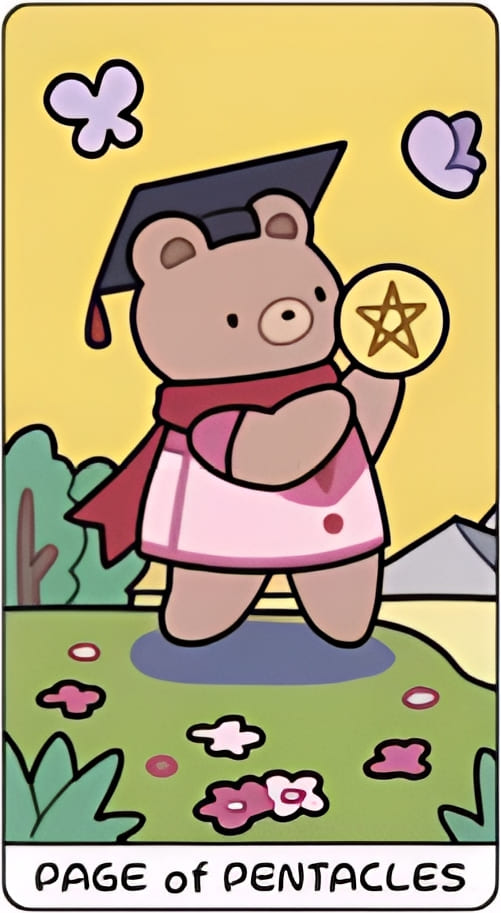
The Page of Pentacles represents youthful curiosity, eagerness to learn, and new material beginnings. The bear's golden pentacle and grounded stance point to prosperity, practical skills, and lessons learned from the physical world. The floral setting emphasizes growth, nurturing ambitions, and the gradual unfolding of potential. Reversed, the card warns of distraction and lack of focus, urging realignment of goals and wise application of that youthful energy.
Knight of Pentacles
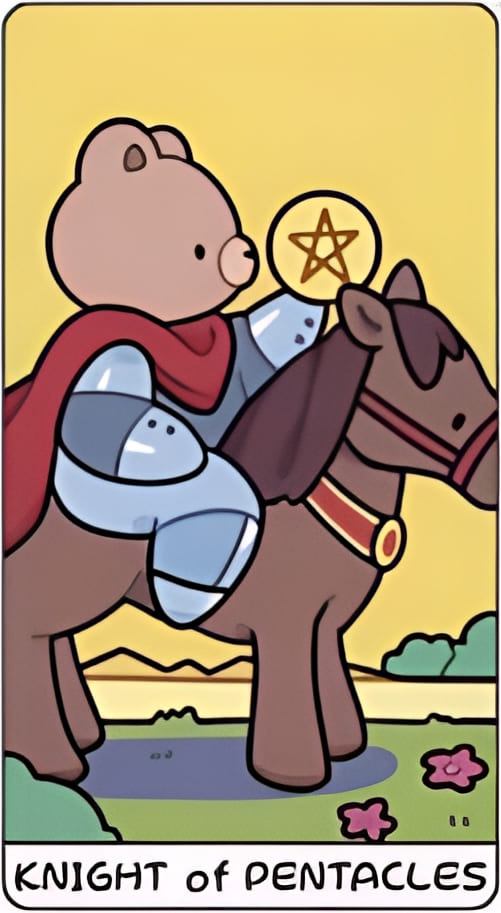
The Knight of Pentacles symbolizes steady perseverance and practical effort, showing that disciplined work produces tangible rewards. His armor and pentacle represent strength and hard-earned achievements, while the cheerful background links diligence to fruitful outcomes. However, his steadiness can calcify into stubbornness if it becomes hesitation or procrastination, potentially blocking progress. This card asks you to examine how your diligence aligns with your values, reminding that patience combined with tenacity fosters growth in all ventures.
Queen of Pentacles
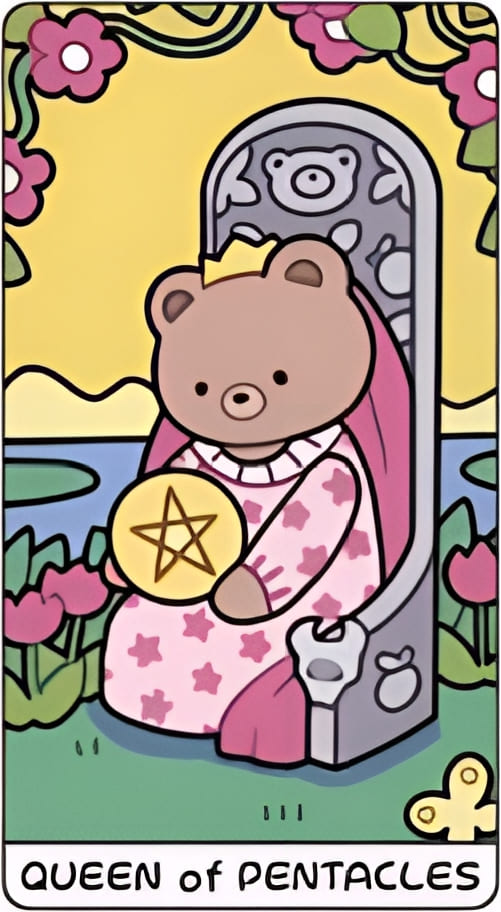
The Queen of Pentacles represents nurturing practicality and material stability, blending care for nature and loved ones with sensible stewardship of resources. She embodies abundance, security, and grounded wisdom, encouraging sustainable growth and generosity. Upright, she asks you to focus on providing comfort and tending practical responsibilities; reversed, she can warn of neglect, smothering, or overindulgence. The card emphasizes the importance of balancing wealth with heartfelt connections and aligning actions with personal values.
King of Pentacles
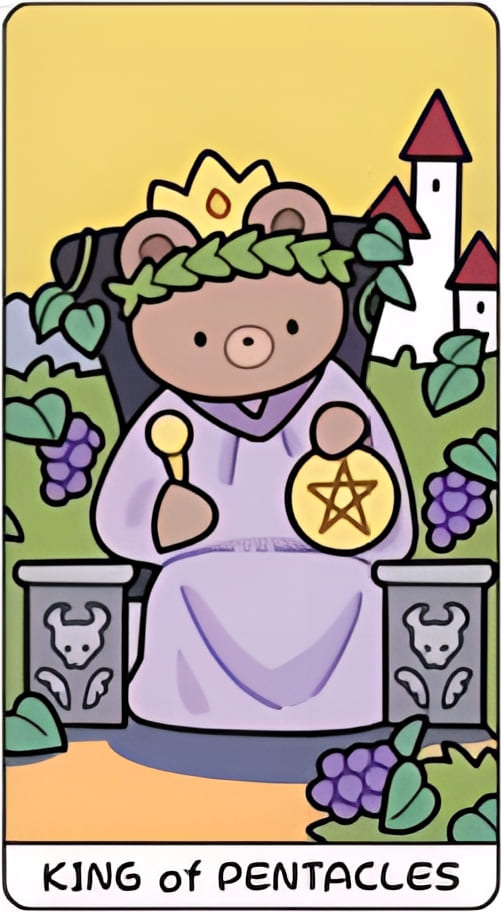
The King of Pentacles embodies stability, prosperity, and practical authority over material matters. His bear form symbolizes strength and resourcefulness, and his crown denotes authority over wealth. Grape vines and the pentacle emphasize abundance and the fruits of hard work and security. He advises practical investments and wise management of resources to build lasting success. When faced with challenges, he can indicate an overemphasis on materialism at the expense of personal fulfillment, urging a balance between wealth and emotional well-being.
Reading Tips for YOLO Tarot
Spark Deck designed this deck for readers who want tarot that matches their energy. The vibrant artwork rewards a direct, gut-level approach.
Match the deck’s energy. YOLO Tarot is not a deck for timid questions. Ask boldly. What do I really want? What am I afraid to do? What would I choose if I knew I could not fail? The deck responds best when you bring the same fearlessness it embodies.
Read the color first. The saturated palette is a language in itself. Hot colors pulse with action and urgency; cooler tones invite reflection and patience. Let the dominant color of each card set the emotional tone before you dive into traditional meanings.
Use it for decision-making. This deck excels at clarity. When you are stuck between two paths, YOLO Tarot cuts through the overthinking and points you toward the choice that is most alive. Trust the card that makes your heart beat faster.
Pair it with action. After every reading, do something. YOLO Tarot is not a deck for passive contemplation — it wants you to move. Write down one concrete action inspired by the reading and do it within twenty-four hours. The deck rewards momentum.
Frequently Asked Questions
How many cards are in the YOLO Tarot?
The YOLO Tarot contains 78 cards: 22 Major Arcana and 56 Minor Arcana divided into four suits — Wands, Cups, Swords, and Pentacles — each running from Ace through King.
Who created the YOLO Tarot?
The deck was created by Spark Deck. Its bold, high-energy aesthetic channels the spirit of living fully and fearlessly — you only live once, and this deck wants you to feel that truth in every reading.
What makes the YOLO Tarot special?
Its vibrant, unapologetic visual style strips away the solemnity that surrounds traditional tarot and replaces it with energy, color, and a modern attitude. The deck speaks to readers who want tarot to match the intensity of their actual lives.
Is the YOLO Tarot good for beginners?
Yes. The energetic, accessible art style makes tarot feel approachable rather than intimidating. Beginners who connect with contemporary aesthetics and bold design will find this deck an exciting entry point into the practice.