Attachment Styles and Tarot: Which Cards Represent Anxious, Avoidant, and Secure
Your attachment style is in your cards
I noticed something years ago that changed how I read relationship spreads forever: the same people kept pulling the same cards. Not occasionally — consistently. The anxious ones got the Moon and the Nine of Swords over and over. The avoidant ones kept pulling the Hermit and the Four of Cups. And the people in genuinely healthy relationships? Two of Cups, Temperance, the Star.
At first I thought it was coincidence. Then I learned about attachment theory and everything clicked.
Your attachment style — how you bond, what you fear, how you respond to emotional closeness — is one of the strongest energetic signatures you carry. And the cards read it like a book.
Attachment theory in 60 seconds
If you’re not familiar: attachment theory says the way you connected with your primary caregivers as a child creates a template for how you connect in adult relationships. There are four main styles:
Secure. Comfortable with closeness and independence. Can ask for what you need without anxiety. Trusts that love doesn’t require constant proof.
Anxious. Craves closeness but fears abandonment. Needs frequent reassurance. Tends to over-analyze partner behavior, read into silences, and feel responsible for the relationship’s emotional temperature.
Avoidant. Values independence to the point of emotional distance. Uncomfortable with vulnerability. Pulls away when things get too close, sometimes without understanding why.
Fearful-avoidant (disorganized). Wants closeness but is terrified of it. Pushes and pulls simultaneously. Often linked to inconsistent or traumatic early caregiving.
These aren’t permanent diagnoses — they’re patterns. And patterns can shift with awareness, therapy, and intentional work. That’s where tarot comes in.
The anxious attachment deck
If you have an anxious attachment style, these cards probably feel very familiar:
The Moon. Your signature card. The Moon lives in the space between what you know and what you fear — which is exactly where anxious attachment lives. You sense something under the surface, your brain generates worst-case scenarios, and the gap between what’s said and what you feel becomes unbearable. When the Moon appears in your readings, it’s reflecting your internal experience more than external reality.
Nine of Swords. The 3 AM card. Lying awake, replaying conversations, analyzing text response times, catastrophizing about what that pause meant. The Nine of Swords is anxious attachment at its most painful — the mind running circles around a fear that may or may not be real.
Eight of Cups reversed. Fear of abandonment, frozen. The upright Eight of Cups walks away; reversed, it can’t. It stays even when staying hurts, because the fear of being left is worse than the pain of staying. If you consistently pull this card reversed in relationship readings, ask yourself: am I here because I want to be, or because I’m afraid to leave?
The Star reversed. Lost hope, diminished self-worth. The Star reversed in an anxious attachment context shows someone who has stopped believing they deserve secure love — who has internalized “I’m too much” or “I’m not enough” as permanent truth rather than a pattern learned in childhood.
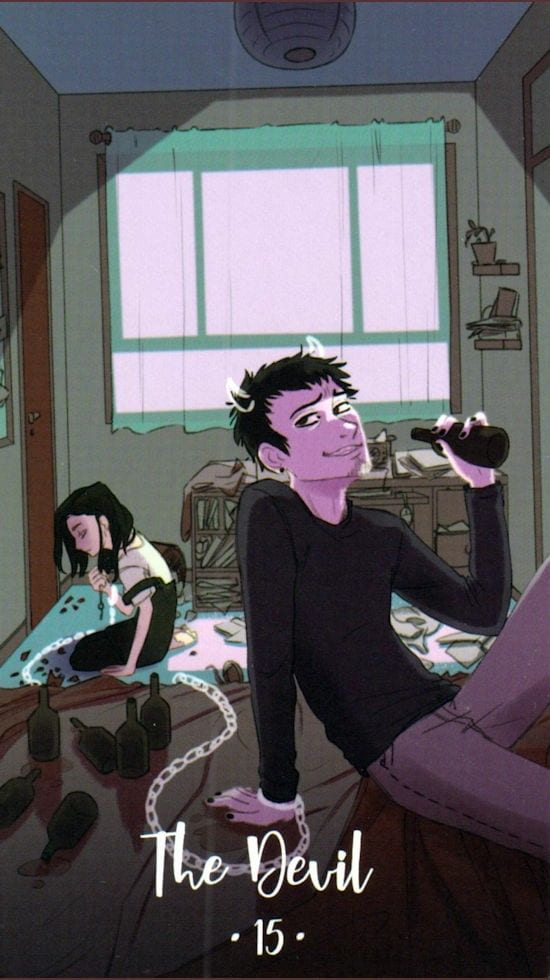
The Devil. Codependency patterns, unhealthy bonds. The Devil doesn’t always mean toxicity — but in an anxious attachment context, it often represents the chains we forge ourselves. The compulsive checking, the need for constant reassurance, the willingness to abandon yourself to keep someone close. The chains in the Devil card are loose. You can take them off. But you have to choose to.
Page of Cups reversed. Emotional immaturity in love — not because you’re immature, but because anxious attachment often keeps you responding from a wounded child state rather than your adult self. The reversed Page of Cups asks: whose voice is driving your relationship fears — yours now, or yours at seven?
The avoidant attachment deck
If you’re avoidant, you’ll recognize these cards in your readings — though you might not want to:
The Hermit. Your comfort zone. The Hermit alone on the mountain, lamp in hand, needing no one. In small doses, the Hermit is healthy solitude. But when it appears consistently in relationship readings, it’s asking: is your independence a choice or a defense? Are you alone because you want to be, or because closeness feels dangerous?
Four of Cups. Emotional unavailability, dressed as discontent. The Four of Cups shows someone being offered a cup (emotional connection) and ignoring it. In avoidant attachment, this card reflects the pattern of dismissing emotional opportunities — not because they’re wrong, but because accepting them means being vulnerable.
Two of Swords. Refusing to engage. Eyes blindfolded, arms crossed, swords blocking the heart. The Two of Swords in an avoidant context is the card of “I don’t want to talk about it.” Emotions exist, but they’re being actively blocked. This isn’t strength — it’s rigidity.
The Emperor. Over-reliance on structure and control. The Emperor builds walls and calls them boundaries. In avoidant attachment, this card often shows someone who has replaced emotional intimacy with systems, rules, and predictability — because feelings are messy and messy feels unsafe.
Knight of Swords. Always moving, never landing. The Knight of Swords charges forward at full speed — great for getting things done, terrible for sitting still with another person’s emotions. In relationship readings, this card for avoidant types says: you’re running from something, and calling it productivity.
Seven of Cups reversed. Dismissing emotional possibilities. The upright Seven of Cups is overwhelmed by options; reversed, it rejects them all. In avoidant attachment, this means shutting down before anyone can get close enough to matter.
The fearful-avoidant deck
The most complex attachment style gets the most complex cards:
The Tower. The card of the pattern itself — closeness building until it becomes terrifying, then destruction, then rebuilding, then terror again. Fearful-avoidant types often experience relationships as a series of Tower moments because the push-pull dynamic creates its own instability.
Wheel of Fortune. The cycle repeats. Get close, panic, pull away, miss them, reach out, get close, panic. The Wheel of Fortune in a fearful-avoidant reading shows the pattern in motion — and asks whether you’re ready to break it or just ride it again.
Death. Transformation is available — but it requires letting an old pattern truly die. Death in this context doesn’t mean the relationship ends. It means the way you do relationships needs to end. The caterpillar has to dissolve completely before the butterfly emerges.
The High Priestess reversed. Disconnected from inner knowing. Fearful-avoidant attachment often creates a profound disconnection from your own feelings — you’re not sure if you want closeness or distance, if you love someone or fear them, if you’re staying or going. The reversed High Priestess reflects this internal static.
What secure attachment looks like in the cards
This is where it gets hopeful — because the cards also show you the destination:
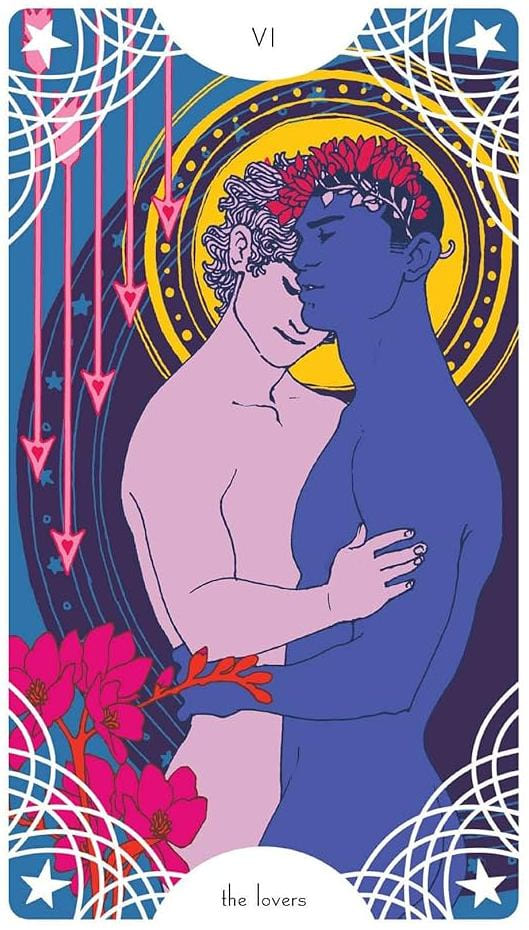
Two of Cups. Equal giving and receiving. Two people choosing each other with open eyes. The Two of Cups is what secure attachment feels like in the cards — mutual, balanced, freely chosen.
Temperance. The art of blending closeness and independence. Temperance doesn’t choose between connection and autonomy — it mixes them into something sustainable. This is the card of earned security: knowing you can be close without losing yourself.
The Empress. Self-love that overflows into love for others. The Empress doesn’t need external validation — she IS the source. In attachment terms, the Empress represents the secure base you build within yourself, from which healthy love becomes possible.
The Sun. Joy without anxiety. The Sun in a relationship reading is attachment security at its brightest — genuine happiness in connection without the background noise of “but what if they leave?” or “but what if they get too close?”
Ten of Cups. Emotional fulfillment, belonging, home. The Ten of Cups is what happens when two securely attached people build something together — not perfection, but genuine, imperfect contentment.
Using tarot for attachment awareness
Here’s a practical way to work with this:
Track your relationship cards. For one month, do a weekly single-card pull asking “what is my attachment energy this week?” Write down the card. After four weeks, look at the pattern. Are you consistently pulling anxious cards? Avoidant ones? The pattern tells you where you are.
Notice your reaction to “connection” cards. When the Two of Cups appears, do you feel warmth or panic? When the Hermit shows up, relief or sadness? Your emotional response to cards about closeness and distance is diagnostic — it shows your attachment pattern in real time.
Use the cards as mirrors, not judges. Pulling the Devil doesn’t make you a bad partner. Pulling the Hermit doesn’t make you broken. These cards are showing you patterns — patterns you can change once you see them.
Don’t read your partner’s attachment style. I know the temptation. But projecting attachment diagnoses onto someone through tarot isn’t fair to them or useful for you. Focus on your own patterns. That’s where the power is.
The card I want you to sit with
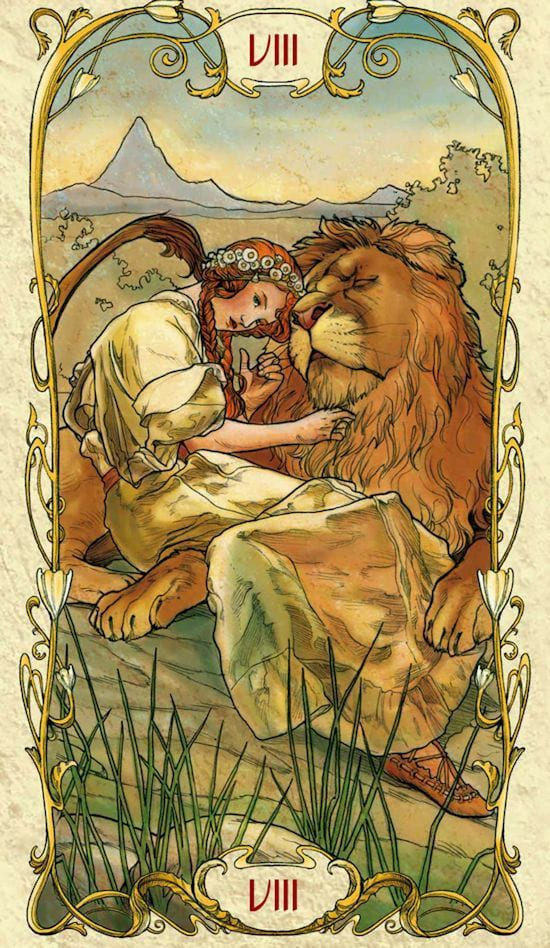
If you’ve made it this far, I want you to sit with Strength.
Not the Strength of overpowering someone. The quiet Strength of opening the lion’s mouth gently, with patience and presence. The Strength of being vulnerable without armor. Of saying “I need closeness” without shame. Of saying “I need space” without guilt.
Whatever your attachment style — anxious, avoidant, fearful, or something unnamed — Strength is the energy that transforms it. Not by forcing change, but by creating enough inner safety to let the old patterns soften.
Your attachment style isn’t who you are. It’s what you learned. And anything learned can be unlearned, with enough awareness and enough gentleness.
The cards already know this about you. It’s time you did too.
Frequently Asked Questions
Can tarot cards reveal my attachment style?
Tarot doesn't diagnose attachment styles like a therapist would, but it consistently reflects attachment patterns through the cards that appear. Someone with anxious attachment might repeatedly pull cards like the Eight of Cups reversed or the Moon, while avoidant types often see the Hermit, Four of Cups, or Two of Swords. Recognizing these patterns in your readings adds a powerful layer of self-understanding.
What tarot cards represent anxious attachment?
The Eight of Cups reversed (fear of abandonment), the Moon (anxiety about hidden intentions), the Nine of Swords (spiraling worry about the relationship), the Star reversed (lost hope and self-doubt), and the Devil (codependency patterns) frequently appear for people with anxious attachment styles in relationship readings.
What tarot cards represent avoidant attachment?
The Hermit (emotional withdrawal), the Four of Cups (emotional unavailability), the Two of Swords (refusing to engage emotionally), the Emperor (over-reliance on control and structure), and the Seven of Cups reversed (dismissing emotional possibilities) are common avoidant attachment cards. The Knight of Swords also appears — always moving, never landing.
Can tarot help me develop a more secure attachment style?
Tarot is an excellent awareness tool for attachment work. By noticing which cards repeatedly appear in your relationship readings, you can identify patterns, triggers, and growth areas. Cards like the Empress (self-nurturing), Temperance (balance), and the Two of Cups (healthy reciprocity) show what secure attachment energy looks like — giving you a template to work toward.