Can Tarot Predict the Future? What Tarot Actually Does (and Doesn't Do)
The question everyone asks
It’s the first thing people want to know. At parties, in DMs, from friends who just found out I read tarot — the question is always the same:
“So… can you actually see the future?”
I’ve been reading cards for years, and I still don’t have a one-word answer. Because the truth is more interesting than yes or no.
The short answer
No, tarot can’t predict a fixed, predetermined future. But it can do something arguably more useful: it can show you where you’re heading based on your current trajectory, and help you decide if that’s where you want to go.
Think of it less like a crystal ball and more like a GPS. A GPS doesn’t create your destination. It reads your current position, your speed, your direction, and says: “If you keep going this way, you’ll end up here.”
You can always take a different turn.
What tarot actually does
After thousands of readings, here’s what I’ve found tarot consistently does well:
Reveals what you already know
Most of the time, when a reading feels shockingly accurate, it’s because the cards articulated something you already sensed but hadn’t put into words. That nagging feeling about your relationship? The career restlessness you’ve been ignoring? Tarot gives language to your inner knowing.
This isn’t a limitation — it’s the power. Your subconscious processes far more information than your conscious mind. Tarot acts as a translator between the two.
Shows patterns you can’t see from inside them
When you’re in the middle of a situation, you lose perspective. You can’t see the forest for the trees. Tarot pulls you out to a bird’s-eye view.
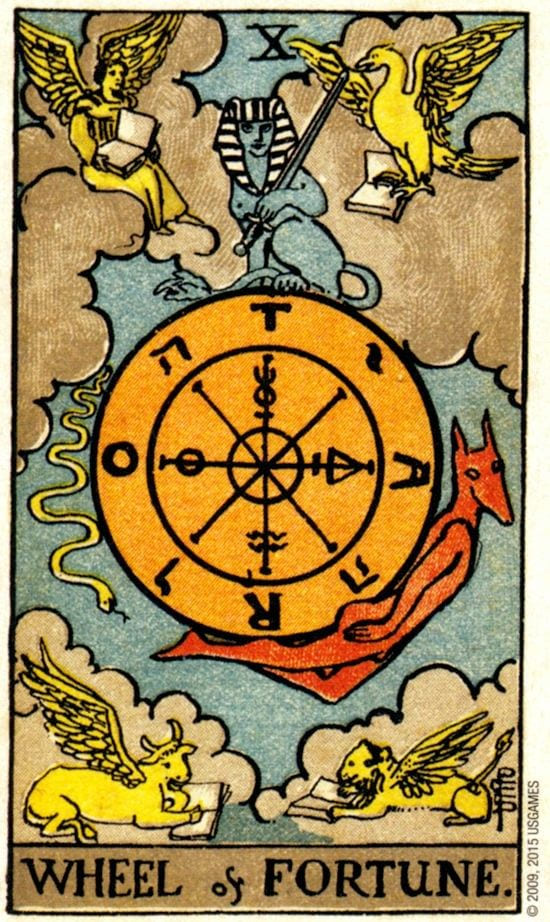
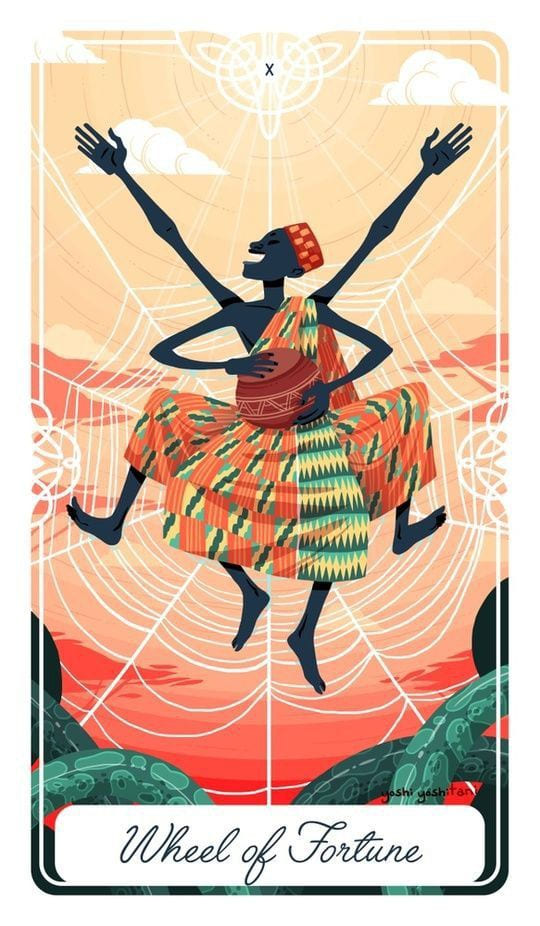
The Wheel of Fortune is the perfect card for this — it reminds us that we’re always in the middle of a cycle. What feels permanent is actually a phase. What seems random might be a pattern. The card doesn’t predict what happens next on the wheel. It helps you see where you are on it.
Identifies likely outcomes (not guaranteed ones)
A reading might say: “If you continue avoiding this conversation, the distance between you will grow.” That’s not a prophecy. It’s a consequence. It’s the logical result of a pattern that’s already in motion.
The key word is likely. Tarot reads momentum, not destiny. And momentum can be changed by conscious action.
Creates space for honest reflection
There’s something about pulling cards that gives people permission to be honest with themselves. Maybe it’s the ritual. Maybe it’s the symbolism. Maybe it’s that the cards provide enough emotional distance to look at difficult truths without flinching.
Whatever the mechanism, I’ve watched people have breakthroughs in readings that they couldn’t access in regular conversation. Not because the cards are magic — because the framework created safety.
Why readings sometimes feel psychic
Let me be transparent about something: sometimes readings feel uncannily, almost spookily accurate. A client asks about their relationship, and the specific cards that fall seem to describe their exact situation with impossible precision.
There are a few reasons for this:
Pattern recognition. Human relationships, career struggles, and emotional challenges follow recognizable patterns. A skilled reader has seen hundreds of variations of the same core dynamics. When they “see” your situation in the cards, they’re drawing on deep experiential knowledge.
Psychological projection. Your mind is remarkably good at finding meaning in ambiguous images. When you look at the Three of Swords, your brain automatically connects it to whatever heartbreak is most alive in your life right now. The card becomes a mirror, not because it’s magic, but because your subconscious is doing the work.
Focused attention. The ritual of a reading — shuffling, laying cards, focusing on a question — creates a state of concentrated attention that you rarely give yourself. In that state, insights surface that were always available but never noticed.
The Barnum effect. Named after P.T. Barnum, this psychological phenomenon explains why people find personal relevance in general statements. “You sometimes feel misunderstood” applies to virtually everyone but feels deeply personal.
This doesn’t diminish tarot’s value. Understanding how it works makes it more useful, not less.
What tarot can’t do (and that’s okay)
Being honest about tarot’s limitations makes the practice stronger, not weaker. Here’s what cards genuinely can’t do:
Predict specific events with dates and details. “You’ll meet someone in September at a coffee shop” — that’s not how tarot works. Cards work in themes and energies, not calendars and addresses.
Tell you what another person is thinking. Your reading reflects your experience and perspective. It can illuminate relationship dynamics as you perceive them, but it can’t access someone else’s private thoughts.
Guarantee outcomes. “Will I get the job?” The cards might show strong potential, but they can’t account for the other 200 applicants, the economy, or whether you’ll actually prepare for the interview.
Replace professional advice. Tarot isn’t a substitute for medical diagnosis, legal counsel, financial planning, or therapy. It can complement all of these, but never replace them.
Override free will. Yours or anyone else’s. The future isn’t a script. It’s being co-created in every moment by billions of choices. No deck of cards can account for all of that.
So what’s the point?
If tarot can’t predict the future with certainty, why bother?
Because certainty about the future was never what you actually needed. What you need — what everyone needs — is clarity about the present.
You need to understand why you keep choosing partners who can’t commit. You need to see the pattern in your career decisions. You need to acknowledge the grief you’ve been avoiding. You need to recognize that you already know the answer to the question you keep asking.
Tarot delivers all of this. Consistently and powerfully.
How to use tarot wisely (knowing what it is and isn’t)
Once you understand tarot as a reflective tool rather than a prediction machine, your readings become dramatically more useful. Here’s how:
Ask better questions
Instead of: “Will I get married?” Try: “What pattern in my relationships needs my attention right now?”
Instead of: “Will I get the promotion?” Try: “What’s holding me back in my career, and what would help me move forward?”
Questions that explore why and how give you actionable insight. Questions that ask when and will give you anxiety.
Hold outcomes loosely
When the cards suggest a likely outcome, treat it as information, not fate. “The cards suggest growing distance in this relationship” means: here’s a pattern worth addressing. It doesn’t mean the relationship is doomed.
Combine with action
The single most important rule: act on what the cards reveal. A reading without follow-through is just fortune-telling-as-entertainment. Pull the card, see the truth, then do something about it.
Know when tarot isn’t the right tool
Sometimes you don’t need a reading. You need a therapist, a doctor, a lawyer, a difficult conversation, or just a good night’s sleep. Tarot is one tool in a full toolkit. Use the right tool for the job.
My honest answer
When people ask me “Can you see the future?” here’s what I actually say:
“I can see where you are right now more clearly than you can, because I’m not inside it with you. I can see the patterns at work and where they’re likely taking you. And I can help you figure out if that’s where you want to end up.”
That’s not prediction. It’s something better.
It’s awareness. And awareness is the only thing that’s ever truly changed anyone’s future.
Frequently Asked Questions
Can tarot cards really predict the future?
Tarot doesn't predict a fixed, inevitable future. Instead, it reads the energy of your current situation and shows likely outcomes based on your present path. Think of it as a GPS showing where you're headed — you can always change direction.
Why are tarot readings sometimes accurate?
Tarot works through pattern recognition, psychological projection, and focused reflection. The cards act as a mirror for your subconscious, helping you see what you already know but haven't consciously acknowledged. This is why readings often feel uncannily relevant.
Should I make big decisions based on tarot readings?
Use tarot as one input among many — not as the sole basis for major decisions. A reading can reveal blind spots, clarify your feelings, and highlight factors you haven't considered, but the final decision should always be yours.
How accurate are tarot readings?
Accuracy depends on the reader's skill, the specificity of your question, and what you mean by 'accurate.' Tarot excels at identifying emotional patterns and underlying dynamics. It's less reliable for specific dates, names, or guaranteed outcomes.