The Children of Litha Tarot: All 78 Card Meanings Explained
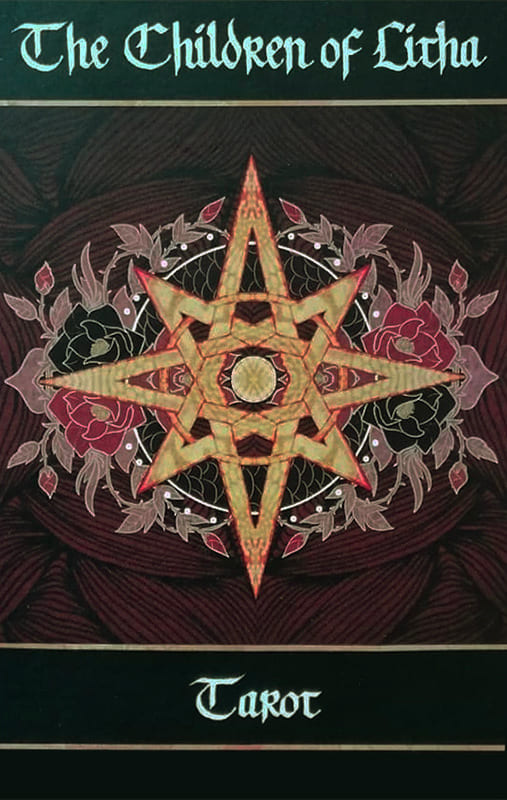
Some tarot decks exist in the world of people. The Children of Litha Tarot exists in the world that existed before people — and still runs beneath everything we build on top of it. Created and illustrated by Alexandria Huntington (Xia Hunt) over four years, this deck is a love letter to the relationship between humanity and nature, told through the language of cross-cultural mythology, botanical detail, and creatures that belong to forest floors, ocean depths, and skies older than memory.
Every card in this 80-card deck (78 standard plus two original bonus cards, The All and The Void) reimagines classic Rider-Waite-Smith archetypes through a lens of ecological wonder. The Major Arcana become gods and goddesses of the natural world. The Minor Arcana populate with finned ocean creatures, forest beings, winged things, and rooted growing things. Huntington’s illustrations are dense with symbolic detail — the kind of art that reveals something new every time you look, where a vine curling around a sword or scales glinting beneath water carry as much meaning as the central figure.
How the Deck Is Organized
The Children of Litha Tarot follows the classic 78-card tarot structure with two bonus additions:
- Major Arcana (0–XXI): The 22 cosmic archetypes — gods and goddesses of the deck representing universal forces, karmic lessons, and the great turning points that reshape your path. In this deck, they emerge from the oldest stories humanity has ever told.
- Wands: The suit of fire. Passion, creativity, ambition, and the wild spark that drives growth.
- Cups: The suit of water. Emotions, love, intuition — here populated by finned creatures of the ocean and sea, offering their heart if not their clarity.
- Swords: The suit of air. Thought, truth, conflict, and the sharp discernment that cuts through illusion.
- Pentacles: The suit of earth. Material reality, craft, patience, and the slow, rooted work of building something that endures.
- Bonus Cards — The All & The Void: Two original cards unique to this deck, bringing the total to 80 — the number of destiny in numerology. They represent the cosmic poles of existence: totality and emptiness, creation and the space before creation.
Each suit runs from Ace (the root essence of that element) through Ten, followed by four court cards — Page, Knight, Queen, and King — for 14 cards per suit and 56 Minor Arcana total.
Major Arcana
The Fool

The Fool represents a free spirit with limitless potential and insatiable curiosity, embodying youthful optimism and the possibility of new beginnings. She is confident yet naive and innocent of the world's harsher realities, which can be both a strength and a vulnerability. Her shadow side can be dimwitted, overly trusting, and reckless, warning against impulsive decisions or refusal of needed guidance. As the only fully human Major Arcana card, she often symbolizes the querent at the start of a Divine journey, standing on the verge of a leap of faith whose outcome is uncertain.
The Magician

The Magician signifies progress and the early stages of understanding one’s own power. He is associated with Nature's master craftsmen—the spider—and with wings that represent an elevated intellect, indicating skill, resourcefulness, and the capacity to handle many tasks. He is flexible and industrious, able to experiment and apply concentration and willpower to gain experience and influence. Yet his shadow side can be dishonest and manipulative, leading to latent talents, poor planning, deceit, and greed, so ethical use of his abilities is essential.
The High Priestess

The High Priestess stands at the threshold between the conscious and subconscious, embodying ancient and hidden wisdom. She is a symbol of fertile mind (the pomegranate) and subtle dominion over dreams and dread (the crescent moon). Her presence urges inward listening, trust in intuition, and respect for the occult or spiritual knowledge. The shadow aspect warns of hidden agendas, blocked psychic energy, and the need to attend more closely to inner guidance to avoid deception or imbalance.
The Empress
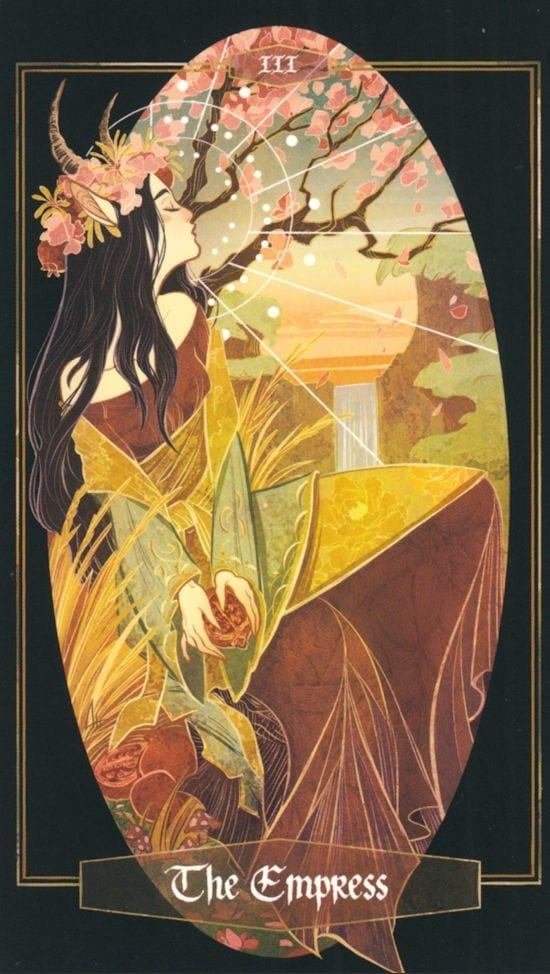
The Empress embodies conventional femininity, fertility, abundance, beauty, and a nurturing maternal power. She symbolizes creativity, sensuality, harmony, and material or physical fertility, signified by the pomegranate she holds lower than the High Priestess's. The card encourages growth, care, artistic expression, and the comforts of nature and luxury. In shadow or reversed, it warns of dependence, creative blocks, weakness of will, emotional stagnation, or overbearing tendencies.
The Emperor
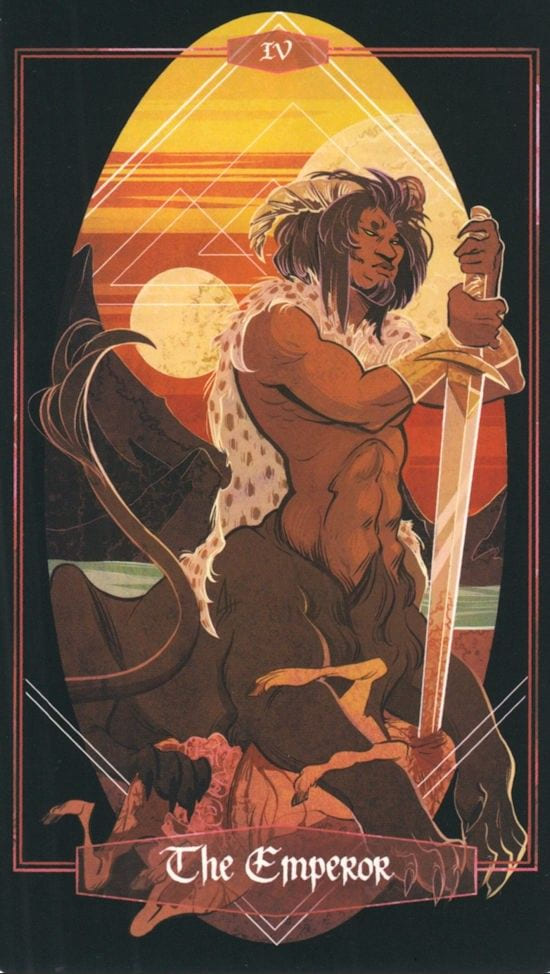
The Emperor embodies archetypal masculine authority as protector and provider, representing structure, leadership, and stability. He is depicted with a sword confidently slaying his prey, indicating decisiveness and the acceptance that destruction can be necessary. In his mature form he offers paternal wisdom, dependability, and practical leadership, but his shadow side can become tyrannical and sadistic. Upright he signals authority and order; reversed he warns of abuse, domination, and lack of discipline.
The Hierophant
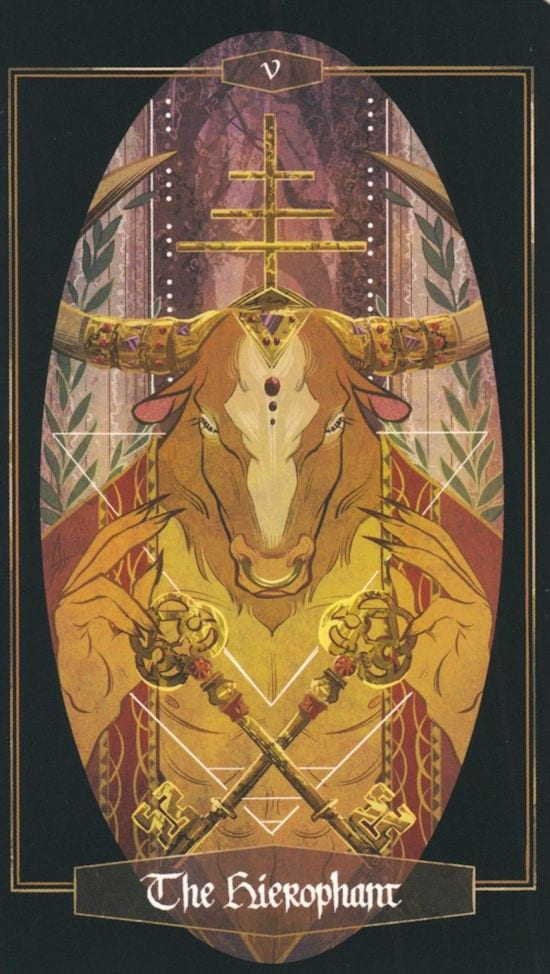
The Hierophant represents tradition, organized religion, group identity, stability, and conformity, embodying comfort within established structures. It symbolizes the impulse to control primal instincts through social constructs, as pictured by the Minotaur confined in a labyrinth. Its shadow side enforces group ideals even when they contradict logic or justice, causing rigidness and suppression of individuality. This confinement can become suffocative, sometimes prompting a return of the beast within that may rule the self again, for better or worse.
The Lovers
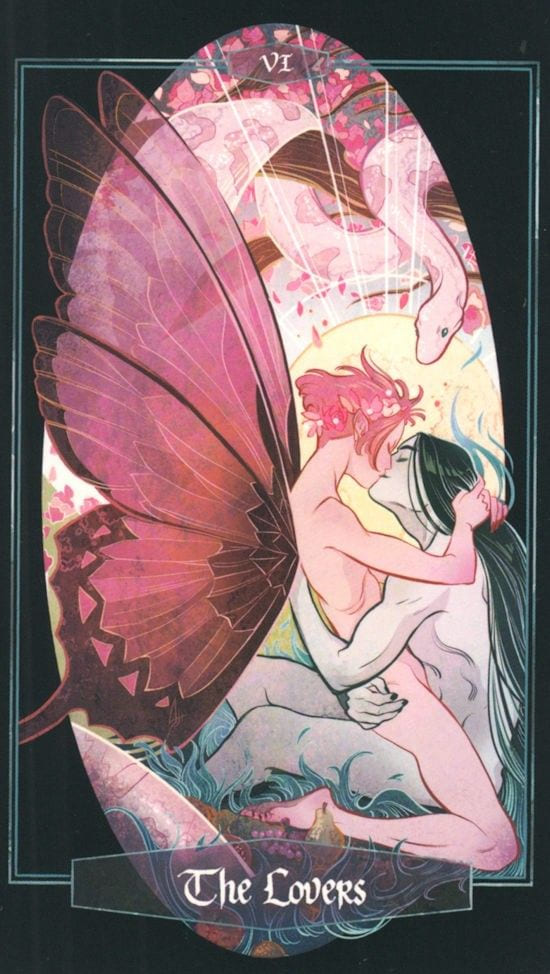
The Lovers represents harmony and alignment between two people as well as between the masculine and feminine aspects within a single psyche. It highlights the importance of aligning one's values with one's actions and making major life choices with integrity. The card signifies love, emotional and sexual connection, and a sense of completeness when inner and outer elements are balanced. Its shadow side warns of cognitive dissonance, instability, disharmony, and potential loss when values and actions are not aligned.
The Chariot

The Chariot signifies mastery achieved through control, determination, and strong will, pointing to victory after overcoming obstacles. Its imagery of a rider navigating untamable seas emphasizes confident steering through challenges and harnessing opposing forces. The card encourages focused discipline, ambition, and hard work to reach success, while cautioning that triumph can produce loneliness or be won at others' expense. In shadow or reversed positions, it warns of lack of direction, unchecked aggression, or victory pursued without regard for cost.
Strength

Strength emphasizes choosing mental fortitude, compassion, and patience over displays of brute force or domination. The imagery of a graceful sphinx cradling the head of a lion illustrates courage tempered by tenderness and calm in the face of provocation. The card cautions against equating strength with the absence of weakness and urges taking the high road by using power for the good of others. When shadowed, this energy devolves into instinctual selfishness, tantrums, and domination to secure easy victories.
The Hermit
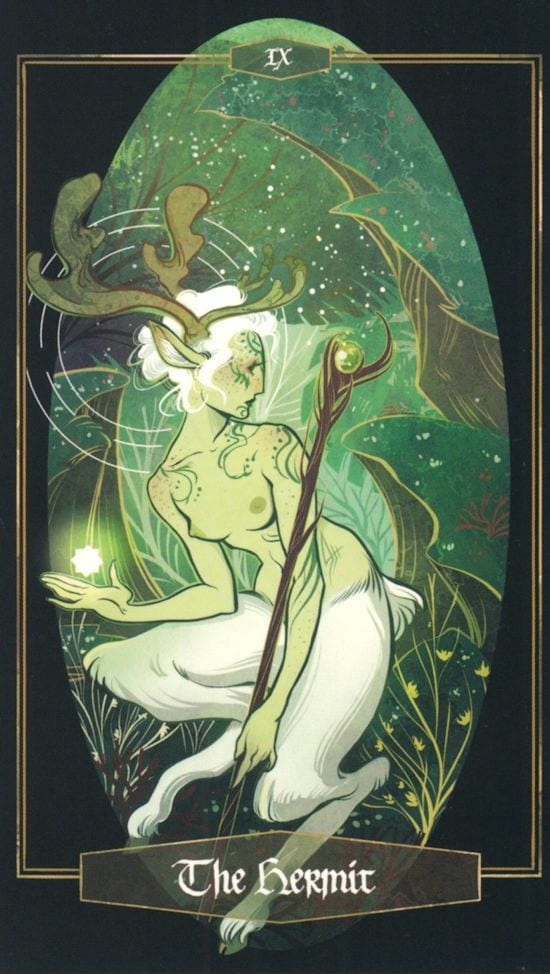
The Hermit urges withdrawal and introspection as a path to inner knowledge and spiritual enlightenment. Solitude and self-reflection allow one to cultivate inner guidance, reason, and peace, symbolized by the glowing star held in the Hermit's hand. This illumination represents the ability to grasp elusive truths through careful contemplation. Reversed or shadowed, the Hermit warns of isolation, paranoia, or avoidance that substitutes seclusion for genuine understanding.
Wheel of Fortune

The Wheel of Fortune represents the cyclical nature of luck and fate, reminding you that good and bad times alternate and that change is inevitable. It counsels not to fear these shifts, as all things shall pass and even the cleverest cannot escape destiny. Upright, it signals favorable turns, decisive moments, and that your efforts are bearing fruit; reversed, it warns of setbacks, delays, and resistance to necessary change. Overall, it advises acceptance of the wheel's motion and preparation when you sense a downturn.
Justice

The Justice card symbolizes law, fairness, and moral integrity, depicted as a woman merged with an ostrich referencing Anubis and the weighing of the soul. It signifies that actions have consequences and that truth, equality, and clear-sighted judgment prevail. Upright, it points to fairness, legal matters, accountability, and standing up for what is right. Reversed, it warns of bias, corruption, unfair verdicts, and self-deception.
The Hanged Man
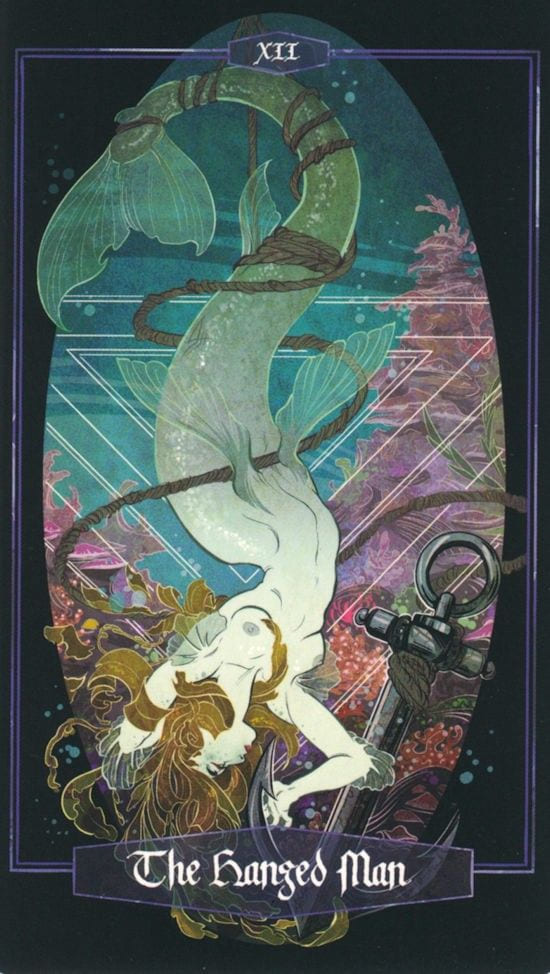
The Hanged Man depicts a mermaid ensnared by a rope and anchor, symbolizing a situation where struggling only tightens constraints. The card urges slowing down, reevaluating circumstances, and adopting a change of perspective rather than forcing action. It speaks to feelings of being stuck and the necessity of letting go and finding calm to achieve freedom. In its shadow aspect it warns of self-pity, martyrdom, willful ignorance, and a refusal to acknowledge other perspectives.
Death

Death signifies endings that make space for new beginnings, emphasizing transformation, transcendence, and growth rather than literal mortality. It urges the release of old or destructive parts of yourself to allow renewal, often a painful but necessary process. In its shadow form, it warns of resistance to change, inability to move on, and repeating negative patterns that block progress. Upright, it points to cleansing, transition, and the promise of rebirth; reversed, it highlights fear, dependency, or feeling numb and stuck.
Temperance

Temperance represents balance, moderation, and patience, encouraging measured action and inner harmony. The figure's wings and tiger body symbolize elevated intellect combined with the strength that comes from restraint. She recognizes that there is more than the physical realm while affirming that corporeal reality and logical pragmatism should not be discounted. The shadow of Temperance warns of imbalance and excess, where instant gratification undermines lasting happiness.
The Devil

The Devil warns of bondage to destructive patterns such as sin, addiction, and self-imposed limitations. It shows how people may willingly accept chains, choosing ease or immediate pleasure over freedom and long-term wellbeing. The card's shadow side points to liberation—especially sexual or experiential—and suggests that giving in or releasing control can sometimes bring needed release. In readings it urges awareness of compulsions and offers the possibility of overcoming or transforming those ties.
The Tower
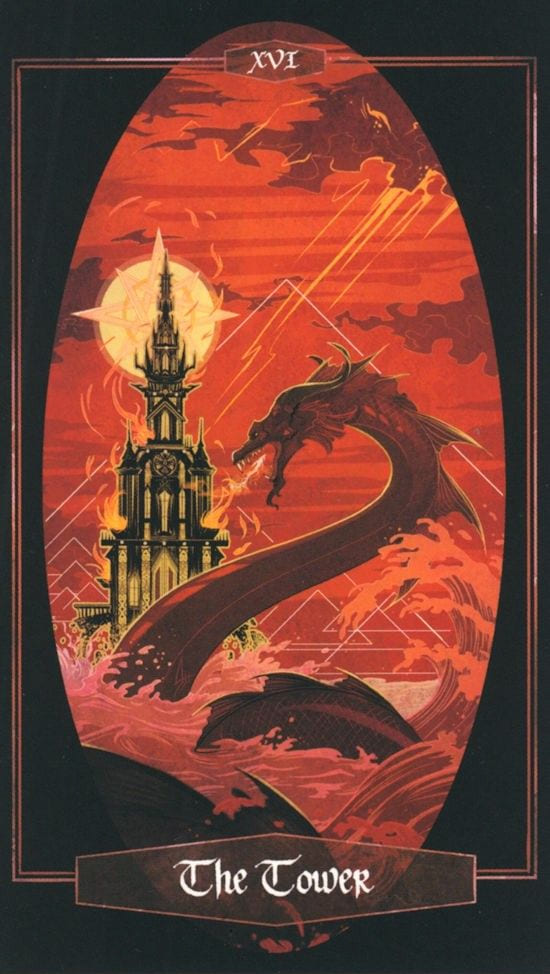
The Tower signifies sudden upheaval, destruction, and chaotic forces that can unexpectedly alter your reality and affect all areas of life. It points to external circumstances beyond your control and complete upheaval of established structures. Reversed, the card can indicate denial, delaying the inevitable, or a warning of imminent destruction, and it may also suggest narrowly avoiding disaster or a blessing in disguise. Overall, the card warns of unavoidable change and the revelations that accompany transformation.
The Star

The Star is a hopeful, restorative card signifying renewal, compassion, and inspiration after a period of destruction or turmoil. It suggests transformation, the calming light that allows you to stand in the face of fear, and the potential for wishes fulfilled or unexpected help. At its best, it brings peace, protection, and renewed spirituality. Reversed or shadowed, it warns of diminished hope, blocked inspiration, or a refusal to acknowledge available opportunities and assistance.
The Moon

The Moon represents intuition and shifting temperaments, like the tide it controls, bringing both dreamlike calm and unsettling illusion. It highlights a duality between soothing imagery and lurking threats, suggesting that shadows may hide truths as well as keys. In the upright position it can blur reality and illusion, provoking anxiety, paranoia, and confusion. Reversed aspects point to releasing fear, engaging the subconscious and intuition, and confronting one's shadow to restore clarity and imagination.
The Sun

The Sun represents bright, warm, carefree joy and the reward that comes after hard work, signaling success, vitality, and openness. It suggests a reprieve from hardship and the fruition of efforts, sometimes indicating a much-needed vacation or rest. Its shadow side is mild—a slightly less prominent or tempered joy rather than deep negativity, often shaped by recent adversity. Overall, the card encourages expression, confidence, self-acceptance, and celebration of accomplishment and freedom.
Judgement

Judgement signals absolution, spiritual awakening, and a higher calling that prompts personal remaking and important decisions. The card's imagery of foxes rising from their graves suggests a reckoning and the opportunity to move on to a new phase. It signifies clarity and understanding—perhaps an epiphany or spiritual awakening—that reveals the consequences of past actions. In its shadow, the card warns of denial or an unwillingness to accept reality and move forward, while reversed meanings point to doubt, guilt, and missed opportunities.
The World
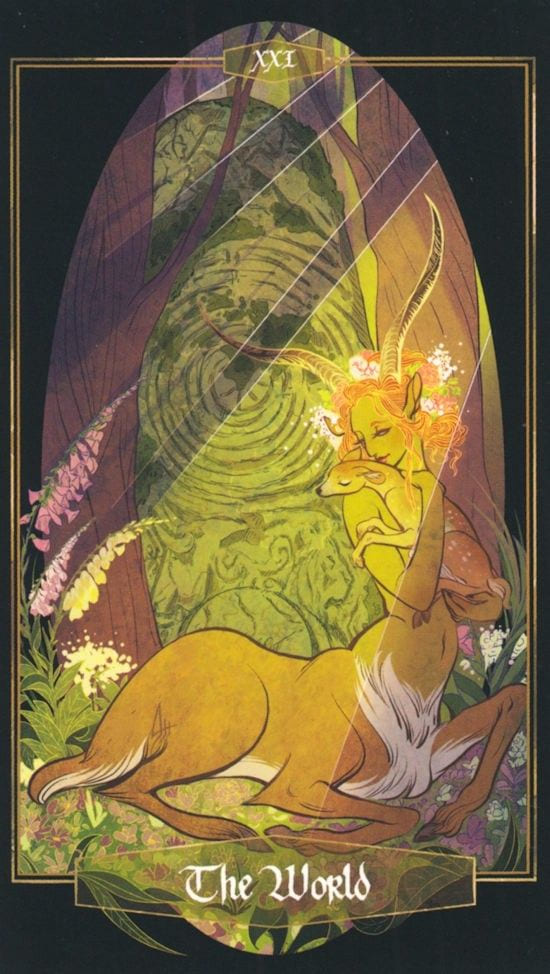
The World signifies completion, accomplishment, and a sense of wholeness after a long journey, often indicating fulfillment, birth, or travel. Its imagery—such as a mother centaur cradling a baby deer before a labyrinth—speaks to having traversed trials and been reborn through experience. It also represents cycles and transitions, reminding you that as one chapter closes another will begin and prompting timely movement rather than stagnation. Reversed, it warns of delays, abandonment, stagnation, or sorrowful endings that impede fulfillment.
Wands
Ace of Wands

The Ace of Wands signifies a spark of creative inspiration and intense passion that initiates new beginnings and enterprises. It embodies spiritual energy, expansion, ambition, and a primal surge of confidence that urges swift, decisive action. When upright, it suggests that inspired ideas and motivation are likely to manifest into tangible results if you seize the opportunity. Reversed, it warns of a lack of inspiration, apathy, delays, burnout, or spiritual discontent that can drain motivation.
Two of Wands

The Two of Wands depicts safety and the urge to explore: you feel secure in your current environment but are drawn toward new horizons and possibilities. It embodies dreaming, planning, and the first steps of discovery as you prepare to move beyond comfort. The card encourages careful inspiration and exploration rather than impulsive leaps. Reversed, it warns of impractical daydreaming or a reluctance to leave the familiar, which can block progress and potential.
Three of Wands

The Three of Wands indicates you are setting plans into action and surveying new territory with a forward-looking vision. Persistent motivation and creative foresight keep progress moving and reveal new opportunities on the horizon. This card encourages you to embrace change and move toward long term goals through preparation and enterprise. Upright, it emphasizes discovery, planning, and turning dreams into concrete outcomes, while reversed it warns of distraction, aimlessness, and losing sight of long-term direction.
Four of Wands
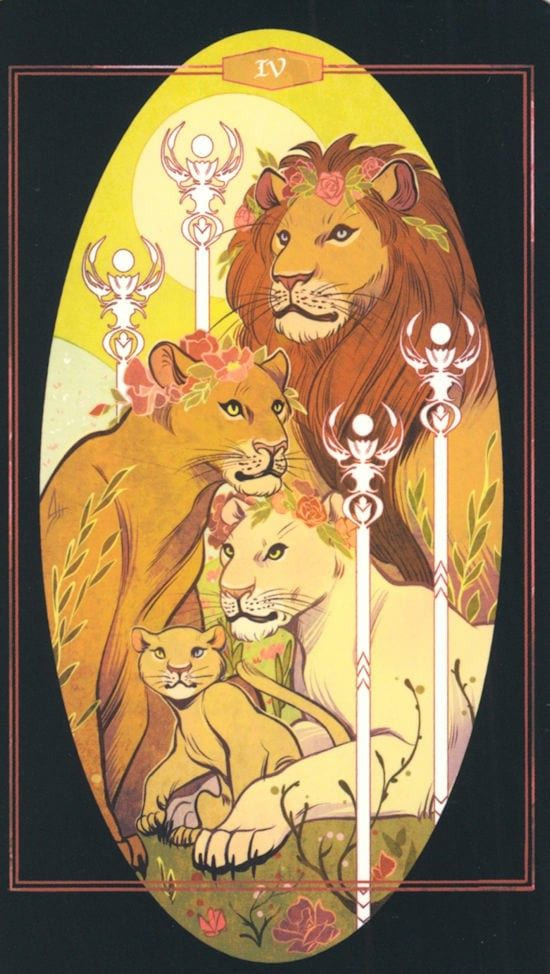
The Four of Wands symbolizes abundance, celebration, and the warmth of family and community, often depicted as a family of lions basking in sunlight with laurels. It signifies communal support, festivity, and important commencements such as weddings, anniversaries, or birthdays. The card encourages you to appreciate familial bonds and to bask in the affection and support that surrounds you. Reversed, it warns of breakdowns in familial communication, awkward or obligatory gatherings, and potentially serious disputes such as custody battles or divorce.
Five of Wands
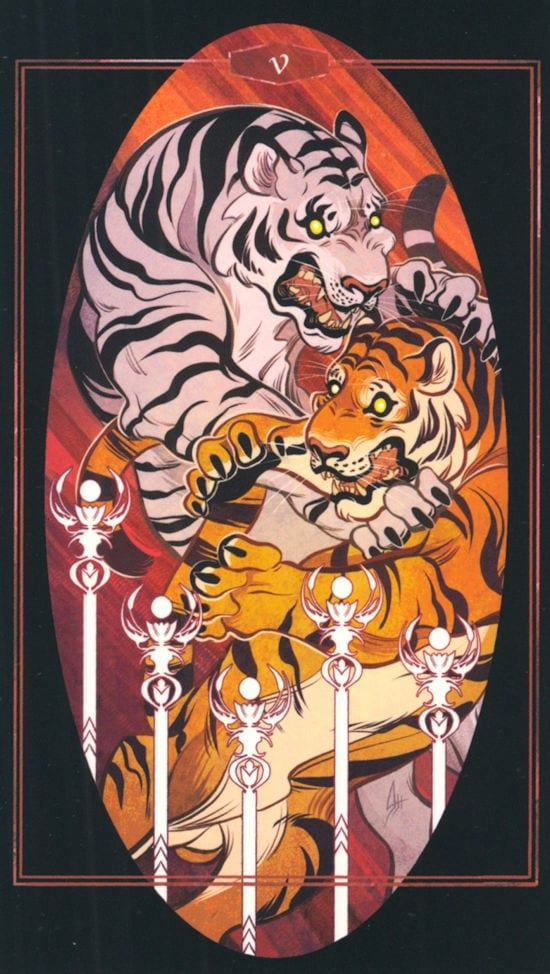
The Five of Wands depicts competitive conflict and ego clashes that can begin playfully but may escalate quickly. It symbolizes tension, group rivalry, and fights for attention or territory. The card warns that small disputes can spiral into bigger struggles when pride and stubbornness take hold. Reversed, it suggests creating or perceiving conflict where none exists, or projecting personal discontent onto others.
Six of Wands

The Six of Wands signifies earned recognition, public acclaim, and newly attained roles of leadership after hard-fought effort. It represents victory, prestige, and the acknowledgement of your peers for accomplishments won through struggle. Reversed, the card can indicate public failure, humiliation, or setbacks that bruise the ego, often accompanied by internal disappointment. The card thus highlights both the celebration of success and the vulnerability of pride when things go wrong.
Seven of Wands
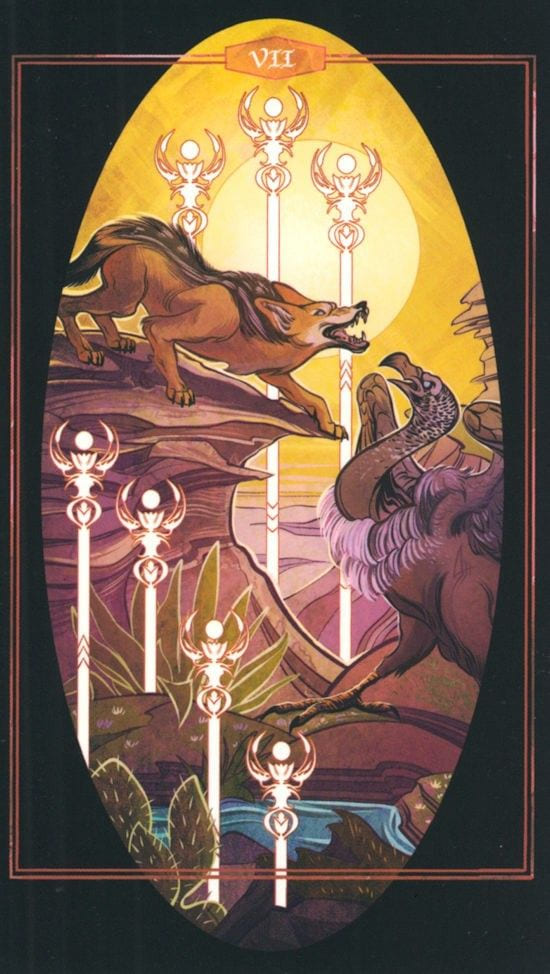
The Seven of Wands symbolizes conflict and the need to defend one's position, often against direct opposition. It points to competition over limited resources and urges standing your ground rather than negotiating when necessary. Upright it emphasizes vigilance, territoriality, and proactive defense of authority. Reversed, it warns of reluctance to engage, a defeatist mindset, or exhaustion from advocating for yourself and feeling overwhelmed or replaced.
Eight of Wands

The Eight of Wands symbolizes swift movement and rapid progress, illustrated by a cheetah running with a wand in her mouth. It indicates that plans are coming to fruition and events are unfolding faster than expected. Reversed, it warns of sudden stops, delays, or frustrating setbacks that require reassessment. Use any enforced pause to reevaluate your trajectory and prepare so that when momentum resumes you will be on the path you desire.
Nine of Wands
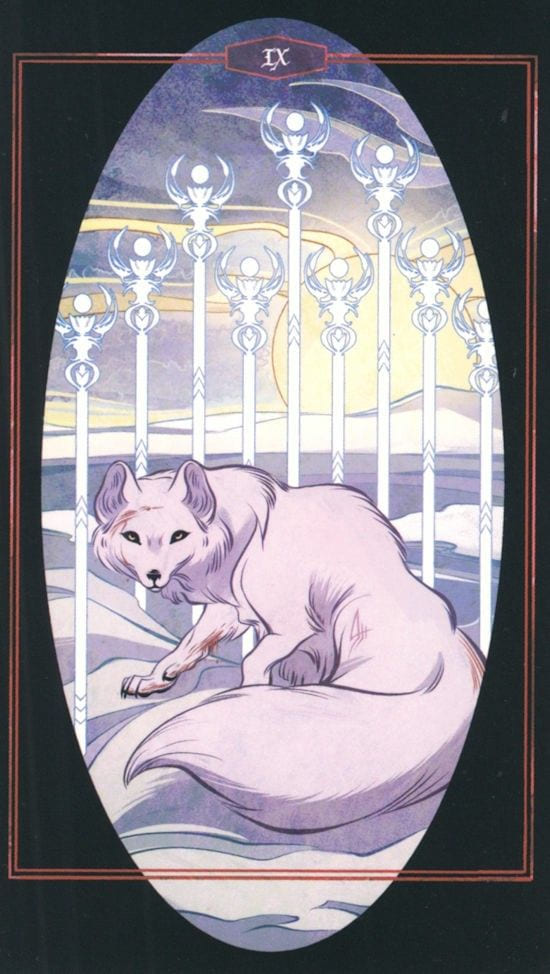
The Nine of Wands depicts an arctic fox that has endured hardship but remains alert and ready to continue. It symbolizes resilience, tenacity, and the strength to defend what is yours after repeated trials. Though worn and bearing wounds, you are able to rest, recover, and move forward with confidence. Reversed, the card warns of being worn down or overwhelmed by life.
Ten of Wands

The Ten of Wands shows a leopard that has secured its prey, symbolizing success that brings new responsibilities and the need for vigilance. It signals that accomplishing a goal often ushers in additional work to protect and sustain what you've earned. Upright, it highlights perseverance, hard-won achievement, and the culmination of effort that must now be managed. Reversed, it warns of feeling overwhelmed by that burden or of shirking responsibilities altogether.
Page of Wands
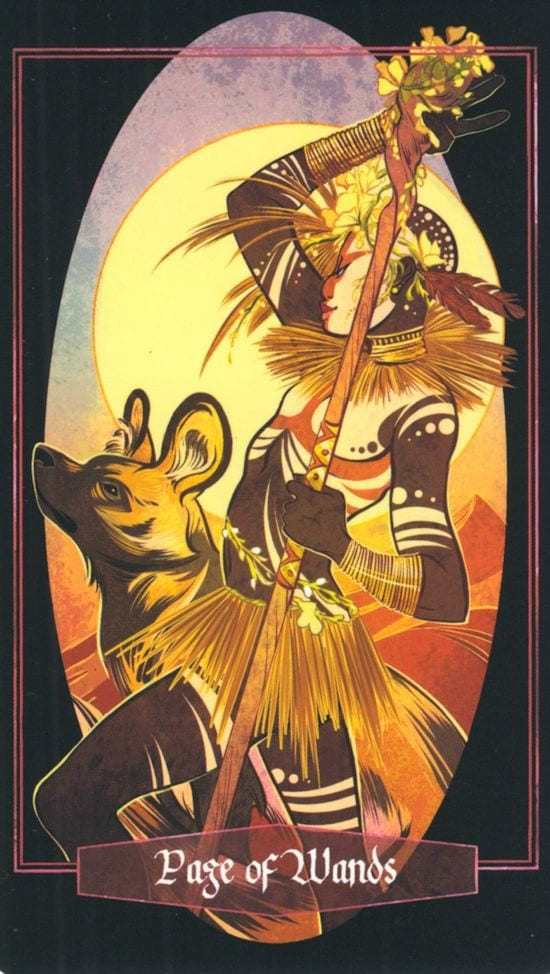
The Page of Wands represents a youthful, feminine energy full of passion, enthusiasm, and optimism, often heralding new inspiration or ventures. This figure may appear as a student, apprentice, younger sibling, or any eager person ready to learn, travel, or explore. Upright, the card signals motivation, discovery, and a free-spirited surge of creativity that encourages action. In reverse, it warns of a lack of focus or direction that causes setbacks, reckless or rash behavior, and stalled projects. Overall, the card invites embracing curiosity and enthusiasm while staying grounded in planning and follow-through.
Knight of Wands

The Knight of Wands represents a younger masculine energy who is lively, fun-loving, adventurous, and fearless. This free-spirited knight is charming, proud, and steadfast in pursuing desires, following ideas through to the end without doubt. Upright, the card emphasizes passion, charisma, and bold action in facing challenges. Reversed, it warns of arrogance, impulsivity, irresponsibility, and shortsighted behavior that can lead to frustration.
Queen of Wands
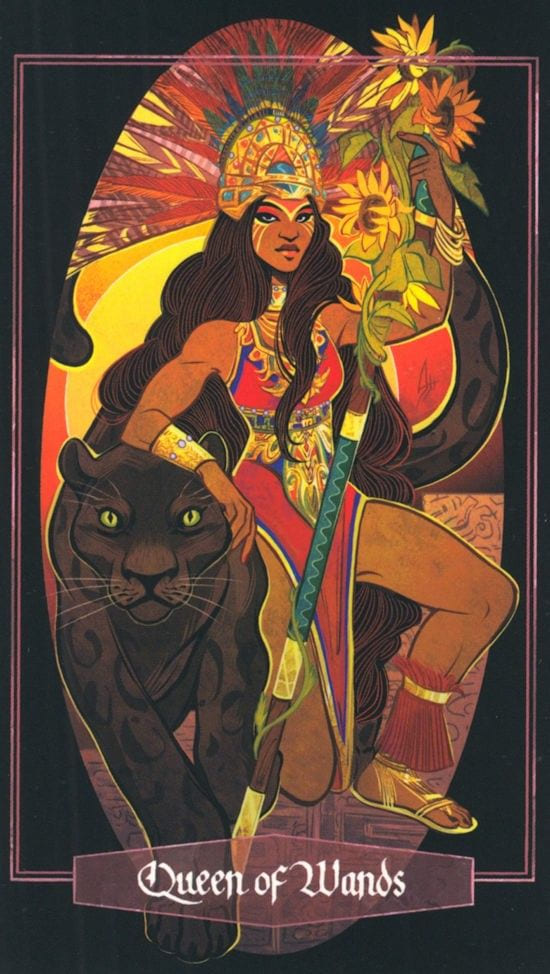
The Queen of Wands embodies a mature, charismatic feminine energy that leads with confidence and creative warmth. She radiates vitality and lights up the room, often excelling as a homemaker or event organizer and inspiring those around her. She is generous with her time and determined in pursuing what she wants, combining passion and leadership. Reversed, this card can signify shyness, withdrawal, apathy, or someone deliberately giving the cold shoulder.
King of Wands

The King of Wands represents a mature, fire-aligned masculine energy: a determined, charismatic leader whose vision inspires others. They hold a fixed sense of how things should be and will work to bend circumstances to realize that vision, often with exuberant warmth that makes them hard to challenge. In readings this card points to leadership, confidence, creativity, and a magnetic presence. Reversed, the energy can become volatile, tyrannical, or manipulative, using charisma for harmful ends and compensating for inner insecurity.
Cups
Ace of Cups
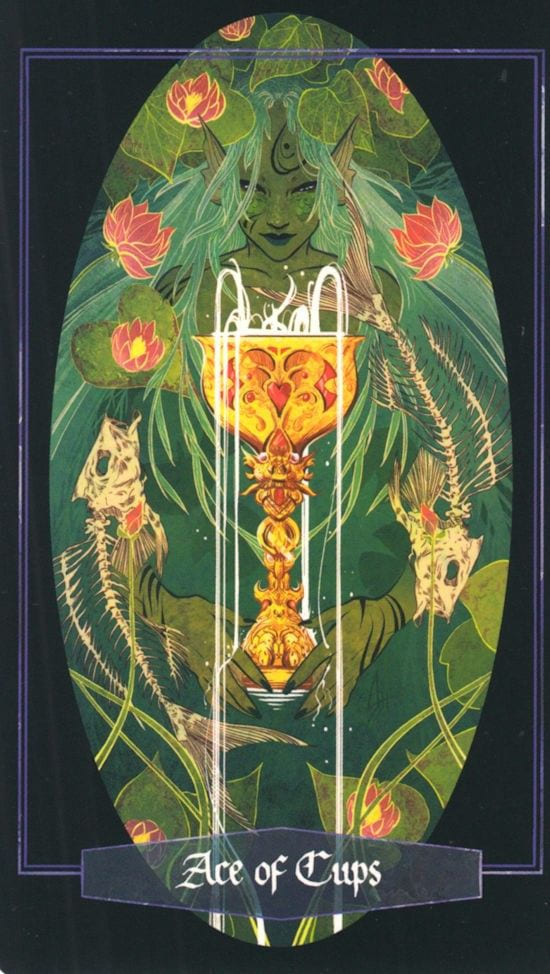
The Ace of Cups shows a river nymph offering an overflowing chalice, symbolizing abundant emotion, creativity, and intuitive potential. Water lilies emphasize tenderness, compassion, and abundance, while the fish skeletons and tangled vines at the card's base point to roots, the subconscious, and the purest essence that sustain feeling and intuition. Upright, the card indicates new emotional beginnings, fulfillment, love, creativity, and intuitive insight. Reversed, it warns of repression, inability to express oneself, stagnation, or emotional numbness.
Two of Cups

The Two of Cups symbolizes harmonious union and close partnership, emphasizing trust, mutual respect, and emotional reciprocity. It represents attraction, balanced give-and-take, and the healing or completion of a once-empty heart. In readings it can indicate proposals, compatibility, reconciliation, or deepening bonds with friends or lovers. Reversed, it warns of imbalance, miscommunication, and disharmony that can lead to arguments, broken promises, or separation.
Three of Cups

The Three of Cups symbolizes community, friendship, and joyful communal bonds, often depicted as a school of fish celebrating together. It emphasizes group solidarity, mutual support, and the nourishment that comes from confiding in like-minded friends. Reversed, it warns of communal disharmony, secrecy, and pressures to conform that can stifle creativity or lead to betrayal. It may also signal affairs, gossip, jealousy, and mismanagement within groups, urging careful attention to relationships and boundaries.
Four of Cups
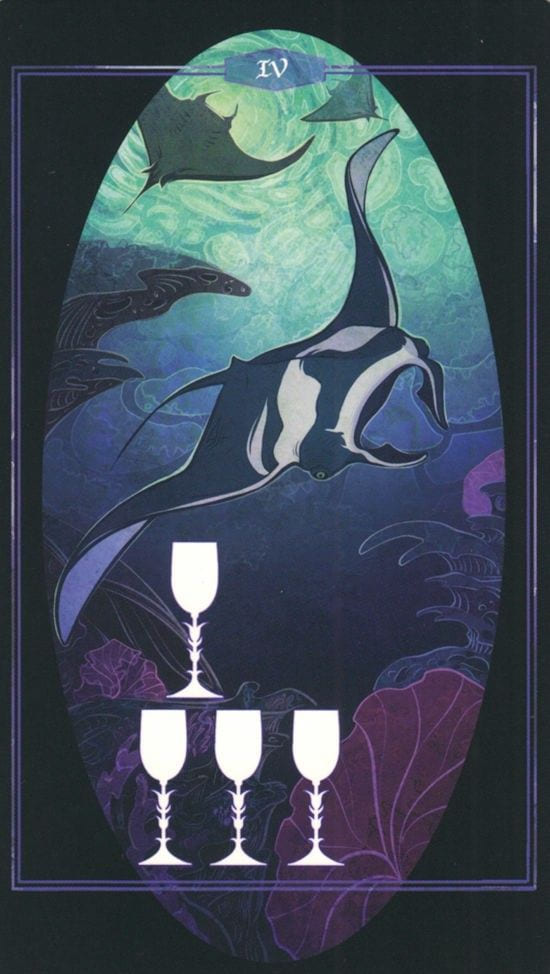
The Four of Cups uses the image of a solitary manta ray drifting in darkness to symbolize inward focus and detachment from external offerings. It warns that becoming absorbed in one's thoughts, daydreams, or melancholy can lead to missed opportunities and an emotional or spiritual vacancy despite material success. Upright, the card points to contemplation, regret, boredom, and apathy; it signals the need to notice what is being overlooked. Reversed, it suggests letting go of regret, seizing new chances, rediscovering enthusiasm, and returning to community and reality.
Five of Cups
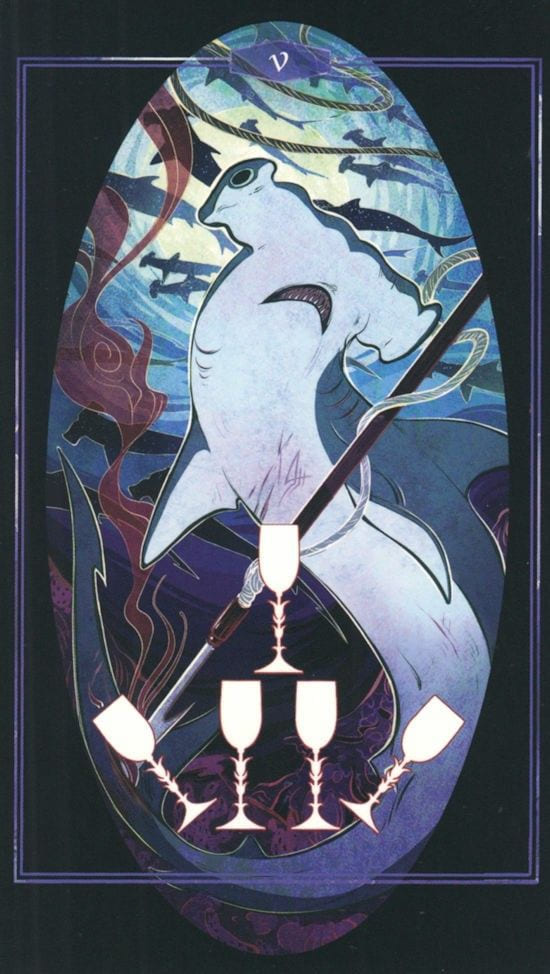
The Five of Cups represents deep anguish, bereavement, and the weight of negative emotions that can leave you frozen while others move on. It urges you to honor your sadness and experience grief rather than deny it. At the same time, the card reminds you not to let sorrow define your identity or consume your life. In its reversed position, the card signals acceptance, letting go, healing, and the possibility of finding new love or regaining your footing after pain.
Six of Cups
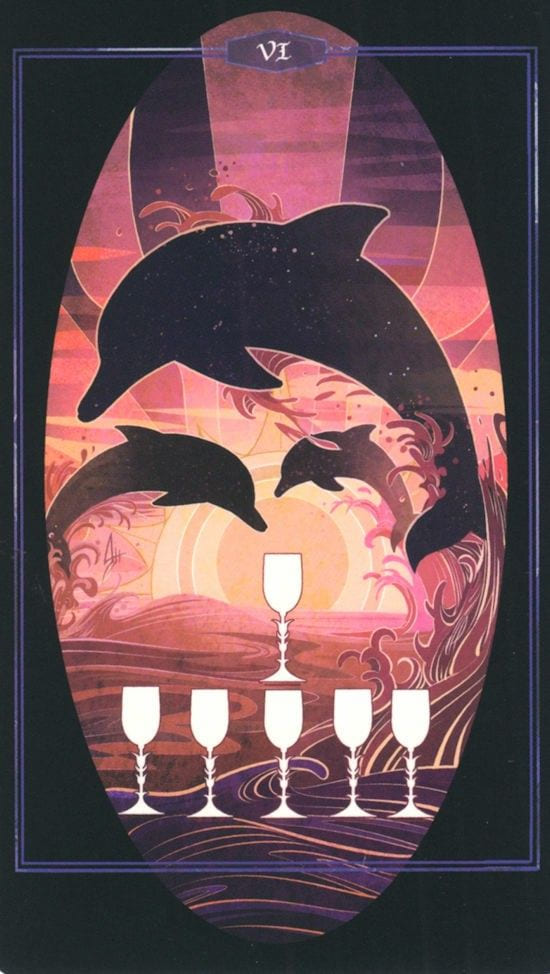
The Six of Cups symbolizes nostalgia and a longing for childhood innocence, often romanticizing memories that have become silhouetted and distant. Its imagery warns against the temptation to escape into memory and reminds us that while the past is a pleasant place to visit, we must return to and live in the present. Reversed, the card indicates clinging to the past—obsessive remembering or selective re-writing of personal history—that can keep one stuck and impede maturation. It encourages healthy reflection, letting go of unrealistic expectations, and nurturing present relationships.
Seven of Cups
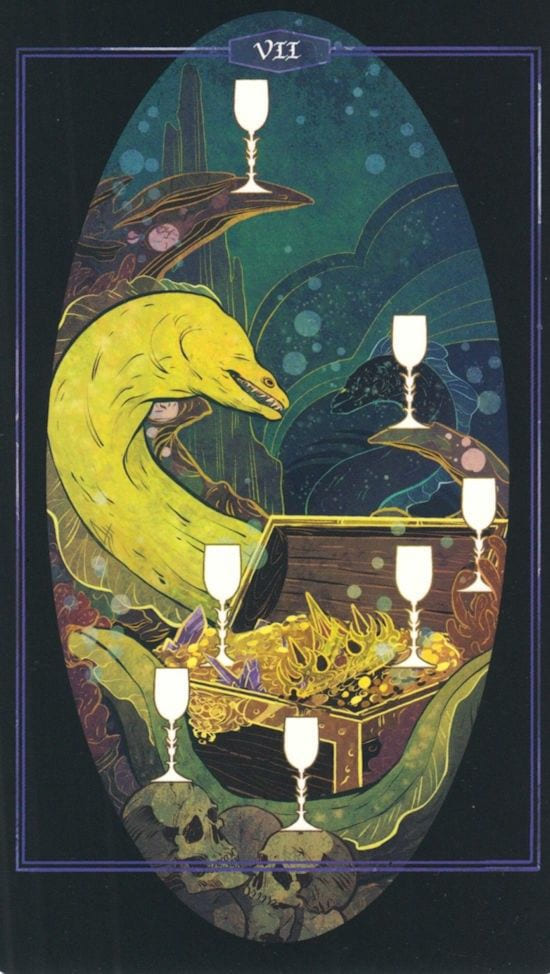
The Seven of Cups depicts a scene of many tempting options and illusions, set against a murky sea of uncertain appearances. The card warns that some choices promise riches, power, or companionship while others hide danger, emptiness, or deceit, making discernment difficult. Upright, it signifies abundant possibilities, imagination, and daydreaming; reversed, it points to temptation, false opportunities, or an illusion of choice. The guidance is to evaluate options carefully and cultivate the ability to distinguish true opportunities from fantasy or misleading appearances.
Eight of Cups

The Eight of Cups signals detachment and the need to let go of what no longer serves you. It describes a liminal state of melancholy and disillusionment where you may leave relationships or roles behind to seek deeper truth. Though the departure is painful and solitary, it is an act of fortitude and introspection that ultimately leads to personal growth. Reversed, the card warns of resistance to transition, clinging to false comforts, or stagnation born of fear.
Nine of Cups

The Nine of Cups heralds warmth, abundance, and contentment after a period of effort, signaling fulfilled wishes and emotional satisfaction. It celebrates the playful intelligence and industriousness symbolized by the Octopus and offers a sense of security from material gain. This card highlights alignment between emotional and material needs and small indulgences as rewards for hard work. Reversed, it warns against premature celebration, overindulgence, or placing earthly pleasures above spiritual and emotional growth.
Ten of Cups

The Ten of Cups shows a family of narwhals emerging from the sea to bask in the heavenly glow of the Northern Lights, symbolizing shared joy and communal blessing. Unlike the Nine of Cups, which marks the start of personal success, the Ten signifies sharing that success with family and loved ones and represents a true "Happily Ever After." It indicates achieved abundance, security, gratitude, harmony, and alignment within family and community. Reversed, it warns of misaligned values, strained family ties, conflicts, or unstable and potentially abusive home environments that require attention.
Page of Cups
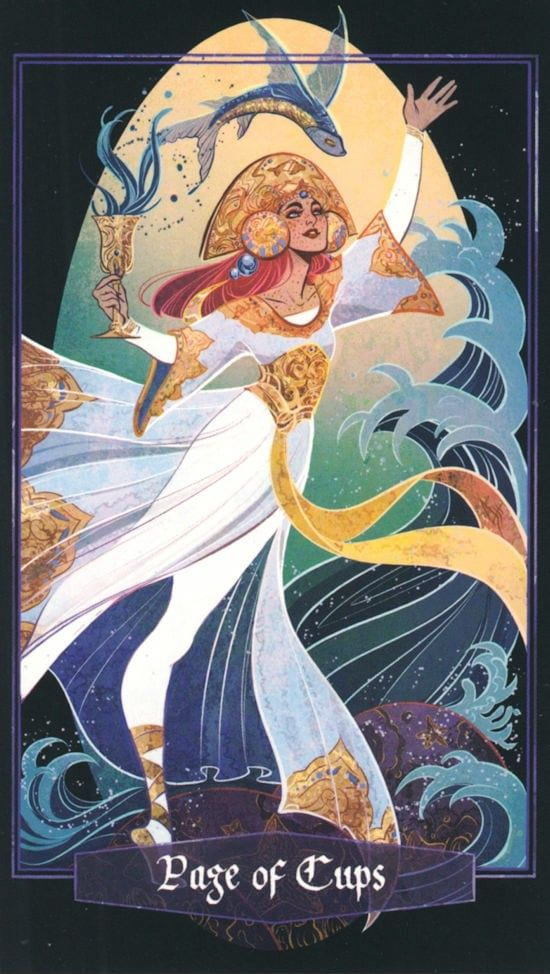
The Page of Cups embodies the spirit of the artist and heralds inspiration and creative energy. It often represents a younger, intuitive, sensitive person full of hope, idealism, and potential who may nonetheless need guidance. It can signal the beginning of a personal journey—such as a new creative project or a budding relationship. Upright, it points to artistic inspiration, creative problem-solving, and unexpected sources of insight; reversed, it warns of emotional immaturity, blocked creativity, or feeling stifled.
Knight of Cups
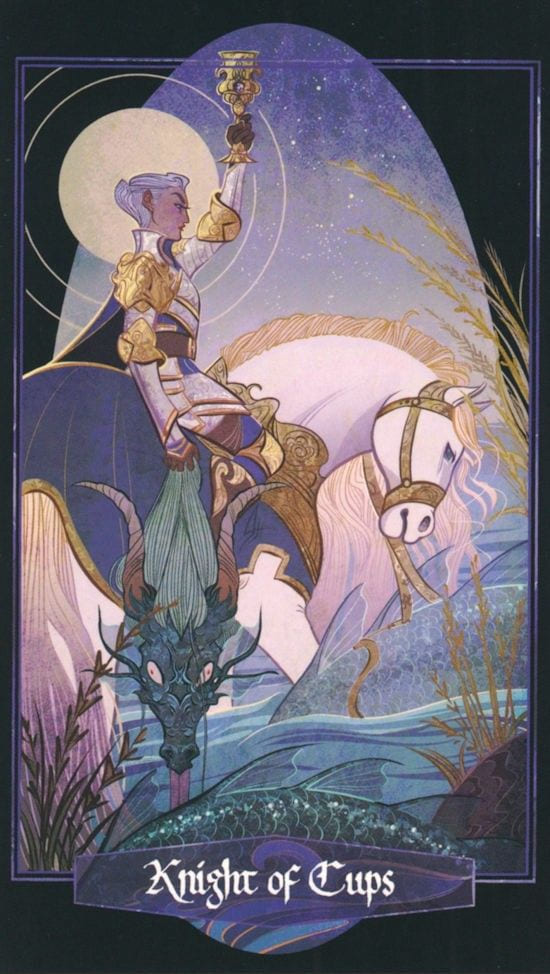
The Knight of Cups heralds romantic news and represents a sensitive, poetic person inclined toward extravagant displays of affection. It can indicate that you will receive a message or token of romantic intention. However, this energy may lack realism or maturity, and the card in reverse warns against being swayed by flattery, empty gestures, and idealizing partners. Reversed, it cautions against pretension, unrealistic expectations, and emotional volatility.
Queen of Cups

The Queen of Cups represents a compassionate, emotionally mature, and nurturing presence who supports creativity and intuition. She can signify a person with deep empathy and emotional intelligence or indicate strong emotional attachments to someone or something. Reversed, the card warns of being overwhelmed or blinded by emotions and suggests the possibility of emotional manipulation or unhealthy dependency. It encourages balanced feeling, attentive listening, and mindful emotional boundaries.
King of Cups

The King of Cups represents a creative, intuitive figure who is deeply in touch with his emotions and can make others feel at ease. He is capable of weathering intense emotional storms while remaining emotionally balanced and dependable. When wounded, he often conceals his hurt and at worst may hold grudges or become distant. The card can also advise you to be more emotionally open and honest with your feelings.
Swords
Ace of Swords

The Ace of Swords signals a breakthrough of mental clarity and the revelation of truth, bringing victory and the courage to speak one's convictions. It represents sharp intellect, decisive vision, and the cutting away of obscurity so that righteousness can be seen. Reversed, the card can indicate a disturbing revelation, betrayal, or the painful recognition of personal error, or continued ambiguity driven by hesitation. The card advises applying clear thought and brave communication to act with integrity and precision.
Two of Swords

The Two of Swords depicts a mouse trapped between two swords with owls watching, symbolizing duality, confinement, and a difficult choice. It indicates a stalemate where neither option seems favorable and the querent must balance reason and faith to move forward. Reversed, the card warns that logic can give way to confusion and indecision, leading to paralysis by overanalysis. The guidance is to confront fear, weigh options calmly, and integrate both rational thought and inner trust to break the standstill.
Three of Swords

The Three of Swords symbolizes sharp emotional pain, heartbreak, and the sensation of having one’s heart pierced by rejection or loss. The imagery of a swan wounded by swords captures the brutality of grief while its serene expression hints at an inner resilience and the possibility of solace. Reversed, the card points to the beginning of healing as the swords fall away, indicating forgiveness, catharsis, and moving on. Keywords reflect both the severity of upright emotional distress and the promise of recovery and closure when reversed.
Four of Swords

The Four of Swords depicts a lunar moth resting on a skull amid morning glory, symbolizing duality, mortality, and love, and it emphasizes the necessity of rest and meditation. The card counsels a period of recuperation and self-care after the heartbreak of the Three of Swords, allowing you to rebuild before facing future challenges. This is a deliberate, passive pause to prepare for battles ahead rather than immediate action. Reversed, the card warns of restlessness, anxiety, and neglecting recovery, which can lead to burnout and impulsive behavior.
Five of Swords

The Five of Swords represents intense conflict, victory pursued at any cost, and the erosion of personal values in the heat of battle. It warns that ideological clashes can escalate quickly and lead to betrayal, bullying, or irreparable damage to relationships. Reversed, the card points to lingering resentments, real or perceived defeat, and an unwillingness to let go. The card invites reflection on whether a conflict is worth the harm it causes and encourages seeking reconciliation or choosing battles wisely.
Six of Swords

The Six of Swords represents transition and leaving behind past troubles, symbolized by the monarch butterfly emerging and following the sun. It emphasizes moving toward brighter days and the possibility of discovering a higher self through change, even though past trauma remains part of you. There can be a sense of loss or disorientation when freed from old burdens, and the card invites you to trust the winds of change. Reversed, it warns of being weighed down by emotional burdens and unable or unwilling to move forward.
Seven of Swords
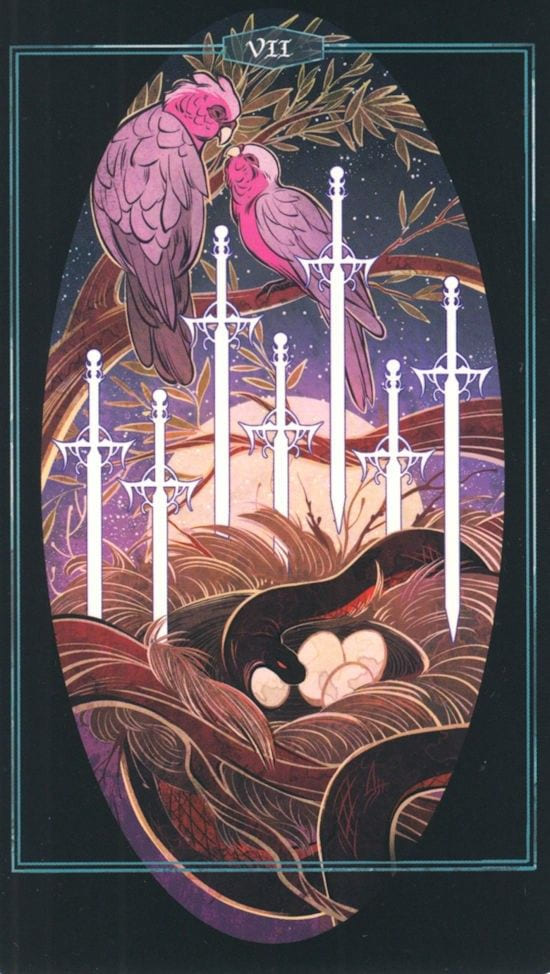
The Seven of Swords warns of deceit and stealth, symbolized by a serpent stealing eggs while distracted lovebirds are unaware. It signals situations that can easily backfire, whether you are being taken advantage of or are the one attempting to deceive. The card urges attention to neglected priorities and cautions against manipulative or predatory behavior. It advises being discerning about the company you keep and having a clear plan if you intend to act covertly.
Eight of Swords

The Eight of Swords depicts a blue jay trapped in a cage of its own making, symbolizing isolation that is often self-imposed. It highlights mental restraints—fear, self-pity, and pessimism—that convince us we cannot break free even when escape is possible. The card urges examination of whether perceived limitations are real or created by thought and emphasizes the personal agency to change one’s situation. In reverse, it indicates a release from mental imprisonment, a fresh perspective, and openness to new opportunities and optimism.
Nine of Swords

The Nine of Swords symbolizes deep psychological anxieties, insomnia, and the heavy mental burdens that disturb peace of mind. Its imagery of ravens dodging swords reflects stressful but often survivable challenges, the emotional impact of fear, and the tendency to carry psychic pain as if it were physical. Upright, the card points to spiraling hysteria, paranoia, and depression; reversed, it can signal a dawning clarity, renewed perspective, or the beginning of recovery. At its simplest it can also be a reminder to rest and address anxiety with clearer thinking and self-care.
Ten of Swords

The Ten of Swords depicts three vultures above the mangled corpse of a fox, conveying tragic finality yet an odd peace that comes with an ending. It signifies the end of a cycle and often follows painful loss, betrayal, or reaching the lowest point. The card suggests that while suffering has been severe, that pain can nourish future growth if wounds are addressed—the metaphorical swords must be removed and left behind for healing to begin. Ultimately it advises acceptance of necessary endings, recognition of true allies, and preparation for recovery and renewal.
Page of Swords

The Page of Swords represents a younger, feminine energy defined by curiosity, intellect, and a hunger for knowledge. This card often signifies a student or apprentice at the start of their journey—eager to learn, communicate, and share ideas but still inexperienced. Upright it points to new challenges, alertness, and an open-minded search for truth; reversed it warns of gullibility, misinformation, or refusal to consider other perspectives. The card encourages learning with discernment and developing critical thinking before accepting or spreading information.
Knight of Swords
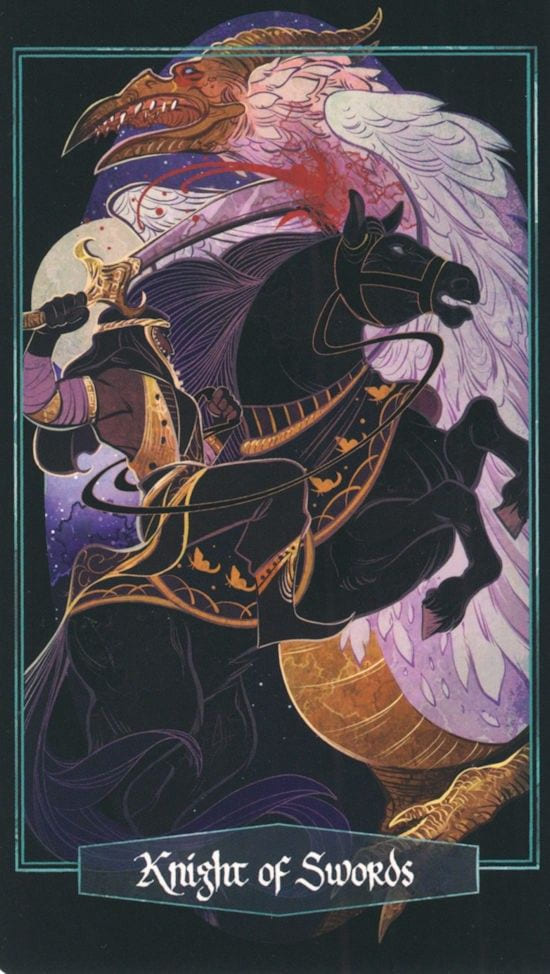
The Knight of Swords embodies a driven, masculine energy that pursues goals with intellectual force and fearless determination. This figure rushes toward challenges head-on, treating failure as unacceptable and wielding intelligence as a weapon. Reversed, the card warns of recklessness, excessive aggression, and a tendency to take ideals too far without regard for consequences. It urges decisive action tempered by focus and a willingness to consider compromise.
Queen of Swords

The Queen of Swords embodies a mature, feminine intellectual energy that prizes truth, discernment, and clear-minded analysis. She is forthright and intolerant of deceit or ignorance, speaking plainly and examining situations from every angle before acting. Upright, she offers wise, discerning guidance though her words can seem harsh or hyper-critical. Reversed, this energy can become controlling, judgmental, and may use influence for self-serving or harmful ends.
King of Swords
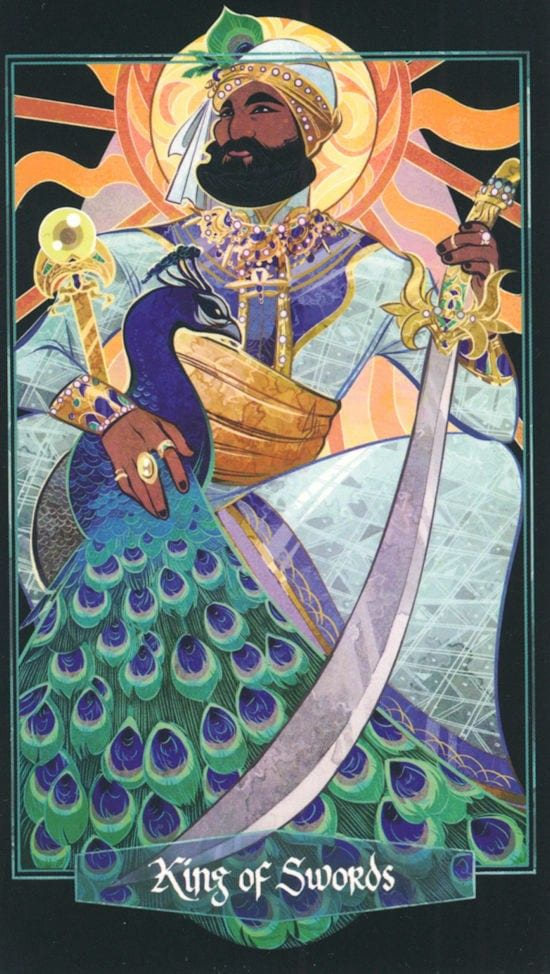
The King of Swords embodies a mature, masculine energy defined by intelligence, eloquence, and a strong sense of righteousness. He appears stern and analytical, offering precise judgment and clear guidance. As an ally he is a mentor and a source of wise counsel, but as an opponent his firmness can become devastating, so caution with words is advised. When reversed, this energy becomes authoritarian, cutthroat, and unwilling to negotiate, reflecting coldness and excessive criticism.
Pentacles
Ace of Pentacles

A spirit emerges from a birch tree holding a stag skull that secures a golden coin, symbolizing a tangible new beginning and material opportunity. The card indicates that the Universe recognizes your effort and is offering abundance, especially in ventures like entrepreneurship or investment. It encourages timely action to seize promising opportunities and to build solid foundations for future prosperity. Reversed, the card warns of sudden financial loss or temporary lack of funds, cautioning against premature or risky investments.
Two of Pentacles

The Two of Pentacles uses the image of two mountain goats on a ragged cliff to symbolize balance and differing approaches to challenge. It emphasizes maintaining equilibrium across life areas—family, friends, health, and fun—while honoring both tenacity and playfulness. The contrast between the steadfast older goat and the careless younger one reminds you to plan and persist without losing your inner child. Reversed, the card warns of imbalance, being overwhelmed, or neglecting priorities as work and play fall out of sync.
Three of Pentacles

The Three of Pentacles emphasizes cooperative work and shared effort, symbolized by two oxen combining their strengths to accomplish a task. It highlights roles of leadership and followership, craftsmanship, and being recognized for skill within a team working toward the common good. Reversed, the card warns of imbalance in contribution, poor workmanship, or someone riding on the efforts of others, creating tension. The card advises clear delegation, collaboration, and honoring each person's role to achieve shared goals.
Four of Pentacles

The Four of Pentacles shows a figure guarding accumulated wealth and security, symbolized by an old ibex holding tightly to its treasures. It highlights the tension between stability earned through past success and the risk of becoming immobilized by fear of loss. The card advises caution in how you protect your resources so that you do not miss new opportunities or stagnate. Upright it points to conservative, responsible handling of success; reversed it warns of greed, hoarding, and financial anxiety.
Five of Pentacles

The Five of Pentacles depicts financial hardship and isolation, symbolized by a worried doe and her two fawns in a snowstorm. It indicates material poverty, severe debt, escalating anxiety, and a sense of vulnerability. The card urges you not to let financial anxieties overwhelm you and to accept the warmth and support of family and loved ones, as you may not be alone. In reversed position, misfortune is waning and recovery or help from unexpected or charitable sources is indicated, bringing solace and renewed stability.
Six of Pentacles

The Six of Pentacles represents generosity, charity, and the restoration that follows loss, symbolized by a reindeer sharing winter's fruits with cardinals. It follows the fear and deprivation of the Five, offering warmth, selfless giving, and relief to those burdened. Upright, it encourages altruism, random acts of kindness, and lightening someone else's load. Reversed, it warns of giving beyond your means or withholding generosity, both of which are harmful.
Seven of Pentacles

The Seven of Pentacles depicts a young yak and a flourishing plant of coins, symbolizing investment, growth, and the rewards of patience. It advises careful planning, perseverance, and long-term commitment rather than seeking immediate gratification. The card acknowledges fear born from past losses that can make you hesitant to invest in new projects. Reversed, it warns that zealous or reckless investing, or neglecting to invest and spending frivolously, undermines future gains.
Eight of Pentacles

The Eight of Pentacles symbolizes diligent, honest labor and the apprenticeship phase of mastering a craft. It indicates actively acquiring new skills, taking on projects, or advancing in work through committed effort. Your industriousness brings respect and progress, but the card warns to allow for rest and reprieve to avoid exhaustion. Reversed, it cautions against overcommitment, perfectionism, and burnout that can stall progress.
Nine of Pentacles

The Nine of Pentacles signifies that sustained effort has produced abundance, stability, and self-sufficiency, allowing you to enjoy the fruits of your labor. It highlights confidence, pride in past accomplishments, and a refined comfort in the present. The card encourages savoring luxury, security, and gratitude for what you have earned. Reversed, it signals doubts about independence or financial viability, anxiety, restlessness, or an inability to relax despite actual stability.
Ten of Pentacles

The Ten of Pentacles signifies communal wealth, legacy, and a secure foundation that benefits family and future generations. It shows that you have achieved not only personal success but the means to provide for loved ones and establish lasting stability. In reverse, the card can indicate anxiety about failing to create a legacy or a vindictive refusal to leave anything behind. Themes include retirement, inheritance, financial security, and the responsibilities and pride that accompany providing for family.
Page of Pentacles

The Page of Pentacles represents a younger, feminine energy at the beginning of a professional or financial journey, characterized by enthusiasm, vision, and a keen eye for opportunity despite limited capital. This card signals motivation, eagerness to learn, and creative drive that can lead to success when paired with diligence. As a messenger, the Page brings new jobs, opportunities, and optimism, often associated with earth signs. Reversed, the Page warns of financial recklessness, short-sightedness, and passion without the follow-through necessary to achieve long-term goals.
Knight of Pentacles

The Knight of Pentacles represents a younger, masculine energy that is methodical, rigorous, and thorough. Upright, this card emphasizes steady, deliberate effort, reliability, and a capacity to follow directions and uphold traditions, though it may signal overthinking. It can describe someone dependable and stubborn who gets the job done through persistence rather than creativity. Reversed, the Knight warns of closed-mindedness, rigidity, and an unwillingness to adopt creative solutions even when current methods fail.
Queen of Pentacles

The Queen of Pentacles embodies mature, nurturing, earth-centered feminine energy and represents a reliable provider and practical caregiver. She symbolizes support that works behind the scenes to help you thrive, or it may indicate that you are the one investing time and energy in others. Her message includes a reminder to extend care to yourself as well as to others. Reversed, she can indicate overinvolvement, manipulation, or enabling behavior that confuses material provision with true emotional well-being.
King of Pentacles

The King of Pentacles embodies mature, masculine energy associated with wealth, stability, discipline, and wise stewardship. He is generous and industrious, often appearing as a father figure or financial benefactor and indicating the nearing fulfillment of a long-term project, business, or investment. When upright, he represents sound business sense, persistence, and reliable support. Reversed, he warns of miserliness, irresponsible use of money, or expectations of unrealistic financial returns.
Tips for Reading with The Children of Litha Tarot
Spend time with the art. Huntington packed every card with layers of botanical, mythological, and elemental symbolism. The central figure is only the beginning — look at what grows around them, what creatures appear in the margins, what the landscape is doing. These details are not decoration; they are part of the reading.
Let mythology speak. This deck draws from cross-cultural myths deliberately. When a card evokes a story you recognize — Greek, Celtic, Japanese, Egyptian, or something older still — let that myth inform your interpretation. The Children of Litha speaks through archetype and story as much as through traditional tarot meaning.
Use the bonus cards intentionally. The All and The Void are not standard tarot cards, so they won’t appear in every reading system. Consider pulling them as clarifiers, meditation cards, or anchors for a spread. They represent the largest possible perspective — everything and nothing — and can reframe an entire reading when they appear.
Read with nature nearby. This deck was born from a deep relationship with the natural world. If you can, read outdoors, near a window, or with plants and stones around you. The Children of Litha responds to environment in a way that more urban decks do not — it was made to breathe open air.
Explore The Children of Litha Tarot in Elvi
Want to experience The Children of Litha Tarot in a live reading? Elvi, our AI tarot companion, offers AI-powered readings with this beautifully mythological deck and many others. Pull cards, explore spreads, and let the nature-rooted wisdom of The Children of Litha guide your journey — anytime, anywhere, right from your phone.
Frequently Asked Questions
How many cards are in The Children of Litha Tarot?
The deck contains 80 cards: the standard 78 (22 Major Arcana and 56 Minor Arcana across four suits) plus two original bonus cards — The All and The Void — bringing the total to a numerologically significant 80, the number of destiny.
Who created The Children of Litha Tarot?
The deck was created and illustrated by Alexandria Huntington, known professionally as Xia Hunt. It was a four-year labor of love exploring humanity's relationship with nature through cross-cultural mythology.
What makes The Children of Litha Tarot unique?
Every card reimagines traditional tarot through nature-based symbolism and mythological creatures drawn from cultures around the world. The art is richly detailed, blending botanical illustration with fantasy, and the deck includes two bonus cards not found in standard tarot.
Is The Children of Litha Tarot good for beginners?
Yes, with a note. The deck follows Rider-Waite-Smith structure faithfully, so any standard guidebook applies. The imagery is more symbolic and layered than some beginner decks, which rewards readers who enjoy sitting with a card and discovering its details over time.