Cirque du Tarot: All 78 Card Meanings Explained
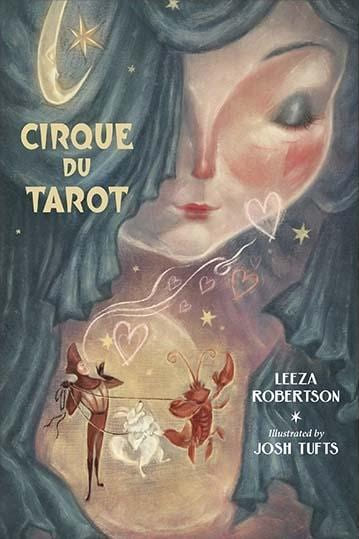
Step right up. The Cirque du Tarot is not a deck that waits quietly on a shelf — it performs. Created by Leeza Robertson with vivid illustrations by Michael Joshua Tufts, this 78-card deck reimagines the entire tarot through the lens of a magical traveling circus. Acrobats, ringmasters, fire breathers, trapeze artists, and mystic performers take the place of traditional figures, turning every reading into a show where each act reveals something true about your life.
What makes this deck so compelling is how naturally the circus metaphor maps onto tarot’s deepest themes. Balance becomes a tightrope walk. Transformation becomes a costume change between acts. Leadership becomes the Ringmaster commanding the ring. Community becomes the troupe that catches you when you fall. The spectacle is never empty — beneath every dazzling act is a lesson about trust, vulnerability, ambition, and the courage it takes to step into the spotlight of your own life.
The Cirque du Tarot follows the standard Rider-Waite-Smith structure, making it fully accessible to readers of any experience level. But the circus framing adds a layer of emotional immediacy that traditional imagery sometimes lacks. When a card shows a performer mid-leap with no net below, you feel the stakes in your body before your mind catches up with the meaning.
How the Deck Is Organized
The Cirque du Tarot follows the classic 78-card tarot structure:
- Major Arcana (0–XXI): The 22 headline acts of the soul’s journey — the Ringmaster’s greatest spectacles, the moments when the entire circus holds its breath. These are the turning points, the transformations, the acts that change everything.
- Wands: The suit of fire. Performers who breathe flame, juggle torches, and command heat — passion, creativity, ambition, and the raw energy that lights up the big top.
- Cups: The suit of water. The emotional current that flows between performers and audience — love, intuition, connection, and the feelings that make the show matter.
- Swords: The suit of air. The knife throwers, the aerialists, the precision acts — thought, clarity, conflict, and the mental sharpness that separates a clean performance from disaster.
- Pentacles: The suit of earth. The stagehands, the rigging, the infrastructure — material reality, work, resources, and the patient craft that holds the entire circus together.
Each suit runs from Ace through Ten, followed by four court cards — Page, Knight, Queen, and King — for 14 cards per suit and 56 Minor Arcana total.
Major Arcana
The Fool

The Fool invites a bold beginning and a leap into the unknown, embodying openness, confidence, and theatrical arrival. It highlights both the excitement of starting anew and the uncertainty that accompanies any uncharted path. This card encourages commitment to the journey despite doubts and fears, reminding you that adventure unfolds as you proceed. It cautions that unknowns exist but emphasizes that hesitation can prevent the transformative experiences that make life vivid.
The Magician

The Magician represents having all the tools and power at your disposal, creating a sense of mastery and opportunity. It warns that such power can inflate the ego and that much of the spectacle is illusory—smoke, mirrors, and sleight of hand. The card encourages enjoying the wonder and spotlight while remaining humble, because your place is not guaranteed and impermanence is part of the show. When the Magician's childlike wonder is lost or magic is taken for granted, cynicism can drain your power and lead to sudden loss of capability.
The High Priestess
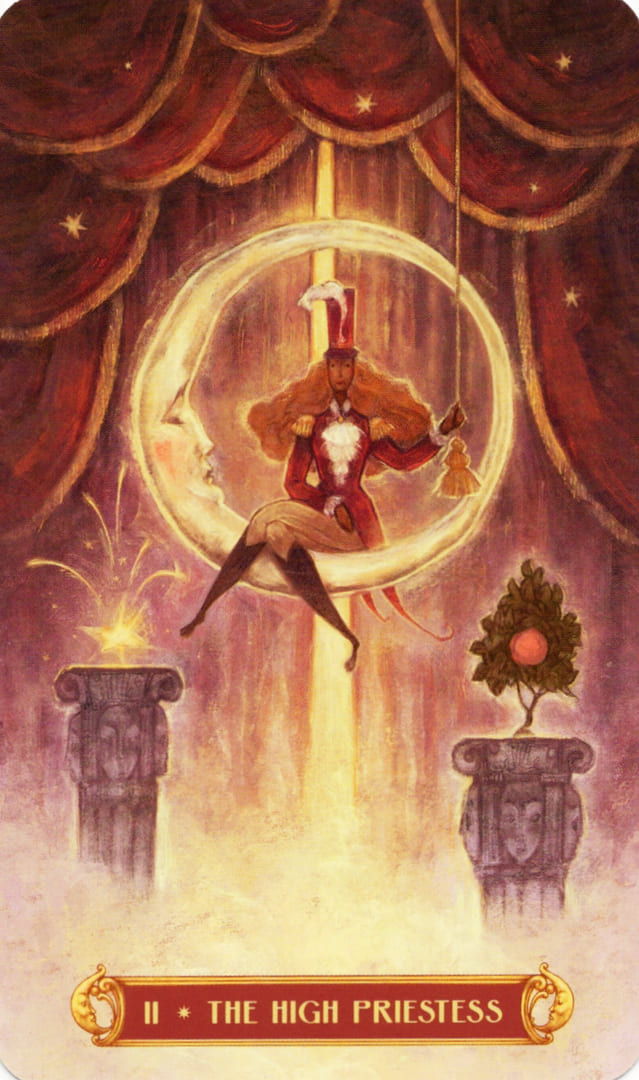
The High Priestess appears as a Ringmaster who commands stillness and quiet attention, guarding hidden knowledge that is revealed only through presence and humility. This card asks you to step back from the spotlight, practice active listening, and be fully in the here and now to access her teachings. Restlessness and frustration will prolong the lesson and block your ability to receive what she offers. Ultimately you face a clear choice: adopt a devotional stance to learn her secrets or remain where you are, with no judgment implied for either path.
The Empress

The Empress represents fertile creation, abundance, and a relaxed, nurturing energy that sometimes prefers rest and simple pleasures. She can appear when change pours in unexpectedly, leaving you to manage the resulting chaos at your own pace. While honoring rest and self-care is valid, you must not abdicate responsibility for actions only you can take; the Empress also calls for willingness to sort, steward, and harness creative forces. If neglected, the consequences of unregulated creation can become overwhelming, so take the time you need but remain accountable.
The Emperor

The Emperor contrasts outward size and power with the inner qualities necessary for true leadership, highlighting that appearance alone does not make a leader. It emphasizes that leadership requires a strong mind, will, tenderness, compassion, and integrity, and warns against becoming a caricature through pride or mockery. The card also challenges the idea of leadership as a role one must want to occupy, suggesting that leadership is a state of mind rather than a costume. If you are not ready to lead, it advises allowing someone else to direct the course until you are prepared to lead with balance and competence.
The Hierophant

The Hierophant represents experienced, steady leadership born of years of practice and training, characterized by confidence, calm under pressure, and strong self-faith. She radiates knowledge and expertise, enabling others to shine and fostering trust through her clarity about right and wrong. As an ally she leads, manages crises, and knows when to ask for and accept help, emphasizing the power of teamwork. Reversed or challenged, the card warns that a lack of faith creates isolation and detachment, reminding you that support is available and you do not have to do everything alone.
The Lovers

The Lovers emphasizes intimate, quiet connection where being fully present with one person is the deepest human desire. It celebrates small, ordinary moments of being seen and acknowledged amid the bustle of life. As an Ally, it highlights sacred closeness found offstage, in simple and uncomplicated ways. As a Challenger, it warns against offering only half of yourself and expecting another to complete you, which creates unrealistic expectations and an unhealthy dynamic. True union requires wholeness within rather than asking someone to fix perceived brokenness.
The Chariot

The card emphasizes spectacle, control, and the power of decisive presentation — you can make grand entrances repeatedly and with flair. The Ringmaster symbolizes mastery over direction and perception, showing that deliberate, strategic movement maximizes effect. It also warns of vulnerability: when supports are lost the chariot can drift into chaos, creating panic and a sense of being at the mercy of external forces. The guidance is to seek small, concrete steps to regain direction and control; recovery may be difficult but is necessary.
Strength

Strength emphasizes mutual support and the courage to both accept and give help, portraying trust as a spiritual bond that uplifts individuals into the spotlight. It highlights that maintaining balanced reciprocity requires time, trust, and inner fortitude. As a challenge, it warns that power struggles and self-doubt erode foundations, leaving people uneasy and disconnected. Restoring trust and cultivating a strong sense of self are necessary to feel supported and to effectively lift others.
The Hermit
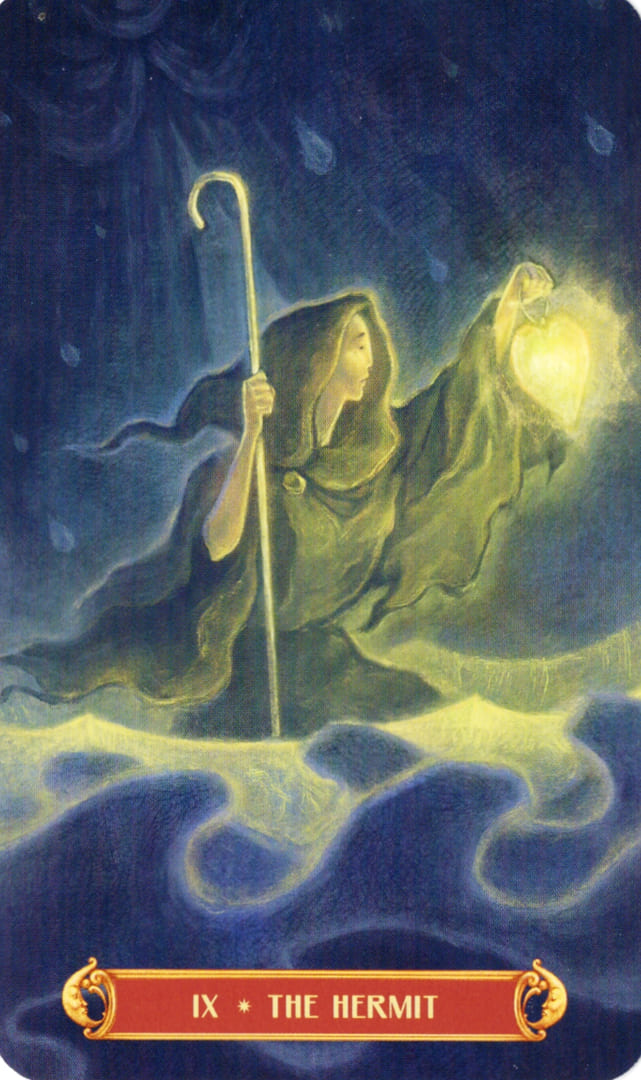
The Hermit reminds you that even a small inner light is enough to guide your next step through darkness. Trusting that limited illumination requires stillness, discipline, and acceptance of solitude rather than trying to see everything at once. Embracing alone time lets the light reveal what is immediately necessary and offers solace and safety during dark moments. Though initial resistance or anxiety may arise, yielding to this quiet guidance brings peace, clarity, and steady progress.
Wheel of Fortune
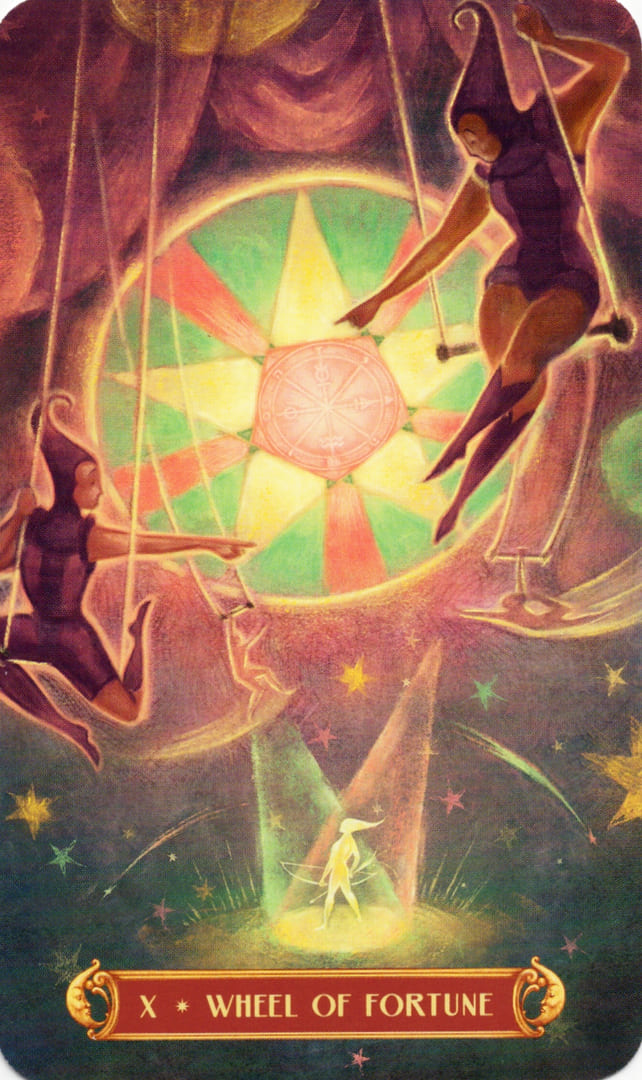
The Wheel of Fortune asks you to choose a direction as fate turns, reminding you that outcomes are temporary and subject to change. Others will offer opinions, but the final decision about where to aim is yours and may be carried away or altered by the Wheel's movement. The card warns against acting before conditions and inner readiness align, urging you to steady your stance, clear your mind, and shore up your resolve. When you prepare deliberately and wait for the right alignment, you will be ready to take a meaningful shot into shifting circumstances.
Justice
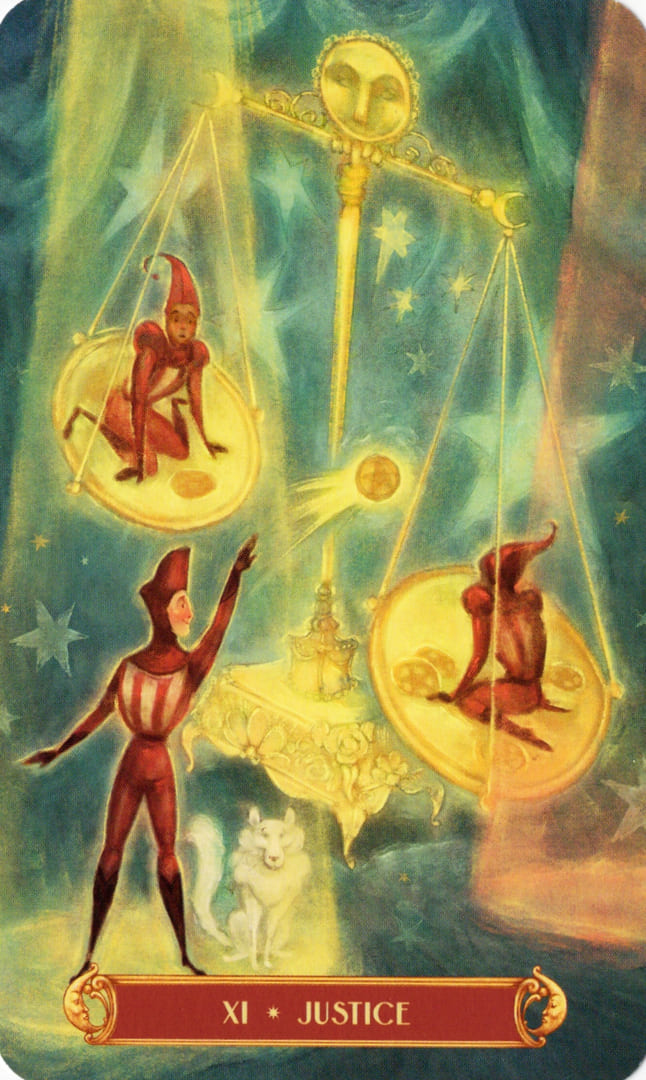
Justice reflects the subjective nature of victory and the role perception plays in determining winners and losers. It suggests that balance may be inherent and that opposing players define each other, making true victory a matter of feeling rather than objective tally. The card warns against a win-at-all-costs mentality that overlooks compromise and mutual benefit. Pursuing justice through imbalance creates an endless conflict that leaves no one truly victorious.
The Hanged Man

The Hanged Man calls for surrender and a willingness to view life from an inverted perspective, suggesting that releasing control can produce clarity and allow events to fall into place. It emphasizes that by stilling the mind and allowing a higher order to unfold, you may see life clearly for the first time. The image also carries an element of apparent risk and urgency, reminding you that suspension is temporary and one must eventually return to grounded action. Balance between surrender and the need to right oneself is the core guidance offered.
Death

Death represents necessary endings and transformative change, urging you to let go of identities, roles, and attachments that no longer serve you. It emphasizes that endings are part of a natural cycle that create space for new growth and alignment with your evolving purpose. Clinging to past versions of yourself or to old stories will only cause suffering and blind you to new possibilities. Embrace the process of shedding the old so you can step into a more authentic, expansive chapter of life.
Temperance

Temperance brings a profound stillness that both heightens and heals, inviting attention and awe. She embodies the ability to hold opposing elements together, acting as an angelic alchemist who makes the impossible possible and offers healing across time and space. As a challenger, she rejects binary thinking and sees unity and untapped potential where others perceive compromise and division. The card calls you to surrender limiting either/or views, allow integration, and choose to step into a balanced, empowered way of being.
The Devil

The Devil emphasizes the magnetic power of fully claiming one’s identity and the spectacle that such unflinching presence can create. It also warns that power can become addictive and serve as a form of enslavement when used to project inner wounds or to intimidate others. The card urges careful self-knowledge before making bargains or embracing authority, because whatever lies in your depths will be amplified outward. Ultimately, it calls for honest ownership of self so power is wielded consciously rather than unconsciously.
The Tower

The Tower warns of abrupt upheaval and the collapse of structures that no longer serve you. It emphasizes that the manner in which you respond—whether with dramatic display or quiet, efficient acceptance—shapes the aftermath and the pace of recovery. Much of this change begins internally; feelings and memories are stirred up as a rehearsal for outward transformation. Practicing calm, measured responses now will reduce drama when disruption manifests and allow you to move through the rubble more quickly.
The Star

The Star encourages recognition of your unique light, whether you shine alone or as part of a group. As an ally message it highlights the power of coming together to form a larger, unified light that reaches many. As a challenger it acknowledges temporary feelings of dimness and urges you to turn inward to reconnect with your inner Star. This inner light will guide you through darkness and back toward others when you are ready.
The Moon

The Moon encourages selective visibility and accepting the natural rhythm of revealing and concealing parts of yourself. It reassures that keeping aspects private can be a conscious, empowering choice rather than withdrawal. At the same time it warns of the thin line between healthy limits and fear-driven retreat, urging awareness of emotional tone. Pay attention to how you feel in the Moon's orbit to know whether you are being guided by self-care or shadowed by fear.
The Sun

The Sun symbolizes radiant energy, life, and illumination that engages all the senses and brings warmth, vitality, and clarity into your life. It encourages you to embrace this light as it spreads power and uncovers hidden corners of your experience. However, the same Sun can be overwhelming and destructive if its intensity becomes excessive, drying up resources and making life feel harsh. When the Sun's energy wanes or becomes suffocating, the guidance is to conserve energy, seek shelter, and wait for balance to return.
Judgement
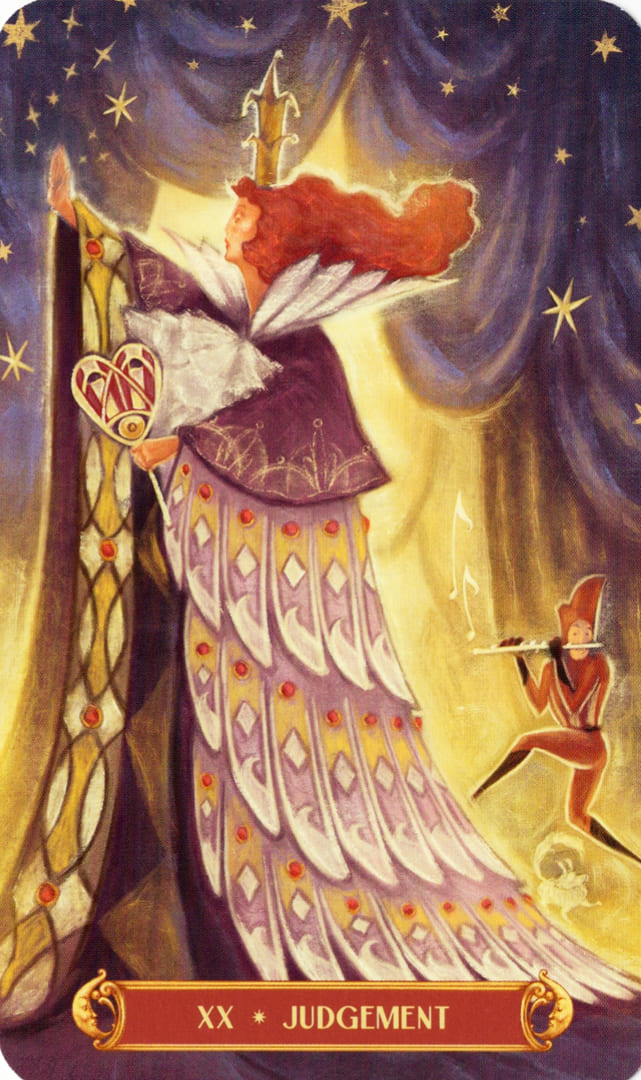
Judgement calls you to stop ruminating and listen to the Fool's healing music, which soothes the soul and eases self-doubt. The lady of Judgement brings love and asks you to cease delving into the past so you can be directed toward forgiveness and healing. You are encouraged to release an unforgiving inner narrative and recognize that shame and guilt do not have to define you. The path to new beginnings is open—the Fool awaits—and only you can give yourself permission to forgive, dream, and begin again.
The World

The World card signals completion and celebration: you have reached the end of a cycle and should acknowledge your achievements. It highlights the lessons, people met, and transformations experienced, and shows that you may feel either elevated like the Ringmaster or grounded like the performers. This sense of culmination is temporary, reminding you that you will be asked to move on and make room for new experiences. Practically, it urges you to tie up loose ends, gather your things, and be ready to leave when the time comes.
Wands
Ace of Wands

The Ace of Wands heralds a surge of fiery, fast-moving creative energy and the potential for new beginnings. It brings passion, enthusiasm, and a strong urge to act, but also warns of volatility and the risk of getting burned if approached recklessly. When embraced with awareness and preparation, this energy can ignite creativity, drive, and forward momentum. If you resist change or cling to specific outcomes, the intensity may be difficult to handle, so caution and respect for limits help channel the power productively.
Two of Wands
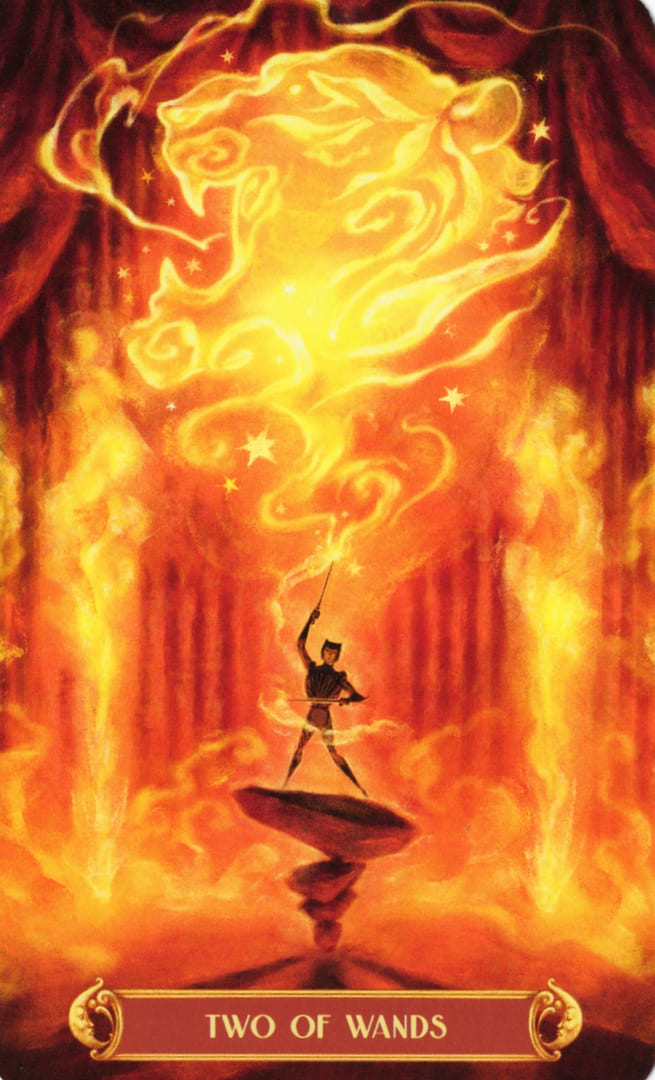
The Two of Wands depicts a performer commanding fiery energy on center stage, symbolizing skill, power, and the ability to create worlds through practice, trust, and faith in one's abilities. It affirms that you have the power to shape and command your world if you cultivate your talents. At the same time, it warns that that same power can become overwhelming or destructive if not held with awareness and control. The card advises knowing your place, maintaining a realistic grasp of your responsibilities, and thinking carefully about the sphere you can truly command.
Three of Wands

The Three of Wands highlights the potency of manifesting through trust and an inner knowing even when evidence is lacking. It urges you to continue practical work—new habits and spiritual practice—that create the conditions for your desires to manifest. Delays can breed discouragement and feelings of being overlooked, but these emotions are invitations to revisit your motivations rather than reasons to quit. Reconnect with your deeper purpose; the effort is ultimately for your own growth and fulfillment, not merely for external applause.
Four of Wands

The Four of Wands depicts a small, secure moment of shared celebration and support where performers feel protected and safe. It highlights harmony, balance, and the comfort of knowing someone has your back, encouraging you to relax and enjoy this stable phase. At the same time, it warns that the stability depends on each person's role and structure; if someone acts unpredictably, the balance can quickly collapse. This energy is temporary, so maintain composure and patience until the moment passes to preserve what is stable.
Five of Wands

The Five of Wands shows that apparent chaos may be deliberately designed and strategically executed; controlled chaos requires planning and precision. What looks messy from the outside is often a choreographed dance with purpose, where each performer knows their place. You are the creator of this energy — you assembled the pieces, staged the performance, and should claim your space rather than retreat. Embrace the creative tension, trust the greater plan you cannot yet see, and allow yourself to enjoy the results of your effort.
Six of Wands

The Six of Wands celebrates public recognition and the triumph that comes from dedicated effort. It affirms that your achievements are earned and invites you to stand tall in your success. At the same time, the card reminds you to accept praise graciously and to express gratitude for the support that helped you reach this moment. Humility and acknowledgement strengthen the positive energy of your accomplishment and deepen its rewards.
Seven of Wands

The card shows a Ringmaster preparing performers for a final push, symbolizing focused effort toward an imminent goal and collective alignment. As an ally, it indicates that your team—whether colleagues, friends, or family—is supportive and ready to play their part. As a challenger, it highlights that uncertainty about others' support often reflects your own doubts and a lack of clear communication about your needs. The guidance is to be specific and assertive about what support you require so you can distinguish who stands with you and who does not.
Eight of Wands

The Eight of Wands brings a surge of momentum and building energy, indicating that a climax or decisive moment is approaching. It urges boldness, visibility, and going all out to seize the moment and energize others. At the same time, it acknowledges that the intensity can feel overwhelming and may trigger panic or paralysis. The guidance is to remain present, resist fleeing from the pressure, and allow the wave to pass so you can reap the rewards.
Nine of Wands

The Nine of Wands depicts weary perseverance after a demanding effort: the performers are exhausted but still standing, sustained by a final, fading buzz. It cautions that this remaining energy is temporary—more smoke than lasting flame—and not meant to carry you indefinitely. The card warns against mistaking a second wind for sustainable strength, as pushing too far risks a painful collapse. Ultimately it advises recognizing limits, withdrawing to rest, and allowing recovery after exertion.
Ten of Wands
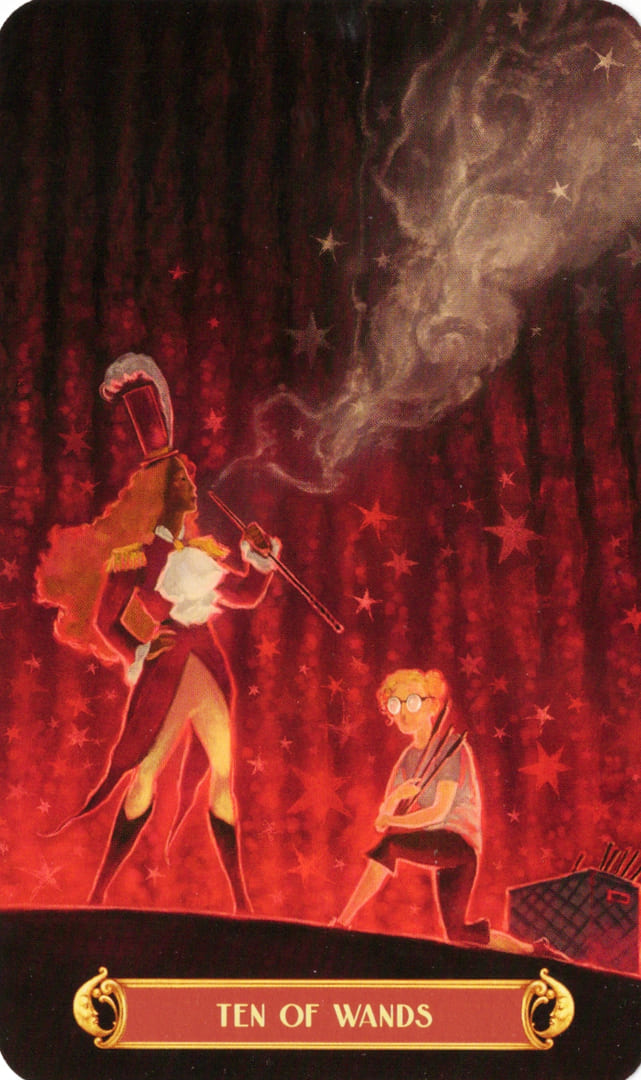
Ten of Wands advises ending and clean-up: the act has finished and it's time to extinguish lingering intensity, pack away remnants, and ensure proper protocols are followed. It warns against clinging to powerful but unsustainable energy—unchecked fire will consume you—so release it and allow for recovery. Seek help and have clear processes to verify endings are complete, preventing repeat harm from past mistakes. When responsibilities are settled and the situation has cooled, you'll be ready to engage with that energy again responsibly.
Page of Wands

The Page of Wands is an energetic, exploratory spark of youthful creativity and readiness, eager to move and experiment. As an ally, it encourages action, playful preparation, and a surge of potential that can uplift and inspire. As a challenger, it can create haste, scattered energy, and ill-timed risk-taking that undermines glamour or success. The card advises channeling this fiery enthusiasm deliberately—benefit from its momentum while remaining mindful of its tendency to burn if approached recklessly. Observe and learn from the performer's preparations, but keep a safe distance from impulsive heat.
Knight of Wands

The Knight of Wands urges bold, energetic movement and thorough preparation: you must practice your actions and trust your gear to handle the heat. This card emphasizes safety and meticulous checks, especially when taking risky or high-energy actions. It also acknowledges moments when intense energy becomes overwhelming, making focus and grounding difficult. In those times, stepping aside for fresh air and regulated breath will help you regroup and return ready for performance.
Queen of Wands
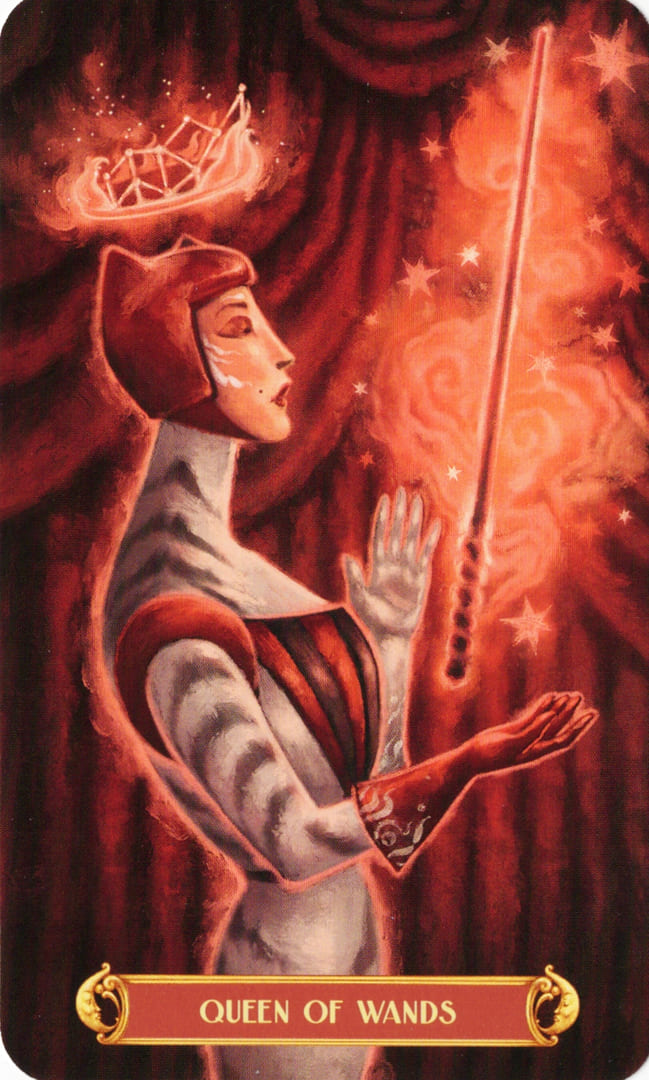
The Queen of Wands teaches you to draw energy from the outside world through breath, presence, and attunement to surrounding vibrations, using that life force to ignite focus and determination. When connected and tuned in, you become confident, magnetic, and unstoppable; when disconnected, chaos, drama, and doubt can overtake your life. The card offers a practical remedy: reconnect through breathwork and the support of others to restore your flow and composure. It invites you to use external vibes as fuel for purposeful action while seeking connection when you feel drained.
King of Wands

The King of Wands embodies charismatic, high-energy leadership and the exhilaration of being seen and celebrated. This card celebrates confidence, creative expression, and the magnetic thrill of performance, but warns that such intensity can be difficult to sustain. Without discipline and care, this power can flare into chaos or burnout, so it is important to channel it intentionally. Grounding through physical action and creative outlets helps move excess energy and restore control so you can continue to lead with purpose.
Cups
Ace of Cups
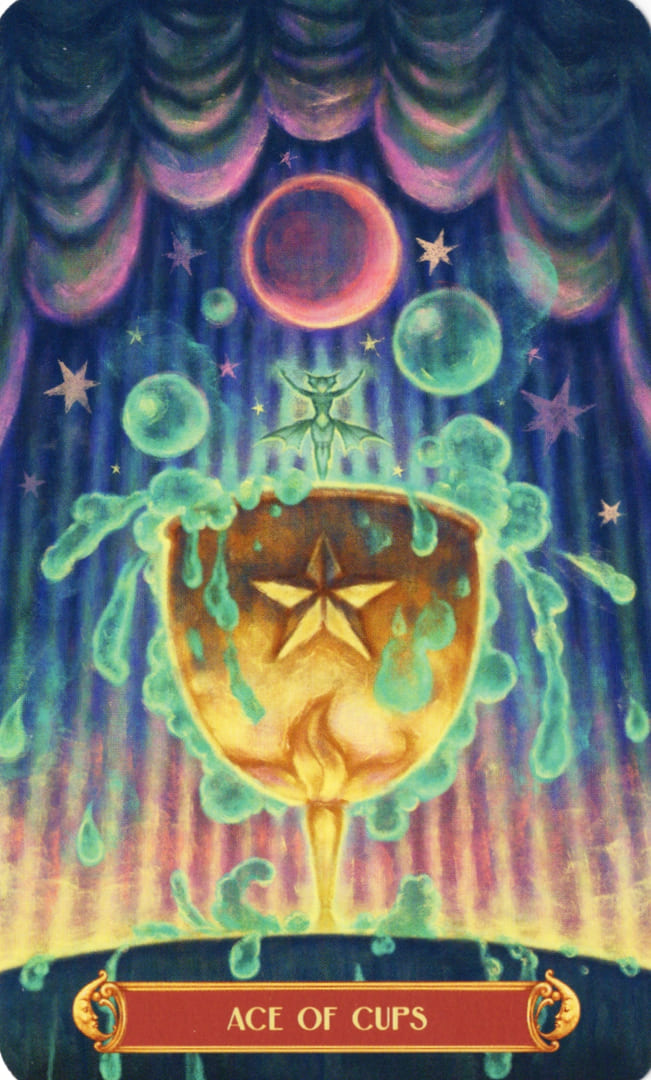
The Ace of Cups invites you to embrace new emotional beginnings, healing, and the potential of deep feeling. It encourages taking a leap of faith to explore your heart, assuring that consequences are minimal and opportunity is ripe, though time may be limited. Reversed as a challenger, it warns that appearances can deceive and urges you to rely on intuition rather than literal sight. Ultimately the card asks you to choose between trusting the gift before you or living in suspicion and missing the chance.
Two of Cups

The Two of Cups signals a reciprocal emotional connection and blessings coming from a like-hearted other, even if their identity is unknown. It emphasizes the flow of giving and receiving—an overflowing cup offered from above and accepted below—inviting you to open your heart and receive. The card warns against conditionality and the belief that physical presence is required to feel another, which can block abundance and leave your cup empty. Maintain a heart-centered openness rather than seeking external praise, and allow the relationship and blessings to flow.
Three of Cups

The Three of Cups signals communal celebration and emotional support, urging you to acknowledge accomplishments with others. It emphasizes gathering with your support network to receive restorative energy and appreciation. If you feel not ready to celebrate, the card advises scheduling a time soon and committing to share your success so relationships and gratitude are honored. Overall, it balances present joy with practical planning, encouraging both enjoyment and thoughtful acknowledgement of those who helped you.
Four of Cups

The Four of Cups depicts a period of emotional withdrawal and low energy where opportunities may be present but not prioritized. It suggests inward focus on reflections and minor concerns that distract from new offers. The card advises allowing this phase to run its course rather than forcing change, while remaining mindful of self-talk. Avoid narrating the mood into permanence so new energy and opportunities can be claimed when you are ready.
Five of Cups

The Five of Cups highlights how small mishaps can be magnified by our reactions, turning minor accidents into emotional drama. It emphasizes that dwelling on loss or mistakes blinds us to what remains intact and worthy of acknowledgment. The card encourages redirecting attention from guilt and rumination toward appreciation of what is still present. By choosing to focus on the positive elements, you can halt downward spirals and restore perspective.
Six of Cups

The Six of Cups invites reconnection with your inner child, playfulness, and nostalgia while warning against becoming stuck in the past. It urges you to stay present so you can notice joyful, whimsical opportunities instead of missing them. The card also prompts scrutiny of your memories, asking whether idealized recollections are clouding your perception of the present. Balance fond remembrance and play with mindful presence, letting go of clinging to a past that may be less impressive than what is available now.
Seven of Cups

Seven of Cups warns of overwhelming choices and dreamlike visions that can blur logical judgment. It advises narrowing focus—sometimes deliberately restricting perception, such as closing one eye, to identify the first clear target. Indecision and paralysis arise from too many appealing options, and you must ultimately commit to move forward. There is no single wrong choice; pick a direction, act, and release the anxiety of endless possibility.
Eight of Cups
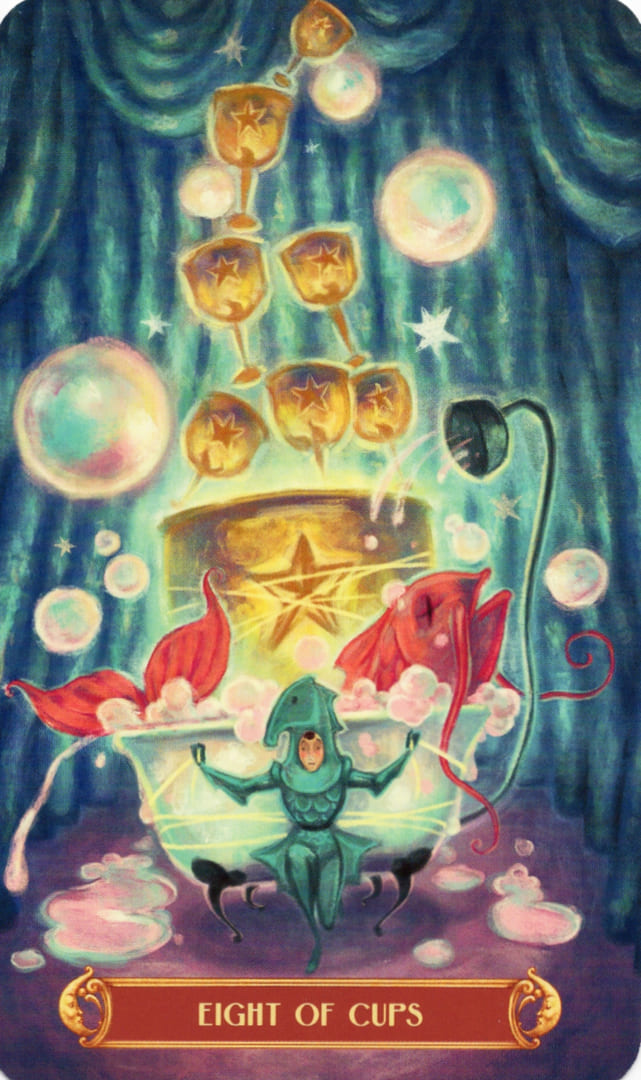
The Eight of Cups signals a turning point where burdens are left behind and the journey becomes lighter and easier. It suggests that what once felt heavy can fall away, allowing you to move forward with greater agility and strength. However, be cautious of the 'fish'—a symbol of the ego—that may whisper doubts or tempt you to reclaim what was dropped. Trust the decision to continue along the lighter path rather than looking back and retrieving the past.
Nine of Cups

The Nine of Cups presents a fairytale image of a magical fountain of cups promising wishes and fulfillment, inviting you to imagine what you truly desire. It cautions that wishes come with consequences and often a hidden price, so choices made now will affect tomorrow. The abundance and option to choose can create paralysis for those prone to overthinking, risking missed opportunities if you delay. If overwhelmed, scale down: ask for small, meaningful wishes to rebuild momentum and let desires be of service.
Ten of Cups

The Ten of Cups celebrates communal success, emotional fulfillment, and the joy of shared achievement at the close of a significant effort. It honors the exhilaration and relief that come after hard work and emphasizes the importance of teamwork and gratitude. The card also cautions against dwelling on faults and replaying mistakes instead of savoring accomplishments. It encourages holding onto small successes as beacons of hope to pull you out of disappointment.
Page of Cups

Page of Cups evokes the youthful, emotional surge of pre-performance excitement, where waves of feeling and anticipation wash over you. It encourages embracing that openness and creative energy while also recognizing its potential to distract and overwhelm. The card advises grounding and reconnecting with your own heart to maintain focus and clear boundaries amid external emotions. Ultimately, it balances joyful receptivity with the need to center yourself so your true feelings and intentions can guide your actions.
Knight of Cups

The Knight of Cups uses a costume as a second skin, allowing a sensitive, emotional, and empathetic person to express themselves without feeling exposed. This protective guise boosts confidence and helps gather the positive energy needed before taking action. However, the suit's flexibility can present a challenge when one is emotionally torn between different modes of expression, causing overwhelm and indecision. Patience and gentle emotional processing in the 'dressing room' will allow the right course of action to make itself known.
Queen of Cups

The Queen of Cups embodies empathy, intuition, and deep emotional attunement, especially in the context of performance. She draws inspiration from the feelings of the crowd and is responsible for setting the emotional pace and cues of an act. Before guiding others, it is essential to tune into and ground your own emotions so you do not impose them onto others. When you care for your emotional self first and then assist others, you create more genuine connections and attract friends and fans.
King of Cups

The King of Cups invites you to step confidently into emotional leadership and the spotlight, merging your feelings with those around you with grace. When aligned, you draw energy from the crowd, feel whole, and find leading comes naturally and comfortably. Out of flow, your emotional state can ripple outward and unsettle others, making your influence potentially disruptive. Practice care, mindfulness, and restraint in expression to maintain harmony and avoid projecting doubt onto those in your sphere.
Swords
Ace of Swords

The Ace of Swords signals the arrival of new ideas and flashes of inspiration that require direction and sometimes instruction. Although the insight is brilliant, you may feel unclear or anxious about how to wield it, but support and guidance are available. The card also highlights the challenge of unfamiliar thinking and being pushed beyond your comfort zone, which can feel scary. With breathing, practice, and accepting help from others, you can shift your mind, steady the sword, and present your idea with confidence.
Two of Swords
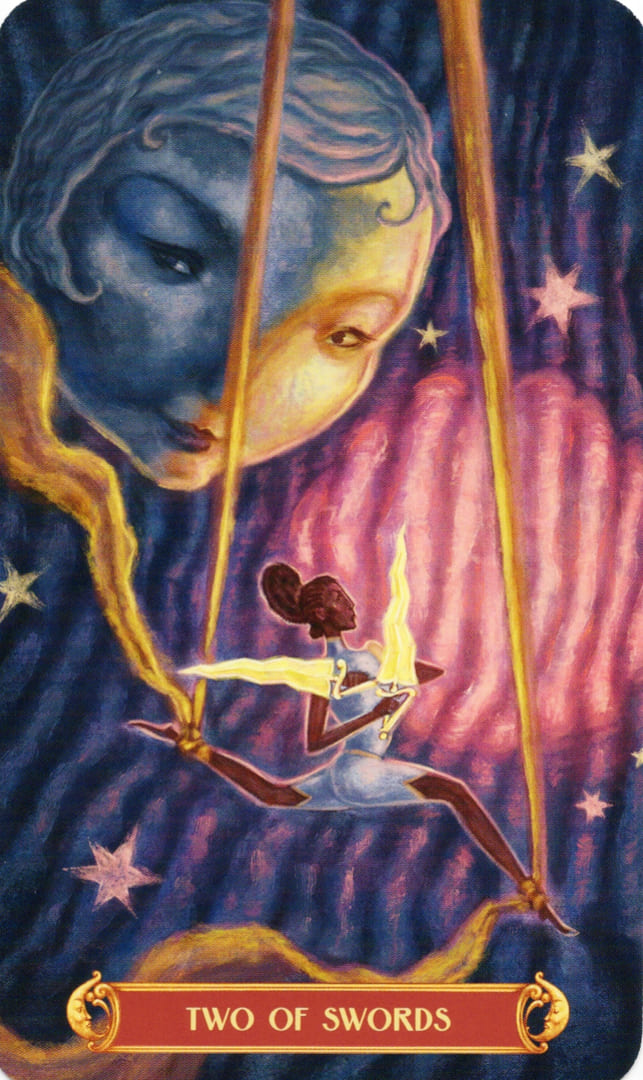
Two of Swords advises finding balance between rational thought and intuition so decisions can be made with clarity rather than fear. When the mind is aligned, the body follows and action feels effortless, like an aerialist walking on air. The card emphasizes that the two swords—the rational and the intuitive—can cooperate rather than oppose, and using the appropriate approach at the right time preserves grace and flow. Be wary of favoring one mode exclusively, as bias can invite doubt and put you at risk; cultivate comfort with both ways of knowing.
Three of Swords
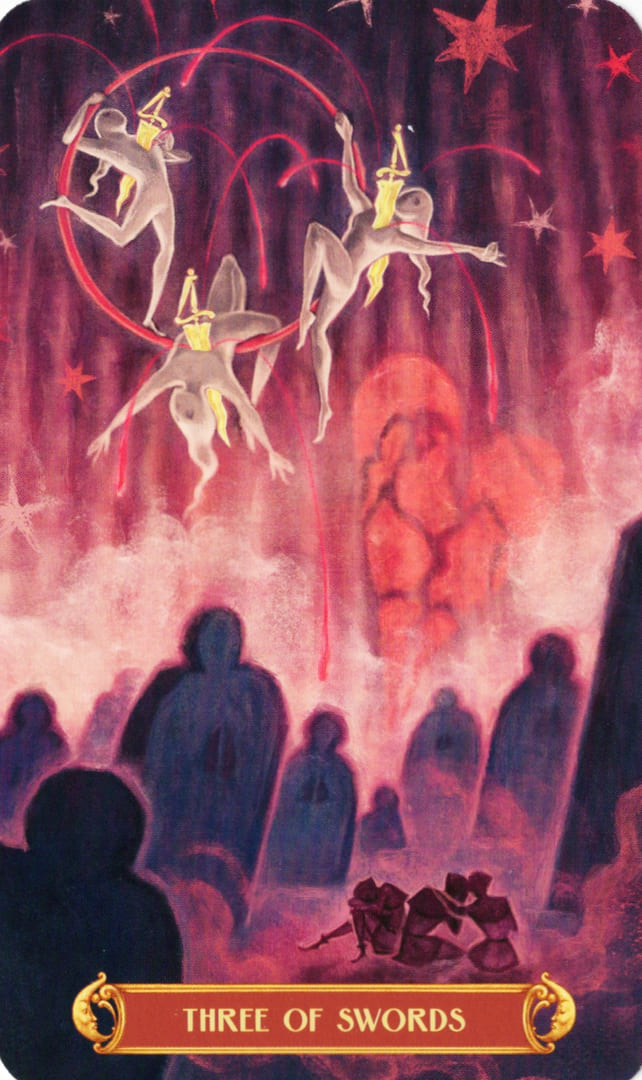
Three of Swords acknowledges that pain is a natural and personal part of life that must be seen and sat with in order to heal. It encourages stepping into pain as a tool for transformation rather than dwelling in it or hiding it to make others comfortable. The card contrasts honest expression—showing pain openly—with suppression, warning that pretending everything is fine only stages a false performance. Suppressed emotions will eventually surface and can cause deeper harm if not addressed on your own terms.
Four of Swords

Four of Swords urges you to take a deliberate pause for rest and recuperation, accepting a temporary stillness as necessary rather than indulgent. It portrays a performer retreating into the shadows between acts, reminding you that even amid busy, public lives a quiet break can restore balance. The card also acknowledges that stillness can be uncomfortable or frightening for some, surfacing anxious thoughts when action ceases. The guidance is to grant yourself permission to breathe and relax while recognizing and gently addressing any resistance to rest.
Five of Swords
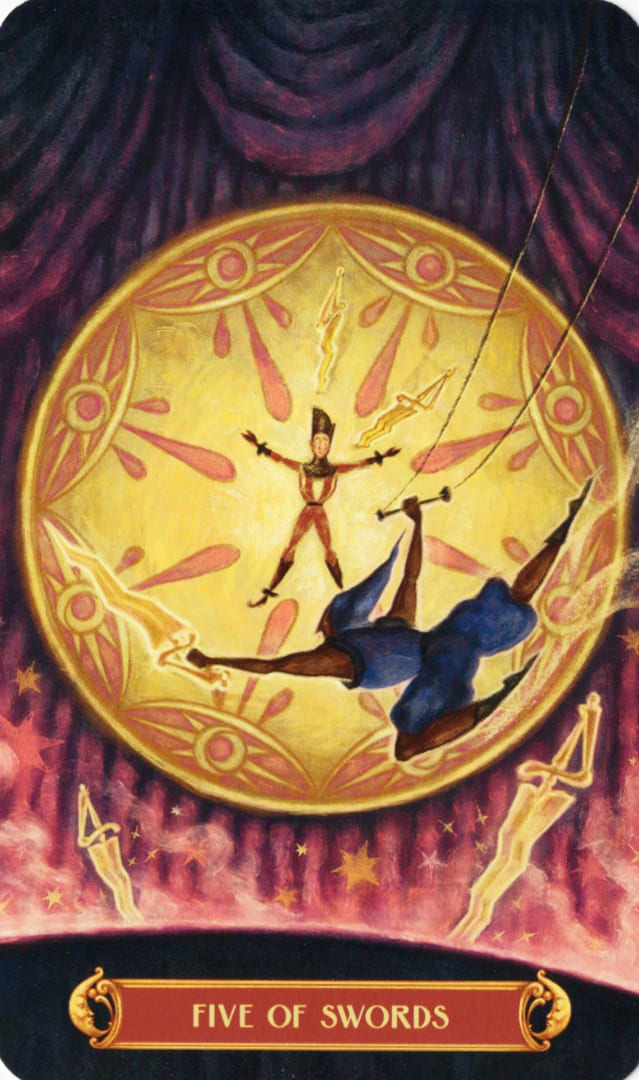
The Five of Swords describes the balance between striking and holding back, symbolized by a sword thrower skilled in missing his target. It notes the thrill and slight addiction of the spectacle and the responsibility of the thrower to remain level-headed. As a challenge, the card warns against showing off or acting on ego-driven impulses that could cause harm and regrets. It urges restraint, focus on larger goals, and a pause before acting.
Six of Swords
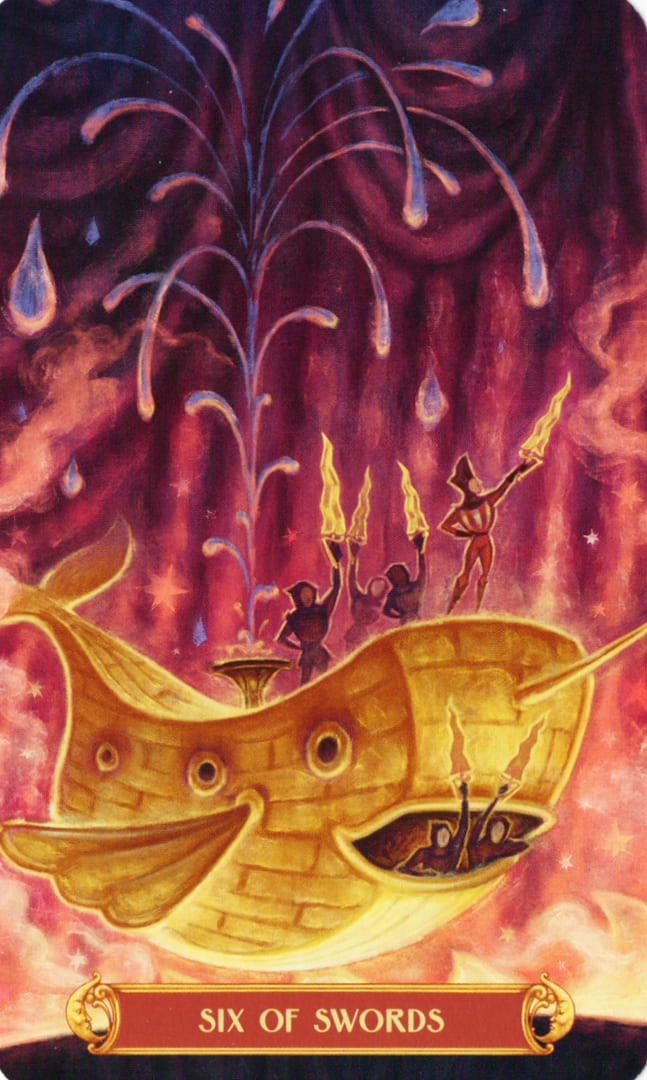
The Six of Swords signals a journey or transition, often shared with companions, that moves you away from the familiar toward growth. It celebrates forward momentum and the transformative effects of travel or change, noting you will not be the same person afterward. The card also highlights resistance to leaving your comfort zone, which can hamper desired results. Ultimately, it calls you to move despite reluctance because meaningful change requires stepping beyond what you already know.
Seven of Swords

The Seven of Swords warns against taking on more than you can handle and urges practical restraint: only take what you can carry and proceed incrementally. It reminds you to recognize your limits, break tasks into manageable steps, and avoid trying to fix everything at once. At the same time, it cautions against overstepping boundaries or interfering with others' responsibilities, since well-intended help can deprive others of growth or create extra work. Be mindful of when and where you step in; do what is essential and avoid imposing your opinion or actions where they are not wanted.
Eight of Swords
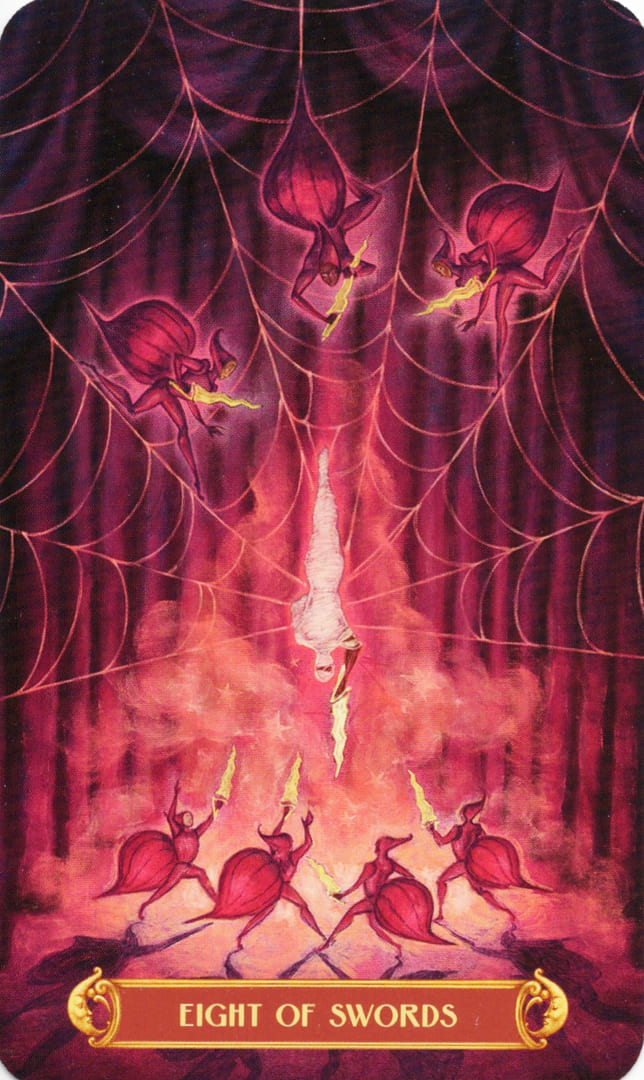
The Eight of Swords highlights how social rituals and the desire to belong can make you feel constrained or trapped. It emphasizes that much of this apparent entrapment is a matter of perspective—what looks oppressive from one angle may be ordinary or benign to those involved. The card warns that the pursuit of acceptance can lead to unintended isolation or risky consequences, so practical contingency plans are wise. Ultimately, it urges awareness of how your mind situates you within group dynamics and to consider alternatives rather than assuming helplessness.
Nine of Swords
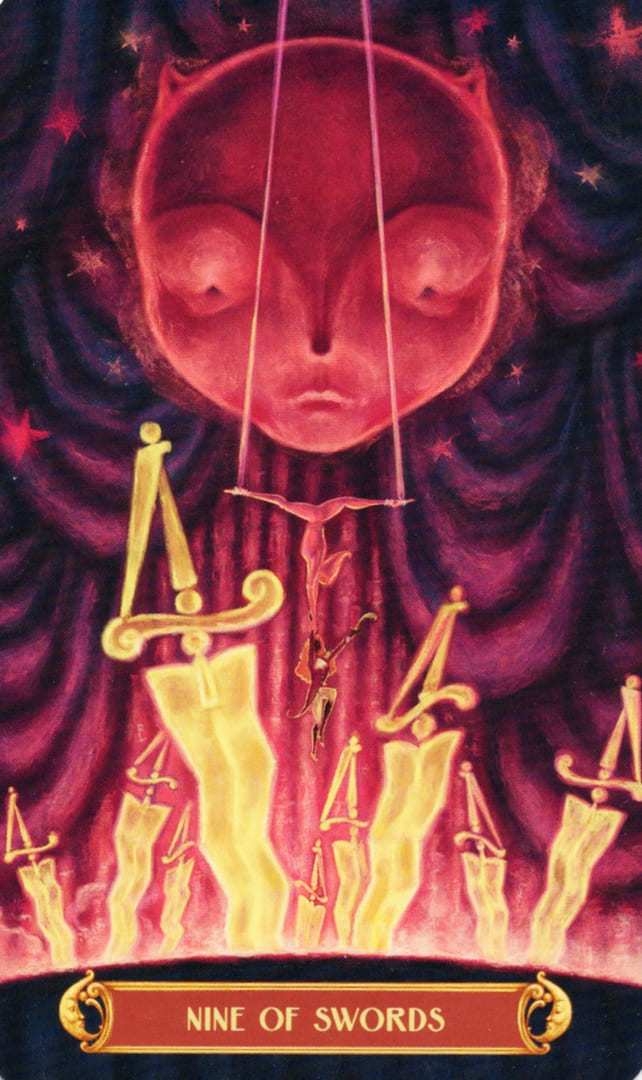
The Nine of Swords highlights pressure as a catalyst: stress can sharpen the senses, focus the mind, and activate dormant survival responses that help you rise beyond your comfort zone. Used well, this intensity can be an advantage; used poorly, it can trigger paralysis, leaving you frozen or reliant on rescue. The card advises learning to work with pressure—using breath and centeredness—to unwind and move forward deliberately. It reassures you that you don't have to rush, only to keep breathing and take steady action to free yourself.
Ten of Swords

The Ten of Swords signifies an ending that is complete and unavoidable, symbolized by the Ringmaster ready to drop the curtain. It emphasizes that endings proceed in stages and asks you to assess what phase of completion you are in and whether there are loose ends to tie up. There is a recognition that letting go—especially of drama or the spotlight—can be difficult, yet what follows will be better than what is being held onto. Ultimately the card advises acceptance: the act is done and there is no going back.
Page of Swords
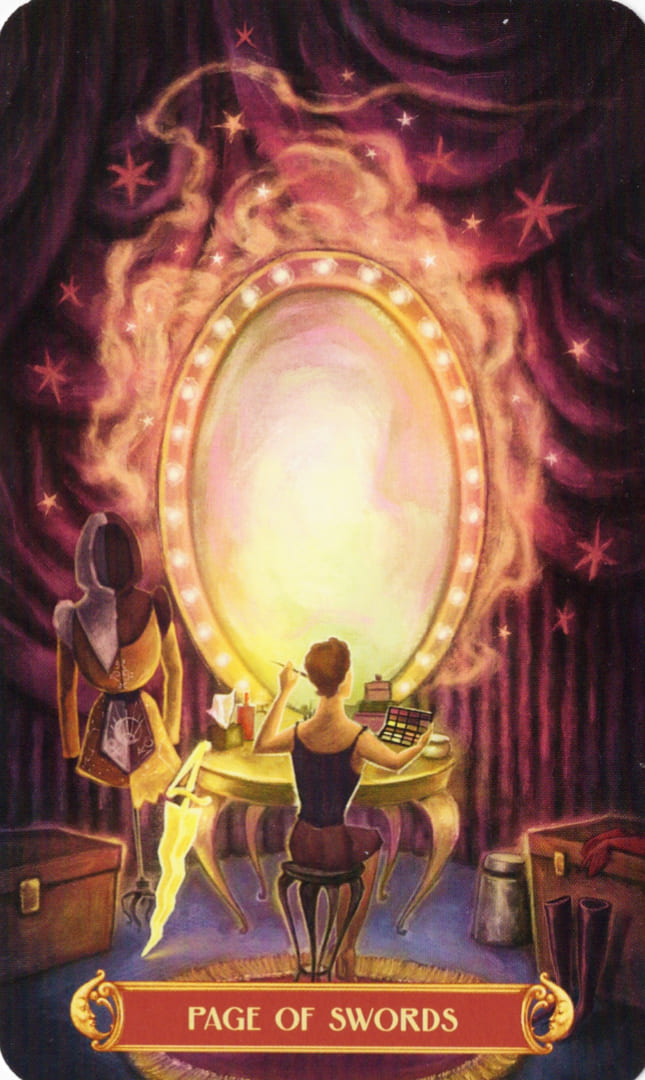
The Page of Swords calls for mental preparation and focused clarity, urging you to steady your mind with a pep talk and quiet inner chatter so you can perform your role confidently. It emphasizes that the outcome depends on your mental readiness and encourages using this moment to center yourself. The card also acknowledges stage fright and anxiety as real reactions, advising slow, deep breaths and grounding to calm panic. Ultimately, it guides you to pause, breathe, regain composure, and then proceed with the confidence born of preparation.
Knight of Swords

The Knight of Swords emphasizes meticulous mental preparation and attention to detail, urging you to map out plans and know exactly where you must be. It encourages thoroughness and focus to reduce mistakes and ensure performance soars rather than falters. At the same time, the card warns that excessive fixation on details can become paralyzing, dragging you into endless tinkering and anxiety. Balance preparedness with action so that details liberate you instead of dooming your progress.
Queen of Swords

The Queen of Swords urges clear mental focus and disciplined rehearsal: visualize your performance and lean on supportive peers to build confidence. She teaches that doing the action first in the mind prepares the body to follow, emphasizing mental preparation as the key to a flawless outcome. At the same time, she warns of the danger of letting logic overwhelm intuition, which can create doubt, frustration, and second-guessing. When imbalance appears, take a deliberate pause or meditate to restore composure and protect your connection with fellow performers and the audience.
King of Swords
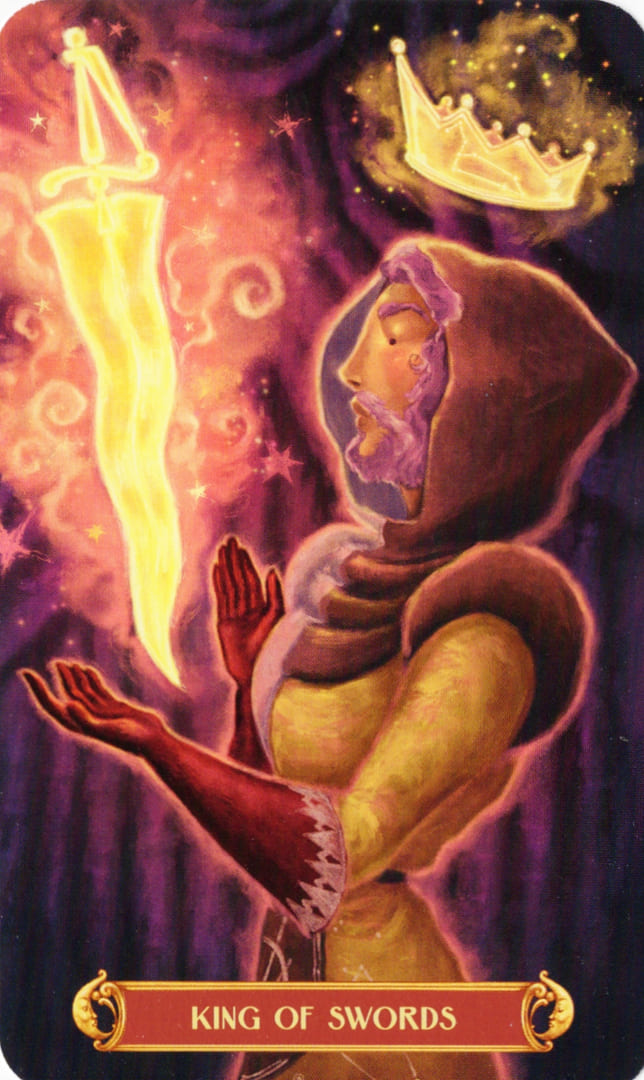
The King of Swords calls you to quiet your mind and prepare with disciplined focus, drawing on your mental tools to perform with precision. This card emphasizes that the moment of action will define how others perceive you, so thorough preparation and calm concentration are essential. It warns against letting doubt and fear open a crack that can derail your efforts, reminding you to trust your abilities. Ultimately, it encourages using mental mastery and confidence to deliver your best performance when it matters.
Pentacles
Ace of Pentacles
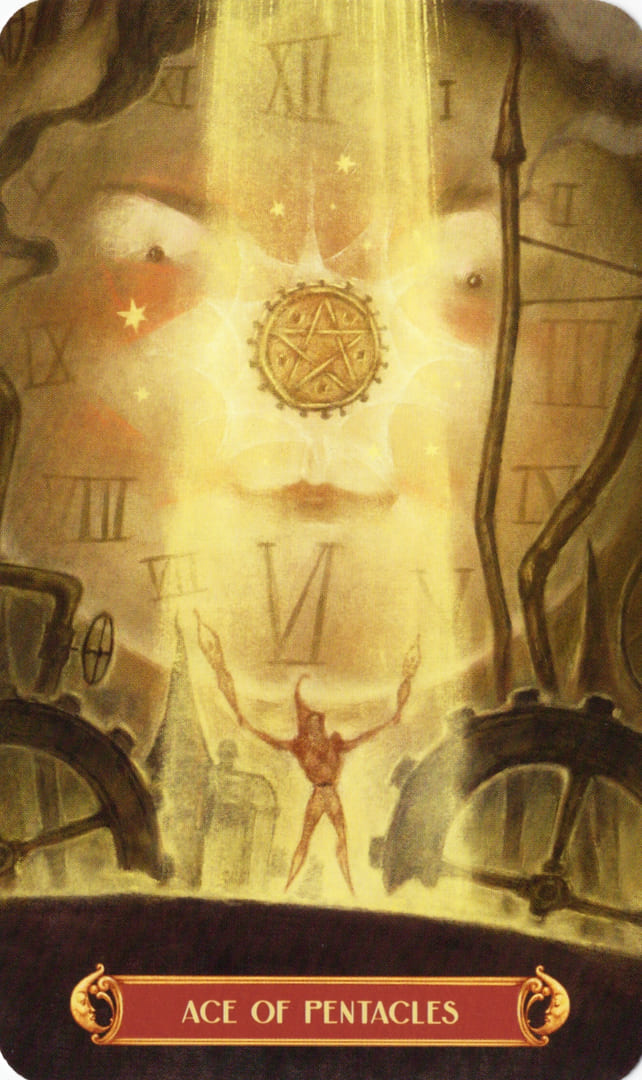
The Ace of Pentacles represents a tangible gift or offering—resources, opportunities, or material blessings—arriving from the wider world. It emphasizes discernment about where such gifts are most needed and the role you play in directing or receiving them. If you are unprepared to accept the pentacle, the opportunity can pass you by and be taken up by someone else. The card advises preparation and awareness so you can recognize, receive, and wisely steward practical blessings when they appear.
Two of Pentacles

The Two of Pentacles depicts a time of juggling increased gifts and growing responsibilities, requiring careful balance of movement, time, and resources. This period can feel like temporary busyness or running in place, yet it contains value if you recognize it as a phase that will pass. The spotlight and attention may be addictive and bolster the ego, but staying in the same performance can block real progress. You are asked to choose whether to continue the familiar routine or move on to the next stage; perseverance and perspective will turn the current hectic phase into eventual forward motion.
Three of Pentacles

This card emphasizes the power of collaboration with skilled others to create lasting, exquisite work; when individuals play to their strengths without competing, they produce masterpieces that endure. It encourages reaching out and forming teams rather than trying to go it alone. The challenger aspect highlights self-doubt and feeling intimidated by others' talents, which can prevent you from claiming your place. The card warns that opportunity is time-sensitive and urges decisive action to accept roles and contribute confidently.
Four of Pentacles

The Four of Pentacles highlights the tension between serving material systems and exercising personal power over the material world. It uses the image of a machine holding a golden pentacle to ask whether you are being consumed by things or directing them to serve you. The card urges examination of where you place your power and whether fear or doubt are directing your choices. Ultimately it advises reclaiming mindful control over resources and roles rather than feeding a machine that drains you.
Five of Pentacles

The Five of Pentacles speaks to feelings of exclusion and the fear of missing out, suggesting a perceived misalignment with the material world. It encourages introspection rather than fixation on what others seem to have, reminding you that your current place may offer vital lessons. Patience and waiting for conditions to align are advised, rather than grasping for what appears absent. Ultimately, the card affirms that you already possess what you require to be content in the present moment, even if it differs from your desires.
Six of Pentacles
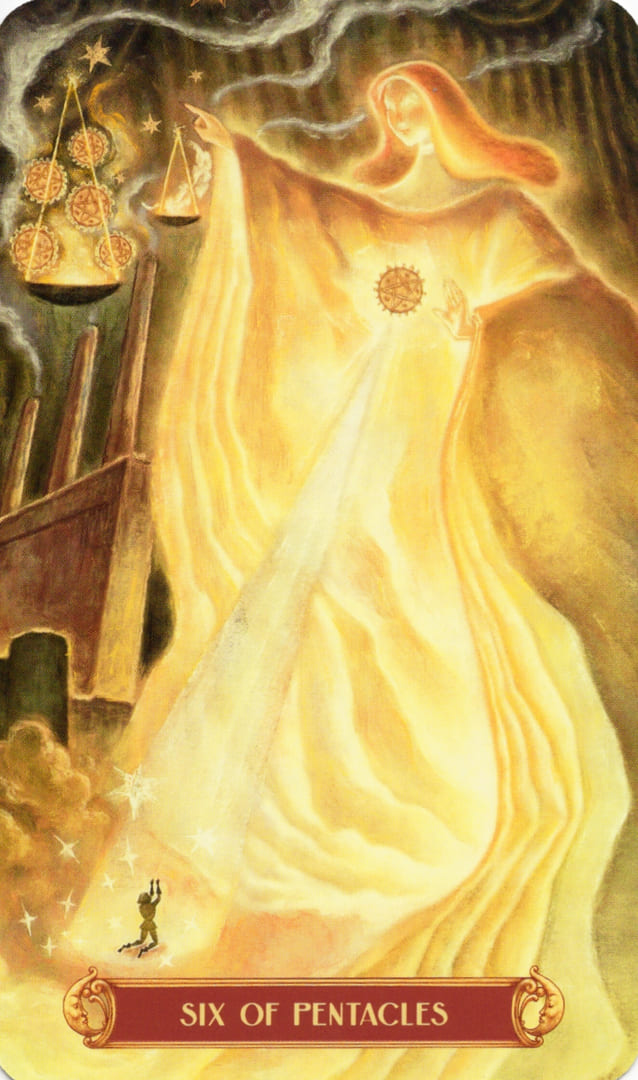
The Six of Pentacles emphasizes the interplay between giving and receiving as essential to abundance. It invites you to recognize whether you are in the role of the giver or the receiver and to honor both roles. The card urges learning to play both parts so that the flow of abundance can expand and balance is maintained. Practicing generosity and openness to receive cultivates tension and resolution that create meaningful exchange and allow prosperity to multiply.
Seven of Pentacles
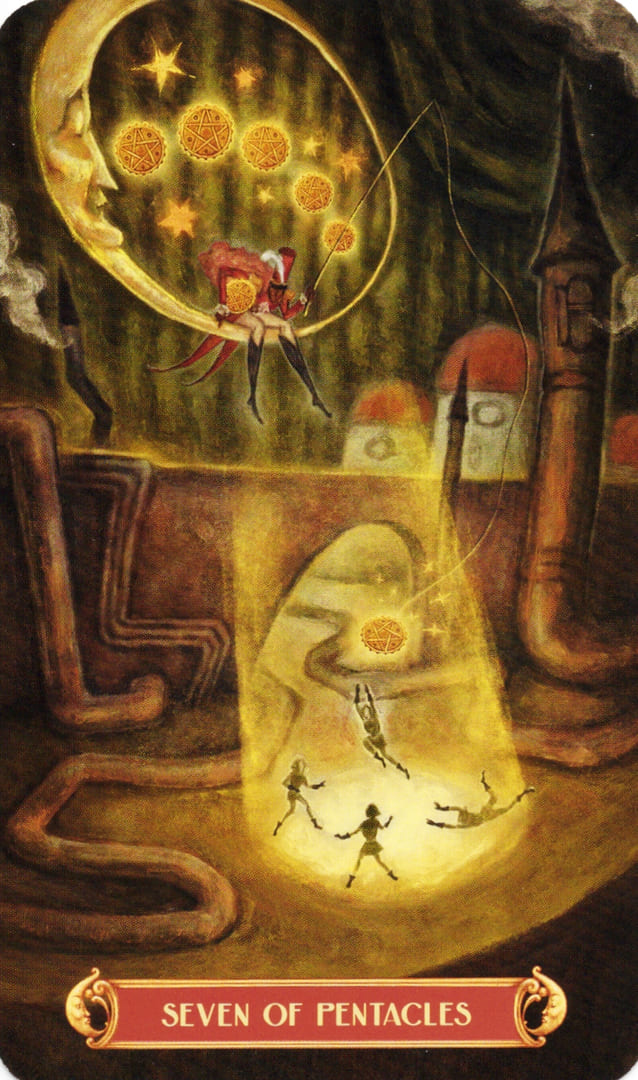
Seven of Pentacles emphasizes that apparent luck is often the result of prior planning and deliberate effort, with rewards arriving when conditions align. The card frames abundance as something that those who planted seeds long ago can expect to receive, likening the outcome to a gift from the Ringmaster. It acknowledges that those who feel overlooked may experience doubt, fear, and resentment, but reminds them that the situation is not random. The guidance is practical: improve your planning and preparation so you will be ready to receive abundance when the next opportunity arrives.
Eight of Pentacles

The Eight of Pentacles emphasizes the importance of collective effort and the many hands required to create material abundance. It highlights that every person has a part to play, and that moments and movements are crucial in how we become interlinked and rely on one another. The card urges extending blessings and recognition to those who contribute, while warning against harmful comparison that makes one feel insignificant. It advises honoring your role by doing it as well as possible and recognizing the value of different contributions.
Nine of Pentacles

This card depicts the comfort and satisfaction of material success and personal achievement, inviting you to enjoy the ease and security that come from hard work. It highlights both public recognition and the quieter pleasure of sitting contentedly in your accomplishments. At the same time it cautions that outward appearances can be misleading and that being visible may provoke discomfort or self-doubt. True belonging and enjoyment of success depend on internal self-worth rather than external trappings.
Ten of Pentacles

This card evokes a vision of material stability and the imaginative act of claiming abundance by holding the feeling of security long enough to make it real. It emphasizes that collective fantasies about wealth can be manifested by those who sustain the vision and energy to do so, while others dismiss it as impossible. A cautionary voice reminds you that not every glittering opportunity is truly valuable and that skill and strategy are needed to turn windfalls into ongoing creation. Ultimately, the card urges focus on what resources can bring you rather than on accumulation for its own sake, and warns that limiting beliefs about luck will produce limited outcomes.
Page of Pentacles

The Page of Pentacles embodies a slow, methodical approach marked by ritual and devotion to practice. This card highlights the value of taking one's time, preparing carefully, and attending intimately to each step of a process. In challenge position, the Page's deliberate pace can frustrate those accustomed to speed and immediacy, showing a tension between thoroughness and urgency. Ultimately it advises respecting careful preparation and resisting outside pressure to rush, even if that resistance is difficult to accept.
Knight of Pentacles
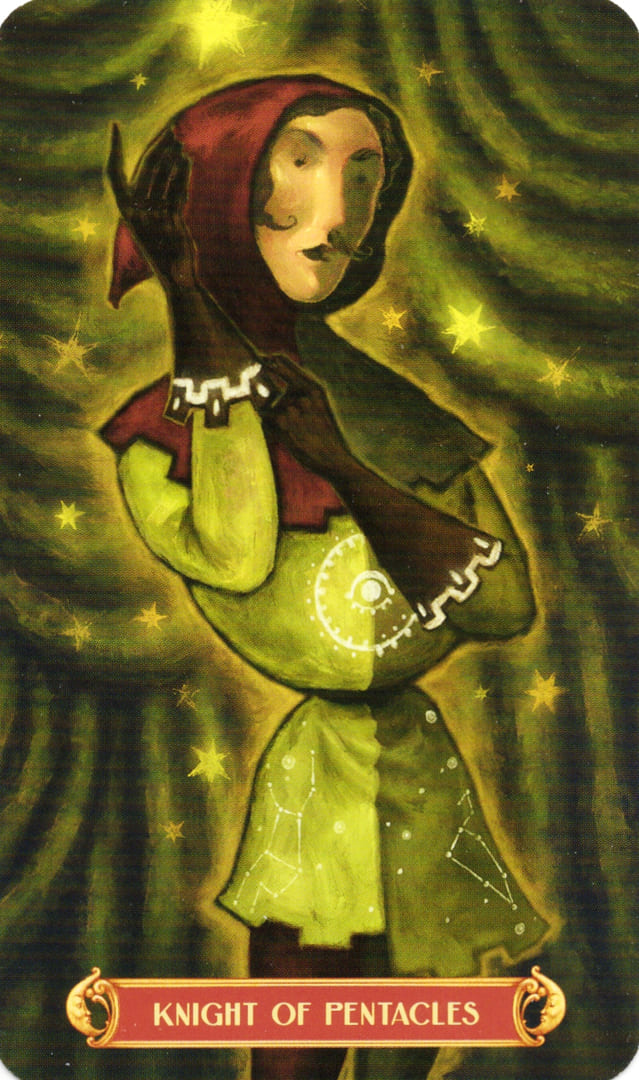
The Knight of Pentacles embodies patience, careful preparation, and methodical attention to detail, urging you to slow down and act with intention. As an ally, this Knight double- and triple-checks routines and resources—often using checklists—to ensure nothing is left behind and you are fully prepared. As a challenger, the Knight's snail-like pace can frustrate and trigger impatience, demanding that every step be completed without shortcuts. Although that slowness can be annoying, the disciplined, thorough process ultimately produces reliable results and confidence in your readiness.
Queen of Pentacles
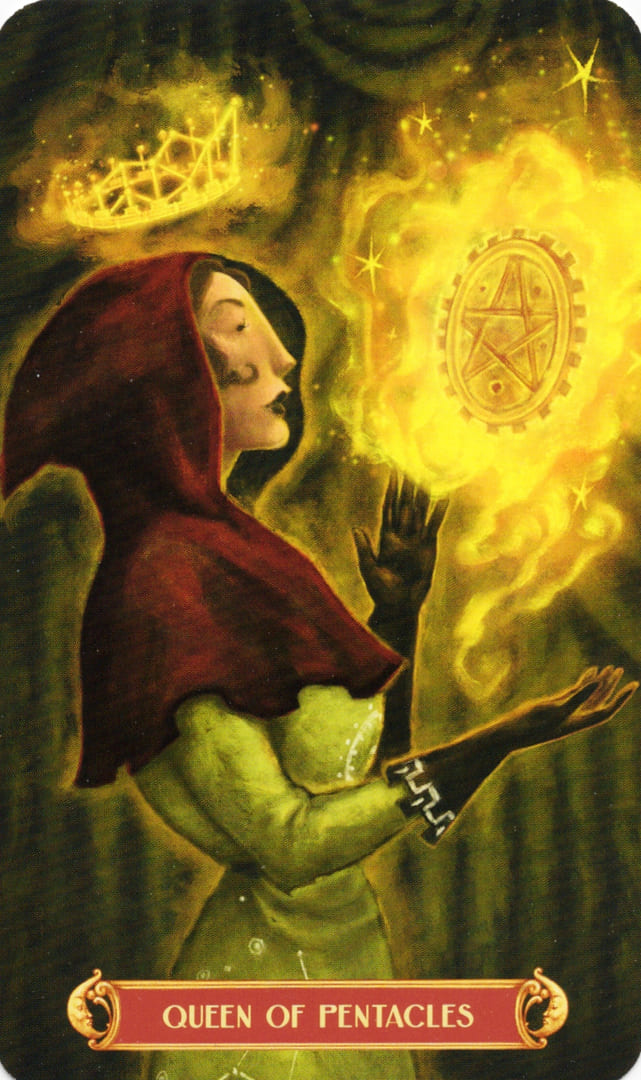
The Queen of Pentacles emphasizes grounding, embodiment, and the practical presence needed to perform with grace and confidence. She advises drawing energy up from the earth into the body to stabilize and strengthen your actions in the present moment. When aligned, she supports steadiness, dignity, and reliable command of your role or work. When out of power, she signals disconnection from the body and the present, leading to fear, instability, and distraction by past or future. Reconnecting through breath, touch, and awareness of the heartbeat restores balance and enables you to continue your daily tasks with poise.
King of Pentacles
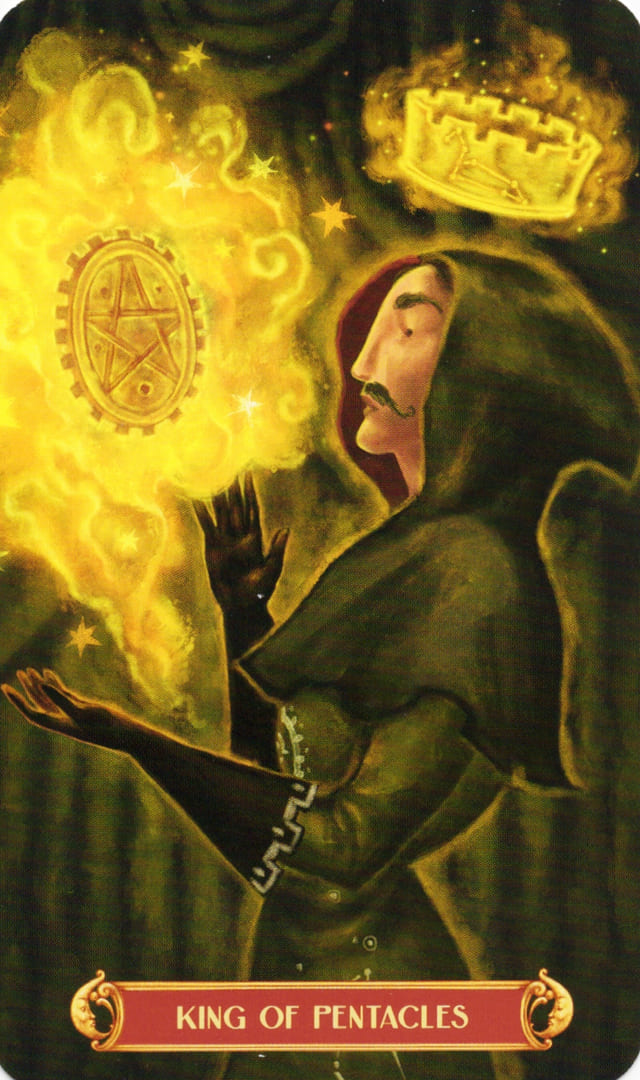
The King of Pentacles represents meticulous preparation, steadiness, and unshakable self-belief achieved through careful work and refinement. When embodied positively, this energy allows you to step confidently into the spotlight, fortified by readiness and resourcefulness. In its shadow, the King can become arrogant, uncooperative, and destabilizing to others when feeling insecure. You are urged to check in with yourself before performing or leading to ensure you remain grounded, responsible, and supportive of the group.
Reading Tips for the Cirque du Tarot
Leeza Robertson designed this deck to be experienced as a journey through a magical circus, and the richest readings come from engaging with the performance metaphor as deeply as you can.
Let the circus tell you who you are in the scene. Are you the performer, the audience, the Ringmaster, or the stagehand? Your instinctive identification with a role in the card often reveals more than the textbook meaning. Notice where you place yourself in the scene — center stage or backstage, in the spotlight or watching from the shadows.
Pay attention to the energy of fire. The Wands suit in this deck is especially vivid — fire performers, torch jugglers, flame breathers — and the metaphor of managing fire runs through the entire deck. Notice when cards ask you to wield power and when they ask you to extinguish it. The circus knows that fire serves those who respect it and consumes those who do not.
Honor the troupe. Many cards in the Cirque du Tarot emphasize collective effort, mutual support, and the relationships that hold the show together. This is not a deck about solo brilliance — it is about what becomes possible when individuals trust each other enough to perform impossible feats. When court cards or numbered cards show multiple figures, consider the dynamics between them, not just the central character.
Embrace the temporary. The circus is always packing up and moving to the next town. Several cards in this deck explicitly remind you that the current phase — whether joyful or painful — is passing. Let that impermanence inform your readings. Nothing here is permanent, and that is not a tragedy. It is the nature of the show.
Explore the Cirque du Tarot in Elvi
Want to experience the Cirque du Tarot in a live reading? Elvi, our AI tarot companion, offers AI-powered readings with this stunning deck and many others. Pull cards, explore spreads, and let the magical circus world of the Cirque du Tarot reveal the acts playing out in your own life — anytime, anywhere, right from your phone.
Frequently Asked Questions
How many cards are in the Cirque du Tarot?
The Cirque du Tarot contains 78 cards: 22 Major Arcana and 56 Minor Arcana. Each card reimagines traditional tarot through the spectacle of circus performance.
Who created the Cirque du Tarot?
The deck was written by Leeza Robertson with illustrations by Michael Joshua Tufts. Published by Llewellyn Publications.
What makes the Cirque du Tarot unique?
Every card is set within a magical circus world — acrobats, ringmasters, tightrope walkers, and mystic performers embody the tarot archetypes. The circus metaphor turns readings into a show where every act reveals something about your life.
Is this deck good for beginners?
Yes. The circus metaphor makes tarot concepts immediately relatable — balance becomes a tightrope act, transformation becomes a magic trick, community becomes the troupe. It follows standard RWS structure.