Dark Wood Tarot: All 78 Card Meanings Explained
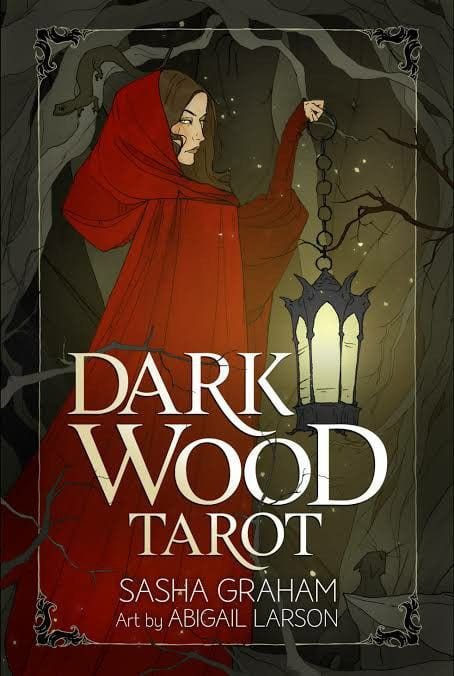
Some decks whisper. This one beckons you into the shadows between the trees, where fairy tales remember their teeth. The Dark Wood Tarot by Sasha Graham, with breathtaking illustrations by Abigail Larson, is a deck that lives at the crossroads of gothic beauty and timeless tarot wisdom. Every card feels like a scene from a story you half-remember from childhood — the kind where the forest is alive, the mirror talks back, and the path you choose matters more than you know.
Abigail Larson’s art is the heart of this deck. Her Victorian gothic style — ink-dark lines, muted earth tones, hauntingly elegant figures — transforms the 78 traditional tarot archetypes into inhabitants of a world where enchantment and danger share the same breath. Wolves watch from the undergrowth. Cloaked figures stand at thresholds. Candles burn in towers that lean against a bruised sky. If you’ve ever felt drawn to the beauty in darkness, to the idea that shadow isn’t the enemy of light but its necessary partner, this deck was made for you.
Sasha Graham, a celebrated tarot author and practitioner, wrote the companion guidebook with a deep understanding of how dark imagery can illuminate inner truth. Her approach treats every card as a doorway — not just into meaning, but into self-discovery. The Dark Wood Tarot doesn’t shy away from the uncomfortable; it invites you to sit with it, learn from it, and emerge transformed.
How the Deck Is Organized
The Dark Wood Tarot follows the classic 78-card tarot structure:
- Major Arcana (0–XXI): The 22 cards of life’s great turning points — archetypal forces, soul lessons, and the transformative crossroads that reshape who you are. In this deck, they emerge from the darkest part of the forest, where the most powerful magic lives.
- Wands: The suit of fire. Passion, creativity, ambition, and the wild spark that drives you forward through the dark.
- Cups: The suit of water. Emotion, love, intuition, and the hidden currents that flow beneath the surface of things.
- Swords: The suit of air. Thought, truth, conflict, and the sharp clarity that comes when illusions are stripped away.
- Pentacles: The suit of earth. Material reality, craft, endurance, and the patient work of building something that lasts.
Each suit runs from Ace through Ten, followed by four court cards — Page, Knight, Queen, and King — for 14 cards per suit and 56 Minor Arcana total.
Major Arcana
The Fool

The Fool symbolizes the archetypal child, embodying a leap of faith, impulsivity, and the initiation of a grand adventure characterized by optimism and innocence. It represents acting in one's own interest, beginning a new cycle, and embarking on a personal journey that one must undertake alone. The card encourages embracing one's completeness beyond societal norms, with a warning against deliberate foolishness and shirking responsibility.
The Magician

The Magician embodies the archetype of magic and the belief that all the magic of our world resides within us. It symbolizes the power to manifest our highest potential and to direct energy at will through our connection to the physical, spiritual, and subconscious worlds. The Magician teaches us about the natural, intrinsic magic that allows for the control of the self rather than external circumstances, highlighting the importance of being present in the moment and following the path of least resistance.
The High Priestess
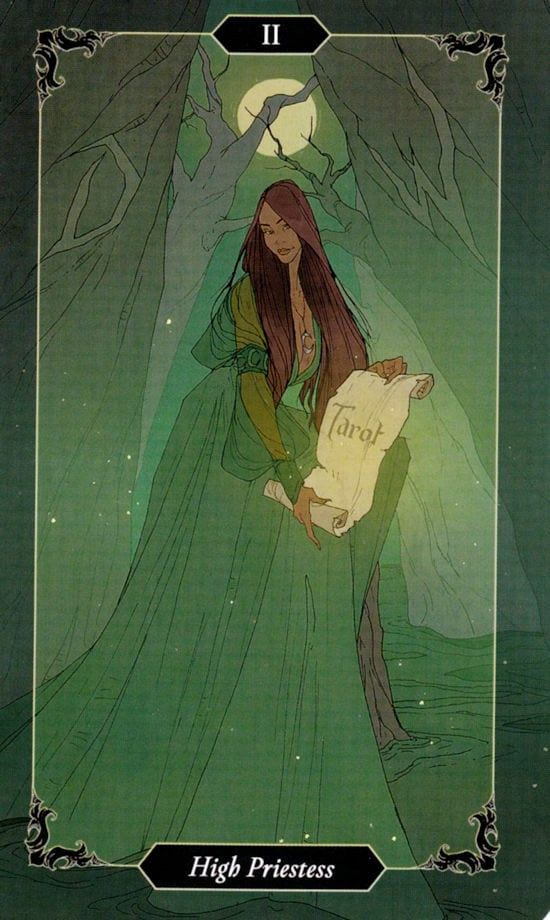
The High Priestess symbolizes your true self, representing a divine whisper of the universe and an embodiment of inner knowledge and wisdom. She reflects the duality of existence, the cycles of life, and the depth of your soul's secrets and potential. Silence is her secret, serving as a space of infinite possibilities and a container for your intentions, much like seeds in fertile soil. The card urges honesty with oneself and alignment with universal forces for genuine self-expression and expansion.
The Empress

The Empress tarot card embodies the archetype of the mother, symbolizing creativity, nurturing, sensuality, and the expansion of the universe within us. It represents the passion and energy for both creating and destroying life. The card encourages embracing one's talents, creative impulses, and intuition to live a life filled with beauty, to transform and express ourselves confidently. It also reminds us of the power of our imagination and creative potential.
The Emperor

The Emperor tarot card embodies fatherliness, stability, structure, and authority. It indicates a time of setting boundaries, establishing order, and pursuing goals with determination and self-discipline. The card suggests power, protection, and the importance of rules and structure in achieving success. The shadow side warns against excessive control, stubbornness, and the refusal to consider the impact of one’s actions on others.
The Hierophant

The Hierophant symbolizes the passing on of wisdom and spiritual guidance. It represents religious and esoteric texts, rituals, external spirituality, religious structures, and institutions. This card also reflects the relationship between teacher and student, emphasizing tradition, mentorship, and the transmission of knowledge, rather than direct experience. Its shadow side warns against groupthink, blind adherence to beliefs that don't resonate personally, and the misuse of spiritual authority.
The Lovers

The Lovers tarot card symbolizes love as a powerful, unifying, and binding force in the Universe. It portrays deep emotional union, sensuality, and the joy of romantic attraction, but also cautions about the darker sides of obsession and unhealthy attachments in love. Representing both the spiritual ecstasy and the challenges of romantic relationships, this card encourages embracing love's transformative power while being aware of its potential to lead to dependency or destructive patterns.
The Chariot

The Chariot symbolizes the archetype of a hero or heroine, urging one to spread their wings and soar toward their destiny with confidence and clarity. It represents a journey of overcoming distractions and fears, driving towards personal goals with focus and determination. This card encourages expanding one's self-concept and exploring new horizons fearlessly. Success, motivation, and accomplishment are within reach if one follows their heart and remains focused on their desired outcome.
Strength
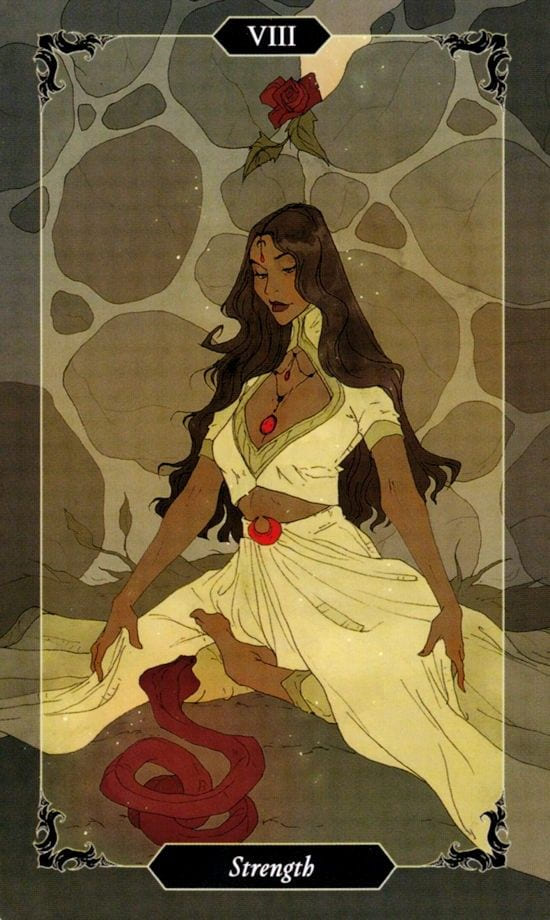
The Strength tarot card embodies internal power and gentle control, highlighting the warrior archetype. It speaks to the universal might that resides within us, urging a mindful and skilled use of our intellectual, physical, and emotional reserves. The card also emphasizes personal resilience, responsibility, and inner confidence independent of external circumstances. Finally, Strength encourages the nurturing and transformation of our inner fire to reshape our reality.
The Hermit

The Hermit represents the journey of wisdom and discovery in solitude. It signifies the importance of stepping away from the external world to connect with the divine whisper of the Universe through silence and meditation. This card highlights the value of esoteric knowledge, the quest for inner truth, and the ability to guide others with the light of wisdom. However, it also warns against isolation, detachment from reality, and spiritual arrogance.
Wheel of Fortune

The Wheel of Fortune represents life's cyclical nature, the ebb and flow of luck and destiny, symbolizing the Universe's movement and the rhythms of life itself, like morning, day, and night. It encourages finding one's center to maintain balance irrespective of life's ups and downs. This card signifies life's peaks and valleys, the rhythm and flow of existence, and the ability to handle challenges and embrace blessings with the help of an unseen benefactor.
Justice
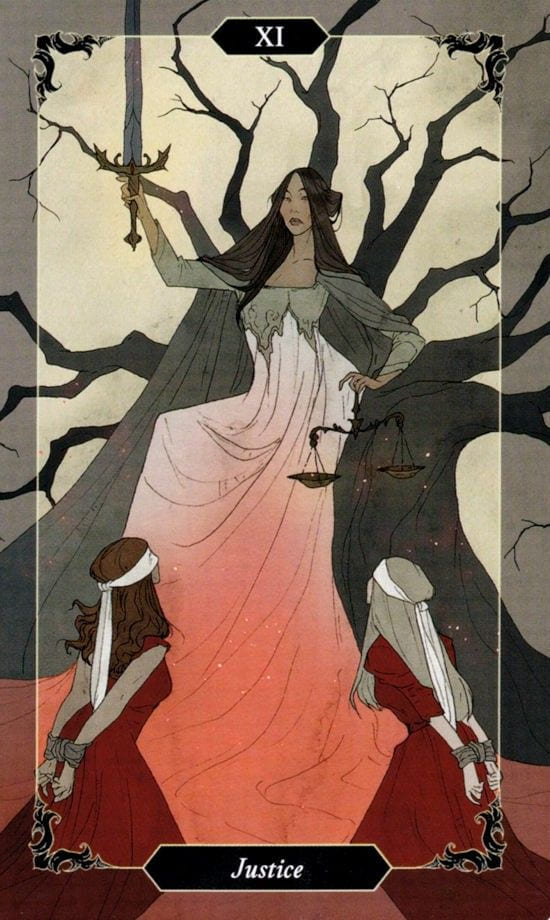
Justice embodies the law of karma and the inner magic of responsibility that maintains universal order. It symbolizes the personal moment of truth, where the efforts and actions one has invested return. The card calls for honesty, rejecting deceit, and embracing the consequences of one's actions, thoughts, and decisions. It teaches that understanding and accepting one's responsibilities leads to freedom and the unveiling of new opportunities and hidden joys.
The Hanged Man

The Hanged Man symbolizes the mystical archetype, inviting a deep exploration and a fresh perspective on life's situations. It represents a moment of suspension and the voluntary sacrifice for a greater good, urging one to contemplate and embrace the interconnectedness of all things. This card encourages viewing the current situation from a new angle and considering the supernatural abilities and revelations that may come from such an altered state.
Death
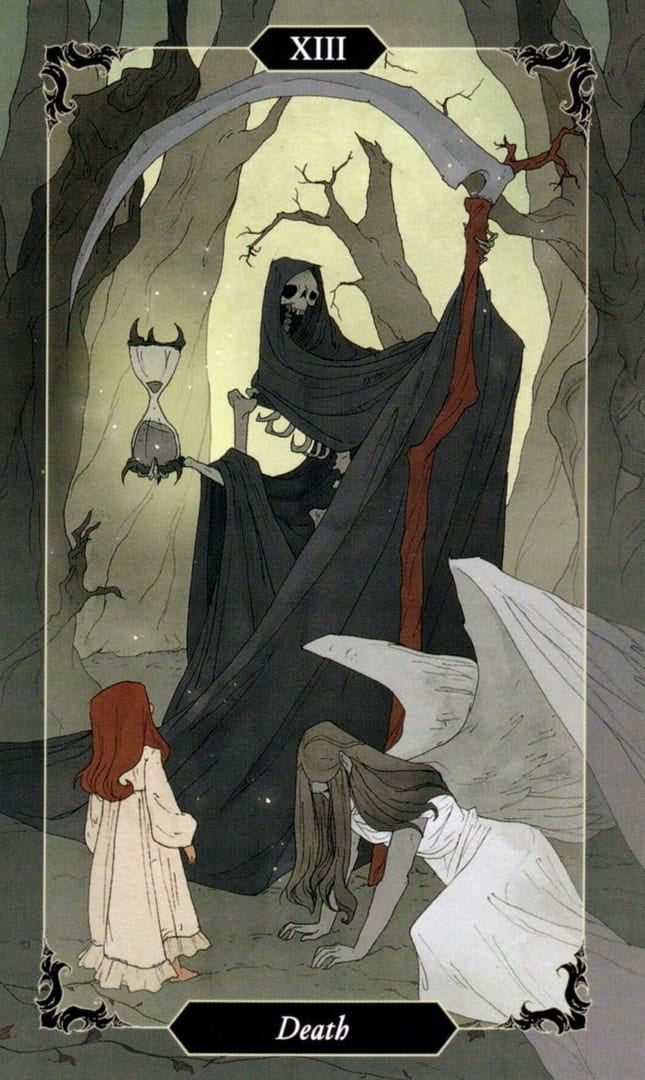
The Death tarot card symbolizes the end of a cycle, clearance, and the opportunity for a new beginning by embracing transformation. It teaches us the inevitability of change and the importance of letting go to progress to a higher level of understanding and existence. Death is not the opposite of life but the counterpart to birth, residing within the material world's cycle of renewal.
Temperance
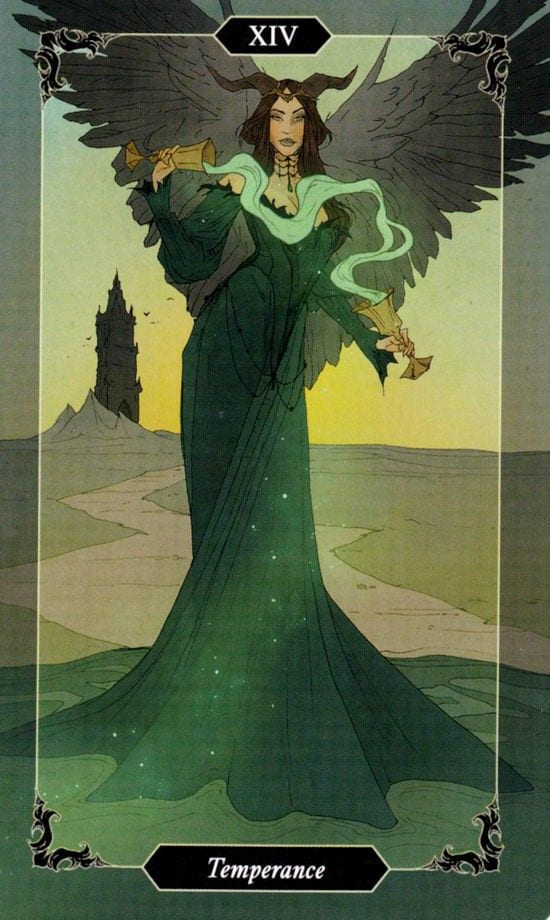
Temperance symbolizes the balance and complexity of merging opposites, embodying mastery and the management of life's energies. It marks a phase of maturity where the lessons of Death are assimilated, leading to new paths and possibilities. The card represents harmonizing life and death, achieving balance through focusing on the fluid transfer between extremes, and hinting at the magic created in this focus.
The Devil
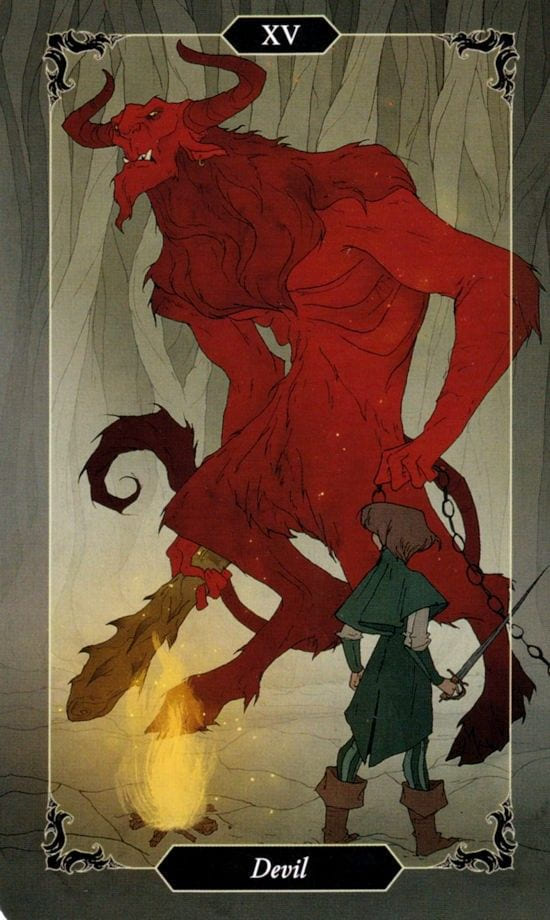
The Devil card represents embracing your shadow to transform fear into an ally. Through darkness and the metaphorical labyrinth of life's challenges, one can find true self-awareness and strength. It symbolizes the importance of confronting fears, the illusions of the ego, and the journey towards understanding and overcoming personal barriers. The card warns against the dangers of dependency, negative energy, and excessive control, suggesting that overcoming these aspects can lead to liberation and endless possibilities.
The Tower
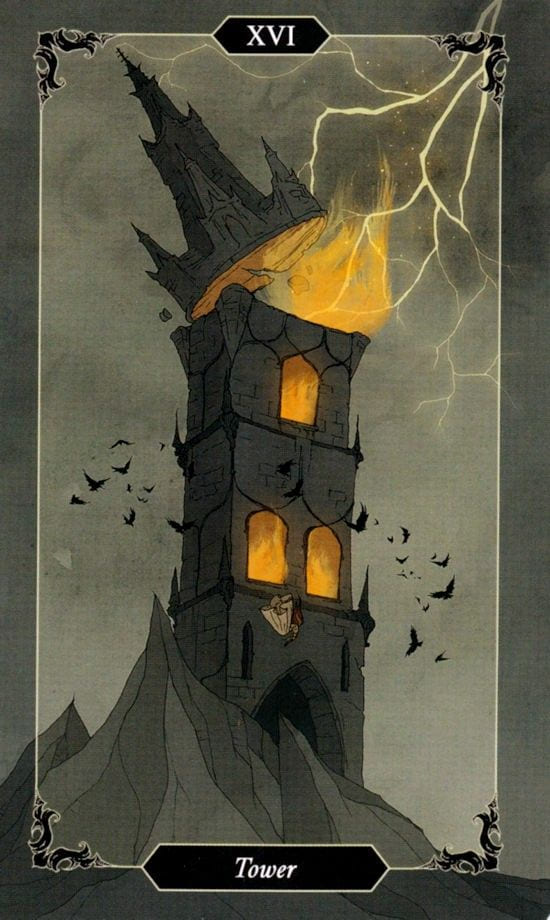
The Tower represents the archetype of destruction and the act of liberation through capitulation. It symbolizes the abrupt end of the old self, including old habits and false constructions, through shocking and often surprising changes. The card encourages facing radical shifts, reevaluating life principles, and opening doors to new opportunities, emphasizing a process of rebirth at the very core of one’s being.
The Star
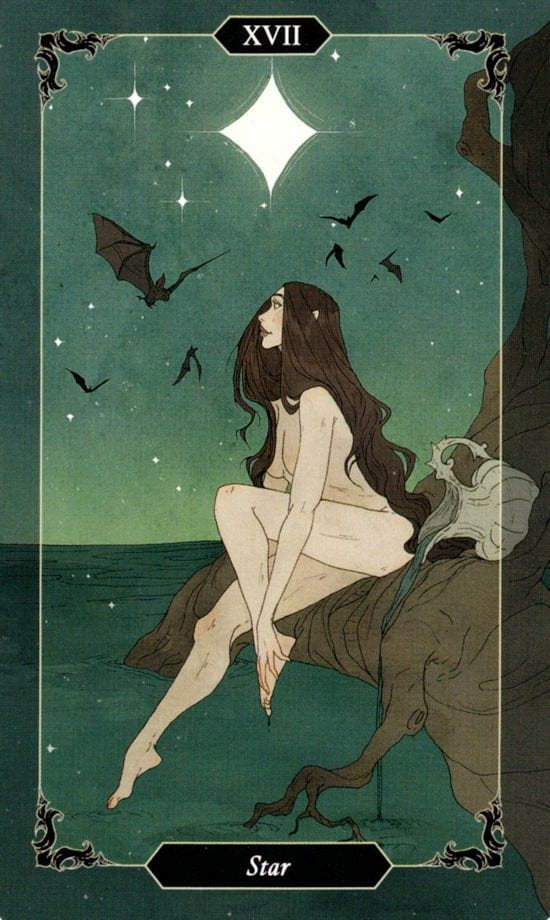
The Star tarot card symbolizes healing, inspiration, and unity with the Universe, following the destruction symbolized by The Tower. It represents true magical beginnings, generosity, and the birth of compassion towards oneself and others. Freedom, hope, and the potential for new, positive perspectives bloom from this card. It's a reminder of the soul's capabilities and the opportunities available after an energetic cleansing. However, it also warns against the illusion of perpetual pleasure and using others for self-justification.
The Moon

The Moon card embodies mystery, revealing the signs visible only to the mind's eye and sensed through the body. It symbolizes new possibilities emerging from the subconscious, embodying the unknown, formative stages of newness that may initially bring fear due to their unfamiliarity. The card gently assures us to support beginnings that are currently unfolding, highlighting direct communication between the subconscious and higher consciousness. It indicates a path of completion and realization, with an emphasis on dreams, imagination, and the paranormal.
The Sun
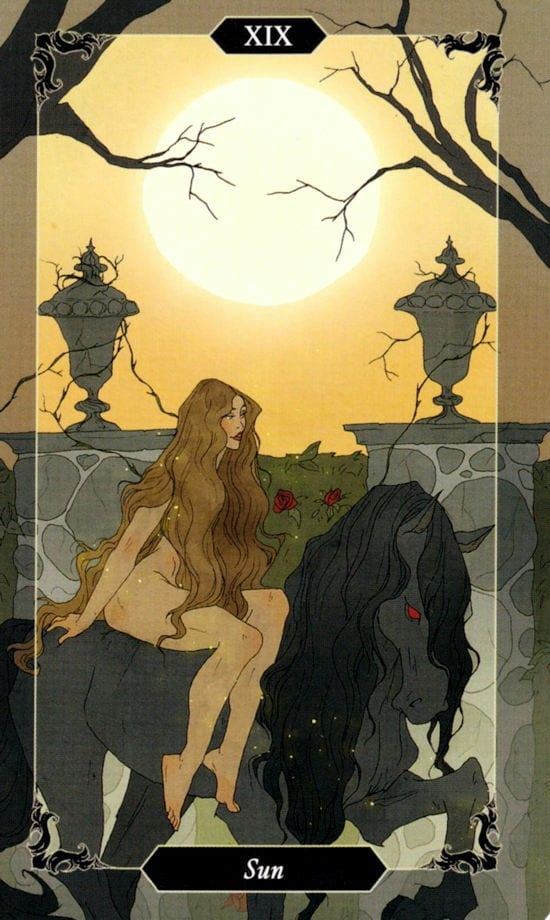
The Sun card symbolizes health, vitality at its peak, and abundance of a warm summer day. It signifies the fulfillment of cherished desires, revealing one's true essence and abilities at the height of glory and meeting with one's inevitable destiny. The imagery of being unburdened, mastering, and freedoms like moving beyond past threats and embracing internal growth and the balance of opposing forces is central. The Sun lights the path, warming and highlighting personal achievements and expansion.
Judgement

The Judgement card signifies reaching a point of no return, embracing transformation, and acknowledging the irreversible change that marks a new phase of life. It signals an awakening to one's true potential and destiny, urging one to seize emerging opportunities and accept their true nature. Transformation is almost complete, and what is true for the individual resonates with the universe.
The World

The World represents the archetype of unity, symbolizing a moment of joy where all energies, both internal and external, converge in ecstatic harmony. It signifies journey, inspiration, movement, and the ultimate unity with the surrounding world. The card's imagery underscores an end to duality, embracing light and darkness, masculinity and femininity, and everything in-between, representing the tantric union of infinite possibilities. It marks the great conclusion of the Major Arcana, a state of supreme bliss, where one's desires are fulfilled, and one shares their gifts with the world without reservation.
Wands
Ace of Wands

The Ace of Wands symbolizes a moment of spontaneous inspiration and the beginning of a new cycle filled with passion and energy. It serves as a metaphorical seed for growth, representing infinite possibilities and the inner strength within everyone. This card urges the querent to contemplate their interpretation of passion and readiness for challenges that will arise with a new wave of inspiration. It also prompts a consideration of how one utilizes their creative and expressive potential.
Two of Wands

The Two of Wands symbolizes a moment of reflection and decision, embodying the marriage of opposites and the synthesis of polarities within oneself. It encourages a careful consideration of actions and outcomes, reminding the seeker that they hold the power to shape their destiny with careful planning and protection of their energy. The card also hints at the potential need to reassess intentions and make reparations for past harm.
Three of Wands
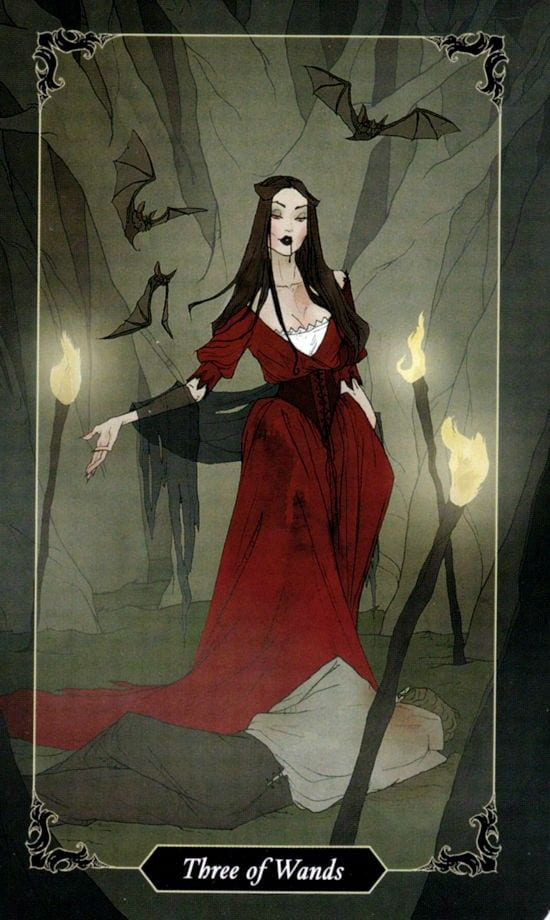
The Three of Wands represents embracing sexuality, eternal life, transformation, and facing one's dark side. It symbolizes the transition from planning to action, creativity, and the necessity of innovative thinking. The card encourages forming one's luck, enjoying changes, and moving forward even in dire circumstances, highlighting the importance of trusting one's inner strength. It also warns against allowing 'psychological vampires' to deplete one's energy and stresses the significance of focusing on positive life paths.
Four of Wands

The Four of Wands signifies a passage that is open before you, suggesting the anticipation of surprises and the beginning of an adventure with unknown outcomes. It highlights the dual aspects of bridges as symbols of danger and transformation, leading from one reality to another, and the underbridge troll representing hidden fears and suppressed qualities. The flowing water and secretive observer suggest consciousness, life force, and mysterious guidance.
Five of Wands

The Five of Wands represents conflict and lively debates, indicating a situation marred by irritation among peers or family, where fiery energy leads to passionate belief spreading. This card surrounds the concept of facing a complex challenge that necessitates acknowledgment and overcoming to progress. The shadows question whether groupthink dominates personal reactions, provoke reflections on handling provocation, and challenge the false strength derived from anger.
Six of Wands
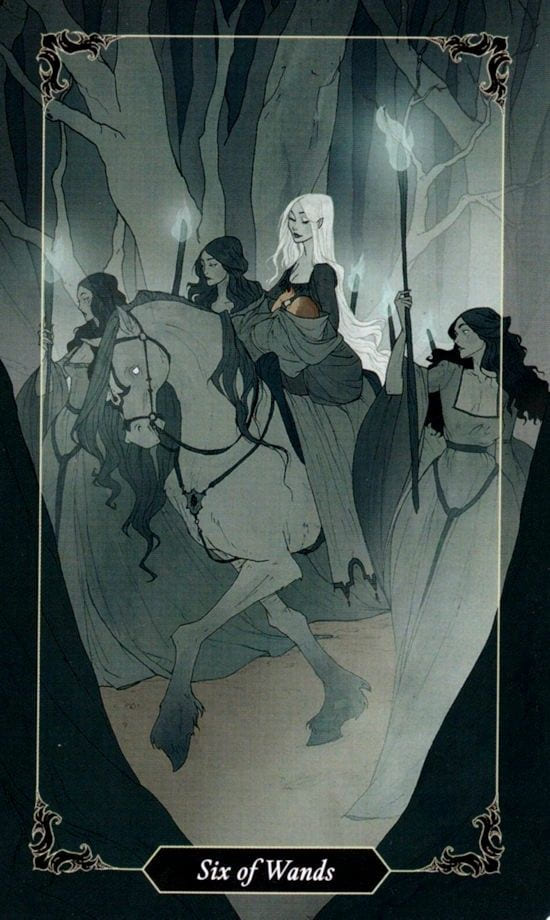
The Six of Wands symbolizes public recognition of achievements and inspires others through action. It signifies success, a high position, and a reason to celebrate. It encourages sharing one's fortune and supporting others while also prompting introspection about feelings of jealousy and envy, which, if acknowledged properly, can lead to understanding one's true desires.
Seven of Wands

The Seven of Wands symbolizes facing shadows, overcoming internal and external conflicts, and confronting challenges directly. It suggests the presence of hidden possibilities in the darkness and the need for self-examination to understand personal enemies and challenges. The card warns against succumbing to victim mentality and emphasizes taking a stand, defending oneself, and acknowledging the role of one's ego in conflicts.
Eight of Wands

The Eight of Wands represents the space between desire and its fulfillment, emphasizing the importance of intentions set in motion and the anticipation of their outcomes. It symbolizes passion, swift actions, and the inevitable wait for the consequences. The card also warns against passivity and encourages taking proactive steps to influence outcomes, reminding one of the karmic principle that what is released into the world will eventually return.
Nine of Wands

The Nine of Wands symbolizes discovering one's own inner strength and nearing the fulfillment of desires while challenging an individual to step out of their comfort zone and confront what lies in the shadows of their actions and desires. This card combines the imagery of a Clown archetype, representing unpredictability and the duality of human nature, with a barrier that has been overcome, hinting at personal expansion, the breakdown of barriers, and venturing into the unknown.
Ten of Wands

The Ten of Wands represents the culmination of a cycle, embodying energy, passion, and the completion of an endeavor. It signifies the end of one journey and the beginning of another, highlighting the importance of reflecting on achievements and preparing for new challenges. The card advises finding balance between control and surrender, encouraging relaxation and planning for the future.
Page of Wands

The Page of Wands is a symbol of fiery enthusiasm and boundless curiosity. It represents the purity of consciousness, untainted by experience, and the ability to experience passion for the first time. This card embodies the idea of focusing on what truly matters and making passionate interactions possible through complete concentration. It also signifies a love for adventures and the constant generation of new dreams, driven by limitless curiosity.
Knight of Wands
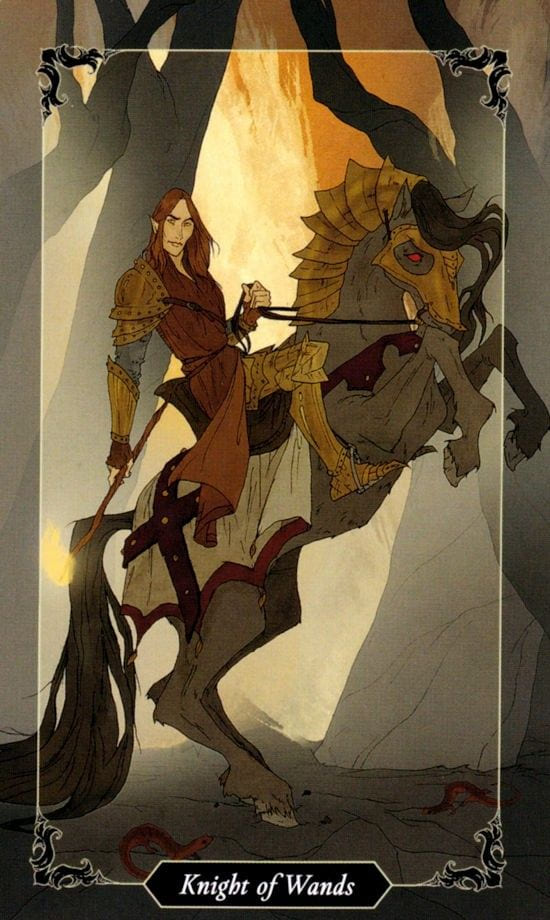
The Knight of Wands symbolizes explosive power, impulsiveness, and the capacity to initiate dynamic actions. Representing a personality that is both exciting and potentially overwhelming, this card often appears in situations that rocket forward with the intensity of a wild fire. It suggests a figure that is charismatic, adventurous, and driven by a passion that can lead both to grand achievements and stumbles, depending on how it is harnessed.
Queen of Wands

The Queen of Wands symbolizes a radiant star of mature feminine essence, embodying compelling charisma, natural magnetism, and the active energy of kundalini. She shines with love, her warmth is contagious, and her bright enthusiasm and compassion are conquering. Her greatest challenge lies in managing her brilliance, avoiding the burnout from shining too intensely. The card also explores the balance between inspiration and destruction, urging contemplation on how one's fiery passion can nourish rather than consume.
King of Wands

The King of Wands embodies a dominant and commanding personality, with mature, masculine expressions of Fire. He is charismatic, enjoys the spotlight, and is focused on his goals, spreading his enthusiasm like wildfire. He is open to new ideas and willing to collaborate, but also faces challenges such as arrogance and nervousness when opposed. The card highlights the joy of demonstrating power, courage in adversity, the ability to inspire, but also warns of the dangers of suppressing energy, self-destruction, and the lack of personal responsibility.
Cups
Ace of Cups

The Ace of Cups represents the seed of emotional growth, beginnings, and the potential contained within every emotion. It signifies emotional fulfillment, the joy of living, and the transformative power of love. The card urges openness of heart, acknowledging the shadow side of emotions, and embracing all feelings with wisdom. It embodies the starting point of emotional energy and creativity.
Two of Cups
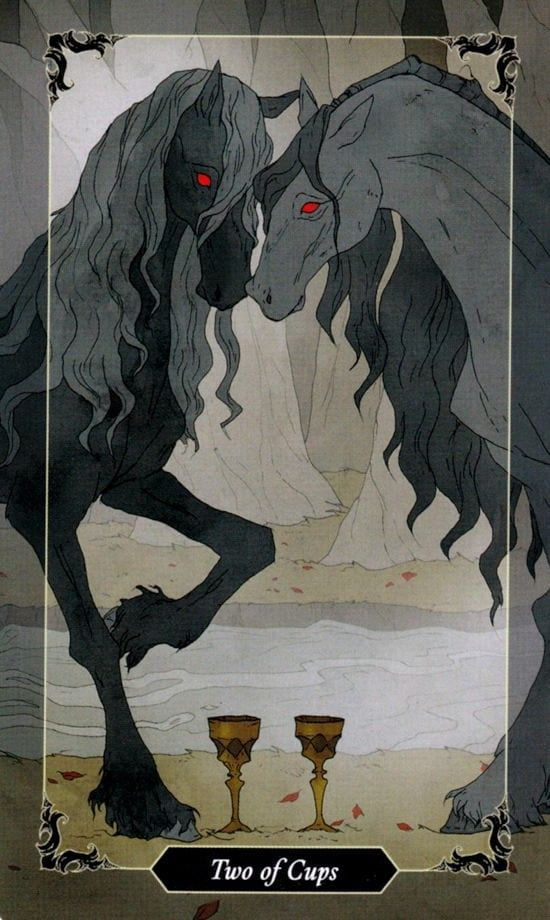
The Two of Cups symbolizes the joy of meeting one's soul reflected in someone or something else, the recognition and valuation of attractions, and the deep connections formed beyond time. It represents intimacy, tenderness, respect, and the magic of reunification, whether with a person, animal, ideal job, calling, or spiritual experiences. The card encourages the recognition of a kindred spirit, celebrating an ideal combination and joyful unions, but warns about the pain of unrequited love as its shadow aspect.
Three of Cups
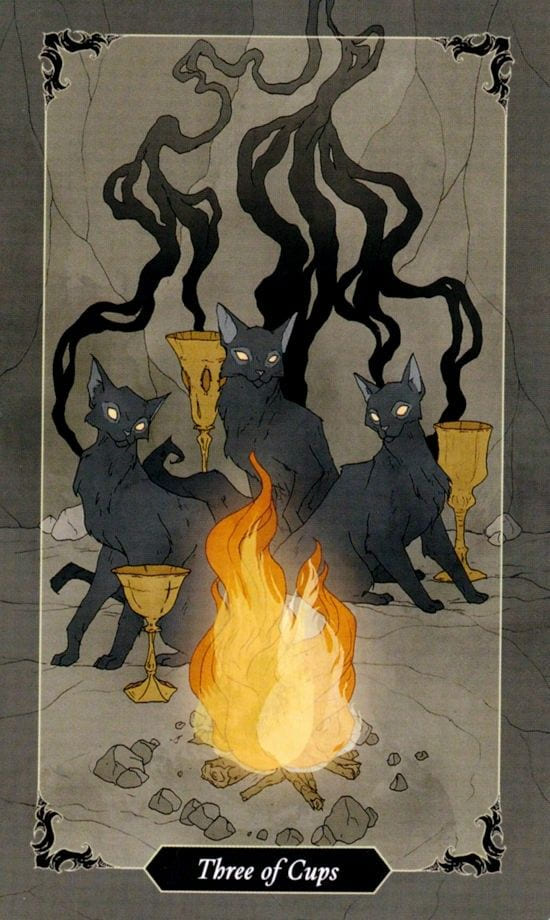
The Three of Cups symbolizes celebration, unity, and emotional bonds formed through common goals and mutual support. It emphasizes the power of collective vision and creativity, suggesting stronger achievements and ecstasy in unity. The card is a reminder of the sacredness of friendships and partnerships that share a common purpose, and the joy that comes from such connections.
Four of Cups

The Four of Cups represents the presence of hidden gifts and opportunities that might be overlooked due to distraction, emotional instability, or preoccupation with one's thoughts. It emphasizes emotional stability, self-awareness, and the importance of shifting focus from inward to outward to perceive the support and abundance the universe offers. The card also suggests that stability and a deeper understanding of emotions can fill one's life with meaningful experiences.
Five of Cups

The Five of Cups symbolizes a deeply entrenched emotional challenge, reminding us of the importance of facing losses and embracing what remains. It encourages introspection and self-evaluation to break free from cycles of dependency and sorrow. Healing comes from recognizing and accepting emotional states without letting them define us, offering a chance to change old habits and emotional patterns.
Six of Cups

The Six of Cups explores themes of nostalgia, emotional growth, and the balance of giving and receiving emotions. It evokes memories and the simple expressions of care that come back as karmic rewards. However, it warns against the romanticization of the past, which can hinder future achievements, and emphasizes the importance of living in the present and helping others as a means to heal oneself.
Seven of Cups

The Seven of Cups symbolizes the magical paths connected with future potentials, choices, and the embracement of one's needs through imaginative endeavors. It encourages making room for what one needs and acting on the wealth of opportunities presented. Each cup represents different paths and aspects of life linked with major arcana archetypes, underpinning the importance of choice, action, and redefinition of self.
Eight of Cups

The Eight of Cups symbolizes leaving behind what no longer serves you and embarking on a quest for something more meaningful. It's a journey of self-discovery and renewal, akin to the path of The Hermit. This card indicates the presence of a unique opportunity to cast away the unnecessary and ascend towards a significant personal goal. However, it also warns of the need to fully understand one's current situation to avoid repeating past patterns.
Nine of Cups

The Nine of Cups symbolizes wish fulfillment and the achievement of one's deepest desires through hard work and sacrifice. It urges us to consider what we are willing to give to realize our dreams, while also reminding us to question the roots of our desires and whether they truly align with our core being.
Ten of Cups
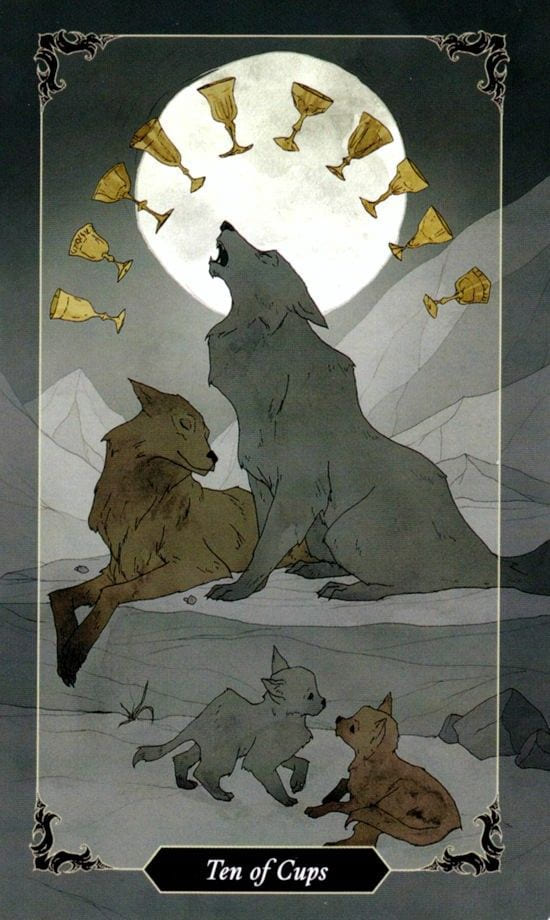
The Ten of Cups embodies happiness, fulfillment, and emotional satisfaction in family life and relationships. It signals a period of peace, joy, and security, underlining the importance of cherishing the good times and appreciating life's cyclical nature. It represents the culmination of emotional journeys, suggesting that happiness, though not constant, is a valuable and achievable state.
Page of Cups

The Page of Cups represents a visionary and imaginative character, embodying intuition, kindness, and open-mindedness. This card speaks to the essence of childhood imagination, allowing for a connection with the supernatural and the true nature of things without judgment. It encourages embracing one's intuition and the importance of acceptance, but also warns of the shadow side which includes emotional instability and the dangers of unrestrained imagination.
Knight of Cups
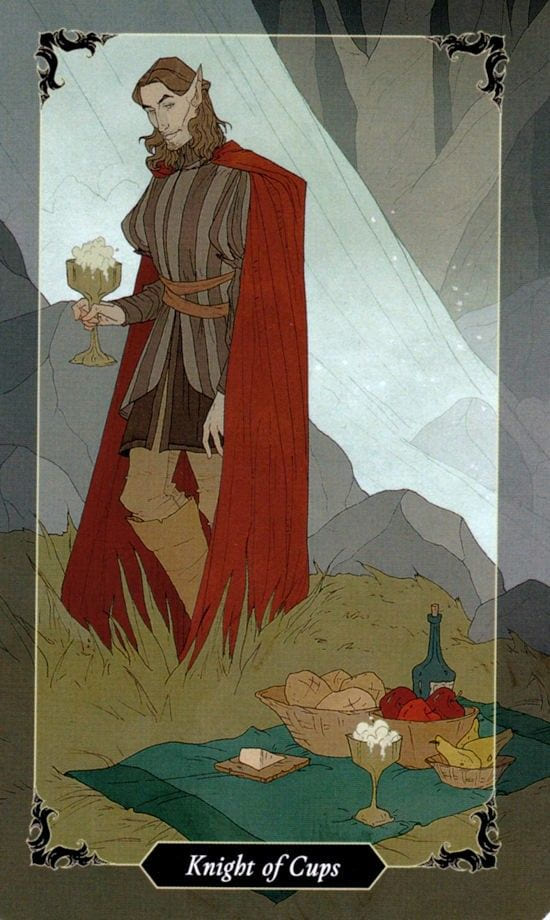
The Knight of Cups is the quintessential romantic, symbolized by a waterfall representing his intense, swiftly moving emotions. A scene is set under the moonlight for a romantic encounter where one is urged to accept his offer of love, embodied in a single cup. This card encourages embracing emotions, poetry, and dreams, suggesting that love is within reach if one dares to dream passionately. On the flip side, it warns of obsession, jealousy, egoism, and the potential for deceit, highlighting the importance of social norms and self-justification.
Queen of Cups
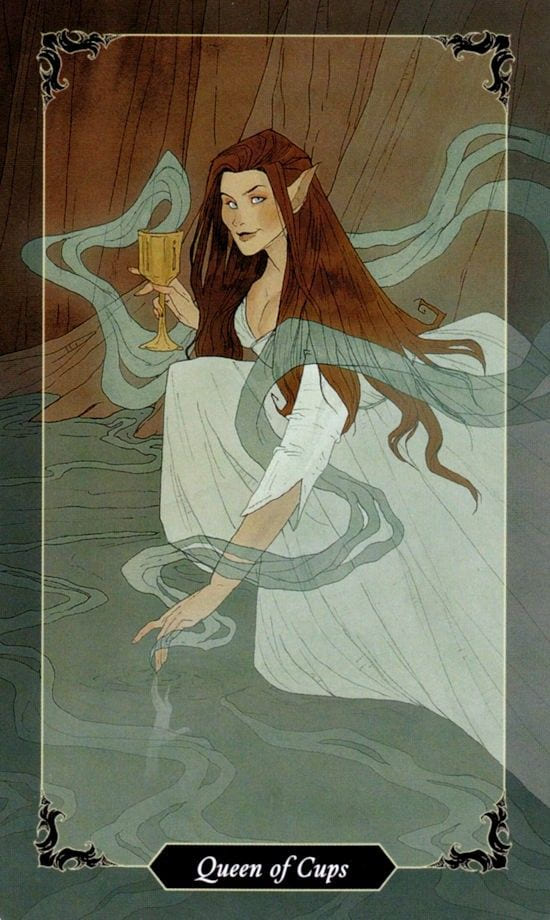
The Queen of Cups is a symbol of empathy, deep understanding, and healing. She embodies the ability to dive into the depths of human understanding and share feelings with others, thus empowering them. Her presence suggests the mastery of Tarot and a nurturing advisory role. Creatively gifted, she connects with the muse and brings emotions to life through arts. Her essence is about healing, comprehension, active imagination, and providing valuable advice, albeit her shadow side reflects over-dramatization and dependency.
King of Cups

The King of Cups is depicted as a grand artist and dreamer, turning dreams into reality. This card represents the zenith of creative development, incorporating aspects of a mystic and philosopher. The imagery includes the King conjuring a water goddess, symbolizing the brink of love and its reimagining. The King's traits include diplomacy, kindness, and the ability to balance and resolve any situation with creativity and open-mindedness. The shadow side, however, warns of emotional manipulation, egomania, and deceit for personal gain.
Swords
Ace of Swords

The Ace of Swords represents a powerful burst of insight, signifying the pure potential and beginnings within the realm of the intellect and the mind. It embodies the essence of clarity, truth, and the brilliance of ideas, urging one to embrace the responsibility for situations and to bring inspired plans to life. Victory and mental prowess are highlighted, along with a reminder of the dual nature of hands for creation and destruction, suggesting a balance between intellect and the physical world is necessary.
Two of Swords
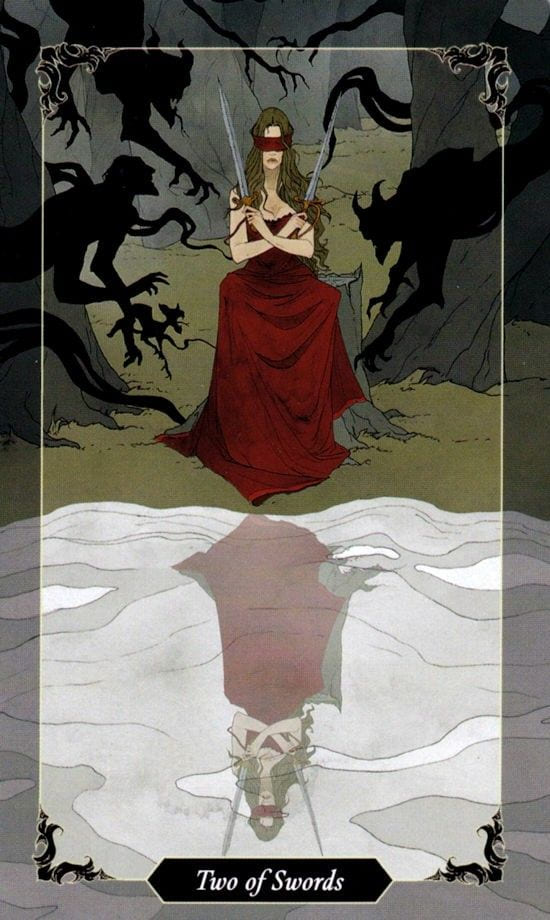
The Two of Swords symbolizes voluntary seclusion in an inner mental sanctuary, acknowledging one's true feelings. It suggests a need to isolate oneself from external noises and influences to find inner peace. The card recommends reflection and contemplation, understanding one's true thoughts, feelings, and reactions. It also cautions against over-isolation and self-torment, reminding the importance of facing problems directly and accepting help when offered.
Three of Swords

The Three of Swords represents the conflict between heart and mind, symbolizing betrayal, loss, regret, and the heartache that leads to emotional openness. It suggests a necessary confrontation with truth, acknowledging that to fully experience love and life, one must be open to pain. The card encourages bravery in facing life's struggles, understanding that experiencing deep feelings enriches our lives.
Four of Swords

The Four of Swords represents a period of rest and recovery after a time of challenge, with the promise of more action to come, urging the necessity of mental peace and the adaptation to change. It signifies stabilizing thoughts and embracing evolution in ideas, suggesting that although our beliefs and thoughts may be challenged, it's essential to adapt and evolve. Trusting the inner voice and adapting to the new realities with all defenses ready is crucial.
Five of Swords

The Five of Swords symbolizes destructive behavior driven by cruelty, jealousy, and the pleasure in others' suffering. It warns of the repercussions of unchecked aggression and the power of words to heal or hurt immensely. The card invites introspection on one's role in conflicts, emphasizing the importance of taking responsibility, evaluating one's actions, and aspiring for peace and self-improvement.
Six of Swords

The Six of Swords symbolizes a journey of escape or transition, possibly marked by theft or rescue, raising questions of morality and underlying forces. It represents a moment of crossing into new beginnings, confronting the depths of emotional connections, and the power and dangers lurking in the subconscious. The card prompts reflections on actions and their consequences, emphasizing that what is given to the world returns threefold.
Seven of Swords

The Seven of Swords symbolizes the need for caution and discretion in changes or actions. It represents escape and cunning as methods to save oneself from threats. It encourages the identification of threats, whether internal, external, in others, or in situations, and to address the key issue with wisdom and luck. The shadow aspect challenges one to confront what they are hiding from and to face desires and threats directly, with the power to set one's own terms.
Eight of Swords

The Eight of Swords depicts a woman in a precarious situation, symbolizing entrapment, victimhood, and the potential for liberation through self-awareness. It illustrates the witch hunts, executions, and demonization of women, emphasizing self-inflicted punishment and the possibility of escape if one chooses to. The card encourages looking at the world with fresh eyes and trusting one's intuition for transformation.
Nine of Swords

The Nine of Swords embodies the mental agony of overthinking, self-doubt, and the toxicity of negative self-criticism. It signifies being trapped in obsessive and harmful thought patterns that lead to anxiety, stress, and sleepless nights. This card also symbolizes a turning point where a new mindset and approach are necessary to move forward. It encourages understanding the power of the mind, even in its darkest times, and suggests the practice of rewriting negative thoughts positively as a path to healing.
Ten of Swords
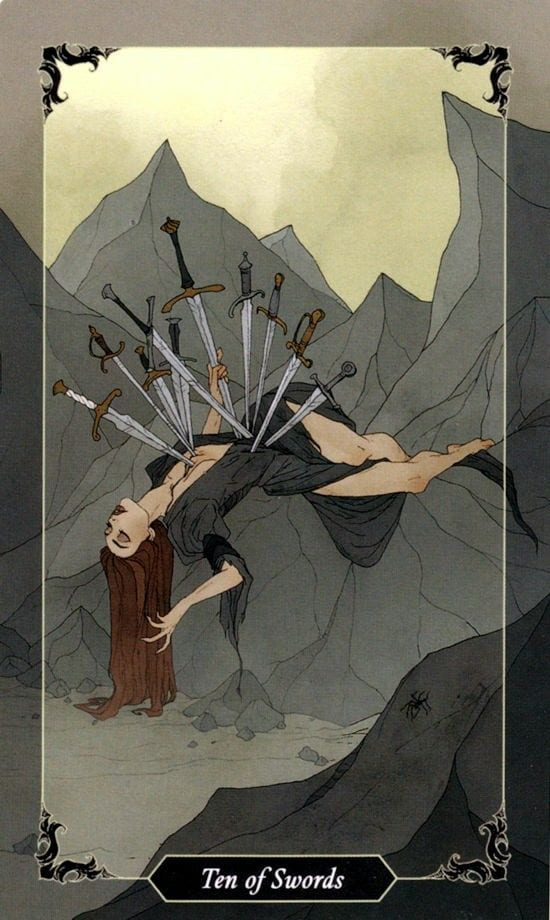
The Ten of Swords signals the end of a cycle, where destructive thoughts and patterns no longer control you. It represents the death of the ego and the dissolution of beliefs that no longer serve you, ushering in new opportunities, a new self-perception, and the readiness to embrace a fresh narrative for oneself. As the dark night of the soul concludes, a new day dawns, symbolizing new beginnings and the potential for conscious expansion.
Page of Swords

The Page of Swords is alert and perceptive, merging past, present, and future into a comprehensive understanding of her surroundings. She represents the youthful search for truth and justice, combining intelligence with curiosity to delve deep into mysteries and puzzles. The card symbolizes a bright, ethical person, ready to assist others, driven by a love for intellectual challenges and problem-solving. In its shadow aspect, it warns against laziness, dishonesty, and the pursuit of power through manipulation.
Knight of Swords

The Knight of Swords signifies readiness for battle, guided by the strength of one's intellect and the rapid energy surrounding them. This card embodies conviction, direct communication—sometimes taken as rudeness, and critical thinking. It also warns against being too impetuous, manipulative, or believing in the exclusivity of one's opinion.
Queen of Swords
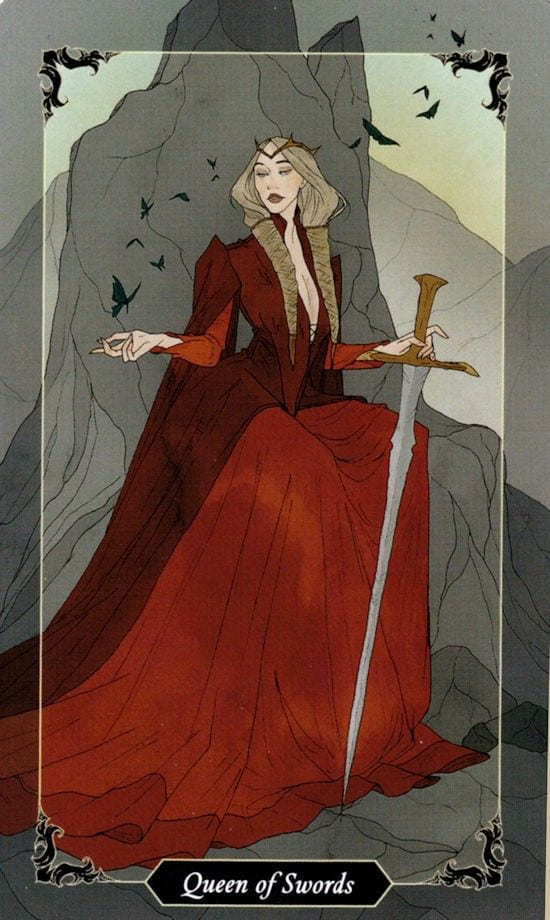
The Queen of Swords signifies mature feminine energy that harnesses the power of thought and words to create reality. She symbolizes the ability to communicate ideas eloquently, embodying quick wit and a sharp mind. Additionally, she signifies reaching the core of any issue with honesty and a straight-forward sense of humor. In contrast, her shadow aspect warns against criticalness and mockery that may isolate and limit opportunities.
King of Swords

The King of Swords represents a wise, mature, and intellectual energy that is adept at bringing thoughts and words to fruition in the real world. He exemplifies the mature masculine energy of Air, symbolizing strength and high standards. His proficiency in languages makes him an excellent negotiator and writer, driven by honesty, creativity, and observational skills. Additionally, this card warns of the shadow aspects like cruelty, intellectual arrogance, and self-serving behavior.
Pentacles
Ace of Pentacles

The Ace of Pentacles symbolizes the unique magic of beginnings, encapsulating the endless possibilities of material and worldly achievements. It represents the seed of potential in the tangible world, encompassing gifts, new friends, or opportunities that might enter one's life. The card also underlines the importance of gratitude towards nature, harmony with one's body, and seeing beyond the immediate to appreciate the wealth of what one already has.
Two of Pentacles

The Two of Pentacles represents choice, duality, and balance. It implies a call to carefully consider wants and options, as achievements and desires materialize naturally with a balanced approach. Flexibility and creativity are essential for stability. Decisions made can lead to fortunate opportunities, encouraging the seizing of chances and embracing evolution. Yet, the card also warns of the inherent dualities within choices, prompting a broader perspective before judgment.
Three of Pentacles

The Three of Pentacles symbolizes creativity and manifestation in the material world, indicating collaboration leading to expansion and growth. It suggests that through cooperation and the exchange of ideas, projects, and endeavors multiply and thrive at a profound level. It emphasizes how unseen creative energies illuminate the world and support all living things, paralleling nature's beauty and the emotional depth it provides.
Four of Pentacles
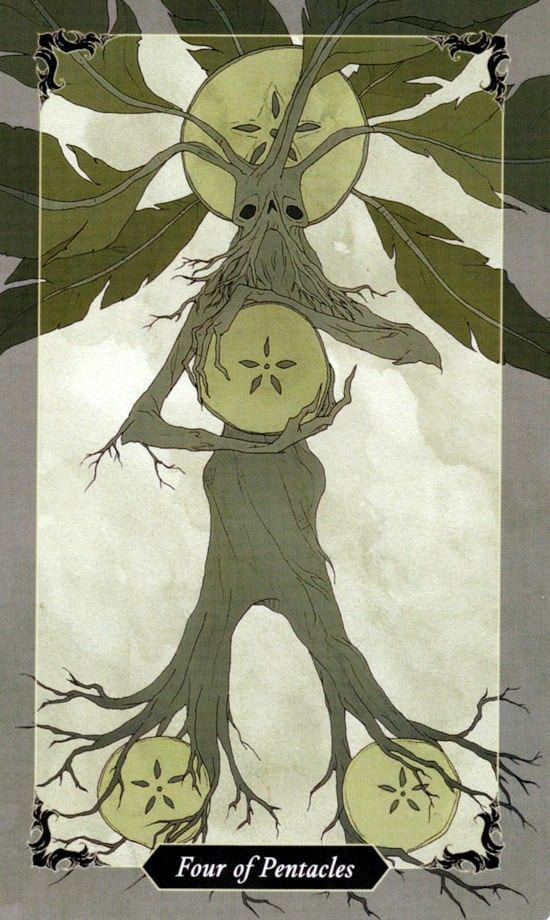
The Four of Pentacles symbolizes the themes of possession, material stability, and cautious financial success. It encourages the foundation of a secure base for future growth while warning against excessive attachment to material possessions and the need for flexibility.
Five of Pentacles

The Five of Pentacles represents a period of hardship, struggle, and feeling left out in the cold. It suggests that support and treasures are closer than one might think, encouraging the need to look beyond immediate suffering to find salvation. The card serves as a reminder of the transformative power of facing challenges together in relationships, whether romantic, familial, or friendly.
Six of Pentacles

The Six of Pentacles is a card about transactions and the balance of power in relationships, symbolized by a deal with the Devil where one twin signs a contract in blood. It questions whether acts of giving or receiving are truly altruistic or self-serving, reminding the viewer to examine their intentions in exchanges of money, energy, and ideas. The card encourages scrutinizing the fine print in agreements and considering the cost of what one receives. It warns against meaningless charity that enhances the giver's ego rather than genuinely helping others.
Seven of Pentacles
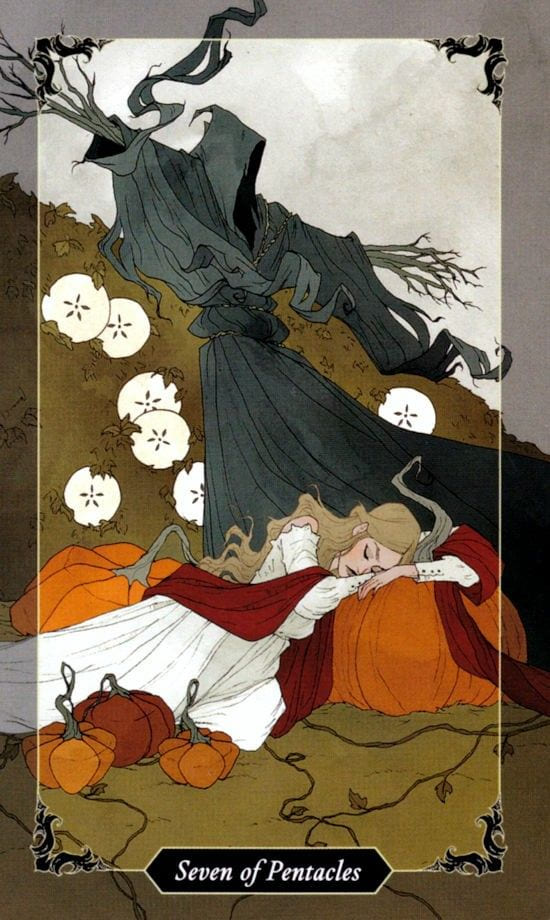
The Seven of Pentacles calls for self-reflection particularly in how one's actions could be repelling opportunities and dealing with fear. It symbolizes great potential but warns against self-sabotage and the misuse of methods. The card suggests protection and safety, assuring that all is unfolding as it should, yet it advises a pause for reassessment and mental clarity. It also touches upon the theme of using sleep or health issues as an escape from reality, urging a wake-up call.
Eight of Pentacles

The Eight of Pentacles symbolizes a deep connection to one's craft or work, showcasing diligence, pride, and the joys of hard work done with integrity. It reflects the idea that engaging in meaningful work can lead to personal satisfaction and recognition. However, it also advises enjoyment of the process itself and not becoming overly fixated on outcomes, emphasizing the importance of staying present and embracing both the highs and lows of one's endeavors.
Nine of Pentacles
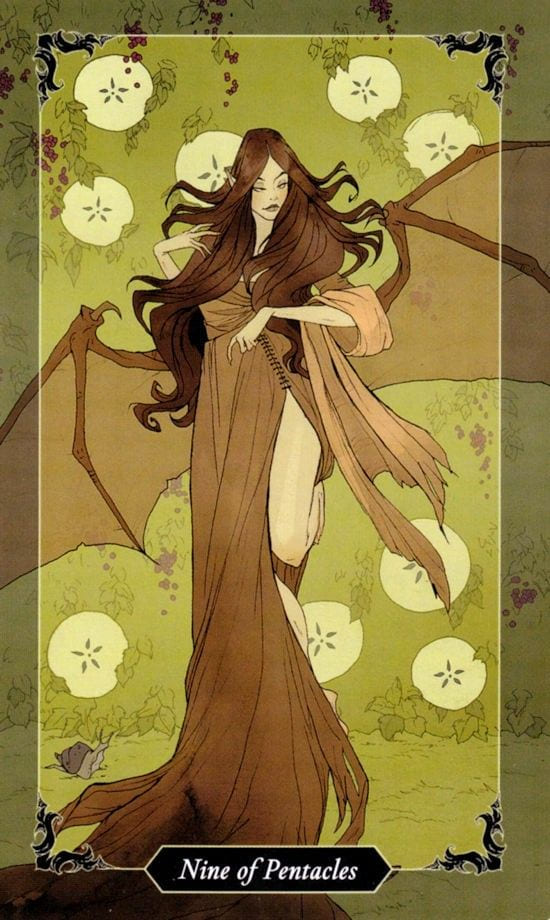
The Nine of Pentacles symbolizes the culmination and manifestation of desires and aspirations. It represents happiness, soulful peace, and the pleasure derived from achieving goals and then sharing them. It emphasizes the importance of solitude, the appreciation of refined things, inherited traits, and talents. It also highlights the value of loving luxury, appreciating quality and others' work, self-care, and the inheritance that connects us with our ancestors. The card carries a reminder to protect personal energy and to keep a personal sanctuary amidst the temptation to make private life public.
Ten of Pentacles

The Ten of Pentacles symbolizes the completion of a cycle, leading to the unveiling of new opportunities and realms beyond the material. It encourages embracing the interconnectedness of all things, recognizing the accumulation of achievements, and welcoming unexpected new beginnings. It also warns against letting fear and feelings of unworthiness prevent you from embracing new opportunities.
Page of Pentacles
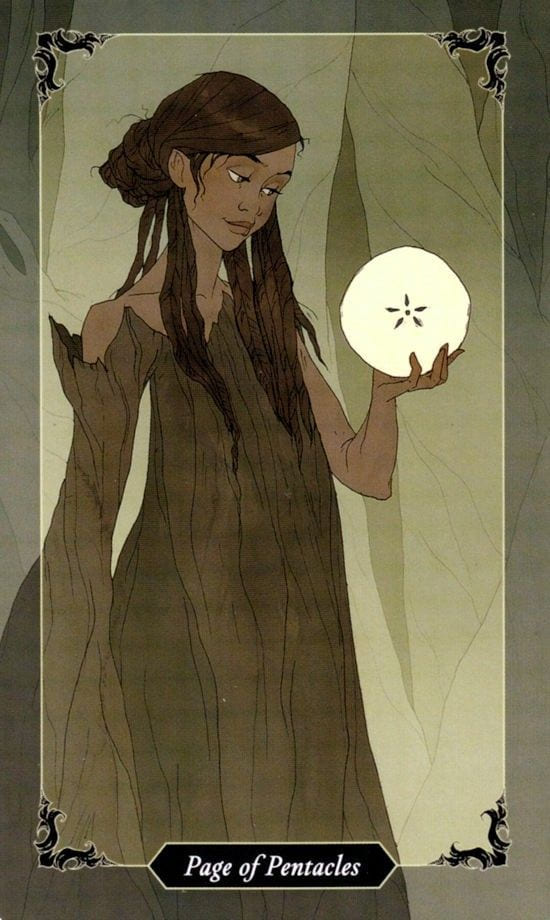
The Page of Pentacles symbolizes the eternal student, deeply connected with the energy of growth and the material world, holding a pentacle and admiring the magic within. This card represents absorbing and applying knowledge to create new worlds, embodying perfection and comfort within oneself. It advises believing in what you have and in what you see, indicating that everything necessary is already at hand. The shadow side encourages awareness and observation to discover the magic that surrounds, urging a deeper look beyond the surface to understand life's structures and patterns.
Knight of Pentacles

The Knight of Pentacles symbolizes a slow and steady, yet vibrant earth energy. It emphasizes the importance of taking time for decision-making and meticulous planning. Advocating for a cautious and deliberate approach, it suggests that patience and diligence are the keys to success. Despite its methodical nature, this card also hints at the importance of messages and reliable outcomes in the real world.
Queen of Pentacles

The Queen of Pentacles encapsulates the joy of engaging with the material world, marked by sensual pleasures, self-care, and providing for others. It emphasizes the importance of touch, taste, and aesthetics, portraying a figure deeply connected with her surroundings and adept at creating comfort and satisfaction. Yet, it also warns against the darker side of materialism, where deceit and wastefulness can lead to an unfulfillable void.
King of Pentacles
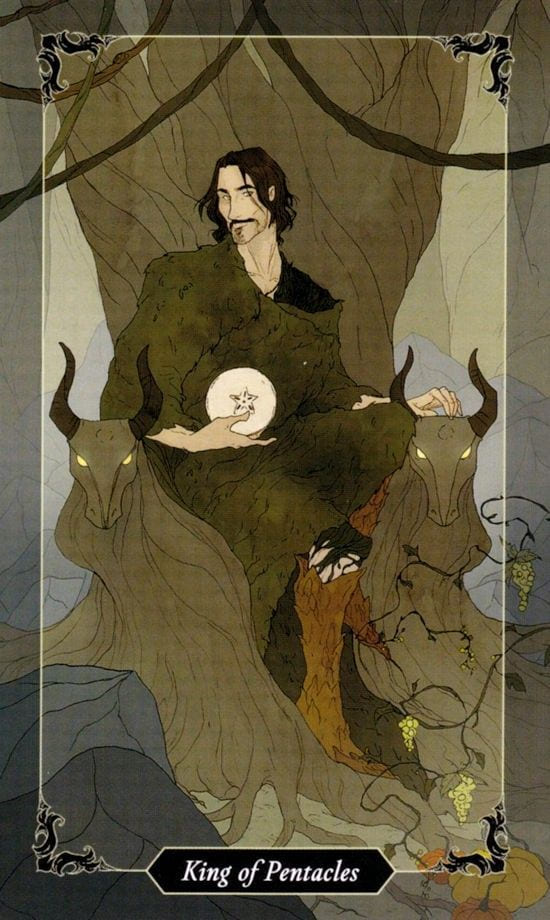
The King of Pentacles embodies masculine, mature energy of growth and expansion. This card suggests a period to invest and create financial plans, symbolizing reliability, business and financial acumen, and the ability to multiply wealth. It also touches on responsibility, philanthropy, and the importance of giving and sharing. On the flip side, it warns against using power to diminish others, the absence of empathy, and urges learning generosity and gratitude.
How to Read the Dark Wood Tarot
This deck rewards readers who are willing to sit with the shadows rather than rush past them. Sasha Graham and Abigail Larson created something that works best when you approach it with curiosity rather than fear.
Let the darkness teach you. The gothic imagery is not decorative — it is functional. Shadows, fog, thorns, and half-hidden figures all carry meaning. When a card feels unsettling, lean into that discomfort rather than away from it. The Dark Wood Tarot’s greatest insights often come from the cards that make you pause.
Read the body language of the figures. Larson’s characters communicate through posture, gaze, and gesture as much as through traditional symbolism. Notice where a figure is looking, whether their hands are open or closed, whether they face toward the light or away from it. These details often reveal the nuance between a card’s upright and shadow expression.
Pay attention to the forest itself. Trees, paths, water, and sky are not just background — they are active elements of each card’s story. A clear path suggests direction; a tangled wood suggests uncertainty. Moonlight illuminates differently than sunlight. The landscape is part of the reading, not merely scenery.
Trust your visceral response. This deck was designed to activate your intuition through beauty and atmosphere. If a card stirs something in you before your mind can articulate why, that response is data. Honor it. The Dark Wood Tarot speaks to the part of you that knows things before you can explain them.
Explore the Dark Wood Tarot in Elvi
Want to experience the Dark Wood Tarot in a live reading? Elvi, our AI tarot companion, offers AI-powered readings with this hauntingly beautiful deck and many others. Pull cards, explore spreads, and let the gothic wisdom of the Dark Wood Tarot guide your journey — anytime, anywhere, right from your phone.
Frequently Asked Questions
How many cards are in the Dark Wood Tarot?
The Dark Wood Tarot contains 78 cards: 22 Major Arcana and 56 Minor Arcana across four suits — Wands, Cups, Swords, and Pentacles. Each card is reimagined through a dark fairy-tale lens.
Who created the Dark Wood Tarot?
The deck was created by tarot author Sasha Graham with hauntingly beautiful illustrations by Abigail Larson. Published by Llewellyn Publications.
What makes the Dark Wood Tarot unique?
Its gothic fairy-tale aesthetic sets it apart — dark forests, enchanted creatures, and figures from folklore populate every card. The art by Abigail Larson blends Victorian gothic style with modern fantasy illustration.
Is the Dark Wood Tarot good for beginners?
Yes, if you're drawn to darker aesthetics. The deck follows standard Rider-Waite-Smith structure, so any traditional guidebook applies. The imagery is evocative rather than obscure, making intuitive reading natural.