Dreaming Way Tarot: All 78 Card Meanings Explained
Some tarot decks tell you what to think. The Dreaming Way Tarot asks you to feel it instead.
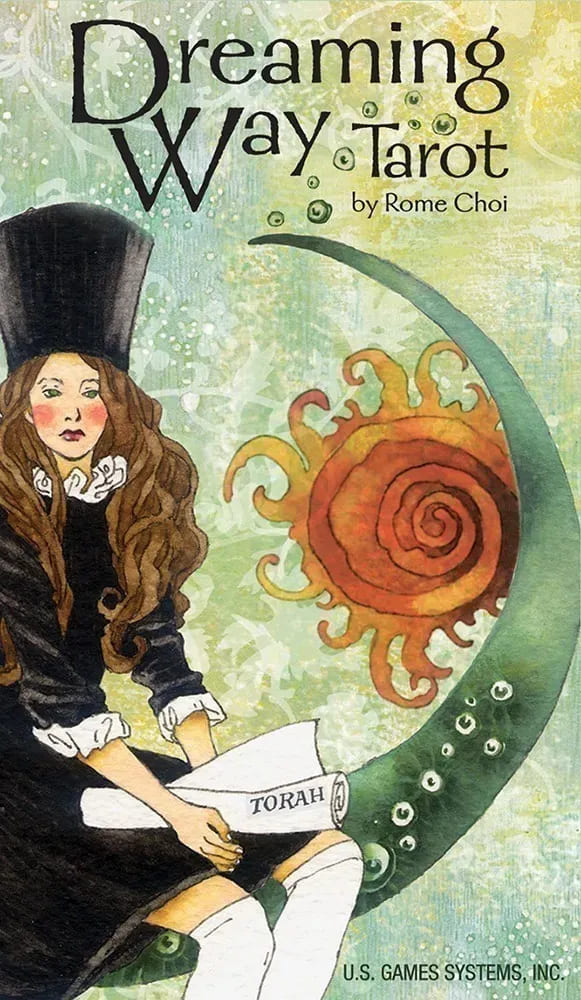
Created by Rome Choi with illustrations by Korean artist Kwon Shina and published by U.S. Games Systems, this 78-card deck strips away the heavy symbolism and cluttered backgrounds that define so many traditional decks. What remains is startlingly beautiful: slender, expressive figures rendered in a clean, fashion-illustration style, standing against pale or empty backdrops that let every gesture, glance, and posture speak for itself. The characters look like they wandered out of a dream — poised between worlds, caught in a single defining moment.
This minimalist approach is not a lack of depth. It is a deliberate redirection of your attention. Without busy landscapes or layered occult symbols competing for your eye, you are drawn immediately into the emotional core of each card. A tilted head, a hand reaching outward, a figure turning away — these small physical truths carry enormous meaning in the Dreaming Way Tarot. The deck teaches you to read people, not just pictures, and that skill translates into every reading you will ever do.
How the Deck Is Organized
The Dreaming Way Tarot follows the classic 78-card tarot structure:
- Major Arcana (0–XXI): The 22 cards of life’s defining moments — archetypal forces, soul lessons, and the turning points that shape who you become. When a Major Arcana card appears, something fundamental is at work.
- Wands: The suit of fire. Passion, creativity, ambition, and the restless energy that drives action.
- Cups: The suit of water. Emotions, love, intuition, and the currents that flow beneath the surface.
- Swords: The suit of air. Thought, conflict, truth, and the clarity that comes from honest examination.
- Pentacles: The suit of earth. Material reality, work, health, and the patient building of something lasting.
Each suit runs from Ace through Ten, followed by four court cards — Page, Knight, Queen, and King — for 14 cards per suit and 56 Minor Arcana total.
Major Arcana
The Fool

The Fool signifies a new beginning and the courage to strike out on a path of one's own making, driven by curiosity and a desire for growth. It evokes the image of a newborn stepping into life to learn and experience, symbolizing recaptured innocence and a willingness to do the unexpected. Upright, it highlights freedom, exploratory energy, and potential economic or personal instability associated with early steps or freelance ventures. Reversed, it warns of naivety, premature actions, poor attention, and financial or relationship instability.
The Magician
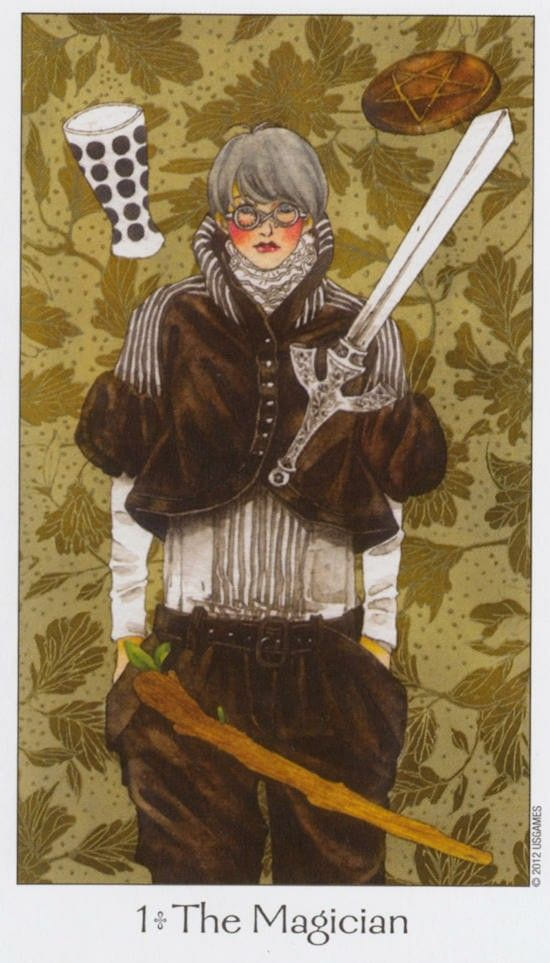
The Magician symbolizes infinite wisdom and the interplay of complementary qualities, indicated by the Mobius strip and the two persons representing wisdom and strength and love. It depicts a capable, ambitious individual who performs tasks efficiently and strives to succeed in all endeavors, often referring to someone between 20 and 40 years old. Upright, the card highlights creativity, confidence, dexterity, attractiveness, and roles such as engineer, programmer, or strategic planner. Reversed, it warns of over-confidence, unintended cheating, the admonition that 'the biter is bitten,' and potential business failure.
The High Priestess

The High Priestess typically represents a well-groomed, young woman (20–40 years old) who appears prim and aloof but has a warm heart. She takes good care of herself and embodies elegance, organization, patience, education, generosity, cultivation, and often the role of a teacher. When single she is popular among men, but after marriage she tends to become reserved and passive. In reverse, these qualities can tilt toward self-indulgence, self-absorption, a passionate sexual life, or suspicion of her partner.
The Empress

The Empress represents the life-giving earth mother who nurtures, assists, and takes care of others rather than leading them. She embodies abundance, luxury, and the bounty of nature, encouraging comfort and prosperity. The card often relates to pregnancy and birth and signals caring, warmth, and harmony with nature. Reversed, the Empress can point to unsuccessful pregnancy, frugality, irresponsibility, stickling behavior, or meddlesomeness.
The Emperor
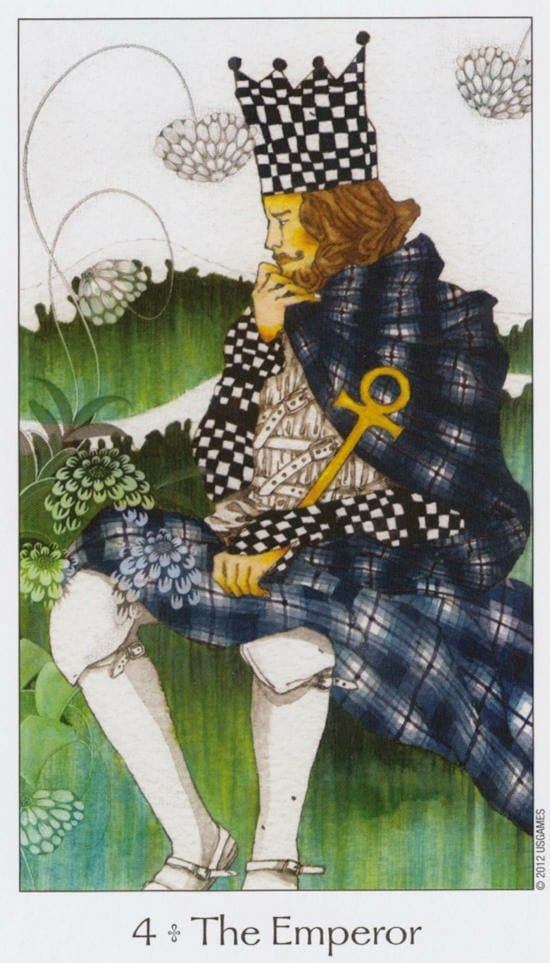
The Emperor represents the father figure whose duty is to be responsible for the welfare and protection of his family. He values and protects what he has rather than seeking new things, takes charge, and often acts in a solitary manner with confidence in his own authority and a distrust of others. Typically the card points to a mature man, usually someone 40 to 60 years old, and symbolizes leadership, organization, conservatism, and a desire for power. Reversed, the card indicates a lack of responsibility or capability, increased anger or violence, dysfunction, or retirement.
The Hierophant

The Hierophant represents established tradition, institutions, and the transfer of wisdom from elders or religious leaders to initiates. It emphasizes ritual, teaching, and initiation into structured groups or belief systems. Upright, the card points to lessons, customs, traditional relationships, and the presence of wisdom even without overt power. Reversed, it warns of excessive sacrifice to tradition, empty rituals, and the potential for bribery or corruption.
The Lovers

The Lovers card represents real, nonpossessive love that does not try to possess or control the other person. It can signify romantic love or the attractive force that brings like-minded people together, with an angel blessing and strengthening the couple's bond. Upright, it points to falling in love, finding common ground, encountering good opportunities, and forming ties. Reversed, it cautions against mistaking attraction for love and warns of obsession, manipulation, deceit, or delusion.
The Chariot

The Chariot speaks to the need for aligned forces and steady control to reach a desired destination; when opposing elements move together, progress is possible. It emphasizes continual self-monitoring and course correction to keep actions matched to goals. The card highlights determination, disciplined channeling of energy, and the drive needed for achievement. Reversed, it warns of misdirected effort, distractions from conflict, and failure to achieve results when energies are not synchronized.
Strength

Strength emphasizes inner courage and gentle power rather than physical might. The card shows a woman calming a lion through compassion, patience, and unconditional love, indicating that acknowledging reality and accepting others brings true influence. Upright, it points to acceptance, caregiving, persistence, and surrender; reversed, it suggests suppression, inability to acknowledge, weariness, and clinging to the status quo. Overall, Strength advises using kindness and patience to transform difficult situations and find resilience.
The Hermit

The Hermit represents a quest for personal truth and the need for solitary withdrawal to pursue inner reflection. He is lost until he realizes he already holds the light of truth in his hands, indicating self-reliance and inner guidance. This inward focus can lead the seeker in a new direction and emphasizes expertise, seclusion, and mentoring when upright. Reversed, the card warns of loneliness, an inability to ask for help, a narrow or distracted outlook, and overreliance on others.
Wheel of Fortune

The Wheel of Fortune emphasizes that life is not predestined and that your actions today influence your future. It advises making changes if you are dissatisfied and encourages expanding your outlook by seeing larger cycles of events. Increased awareness and a shift in attitude can alter outcomes and open new directions. Upright, the card signals vision, unexpected opportunities, and positive change; reversed, it warns of stagnation, impasse, and irresponsibility.
Justice

Justice represents impartial balance and ethical decision-making, symbolized by the scales and the double-edged sword. It calls for careful weighing of facts before taking decisive action and applying consistent standards to oneself and others. Upright, it emphasizes accountability, fairness, and the resolution of matters based on truth. Reversed, it warns of ignoring facts, indecision, or a lapse in integrity that undermines just outcomes.
The Hanged Man
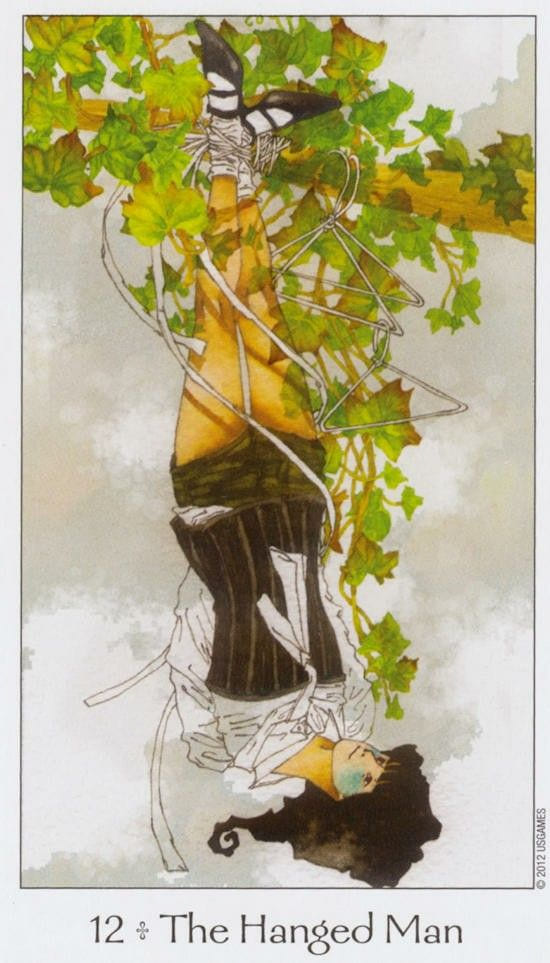
The Hanged Man emphasizes deliberate suspension and the value of pausing to gain clarity. Its inversion of perspective suggests that new insights come from seeing the world differently than others do. The card highlights the importance of thoughtful reflection to extract meaning from observations while halted. Upright it points to contemplation, considered responses, and difficult decisions seen from opposing viewpoints; reversed it warns of hasty choices, defiance, and a refusal to relinquish control.
Death
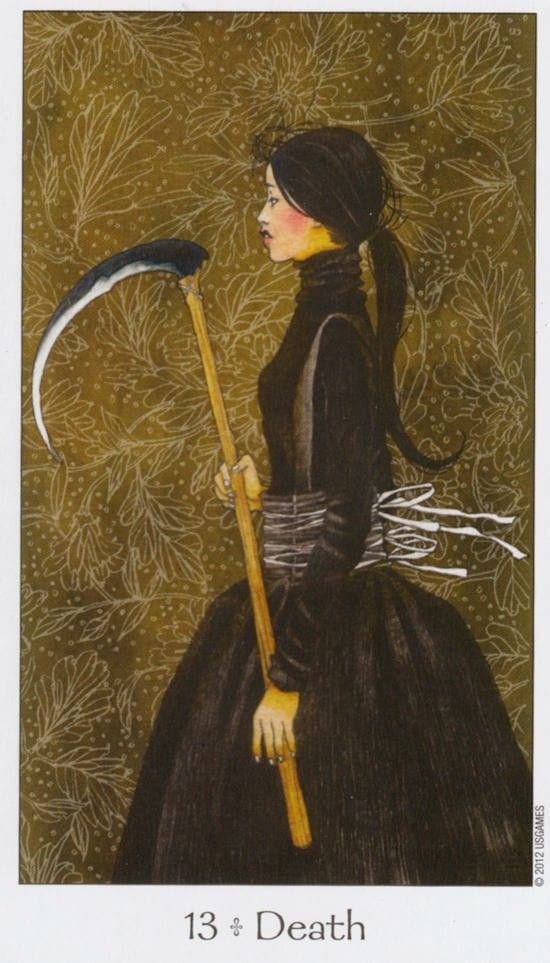
Death signifies finalization and the end of a phase, often brought about by external forces rather than personal choice. It emphasizes transition and the necessity of letting go, even when you are not ready. Upright, it calls for acceptance of change, concluding chapters, and releasing old attitudes. Reversed, it warns of resistance, continuing suffering, and clinging to the past; the card highlights transformation rather than literal death.
Temperance
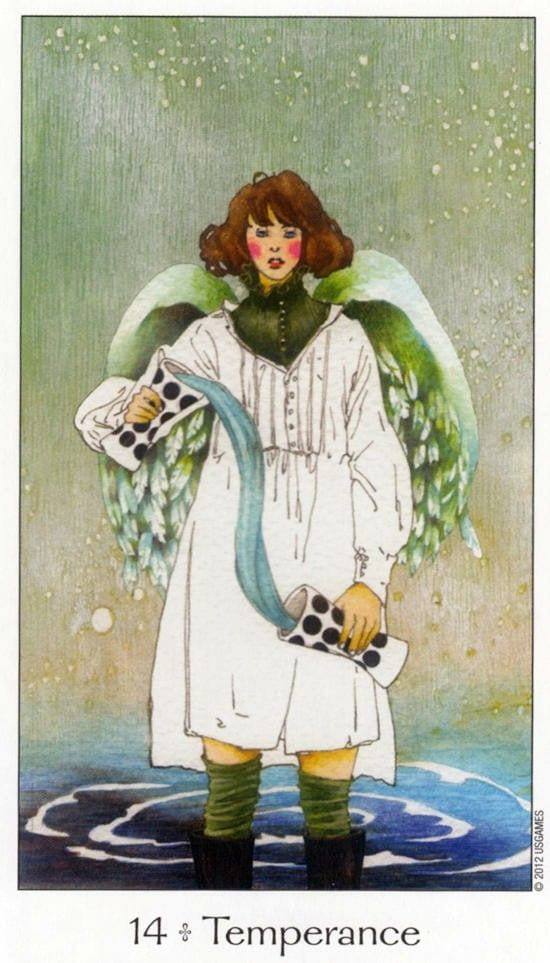
Temperance signals that desire must be tempered with balance and moderation to achieve harmony. It emphasizes compromise and self-restraint as the path to peace of mind and integration. In readings it advises finding the middle ground and making beneficial modifications rather than indulging impulses. Reversed, the card warns of agitation, excess, conflict, separation, and self-indulgence when moderation is abandoned.
The Devil

The Devil represents mental agony rooted in obsession and emotional entanglement, urging release from unhealthy dependence on others. It warns that a mindless pursuit of power and pleasure leads one down a dark path. Liberation comes by facing the unknown, which can bring you back to the light. In the upright position it signals greed, obsession, sexual excess, and overindulgence, while reversed it suggests increasing obsession, addiction, and negative thinking.
The Tower
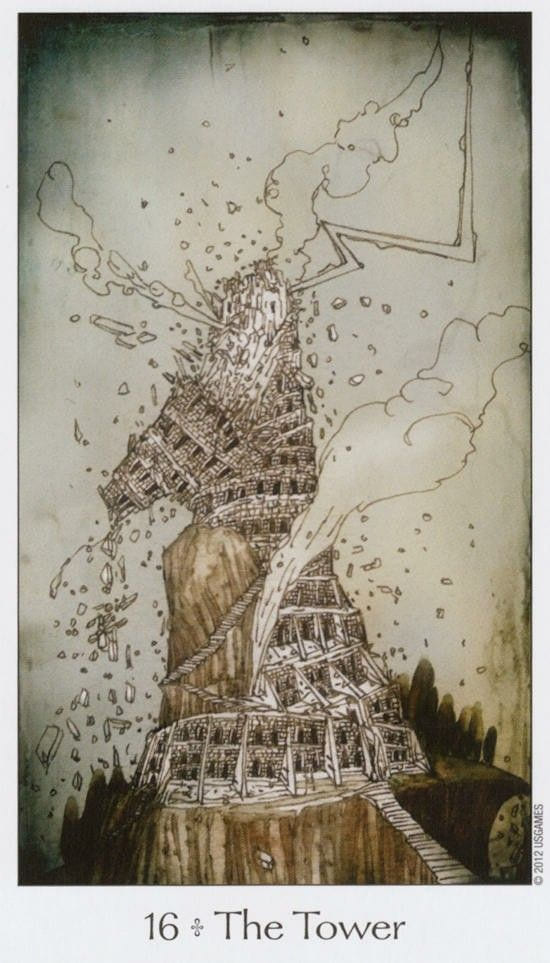
The Tower indicates sudden, often traumatic change that disrupts the status quo and can feel like disaster. It suggests that this upheaval may have arisen from prior actions or inactions and often arrives before one is prepared. Despite the shock, the card emphasizes that you retain agency in how you respond and can make necessary changes moving forward. When reversed, the Tower points to changes you can cope with or that the worst outcomes have been avoided.
The Star

The Star, represented by the Polar Star, symbolizes guidance and the sense that you are where you need to be with your goals within reach. It promises light at the end of the tunnel and the release of past grief and despair, bringing clarity and renewed direction. Upright, it denotes hope, inspiration, upliftment, and finding the way. Reversed, it signals a vague sense of hope, pessimism, blockage, and chaos that can obscure your path.
The Moon

The Moon card signifies uncertainty, illusion, and the feeling of being lost beneath obscuring influences. It warns that what seems factual may be misleading and that fears can hide unexpected benefits. In times of confusion it advises patience and waiting for clarity rather than forcing decisions. Reversed, the card indicates that mysteries begin to resolve, bringing gradual revelation, insight, and practical solutions.
The Sun

The Sun card signifies clarity and illumination, bringing what was hidden into the open. It indicates confidence, vitality, and the readiness to fully realize one’s potential while earning others' trust. The card suggests an ability to help others grounded in clear self-knowledge and understanding of limits. Reversed, it warns of over-confidence, self-deception, megalomania, and unreliability that can undermine trust and progress.
Judgement

Judgment speaks to the finalization of past matters and the necessity to accept results you cannot change. It calls for releasing condemnation and guilt so you can move forward, emphasizing forgiveness, reconciliation, and redemption. The card offers a chance for a new beginning once past mistakes are acknowledged and put behind you. Upright it denotes conclusions, inevitable results, convictions, and spiritual renewal; reversed it signals indecision, regret, blame, and uncertainty.
The World
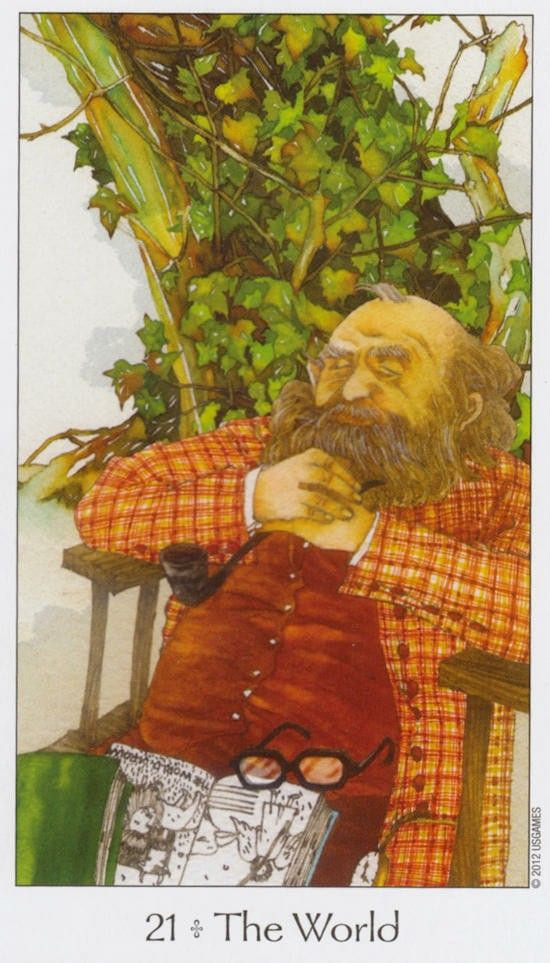
This card signifies that projects or situations have reached completion and that you are experiencing a successful end to a journey. It indicates that elements have come together to create harmony and a deep sense of fulfillment. The World marks the close of one stage and the beginning of another, bringing accomplishment and shared joy. Reversed, it can point to dissatisfaction, regret, isolation, or an unwillingness to accept completion.
Wands
Ace of Wands
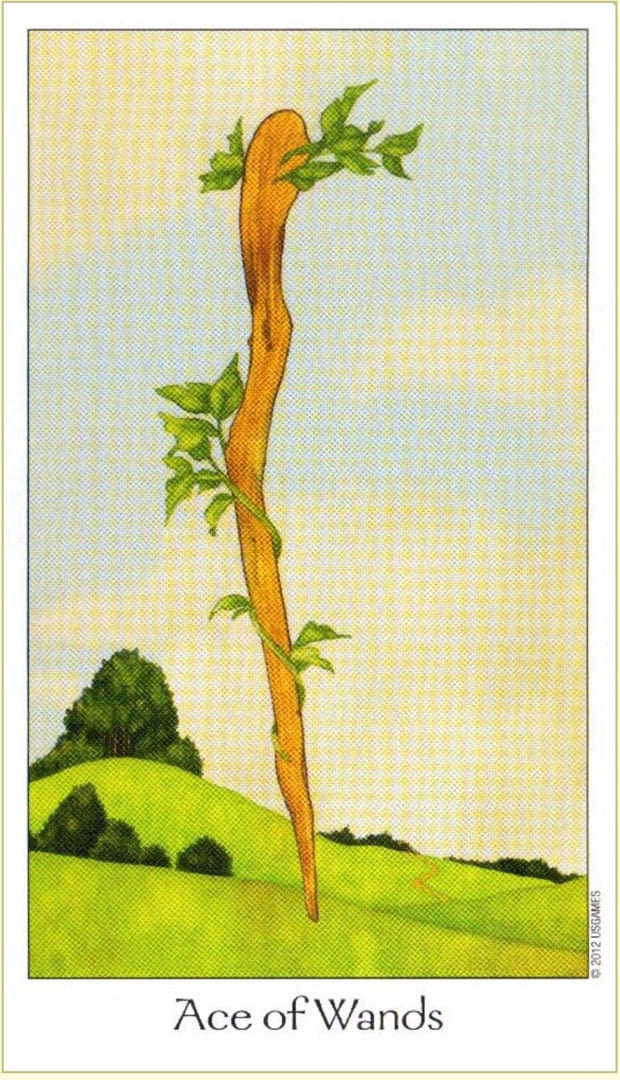
The Ace of Wands heralds a surge of creative and sexual energy, marked by passion, strong desire, and assertive will. Upright, it signifies initiative, the expression of interest, and a hot-tempered drive to act. Reversed, it warns of waning motivation—decreasing will, diminishing desire, untapped talents, and loss of interest. Overall, the card points to a spark of potential that can propel action or, if blocked, leave gifts unrealized.
Two of Wands

The Two of Wands signals ambition and the setting of lofty goals, encouraging a unique or unconventional approach. It emphasizes wielding authority and making decisive moves to seize opportunity. Reversed, the card warns of meaningless goals, insufficient effort, or being stuck in old ways that impede progress. Use the upright energy to pair vision with action, and treat the reversal as a prompt to reevaluate aims and renew commitment.
Three of Wands
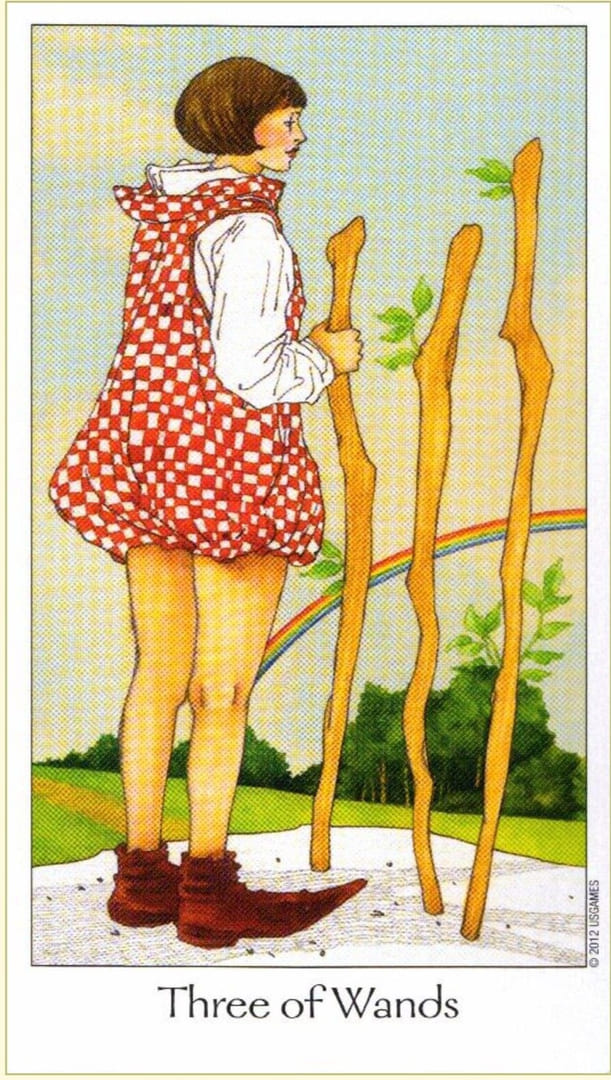
The Three of Wands upright indicates expanding horizons, forward thinking, and a visionary mindset oriented toward future opportunities. It encourages planning, long-range perspective, and confident anticipation of growth. Reversed, the card points to small gains that lack significance and the frustration of efforts spent on tasks that feel meaningless. It invites reassessment of priorities to focus energy on pursuits that deliver deeper purpose.
Four of Wands

The Four of Wands signals celebration, the successful completion of projects, and a period of communal joy and stability. It heralds weddings, reunions, and milestones where achievements are acknowledged and freedom is felt. In readings it encourages enjoying the moment and honoring collective harmony after hard work. Reversed, the card warns of oppressive circumstances, restrictions, or emotional withholding that block celebration and forward movement.
Five of Wands

The Five of Wands represents conflict, competitive energy, and the friction that arises when different ideas meet. Upright, it points to arguments, brainstorming, irritations, and deliberately provoking conflicts as a way of solving a problem. Reversed, it suggests cooperation, turning away or stepping back, putting conflicts behind you, and integration of differing viewpoints. The card highlights that confrontation can be a tool for problem-solving but also signals when reconciliation and cooperation are the wiser path.
Six of Wands

The Six of Wands upright signifies public success achieved with others, team triumphs, and deserved honors and recognition. It highlights the value of collaboration and the celebratory acknowledgment of collective or individual efforts. Reversed, the card warns of rejection, excessive pride, harmful competitiveness, or potential defeat that undermines success. The card advises appreciating shared victories while remaining humble to avoid pride-related setbacks.
Seven of Wands
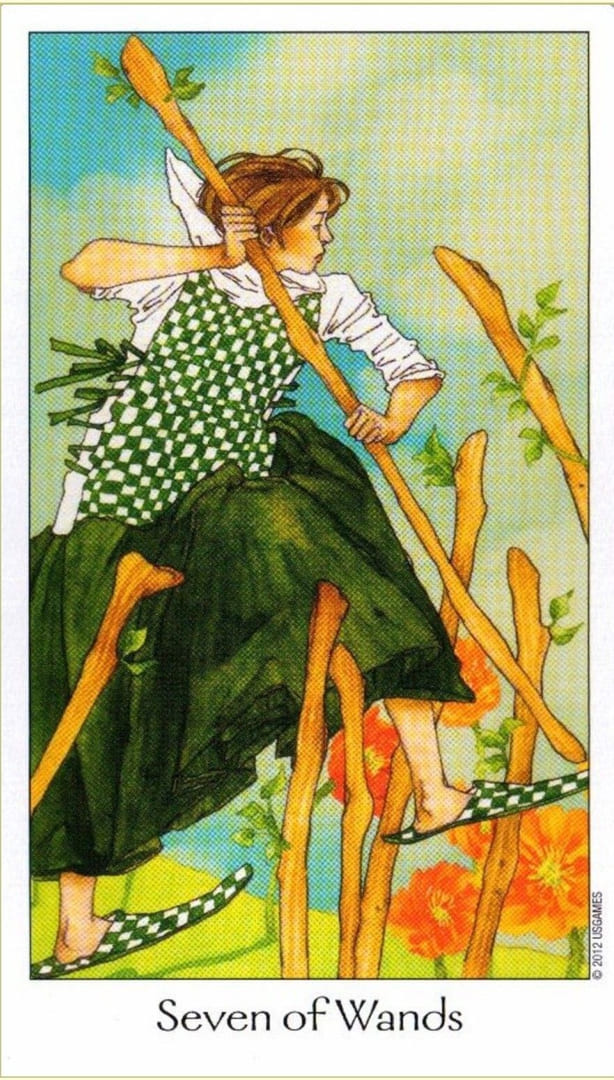
Upright, the Seven of Wands signals self-assertion, taking a stand, resisting others' objections, and taking responsibility for your position. It highlights the need to defend your choices and meet opposition with confidence. Reversed, the card indicates following the majority because it's easier and a tendency toward passivity. It serves as a warning against relinquishing personal agency and urges reclaiming your voice when you have become complacent.
Eight of Wands

The Eight of Wands signifies rapid movement and swift progress, indicating that events are accelerating and things are falling into place. It points to the arrival of important information and the need to put ideas into action. Reversed, the card warns of expecting too much, delays, or holding back, suggesting that timing or self-restraint may be impeding progress. Overall, it advises embracing momentum when present and exercising patience or reassessment when obstacles arise.
Nine of Wands
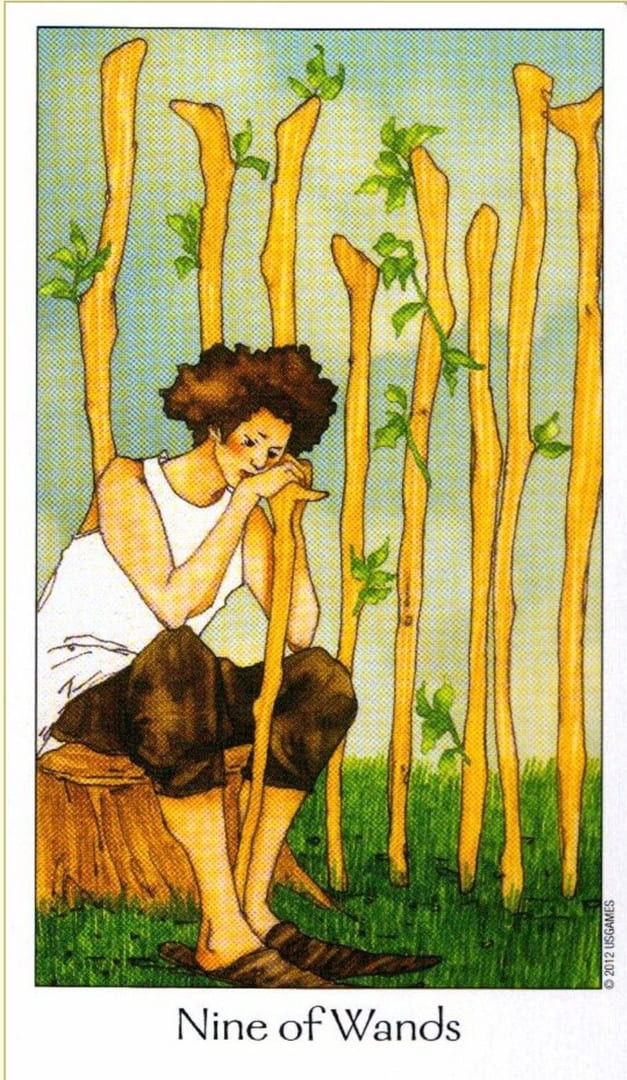
Upright, the Nine of Wands signifies perseverance despite setbacks, enduring through fatigue or injury, and a test of faith that requires determination. It emphasizes continuing on despite weariness and standing guard even when energy is low. Reversed, it suggests doing one's best but experiencing worsening conditions, tendencies to give up, becoming defensive or paranoid, and trusting the wrong people. The card highlights resilience under trial while warning to be cautious about whom you rely on.
Ten of Wands

The Ten of Wands represents the heavy burden of responsibility and overwhelming effort, often manifesting as severe physical fatigue and difficulty managing everything. It points to laborious tasks and the toll they take on one's energy and capacity. The card warns against taking on more than you can handle and suggests the need to prioritize, delegate, or release obligations. In reverse, it indicates relief through unburdening, stepping away, or leaving the job to someone else to regain balance.
Page of Wands
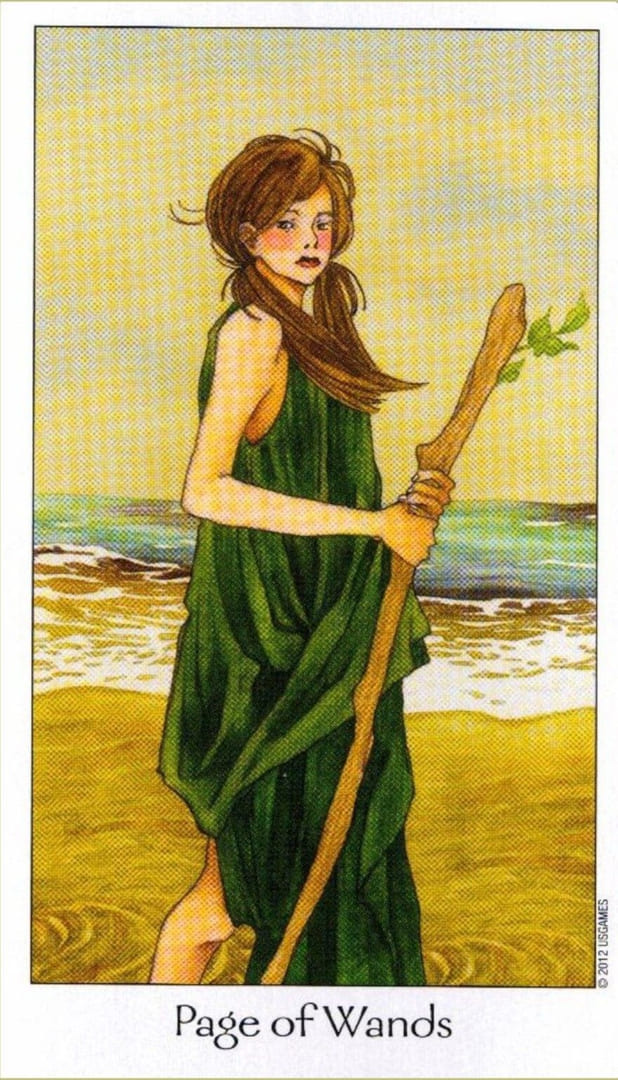
The Page of Wands signals a youthful spark of curiosity and inspiration, urging eager exploration and the willingness to take bold action. It often manifests as a restless energy and a lack of patience to see things through. Reversed, the card indicates being held back by doubts, passing up opportunities, and a waning enthusiasm. Overall, it advises harnessing inspiration into courageous steps while watching for impatience and self-doubt.
Knight of Wands

The Knight of Wands represents confidence, passion, and energetic drive, embodying a capable, charming hard worker. It points to forward momentum and enthusiastic action toward goals. Reversed, the card indicates stalled energy, lack of motivation, and depressive feelings that undermine capability. It can also warn of seeking short-term gratification instead of sustained effort.
Queen of Wands

The Queen of Wands represents a very determined, energetic, and self-sufficient individual who works hard and exudes vitality and control. Upright, she signals leadership, initiative, and confidence with a strong desire to direct her circumstances. Reversed, the qualities tilt toward an overbearing or self-assertive nature that may neglect others and responsibilities, becoming tough but irresponsible. The card calls for balancing personal power and ambition with consideration and accountable action.
King of Wands
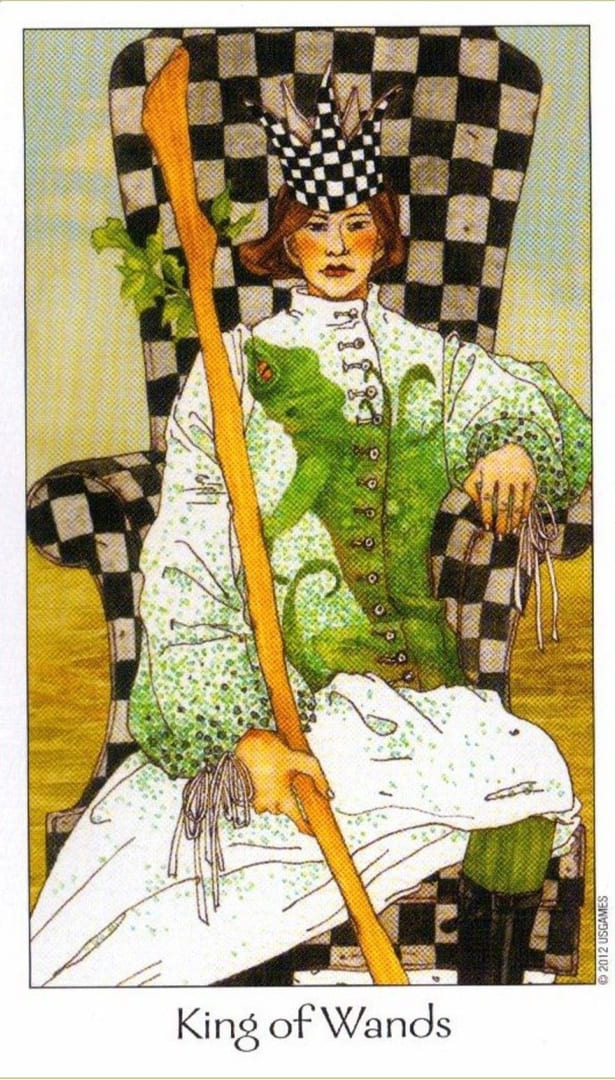
The King of Wands embodies a forceful, responsible leader who strives for perfection and can present as a demanding father figure. He commands attention and often occupies the center of social or professional situations. In readings, this card highlights authority, responsibility, and a perfectionist drive. Reversed, the same qualities can tilt into a tough, confrontational, blunt, and aggressive personality, warning against harsh or domineering behavior.
Cups
Ace of Cups

The Ace of Cups signals new or renewed emotional beginnings, emphasizing warmth, compassion, and deep attraction. Upright, it points to feeling good about somebody and emotional intimacy that fosters connection and empathy. Reversed, it warns of psychic discord, blurred or missing boundaries, and becoming too emotionally involved. It encourages mindful opening of the heart while maintaining healthy limits to sustain emotional well-being.
Two of Cups

The Two of Cups signifies partnership, mutual attraction, and harmonious connection between people. Upright, it represents good relationships, falling in love, shared ideals, being drawn together, strong connections, and open communication. It emphasizes balanced emotional exchange and the potential for a meaningful union or collaboration. Reversed, it cautions about incompatibility, the need for solitude, emotional distance, or separation, urging honesty about needs and boundaries.
Three of Cups

The Three of Cups represents friendship, close relations, and a strong sense of community, highlighting support systems, shared goals, and celebration. Upright, it emphasizes joyful collaboration, mutual support, and communal achievement. Reversed, it warns that personal relations can interfere with work, leading to withdrawal from the group and isolation. The card encourages valuing social bonds while remaining mindful of responsibilities and boundaries to maintain healthy connections.
Four of Cups
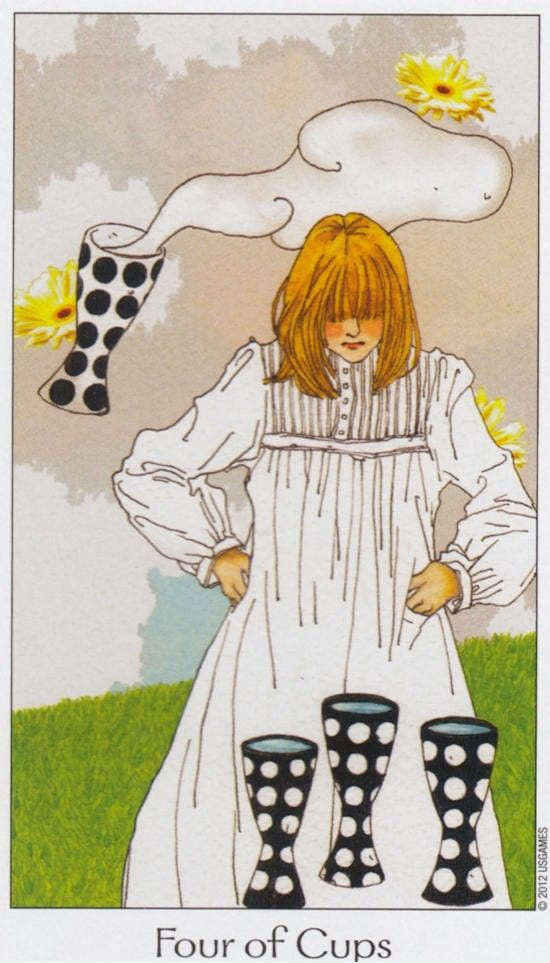
The Four of Cups upright describes a state of self-absorption and emotional disengagement, where one becomes unaware of others and ignores blessings. It often signals intolerance of others' advice and withholding of affection, leading to missed opportunities for connection. Reversed, the card points to a softening of defenses: sharing with others, dropping one's guard, increased involvement, and greater receptivity. Overall it urges awareness of what is being overlooked and invites openness to the offerings and relationships around you.
Five of Cups
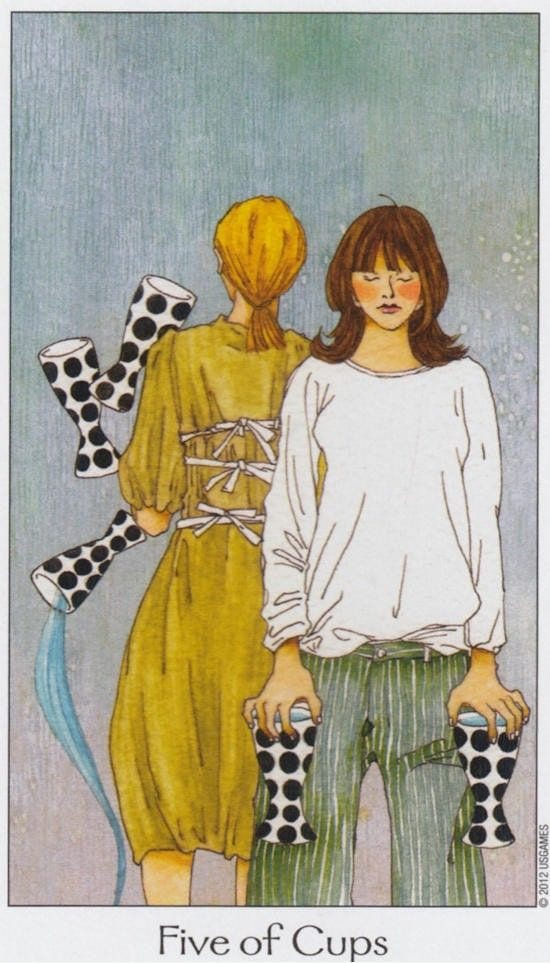
The Five of Cups centers on disappointment and sorrow, highlighting a focus on shortcomings and deep regret. Upright, it signifies defeat and mourning what has been lost. Reversed, it can indicate a shift toward satisfaction but also a tendency to ignore strengths while concentrating on weaknesses. It may also point to a fear of completion that hinders emotional resolution.
Six of Cups
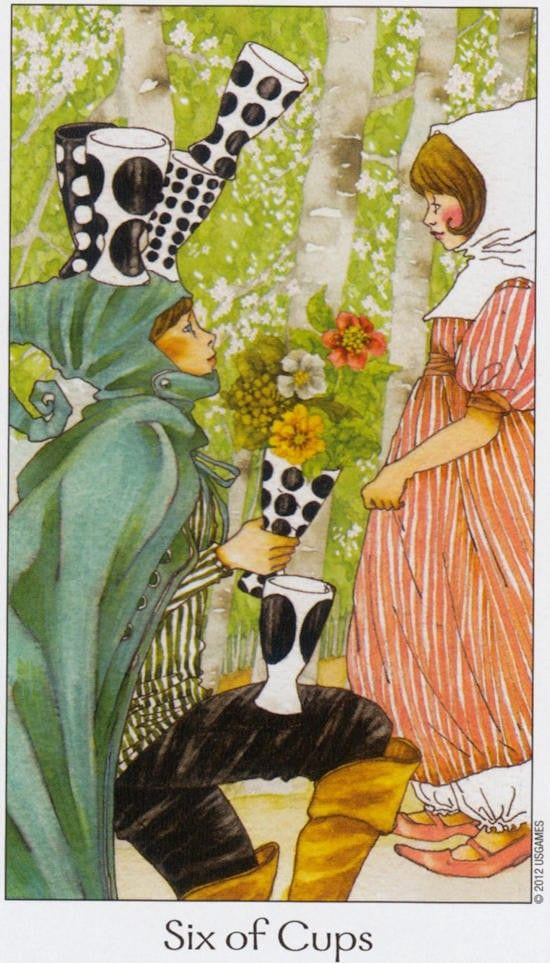
The Six of Cups emphasizes nostalgia and recalling the past, celebrating personal tradition and appreciating simple joys. Upright, it encourages reconnecting with fond memories and the comfort of familiar practices. Reversed, it warns of being stuck in the past, resting on laurels, never advancing, and repeating mistakes. It can signal missing what once was and the onset of cynicism when one refuses to move forward.
Seven of Cups
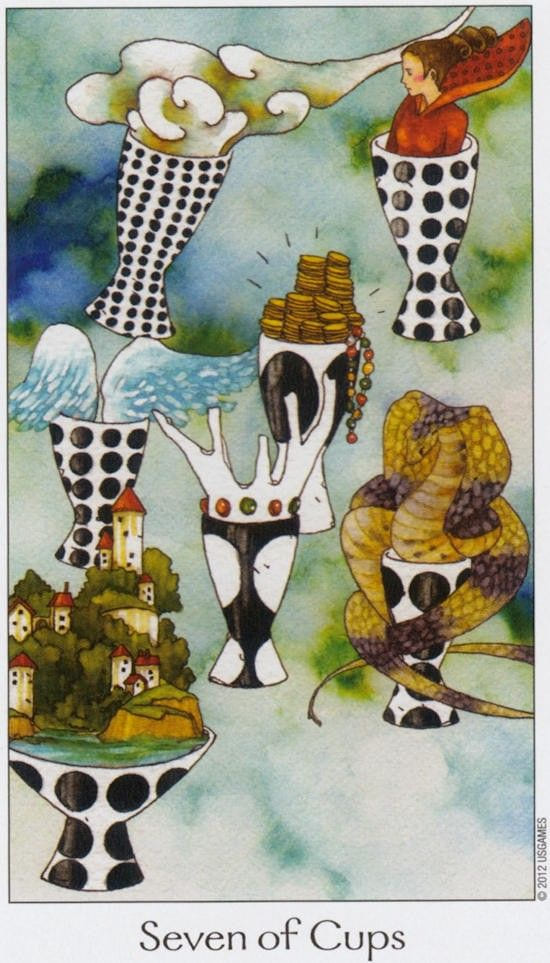
The Seven of Cups warns of being caught in illusion and overwhelmed by too many options, which can lead to indulgence and disorganization. Upright, it highlights fanciful thinking, indecision, and the seductive pull of unrealistic choices. Reversed, it marks a shift toward recognizing which beliefs are impractical and coming to terms with practical issues. The card advises restraint and discipline, urging clarity and concrete decision-making to move from fantasy into achievable reality.
Eight of Cups

Eight of Cups signals the need to move on and let go of a situation that no longer serves you. Upright, it points to dissatisfaction, an overdue change, and the start of a journey or realization. Reversed, it warns that things may be headed in an undesirable direction, leaving you ill at ease, caught between difficult choices, or clinging in denial. The card emphasizes honest appraisal and the possibility of leaving what is hopeless while acknowledging the discomfort of transitional periods.
Nine of Cups
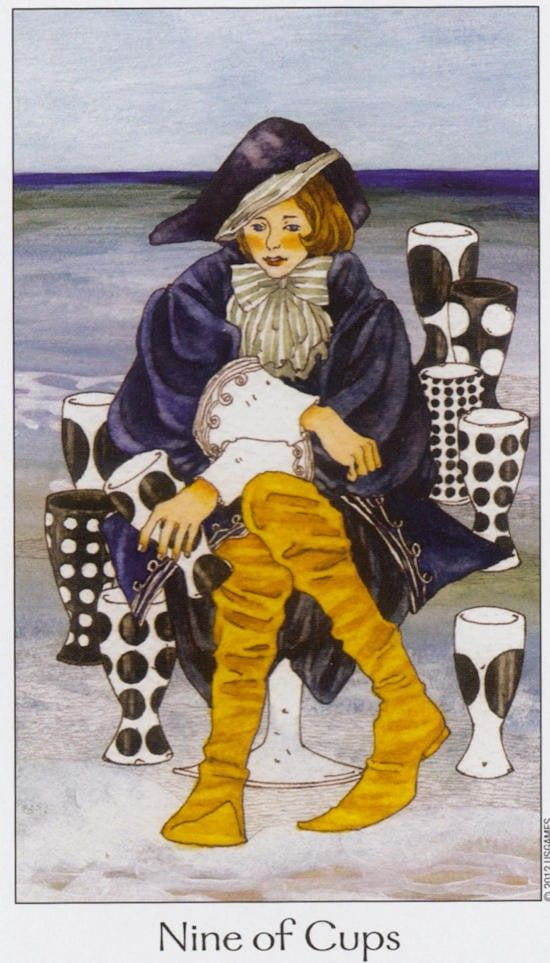
The Nine of Cups celebrates satisfaction and the fulfillment of wishes, highlighting pride in achievements and sensual enjoyment. It speaks to savoring the present and taking pleasure in what has been attained, sometimes with a note of smugness. Reversed, it warns of unreliable help and the consequences of over-indulgence or arrogance, indicating that excess can lead to regret. The card thus encourages gratitude and moderation while recognizing the joy of realized desires.
Ten of Cups
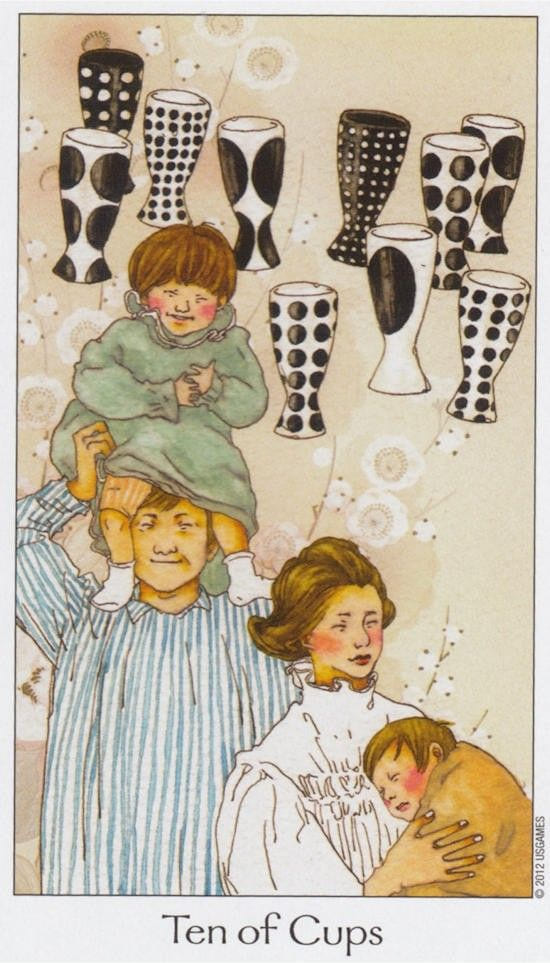
The Ten of Cups represents domestic happiness, emotional fulfillment, and harmonious family relationships. Upright, it signals peace at home, strong bonds, forgiveness, and enduring joy shared with loved ones. Reversed, it warns of emotional enmeshment, manipulation within close relationships, upheaval, and feeling overwhelmed by life. The card encourages nurturing connections and resolving conflicts to restore serenity, or, when reversed, the need to set boundaries and address unhealthy dynamics.
Page of Cups
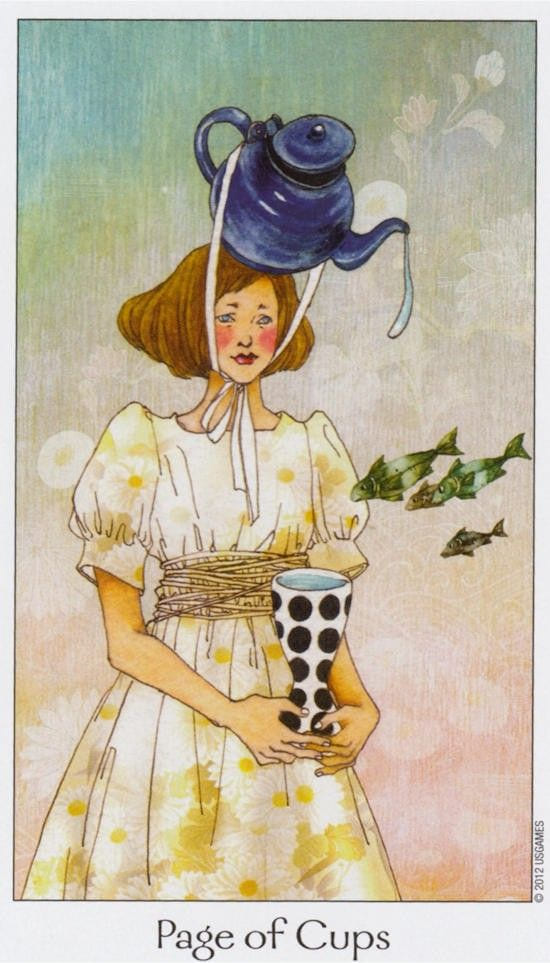
The Page of Cups represents emotional openness, gentle sentimentality, and the arrival of opportunities for love and intimacy. It encourages following intuition and allowing the heart to guide new emotional experiences. Reversed, the card cautions against being overly passive, too yielding, or excessively attached, which can undermine self-respect. Overall, it advises balancing receptivity with healthy boundaries so that feelings can be expressed without losing personal strength.
Knight of Cups

The Knight of Cups embodies a romantic, sensitive, and idealistic temperament who values friendships and harmonious relationships. Upright, this energy is affectionate, gentle, and prone to daydreaming, often avoiding conflict and idealizing love. When reversed, the same qualities can manifest as gullibility, manipulation, melodrama, moodiness, and poor self-control. The card suggests balancing emotional sensitivity with discernment to avoid unrealistic expectations and emotional volatility.
Queen of Cups

The Queen of Cups represents deep emotional empathy, nurturing care, and intuitive sensitivity, often embodying a tenderhearted maternal figure. Upright, she is inclusive, compassionate, psychic, and gently supportive, offering kindness toward all beings. Reversed, her qualities can turn problematic—becoming meddling, overbearing, manipulative, demanding, or overly sensitive. The card suggests honoring compassion and intuition while remaining mindful of boundaries so care does not become control.
King of Cups
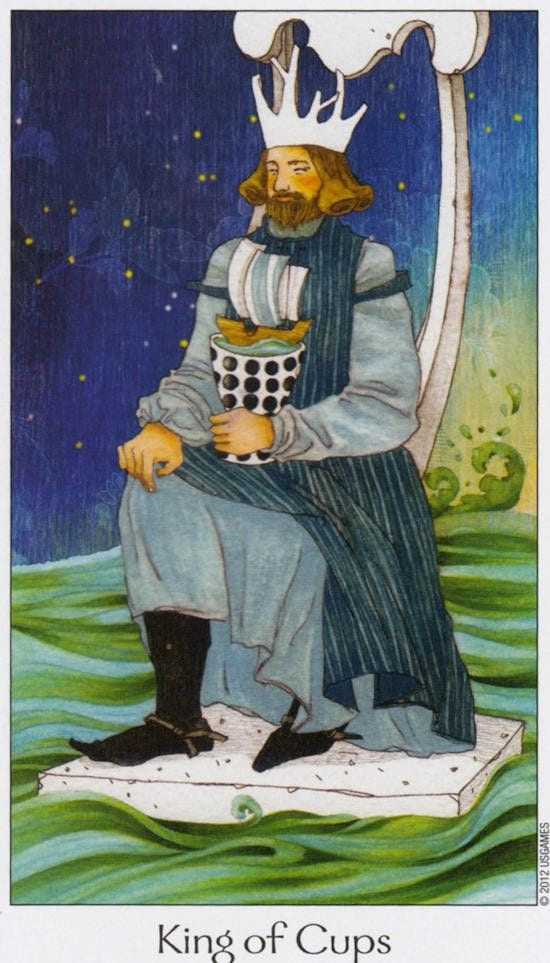
The King of Cups embodies a compassionate, emotionally mature figure—warm, diplomatic, and engaged as a supportive father or mentor. Upright, he represents understanding, tolerance, and a stable, involved presence serving as a good role model. Reversed, his qualities are distorted into indecision, aloofness, and poor judgment, or into extremes of being too giving or overly controlling. The card urges balanced emotional leadership and mindful boundaries.
Swords
Ace of Swords
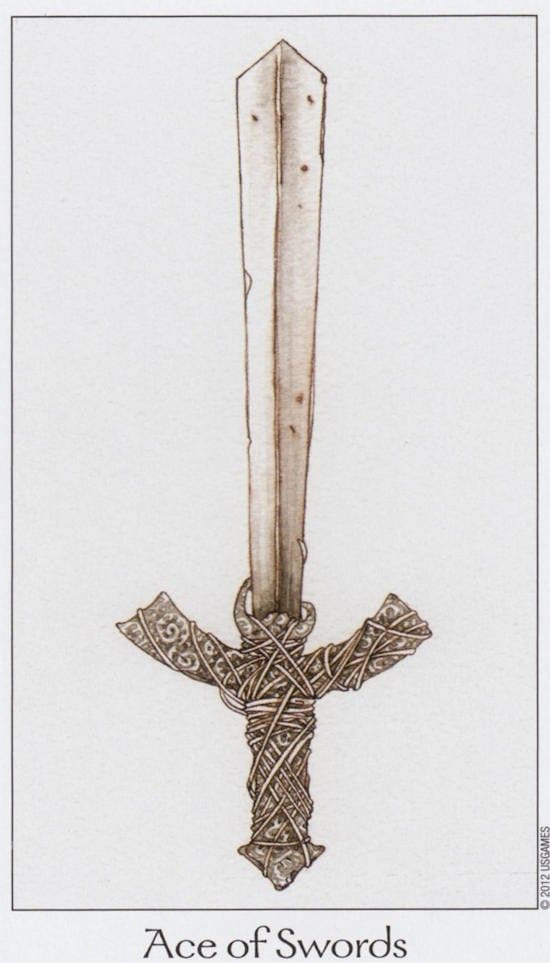
The Ace of Swords signals clarity of mind, sound judgment, and the capacity to face challenges with rational choice. Upright, it highlights good judgment, clear understanding, and decisive thinking. Reversed, it warns of errors in judgment, hasty decisions, and mental confusion. The card advises applying careful reasoning and restraint to avoid mistakes and restore clarity.
Two of Swords

The Two of Swords represents being at a crossroads and making a difficult choice. It often involves avoidance — evading responsibility and ignoring warning signs rather than confronting the matter. In reverse the energy shifts toward reconciliation or the need to confront unpleasant facts. It can also manifest as jumping to conclusions.
Three of Swords

The Three of Swords signals emotional pain, betrayal, and distress, often brought by harsh news or rejection. Upright, it points to heartache, alienation, and anxieties such as fear of germs that exacerbate stress. Reversed, it suggests avoidance of problems, continued trust in someone who has caused harm, or a turn toward companionship and healing. The card encourages acknowledging pain honestly so healing can begin while warning against ignoring wounds or giving trust prematurely.
Four of Swords

The Four of Swords calls for rest, retreat, and mental recovery, encouraging you to step back to gain perspective. Upright, it signifies taking time to heal, contemplation, and finding a clearer viewpoint before acting. Reversed, it warns of burnout and the dangers of rushing through a problem before the solution emerges. The card advises deliberate pause and recuperation to restore clarity and avoid hasty mistakes.
Five of Swords

The Five of Swords highlights conflict, competition, and the ethical costs of winning. Upright, it points to someone who may be a strong contender yet loses through compromised integrity, selfish motives, or being passed over despite effort. Reversed, it warns of hollow victories, hostile competition, and glory achieved at another's expense with no real gain. The card urges examination of motives and the long-term consequences of pursuing success at the cost of relationships or self-respect.
Six of Swords
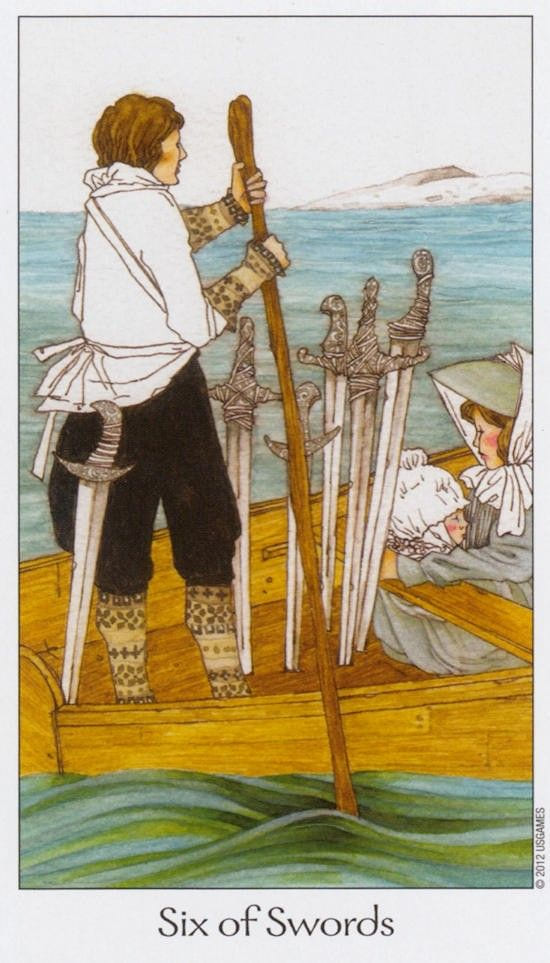
The Six of Swords signals a movement away from difficulty and the beginning of recovery. It indicates that problems are slowly being solved and that an inner journey toward hope is underway. In its reversed position, it notes that while things may be improving, progress can be slow and there may be a tendency to avoid unpleasant feelings. The card encourages continued forward movement and facing emotions to fully complete the transition.
Seven of Swords
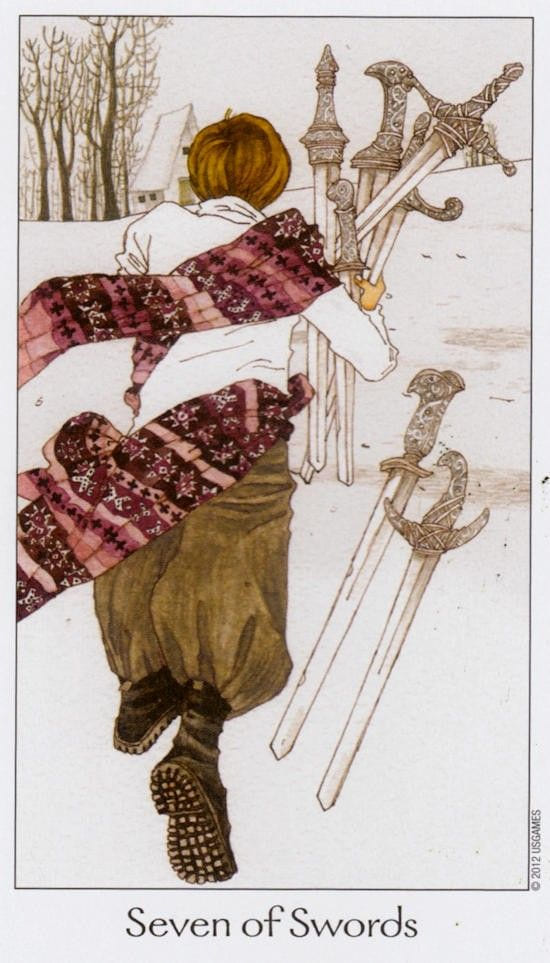
The Seven of Swords highlights a willingness to take risks in pursuit of profit, often accompanied by avoidance of direct challenges and a focus on self-interest. Upright, it suggests actions driven by personal gain and the impulse to escape difficult situations rather than confront them. Reversed, it cautions that high-risk choices can produce low returns and emphasizes the need to meet obligations. In reversal, the card calls for facing responsibilities and reassessing risky strategies to avoid loss.
Eight of Swords

The Eight of Swords upright describes being trapped by circumstances often of one's own making, with the ability to solve the problem but not seeing the solution. It emphasizes feeling victimized, restricted, and expecting to be rescued. Reversed, the card indicates exploring choices, breaking out of limiting circumstances, and reclaiming empowerment. The card's guidance is to recognize self-imposed limits and actively seek solutions to regain agency.
Nine of Swords

The Nine of Swords signifies intense mental anguish, worry, and sleepless nights brought on by negative thought patterns and regret. It describes being overwhelmed by fears and internal narratives that magnify perceived problems. Reversed, the card can indicate extreme anxiety, suspicion, paranoia, or emotional numbness while also suggesting the possibility of beginning to address the issues at hand. The card urges confronting inner fears, seeking support, and working to shift thought patterns to alleviate distress.
Ten of Swords
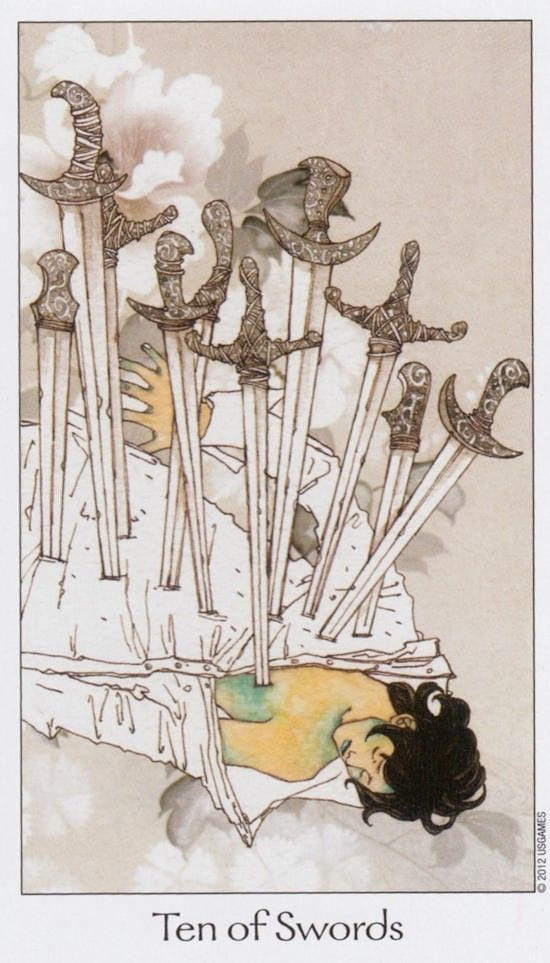
The Ten of Swords signals a painful nadir characterized by extreme duress, martyrdom, and self-pity. It points to being stuck in a victim mentality and reaching the lowest point of a cycle. In reversal, it indicates release, that the worst is over, and positive signs of recovery. Reversed, it can herald a return to strength and feeling on top of the world as circumstances improve.
Page of Swords

The Page of Swords represents mental agility, truth-seeking, and the courage to speak up for what is right. Upright, it indicates asserting what is right and fair, acting with integrity, and overcoming setbacks. It encourages clear thinking, vigilance, and principled action. Reversed, the card warns of foolish decisions, irresponsible behavior, and a lack of confidence that undermines judgment.
Knight of Swords
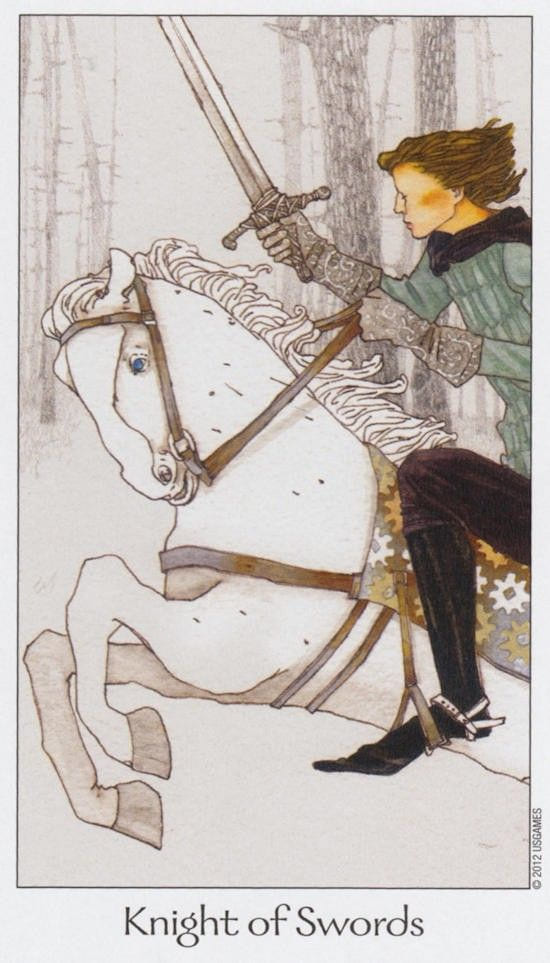
The Knight of Swords combines decisive judgment with a forceful, sometimes overbearing manner. Upright, it indicates good judgment but can manifest as acting with authority, arrogance, opinionated, and dogmatic behavior. Reversed, it warns of isolation, imprudence, and impetuousness. It can also point to the need for diplomacy and tolerance when the energy becomes disruptive.
Queen of Swords

The Queen of Swords depicts a woman with a strong personality who seeks to hold control and embodies independence, experience, and executive authority. Upright, she is scrupulous, forthright, and intent on maintaining clarity and order. Reversed, her traits can become fanaticism, oversensitivity, or aggression, causing her to take everything too seriously. The card highlights the tension between decisive authority and the risk of rigidity or excessive reaction.
King of Swords

The King of Swords upright represents a reasonable father figure who is capable, credible, and upholds high standards. He embodies an analytical mind and clarity of thought that guide fair judgment and leadership. In reverse, the King of Swords warns of moral corruption, particularly nepotism, and the misuse of power. This reversal can manifest as cruelty, double standards, and a breakdown of integrity in decision-making.
Pentacles
Ace of Pentacles
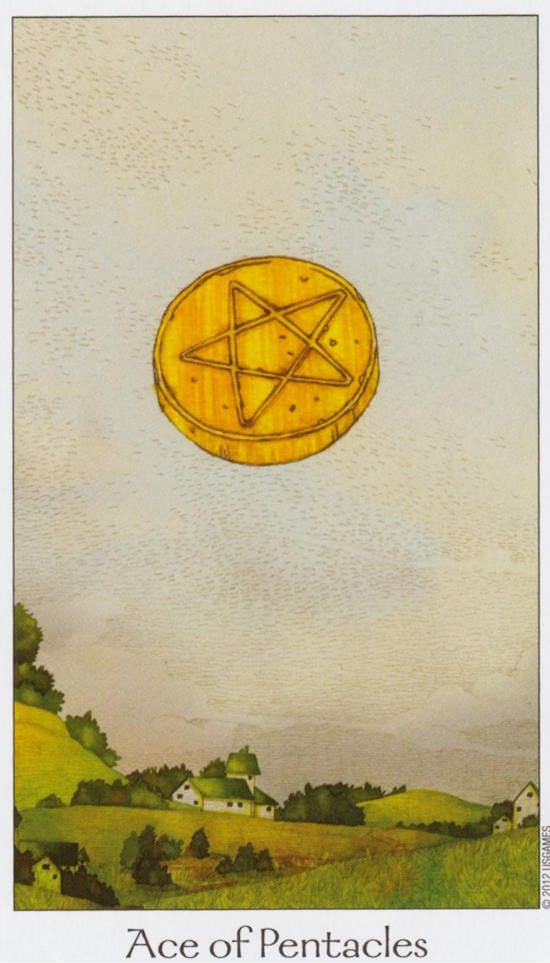
The Ace of Pentacles signals a new opportunity for material stability, practical growth, and the beginnings of a secure foundation. Upright, it emphasizes seeking stability, adequate resources, groundedness, steady work, and using available tools to manifest prosperity. Reversed, it points to insecurity, shortages, unstable work or relationship situations, and a fear of change that undermines progress. The card advises attention to practical matters and openness to change to restore or build lasting stability.
Two of Pentacles

The Two of Pentacles speaks to juggling multiple responsibilities and managing more than one job or task at a time. It highlights a desire to maintain the current status and the possibility of two-timing or divided attention. In reverse, the card indicates a wish to take on several jobs but an incapacity to do so, leading to instability. The reversed position warns of being thrown off balance and overwhelmed by competing demands.
Three of Pentacles

The Three of Pentacles indicates benefits in the present, but those gains are insubstantial and temporary. It describes competence without expertise, suggesting work that is adequate but not outstanding. Reversed, the card warns that profits are small and declining, pointing to diminishing returns. It can also signal an unsatisfying job or unproductive work situation.
Four of Pentacles

The Four of Pentacles highlights a tendency to cling to security, possessions, or control, resulting in emotional withdrawal and resistance to change. Upright, it points to reluctance to share, inability to express creativity or feelings, and a tightening inward. Reversed, efforts to protect oneself may cause more harm, leading to carelessness or emotional stagnation. It can also indicate unfulfilled attraction or an inability to form a relationship, suggesting the need to loosen control and open up.
Five of Pentacles

The Five of Pentacles signifies material and physical hardship, often manifesting as financial difficulty and poor health. Upright, it highlights being hurt, enduring hardship, and feeling left out in the cold. Reversed, it points to accumulating debt, worsening health, and persistent insecurities that continue to trouble the querent. Overall, the card warns of scarcity and isolation while underscoring a need to address practical and emotional vulnerabilities.
Six of Pentacles

The Six of Pentacles represents giving and sharing earned rewards with a conscientious spirit, often producing successful results and strengthening relationships. It emphasizes sharing your achievement and maintaining a good reputation through fair distribution. Reversed, it signals wishing for better results than one deserves or seeking unfair benefits or advantages. The card highlights issues of fairness in both giving and receiving and encourages honest appraisal of merit.
Seven of Pentacles

The Seven of Pentacles emphasizes pausing to evaluate your progress, resources, and long-term goals. It encourages patient assessment of what you have versus what you need and thoughtful questioning of past choices. Reversed, it warns against wanting rewards without taking responsibility or putting in the necessary work. Overall it urges deliberate reassessment and renewed commitment to practical, sustained effort to achieve desired outcomes.
Eight of Pentacles

The Eight of Pentacles emphasizes learning through practical, hands-on experience and the importance of diligent, focused effort. It encourages committing to the task at hand and applying genuine effort to improve skills or solve problems. Upright, it highlights relearning, concentration, and steady work toward mastery. Reversed, it warns against apathy, avoidance of responsibility, and failure to apply the necessary effort to resolve issues.
Nine of Pentacles

The Nine of Pentacles signifies enjoying the finer things in life, graciousness, self-reliance, and making the most of resources. It reflects financial independence, cultivated comforts, and the rewards of disciplined effort. In reversal, it warns of extravagance, wastefulness, self-indulgence, and a lack of appreciation. The card advises caution around spending and a reassessment of values and resource management.
Ten of Pentacles

The Ten of Pentacles upright signifies financial success, abundance, adherence to traditional guidelines, and partnership, indicating stability and reward for established practices. It points to prosperity and cooperative arrangements that follow proven structures. Reversed, the card signals economic hard times, unpredictable investments, mistrust, and loss, suggesting insecurity and setbacks. It advises caution with finances and partnerships and a reassessment of unstable or risky ventures.
Page of Pentacles

The Page of Pentacles urges acting on your dreams and committing to practical goals, often through education and steady effort. It points to opportunities to enrich your life and achieve tangible progress through focused study and responsibility. Reversed, the card warns of ineffective studying, impractical ideas, careless spending, and financial uncertainties. The guidance is to ground your plans in practicality and maintain consistent effort to turn potential into real results.
Knight of Pentacles

The Knight of Pentacles represents steadiness, responsibility, and a cautious approach to life and work. Upright, it suggests a stable job, prudence, and reliability—someone suited to long-term commitment though not very adventurous. Reversed, it warns of poor financial management despite good pay, job instability, or reckless choices that undermine security. The card encourages valuing consistency and practicality while watching for stagnation or risky behaviors that threaten material stability.
Queen of Pentacles

The Queen of Pentacles embodies a caring, nurturing figure who prioritizes child-rearing and home life while remaining financially secure and down to earth. She is practical and sensible, often taking on the role of a housewife who makes do with what she has. In reverse, her devotion can become obsessive or overbearing, manifesting as an 'alpha mother' tendency that consumes her. The reversed card can also indicate attempts to gain benefits without accepting responsibility and a general sense of suspicion.
King of Pentacles
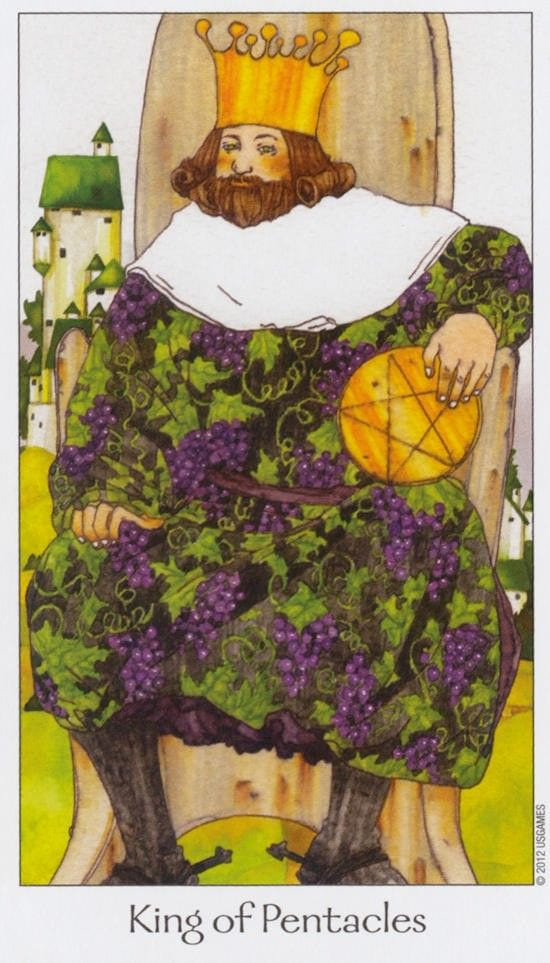
The King of Pentacles upright represents a good father figure: stable, unchangeable, protective of home and family, and encouraging of others. In this position he embodies security, reliability, and practical support. Reversed, the card warns of apparent wealth without liquidity—rich but not having cash—and decreasing liquidity due to excessive investment. It also signals mistrustfulness and instability.
Reading Tips for the Dreaming Way Tarot
The Dreaming Way Tarot rewards a reading style that trusts the eye more than the textbook. Its minimalist compositions are not accidents — they are invitations to see what is actually there.
Read the body, not just the symbols. With so little background detail competing for your attention, the figures themselves become the primary language. Notice posture: is the figure leaning forward or pulling back? Are arms open or crossed? Is the gaze meeting yours or looking away? These physical cues often reveal more than any memorized keyword list.
Let the empty space speak. The pale, minimal backgrounds in this deck are not voids — they are silences that give each figure room to breathe. In a reading, treat the space around a figure the way you would treat a pause in a conversation: it is meaningful. Isolation can mean freedom or loneliness; openness can mean possibility or exposure.
Trust your emotional first impression. Kwon Shina’s illustration style has a dreamlike, almost cinematic quality that communicates mood before meaning. If a card makes you feel something before your mind catches up with “the official interpretation,” honor that response. This deck was designed to be felt first and analyzed second.
Use the elegance as a mirror. The fashion-illustration quality of these figures makes them feel contemporary and relatable. You are not looking at medieval allegories — you are looking at people who could be you. Let that identification deepen your readings. When a card reminds you of someone you know or a version of yourself, follow that thread.
Explore the Dreaming Way Tarot in Elvi
Want to experience the Dreaming Way Tarot in a live reading? Elvi, our AI tarot companion, offers AI-powered readings with this stunning deck and many others. Pull cards, explore spreads, and let the elegant, dreamlike illustrations of the Dreaming Way Tarot guide your journey — anytime, anywhere, right from your phone.
Frequently Asked Questions
How many cards are in the Dreaming Way Tarot?
The Dreaming Way Tarot contains 78 cards: 22 Major Arcana and 56 Minor Arcana. It features elegant, minimalist Korean-style illustrations with a dreamlike quality.
Who created the Dreaming Way Tarot?
The deck was created by Rome Choi with illustrations by Korean artist Kwon Shina. Published by U.S. Games Systems.
What makes the Dreaming Way Tarot unique?
Its clean, elegant Korean illustration style sets it apart. The figures have a fashion-illustration quality with minimal backgrounds, putting the focus entirely on the characters' expressions and body language.
Is this deck good for intuitive reading?
Excellent. The minimalist backgrounds and expressive figures encourage you to read body language and emotional cues rather than relying on traditional symbols. It trains your intuition naturally.